If ever there was a growth story in the next 2-3 years, especially during potential economic uncertainty, then infrastructure-as-a-service (IaaS) is it. This past week, Amazon’s IaaS offering, AWS, reported sales growth of 45% from $5.11 billion to $7.43 billion, with operating income increasing 61% to $2.18 billion up from $1.35 billion. Microsoft’s IaaS offering, Azure, was up 76 percent (same as last quarter) reaching $4 billion in revenue. Microsoft’s overall commercial cloud computing revenue which includes software grew 48 percent to $9 billion. If both companies continue on this trajectory in 2019, then Microsoft will narrow its gap from 3:1 to 2:1 with Amazon.
2018 CLOUD IAAS REVENUES
$26 billion AWS
$10 billion MS
UPDATED PROJECTED 2019 if growth continues at current rate
$16 billion MS
$30 billion AWS
Amazon, Microsoft and Google Revenue Trend Chart
Note: I’ve written quite a bit of analysis over the last few months about the duopoly between Microsoft and Amazon. To quickly summarize, my first analysis discussed the strategic acquisition of Github. My second analysis discussed the great efforts Microsoft has put into become a serious bidder for the Pentagon contract.my first analysis discussed the strategic acquisition of Github. My second analysis discussed the great efforts Microsoft has put into become a serious bidder for the Pentagon contract.
Truly, there is plenty of green field for both players. The investment window for the IaaS market is far from over as it took twelve years for the IaaS market to reach $40 billion and it will take only three years to double to $80 million – and this figure is on the low end of estimates.
My newsletter subscribers get this information first. Sign up here.My newsletter subscribers get this information first. Sign up here.here.
Here are a few of the projections for this space from various analysts:
Amazon’s Cloud Business could reach $71 billion by 2022 with a valuation of $350 Billion (source Jefferies – which tends to be more bullish on AWS than MS).
Microsoft’s Cloud Business Could Be Bigger Than Windows by 2021 with $26.4 billion in revenue in 2021 fiscal year vs. $20.3 billion from Windows (source: Keybanc – most estimates on MS are low, which is why there’s still a growth story here)
Global cloud IT market will triple between 2015 and 2020 with IaaS being the segment with the largest growth of 27% compared to SaaS growth of 18% (source: Bain and also SoftwareStrategistBlog.com)
Global IT Revenue Chart Growth source: Bain Analysis
IaaS Cloud is Secular
On a micro-level, the tech industry is in a state of transition. Mobile is hitting saturation, social media faces privacy regulations, chip makers are getting hurt in the trade war, and meanwhile, 5G, artificial intelligence, and autonomous vehicles are too nascent to see returns in the near term. This is one reason I continue to hammer on IaaS as a safe, secular bet. Companies are going through a major transition right now by transferring work loads into the cloud.
As these transitions take place, IaaS will be as essential to companies as food, gas and cigarettes are to consumers. The company that has transferred to the cloud cannot exist without budgeting for this operating expense. Meanwhile, the companies who have not transferred to the cloud risk losing on competitive advantages such as artificial intelligence, machine learning, and scaling quickly through server virtualization.
As it currently stands, IaaS is Amazon’s largest revenue segment and Microsoft’s fastest growing revenue segment – although there is plenty of addressable market left for both players. Amazon’s capex spending (which includes all capex; not AWS specific) was at $14 billion in 2018 while Microsoft reported capex of $12 billion. One major drawback is that these are not pure play IaaS stocks which introduces risk from other revenue segments. You can read my follow up analysis on 6 pure play cloud stocks here.6 pure play cloud stocks here.
This is the second article in a 2-part series. The first article “Best Bet for Growth Stocks in 2019? Secular IaaS.” can be accessed here.This is the second article in a 2-part series. The first article “Best Bet for Growth Stocks in 2019? Secular IaaS.” can be accessed here.here.
One reason for Microsoft’s success with growth rates of 76% in the last two quarters is the company’s hybrid approach. This approach helps customers keep their most sensitive data on their own servers while sending workloads that have advantages as cloud apps, such as real-time data analytics, to Azure. This, in turn, has caused Amazon to chase Microsoft with recent efforts to improve its hybrid solutions.
The Department of Defense is a perfect example of an entity that would want to keep its most secure data with on-premise servers while leveraging the cloud for artificial intelligence and machine learning. Fortune 500 companies with substantial IP are another example of who would require on-premise security.
Understanding hybrid is key because it gives transparency into how companies with big budgets think and how they evaluate the cloud. Security is clearly a concern as on-premise servers continue to be in demand as a counterpart to the public and private cloud. Therefore, small to mid-cap companies which help to make the cloud more secure have room for near-term growth.
Additionally, the strengths and benefits of the public and private cloud include mining data more efficiently and improving accuracy and also productivity. Therefore, any small to mid-cap companies that assist with data insights or improved work flows will have room for near-term growth. For example, SalesForce is a major growth story that came from improving both the accuracy of sales targets and productivity of sales teams.
Below are a few of the more popular stocks in the cloud space. Although it is my belief some of these are overbought, and will have to prove themselves if we do go through a bear market, it most certainly doesn’t hurt to have them on the radar and to look for the right entry point.
Okta and Zscaler are both in cloud cybersecurity. Okta is in the identity and access management market which secures access to APIs, provides single sign-on, and prevents data breaches by protecting identity credentials through multi-factor authorization.
Zscaler is a “zero trust security architecture” that verifies identification and access. Currently, most companies use a virtual private network (VPN) as a security architecture and Zscaler improves on this by leveraging the cloud rather than physical or virtual appliances.
Risks: One of the greatest risks to these companies is the ongoing competition in cybersecurity. Cybersecurity, in general, is a hard space to create a competitive moat. In Okta’s case, the tech giants can duplicate the majority of these services. An acquisition, especially talent based, would be a good outcome for Okta. In Zscaler’s case, a competitor could come in and create a pricing war. I also noticed recently that insiders of Zscaler have been selling their stock – one at $2.1 million in stock and another at $4.5 million.
Twilio is a common household name in the San Francisco and Silicon Valley area due to a well-run developer evangelism team. This company was heavily promoted at every developer conference over the last 10 years and you can bet that most of its revenue comes from a very loyal fan base. Twilio’s cloud products are voice-based and SMS/text messaging based, as well as other communication functions through APIs. The translation here is that you can essentially make phone calls and send text messages in the cloud, for instance, like when you call or text through Lyft’s ride share app. Developer-led technologies with strong adoption and loyalty are hard for competitors to shake. In fact, it’s one of the primary key metrics I look for when making tech stock buys.
Risk: There could be a point where artificial intelligence begins to eat into Twilio’s market share. Any manual requests by users or communication done through texting, for instance, will be replaced with highly accurate voice commands. We will speak what we want rather than type what we want. Google, Amazon and Apple are quickly building this out, and the accuracy will be nearly perfect. You can read more on my analysis about the rise of AI assistants here. Twilio has clearly had amazing returns of 335%, so if you got in early, you’re high-flying right now.
My newsletter subscribers get this information first. Sign up here.My newsletter subscribers get this information first. Sign up here.here.
Slack is also a common household name in the San Francisco and Silicon Valley area, and the 8 million subscriber base in 2018 includes 50% global teams in Europe and Asia. Slack is a collaboration hub for work that lets you communicate across multiple team members without having to create long and confusing email threads. There are many productivity features such as sharing files, making calls in-app, and having separate work spaces and threads. Programmers were especially fond of Slack in the beginning and now it’s caught fire across all departments. In fact, I’m currently logged into Slack as I type this communicating with my team.
Risk:Slack filed for an IPO this week, actually. The company is choosing to do a direct listing which introduces risk as the founders and VCs don’t have to wait to cash out of the shares they sell. For obvious reasons, it’s better to have the founding team be in the same sink-or-swim boat as its stock investors (if you don’t believe your company will have returns over the next 6 months, why should I?). Direct listings for buzzy tech IPOs are relatively new, and I’m still a bit weary of them. That point aside, Slack does have serious potential for growth.
Veeva is disrupting the pharmaceutical and life sciences industries by assisting with sales and operations while meeting health industry regulations. Veeva has a history of being an outlier with no competition to speak of, and is one of the rare companies that was already profitable when it made its public offering in 2013. Today, Veeva is close to securing the fifth spot for a cloud software company to reach $1 billion in revenue. If Veeva does hit TAM, an exit strategy could be a solid acquisition for deep pocketed Walgreens, CVS or Amazon who has big ambitions to get into pharmaceuticals.
Risk: The major risk to Veeva is the current valuation and total addressable market as they are targeting a specific industry. With a PE ratio hovering around 100 and price to sales of 19, this stock is priced to perfection. Quite a few tech stocks that came of age during the bull streak (for Veeva this was 2013) may have an awakening ahead of them. If there is a good entry point, Veeva’s revenue growth will continue with analysts projecting revenue to “reach just over $2 billion by fiscal 2024.” As an individual investor, I have to make sure the first $1 billion in revenue is priced right with a fair valuation or the second billion in revenue (projected to be five years from now) won’t matter for my returns.
Workday is a cloud platform that increases productivity across HR and finance. This is done through machine learning, analytics and real-time reporting through a cloud platform. Products include financial management and human capital management. Workday is a large cap company and is ranked as the 27th largest internet company by revenue and is one of the first five cloud software companies to achieve $1 billion in revenue.
Risks: Similar to Veeva, Workday came of age during a raging bull market in 2012 and its valuations reflect this. It saw an 83% increase the day of its public filing and went on a tear in 2017/2018. The 52-week low is $107 and its current price is $186. With a price to sales ratio of 15, and no P/E ratio to speak of, I think we will see a better entry point than where it currently stands.
Robot dogs from Continental prove that autonomous vehicle hype has gone too far. At CES 2019, Continental announced a way to automate last mile-delivery without requiring a human. This is where the robot dogs come in. The company’s official statement was, “With the help of robot delivery, Continental’s vision for seamless mobility can extend right to your doorstep. Our vision of cascaded robot delivery leverages a driverless vehicle to carry delivery robots, creating an efficient transport team.”
Virtual Representation of Autonomous Vehicles with AI Robots. Source: Continental
The problem with robot dogs, and many other AV gimmicks, is that the industry is not talking truthfully about what where we are with AV and what it will take to put an advanced AVs on the road. This is harmful to consumers who mistakenly believe autonomous vehicles are available for purchase and already on the road today. In fact, 71% of respondents around the world believe they can buy an AV – yet there is not one AV on the market. The top three brands that consumers mistakenly believe distribute self-driving cars include Tesla (40%), BMW (27%), and Audi (21%). It’s also harmful to investors who expect AV technologies to be profitable in the near term of two to three years.
CES is one of the world’s major marketing events where autonomous vehicles were first hyped. The main stage, the keynotes, the sessions, the booths, the competition between rival companies – all of it pushed for bigger and better car demos. Which is why CES is the perfect platform for the announcement of PAVE, which stands for The Partners for Automated Vehicle Education. PAVE is a new coalition that will help educate the public and policymakers about the potential of automated vehicles. Audi, Aurora, Cruise, GM, Mobileye, Nvidia, Toyota, Waymo and Zoox have joined the coalition, which has a central focus on education and safety – and also a focus on more credible information. As stated by Mark Del Rosso, President of Audi America, “Traditional automakers and newcomers are investing billions of dollars in the technology that will make automated vehicles possible. PAVE recognizes the need to invest in public information – in making sure consumers and policymakers understand what’s real, what’s possible, and what is rumor or speculation.”
Just the Facts: Level 2 Automation at CES 2019
Level 2 automation is a reference to the six levels of autonomous vehicles published by SAE International, and adopted as the industry standard for discussing the various stages and evolution of autonomous vehicles. Level 0 is no automation and Level 5 is full automation without a human driver and does not have brakes or a steering wheel. We are at Level 2 right now and the industry is experiencing notable delays in deploying Level 3.
Below are a couple of the more important (and realistic) announcements from CES that will deploy in the very near future.
Nvidia
Nvidia placed emphasis on gaming this year at its Sunday CES press conference with the announcement of the RTX 2060, whereas it has been Nvidia’s tradition to focus on autonomous vehicles (and data center technologies) at the CES press conference. One day later, on Monday at CES, Nvidia launched DRIVE AutoPilot, which will improve advanced driver assistance features, such as enabling lane changes, pedestrian and cyclist detection, parking assist, and personal mapping. This improved automation strengthens the Level 2 vehicles we see on the road today.
Intel
Intel had a showy display that included a Gotham City themed BMW X5 equipped with large screen TVs, projectors, sensors and haptic feedback. Visual distractions aside, the real news from Intel at CES is the company’s ongoing focus on China. Intel did not officially state they are redirecting their efforts from the United States to China, however, the announcements speak for themselves:
Mobileye, Beijing Public Transport Corp. and Beijing Beytai Collaborate to Bring Autonomy to China’s Public Transportation
2019 CES: Great Wall Motors, Mobileye Join Forces to Deliver ADAS and Autonomous Driving Solutions in China and Beyond
Intel and Alibaba Team on New AI-Powered 3D Athlete Tracking Technology Aimed at the Olympic Games Tokyo 2020
My newsletter subscribers get this information first. Sign up here.My newsletter subscribers get this information first. Sign up here.here.
This is in addition to a hard-to-miss announcement back in July that Baidu was partnering with Mobileye on their Apollo vehicle. At CES 2019, Baidu had on display the successful implementation of Mobileye’s Responsibility Sensitivity Safety (RSS) in the simulation engine of Apollo (I personally tried out the simulator).
Baidu Spokesperson at CES discussing Data-Centric Innovation
It’s important to note that China is not immune to the issues the industry faces in advancing from Level 2 automation to Level 3 automation. China, too, is idling at Level 2 (apologies for the pun). For instance, Great Wall Motors released a statement at CES 2019 that “GWM hope to integrate Mobileye’s solutions into its vehicles. Starting with L0-L2+ within the next three to five years, the companies are also exploring opportunities for Mobileye’s Level 3 products.”
Baidu and Mobileye have both made promises to deliver Level 3 by 2019 and Level 4 autonomy by 2021. These dates were announced in 2017 but there has been no recent updates as to the estimated delivery for L3 – including at CES this year.
Mercedes Benz
The best AV investments over the next three to five years will come from companies who are taking baby steps towards a better and safer driving experience. Mercedes-Benz is one company making the most of Level 2 partial automation by announcing a new CLA class. The CLA class is a more tech-driven option with augmented reality for navigation, and an Interior Assistant that understands indirect voice commands and operational gestures. (Read my analysis on how we have reached a tipping point for AI-powered assistants here). An example of this is when a driver reaches over in the seat, and lights automatically illuminate the area. You can also set a command such as “navigate me home” or ask the voice assistant something complicated like “find child-friendly Asian restaurants nearby with 4-star rating which are neither Chinese nor Japanese,” which was one example given in the demo.
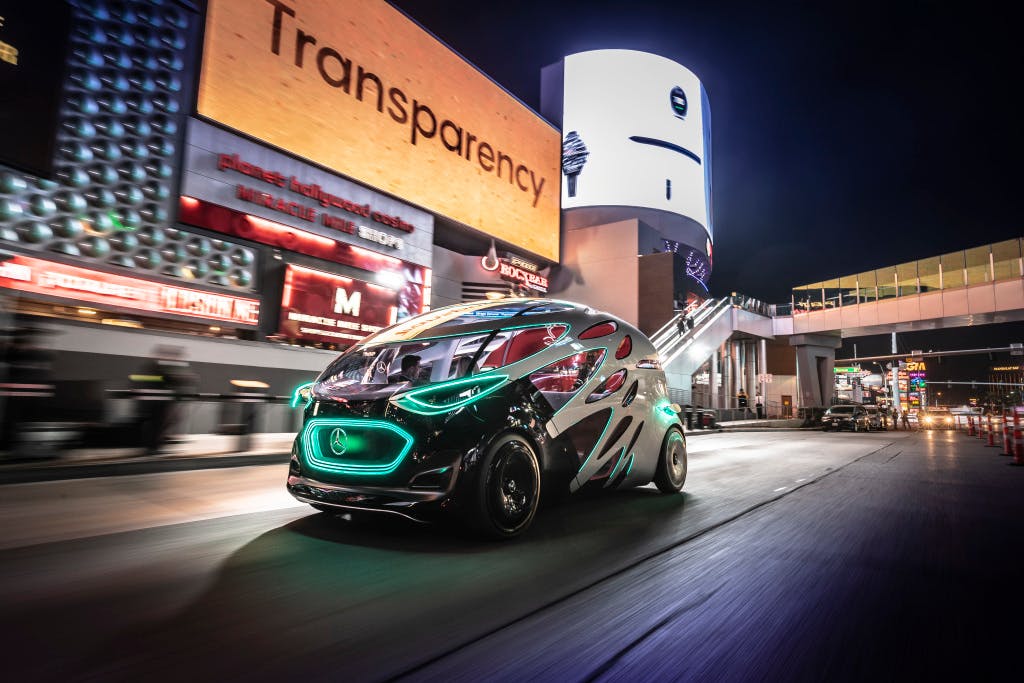
New Autonomous Vehicle Mercedes Benz CLA class. Source: TechCrunch
Takeaway:
Nvidia and Intel had a different tone at CES this year in regards to autonomous vehicles. Nvidia’s launch of DRIVE AutoPilot is a smart strategy to boost sales in the short term while the AV future of Level 3 or Level 4 sorts itself out. The Mercedes CLA class is another great example of a strong Level 2 automation strategy. Intel is clearly betting on China, especially Baidu, although China is not immune to the difficulties of how to get a machine to react like a human. Notably, there was no Level 3 follow up from Baidu at this year’s CES despite promises for arrival in 2019 (although the year is young).
Regardless of make or model, AVs are stuck at Level 2, and there are too high of expectations as to when advanced AV will turn a profit. Therefore, the AV market will struggle as the delivery of reliable and safe automation continues to see delays. Nvidia, Intel and Mercedes are a few companies preparing for the slow down, and I’m betting we will see others do the same this year.
To experience CES this year was to experience the sensation of exiting a large football stadium. You essentially walk in a continuous herd of over 180,000 people. There were many noteworthy displays and freebies, as long as you don’t mind standing in line for two hours or having hundreds of people blocking your view. (The only line I stood in was for Starbucks).
I’m also not one for flying taxis or the never-ending release of new television screens. At this point, if you buy an 8K television, it will take years for content producers to catch up to 8K content (which is why you won’t see me covering this as a trend). Although, standing under these curved OLED TVs from LG complete with a dramatic presentation was one of my favorite, personal highlights.
I’ve organized the stampede into a couple of important trends that will impact you as a consumer of technology and will also help to inform your tech stock portfolio. I’ll be covering the notable CES trends in a three-part series. These trends include the tipping point for AI-powered assistants, Level 2 vehicle automation and 5G (yes, it’s a big deal).
Note: I’m launching a podcast. Sign up for my newsletter for more information.
CES 2019 Becomes Tipping Point for AI-Assistants
You may have heard the shocking statistics regarding daily mobile phone usage. For instance, the average person spends over 4 hours per day looking at their phone. The idea of touching your mobile phone to an obsessive level, especially while driving, will become a long-forgotten concept as we transition to AI-powered voice assistants. Google was clear with CES attendees – AI-powered assistants are the next frontier in technology and Google wants to win.
One of the bigger attractions at CES was a theme park ride that took riders through a Disney-like experience designed to highlight Google Assistant. The characters and landscapes prompted daily tasks through Google Assistant, such as turning off lights, taking selfies, and ordering birthday cakes. It was a costly display that got a lot of media attention.
Man Taking A Picture at CES 2019
source: Mashable
Here is a brief overview of the Google assistant-powered announcements from last week.
Google expects Google Assistant to be on 1 billion devices by the end of the month, up from 400 million devices a year ago.
Google Assistant will be on Google Maps for both iOS and Android
Google Assistant will be integrated with Android lock screens, Sonos Speakers, Samsung TVs, Dish set-top-boxes, Lenovo alarm clocks, IKEA blinds (yes, you read that right), Anker and JBL to retrofit your car, and has partnered with United to check you in on flights with more airlines on the way.
Amazon Alexa had 80% of the market in early 2018. When new numbers are released, you can expect market share to decrease as Google was growing at 483% growth compared to Amazon’s 8% growth. Here are a few of Amazon’s announcements from CES:
Alexa, in a partnership with JLB speakers, can be installed into your ceiling through a LED downlight.
Razer plans to integrate Alexa into its gaming platform
Amazon announced partnerships with Telenav and HERE technologies, which are both big players in the connected car space. Telenav is a connected car and location-based services provider and HERE sells and licenses mapping and location data, and works with companies such as BMW, Oracle, Facebook and Yahoo! Maps.
Echo Auto now has over 1 million pre-orders, which is a dongle that plugs into a car’s infotainment system to provide hands-free driving.
Home is Where the Privacy Is
Apple should have an answer for this at WWDC in June, if not sooner. Siri was the original AI powered assistant released four years before Alexa. The only news we got from Apple during the show came from partnership announcements with HomeKit and AirPlay 2 arriving on non-apple devices such as Samsung, LG, Vizio and Sony TVs. (Apple does not make announcements at CES, rather Apple makes announcements at its own, proprietary conferences).
My newsletter subscribers get this information first. Sign up here.My newsletter subscribers get this information first. Sign up here.here.
However, Apple did make one very bold statement at CES. The statement was in the form of a large ad that stated, “What happens on your iPhone, stays on your iPhone.” Apple is correct to bring up privacy at a time when tech companies will have more data and information than ever before from AI-powered speakers.
Apple Statement at CES 2019
Takeaway:
The time we spend touching our mobile phones will define this past decade as a “thing of the past.” The practice of typing everything we are thinking onto a small screen will slowly be replaced by voice activated technology. CES 2019 was a turning point with tech giants revealing AI assistants are the central focus in their strategy moving forward. However, there are serious privacy implications to having a speaker in every room of the house. Google’s Android operating system leaks more data than Facebook, even on Facebook’s worst day. The bottom line is that there are still a lot of questions to be answered before these assistants are in your ceilings, on your blinds and in your bedroom via the alarm clock. I’ll be looking forward to Apple’s privacy-driven answer at WWDC in June.
The cloud infrastructure market is expected to reach $83.5 billion by 2021, up from $40.8 billion in 2018. Amazon Web Services was launched in 2006, which means it took twelve years for the infrastructure-as-a-service (IaaS) market to reach $40 billion – but will take only three years for the next $40 billion to accumulate. Therefore, the investment window for cloud infrastructure stocks is far from over.
The IaaS segment is currently Amazon’s most profitable revenue stream comprising 55% of its quarterly operating profit, and is also the top growth-driver for Microsoft at 89%. Considering these are two of the three companies vying for most valuable company in the United States, it’s easy to see why IaaS could be the determining factor on who will remain in this position. AWS has a formidable lead in cloud infrastructure with estimates of $26 billion in sales last year compared to Microsoft’s $10 billion.
However, there was an important strategic acquisition Microsoft completed last month which will narrow its position in second place – and it’s my prediction that this specific acquisition will be a primary driver that will propel MS into first place in the next 2-3 years. Before I discuss the acquisition, I think it’s important to provide an overview of the IaaS segment.
Gartner analysis bumped Oracle and IBM from the leader quadrant this year, while placing Google Cloud in third behind AWS and Microsoft. For all intents and purposes, these are the three cloud infrastructure companies remaining for serious stock investors after a period of fierce consolidation. At one point, Amazon had more market share than the trailing 14 cloud infrastructure companies combined. It now has the market share of the trailing 5 companies combined. This reflects Microsoft and Google’s growth as the territory Amazon has forfeited was primarily gained by MS Azure and also Google Cloud Platform (GCP).
AWS has an outstanding lead at 33% of the market, with Microsoft at 13% and Google at 5-6%. These margins are why Amazon posts 40% growth while Microsoft posts 98% growth – there is simply more territory that MS can gain as a second-place participant. GCP claims the most growth because its revenue is small enough to post these gains.
Suffice to say, current revenue is not a solid indicator of who will capture the $40 billion projected growth over the next three-year period. In fact, I believe AWS will have its hardest years ahead as Microsoft’s singular focus has been to grow Azure, and this strategy will be reflected in earnings between 2019-2022. AWS is the most mature provider in this category, but Microsoft has deeper experience with strategic IT dominance. The effort at which Microsoft is driving adoption to .NET CORE and Azure is, surprisingly, not something we see with AWS (more on this below).
To some extent, this reason could easily be explained by Amazon’s ever-expanding focus. The company may be too distracted with growing its e-commerce dominance, such as Prime deliveries and also Prime OTT streaming, plus the Whole Foods acquisition, as well as its plans to disrupt the healthcare industry and the connected home. It’s easy to see how Amazon might lack the focus in strategic investments that the competitive cloud infrastructure market will demand. Microsoft, on the other hand, is putting its entire weight behind IaaS, and the next couple of years will be interesting to see how this plays out.
Microsoft’s Strategic Move to Acquire the World’s Largest Open Source Repository
Microsoft’s dedication to become the cloud infrastructure leader was demonstrated last month with the acquisition of Github for $7.5 billion, which is a repository for developers to upload projects and files. There are 28 million active developers collaborating on GitHub. In other words, every single developer in the world is on GitHub. In fact, GitHub’s user base is larger than the total number of developers globally, which is an impossibility the founder pointed out last year, proving the platform’s omnipresence.
“Git” refers to version control systems, which developer-talk for an open version of all the modifications made to projects (like writing code), that is stored in one central repository. Collaboration and sharing are at the essence of open-source software, and Github provides a social environment for this to occur. There is a ton of innovation which happens here, and almost every developer hosts their code and projects here for the world to see (or even for employers to review during job interviews). Developers can “fork’ a project, or split a project, by creating a new project off an existing one. Or they can issue a pull request to have the original developers of a project incorporate new code.
My newsletter subscribers get this information first. Sign up here.My newsletter subscribers get this information first. Sign up here.here.
Ironic is the best word to describe Microsoft’s venture into open source technologies and repositories. At one time, the company was loathed by the developer community for their closed standards, as the Founder Bill Gates adamantly believed software should be proprietary. In the late 90s, leaked documents showed Microsoft had attempted to contain the open source movement, and to prevent Linux from competing with Microsoft software by locking customers into proprietary protocols. (Linux is the free and open-sourced software operating system that launched in the early 90s and Android is built on today; Windows is the anti-thesis to this operating system).
Developers seek open source environments so they can learn from each other, and to support more innovation. Today, AWS excels when it comes to open source development due to being an early supporter of Linux. However, Microsoft is attempting a complete one-eighty by embracing the open-source community, and if MS succeeds, it will pay in dividends for Azure as it goes head to head with AWS.
This venture into open-source advocacy has been planned for some time. Over the last few years, Microsoft became the top contributor on Github with 2 million projects, which helps position Microsoft as an advocate while evangelizing the .NET framework and the .NET CORE that runs on Windows, MacOS, and Linux. Microsoft now claims that 40% of Azure’s virtual machines are running Linux.
Furthermore, MS acquired Xamarin two years ago, the leading mobile application development platform. The tools help developers navigate across the various programming languages required by different platforms, such as iOS and Android on native, web applications, or a mix of both with 75% of the code re-usable. This greatly reduces development time and resources, and also demonstrates that MS is ready to host and support competing operating systems in order to gain on cloud infrastructure.
Takeaway: Microsoft is courting developers because they are a primary decision maker as to which cloud service a company will use. MS Azure’s current customers are enterprise level, such as Fortune 500 companies. Microsoft’s strength is that most businesses at this level have a significant investment in MS products, and it is easier to go with MS because it is what they know, and the transition is easy as the IT department won’t have to be trained on AWS or Google Cloud.
However, Microsoft’s blaring weakness is open source, and the some 28 million developers that are on smaller teams, and who socialize on Github, are decidedly open source. For $7.5 billion, Microsoft has done what every great company should do – acquire to address your weakness.
Both Xamarin and Github are highly strategic acquisitions. Microsoft paid 25 times the value of Github, which has revenue of about $300 million. Alphabet was also interested in purchasing Github, according to inside sources.
This week, General Motors Company cut more than 14,000 salaried staff and factory workers with plans to close seven factories worldwide in what Bloomberg calls a “sweeping realignment to prepare for a future of electric and self-driving vehicles.” Unfortunately for GM, and their employees, the future of autonomous vehicles is much farther off than what the company represents. Investors in GM stock should be cautious, and realistic, as to when new revenue streams will occur, as cutting costs, even to the tune of a net savings of $4.5 billion, might not be enough to wait out the innovation cycle.
In light of the recent layouts, there is $1.5 billion of reduced capex that the company will be saving by cutting the low-demand production lines and the anticipated plant closures (a drop in the bucket compared to the annual capex of $27.5 billion), however, the $1.5 billion capex is not being reinvested into electric vehicles or autonomous vehicle production at this time. The lack of reallocation conflicts with statements from the company CEO, Mary Barra, who promised the company would double investment in electric vehicles and self-driving technology during this week’s announcement.
The bottom line is that GM is correct to prepare for tough times, but they are not disclosing the true timeline for long-range electric vehicle and autonomous vehicle deployment and investors will have to wait years before they see any real profit from new production lines.
Three Words to Heed for GM Stock: Gartner’s “Trough of Disillusionment”
In September, Autonomous Vehicles fell into the “trough of disillusionment,” which is the downward slope published by the analyst firm, Gartner, to show the hype cycle for certain technologies. You can think of this as “winter is coming” for tech products – a time when all of the buzz and excitement finally meets reality (note: artificial intelligence winter is a well-documented thing).
ABI Research, an advisory firm that reports on market-foresight trends, predicts 8 million consumer vehicles with Level 3 to Level 5 autonomy will ship in 2025. Compare this to the 94.5 million vehicles sold in 2017 – which equates to 8.5% of sales. This is a small and fairly insignificant percentage of market share to be chasing 7-years ahead of deployment. Yet, investors have poured cash into auto manufacturers due to marketing campaigns that provide false hope for the near future.
The reality for autonomous vehicles includes regulations, production cycles, and delays in implementation for what is an extraordinarily difficult problem to solve – how to get machines to respond like humans at crucial moments. This gap between investor expectations (perception) and commercial deployments (reality) has created an autonomous vehicle bubble.
Per statements from GM, long-range electric vehicles are a minimum of 8 years before they represent a slim 10% of GM’s current production. In 2017, the company committed to a volume production goal of “1 million units globally by 2026,” with the majority of EVs being sold in China. GM’s overall production was about 10 million units globally in 2016.
Brief Background on the 6 Levels of Autonomy
You can skip this section if you know the six levels of autonomous vehicles as published by SAE International. If not, this background is important to understand why the autonomous vehicle bubble formed, and why and when it will burst.
Level 0: No Automation. The driver performs all of the tasks.
Level 1: Driver Assistance. The driver handles all of the accelerating, braking, and monitoring of surrounding environment. An example of this level is when a car brakes for you in a critical moment.
Level 2: Partial Automation. The vehicle assists with steering and acceleration functions and allows the driver to disengage. Bubble formed here with investments pouring in, fueled by high hopes of Level 4 or Level 5 commercial deployment by 2020.
Level 3: Conditional Automation. The vehicle controls all monitoring of the environment using sensors. The driver’s attention is critical but the AV system runs the safety critical functions. This level does not require human attention under 37 miles per hour. Bubble will burst at this level as commercial deployments are delayed and reality sets in that AV investments will not see returns for many years.
Level 4: High Automation. Vehicle is capable of steering, braking, and accelerating, as well as responding to events and changing lanes. The system is switched into the mode under safe conditions, but the vehicle cannot determine dynamic instances like traffic jams or merging onto the highway. Most likely ETA 7-10 years.
Level 5: Complete Automation. No human attention required. No need for pedals, brakes, or a steering wheel. The AV controls all critical tasks, monitoring of the environment and identification of unique driving conditions like traffic jams. Most likely ETA 10-15 years.
Autonomous Vehicles – Stuck in Second Gear
Hurricane auto sales from last September helped GM stock, which rose 11.9% from the previous years, however the stock has retraced and is now trading at $35 per share. GM is no stranger to pushing the autonomous vehicle hype with executives commenting that Cruise Automation was making “rapid progress” back in October 2017, and in a blog post, the CEO stated, “in the coming months, we’ll take the next bold steps in testing our autonomous technology as we lead the way to fully self-driving vehicles without any human driver as a backup.” Those months have come and gone, of course.
Tesla is another example of a company that has made unfulfilled AV promises. In 2017, Tesla missed the deadline for a full rollout for self-driving cars. Since 2015, the company had been promising that every car made going forward would have the hardware necessary to facilitate full self-driving capabilities. In line with inflated expectations, Tesla announced it would officially stop promoting the “Full Self-Driving” option for its cars.
My newsletter subscribers get this information first. Sign up here.My newsletter subscribers get this information first. Sign up here.here.
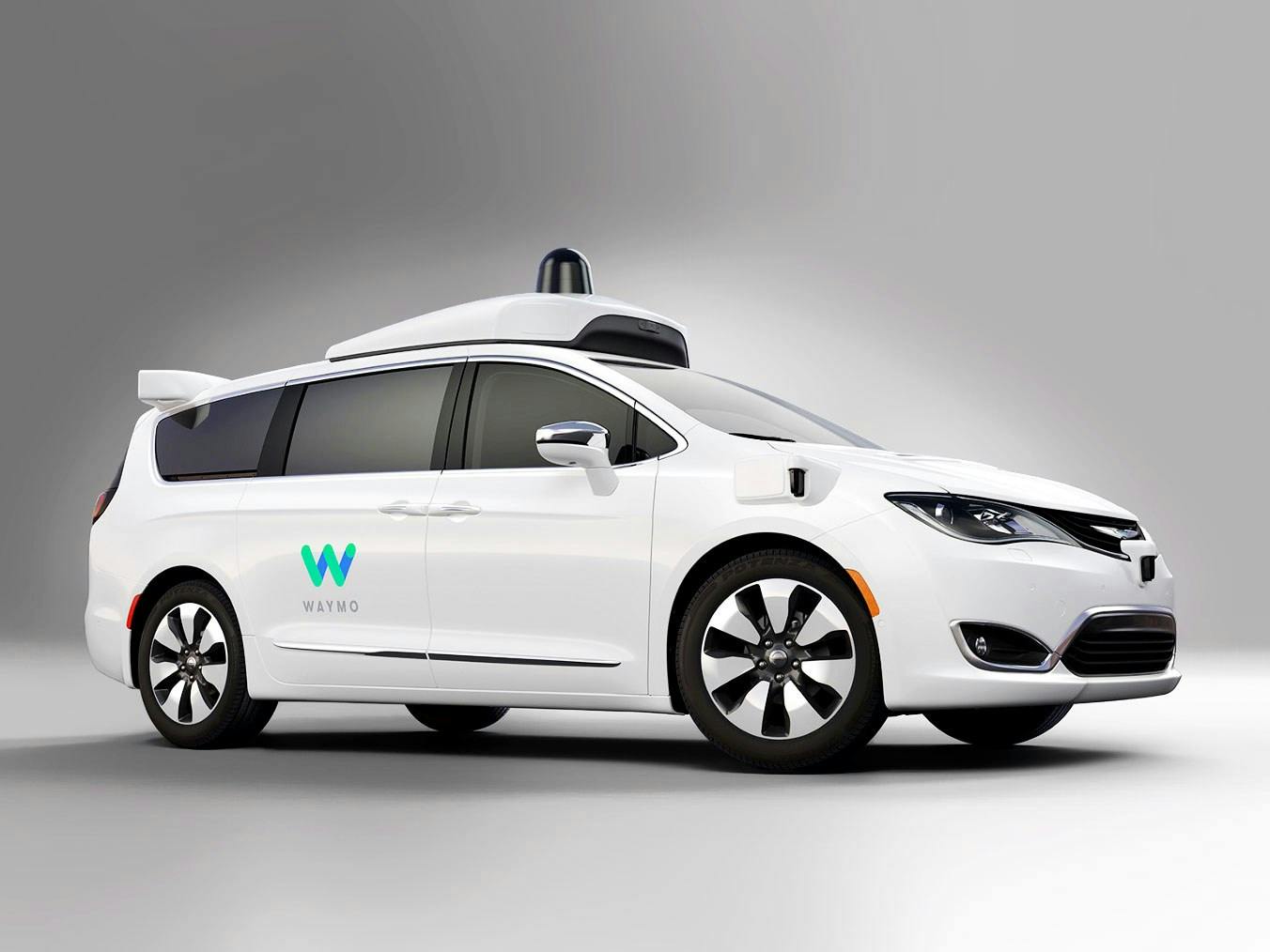
Waymo has been in testing since 2009 and has racked up more than 8 million miles on public roads and more than 5 billion miles in simulation. There are 600 self-driving Chrysler Pacifica Hybrid minivans on the road with goals of launching a commercial driverless transportation system later this year. This, and many other “near deployment” announcements have created massive expectations for the AV market, which is forecast to grow 10x from $54 billion in 2019 to $556 billion in 2026 at a growth rate of 39.47%.
The primary risk today for GM stock is that these forecasts assume commercial deployments will occur on time. As Mike Ramsey, a lead author on the Gartner report points out, even if GM and Waymo continue to debut driverless minivans or launch ride-hailing fleets, commercial deployments won’t be ready anytime soon. For example, the 2019 Audi A8 with Traffic Jam Assist with Level 3 partial automation, which has been anticipated for some time, has extended its release date another year due to foggy federal regulatory framework, infrastructural differences, and a lack of consumer understanding of self-driving technology.
More Evidence of the Autonomous Vehicle Bubble
In two side-by-side headlines we see Mary Barra of GM propagating a very different perception than what company insiders have reported. On November 1st, at the New Times conference moderated by Andrew Ross Sorkin, Barra stated the company is “on track” to roll out a ride sharing service in 2019 that would rely on autonomous vehicles, with the New York Times reporting Barra “added the company had a strategy to show how its vehicles are safer than human drivers.”
Meanwhile, on October 23rd, GM insiders told Reuters, “Nothing is on schedule,” citing unexpected technical challenges, such as Cruise cars not correctly identifying whether objects are in motion. Current employees and former employees also reported that Cruise software struggled to identify whether objects on the road are stationary or moving, failed to recognize pedestrians, and has mistakenly seen phantom bicycles.
The regulation hurdles between Level 2 and Level 3, and delayed deployments, will put immense pressure on stocks, like GM, that are overvalued based on AV speculation. Press plays a large role in this. Headlines are a continual churn of autonomous vehicle “moments” – every partnership, every mile driven, every make and model that adds another feature. To be clear, we’ve only gone from a Level 1 to Level 2. We are not able to release Level 3 AV right now –that includes Waymo, GM, Audi, Mercedes, BMW, and yes – even Tesla.
Research studies have proven that consumers are very confused by the high profile promises, which Thatcham Research calls “dangerously confusing.” In a recent study, 71 percent of respondents around the world believe they can buy an autonomous vehicle today – yet there is not one autonomous vehicle on the market. The top three brands that consumers mistakenly believe distribute self-driving cars include Tesla (40%), BMW (27%), and Audi (21%). Of these, 11 percent say they would take a brief nap while using assist systems (hopefully, you’re not the person in the crosswalk when this happens).
GM Stock Investors Must Define “Future”
The company’s decision to lay off a sizeable work force seems sensible enough from a shareholders’ perspective (however unfortunate for the Midwest laborers). However, what is not sensible is having high expectations of when the future will deliver new revenue streams.
For value investors looking to buy GM’s high yield at depressed prices, don’t base the decision on GM’s PR push around electric vehicles and autonomous vehicles unless you’re comfortable not seeing profits in these production lines for many years to come.
Tech stocks are getting slammed right now, and Nvidia may be one of Wall Street’s biggest losers in the sell-off that began last month and continued into this week. Nvidia’s stock has seen a 30-day high of $292 and a whiplash low of $176 – equaling a 40% plunge in the matter of four weeks. Today, it stands at $197.60.
Economic indicators and earnings from tech companies have not exactly warranted this reaction from the market. Fears the semi-conductor industry is slowing down based off Advanced Micro Devices earnings report were negated when Intel reported strong Q3 earnings. And while Apple may be on the precipice of a capped out $1 trillion-dollar market cap due to possible iPhone saturation, Nvidia’s outlook is quite the opposite in regards to public-company growth trajectory. The market may continue to have volatility, but Nvidia investors who are patient will be rewarded due to competitive advantages in GPU-powered cloud performance and developer adoption of Nvidia’s platform.
Brief Overview of Nvidia’s Revenue Segments
To summarize, gaming claims the majority of Nvidia’s revenue at $1.81 billion, up 52% YoY. Gaming will get a nice boost in 6-12 months from the new GeForce RTX 2070, RTX 2080 and 2080 Ti chips, which introduce the possibility of hybrid rendering through ray-tracing. In layman’s terms, ray-tracing mimics how light behaves in the real world by mapping out rays from 3D illumination sources. The imagery is much more realistic as a result. Electronic Arts released the first raytracing game today (November 14th) whereas 6 months ago, the gaming industry did not think raytracing would even be possible. Companies who have signed up for the new Turing architecture include Adobe, Pixar, Siemens, Black Magic, Weta Digital, Epic Games (maker of Fortnite) and Autodesk.
Data center revenue has been picking up speed at 83% YoY, or $760 million, as GPU chips are powering more of the cloud for machine learning and artificial intelligence applications. Data center revenue, once a small blip, claims 24% of the company’s total sales. This will continue to grow steadily into the near future due to the computing power and flexibility GPUs provide over CPUs, which is what Intel sells, or TPUs and FPGA, which are custom machine-learning chips by Google and used by Microsoft that are too specific to one platform for widespread adoption – more on these points below.
Source: TechCrunch
Smaller segments by Nvidia include professional visualization and automotive, which grew to $281 million and $161 million, respectively, up 20% and 13% year over year.
Two Impenetrable Moats: GPU-Cloud and Developer Adoption
Revenue segments are your typical Nvidia stock coverage. But can Nvidia take market share from Intel? Will Google, Microsoft, Facebook and Apple design their own custom chips to compete with Nvidia? This is what investors need to answer for themselves especially if we continue into correction territory.
Regarding Intel, the cloud is too competitive to forego the performance and efficiency that Nvidia delivers. Recently, the Turing T4 GPU became the fastest adopted server GPU of all time in just two short months of hitting the market. Prior to the release of the Turing T4 GPU, Nvidia’s data center growth was 3x compared to Intel. Intel posted 26% growth YoY whereas Nvidia posted 83% YoY. However, Nvidia’s data center revenue is 1/6th compared to Intel’s at $760 million vs. $6.1 billion. This revenue segment will continue to grow as the GPU-powered cloud is built out. Unfortunately for Intel, GPUs are the better choice for cloud customers as the usage pattern is constantly in flux, demanding a wide variety of models and different software frameworks. Intel’s CPU Xeon Processor cannot compete with the performance-per-watt of what Nvidia offers in the cloud. Per the announcement on September 13th, 2018, Microsoft, Google, Cisco, Dell EMC, Fujitsu, HPE, IBM, Oracle and Supermicro plan to release servers with Nvidia’s T4 GPU on board.
My newsletter subscribers get this information first. Sign up here.My newsletter subscribers get this information first. Sign up here.here.
Google and Microsoft have both made chips for their data centers. Microsoft adopted the field-programmable gate array (FPGA) which is used for AI apps. And Google has built a custom chip called the Tensor Processor Unit (TPU) for Google’s TensorFlow deep learning framework. Competing, customized chips will become the new norm as tech giants prefer to use proprietary tech. The biggest weakness that competing customized chips face like TPUs, from Google, and FPGA, used by Microsoft, is that they may be too specialized for developers to adopt. The drawbacks will continue to be price and difficulty, as programming for FPGA is an area not many engineers have expertise in. The same goes for Google Cloud Platform (GCP). They’ll have to get developers to adopt GCP and keep them locked into TensorFlow. Even so, there are alternate frameworks such as PyTorch from Facebook which add further to the fragmentation of developer frameworks. In addition, even if Google uses TPUs for inferencing, it may still use Nvidia’s GPU for training neural networks.
Let’s use mobile application development as an example. One of the reasons mobile is a duopoly between Android and iOS is that developers can only learn so many tools and development environments before the process becomes inefficient. In order to truly excel at a language, it has to be universal. For instance, Microsoft attempted to launch a Windows phone, which was met by resistance as developers did not care to learn a new operating system that could not prove itself with user adoption. In turn, mobile users did not buy the Windows phone because their favorite applications were not available to download. iPhone’s success was due to iOS developers who learned tools like XCode to create applications. Android became the competing universal language for the remaining manufacturers, such as Samsung, LG, Sony, Pixel, etcetera. The next wave of AI applications and machine learning inferences will follow the same path of limited competition due to development bandwidth. Developers will self-regulate the number of competitors for processing units due to a need for a universal platform that supports all frameworks.
Here’s a quote from Marc Andreessen of Andreessen-Horowitz, one of the most successful venture capitalists in Silicon Valley:
“We’ve been investing in a lot of startups applying deep learning to many areas, and every single one effectively comes in building on Nvidia’s platform. It’s like when people were all building on Windows in the ’90s or all building on the iPhone in the late 2000s.”
There is an even greater need to simplify artificial intelligence and machine learning than exists for mobile standards. There are thousands of variants emerging each year in AI as neural networks evolve and expand in depth, complexity and architecture. There are multiple frameworks supported by major industry players and Nvidia’s GPUs are flexible enough to accelerate all of these frameworks and workflows including Caffe2, Cognitive Toolkit, Kaldi, MXNet, PaddlePaddle, Pytorch and TensorFlow.
In addition, AI occurs beyond the cloud and Nvidia’s GPUs are available in what is called edge devices, such as self-driving cars, desktops, workstations, data centers and across all major cloud providers.
Conclusion
Nvidia is already the universal platform for development, but this won’t become obvious until innovation in artificial intelligence matures. Developers are programming the future of artificial intelligence applications on Nvidia because GPUs are easier and more flexible than customized TPU chips from Google or FGPA chips used by Microsoft. Meanwhile, Intel’s CPU chips will struggle to compete as artificial intelligence applications and machine learning inferencing move to the cloud. Intel is trying to catch-up but Nvidia continues to release more powerful GPUs – and cloud providers such as Amazon, Microsoft and Google cannot risk losing the competitive advantage that comes with Nvidia’s technology.
The Turing T4 GPU from Nvidia should start to show up in earnings soon, and the real-time ray-tracing RTX chips will keep gaming revenue strong when there is more adoption in 6-12 months. Nvidia is a company that has reported big earnings beats, with average upside potential of 33.35 percent to estimates in the last four quarters. Data center revenue stands at 24% and is rapidly growing. When artificial intelligence matures, you can expect data center revenue to be Nvidia’s top revenue segment. Despite the corrections we’ve seen in the technology sector, and with Nvidia stock specifically, investors who remain patient will have a sizeable return in the future.
Roku’s earnings report for Q3 is scheduled on a potentially volatile trading day depending on how the broader markets react to the mid-term elections. The uncertainty around this outcome, along with rising rates, geopolitical trade uncertainty, and a host of companies tempering their Q4 outlook has caused a style rotation, which has pummeled tech stocks. Regardless, Roku is a mid-cap growth stock in the tech sector that will continually prove itself against headwinds as the company is poised to become one of the most opportunistic growth stories in the market by 2023.
The reason for this is simple: connected TV advertising combines the high engagement of traditional television with the audience targeting capabilities of mobile. These previously two competing forces will combine to create the next advertising phenom, and Roku will emerge as the tech darling of this ever-important shift in ad dollars.
Pay TV Attrition is a Blood Bath
Pay TV has had better decades. The peak for Pay TV user growth in the United States occurred in 2011 when it began an inevitable erosion due to bloated, costly monthly packages, a lack of flexibility for on-demand, and advertising-stuffed programming choices. The following year, pay TV subscribers fell by 8,000 in 2012, which accelerated to 164,000 subscriber losses in 2014. Three years later, those losses grew 20x to a staggering 3 million subscribers (source: Leichtman). And by 2023, live-linear OTT video subscriptions will surpass traditional broadcast TV[1].
Cord-cutters have driven a formidable marketplace. In fact, the global OTT devices and services market will reach $165 billion in 2025 compared to $29 billion in 2015[2].
Roku offers the most synonymous OTT business model with cable and satellite TV providers and can capitalize long-term on this massive subscriber loss by leveraging its advertising, audience development and content distribution services, which make up 89% of gross margins from the platform. As of Q2 2018, if Roku were a traditional cable TV company, the 22 million active subscriber base would rival Comcast as second largest distributor of content in the United States. Only AT&T has more with 47 million DirecTV subscribers. Compare this to Charter Communications, which has a $65 billion market cap and only 16 million users or Comcast with a $171 billion market cap with the aforementioned 22 million subscribers. Roku’s market cap is at $6 billion with shares priced at $56 with the same number of users as Comcast.
The Next Phenom in Tech is Connected TV Advertising
I’ve covered Roku extensively in previous analysis including strengths on how the company is vendor agnostic, player vs platform revenue and the company’s global potential. Connected TV advertising, however, is by far the most important piece for Roku’s trajectory.
Bear with me here as I talk about some of the problems and technicalities in the advertising industry, and why Roku is well positioned.
As Digiday puts it, “Two of the big trends in digital media aren’t compatible: The drive to enforce viewability standards and the shift to mobile, particularly apps.”
Viewability issues are a serious issue for big brands who are averse to mobile in-app advertising because it’s too challenging to track. In addition, many big brands do not need immediate purchases which is called “purchase intent” – which is mobile’s main value over television.
For instance, Coca-cola doesn’t expect you to buy a soda immediately after seeing an ad. Audi doesn’t expect you to buy a car immediately either. So, a lot of the benefits of mobile aren’t worth the downside to these big brands. Advertising budgets shifted to mobile because they had to find audiences, not because it’s a superior method to advertise.
Pay TV has high completion rates as viewers are comfortable in their homes and better prepared to receive advertisements.
undefinedundefined
Mobile offers audience data to better target viewers based on individual preferences.
undefinedundefinedundefined
Connected TV advertising, which is Roku’s specialty, combines the best of both television and mobile. It offers 100% viewability and completion rates with the audience data and dynamic ad insertion found on mobile. Forbes covered this in a recent article which stated Ad Supported OTT is the future reporting OTT ads have a 97% completion rate and 100% viewability.
In a recent study by FreeWheel, 200 billion video starts found OTT ads had ballooned from 2% to 32% in a four-year period due to heavier investments from advertisers.
In the Q2 2018 Video Advertising benchmark study released by Extreme Reach, a tech platform for video ad campaigns, connected TV impressions overtook mobile, accounting for 38 percent of all video ad impressions down from 33 percent in Q1.
Here’s a quote from Extreme Reach:
“CTV is clearly on the path to becoming the dominant platform for media consumption, and premium inventory is the most sure-fire audience draw.”
– Mary Vestewig, Senior Director, Video Account Management at Extreme Reach.
AppNexus, the world’s leading independent advertising technology company, announced in July of 2018 that advertiser spend in its connected TV marketplace grew 748% year-over-year versus the second quarter of 2017 and 68% quarter-over-quarter. AppNexus currently sees 20 billion monthly connected TV impressions per month.
From an investment standpoint, the implications of attracting more advertising dollars than mobile is enormous. Big brand budgets have been looking for a solution to traditional television that isn’t confined to the attention span and limited screen size of mobile viewers. With Roku, that option is finally here.
Subscription video-on-demand (SVOD) comprises 40 percent of the OTT market with the majority of the revenue coming from the United States. By 2022, SVOD penetration will be 132% of US TV households with many homes having more than one SVOD platform[1].
Total SVOD is expected to reach 171 million by 2022 – up from 59 million in 2016 reflecting a 53% increase.
Previously, viewing data and ratings on SVOD (subscription video on demand) such as Netflix (NFLX), Hulu Plus, and Amazon Prime and other OTT content was not disclosed even by Nielsen (NLSN). However, in a recent interview, Nielsen COO Steve Hasker revealed four previously undisclosed statistics about SVOD such as 89.5% of SVOD content is primarily viewed on the television glass whereas 11.5% is viewed on smartphones and tablets.
Of this time, 80% is spent on catalog programming whereas 20% is spent on original content. For definition purposes, Netflix is original content and something Roku or Amazon Prime offers is considered catalog programming.
Meanwhile, as competition increases, the costs for original programming are escalating with Netflix spending $8 billion in 2018 in order to remain competitive for a small piece of the pie (20% of how time is spent).
Roku has held firm on not creating original programming and the statistics support this. The costs for original programming are likely to escalate as HBO, Showtime, Apple, and now Disney developing its own channel for 2019, will continue to compete for this space.
In addition, subscribers pay for quite a few premium $8+ subscription channels, which will eventually lead to subscription fatigue – not to mention mitigate the reason cord-cutters leave pay TV services – which is to lower costs. For a subscriber with YouTube TV ($40) and three premium channels ($24-26), they are paying $65+ per month. This pricing will meet resistance by cord cutters and ad-supported OTT will continue to be a solid choice for viewers.
Conclusion:
Roku is executing on a market trend that will defy typical growth trajectories. Brand budgets are migrating towards Connected TV as a superior method of advertising over mobile. The Roku Channel launched in October 2017 and is already a top 5 channel by active account research. Investors should keep a close eye on platform revenue, which was up 96% YoY to $90.3 million in Q2. The trailing 12-month ARPU in Q2 increased 48% YoY to $16.60 and was “driven by strong growth in video advertising as we continue to capture more share of TV ad budgets,” as the company stated in their shareholder letter. Due to connected TV advertising trajectories, I am long on Roku for the next 3-5 years.
Last month, Autonomous Vehicles fell into the “trough of disillusionment,” which is the downward slope that analyst firm Gartner publishes to show the hype cycle for certain technologies. You can think of this as “winter is coming” for tech products – a time when all of the buzz and excitement finally meets reality (note: artificial intelligence winter is a well-documented thing). The reality for autonomous vehicles includes regulations, production cycles, and delays in implementation for what is an extraordinarily difficult problem to solve – how to get machines to respond like humans at crucial moments. This gap between investor expectations (perception) and commercial deployments (reality) has created an autonomous vehicle bubble that will pop in 2019 as the next level of autonomy continues to face delays.
Brief Background on the 6 Levels of Autonomy
You can skip this section if you know the six levels of autonomous vehicles as published by SAE International. If not, this background is important to understand why the autonomous vehicle bubble occurred, and when it will burst.
Volatility is Closer than it Appears
Waymo has been in testing since 2009 and has racked up more than 8 million miles on public roads and more than 5 billion miles in simulation. There are 600 self-driving Chrysler Pacifica Hybrid minivans on the road with goals of launching a commercial driverless transportation system later this year. This, and many other “near deployment” announcements have created massive expectations for the AV market, which is forecast to grow 10x from $54 billion in 2019 to $556 billion in 2026 at a growth rate of 39.47%[1]. For investors, the primary risk today is that these forecasts assume commercial deployments will occur on time.
As Mike Ramsey, a lead author on the Gartner report points out, even if Waymo and General Motors continue to debut driverless minivans or launch ride-hailing fleets, commercial deployments won’t be ready anytime soon. For example, the 2019 Audi A8 with Traffic Jam Assist with Level 3 partial automation, which has been anticipated for some time, has extended its release date another year due to foggy federal regulatory framework, infrastructural differences, and a lack of consumer understanding of self-driving technology[2].
The regulation hurdles between Level 2 and Level 3 and delayed deployments will put immense pressure on stocks that are overvalued based on AV speculation. ABI Research, an advisory firm that reports on market-foresight trends, predicts 8 million consumer vehicles with Level 3 to Level 5 autonomy will ship in 2025. Compare this to the 94.5 million vehicles sold in 2017 which equates to 8.5% of sales[3]. This is a small and fairly insignificant percentage of market share to be chasing 7-years ahead of deployment. Yet, investors are pouring cash into hyped up stocks- and the press plays a large role in this. Headlines are a continual churn of autonomous vehicle “moments” – every partnership, every mile driven, every make and model that adds another feature. To be clear, we’ve only gone from a Level 1 to Level 2. We are not able to release Level 3 AV right now – and yes, that includes Elon (most especially Elon – read my Tesla analysis here).
My newsletter subscribers get this information first. Sign up here.My newsletter subscribers get this information first. Sign up here.here.
One example of this investment bubble is when Tesla’s stock skyrocketed in 2016 while Adam Jonas from Morgan Stanley, a lead underwriter, said that Tesla’s ridesharing network was worth $244 a share. However, reality has set in, and Adam Jonas has now changed that valuation to $95 per share or $17 billion by 2040[4]. The following year, Tesla went on to surpass BMW’s market cap of $60 billion in 2017 despite posting a loss of $725 million from 80,000 vehicles compared to BMW making $7.7 billion from 2.4 million vehicles. Meanwhile, the 2017 deadline for a full rollout for self-driving has come and gone. And as recently as this month, Tesla officially stopped promoting the “Full Self-Driving” option for its cars.
Another example is GM, whose shares have dipped more than the broader markets, erasing any gains from its peak in October of 2017. The hurricane sales from last September helped the stock, which rose 11.9% from the previous years, however the stock has retraced and is now trading at $31-$32 per share. GM is no stranger to pushing the autonomous vehicle hype with executives commenting that Cruise Automation was making “rapid progress” back in October 2017, and in a blog post, the CEO stated, “in the coming months, we’ll take the next bold steps in testing our autonomous technology as we lead the way to fully self-driving vehicles without any human driver as a backup.” Those months have come and gone, of course.
Research studies have proven that consumers are very confused by the high profile promises, which Thatcham Research calls “dangerously confusing.” In a recent study, 71 percent of respondents around the world believe they can buy an autonomous vehicle today – yet there is not one autonomous vehicle on the market. The top three brands that consumers mistakenly believe distribute self-driving cars include Tesla (40%), BMW (27%), and Audi (21%). Of these, 11 percent say they would take a brief nap while using assist systems. Therefore, the disconnect between perception and reality is widespread – and not only in the investment community.
Startups will do their part in the autonomous vehicle bubble, as well. Zoox, Inc is a startup that has raised $800 million with a $3.2 billion valuation — but has not made any revenue yet. The premise of Zoox is to forego partnering with auto manufacturers by deploying their own vehicles. Essentially, the idea is to skip the AV iteration and deployment line and go directly to Level 4 or Level 5 autonomy with no prior manufacturing experience – all by 2020. Meanwhile, there is no mention of regulations, safety and security hurdles in the deployment estimate, or anything else related to practicality for that matter. And as Bloomberg reported, “Even with all of that cash, Zoox will be lucky to make it to 2020, when it expects to put its first vehicles on the road – ‘It’s a huge bet,’ [the founder] concedes.”
A note on Nvidia and Intel
I’m working on a separate analysis of these two companies. Follow me for updates.
Nvidia and Intel are in a well-publicized arms race to capture the autonomous vehicle market. With the ongoing PR focusing on AV, one could almost forget that Nvidia gets its revenue from gaming first and foremost, with data centers as the second driver of revenue. In fact, Nvidia’s revenue breakdown in order is: primarily gaming (4x all other revenue), data centers, professional visualization, OEM and IP, and then in last place, auto.
On a side note, gaming is a formidable industry worth $160 billion to $180 billion (this is 3x the size of the OTT market, for instance) – which is one reason Nvidia should stabilize in the short term. Nvidia is also set to capture data centers by providing chips for the GPU cloud, which powers machine learning and artificial intelligence. You can see this growth in the chart above as data center revenue has begun a nice upward trajectory. In other words, one reason I recommend Nvidia in the long-term precisely because they are not dependent on autonomous vehicles for future growth. When the autonomous vehicle revolution finally gets here, it’ll be a nice bonus to their already strong profit margins.
Intel on the other hand is dependent on the data center revenue that Nvidia is slowly chipping away at (apologies for the pun). Intel will have to prove it can compete with the GPU-processing power of the market leader in virtually every forward-thinking segment.
Note: In the short term, both of these stocks currently face potential volatility due to trade war issues with China.
Predictions at current prices: Sell: Tesla, GM and Intel
Hold: Nvidia
Bandwagons are easy to jump on but it can be hard to decide when it’s time to get off, especially considering Spotify stock has famous hedge funds like Soros Fund Management, Philippe Laffont of Coatue Management, and Louis Bacon’s Capital Management holding sizeable stakes. Since its IPO in April, Spotify has seen an $8 billion rally in market value for an all-time high market cap of $34 billion following Q2 earnings.
The bull storyline is that Spotify is the leader in streaming music with nearly 40% of market share in 2017 – which is double what Apple Music holds and 4x the number of Amazon music subscribers (source: Statista). There is a strong case for future earnings as 83 million monthly subscribers pay for Spotify’s premium service price at $9.99 per month to $14.99 for the premium plan.
Despite a healthy user base, I believe Spotify is reaching its peak due to hefty royalty payments, a miss in the razor-razor blade model, Apple’s recent acquisition of Shazam, and due to being a small fish in technological advancements such as AI and song services. The stock may have one or two good quarters left but investors should have a disciplined trailing stop. I expect that within 12-18 months Spotify stock will be in sell status with the potential to plummet in price on any single day in 2019 due to the following key issues:
8 Reasons Spotify Stock Will Be a Sell Recommendation by 2019:
Numbers Don’t Lie:
1. Numbers don’t lie – as long as you know what to look for. When a company is a leader in a technology vertical such as music streaming, you can easily substantiate the company based on past performance. Yes, Spotify has 180 million users and reported 40 percent year-over-year growth in paid subscribers for $1.49 billion in revenue. However, Spotify missed big on EPS with a loss of -2.20 euro compared to estimates of -0.68 euro in Q2 due to the high cost of royalty payments to record labels and artists.
Investors should also watch user growth closely with Spotify as the company added fewer users this quarter compared to last quarter (13 million in Q1 compared to 7 million in Q2 or 5.9% QoQ). The estimates for Q3 call for 8 million users and meanwhile, the average revenue per user (ARPU) has dropped by 12%, which is likely due to bundled offers with Hulu and family plans. The concern here is that user growth is hovering at 5-6% while ARPU is decreasing by 12%, thereby depleting the gains from user growth – meanwhile, competition continues to stiffen. In my opinion Spotify must reach at least 10% QoQ growth with ARPU increasing before I would invest in this application.
Apple Has Homefield Advantage:
2. Last month, Apple was cleared to complete the acquisition for UK-based music recognition app Shazam Entertainment for $400 million. The threat to Spotify and other competitors was enough for regulators in seven countries to contest the acquisition when first announced in December of 2017 but approval was granted to this potentially unstoppable push into enriched data and augmented reality features. To date, Shazam has had well over 1 billion downloads (last reported in 2016) and owns a wealth of information on what music is trending with over 20 million searches per day.
One thing about Apple, is that this company will not be beat on its home turf. Apple revolutionized digital music with the iPod and iTunes. With smartphone penetration, the Beats acquisition, its Homepod ecosystem and a huge push into connected car infotainment, Apple can surround Spotify in nearly every direction. Keep in mind, that 66% of the world’s paying app users are iPhone users who trend towards higher incomes (vs. only 34% on Android), so Apple users are supremely important for Spotify’s $9.99 subscriptions.
In fact, the turf war has already receded Spotify’s market share. Record industry sources state Apple is adding paying subscribers at a rate of 5 percent in the U.S. versus 2 percent for Spotify, and that Apple Music may have already taken over Spotify as the number one streaming service in the United States. Apple Music was launched only 2 years ago and has 40 million paying customers compared to Spotify’s 83 million paying customers which took 12 years to build.
My newsletter subscribers get this information first. Sign up here.My newsletter subscribers get this information first. Sign up here.here.
Razor-Razor Blade Model:
3. I like the Gillette analogy for tech companies and it’s one of the points I make as to why I’ve been long on Roku since its IPO. As the original set top box manufacturer, Roku players are the cheap razors that will deliver the razor blades of ad-supported content in the OTT market. (You can read more my analysis here on Roku). However, this is the same model that will ruin Spotify in the long run. At home assistants such as Alexa are designed and leveraged specifically for AI activated music services. Major record labels let Amazon offer a reduced Alexa version of the premium service at $3.99 per month and Apple is requiring users to sign in to Apple Music to power the HomePod – which completely shuts out devout Spotify. Car infotainment centers will be the next piece of real estate where Spotify is simply a guest (that will become increasingly unwelcome).
Lack of Technological Advancement:
4. Spotify states they have spent “years developing an intelligent music streaming platform that leverages proprietary artificial intelligence (AI) and machine learning (ML) tools” that tap into “datasets of over 200 petabytes.” It seems every app and platform in tech these days says they leverage AI and ML. Yet for Spotify, the evidence isn’t there in the functionality of the app. (For what it’s worth, I’m a Spotify Premium subscriber but this doesn’t mean I’ll buy their stock). Spotify is falling behind in voice-based computing with features such as asking for songs through verbal commands and voice-activated queries due to a lack of lyric recognition. The future for AI and ML, especially as it relates to music streaming, will be a world where you do not have to look at your phone to prompt the next playlist. As of last month (August 2018), even Pandora had search by lyrics with Google Assistant.
The second point here is the amount of data. Yes, Spotify has a lot of music specific data but, again, this is irrelevant when competing with Google, Amazon or Apple.
What About Spotify & Tencent?
5. As the earnings report states, “Spotify owns Tencent Music Entertainment (TME) shares and “a TME IPO would trigger a fair market value adjustment to the carrying value of our investment recognized in other comprehensive income. The gain could be significant.” This one-time, non-recurring event would generate a Net income for Spotify with a Net loss returning in the following quarters. Spotify stock holders should be aware that this one time wave may be worthwhile to hold on for, but that the long-term prospects of the company are still not proven.
6. Some speculators have suggested Spotify is a great acquisition target – which is correct. Google attempted to buy Spotify in 2014 and Tencent also tried to buy Spotify prior to the IPO sometime in 2017. Spotify was priced too high then and is most certainly priced too high now. It will have to demonstrate that it has staying power as a public company, which I believe is where Spotify will falter. Meanwhile, Spotify founders and investors can sell their shares any time as Spotify did not have a traditional lock-up period and this was cited as one of the risks to holding Spotify stock.
A Few More Points:
7. The music industry is not loyal to Spotify. Any catalog Spotify has is likely to be duplicated across all music streaming services, offering little differentiation across competitors for content. (Compare this to OTT streaming like Netflix which is highly differentiated through original content). If anything, artists dislike Spotify very much and are often bringing class action lawsuits against the company. And even though Spotify has paid over $10 billion since 2016 to artists, it’s still not a fair wage according to the musicians who see about $5,000 for every 1 million streams. In this case, Spotify is not pleasing the geese who lay the golden eggs, and this is a huge risk in their business model.
8. Pandora is a cautionary tale as it had a steady first year after its IPO until it dropped 40% in one day in October of 2015. The company reported a quarterly revenue increase of 30% year over year, which was within guidance, and advertising revenue had also grown 31% year over year. But there was a $90 million settlement related to royalties and Pandora’s active listeners only rose 2.1% year over year and declined quarter over quarter. I believe Spotify will share a similar fate in the near future.
Please note: The I/O Fund conducts research and draws conclusions for the Fund’s positions. We then share that information with our readers. This is not a guarantee of a stock’s performance. Please consult your personal financial advisor before buying any stock in the companies mentioned in this analysis.