Skip to content
Logo-main-white.860316a8

I/O Fund

  • Home
  • Free Stock Analysis
  • AI Stocks
  • BEST OF 2025
  • Analysts
  • Nvidia Hub
  • About
    • Case Studies
    • About Us
    • Premium Services
    • Pricing
    • Notable Wins
    • I/O Fund Reviews
    • Media
  • Contact Us

Month: June 2019

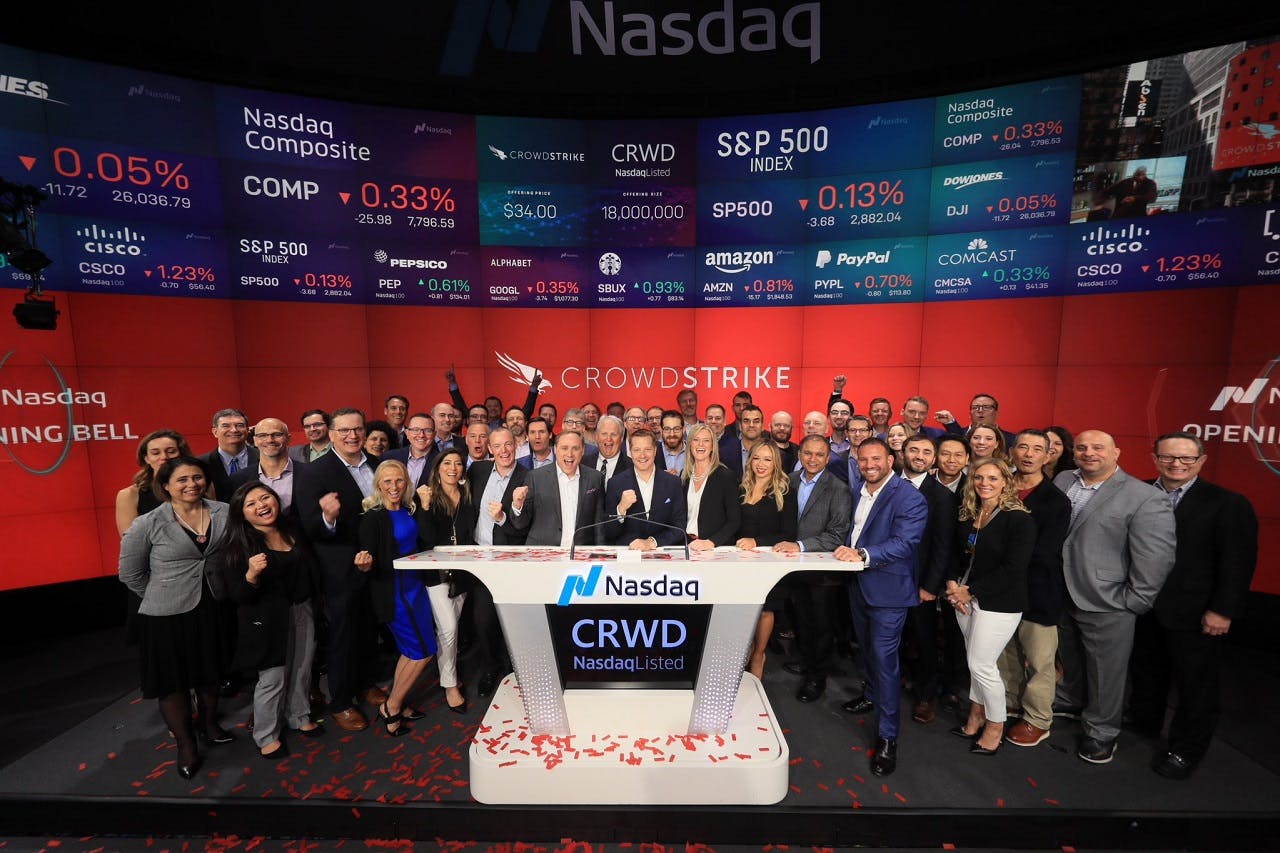
CrowdStrike IPO: Price at 2x Addressable Market

Posted on June 21, 2019June 30, 2026 by io-fund
CrowdStrike IPO: Price at 2x Addressable Market

Crowdstrike is another Silicon Valley startup that recently went public with triple-digits across the board including revenue growth, net retention rate, and annual revenue-run rate, which may have you wondering, how does one tell all of these Silicon Valley IPOs apart? For the Crowdstrike IPO, as with most cybersecurity companies, competitive landscape is crucial and requires bulletproof product differentiation as security is a very crowded space. This analysis will look into the product differentiation between Crowdstrike and its competitors for endpoint security to achieve an understanding of valuation and to form a prediction of how Crowdstrike will perform as a public company. Addressable market will also be taken into consideration as endpoint security has demand limitations.

Overview of Endpoint Security

Understanding the basics around endpoint security is important as Crowdstrike’s strength resides in how the software uses artificial intelligence to detect breaches. Some of the company’s growth may also come from offering multiple cloud modules, which provides various product features for flexibility.

The primary category for Crowdstrike is endpoint security, which secures endpoints on a network, defined as end-user devices, such as mobile devices, laptops and desktop PCs, although endpoint security can also include servers in a data center and IoT devices.  Endpoint security protects the corporate network from remote devices by securing the endpoints on the network. Traditionally, endpoint security consists of security software centrally managed on a server or gateway and software on the client devices. The server authenticates logins from the endpoints and updates the software when needed.

Crowdstrike’s product improves this process by aggregating the data from the endpoints across their entire customer base, while using AI and behavior pattern-matching to stop breaches. According to CrowdStrike, their Falcon product correlates more than 90 billion security events globally to prevent and detect threats. Relying on AI’s detection capabilities for security breaches and fraud is becoming a trend into the foreseeable future. For instance, I recently interviewed Mastercard’s Vice Chairman on how Mastercard uses pattern-matching to detect fraud and unusual behavior on my tech podcast, and has been successful in preventing high-loss activities such as money laundering as these behavioral patterns appear erratic to AI, and become easily detectable. 

Crowdstrike had one offering until 2017 when the company launched multiple cloud modules to provide flexibility, which are all subscription-based. According to Crowdstrike, offering different subscription options has been successful with 47% of customers buying over 4 modules, per the S-1 Filing.

Crowdstrike IPO and S-1 Filing by the Numbers

Crowdstrike has grown at a blistering pace from $37 million in revenue in 2017 to $92 million in 2018 to $219 million in 2019. The numbers published for the Crowdstrike IPO show an undeniable triple-digit growth trajectory, but keep in mind, that cybersecurity is a crowded field with many players dealing in endpoint security – more on this below.

Loads of Competition:

Endpoint security is a crowded space. Not only do you have incumbents like Symantec, but you have small to mid-cap companies – both public and private. The market size for endpoint security was at $6.4 billion in 2018 and will grow to $13.2 billion by 2022, according to Statista. Meanwhile, you have more than 20 companies competing for the $7 billion slice of pie. This is the bigger concern for Crowdstrike. Investors in Crowdstrike will have to believe that crowdsourcing endpoints and scanning for breaches with AI is enough of a differentiator to pull ahead and maintain a lead.

Assuming Crowdstrike claims the entire endpoint security market, the current valuation impedes investor returns. The market cap for Crowdsrike is at $14 billion, at time of writing – or 200% of the current addressable market and over 100% of the addressable market for 2022.

This is not the addressable market in the S-1 filing, however, which is listed at $24.6 billion in 2019 and expectations to reach $29.2 billion in 2021. The addressable market that Crowdstrike claims is a bit distorted, in my opinion, as it aggregates various forms of revenue streams (which are not later broken out in the S-1 filing). For the most part, Crowdstrike is considered an endpoint security product and frequently ranks on analyst reports for this category. There is very little mention of Crowdstrike ranking in any of the other categories which are being used to stretch the addressable market, notably, threat intelligence, security and vulnerability management, IT service management software, and managed security service.

We have some indication that 47% of customers bought over 4 modules, per the S-1 Filing, but it’s unclear if these modules should fall under the endpoint security addressable market rather than under separate addressable markets as these modules cannot stand on their own. This is paramount to valuing the company (is Crowdstrike endpoint security or should it be placed under various categories) as the growth for endpoint security is too lean to have this high of a valuation.

Meanwhile, other cyber security companies such as Carbon Black, Trend Micro and Palo Alto Networks have not don’t particularly well on the public markets recently relative to other tech investments.

  • Carbon Black went public in 2018 in the $23 price range and is now trading at $15 due to a shift to cloud and other challenges required to keep up with competition. CarbonBlack is going through a “significant corporate transition,” consolidating its offerings into a cloud-based security platform, which confirms the competitive environment.
  • Trend Micro is the third-largest vendor in the Endpoint Protection Platforms (EPP) market and has a market cap of about $6.3B and has traded sideways for years between $30-$50 with a peak in September/October this year at $60 but saw a correction and resumed the $45 price.
  • Palo Alto Networks provided weaker guidance in the most recent earnings report and we’ve seen the price drop over the last month from $250 to $195. The company is also transitioning to the cloud and undergoing changes that impacted the recent earnings.

Conclusion

Crowdstrike’s IPO financials sparkle with triple-digit growth percentages across the board, as do many startups going public this year. However, the competitive landscape is fierce and the addressable market of $24 billion provided in the S-1 filing questionable. Perhaps the cloud modules expand the endpoint security addressable market beyond the $7 billion size, but not by much in the current calendar year as endpoint security platforms are more of a value-add than a sum of the aggregate security markets. In addition, cybersecurity is a lukewarm market compared to hotter tech industry verticals. The cloud-level AI aspect to detecting breaches is very interesting for future years, however, I am respectfully on the sidelines for now.

Read previous analysis on 2019 IPOs:

  • Slack: Slack IPO: Pros and Cons  
  • Lyft Lyft: Risky Valuation and No Intellectual Property
  • Uber Uber IPO: Record-Breaking For All the Wrong Reasons
Posted in Cloud Software, Cybersecurity, Financial MarketsLeave a Comment on CrowdStrike IPO: Price at 2x Addressable Market

Will Facebook Cryptocurrency Have A Long-Term Impact?

Posted on June 18, 2019June 30, 2026 by io-fund
Will Facebook Cryptocurrency Have A Long-Term Impact?

Facebook has been clobbered by privacy issues for nearly 16 months now. A pivot into cryptocurrency could help save the social media giants market cap while making good use of the platform’s 2.3 billion users. The main issue for investors is the short-term risks with privacy and data may not outweigh the long-term opportunities with crypto this year.

Background on Facebook’s Cryptocurrency:

News has been circulating for some time about Facebook’s cryptocurrency venture with news officially breaking on Friday that Facebook has signed a consortium of firms known as the Libra Association to govern Facebook’s cryptocurrency. The list of names joining is impressive, as reported by the Wall Street Journal to include Paypal, Stripe, Visa and Mastercard. Rumor has it that more names will be revealed today, including venture firms Andreessen Horowitz, Union Square Ventures, cryptocurrency exchange Coinbase, and a few non-profits such as MercyCorp.

Here is the full list set to be announced on June 18th:

Facebook’s-Cryptocurrency-Background

source: The Block

According to an introductory blog post that will be published this week, Libra will be built on the Libra Blockchain, which is a “secure, stable, and reliable blockchain” and backed by Libra Reserve, “a reserve of real assets” that will provide the cryptocurrency with “stability, low inflation, global acceptance and fungibility.”

The coin will be traded on Messenger and Whatsapp, which helps solve the mystery of how Facebook plans to monetize the app that was acquired for $19 billion many years ago. To compete with payment applications, the cryptocurrency transfers will have zero fees and Facebook is currently working with merchants to accept the token. According to The Information, Facebook has plans to roll-out ATMs to exchange traditional assets for cryptocurrency.

To avoid Big Tech anti-trust issues, which is becoming a buzz-phrase this year, Facebook created the independent foundation to oversee the cryptocurrency. Each company paid $10 million to operate a node that validates the transactions, which will help decentralize the global currency.

Facebook Cryptocurrency: More Questions Than Answers

Facebook and Google frequently attempt to pivot from advertising with more failure than success. Google calls these “Other Bets” with “bet” being an appropriate word as user adoption for massive tech companies is always challenging to predict. Psychologically, these companies do not hold as much power as investors may think as acquisitions have always been the better path rather than launching products (Facebook: Instagram and Whatsapp vs. dating, for instance, or Android and YouTube for Google vs. Google Glass, for instance). 

While it may seem the names of the Libra Association are partners, they are more likely to be paying $10 million to remain diversified and to have a stake if Facebook pulls off crypto. As in most things tech related, it will ultimately be up to the user adoption rate of the technology.

Despite the bump in price the stock has seen this past week, there will likely be a lull mid-year for the stock as privacy wears on and crypto is too nascent to have a serious impact on the financials.

Here are some Long-Term Risks to Facebook’s Cryptocurrency:

  1. Bank accounts are not tied to Messenger or Whatsapp, therefore there will be friction in the transfers and setting up crypto wallets.
  2. Messaging apps like Venmo transfer money without fees already and is linked to bank accounts. In other words, payment applications may be a better fit for crypto transfers.
  3. Many thought leaders in tech and those inclined to support disruption are adamantly against the Facebook platform and began the #deleteFacebook campaign. This group uses Signal for messages. Are power Facebook users and Whatsapp users disruptive enough to drive crypto adoption?
  4. Amazon already accepts payments while Apple is moving into financial services. Facebook’s direct leap into crypto could have psychological barriers for users who have not used Facebook for a payment of any kind. Notably, Jack Dorsey of Square is also hiring a crypto team.
  5. Cryptocurrency is heavily regulated by foreign governments, and in some cases is illegal. With Facebook showing signs of saturation domestically in the United States, the company will have to rely on foreign governments legalizing the coin and allowing Facebook to be a crypto player in their country. I see this as a major headwind as currency brings up more regulatory issues than what tech has dealt with previously.
  6. Facebook is known for being used for election tampering and there is bipartisan support to regulate the social network. Globally, Facebook has been used by terrorist groups. Therefore, the platform could be especially prone to fraud and laundering compared to Amazon, Apple or a pure-play crypto option.
  7. Facebook would need to be regulated closely like a financial institution which would change how the company collects and uses data. Gramm-Leach-Bliley Act is a good example of a regulation that tightens the use of data for companies that are involved in financial transactions. 

This month, I will be attending the Bitcoin 2019 Conference in San Francisco. Follow me for updates.


Posted in Consumer Tech, Crypto Investment, Social MediaLeave a Comment on Will Facebook Cryptocurrency Have A Long-Term Impact?

Uber Stock Had Disappointing Q1 Earnings: So Why Did the Price Go Up?

Posted on June 13, 2019June 30, 2026 by io-fund
Uber Stock Had Disappointing Q1 Earnings: So Why Did the Price Go Up?

Uber’s CEO, Dara Khosrowshahi, is blaming timing and the trade war for the stock’s poor performance in its public market debut rather than focusing on the company’s unprofitability. When Uber filed to go public, the S-1 filing showed a massive operating loss of $3 billion per year. The most recent earnings report on May 30th showed the losses are getting worse at $1 billion per quarter for the “deeply unprofitable” company. Revenue is slowing down with growth of 20 percent to $3.1 billion in the most recent quarter compared to 25 percent revenue in the year-prior quarter. This was Uber’s slowest growth since it began disclosing results in 2017.

Meanwhile, Uber stock has received a unanimous buy rating from financial analysts and many positive press headlines. This analysis will look closer as to why the current stock price does not reflect the clear evidence of diminished value as of the Q1 earnings report.

Uber Stock: Prospectus and S-1 Filing

If you’ve read my previous analysis on Uber’s IPO and Lyft’s IPO, then you can skip this section on the prospectus and S-1 filing. Notably, I provided accurate predictions on both of these public offerings before the market knew how the companies would perform – and I was very clear on the risks around these two stocks prior to Lyft dropping 20% from its IPO price and Uber stock becoming the worst IPO performance in history.

My newsletter subscribers get this information first. Sign up My newsletter subscribers get this information first. Sign up here.

In years prior, Uber’s prospectus points towards “an accumulated deficit of $7.8 billion” in the years ending December 31, 2017 and 2018. In 2017, Uber posted $4 billion in operating loss and negative $2.6 billion in adjusted EBITDA with losses of about $3 billion in 2018. This upcoming year of 2019, Uber is on track to reverse backwards on operating losses to the $4 billion mark with no improvement in profitability despite demanding a large cap valuation.

Notably, for anyone glancing over the prospectus, Uber sold some operations in Russia and Asia, which provided one-time income, and caused the company to post $1 billion in net income. This is why net income should be ignored when looking at the financials as it does not reflect the operating income or adjusted EBITDA.

Uber’s Core Platform Contribution Margin also worsened, dropping from negative 3% in Q4 2018 to negative 4.5% in Q1 2019 (most recent quarter not shown on the graph below).

Uber states that the reason the Core Platform Contribution Margin goes through periods of decline is due to competition in ridesharing. As my previous analysis pointed out, Uber has to subsidize rides in order to drive demand. This causes artificial supply and is the primary risk for investors.

Uber Eats is mentioned often in earnings reports and in the press. To be clear, Uber Eats only contributed $165 million in adjusted net revenue in Q4 2018 compared to ride sharing at $2.3 billion in adjusted net revenue; which again, the ridesharing is what places the profitability in question.

Evidence That Uber Stock Price is Too High

The primary risk of the ride-sharing business cannot be offset by new ventures, although the company has attempted to offset these losses by lumping users from Uber Eats and Uber Freight into a “platform.” These native apps are not a platform; this is a loophole to hide the numbers on ride-sharing as Uber Eats likely has a healthy user base, totaling $7 billion in sales annually.

Uber and Lyft subsidize rides which is why revenue grows and losses accelerate. The more business these companies do, the more money they lose. We do not know the true cost of ride-sharing as customers are not paying fair market value, and instead venture capital dollars are providing a cheaper ride than what supply and demand dictates. This is essential to understanding the metrics pictured below.

Mobile applications typically break down a few key metrics for investors to analyze. Uber does not offer monthly active users or daily active users. The company focuses on gross bookings, which is at a staggering $50 billion gross bookings annually, although this does not address why there are also staggering losses.

Data can easily be presented in favorable terms, and therefore, more than one source is recommended when drawing conclusions. In February, Adam Blacker of Apptopia, a provider of app intelligence, wrote a blog on various modes of transportation and estimated “decreases in active usage for Uber and Lyft, while seeing increases in public transportation.” The article goes on to state “From January 2018 to January 2019, Uber and Lyft lost a combined 1.2 million average DAUs in the United States.”

The majority of the DAU loss would have come from Uber due to the relative size of the company compared to Lyft, therefore, we can generously assume Uber lost 600,000 DAU, or about half the amount Apptopia reported. According to other sources, Uber completes about 14 million trips per day, so losing 600,000 DAUs is substantial as it represents a minimum loss of about 5% (this percentage of DAU likely higher as not all 14 million trips come from DAUs).

Former Uber growth marketer, Andrew Chen, has pointed out that DAU and MAU for Uber is not a meaningful number as infrequent airport rides are a strong driver of revenue growth, for instance, and these users are not reflected in DAU or MAU.  However, when looking at past DAU compared to current DAU, this is a very meaningful number as it shows us relative churn and retention.

Uber Stock Lock-up Expires in November – Mark Your Calendar

If the S-1 numbers show massive losses of $3 billion and the Q1 earnings reports even worse losses of $1 billion per quarter, then why is Uber stock trading higher? My theory is that just like bitcoin, Uber has whales keeping the price steady until the lockup period expires. Before either ride-sharing company went public, I emphasized both IPOs would be liquidity events and to be especially cautious of the press, as PR is a cheap expense to protect the $60 billion that has been sunk into this startup. 

When Uber’s lock-up expires in November, the true valuation of Uber will surface in the months that follow. It can take up to two years for a public offering to settle after the lock-up period. While I do not expect an immediate dump on day one of the lock-up expiring in November, I believe there will be a noticeable unwinding in the months that follow. As more shares become available, the stock price will undergo dilution. If you think I’m wrong about the overall fundamentals, and you want to invest in Uber and Lyft, I would urge you to wait beyond the lock-up.

Check out my analysis on Zoom published prior to the IPO, where I called it the Best Silicon Valley IPO of the Year.

Posted in Consumer Tech, Financial Markets, TravelLeave a Comment on Uber Stock Had Disappointing Q1 Earnings: So Why Did the Price Go Up?

Slack IPO: Pros and Cons

Posted on June 6, 2019June 30, 2026 by io-fund
Slack IPO: Pros and Cons

June 20th is the official date of the Slack IPO, although the technical term is not an IPO but rather a DPO for Direct Public Offering. Of the cloud software companies to go public over the last few years, Slack may be Silicon Valley’s pet favorite. You can think of Slack as a cloud-based messaging and delivery hub for teams as email is ineffective for frequent communication and projects. The product is simply amazing in terms of productivity and team work flow. From a customer perspective, the cost of the paid product is offset by the time employees save by eliminating collaboration friction such as long email threads and lost files. With that said, there will be plenty of product bias on this stock from Slack power users.

Prior to the Slack IPO (or DPO to be exact), I had cautioned that cloud software is pricey right now and is breaking records from the dot-com era on price-to-sales ratios. Cloud software has carried the Nasdaq rally from December lows with some cloud software stocks seeing 100% returns compared to 13% on average from mega-cap FANG stocks over the last six months.

IPOs in the cloud software category have been especially rewarding over the last two years with PagerDuty, Okta, Twilio, Zoom and a few others trading at triple percentages from their IPO price. By simply breathing the same air as the cloud software vertical, Slack is likely to see a healthy bump when the company officially begins to trade. Notably, Class B shares are trading privately between $21 and $31.50 over the past four months with a volume weighted average of $26.38, which represents a 142% increase in value from the last private valuation of $7 billion in August of 2018.

Keep in mind, we saw the fragile ground cloud software companies are on with Zuora, which reported disappointing earnings resulting in an overnight loss of 30% in value with stock price dropping from $20 to $14 on May 31st.

Setting aside my affection for Slack (I’m logged in on two separate accounts as I write this), there are a couple of issues that require more visibility. One paramount issue is that direct listings are risky as there is no lock-up period and this didn’t go well for Spotify. The financials also reveal paid users are decreasing even though paid accounts over $100,000 are increasing. Ideally, these two metrics would both be in an uptrend. Net dollar retention rate is strong with Slack, although it has the benefit of being a fairly young company with the product having launched in 2014, and this puts the retention rate in Slack’s favor compared to prior IPOs in the same category.

You can read my analysis on Spotify here – which also had a direct listing.

1. Slack IPO Pro: The Product is Awesome

First and foremost, Slack is an exceptional product in a high-growth category and has a loyal user base. Slack currently holds the title of fastest-growing SaaS startup in history. Enough said.

2. Slack IPO Con: Direct Listing

Slack is not looking to raise money, and has chosen a direct listing as opposed to a traditional initial public offering. This means insiders will initially sell their stock and there will be no lock-up period. Eliminating the lock-up period creates even more risk than usual compared to traditional IPOs that have six-month lock-up periods.

There is quite a bit of information about Slack’s direct listing available, as well as Spotify’s direct listing, and therefore, I will not go into an exhaustive analysis of the pros and cons (there are primarily cons for public market investors). You can read my analysis on Spotify stock here when I said the stock was too high at $185 and is now priced at $127.

The issue with a direct listing for Slack is that the company should be raising money with the level of competition the company is currently facing from Microsoft globally (Microsoft is technically in the lead, according to Gartner and a few other sources). In addition, Slack has partnered with other collaborative cloud software products, such as Atlassian and Oracle, but both of these companies are much larger than Slack and are able to copy what Slack offers.

Slack has 10 million customers which is not much considering Microsoft is already in the lead and some startups may nip on their heels such as Asana. In addition, we see in the financials that Slack’s cost of user acquisition with around 50-60% of revenue spent on sales and marketing over the last two years. If this number is not improving, then Slack should be raising money to expand its reach.

3. Slack IPO Con: Net Losses Not Improving

Slack’s prospectus reports “good enough” financials that will satisfy most growth investors. Revenue grew from about $105 million in 2017 to $220 million in 2018 to $400 million in 2019 representing growth of 110% and 82% respectively. International represents one-third of the revenue. The net losses were relatively flat, ranging between $138 million to $146 million for all three years, although Slack’s prospectus states the “net losses have been decreasing as a percentage of revenue over time as revenue growth has outpaced the growth in operating expenses.” This is true, but the decrease in operating expenses is due to cutting back on R&D as a percentage of revenue rather than sales and marketing. Relative to revenue growth, we see that the cost of acquisition remained the same with sales and marketing at about 64% of revenue in 2018 and 58% of revenue in 2019. As pointed out above, Slack should be spending on R&D to remain competitive in the cloud collaboration space.

On June 3rd, Slack released an updated prospectus that does not show any improvement in the net losses although the revenue grew to $134M in the most recent quarter compared to $80M in the year-ago quarter. In fact, the net losses of $38M in the most recent quarter are higher than the year-ago quarter of $26M.

Notably, according to the updated Prospectus, Slack shows growth in customers over $100,000, yet shows a decline across all paid user growth from 9,000 in the year-ago quarter compared to 7,000 in the current quarter. In other words, there is a divergence as overall paid users are declining while customer accounts over $100K is growing with the current quarter growing 24% compared the year-ago quarter. More quarterly earnings will be needed to determine which direction this will ultimately go.

4. Slack IPO Pro: Net Dollar Retention Rate

Slack provided limited key metrics in the S-1 filing although the company did provide net dollar retention rate. Net dollar retention rate depicts what percent of revenue from current customers is retained from the prior year, after accounting for upgrades, downgrades and churn. The formula for net dollar retention is:

Beginning of period revenue + upgrades – downgrades + churn = y with y / beginning of period revenue

If net dollar retention is above 100%, then the growth from the existing customer base offsets the losses. If the number is below 100% then downgrades and churn exceed growth.

Slack’s Net Retention Rate at 143% is very good and outperforms most cloud software IPOs that provided this number in the past. As mentioned in the introduction of this analysis, Slack has power users and a loyal brand following, which is reflected in the retention rate.

One thing to note about the retention rate is that Slack officially launched in 2014, and has a shorter history than other companies on this list with many having launched ten years prior to IPO. Typically, the longer the time period, the lower the net retention rate due to customer stabilization.

Conclusion: Slack will likely make a good trade due to brand appeal, traction and the current strength of cloud software in the market. The company knows how to make the financials look good by reducing R&D and maintaining similar levels of user acquisition as the year prior. For a long-term trade, I’d wait to see if the net losses improve and if Slack can prove that a direct listing was the best thing for the longevity of the company rather than in the best interest of the insiders. For Spotify, a direct listing did not fare well for early investors (including George Soros). With that said, Slack has stronger fundamentals than Spotify and is likely to be a very hot IPO. Follow me for updates, as the total addressable market for cloud collaboration is at $24 billion and with one or two strong quarterly earnings reports, Slack could transition from a solid short-term trade into a solid long-term holding.

Posted in Cloud Software, Financial Markets, ProductivityLeave a Comment on Slack IPO: Pros and Cons

Recent Posts

  • The IPO Glut of 2020: Why Valuations Have Gone Too Far
  • Zoom Discusses Two Important Catalysts In Q1 Earnings
  • Three Risk Management Tools the I/O Fund Offers
  • Micron Is Up 900%. Here’s Why the AI Memory Trade May Still Have Room to Run
  • Credo: Reliability Leader Aggressively Moves into Optics

Recent Comments

No comments to show.

Archives

  • June 2026
  • May 2026
  • April 2026
  • March 2026
  • February 2026
  • January 2026
  • December 2025
  • November 2025
  • October 2025
  • September 2025
  • August 2025
  • July 2025
  • June 2025
  • May 2025
  • April 2025
  • March 2025
  • February 2025
  • January 2025
  • December 2024
  • November 2024
  • October 2024
  • September 2024
  • August 2024
  • July 2024
  • June 2024
  • May 2024
  • April 2024
  • March 2024
  • February 2024
  • January 2024
  • December 2023
  • November 2023
  • October 2023
  • September 2023
  • August 2023
  • July 2023
  • June 2023
  • May 2023
  • April 2023
  • March 2023
  • February 2023
  • January 2023
  • December 2022
  • November 2022
  • October 2022
  • September 2022
  • August 2022
  • July 2022
  • June 2022
  • May 2022
  • April 2022
  • March 2022
  • February 2022
  • January 2022
  • December 2021
  • November 2021
  • October 2021
  • September 2021
  • August 2021
  • July 2021
  • June 2021
  • May 2021
  • April 2021
  • March 2021
  • February 2021
  • January 2021
  • December 2020
  • November 2020
  • October 2020
  • September 2020
  • August 2020
  • July 2020
  • June 2020
  • May 2020
  • April 2020
  • March 2020
  • February 2020
  • January 2020
  • December 2019
  • November 2019
  • October 2019
  • September 2019
  • August 2019
  • July 2019
  • June 2019
  • May 2019
  • April 2019
  • March 2019
  • February 2019
  • January 2019
  • December 2018
  • November 2018
  • October 2018
  • September 2018
  • August 2018
  • July 2018
  • June 2018
  • May 2018
  • April 2018
  • February 2018
  • January 2018

Categories

  • 5G
  • About
  • Accounting Tips
  • AdTech
  • Ai Platforms
  • Ai Platforms
  • Ai Platforms
  • Ai Platforms
  • Ai Platforms
  • Ai Platforms
  • Ai Platforms
  • Ai Platforms
  • Ai Platforms
  • Ai Platforms
  • Ai Platforms
  • Ai Platforms
  • Ai Platforms
  • Ai Platforms
  • Ai Platforms
  • Ai Platforms
  • AI Stocks
  • AI Stocks
  • Analysts
  • Application Monitoring
  • Application Monitoring
  • Applications
  • Applications
  • Applications
  • Applications
  • Applications
  • Applications
  • Applications
  • AR
  • Audit Reports
  • Autonomous Vehicles
  • Autonomous Vehicles
  • Autonomous Vehicles
  • Autonomous Vehicles
  • Autonomous Vehicles
  • Autonomous Vehicles
  • Autonomous Vehicles
  • Avod
  • Avod
  • Battery Charging
  • Bear Market
  • Bitcoin
  • Bitcoin
  • Bitcoin
  • Bitcoin
  • Bitcoin
  • Bitcoin
  • Bitcoin
  • Blockchain
  • Blockchain
  • Blockchain
  • Blockchain
  • Blockchain
  • Blockchain
  • Blockchain
  • Broad Market Today
  • Bull Market
  • Bull Market
  • Chainlink
  • Chainlink
  • Chainlink
  • Chainlink
  • China Stocks
  • Cloud
  • Cloud Infrastructure
  • Cloud Infrastructure
  • Cloud Infrastructure
  • Cloud Infrastructure
  • Cloud Infrastructure
  • Cloud Infrastructure
  • Cloud Infrastructure
  • Cloud Platforms
  • Cloud Platforms
  • Cloud Software
  • Cloud Software
  • Cloud Software
  • Cloud Software
  • Cloud Software
  • Cloud Software
  • Cloud Technology
  • Company
  • Company
  • Console Gaming
  • Console Gaming
  • Console Gaming
  • Consumer
  • Consumer
  • Consumer
  • Consumer
  • Consumer
  • Consumer
  • Consumer
  • Consumer
  • Consumer
  • Consumer
  • Consumer
  • Consumer
  • Consumer
  • Consumer
  • Consumer Tech
  • Corrections
  • Crypto Investment
  • Ctv
  • Ctv
  • Ctv
  • Ctv
  • Ctv
  • Ctv
  • Ctv
  • Ctv
  • Ctv
  • Ctv
  • Cybersecurity
  • Cybersecurity
  • Cybersecurity
  • Cybersecurity
  • Cybersecurity
  • Cybersecurity
  • Cybersecurity
  • Cybersecurity
  • Cybersecurity
  • Cybersecurity
  • Cybersecurity
  • Cybersecurity
  • Data
  • Data Analytics
  • Data Analytics
  • Data Analytics
  • Data Center
  • Data Center
  • Data Center
  • Data Center
  • Data Center
  • Data Center
  • Data Center
  • Data Center
  • Data Center
  • Data Center
  • Data Center
  • Data Center
  • Data Center
  • Data Center
  • Data Center
  • Data Center and Processing
  • Data Warehousing
  • Data Warehousing
  • Data Warehousing
  • Data Warehousing
  • Databases
  • Databases
  • Databases
  • Databases
  • Dating
  • Defi
  • Digital Ads
  • Digital Ads
  • Digital Ads
  • Digital Ads
  • Digital Ads
  • Digital Ads
  • Digital Ads
  • Digital Ads
  • Digital Ads
  • Digital Ads
  • Digital Ads
  • Digital Ads
  • Digital Ads
  • Digital Ads
  • E-Commerce
  • Earning Updates
  • Earning Updates
  • Earning Updates
  • Earning Updates
  • Earning Updates
  • Earnings Report
  • Earnings Report
  • Earnings Report
  • Earnings Report
  • Earnings Report
  • Earnings Report
  • Earnings Report
  • Earnings Report
  • ECommerce
  • Electric Vehicles
  • Electric Vehicles
  • Electric Vehicles
  • Electric Vehicles
  • Electric Vehicles
  • Electric Vehicles
  • Electric Vehicles
  • Energy Stocks
  • Enterprise
  • Enterprise
  • Enterprise
  • Enterprise
  • Enterprise
  • Enterprise
  • Enterprise
  • Enterprise
  • Enterprise
  • Ethereum
  • Events1
  • Events1
  • Exchange
  • Faq
  • Finance
  • Financial Analysis
  • Financial Analysis
  • Financial Analysis
  • Financial Analysis
  • Financial Analysis
  • Financial Analysis
  • Financial Analysis
  • Financial Analysis
  • Financial Analysis
  • Financial Analysis
  • Financial Analysis
  • Financial Analysis
  • Financial Markets
  • FinTech
  • Fundamental Analysis
  • Gambling
  • Gaming
  • Genomics
  • Glossary
  • Green Energy
  • Growth Stocks
  • Growth Stocks
  • Growth Stocks
  • Headsets
  • Headsets
  • Health Tech
  • Hydrogen
  • Identity
  • Identity
  • Identity
  • Inflation
  • Inflation
  • Inflation
  • Internet of Things
  • Interviews
  • Interviews
  • Interviews
  • Interviews
  • Investing
  • Investing
  • Ltbh
  • Ltbh
  • Ltbh
  • Ltbh
  • Ltbh
  • Macro Trends
  • Macro Trends
  • Market Trends
  • Market Trends
  • Market Trends
  • Market Trends
  • Market Trends
  • Market Trends
  • Market Trends
  • Market Updates
  • Market Updates
  • Market Updates
  • Market Updates
  • Market Updates
  • Market Updates
  • Market Updates
  • Market Updates
  • Market Updates
  • Market Updates
  • Media
  • Membership
  • Mining
  • Mobile
  • Mobile
  • Mobile
  • Mobile
  • Mobile Gaming
  • Mobile Gaming
  • Mobile Gaming
  • Multimedia
  • Music Streaming
  • NVDA | NVIDIA Corporation
  • Performance Updates
  • Pin Content
  • Podcasts
  • Podcasts
  • Podcasts
  • Portfolio
  • Premium Research
  • Press Releases
  • Press Releases
  • Productivity
  • Productivity
  • Productivity
  • Productivity
  • Productivity
  • Productivity
  • Productivity
  • Reports and Whitepapers
  • Research Services Preview
  • Resources
  • Resources
  • Semiconductor Stocks
  • Semiconductors
  • Semiconductors
  • Semiconductors
  • Semiconductors
  • Semiconductors
  • Semiconductors
  • Semiconductors
  • Semiconductors
  • Semiconductors
  • Semiconductors
  • Semiconductors
  • Semiconductors
  • Semiconductors
  • Social Media
  • Social Media
  • Social Media
  • Social Media
  • Social Media
  • Social Media
  • Social Media
  • Software
  • Software
  • Software
  • Software
  • Software
  • Software
  • Software
  • Software
  • Software
  • Software
  • Software
  • Software
  • Software
  • Software
  • Software
  • Solar
  • Solar
  • Stock Analysis PDFs
  • Stock Updates
  • Stock Updates (Blogs)
  • Supplychain
  • Supplychain
  • Supplychain
  • Supplychain
  • Supplychain
  • Supplychain
  • Svod
  • Svod
  • Svod
  • Svod
  • Svod
  • Svod
  • Tech Podcast
  • Tech Stock News
  • Tech Stock News
  • Tech Stock News
  • Tech Stock News
  • Tech Stock News
  • Tech Stocks
  • Tech Stocks
  • Tech Stocks
  • Tech Stocks
  • Tech Stocks
  • Tech Stocks
  • Tech Stocks
  • Tech Stocks
  • Tech Stocks
  • Tech Stocks
  • Tech Stocks
  • Tech Stocks
  • Tech Stocks
  • Tech Stocks
  • Technical Analysis
  • Telehealth
  • Telehealth
  • Telehealth
  • Telehealth
  • Testing Equipment
  • Testing Equipment
  • Top Tech Stock News
  • Travel
  • Trends Report
  • Tutorials
  • Uncategorized
  • Updates
  • Updates
  • Updates
  • Video
  • Video
  • Video
  • Video
  • Video Footage
  • VR
  • Webinar Alerts
  • Webinar Alerts
  • Webinars
Proudly powered by WordPress | Theme: iofund by iofund.co.uk.