Skip to content
Logo-main-white.860316a8

I/O Fund

  • Home
  • Free Stock Analysis
  • AI Stocks
  • BEST OF 2025
  • Analysts
  • Nvidia Hub
  • About
    • Case Studies
    • About Us
    • Premium Services
    • Pricing
    • Notable Wins
    • I/O Fund Reviews
    • Media
  • Contact Us

Month: July 2018

I Predicted Facebook Would Miss Q2 Earnings: Here’s What Investors Need To Know For Q3

Posted on July 27, 2018June 30, 2026 by io-fund
I Predicted Facebook Would Miss Q2 Earnings: Here’s What Investors Need To Know For Q3

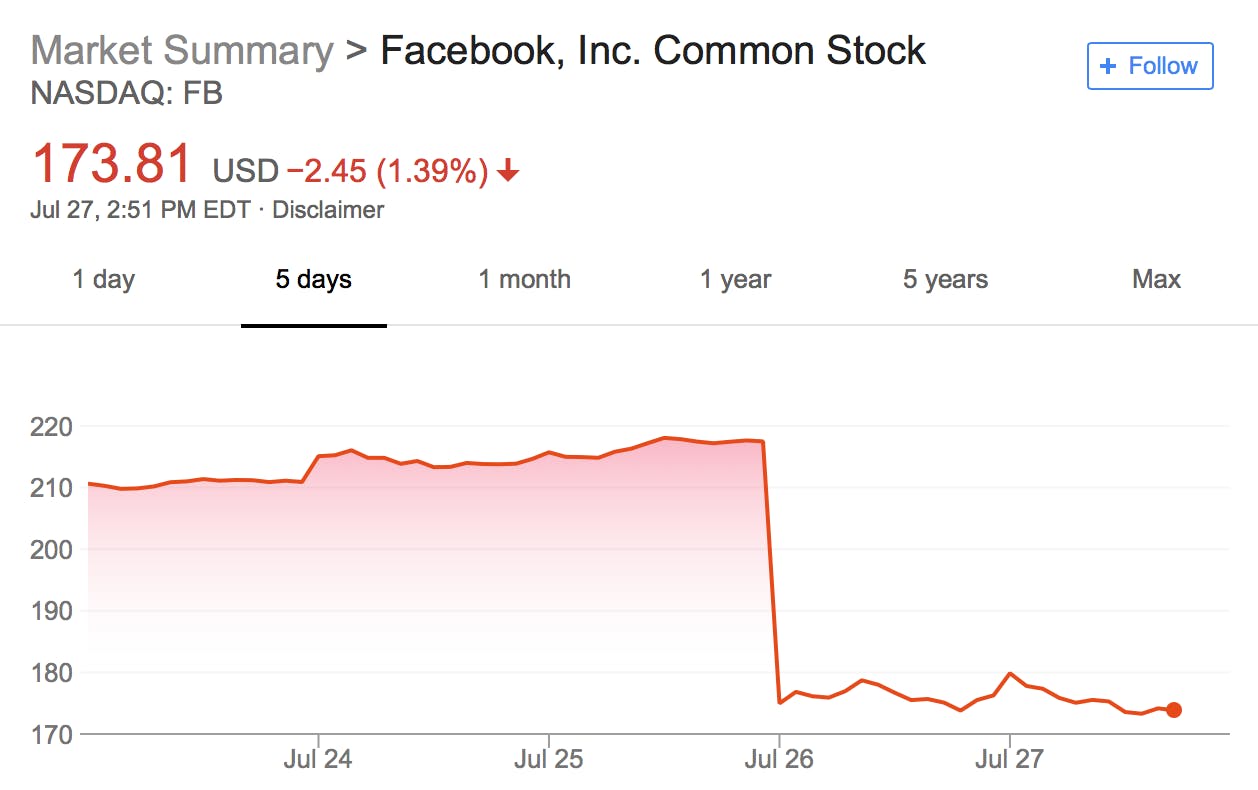
This is a crucial time to point out to investors that my predictions were correct. Last April, I published an in-depth analysis on Seeking Alpha along with predictions for Facebook (FB) stock. The analysis urged readers to ignore post-Cambridge Analytica hype as Facebook’s quarterly earnings would miss as a result of GDPR. Specifically, I stated the culprit would be revenue and data sources outside of the Facebook “family of apps.” However, with this article, I’d like to explore this point even further and explain with granularity why the issues have only begun and what Facebook isn’t telling you (source for Facebook earnings report: NASDAQ).

Tech companies are complex, especially as it relates to data science, and it’s unlikely a financial analyst or hedge fund whose expertise is in finance understands what exactly Facebook does with data and how this impacts average revenue per user (ARPU) or future earnings.

There’s more to Facebook than a “family of apps” which is causing confusion in the markets.

Have you heard of Audience Network? As an investor, it’s essential that you know what this is. Facebook makes money off third-party websites and applications through a platform called Audience Network. This is an advertising network, which powers advertisements to 40% of the top 500 applications. This is indicative of Audience Network’s overall presence in the mobile app market of approximately 40%. While it is well known in the mobile industry as the most dominant ad network in the mobile market, don’t be surprised if you’ve never heard of it.

Facebook Inc. doesn’t like to talk about Audience Network. You’ll be hard pressed to find any mention of it in their SEC filings or on earnings calls. Even among advertisers, who pay billions of dollars into Audience Network, the ad platform is notorious for its lack of transparency and is known to be a black box.

And, it’s a very profitable black box. The last time Facebook reported Audience Network numbers, it served advertisements to over 1 billion people per month at the end of 2016. That’s more than Instagram today, and this incredible base should be more like 2 billion in 2018 assuming it followed the same trajectory of adding 1 billion users every 2 years (Audience Network was launched in 2014).

With Audience Network, advertisers see 16% more reach on average globally than on Facebook and Instagram alone, and a 12% increase in website conversions with Facebook and Audience Network combined.

What could possibly have more reach than Facebook or Instagram?possibly have more reach than Facebook or Instagram?

Whoa – higher reach than Facebook and Instagram? And higher conversions? And all of this to over 1 billion people outside of Facebook’s “family of apps”?

Why is Audience Network so widely used in the mobile industry? Because it’s augmented with proprietary data from Facebook’s social apps. In order to power ads across hundreds and thousands (maybe even millions) of applications at a higher conversion than the world’s best advertising platforms (Facebook and Instagram) would require using data in ways that you would never want your users to find out about.

My newsletter subscribers get this information first. Sign up here.My newsletter subscribers get this information first. Sign up here.here.

I mean, what Facebook user would want their private information brokered to hundreds of applications to power advertisements in websites and applications that they didn’t authorize or have relationships with? From the backlash we saw after Cambridge Analytica, I’m guessing not many would like this.

Let me stop because this is where a lot of confusion begins. I’ll give you an example as to how this works. Let’s say you buy items from the retailer Target (NYSE: TGT) every week. Maybe you buy toilet paper, dish soap and laundry soap. How would you feel if Target used that data in a partnership with Hulu or NBC or CBS to show you advertisements later on your television? That evening, Hulu or NBC or CBS would start to show you toilet paper ads and laundry soap ads based specifically off your private purchases and information shared at the cash register.

Target would make a lot of money if they brokered your private cash register data – but they don’t. Apple (NASDAQ:AAPL) has been very upfront about the billions of dollars they have opted to not make by keeping data private. This is what Tim Cook is referring to. Investors should know that it’s very, very rare for a company to risk the customer relationship in this way.

Meanwhile, Facebook is doing this across hundreds and thousands of applications using private data shared in what should be a privileged customer relationship. Not only that, but Facebook takes your private data from application partners (in this fake example, that would be Hulu, NBC or CBS) – so now they know what you were watching that night – but you never gave consent for any of this.

Data collected from the Audience Network software development kit (SDK) installed in iOS and Android applications continues to enrich Facebook proprietary data sets and drive up cost per impressions on advertising and average revenue per user. This business model of being a “data-broker-and-ad-network-without-consent-and-for-profit-beyond-social-media” is where some of the fallout from Cambridge Analytica began to occur. But this is miniscule compared to the data exchange (dare I say, data leakage?) through Audience Network.

Ethics aside, what investors need to know about Audience Network is that it violates some important regulations put into place by the GDPR as data is being used by both partners in ways that are explicitly without consent (Facebook users have NO IDEA how their private data is being used beyond the “family of apps.” On that note, investors don’t either because all Facebook ever talks about on earnings calls is the “family of apps” – never referring to Audience Network by its name).

The applications who share data with Facebook are at risk and Facebook who brokers proprietary data with partner applications are at risk if they continue this practice. In 2020, these regulations will also go into effect in the State of California. Facebook will have to slowly wean Audience Network out of existence or face major fines. As this weaning takes place, the revenue earned from 40% of the top 500 apps (plus more) will slowly dwindle.

How Much Are We Talkin’?

Quite a few people have asked me to estimate the value of Audience Network. I want to be clear that Facebook has provided very little information here. While the exact number of how much Audience Network is impossible to predict with pinpoint accuracy (insert: lol) the important thing to understand here is that the average revenue per user will drop on Facebook social because they will no longer store data and use that data from partner applications.

One reason there is limited information is that Facebook runs Audience Network ads through their Newsfeed feature, and therefore, uses this loop hole to count the revenue as Facebook revenue. This is very misleading to not provide transparency. Compare this to Alphabet which clearly discloses third-party websites and application revenue as a separate line item in their SEC Filing of roughly $17 billion per year.

Here’s one of the only statements issued by Facebook on Audience Network’s reach:

“We talk about reaching a billion people every month, and these are real people,” said Brian Boland, VP of publisher solutions at Facebook. “We’re not talking about cookies or browsers or devices or ID, where one person can look like six things. We’re talking about legitimately 1 billion people that can be reached on the audience network[2][2].”-Q4 2016

This means Audience Network is larger than Instagram today (Instagram has 800 million users). This also means Audience Network was 2 times larger than Whatsapp at the time of acquisition when Whatsapp had 484 million users – enough to claim the largest acquisition price tag in history of $19 billion.

This is how I estimated the net value at $5 billion minimum up to excess of $10 billion net to Facebook (after 70% revenue share with publishers).

  • Audience Network serves approximately 40% of the mobile apps on the market today which means Facebook likely monetizes every person with a smartphone (i.e. over 3 billion people rather than the 2.2 billion on Facebook social apps). Plus, they monetize this 3 billion many times over across unlimited inventory.
  • Google monetizes 2 million websites and 650,000 apps for $17 billion in third-party network revenue. Facebook Audience Network has a larger reach on mobile than Google’s ad network and the SDK could be in up to 2 million iOS and Android applications (figuring 40% of applications).
  • Facebook warned of ad load issues due to limited real estate in social network apps in earnings calls in 2016, however the exact opposite happened. Revenue skyrocketed and Facebook doubled the number of advertisers from 3 million to 6 million. This growth would have been supported by Audience Network as the ad network would eliminate ad load issues. Facebook added $23 billion in annual revenue since warnings of ad load. A large portion of this would have been supported by Audience Network alleviating ad load.

Most importantly, Facebook does not have to net anything off Audience Network in order to increase average revenue per user on its own social media apps. Growth in the United States and Canada flatlined a long time ago, meanwhile the ARPU (average revenue per user) skyrocketed. Data extracted from Audience Network would have substantially contributed to this ARPU growth. This is essential for investors to understand.This is essential for investors to understand.


Therefore, any ARPU made after the warning of ad load issues in 2016 and 2017 are questionable as the enriched data and targeting capabilities from Audience Network likely contributed to this ARPU growth.

Images from Shift Communications can be found here 

Additional Considerations for Facebook’s Q3 Earnings:

  1. User attrition and slowing user growth has been occurring for some time in the United States and Canada, yet earnings previously remained strong with ARPU climbing to $26 per user in these coveted markets. Therefore, a small user attrition of 1 million European Users from a base of 2.2 billion monthly active users is not why we are seeing the first revenue miss with Facebook executives warning of more decline to come. To believe the stock dropped because of infinitesimal decimal point user attrition is a dangerous theory propagated on earnings calls because your next thought will be whatever revenue lost from the Facebook user base could easily be made up by Instagram or one of the other “family of apps.” If you believe this storyline, then you will continue to hold onto this stock without having all of the information.
  2. The other Facebook domain properties such as Instagram, Whatsapp, and Oculus should be ignored for now. Yes, Instagram has potential but this is not what you are investing in when you buy Facebook stock. It is sheer speculation and if Instagram was a standalone company, you wouldn’t be paying these stock prices. You bought Facebook, Inc and to hype up Instagram as the central business model in 2018 is senseless.
  3. First-party data uploaded to Facebook by advertisers has weakened. The GDPR has a trickle-down effect by weakening the data advertisers upload to the Facebook newsfeed. This reduces the targeting power and the CPMs they can charge. I made this point in my Seeking Alpha article that “many brands will undergo the same regulations as to how they obtained their data.” In addition, Facebook is shutting down the self-serve tool that allows advertisers to import data from third-parties. This will also continue to erode earnings.

Conclusion:

Investors cannot expect transparency from Facebook executives. This company has better trained actors than Hollywood (sorry, but true). There are many instances in prior earnings calls where they purposely covered up revenue sources, such as Audience Network, in order to keep Wall Street confidence high leading up to these quarterly earnings (I’m working on a follow up article citing these specific omissions). They played down the impact of the GDPR and have omitted third-party mobile applications and websites revenue from SEC Filings. It is nearly impossible to evaluate the stock with what little information has been provided by Facebook, Inc.

But remember, this is a company that has misled the general public, Congress, and most importantly their users on important facts about their business model and revenue streams – especially that they use the data from Facebook across a huge network of applications and websites without authorization from their users. Quite simply, investors have been caught in the cross fire of Facebook’s attempts to cover up privacy issues with their users.

While the drop yesterday was “startling” for investors caught unaware, my readers on Seeking Alpha and beth.technology were fully informed with insider knowledge as to the underlying forces which are at play with Facebook, Inc and mobile advertising. You can subscribe to my newsletter here.

Any information or analysis contained herein and published or referenced elsewhere should be appropriately credited to Beth Kindig of beth.technologybeth.technology

This article appeared on Seeking Alpha.

Posted in Social Media, Tech Stocks, Tech StocksLeave a Comment on I Predicted Facebook Would Miss Q2 Earnings: Here’s What Investors Need To Know For Q3

The Good, the Bad and the Ugly About Google’s $5 Billion Antitrust Fine

Posted on July 20, 2018June 30, 2026 by io-fund
The Good, the Bad and the Ugly About Google’s $5 Billion Antitrust Fine

To summarize, the $5 Billion Antitrust Fine on Google is due to the following issues:

  • Google has required manufacturers to pre-install the Google Search app and browser app (Chrome), as a condition for licensing Google’s app store (the Play Store);
  • Google made payments to certain large manufacturers and mobile network operators on condition that they exclusively pre-installed the Google Search app on their devices; and
  • Google has prevented manufacturers wishing to pre-install Google apps from selling even a single smart mobile device running on alternative versions of Android that were not approved by Google (so-called “Android forks”)  source: European Commission

New gadgets and the promise of AI have helped to successfully rebrand Google’s search and advertising business, however, it’s important to remember that Alphabet is still an old-fashioned advertising company with nearly 90% of Q1 2018 revenue, or $26.6 billion, coming from advertising and only 15%, or $4.6 billion, coming from these other ambitions.

Therefore, understanding the nuances of advertising especially as it relates to data collection is going to be key for Alphabet investors. Unfortunately, top-rated analysts struggle to understand Alphabet’s business model and CEO Sundar Pichai did not offer any answers. In the Q1 2018 earnings call, Mark Mahaney of RBC Capital Markets asked if the “GDPR or other regulation is likely to impact materially the targeting capabilities that advertisers have on Google?” The CEO replied:

“You know, above everything else as we are working through GDPR we are making sure we are focused on getting that user experience right for our users and our partners. But to clarify your question further, you know, first of all, it’s important to understand that most of our ad business is Search, where we rely on very limited information, essentially what is in the keywords to show a relevant ad or product.”

This answer was over-simplified at best. Yes, Search is a large driver of revenue but what are the other portions of the advertising machine which will be affected? And how much revenue do the higher risk methods currently contribute to earnings?

Data & the $5 Billion Antitrust Fine: The Good, The Bad and The Ugly


The Good: Search Doesn’t Need Data; Gmail, Chrome and Google Maps Have User Consent

Quite a few of Google’s data-driven applications and services such as Gmail, Chrome and Google Maps can easily obtain user permission in exchange for the services these applications and browser provides. In addition, Google AdWords, which is based off search intent, will provide a safe haven for Google’s advertising revenue as this does not require the company to harvest private data. However, even search is not immune as it’s been enriched with data such as location to enhance search results.

The Bad: Android OS Collects Surveillance-Level Data without User Consent through pre-installed applications

While pre-installed applications help cement Google’s search dominance, there is much more going on behind the motivation for risking antitrust violations. It’s hard to know where to start when looking at Google’s sprawl of potential data regulation and antitrust issues. We could start with the fact they have a deal with data brokers that gives them access to 70% of our purchases made with credit cards and debit cards (without consent). The company is literally in your bank account. This is for the purpose of letting advertisers know if you completed a sale following an ad seen on one of Google’s properties. Another place to start is implicit data for advertising purposes, which uses your search history to target ads to you outside of Google search. This is why when you privately email your friend about a trip to Rome, you mysteriously get advertisements for flights to Rome on other websites. In one study of 850,000 internet users last year, mainly in the U.S. and Europe, Google tracked 64% of all pages loaded by mobile and web browsers.

While online tracking and conversion tracking are both invasive, the Android operating system is a surveillance-level behemoth with over 2 billion devices in circulation while littered with millions of applications leaking data to Alphabet’s advantage. Exponentially speaking, Android is impossible to contain. One study by the French research organization Exodus Privacy and Yale University’s Privacy Lab found that more than three in four Android apps contain a third-party tracker which extracts personal information, including location and in-app behavior. The apps the trackers were discovered includes Uber, Twitter, Spotify, and Tinder. The Privacy Lab found the in-app trackers revealed “an extensive data mining market buried within the mobile app ecosystem” enabling physical surveillance including through the use of WiFi, Bluetooth and ultrasonic sound inaudible to the human ear to track geolocations in real time.

Takeaway (from my article dated May 31st): Android will be the most likely source for fines by the European Union as it will be challenging to partition device IDs by geographies. Some have conjectured Alphabet will risk fines before voluntarily reducing their cyber intelligence. The fines are 1.6% of annual global revenue, or $4.4 billion for Google.

Update: Antitrust is a much better approach to breaking up the monopoly Google has on data collection.

My newsletter subscribers get this information first. Sign up here.My newsletter subscribers get this information first. Sign up here.here.

The Ugly: Walking the Razor’s Edge Between Data Violations and Non-Personalized Ads

Data collected from the Android OS augments and enriches data science modeling for Alphabet to monetize the data elsewhere. That “elsewhere” is Adsense, AdX and AdMob. Google’s AdSense and AdX Networks enable non-Google websites to incorporate Google display advertising, and this is what current publishers are in an uproar about.

To summarize, Alphabet is attempting to become a co-controller for data in some instances and a processor in other instances. It’s unknown how the European Union will view data leaks from publishers to Alphabet.

Source: Quora

The level of involvement Google has as either a co-controller or processor is important for investors to understand as these regulations continue to play out. This may be hard to imagine today, but if data collection returns to property-owned data collection only, then the premium price advertisers pay for Google ad inventory may diminish as Google will struggle to differentiate itself from other advertising options from a campaign ROI standpoint if or when it fails to get the proper consent to collect the data and broker the ads.


Source: Statista

The worst case scenario here is that Google has to display “non-personalized” ads where consent isn’t obtained — which Google is already prepared to do: “As previously announced, we’re also launching a Non-Personalized Ads solution (DFP/AdX, AdMob, AdSense) to enable publishers to present EEA users with a choice between personalized ads and non-personalized ads (or to choose to serve only non-personalized ads to users in the EEA).”

As mentioned above, this is where the premium price can potentially recede. By being forced to serve non-personalized ads, the competitive advantage Google has will diminish in this circumstance.

Bottom Line:

While Search is intact, there are many layers to data collection and ad targeting which will lower ROI campaign performance as the data Alphabet is allowed to collect continues to wane. In this article, we’ve discussed that the Android OS is leaky and the most likely part of Alphabet’s business to be fined. As far as revenue is concerned, non-personalized ads is the potential weakness especially on network sites as $17.59 billion was earned from network sites annually in 2017.

Posted in Digital Ads, Mobile, Tech StocksLeave a Comment on The Good, the Bad and the Ugly About Google’s $5 Billion Antitrust Fine

Recent Posts

  • The IPO Glut of 2020: Why Valuations Have Gone Too Far
  • Zoom Discusses Two Important Catalysts In Q1 Earnings
  • Three Risk Management Tools the I/O Fund Offers
  • Micron Is Up 900%. Here’s Why the AI Memory Trade May Still Have Room to Run
  • Credo: Reliability Leader Aggressively Moves into Optics

Recent Comments

No comments to show.

Archives

  • June 2026
  • May 2026
  • April 2026
  • March 2026
  • February 2026
  • January 2026
  • December 2025
  • November 2025
  • October 2025
  • September 2025
  • August 2025
  • July 2025
  • June 2025
  • May 2025
  • April 2025
  • March 2025
  • February 2025
  • January 2025
  • December 2024
  • November 2024
  • October 2024
  • September 2024
  • August 2024
  • July 2024
  • June 2024
  • May 2024
  • April 2024
  • March 2024
  • February 2024
  • January 2024
  • December 2023
  • November 2023
  • October 2023
  • September 2023
  • August 2023
  • July 2023
  • June 2023
  • May 2023
  • April 2023
  • March 2023
  • February 2023
  • January 2023
  • December 2022
  • November 2022
  • October 2022
  • September 2022
  • August 2022
  • July 2022
  • June 2022
  • May 2022
  • April 2022
  • March 2022
  • February 2022
  • January 2022
  • December 2021
  • November 2021
  • October 2021
  • September 2021
  • August 2021
  • July 2021
  • June 2021
  • May 2021
  • April 2021
  • March 2021
  • February 2021
  • January 2021
  • December 2020
  • November 2020
  • October 2020
  • September 2020
  • August 2020
  • July 2020
  • June 2020
  • May 2020
  • April 2020
  • March 2020
  • February 2020
  • January 2020
  • December 2019
  • November 2019
  • October 2019
  • September 2019
  • August 2019
  • July 2019
  • June 2019
  • May 2019
  • April 2019
  • March 2019
  • February 2019
  • January 2019
  • December 2018
  • November 2018
  • October 2018
  • September 2018
  • August 2018
  • July 2018
  • June 2018
  • May 2018
  • April 2018
  • February 2018
  • January 2018

Categories

  • 5G
  • About
  • Accounting Tips
  • AdTech
  • Ai Platforms
  • Ai Platforms
  • Ai Platforms
  • Ai Platforms
  • Ai Platforms
  • Ai Platforms
  • Ai Platforms
  • Ai Platforms
  • Ai Platforms
  • Ai Platforms
  • Ai Platforms
  • Ai Platforms
  • Ai Platforms
  • Ai Platforms
  • Ai Platforms
  • Ai Platforms
  • AI Stocks
  • AI Stocks
  • Analysts
  • Application Monitoring
  • Application Monitoring
  • Applications
  • Applications
  • Applications
  • Applications
  • Applications
  • Applications
  • Applications
  • AR
  • Audit Reports
  • Autonomous Vehicles
  • Autonomous Vehicles
  • Autonomous Vehicles
  • Autonomous Vehicles
  • Autonomous Vehicles
  • Autonomous Vehicles
  • Autonomous Vehicles
  • Avod
  • Avod
  • Battery Charging
  • Bear Market
  • Bitcoin
  • Bitcoin
  • Bitcoin
  • Bitcoin
  • Bitcoin
  • Bitcoin
  • Bitcoin
  • Blockchain
  • Blockchain
  • Blockchain
  • Blockchain
  • Blockchain
  • Blockchain
  • Blockchain
  • Broad Market Today
  • Bull Market
  • Bull Market
  • Chainlink
  • Chainlink
  • Chainlink
  • Chainlink
  • China Stocks
  • Cloud
  • Cloud Infrastructure
  • Cloud Infrastructure
  • Cloud Infrastructure
  • Cloud Infrastructure
  • Cloud Infrastructure
  • Cloud Infrastructure
  • Cloud Infrastructure
  • Cloud Platforms
  • Cloud Platforms
  • Cloud Software
  • Cloud Software
  • Cloud Software
  • Cloud Software
  • Cloud Software
  • Cloud Software
  • Cloud Technology
  • Company
  • Company
  • Console Gaming
  • Console Gaming
  • Console Gaming
  • Consumer
  • Consumer
  • Consumer
  • Consumer
  • Consumer
  • Consumer
  • Consumer
  • Consumer
  • Consumer
  • Consumer
  • Consumer
  • Consumer
  • Consumer
  • Consumer
  • Consumer Tech
  • Corrections
  • Crypto Investment
  • Ctv
  • Ctv
  • Ctv
  • Ctv
  • Ctv
  • Ctv
  • Ctv
  • Ctv
  • Ctv
  • Ctv
  • Cybersecurity
  • Cybersecurity
  • Cybersecurity
  • Cybersecurity
  • Cybersecurity
  • Cybersecurity
  • Cybersecurity
  • Cybersecurity
  • Cybersecurity
  • Cybersecurity
  • Cybersecurity
  • Cybersecurity
  • Data
  • Data Analytics
  • Data Analytics
  • Data Analytics
  • Data Center
  • Data Center
  • Data Center
  • Data Center
  • Data Center
  • Data Center
  • Data Center
  • Data Center
  • Data Center
  • Data Center
  • Data Center
  • Data Center
  • Data Center
  • Data Center
  • Data Center
  • Data Center and Processing
  • Data Warehousing
  • Data Warehousing
  • Data Warehousing
  • Data Warehousing
  • Databases
  • Databases
  • Databases
  • Databases
  • Dating
  • Defi
  • Digital Ads
  • Digital Ads
  • Digital Ads
  • Digital Ads
  • Digital Ads
  • Digital Ads
  • Digital Ads
  • Digital Ads
  • Digital Ads
  • Digital Ads
  • Digital Ads
  • Digital Ads
  • Digital Ads
  • Digital Ads
  • E-Commerce
  • Earning Updates
  • Earning Updates
  • Earning Updates
  • Earning Updates
  • Earning Updates
  • Earnings Report
  • Earnings Report
  • Earnings Report
  • Earnings Report
  • Earnings Report
  • Earnings Report
  • Earnings Report
  • Earnings Report
  • ECommerce
  • Electric Vehicles
  • Electric Vehicles
  • Electric Vehicles
  • Electric Vehicles
  • Electric Vehicles
  • Electric Vehicles
  • Electric Vehicles
  • Energy Stocks
  • Enterprise
  • Enterprise
  • Enterprise
  • Enterprise
  • Enterprise
  • Enterprise
  • Enterprise
  • Enterprise
  • Enterprise
  • Ethereum
  • Events1
  • Events1
  • Exchange
  • Faq
  • Finance
  • Financial Analysis
  • Financial Analysis
  • Financial Analysis
  • Financial Analysis
  • Financial Analysis
  • Financial Analysis
  • Financial Analysis
  • Financial Analysis
  • Financial Analysis
  • Financial Analysis
  • Financial Analysis
  • Financial Analysis
  • Financial Markets
  • FinTech
  • Fundamental Analysis
  • Gambling
  • Gaming
  • Genomics
  • Glossary
  • Green Energy
  • Growth Stocks
  • Growth Stocks
  • Growth Stocks
  • Headsets
  • Headsets
  • Health Tech
  • Hydrogen
  • Identity
  • Identity
  • Identity
  • Inflation
  • Inflation
  • Inflation
  • Internet of Things
  • Interviews
  • Interviews
  • Interviews
  • Interviews
  • Investing
  • Investing
  • Ltbh
  • Ltbh
  • Ltbh
  • Ltbh
  • Ltbh
  • Macro Trends
  • Macro Trends
  • Market Trends
  • Market Trends
  • Market Trends
  • Market Trends
  • Market Trends
  • Market Trends
  • Market Trends
  • Market Updates
  • Market Updates
  • Market Updates
  • Market Updates
  • Market Updates
  • Market Updates
  • Market Updates
  • Market Updates
  • Market Updates
  • Market Updates
  • Media
  • Membership
  • Mining
  • Mobile
  • Mobile
  • Mobile
  • Mobile
  • Mobile Gaming
  • Mobile Gaming
  • Mobile Gaming
  • Multimedia
  • Music Streaming
  • NVDA | NVIDIA Corporation
  • Performance Updates
  • Pin Content
  • Podcasts
  • Podcasts
  • Podcasts
  • Portfolio
  • Premium Research
  • Press Releases
  • Press Releases
  • Productivity
  • Productivity
  • Productivity
  • Productivity
  • Productivity
  • Productivity
  • Productivity
  • Reports and Whitepapers
  • Research Services Preview
  • Resources
  • Resources
  • Semiconductor Stocks
  • Semiconductors
  • Semiconductors
  • Semiconductors
  • Semiconductors
  • Semiconductors
  • Semiconductors
  • Semiconductors
  • Semiconductors
  • Semiconductors
  • Semiconductors
  • Semiconductors
  • Semiconductors
  • Semiconductors
  • Social Media
  • Social Media
  • Social Media
  • Social Media
  • Social Media
  • Social Media
  • Social Media
  • Software
  • Software
  • Software
  • Software
  • Software
  • Software
  • Software
  • Software
  • Software
  • Software
  • Software
  • Software
  • Software
  • Software
  • Software
  • Solar
  • Solar
  • Stock Analysis PDFs
  • Stock Updates
  • Stock Updates (Blogs)
  • Supplychain
  • Supplychain
  • Supplychain
  • Supplychain
  • Supplychain
  • Supplychain
  • Svod
  • Svod
  • Svod
  • Svod
  • Svod
  • Svod
  • Tech Podcast
  • Tech Stock News
  • Tech Stock News
  • Tech Stock News
  • Tech Stock News
  • Tech Stock News
  • Tech Stocks
  • Tech Stocks
  • Tech Stocks
  • Tech Stocks
  • Tech Stocks
  • Tech Stocks
  • Tech Stocks
  • Tech Stocks
  • Tech Stocks
  • Tech Stocks
  • Tech Stocks
  • Tech Stocks
  • Tech Stocks
  • Tech Stocks
  • Technical Analysis
  • Telehealth
  • Telehealth
  • Telehealth
  • Telehealth
  • Testing Equipment
  • Testing Equipment
  • Top Tech Stock News
  • Travel
  • Trends Report
  • Tutorials
  • Uncategorized
  • Updates
  • Updates
  • Updates
  • Video
  • Video
  • Video
  • Video
  • Video Footage
  • VR
  • Webinar Alerts
  • Webinar Alerts
  • Webinars
Proudly powered by WordPress | Theme: iofund by iofund.co.uk.