Facebook’s earnings call today may be the most anticipated call of Q3. The stock has tumbled since the last quarterly earnings call from a high of $217 in July to a low of $142. Three months ago, Street analysts did not think this was possible – and many still have price targets at $200. I believe bullish financial analysts are distracted by Facebook’s security costs, news feed fatigue and Instagram while underestimating the most important number on Facebook’s earnings call tomorrow –user growth rate.
Background on Facebook’s User Growth Trajectory
Facebook’s rampant growth from 2004-2017 was due to a viral coefficient formula which is also known as the k-factor. The k-factor equation was taken from epidemiology, in which a virus that has a k-factor greater than 1 indicates exponential growth. The equation for virality for websites and applications describes the growth rate:
k = i * c
i = number of invites
C = conversion rate
When K is equal to one or greater, you have viral growth.
Facebook’s growth rate trajectory was exponential because people found the network more rewarding when more people they knew joined the network. The same will be true for Facebook’s deceleration, as well. As people start to spend less time on the social network, there will be viral deceleration.
To illustrate, a loss of 1 million users in the United States to Facebook is not a 1:1 loss, like it would be for Netflix or Google, where users are isolated from each other in a “silo.”
If I stop using Google, your search results are not affected.
If I stop using Netflix, your programming choices are not affected.
Even Twitter can withstand user loss as the platform is not based on a reciprocal following structure. This is why a celebrity can have 60 million followers, yet only follow 135 people in return.
If 1 million users close their Facebook accounts in the United States, however, it will be subject to a negative k-factor. These 1 million people who delete their accounts weaken the content on the platform for the 50 million-500 million people who were connected to them (assuming each user has at least 100 friends and some are inter-connected).
Now, if 2 million of the subsequent 50-500 million start to use Facebook less due to the impact the original 1 million had, then another 500 million to 1 billion will have a less enjoyable experience, which will reduce time on site. If 5 million from those 500 million find the platform less interesting because their favorite people have left the platform, the affects will continue to spiral.
My newsletter subscribers get this information first. Sign up here.My newsletter subscribers get this information first. Sign up here.here.
This is why Snap has been a popular short. Snapchat continues to lose daily active users on a quarter-over-quarter basis in North America and Europe. Only last May, Snap began to report a sinking growth rate of 2.13 percent – which was its slowest ever at the time compared to 5 percent in Q4 2017. See below for how Facebook’s user growth rate compares.
It should be noted that this was once Facebook’s strength and Twitter’s weakness. New users on Facebook had a low barrier to entry because total friend count grew relative to how much you reciprocate and follow back. Twitter, on the other hand, has had a tough time attracting new users because there is no reciprocation.
Facebook Reported Slowest-ever User Growth Rate in Q2 2018
The viral-coefficient-in-the-reverse explains why the most important metric for investors to pay attention to in Facebook’s earnings report is the user growth rate. Last quarter, Facebook’s monthly user count grew 1.54 percent compared to 3.14 last quarter. Daily active users grew even slower at 1.44 percent, compared to 3.42 percent last quarter. Previously, the slowest daily active user growth rate was 2.18 percent in Q4 2017. If this number becomes stagnant, the social media platform can decelerate very quickly. This is also why it’s possible for Facebook to report strong earnings and there still be a sell-off. If and when this number goes into the red, Facebook will have reached its peak as a social media platform –and profits will soon follow this trailing decline.
Disclosure: I shorted this stock in April of 2018 and have a put option on this stock as of October 2018 as I expect the user growth rates to continue to decline in the near future. Readers should also note these declines are more likely to occur in high average revenue per user markets (ARPU) such as the United States, Canada, and in Europe.
Last month, Autonomous Vehicles fell into the “trough of disillusionment,” which is the downward slope that analyst firm Gartner publishes to show the hype cycle for certain technologies. You can think of this as “winter is coming” for tech products – a time when all of the buzz and excitement finally meets reality (note: artificial intelligence winter is a well-documented thing). The reality for autonomous vehicles includes regulations, production cycles, and delays in implementation for what is an extraordinarily difficult problem to solve – how to get machines to respond like humans at crucial moments. This gap between investor expectations (perception) and commercial deployments (reality) has created an autonomous vehicle bubble that will pop in 2019 as the next level of autonomy continues to face delays.
Brief Background on the 6 Levels of Autonomy
You can skip this section if you know the six levels of autonomous vehicles as published by SAE International. If not, this background is important to understand why the autonomous vehicle bubble occurred, and when it will burst.
Volatility is Closer than it Appears
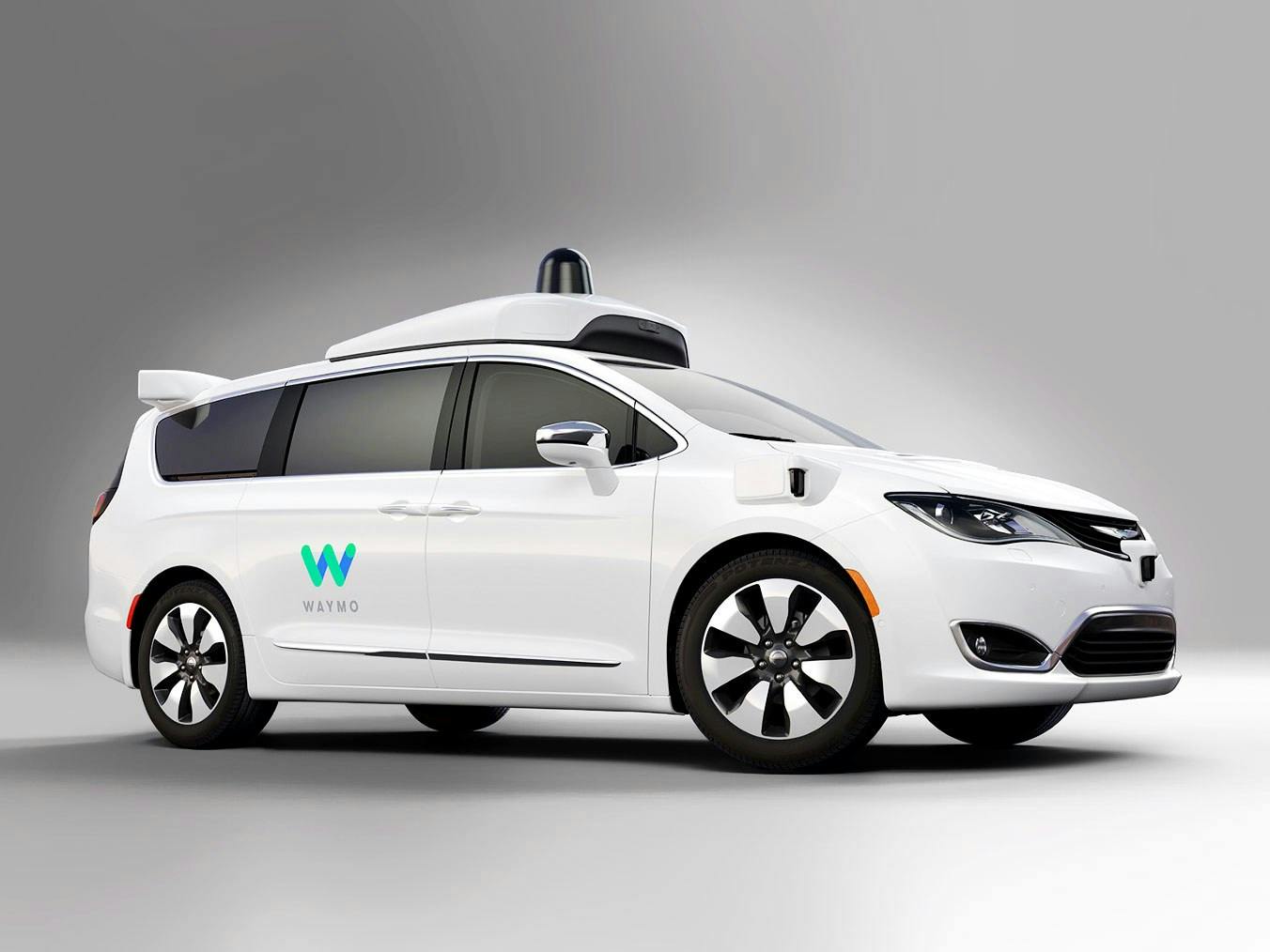
Waymo has been in testing since 2009 and has racked up more than 8 million miles on public roads and more than 5 billion miles in simulation. There are 600 self-driving Chrysler Pacifica Hybrid minivans on the road with goals of launching a commercial driverless transportation system later this year. This, and many other “near deployment” announcements have created massive expectations for the AV market, which is forecast to grow 10x from $54 billion in 2019 to $556 billion in 2026 at a growth rate of 39.47%[1]. For investors, the primary risk today is that these forecasts assume commercial deployments will occur on time.
As Mike Ramsey, a lead author on the Gartner report points out, even if Waymo and General Motors continue to debut driverless minivans or launch ride-hailing fleets, commercial deployments won’t be ready anytime soon. For example, the 2019 Audi A8 with Traffic Jam Assist with Level 3 partial automation, which has been anticipated for some time, has extended its release date another year due to foggy federal regulatory framework, infrastructural differences, and a lack of consumer understanding of self-driving technology[2].
The regulation hurdles between Level 2 and Level 3 and delayed deployments will put immense pressure on stocks that are overvalued based on AV speculation. ABI Research, an advisory firm that reports on market-foresight trends, predicts 8 million consumer vehicles with Level 3 to Level 5 autonomy will ship in 2025. Compare this to the 94.5 million vehicles sold in 2017 which equates to 8.5% of sales[3]. This is a small and fairly insignificant percentage of market share to be chasing 7-years ahead of deployment. Yet, investors are pouring cash into hyped up stocks- and the press plays a large role in this. Headlines are a continual churn of autonomous vehicle “moments” – every partnership, every mile driven, every make and model that adds another feature. To be clear, we’ve only gone from a Level 1 to Level 2. We are not able to release Level 3 AV right now – and yes, that includes Elon (most especially Elon – read my Tesla analysis here).
My newsletter subscribers get this information first. Sign up here.My newsletter subscribers get this information first. Sign up here.here.
One example of this investment bubble is when Tesla’s stock skyrocketed in 2016 while Adam Jonas from Morgan Stanley, a lead underwriter, said that Tesla’s ridesharing network was worth $244 a share. However, reality has set in, and Adam Jonas has now changed that valuation to $95 per share or $17 billion by 2040[4]. The following year, Tesla went on to surpass BMW’s market cap of $60 billion in 2017 despite posting a loss of $725 million from 80,000 vehicles compared to BMW making $7.7 billion from 2.4 million vehicles. Meanwhile, the 2017 deadline for a full rollout for self-driving has come and gone. And as recently as this month, Tesla officially stopped promoting the “Full Self-Driving” option for its cars.
Another example is GM, whose shares have dipped more than the broader markets, erasing any gains from its peak in October of 2017. The hurricane sales from last September helped the stock, which rose 11.9% from the previous years, however the stock has retraced and is now trading at $31-$32 per share. GM is no stranger to pushing the autonomous vehicle hype with executives commenting that Cruise Automation was making “rapid progress” back in October 2017, and in a blog post, the CEO stated, “in the coming months, we’ll take the next bold steps in testing our autonomous technology as we lead the way to fully self-driving vehicles without any human driver as a backup.” Those months have come and gone, of course.
Research studies have proven that consumers are very confused by the high profile promises, which Thatcham Research calls “dangerously confusing.” In a recent study, 71 percent of respondents around the world believe they can buy an autonomous vehicle today – yet there is not one autonomous vehicle on the market. The top three brands that consumers mistakenly believe distribute self-driving cars include Tesla (40%), BMW (27%), and Audi (21%). Of these, 11 percent say they would take a brief nap while using assist systems. Therefore, the disconnect between perception and reality is widespread – and not only in the investment community.
Startups will do their part in the autonomous vehicle bubble, as well. Zoox, Inc is a startup that has raised $800 million with a $3.2 billion valuation — but has not made any revenue yet. The premise of Zoox is to forego partnering with auto manufacturers by deploying their own vehicles. Essentially, the idea is to skip the AV iteration and deployment line and go directly to Level 4 or Level 5 autonomy with no prior manufacturing experience – all by 2020. Meanwhile, there is no mention of regulations, safety and security hurdles in the deployment estimate, or anything else related to practicality for that matter. And as Bloomberg reported, “Even with all of that cash, Zoox will be lucky to make it to 2020, when it expects to put its first vehicles on the road – ‘It’s a huge bet,’ [the founder] concedes.”
A note on Nvidia and Intel
I’m working on a separate analysis of these two companies. Follow me for updates.
Nvidia and Intel are in a well-publicized arms race to capture the autonomous vehicle market. With the ongoing PR focusing on AV, one could almost forget that Nvidia gets its revenue from gaming first and foremost, with data centers as the second driver of revenue. In fact, Nvidia’s revenue breakdown in order is: primarily gaming (4x all other revenue), data centers, professional visualization, OEM and IP, and then in last place, auto.
On a side note, gaming is a formidable industry worth $160 billion to $180 billion (this is 3x the size of the OTT market, for instance) – which is one reason Nvidia should stabilize in the short term. Nvidia is also set to capture data centers by providing chips for the GPU cloud, which powers machine learning and artificial intelligence. You can see this growth in the chart above as data center revenue has begun a nice upward trajectory. In other words, one reason I recommend Nvidia in the long-term precisely because they are not dependent on autonomous vehicles for future growth. When the autonomous vehicle revolution finally gets here, it’ll be a nice bonus to their already strong profit margins.
Intel on the other hand is dependent on the data center revenue that Nvidia is slowly chipping away at (apologies for the pun). Intel will have to prove it can compete with the GPU-processing power of the market leader in virtually every forward-thinking segment.
Note: In the short term, both of these stocks currently face potential volatility due to trade war issues with China.
Predictions at current prices: Sell: Tesla, GM and Intel
Hold: Nvidia
It’s understandable if you missed the headlines that Apple may buy Tesla. That piece of speculative news, like most news about Tesla, has been overshadowed by the PR storm that surrounds the CEO’s behavior rather than based on the technology behind the product.
Here’s some background information for those who missed it. Simultaneously with the CEO’s investigation for violation SEC law 10b-5, rumors began to circulate that Apple may buy Tesla. Some of these rumors were started by Ross Gerber, a Tesla investor, while others sourced the VC firm Loup Ventures, and the gossip is still being echoed a month later. Essentially, the prediction is that if Tesla fails to become profitable, “Apple gains the upper hand and becomes the most likely investor or buyer.”
From a technical standpoint, the theory of an Apple acquisition is nearly impossible. The authors oversimplify (or don’t even address) where Apple is in the development stack, where autonomous vehicles (AV) are in the maturation cycle, and the ongoing failure points in AV technology that Tesla is not able to solve.
I understand there are a lot of Elon fans rooting for him, and perhaps some satisfied Tesla owners who will read this, but stock investors are in a different class. They can’t afford to follow a fad because returns are at stake. With that said, here are three blatant reasons as to why Apple won’t touch Tesla, and why I won’t either. (There is information on shorting Tesla below).
My newsletter subscribers get this information first. Sign up here.My newsletter subscribers get this information first. Sign up here.here.
1. Apple Makes The World’s Best Software– Not Vehicles
Apple will not buy Tesla for the very fact that Apple doesn’t need to manufacture a car in order to capture the autonomous vehicle (AV) market. Apple is a computer and software company and AVs will require powerful computing systems. The cars released today with connectivity features have the computing power of 20 personal computers and feature over 100 million lines of programming code. Next decade’s semi-autonomous cars will have 300 million lines of code, and the distant future of fully autonomous will have 1 billion lines of code. Apple will not limit itself to the 200,000 cars that Tesla sells annually, (or even 320,000 if the current quarter is to be sustained), while at the time assuming the overhead, cyclical sales and incumbent competition of an auto manufacturing when it can capture a piece of the 82 million vehicles sold globally through the core business of supplying software. Keep in mind, Tesla is one among many who have achieved Level 2 autonomy with no indication they can safely release beyond Level 2. This makes the small amount of production Tesla actually does even less impressive from an acquisition standpoint (more on this below).
2. Apple Vs. Google: Nothing New Here Folks
The cars that Apple and Google have on the market are used to test the operating system and nothing more. These vehicles are not necessarily trying to compete with GM, Ford, Volkswagen or Audi. That’s why Apple and Google are seeking partnerships with them – they’re not competing with them. For instance, Google has run tests with Lexus/Toyota, and Jaguar Land Rover, and Apple has partnered with Volkswagon. Even still, we are at least a decadeaway from having full autonomous vehicles on the road due to technical mishaps, security vulnerabilities and government regulations. Of these, security will be the biggest hurdle to overcome as you can’t test for every possible scenario. This is because the electrical components in a car (known as the electronic control units, or ECUs) are connected via an internal network. The peripheral ECU introduces vulnerabilities such as the vehicle’s infotainment center, which means WiFi or Bluetooth can grant access to core systems such as the brakes and transmission.
AVs closest comparable for security today is the smartphone, with roving mobile sensors and signals, and iOS is challenging to hack. Can GM and other Detroit manufacturers duplicate the level of secure, computing power which Apple has perfected over the last 40 years with a closed ecosystem and the last 10 years with roving mobile signals? It’s not likely Detroit will compete with Cupertino on the machine learning required for 300 million lines of code or more, combined with full-system security, and it’ll take only one car hack before this is realized. (GM’s On Star was hacked in 2015).
This is true in the reverse, as well. Cupertino and Mountain View don’t have the talent recruits or experience that Detroit and Munich have in car manufacturing. Tesla most certainly doesn’t as the CEO is a mobile payments entrepreneur from Paypal (yes, he led a team that launched rockets — but there are no competitors here – except NASA which only spends money – therefore this is irrelevant for what Tesla faces).
3. Baby Steps: Connected Car, then Semi-Autonomous, then Fully-Autonomous
As Tim Cook said, “[Autonomous Systems] are probably one of the most difficult AI projects to work on.” There are six levels to autonomous vehicles as published by SAE International. The cars released today are primarily “connected cars” featuring driver assistance (level 1) or partial automation (level 2). Tesla’s Autopilot is a Level 2 system.
What will it take to get to a Level 3? Level 3, also known as conditional automation, is hands-off and eyes-off, but still requires a human. The first to market (and only vehicle to reach the public market as of yet) is the Audi A8 featuring Traffic Jam Pilot which continues to see delays in the United States. This is why it may be at least a decade before we see level 4, high automation, or level 5, full automation. (This is despite Elon Musk tweeting that Tesla will release full automation by 2019 – but at this point, it’s safe to say we should not put your money behind these tweets).
Gartner, one of the most trusted sources for predicting technology development cycles, has placed autonomous vehicles at more than 10 years out on their most recent hype cycle graph. This hype cycle graph predicts the maturation phases for new technologies and is hauntingly accurate in predicting the ebb and flow of tech and startup fads. Remember the wearables crash? Yes, Apple Watch survived but many did not – including Google Glass despite its backing. How about Virtual Reality – especially fan favorite Oculus? As you can see in the chart below, we have just exited the peak of inflated expectations and are on the way towards the trough of disillusionment. Short sellers of Tesla this year and last year may have been basing their calls on the CEO’s behavior but we are now about to enter major technology road blocks and consolidation that unbiased analysts predict will put even the highest performing AV companies to the test – with many low performing AV companies will not survive (see where Tesla is rated below). The current shorts are not wrong, they are simply too early in the maturation process for AVs and have had a bumpy ride because of this.
4. Would you Bet On a Horse in Nineteenth Place?
In a recent report released in Q1 2018 by Navigant Research, automated driving systems were rated on 10 criteria: go-to market strategy, partners, production strategy, technology, sales, marketing and distribution, product capability, product quality and reliability, product portfolio, and staying power. Of the nineteen companies that Navigant objectively analyzes, Tesla came in last place at number nineteen.
There is a “cost and complexity” once you take a “human driver out of the control loop,” as Navigant states, and it is my belief that the partnerships which are forming between software companies and auto manufacturers will continue to outrank Tesla in product capability, reliability and security (something Navigant did not report on) – not to mention the basics of production cycles and manufacturing vehicles at scale.
Here are the top 10 from the Navigant leaderboard:
Top 10 Vendors:
GM
Waymo
Daimler-Bosch
Ford
Volkswagen Group
BMW-Intel-FCA
Aptiv
Renault-Nissan Alliance
Volvo-Autoliv-Ericsson-Zenuity
PSA
Conclusion:
Apple has many opportunities to enter the connected car and semi-autonomous vehicle market, and the best card to play will be the through the OS in the level 1-2 category similar to Google’s recent announcement that the Android OS and Google Assistant will be featured across the Renault-Nissan-Mitsubishi Alliance. Taking these baby steps now is a much smarter move for Apple than acquiring a horse that is in nineteenth place with the race heating up to reliably and safely reach Level 3 and Level 4 autonomy. In this regard, there is nothing to here to acquire.
Although there is no doubt that Waymo is ahead of Apple (and everyone, really) in the race towards automation, if Gartner and many other unbiased sources are correct, Apple has time to develop a driving system in-house (or perhaps acquire a machine learning automation startup) as we are at least 10 years from full automation.
Beth.Technology Prediction: Telsa shorts were right but their timing was off. We are in a Level 2 AV bubble, and it will burst as Level 3 and Level 4 experiences growing pains (lots of cash has poured in with too high of expectations on when when AV will start to turn a profit). Tesla, a luxury electric car company, will struggle greatly in the competitive hurricane for reliable and safe automation. Therefore, I’m considering a short on Tesla in 2019 or 2020, which I plan to time with the AV bubble bursting.