Skip to content
Logo-main-white.860316a8

I/O Fund

  • Home
  • Free Stock Analysis
  • AI Stocks
  • BEST OF 2025
  • Analysts
  • Nvidia Hub
  • About
    • Case Studies
    • About Us
    • Premium Services
    • Pricing
    • Notable Wins
    • I/O Fund Reviews
    • Media
  • Contact Us

Month: December 2024

Coherent: Key Nvidia Supplier for Optical Networking Components

Posted on December 27, 2024June 30, 2026 by io-fund

Coherent supplies components for datacom transceivers and for optical interconnects. Transceivers and optical interconnects convert electrical signals into optical signals for fiber optic networks within the data center. Traditionally, optical links have been used for compute and storage servers, yet AI/ML servers are driving an increase in demand for the optical interconnects and transceivers that Coherent supplies.

Transceiver speed has been growing with the highest data rates ranging from 100G to 200G to 400G. AI servers are driving a market for 800G data rates, which are shipping in production now, and 1.6T rates, which are shipping in 2025. We’ve been covering these AI-driven upgrades around optical networking in our Marvell write-up and Semtech write-upwrite-up and Semtech write-up.

Coherent’s transceivers work with both Ethernet or InfiniBand, as well as proprietary protocols such as Nvidia’s NVLink and Nvidia’s interconnect chips NVSwitch. The company has stated that their 100ZR pluggable transceivers can upgrade old 10GBps Ethernet links with 100 GBps at the optical network edge, representing a 10X upgrade.

Coherent designs and manufactures the components, such as lasers, detectors and passive optics. Manufacturing the components (as opposed to buying them) is a strength as the company has supply chain resiliency by controlling the end-to-end process, and the manufacturing takes place primarily in the United States with some in Europe. Notably, the discussion as to where AI chips and their components are manufactured is setting up to become a hot topic come 2025.

Overview of Coherent’s Products:

Last quarter, Coherent’s networking revenue increased 12% sequentially and 61% year-over-year to $763 million. The strong growth was led by the AI-related datacom segment, which grew 16% sequentially and 89% year-over-year. The company has seen strong rebounds in this segment since September of last year, partly due to being a supplier for Nvidia’s NVLink and InfiniBand. Coherent also supplies components for Ethernet networking.

Coherent provides laser technologies for 100-gig to 400-gig, plus the AI-centric 800-gig optics and the AI-centric 1.6T optics. Of these, the 800-gig is the primary interconnect for AI deployments with 1.6T shipping in 2025. Artificial intelligence and machine learning drive demand for the 800-gig PAM to increase the speed of input-output and to process the data flows. This doubles the throughput (bandwidth) due to an 8x100Gpbs optical transceiver for inside and between AI clusters.

Marvell was first to launch the 1.6T solution 5nm and 3nm with 200-gig per lane for both. The highly newly launched 1.6T 3nm optical DSPs will reduce power consumption, something that Blackwell is breaking the upper limits of with an estimated 140kW per rack. Right now, any component that lowers power consumption will be in high demand come Q1-Q2. Coherent is expected to launch their solution next year, per the earnings call: “Having delivered initial samples in the preceding quarter, we continue to expect to begin ramping sales of 1.6T datacom transceivers in calendar 2025.”

Although Marvell and Broadcom are the two that first come to mind when discussing PAM4-based networking and DSPs, it’s important to remember that Nvidia is a leader in AI networking in their own right. Last quarter, Nvidia reported networking revenue of $3.13 billion while Broadcom most recently reported AI revenue of $3.7 billion for the quarter. If we remove the $300 million for custom silicon, Broadcom reported $3.4 billion in AI networking. Nvidia is a newcomer to the field following the acquisition of Mellanox in 2019.

Coherent supplied content is likely to increase with Nvidia as Blackwell is a catalyst for this partnership. With the upcoming release of Blackwell, NVLink speeds will double from the fourth-generation to the fifth-generation. We pointed out a few months back the significance of NVLink’s fifth-generation as it’s the most important generational leap to-date for Nvidia’s networking products:

“NVLink Switch is a major component to the Blackwell upgrade. Fifth-generation NVLink enables multi-GPU communication at high speed, reaching 1.8 TB/s bidirectional throughput or 14X the bandwidth of PCIe for a single GPU.

For the NVL72 systems, NVLink Switch can reach 130 TB/second, which is “more than the aggregate bandwidth of the internet.” Therefore, it’s the compute and the communication capabilities of the upcoming GB200 release that are important to consider. The 72 GPUs in the NVL72 can be used as a single accelerator for 1.4 exaflops of AI compute power.”130 TB/second, which is “more than the aggregate bandwidth of the internet.” Therefore, it’s the compute and the communication capabilities of the upcoming GB200 release that are important to consider. The 72 GPUs in the NVL72 can be used as a single accelerator for 1.4 exaflops of AI compute power.”

The result is that the GB200 will deliver a 30X speedup for 1 trillion­­+ parameter models by leveraging FP4 precision and fifth-generation NVLink. The NVL72 rack-scale systems are exascale computers that will contain up to 5,000 NVLink cables for up to 2 miles of networking.

To put it simply, Nvidia is set to report roughly $200 billion in AI systems revenue next year (we think it’ll be higher than this), with the GB200 systems driving a surge in demand for Nvidia’s in-house networking solutions. There is no other player in the ballpark or zip code of this AI accelerator revenue, and thus, this year will offer a unique opportunity for Nvidia to greatly increase its networking segment driven the scale-out and scale-up of GPUs. That is to say, the 4.5X to 9X increase in systems from 8 GPUs to 36 GPUs or 72 GPUs, plus the scale-out toward clusters with 100,000-GPUs and eventually million-plus GPUs.

Below are a few products that Coherent offers that are set to benefit.

Coherent’s AI-Related Products:

Coherent has a highly technical suite of hardware products. To streamline the discussion, I’ll focus on the three product lines that management calls out as major contributors to the rebound in its AI-related datacom segment (part of the larger networking segment).

  • Next-generation transceiver technologies, such as VCSELs, EMLs and CW lasers for silicon photonics – reported in the networking segment
  • Datacom optical switch platform – reported in the datacom segment
  • Data center interconnects (DCIs) – not part of the AI segment, rather this is reported in the telecom segment.

Next-Generation Transceivers:

Last quarter, Coherent’s networking revenue increased 12% sequentially and 61% year-over-year to $763 million.

VCSELs: >100 meters Distance:

Vertical Cavity Surfacing Emitting Lasers (VCSELs) are for link distances of less than 100 meters. As Coherent explains, these are the lowest-cost, lowest power consumption solution. In March, the company announced its 200G VCSELs that replace the oxide-aperture with a lithographic-aperture. When combined with a DSP, the 200G VCSELs allow for a 1.6T multimode optical transceiver for AI, high-performance computing (HPC) and networking applications.

Silicon Photonics >100m: Nvidia to Launch SiPho Product H2 2025

For distances greater than 100m, silicon photonics-based transceivers are used. We wrote about silicon photonics previously before Nvidia Hopper had shipped in volume. Back in early 2023, an article from Next Platform discussed the previous generation of GPUs, where the NVSwitch fabric on the DGX-A100 systems has “a range of about 300 centimeters and moves data at 8 picojoules per bit. The goal is silicon photonics to do it at half the energy and boost the range to as far as 100 meters between devices.”

Coherent recently announced a continuous wave (CW) InP laser for silicon photonics that “are on the forward edge of data transmission technology, crucially addressing the explosive bandwidth demands brought on by the rapid adoption of machine learning networks within AI-driven data centers.” According to the press release, Coherent’s CW lasers will result in 15% better power efficiency and are more reliable due to eliminating aluminum.

The first CW laser to launch was in September of 2024 with a higher-power laser for cooled operations launching in 2025. The press release cited that production capacity is expanding 500% over the next two years: “And with our upcoming expansion to a state-of-the-art 6-inch InP fab in Sherman, Texas, by 2026, we expect production capacity to be 5x our current production rate, a significant ramp given the complexity of this material.”

At the end of September, Coherent demonstrated a new 1.6T-DR8 transceiver module running a 5nm Nvidia chip. The SiPho product, or silicon photonics product, will read and write data at the speed of 1.6Tbps. The initial reaction from analysts is that this product will become more impactful at the end of 2025, taking up to 10% to 20% of the market in 2026, pointing toward Nvidia customers Microsoft, Coreweave and Lambda as being names that would drive the sales come 2026.

EML Lasers:

Electro-absorption modulated lasers (EMLs) help to enable the 200G per lane transmission, which is enabling the 1.6TBps data rate. In the future, it is likely AI networking will expand to a 3.2TBps data rate. The EML device that Coherent supplies offers signal integrity for 200G optical transmission due to the wide bandwidth of the modulator and on-chip integrated radio frequency (RF) termination.

EMLs were traditionally used by telecom customers, yet became attractive for AI servers due to meeting the 200G per second speeds necessary to support AI models and capabilities for 1.6T optical modules. EMLs are more expensive than CW lasers for silicon photonics, with 1.6T SiPho being the more popular choice. Where four EML lasers are required to run 1.6T, two less-expensive CW lasers are needed to run four channels with a silicon photonics module.

Coherent’s press releases point toward EML lasers becoming more impactful with the push toward reading and writing data at 3.2TB per second speeds.

When asked on the call which product will be most influential at 1.6TB ramps, Coherent’s management was declined to state it would be primarily SiPho, rather stating it would be a mix of all three:

Q: “[…] And then if you think that the world is kind of ramping on 1.6T, do you guys see kind of more of a silicon photonics world or an EML world as that 1.6T ramp?”

A: “[…] We look at it as we'll deploy whatever the best technology is for the benefit of the customer and the application that we're trying to drive. So, whether that's an EML, a VCSEl, or silicon photonics, we're developing all of those different options and we'll deploy whatever technology is strongest to create the biggest differentiation for our products and the biggest benefit for our customers. So, that's kind of the approach that we take to the technology. And I think we've got the broadest set of technology options of certainly any of our peers and competitors. So, I think that's a real competitive strength for us.”

Datacom Optical Switch Platform (OCS Switch):

Optical current switches are a new kind of switch for AI clusters that handles the switching optically instead of using transceivers to convert photons to electrons, and back again. According to the earnings call, “Our differentiated switch is based on our highly reliable solid-state liquid crystal technology and was recognized at ECOC '24 with the Best Product Award for data center innovation. We've shipped sample units to key strategic customers and we expect to begin ramping revenue in calendar 2025.”

According to a Dell’Oro analyst, optical switches are a new kind of switch that offers high bandwidth, low latency and are less expensive to operate. Per Coherent: “this kind of optical switching tends to be more reliable – something that will pay dividends in very larger clusters in which mean time to failure tends to be quite low.”

At Hot Chips 2023, Google’s TPU group technical lead, Andy Swing, explained that Google has been able to “switch together very large quantities of AI accelerators” in pods with 64 TPUs. According to Google, the optical circuit switch results in a sizable boost in network bandwidth and can be reconfigured if a node fails. It doesn’t take much imagination to consider other hyperscalers are likely to follow in Google’s footsteps by using an OCS switch as cluster sizes for AI accelerators are set to increase. 

Datacom Interconnects (DCIs):

For long distance transmission, Coherent offers data center interconnects (DCIs). This can range up to hundreds of kilometers. There was a recent press announcement that Marvell, Lumentum and Coherent worked on optical modules with transmission links of up to 500km.

DCIs are recognized under the telecom segment, which saw growth of 9% sequentially and 17% year-over-year. Within this, management stated: “We are definitely seeing strong demand signals in DCI, right? And obviously, that's only a portion of the telecom market, but we are seeing very strong demand signals there.”

Financials:

Coherent’s Q1 FY2025 revenue grew by 28% YoY to $1.35 billion, beating estimates by 2.4%. Revenue accelerated by 18.9 percentage points from the 9.1% growth reported in the June quarter. The strong growth was primarily led by AI-related datacom revenue, which grew 16% sequentially and 89% YoY.

Management has guided FQ2 revenue of $1.37 billion, representing 21.1% YoY growth at the midpoint. Analysts expect growth to sustain 15.6% YoY growth to $1.40 billion in FQ3.

Looking further out, analysts expect FY2025 ending in June revenue to grow 17.9% YoY to $5.55 billion and 11.2% YoY to $6.17 billion in FY2026.

Revenue by End Market:

Communications

Communications end market FQ1 revenue grew by 68% YoY and 14% sequential growth to $774 million. It is the largest end market and constitutes 57.4% of total revenue. Revenue accelerated by 49 percentage points from 19% growth in FQ4. The strong growth was led by datacom and telecom revenue.

FQ1 datacom revenue grew by 89% YoY and 16% sequentially due to strong AI data center demand. The company witnessed a continued ramp for 800-G transceivers, benefitting from the increased number of customers ramping 800-G transceivers. Management expects strong growth in 800-G transceivers to continue in the coming quarter with revenue from 1.6T transceivers starting to ramp in CY2025. The company delivered initial samples of 1.6T transceivers in FQ4.

Telecom revenue grew by 17% YoY and 9% sequentially, primarily due to end market improvement and the ramp of the company’s new products, namely 100G ZR and 400G ZR+ Coherent transceivers. Although management expects the telecom end market to remain weak in the near term, they expect a ramp in revenue from these new products over FY2025. Overall, they expect the communications market to be a long-term growth driver for the company.

Industrial

The industrial end market is the second largest end market and constitutes 30.2% of revenue. The industrial end market grew by 1% YoY and down (-6%) QoQ to $407 million. Revenue decelerated from 5% growth in FQ4 as the strength in display capital equipment was offset by the weakness in the precision manufacturing. The company faced demand headwinds in the precision manufacturing, mirroring broader industry trends. However, despite the near-term weakness, management “expects the industrial market to be a long-term growth driver for the company as the end markets recover and as our new products continue to ramp.”

Instrumentation

The Instrumentation end market constitutes only a small 6.8% of total revenue. FQ1 revenue was down (-8%) YoY and (-10%) sequentially to $91 million.

Electronics

The Electronics end market also constitutes only a small 5.6% of total revenue. FQ1 revenue was down (-16%) YoY and (-27%) QoQ to $76 million.

Segments

  • Networking FQ1 revenue reported strong growth of 61% YoY and 12% sequentially to $763 million due to the AI data center demand. Revenue accelerated from 16% growth in FQ4.
  • Lasers segment revenue increased 4% YoY and down (-2%) QoQ to $348 million. Revenue decelerated from 7% growth in FQ4.
  • Materials segment FQ1 revenue was down (-3%) YoY and (-15%) QoQ to $237 million.

Margins

Margins are expanding yet they remain low compared to other semiconductor companies, and this will remain a predominant concern with Coherent. Management has set a goal of achieving a consistent adjusted gross margin level of above 40% and has two important initiatives: pricing optimization in the industrial business (includes industrial end market, instrumentation, and electronics) and product cost reductions for the datacom transceiver business.

Per the earnings call:

“[…] And I do see opportunity to do a much better job of optimizing the pricing of the [industrial] products and capturing what I would say — what I would call is the fair value for the technology and the innovation that we're bringing to those industrial markets.

Now, in pricing in the datacom transceiver space, there I think there's, I would say, there's not as much opportunity on the pricing side. But what I would say is, but there's definitely opportunity on the product cost side. And that's one of the examples I gave earlier on the call is on product costs within transceivers. And I highlighted, I believe this on the last earnings call, yields as definitely an opportunity. And Sherri and I, as I said earlier, we're in an operational review this morning, spending time talking to the team about yields, the improvements that they've driven over the past few months, and what we need to see in terms of yield improvements moving forward as well. And that is definitely an area of focus for us. So, I would — back to your datacom transceiver question in particular, I would say maybe not so much on pricing, but definitely there's opportunity for us in cost and we're certainly very focused on that.”

  • FQ1 gross margin improved five percentage points YoY to 34.1%. Adjusted gross margin improved 2.9 percentage points YoY to 37.7%, primarily helped by higher revenue, favorable product mix, and yield improvements.
  • Management has guided for an adjusted gross margin of 37% at the midpoint for FQ2 compared to 36% in the same period last year. The CFO provided more clarity during the earnings call Q&A on the gross margins and assured to provide more details before the Investor Day in May 2025 on its plan to achieve the long-term goal of above 40% gross margins.

“When we look at Q2, the guide for Q2, that is a range, right, 36% to 38%, it is a range, and there can certainly be fluctuation on a quarterly basis with respect to gross margin. But we did talk about, last quarter; Jim mentioned that we launched our gross margin expansion strategy which includes product pricing optimization, as well as product cost reduction. And so that's an area where we're going to focus on because we want to achieve a long-term gross margin of greater than 40%, and so that's really how to think about what our goal is for our long-term gross margin.”

  • FQ1 operating margin improved significantly to 5.6% from (-2%) in the same period last year. Adjusted operating margin improved 4.7 percentage points YoY to 17.3%. Management guide for the next quarter is 16.2%. Even though the guide is down sequentially, it is up from 15.2% in the same period last year.
  • The operating margin is expected to improve along with the gross margins in the long term. The company is prioritizing its R&D investments in the growth areas and divesting non-profitable businesses. Another key takeaway from the earnings call is the CEO’s comment, “I just want to reiterate what I said in the prepared remarks that even though the overall non-strategic category is a relatively small part of our revenue, again, it is dilutive to our operating margins.”
  • Net income was $25.9 million or 1.9% of revenue compared to a net loss of (-$67.5) million or (-6.4%) of revenue in the same period last year. Adjusted net income was $149.7 million or 11.1% of revenue compared to $55 million or 5.2% of revenue in the same period last year.

EPS

Coherent has strong EPS growth. Analysts expect EPS growth to continue going forward, and there is potential for further upgrades to the EPS estimates due to the new CEO’s streamlining/restructuring plan.

  • FQ1 adjusted EPS grew by 357% YoY to $0.74, primarily helped by operating leverage, favorable product mix, improvement in yield, product price optimization, and product cost reductions.
  • Analysts expect adjusted EPS to grow 86.3% YoY to $0.67 and 43.2% YoY to $0.76 in the subsequent two quarters.
  • Looking further out, analysts expect the adjusted EPS for FY2025 ending June to grow 80.5% YoY to $3.01 and 45.1% YoY to $4.37 for FY2026.
  • Jefferies analyst believes that the new CEO’s streamlining and cost reduction initiatives could potentially double the adjusted EPS from the current about $3.0 to as much as $6.40 annual EPS in 2026.

Cash Flow and Balance Sheet: 2.4X Debt Leverage

Operating cash flow margins have been hovering around 10% of revenue and are expected to improve with higher revenue and profits in the coming quarters.

  • FQ1 operating cash flow was $152.98 million or 11.4% of revenue compared to 18.9% in the same period last year. The operating cash flow margin was in line with the full year operating cash flow margin of 11.6% for FY2024 and 12.3% for FY2023.
  • FQ1 free cash flow was $61 million or 4.5% of revenue compared to 13% in the same period last year. The free cash flow margin was in line with the full year free cash flow margin of 4.2% for FY2024 and 3.8% for FY2023.
  • Cash was $1.02 billion; debt was $3.99 billion compared to $926 million and $4.1 billion at the end of FQ4.
  • During FQ1, the company repaid $118 million in debt from the cash from operations and proceeds from the sale of the Newton Aycliffe fabrication facility. The sale is part of the company’s ongoing efforts to streamline operations.
  • With the $118 million debt repayment, the company has reduced the debt leverage ratio to 2.4x, and debt reduction will continue to be the priority for the management.

Divestment

The company is looking to divest or shut down non-strategic product lines and assets. The company recently sold the Newton Aycliffe fabrication facility in the UK. The proceeds from the sale of the facility were used to repay debt and will also help to reduce the overhead expenses and interest expenses.

Similarly, it is looking for strategic alternatives for the battery technology business. Although the business accounts for a small percentage of revenue, it is dilutive to the company’s margins. It will allow the company to focus on investments that have better returns on investments, such as the AI data center transceiver business. The management is expected to provide more updates in the coming months and during the Investor Day in May 2025. The company might also divest the silicon carbide business, in which Denso and Mitsubishi Electric have a 25% non-controlling stake.

New Management from Lattice Semiconductor:

Jim Anderson was appointed CEO of Coherent Corp. and a member of the Board of Directors on June 3, 2024. He previously served as CEO of Lattice Semiconductor Corporation since September 2018. Prior to joining Lattice, Mr. Anderson served as the Senior Vice President and General Manager of the Computing and Graphics Business Group at AMD.

Jim, who is credited for bringing about a turnaround in Lattice Semiconductor, is also expected to repeat his success at Coherent along with the new CFO Sherri Luther. The company appointed Sherri Luther as CFO on Oct 11, 2024. Prior to that, she was the CFO of Lattice Semiconductor since 2019. Prior to joining Lattice in 2019, she worked at Coherent for 16 years, including as Corporate Vice President of Finance.

Commentary from FQ1 2025 Earnings Call:

800-Gig drove the Revenue Beat, 1.6T Shipping in 2025:

There were questions as to where the upside from the quarter came from, given the top line and sizable 20%+ bottom-line beat. As noted, there was sizable growth in the datacom transceiver business of 16% QoQ growth and 89% YoY growth. The CEO points out customer breadth is expanding on the 800G product.

Q: Simon Leopold, Raymond James: “[…] And I guess what I'm trying to understand is where was the, really, upside surprise this quarter, was it really 800 gig and above or was there more strength from the more traditional products below — 400-gig and below, did that provide any upside or was it all coming from the higher performance? Thank you.”

A: Jim Anderson, CEO: “We did see sequential growth there [400-gig and under speeds]. That was very nice to see. When you look across the customer base, customers are at different stages of adopting the different transceiver speeds. So, we still have customers that are doing significant volume on 400G and below as well. And so, it's really a mix of different transceiver speeds.

And then, back on 800-gig, I would say, look, we're really pleased with the ramp, the overall ramp of our 800-gig transceivers. And then, the other color I would add is that one of the things I'm really pleased to see is the breadth of customers that we have. The number of customers that are ramping 800-gig has significantly increased. If I look like a year ago, it was only maybe a couple customers. Now, we have many customers ramping 800-gig. So, there's a much bigger diversity of revenue streams underneath that 800-gig ramp. And we do expect 800-gig to continue to grow over the coming quarters as well.”

Although the customer breadth has grown with 800-gig, it was stated on the call the 1.6T will launch with a customer breadth that is smaller and matches the start of the 800-gig.

Supply Constraints Could be a Catalyst for Coherent:

There were three questions on the call from three separate analysts about potential supply constraint in lasers, with two analysts calling out the supply constraint being specifically with EMLs: “certainly on the EML side as we're hearing about constraints, et cetera, as you think about '25 and '26?”

The CEO pointed out this is an area incremental strength for Coherent as they make most of their parts internally (which is quite rare) yet will source when the demand requires it. The CEO also pointed out their breadth of technologies helps to meet demand if there were to be a shortage in a specific laser, such as EML.

Here are a few statements from the CEO that addressed Coherent having an advantage by building their own products in a fairly crowded market of networking components:

“On that first area of technology roadmap, I think our customers really recognize the breadth and the depth of the technology portfolio that we can bring to bear, specially in the optical networking space, where we don't just assemble the modules, but we build a lot of the ingredient components that go into the module; the lasers, whether they're VCSELs, EMLs for silicon photonics that we design, or a lot of the other ingredients that go into those modules […] and then, our verticalized structure could be a real advantage, especially in a very fast ramp situation, which we're in right now with our datacenter customers. When demand is increasing very quickly, it's really important to have that verticalized strategy and structure that we have, because I think that's really allowed us to supply them in a really reliable.”

This statement was reiterated a few times, which is that Coherent’s advantage lies within the breadth of the technologies they offer alongside the capability to build internally.

United States Domiciled:

The discussions around supply constraints potentially helping Coherent as the company builds its own products are further supported by the fact Coherent components are primarily manufactured in the United States, with some in Europe. The company has plans to expand its presence in the United States with a 6-inch InP wafer fab in Sherman Texas. According to an announcement last week, Coherent was awarded $33 million from the United States CHIPS act to support the expansion of the Texas facility.

Competitors:

According to the 10-K, the company “had one customer who contributed more than 10% of revenue during fiscal 2024.” This is understood to be Nvidia. Yet, B.Riley downgraded the stock due to Nvidia seeking more suppliers for the 1.6T products, with the analyst note naming Eoptolink, Innolight and Fabrinet as notable competitors.

Conclusion:

If you had “reading about AI networking components” on your Christmas list, then consider yourself in luck. The I/O Fund is leaving no stone unturned in delivering a full hardware stack analysis on what’s to come in 2025 as AI systems increase in complexity. Although we saw some outliers in AI software this year, we continue to foresee 2025 to be the year for AI hardware – far more so previous years. This goes back to how the Blackwell systems are being built, by scaling out 4-9X, and also requiring new components to handle the surge in AI server power consumption.

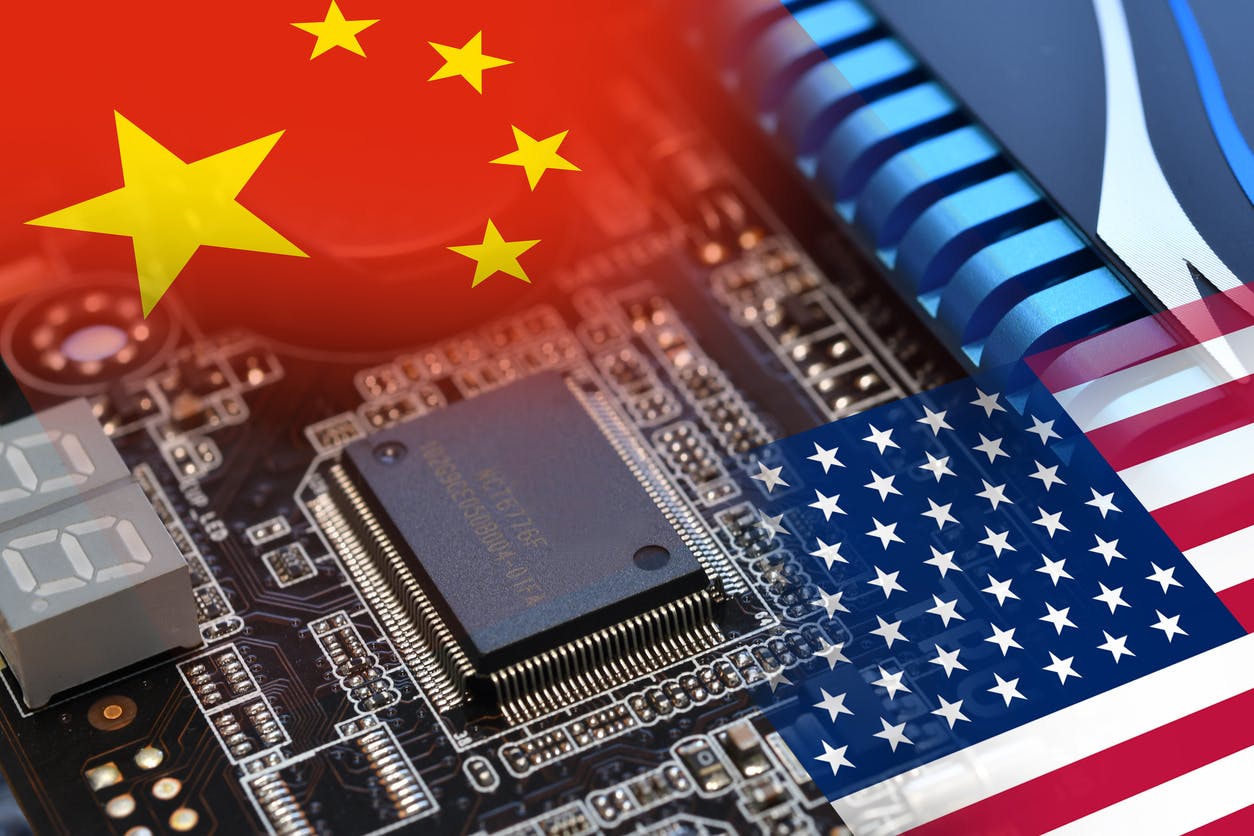
Of course, with every great opportunity, there comes some element of risk. The clear risk to semiconductors are tariffs with rumors that Chinese tariffs could be as high as 60% on imports from this region.  This would technically be a tailwind for Coherent — a key Nvidia supplier as we go into 2025 that would not only circumvent the majority of tariffs but potentially come out on top.

Please note: The I/O Fund conducts research and draws conclusions for the Fund’s positions. We then share that information with our readers. This is not a guarantee of a stock’s performance. Please consult your personal financial advisor before buying any stock in the companies mentioned in this analysis.

Additional Readings:
  • Semtech: Fiber Optics and Copper (ACC) AI Networking Components
  • Vertiv: AI Data Center and Direct Liquid Cooling Stock; Nvidia Supplier
  • Marvell Q3 Earnings: Strong Sequential Growth; Expanded AWS Partnership
  • Optical Interconnects Overview: Strong Growth Expected Ahead
Posted in Ai Platforms, Semiconductor StocksLeave a Comment on Coherent: Key Nvidia Supplier for Optical Networking Components

Coherent: Key Nvidia Supplier for Optical Networking Components

Posted on December 27, 2024June 30, 2026 by io-fund

Coherent supplies components for datacom transceivers and for optical interconnects. Transceivers and optical interconnects convert electrical signals into optical signals for fiber optic networks within the data center. Traditionally, optical links have been used for compute and storage servers, yet AI/ML servers are driving an increase in demand for the optical interconnects and transceivers that Coherent supplies.

Transceiver speed has been growing with the highest data rates ranging from 100G to 200G to 400G. AI servers are driving a market for 800G data rates, which are shipping in production now, and 1.6T rates, which are shipping in 2025. We’ve been covering these AI-driven upgrades around optical networking in our Marvell write-up and Semtech write-upwrite-up and Semtech write-up.

Coherent’s transceivers work with both Ethernet or InfiniBand, as well as proprietary protocols such as Nvidia’s NVLink and Nvidia’s interconnect chips NVSwitch. The company has stated that their 100ZR pluggable transceivers can upgrade old 10GBps Ethernet links with 100 GBps at the optical network edge, representing a 10X upgrade.

Coherent designs and manufactures the components, such as lasers, detectors and passive optics. Manufacturing the components (as opposed to buying them) is a strength as the company has supply chain resiliency by controlling the end-to-end process, and the manufacturing takes place primarily in the United States with some in Europe. Notably, the discussion as to where AI chips and their components are manufactured is setting up to become a hot topic come 2025.

Overview of Coherent’s Products:

Last quarter, Coherent’s networking revenue increased 12% sequentially and 61% year-over-year to $763 million. The strong growth was led by the AI-related datacom segment, which grew 16% sequentially and 89% year-over-year. The company has seen strong rebounds in this segment since September of last year, partly due to being a supplier for Nvidia’s NVLink and InfiniBand. Coherent also supplies components for Ethernet networking.

Coherent provides laser technologies for 100-gig to 400-gig, plus the AI-centric 800-gig optics and the AI-centric 1.6T optics. Of these, the 800-gig is the primary interconnect for AI deployments with 1.6T shipping in 2025. Artificial intelligence and machine learning drive demand for the 800-gig PAM to increase the speed of input-output and to process the data flows. This doubles the throughput (bandwidth) due to an 8x100Gpbs optical transceiver for inside and between AI clusters.

Marvell was first to launch the 1.6T solution 5nm and 3nm with 200-gig per lane for both. The highly newly launched 1.6T 3nm optical DSPs will reduce power consumption, something that Blackwell is breaking the upper limits of with an estimated 140kW per rack. Right now, any component that lowers power consumption will be in high demand come Q1-Q2. Coherent is expected to launch their solution next year, per the earnings call: “Having delivered initial samples in the preceding quarter, we continue to expect to begin ramping sales of 1.6T datacom transceivers in calendar 2025.”

Although Marvell and Broadcom are the two that first come to mind when discussing PAM4-based networking and DSPs, it’s important to remember that Nvidia is a leader in AI networking in their own right. Last quarter, Nvidia reported networking revenue of $3.13 billion while Broadcom most recently reported AI revenue of $3.7 billion for the quarter. If we remove the $300 million for custom silicon, Broadcom reported $3.4 billion in AI networking. Nvidia is a newcomer to the field following the acquisition of Mellanox in 2019.

Coherent supplied content is likely to increase with Nvidia as Blackwell is a catalyst for this partnership. With the upcoming release of Blackwell, NVLink speeds will double from the fourth-generation to the fifth-generation. We pointed out a few months back the significance of NVLink’s fifth-generation as it’s the most important generational leap to-date for Nvidia’s networking products:

“NVLink Switch is a major component to the Blackwell upgrade. Fifth-generation NVLink enables multi-GPU communication at high speed, reaching 1.8 TB/s bidirectional throughput or 14X the bandwidth of PCIe for a single GPU.

For the NVL72 systems, NVLink Switch can reach 130 TB/second, which is “more than the aggregate bandwidth of the internet.” Therefore, it’s the compute and the communication capabilities of the upcoming GB200 release that are important to consider. The 72 GPUs in the NVL72 can be used as a single accelerator for 1.4 exaflops of AI compute power.”130 TB/second, which is “more than the aggregate bandwidth of the internet.” Therefore, it’s the compute and the communication capabilities of the upcoming GB200 release that are important to consider. The 72 GPUs in the NVL72 can be used as a single accelerator for 1.4 exaflops of AI compute power.”

The result is that the GB200 will deliver a 30X speedup for 1 trillion­­+ parameter models by leveraging FP4 precision and fifth-generation NVLink. The NVL72 rack-scale systems are exascale computers that will contain up to 5,000 NVLink cables for up to 2 miles of networking.

To put it simply, Nvidia is set to report roughly $200 billion in AI systems revenue next year (we think it’ll be higher than this), with the GB200 systems driving a surge in demand for Nvidia’s in-house networking solutions. There is no other player in the ballpark or zip code of this AI accelerator revenue, and thus, this year will offer a unique opportunity for Nvidia to greatly increase its networking segment driven the scale-out and scale-up of GPUs. That is to say, the 4.5X to 9X increase in systems from 8 GPUs to 36 GPUs or 72 GPUs, plus the scale-out toward clusters with 100,000-GPUs and eventually million-plus GPUs.

Below are a few products that Coherent offers that are set to benefit.

Coherent’s AI-Related Products:

Coherent has a highly technical suite of hardware products. To streamline the discussion, I’ll focus on the three product lines that management calls out as major contributors to the rebound in its AI-related datacom segment (part of the larger networking segment).

  • Next-generation transceiver technologies, such as VCSELs, EMLs and CW lasers for silicon photonics – reported in the networking segment
  • Datacom optical switch platform – reported in the datacom segment
  • Data center interconnects (DCIs) – not part of the AI segment, rather this is reported in the telecom segment.

Next-Generation Transceivers:

Last quarter, Coherent’s networking revenue increased 12% sequentially and 61% year-over-year to $763 million.

VCSELs: >100 meters Distance:

Vertical Cavity Surfacing Emitting Lasers (VCSELs) are for link distances of less than 100 meters. As Coherent explains, these are the lowest-cost, lowest power consumption solution. In March, the company announced its 200G VCSELs that replace the oxide-aperture with a lithographic-aperture. When combined with a DSP, the 200G VCSELs allow for a 1.6T multimode optical transceiver for AI, high-performance computing (HPC) and networking applications.

Silicon Photonics >100m: Nvidia to Launch SiPho Product H2 2025

For distances greater than 100m, silicon photonics-based transceivers are used. We wrote about silicon photonics previously before Nvidia Hopper had shipped in volume. Back in early 2023, an article from Next Platform discussed the previous generation of GPUs, where the NVSwitch fabric on the DGX-A100 systems has “a range of about 300 centimeters and moves data at 8 picojoules per bit. The goal is silicon photonics to do it at half the energy and boost the range to as far as 100 meters between devices.”

Coherent recently announced a continuous wave (CW) InP laser for silicon photonics that “are on the forward edge of data transmission technology, crucially addressing the explosive bandwidth demands brought on by the rapid adoption of machine learning networks within AI-driven data centers.” According to the press release, Coherent’s CW lasers will result in 15% better power efficiency and are more reliable due to eliminating aluminum.

The first CW laser to launch was in September of 2024 with a higher-power laser for cooled operations launching in 2025. The press release cited that production capacity is expanding 500% over the next two years: “And with our upcoming expansion to a state-of-the-art 6-inch InP fab in Sherman, Texas, by 2026, we expect production capacity to be 5x our current production rate, a significant ramp given the complexity of this material.”

At the end of September, Coherent demonstrated a new 1.6T-DR8 transceiver module running a 5nm Nvidia chip. The SiPho product, or silicon photonics product, will read and write data at the speed of 1.6Tbps. The initial reaction from analysts is that this product will become more impactful at the end of 2025, taking up to 10% to 20% of the market in 2026, pointing toward Nvidia customers Microsoft, Coreweave and Lambda as being names that would drive the sales come 2026.

EML Lasers:

Electro-absorption modulated lasers (EMLs) help to enable the 200G per lane transmission, which is enabling the 1.6TBps data rate. In the future, it is likely AI networking will expand to a 3.2TBps data rate. The EML device that Coherent supplies offers signal integrity for 200G optical transmission due to the wide bandwidth of the modulator and on-chip integrated radio frequency (RF) termination.

EMLs were traditionally used by telecom customers, yet became attractive for AI servers due to meeting the 200G per second speeds necessary to support AI models and capabilities for 1.6T optical modules. EMLs are more expensive than CW lasers for silicon photonics, with 1.6T SiPho being the more popular choice. Where four EML lasers are required to run 1.6T, two less-expensive CW lasers are needed to run four channels with a silicon photonics module.

Coherent’s press releases point toward EML lasers becoming more impactful with the push toward reading and writing data at 3.2TB per second speeds.

When asked on the call which product will be most influential at 1.6TB ramps, Coherent’s management was declined to state it would be primarily SiPho, rather stating it would be a mix of all three:

Q: “[…] And then if you think that the world is kind of ramping on 1.6T, do you guys see kind of more of a silicon photonics world or an EML world as that 1.6T ramp?”

A: “[…] We look at it as we'll deploy whatever the best technology is for the benefit of the customer and the application that we're trying to drive. So, whether that's an EML, a VCSEl, or silicon photonics, we're developing all of those different options and we'll deploy whatever technology is strongest to create the biggest differentiation for our products and the biggest benefit for our customers. So, that's kind of the approach that we take to the technology. And I think we've got the broadest set of technology options of certainly any of our peers and competitors. So, I think that's a real competitive strength for us.”

Datacom Optical Switch Platform (OCS Switch):

Optical current switches are a new kind of switch for AI clusters that handles the switching optically instead of using transceivers to convert photons to electrons, and back again. According to the earnings call, “Our differentiated switch is based on our highly reliable solid-state liquid crystal technology and was recognized at ECOC '24 with the Best Product Award for data center innovation. We've shipped sample units to key strategic customers and we expect to begin ramping revenue in calendar 2025.”

According to a Dell’Oro analyst, optical switches are a new kind of switch that offers high bandwidth, low latency and are less expensive to operate. Per Coherent: “this kind of optical switching tends to be more reliable – something that will pay dividends in very larger clusters in which mean time to failure tends to be quite low.”

At Hot Chips 2023, Google’s TPU group technical lead, Andy Swing, explained that Google has been able to “switch together very large quantities of AI accelerators” in pods with 64 TPUs. According to Google, the optical circuit switch results in a sizable boost in network bandwidth and can be reconfigured if a node fails. It doesn’t take much imagination to consider other hyperscalers are likely to follow in Google’s footsteps by using an OCS switch as cluster sizes for AI accelerators are set to increase. 

Datacom Interconnects (DCIs):

For long distance transmission, Coherent offers data center interconnects (DCIs). This can range up to hundreds of kilometers. There was a recent press announcement that Marvell, Lumentum and Coherent worked on optical modules with transmission links of up to 500km.

DCIs are recognized under the telecom segment, which saw growth of 9% sequentially and 17% year-over-year. Within this, management stated: “We are definitely seeing strong demand signals in DCI, right? And obviously, that's only a portion of the telecom market, but we are seeing very strong demand signals there.”

Financials:

Coherent’s Q1 FY2025 revenue grew by 28% YoY to $1.35 billion, beating estimates by 2.4%. Revenue accelerated by 18.9 percentage points from the 9.1% growth reported in the June quarter. The strong growth was primarily led by AI-related datacom revenue, which grew 16% sequentially and 89% YoY.

Management has guided FQ2 revenue of $1.37 billion, representing 21.1% YoY growth at the midpoint. Analysts expect growth to sustain 15.6% YoY growth to $1.40 billion in FQ3.

Looking further out, analysts expect FY2025 ending in June revenue to grow 17.9% YoY to $5.55 billion and 11.2% YoY to $6.17 billion in FY2026.

Revenue by End Market:

Communications

Communications end market FQ1 revenue grew by 68% YoY and 14% sequential growth to $774 million. It is the largest end market and constitutes 57.4% of total revenue. Revenue accelerated by 49 percentage points from 19% growth in FQ4. The strong growth was led by datacom and telecom revenue.

FQ1 datacom revenue grew by 89% YoY and 16% sequentially due to strong AI data center demand. The company witnessed a continued ramp for 800-G transceivers, benefitting from the increased number of customers ramping 800-G transceivers. Management expects strong growth in 800-G transceivers to continue in the coming quarter with revenue from 1.6T transceivers starting to ramp in CY2025. The company delivered initial samples of 1.6T transceivers in FQ4.

Telecom revenue grew by 17% YoY and 9% sequentially, primarily due to end market improvement and the ramp of the company’s new products, namely 100G ZR and 400G ZR+ Coherent transceivers. Although management expects the telecom end market to remain weak in the near term, they expect a ramp in revenue from these new products over FY2025. Overall, they expect the communications market to be a long-term growth driver for the company.

Industrial

The industrial end market is the second largest end market and constitutes 30.2% of revenue. The industrial end market grew by 1% YoY and down (-6%) QoQ to $407 million. Revenue decelerated from 5% growth in FQ4 as the strength in display capital equipment was offset by the weakness in the precision manufacturing. The company faced demand headwinds in the precision manufacturing, mirroring broader industry trends. However, despite the near-term weakness, management “expects the industrial market to be a long-term growth driver for the company as the end markets recover and as our new products continue to ramp.”

Instrumentation

The Instrumentation end market constitutes only a small 6.8% of total revenue. FQ1 revenue was down (-8%) YoY and (-10%) sequentially to $91 million.

Electronics

The Electronics end market also constitutes only a small 5.6% of total revenue. FQ1 revenue was down (-16%) YoY and (-27%) QoQ to $76 million.

Segments

  • Networking FQ1 revenue reported strong growth of 61% YoY and 12% sequentially to $763 million due to the AI data center demand. Revenue accelerated from 16% growth in FQ4.
  • Lasers segment revenue increased 4% YoY and down (-2%) QoQ to $348 million. Revenue decelerated from 7% growth in FQ4.
  • Materials segment FQ1 revenue was down (-3%) YoY and (-15%) QoQ to $237 million.

Margins

Margins are expanding yet they remain low compared to other semiconductor companies, and this will remain a predominant concern with Coherent. Management has set a goal of achieving a consistent adjusted gross margin level of above 40% and has two important initiatives: pricing optimization in the industrial business (includes industrial end market, instrumentation, and electronics) and product cost reductions for the datacom transceiver business.

Per the earnings call:

“[…] And I do see opportunity to do a much better job of optimizing the pricing of the [industrial] products and capturing what I would say — what I would call is the fair value for the technology and the innovation that we're bringing to those industrial markets.

Now, in pricing in the datacom transceiver space, there I think there's, I would say, there's not as much opportunity on the pricing side. But what I would say is, but there's definitely opportunity on the product cost side. And that's one of the examples I gave earlier on the call is on product costs within transceivers. And I highlighted, I believe this on the last earnings call, yields as definitely an opportunity. And Sherri and I, as I said earlier, we're in an operational review this morning, spending time talking to the team about yields, the improvements that they've driven over the past few months, and what we need to see in terms of yield improvements moving forward as well. And that is definitely an area of focus for us. So, I would — back to your datacom transceiver question in particular, I would say maybe not so much on pricing, but definitely there's opportunity for us in cost and we're certainly very focused on that.”

  • FQ1 gross margin improved five percentage points YoY to 34.1%. Adjusted gross margin improved 2.9 percentage points YoY to 37.7%, primarily helped by higher revenue, favorable product mix, and yield improvements.
  • Management has guided for an adjusted gross margin of 37% at the midpoint for FQ2 compared to 36% in the same period last year. The CFO provided more clarity during the earnings call Q&A on the gross margins and assured to provide more details before the Investor Day in May 2025 on its plan to achieve the long-term goal of above 40% gross margins.

“When we look at Q2, the guide for Q2, that is a range, right, 36% to 38%, it is a range, and there can certainly be fluctuation on a quarterly basis with respect to gross margin. But we did talk about, last quarter; Jim mentioned that we launched our gross margin expansion strategy which includes product pricing optimization, as well as product cost reduction. And so that's an area where we're going to focus on because we want to achieve a long-term gross margin of greater than 40%, and so that's really how to think about what our goal is for our long-term gross margin.”

  • FQ1 operating margin improved significantly to 5.6% from (-2%) in the same period last year. Adjusted operating margin improved 4.7 percentage points YoY to 17.3%. Management guide for the next quarter is 16.2%. Even though the guide is down sequentially, it is up from 15.2% in the same period last year.
  • The operating margin is expected to improve along with the gross margins in the long term. The company is prioritizing its R&D investments in the growth areas and divesting non-profitable businesses. Another key takeaway from the earnings call is the CEO’s comment, “I just want to reiterate what I said in the prepared remarks that even though the overall non-strategic category is a relatively small part of our revenue, again, it is dilutive to our operating margins.”
  • Net income was $25.9 million or 1.9% of revenue compared to a net loss of (-$67.5) million or (-6.4%) of revenue in the same period last year. Adjusted net income was $149.7 million or 11.1% of revenue compared to $55 million or 5.2% of revenue in the same period last year.

EPS

Coherent has strong EPS growth. Analysts expect EPS growth to continue going forward, and there is potential for further upgrades to the EPS estimates due to the new CEO’s streamlining/restructuring plan.

  • FQ1 adjusted EPS grew by 357% YoY to $0.74, primarily helped by operating leverage, favorable product mix, improvement in yield, product price optimization, and product cost reductions.
  • Analysts expect adjusted EPS to grow 86.3% YoY to $0.67 and 43.2% YoY to $0.76 in the subsequent two quarters.
  • Looking further out, analysts expect the adjusted EPS for FY2025 ending June to grow 80.5% YoY to $3.01 and 45.1% YoY to $4.37 for FY2026.
  • Jefferies analyst believes that the new CEO’s streamlining and cost reduction initiatives could potentially double the adjusted EPS from the current about $3.0 to as much as $6.40 annual EPS in 2026.

Cash Flow and Balance Sheet: 2.4X Debt Leverage

Operating cash flow margins have been hovering around 10% of revenue and are expected to improve with higher revenue and profits in the coming quarters.

  • FQ1 operating cash flow was $152.98 million or 11.4% of revenue compared to 18.9% in the same period last year. The operating cash flow margin was in line with the full year operating cash flow margin of 11.6% for FY2024 and 12.3% for FY2023.
  • FQ1 free cash flow was $61 million or 4.5% of revenue compared to 13% in the same period last year. The free cash flow margin was in line with the full year free cash flow margin of 4.2% for FY2024 and 3.8% for FY2023.
  • Cash was $1.02 billion; debt was $3.99 billion compared to $926 million and $4.1 billion at the end of FQ4.
  • During FQ1, the company repaid $118 million in debt from the cash from operations and proceeds from the sale of the Newton Aycliffe fabrication facility. The sale is part of the company’s ongoing efforts to streamline operations.
  • With the $118 million debt repayment, the company has reduced the debt leverage ratio to 2.4x, and debt reduction will continue to be the priority for the management.

Divestment

The company is looking to divest or shut down non-strategic product lines and assets. The company recently sold the Newton Aycliffe fabrication facility in the UK. The proceeds from the sale of the facility were used to repay debt and will also help to reduce the overhead expenses and interest expenses.

Similarly, it is looking for strategic alternatives for the battery technology business. Although the business accounts for a small percentage of revenue, it is dilutive to the company’s margins. It will allow the company to focus on investments that have better returns on investments, such as the AI data center transceiver business. The management is expected to provide more updates in the coming months and during the Investor Day in May 2025. The company might also divest the silicon carbide business, in which Denso and Mitsubishi Electric have a 25% non-controlling stake.

New Management from Lattice Semiconductor:

Jim Anderson was appointed CEO of Coherent Corp. and a member of the Board of Directors on June 3, 2024. He previously served as CEO of Lattice Semiconductor Corporation since September 2018. Prior to joining Lattice, Mr. Anderson served as the Senior Vice President and General Manager of the Computing and Graphics Business Group at AMD.

Jim, who is credited for bringing about a turnaround in Lattice Semiconductor, is also expected to repeat his success at Coherent along with the new CFO Sherri Luther. The company appointed Sherri Luther as CFO on Oct 11, 2024. Prior to that, she was the CFO of Lattice Semiconductor since 2019. Prior to joining Lattice in 2019, she worked at Coherent for 16 years, including as Corporate Vice President of Finance.

Commentary from FQ1 2025 Earnings Call:

800-Gig drove the Revenue Beat, 1.6T Shipping in 2025:

There were questions as to where the upside from the quarter came from, given the top line and sizable 20%+ bottom-line beat. As noted, there was sizable growth in the datacom transceiver business of 16% QoQ growth and 89% YoY growth. The CEO points out customer breadth is expanding on the 800G product.

Q: Simon Leopold, Raymond James: “[…] And I guess what I'm trying to understand is where was the, really, upside surprise this quarter, was it really 800 gig and above or was there more strength from the more traditional products below — 400-gig and below, did that provide any upside or was it all coming from the higher performance? Thank you.”

A: Jim Anderson, CEO: “We did see sequential growth there [400-gig and under speeds]. That was very nice to see. When you look across the customer base, customers are at different stages of adopting the different transceiver speeds. So, we still have customers that are doing significant volume on 400G and below as well. And so, it's really a mix of different transceiver speeds.

And then, back on 800-gig, I would say, look, we're really pleased with the ramp, the overall ramp of our 800-gig transceivers. And then, the other color I would add is that one of the things I'm really pleased to see is the breadth of customers that we have. The number of customers that are ramping 800-gig has significantly increased. If I look like a year ago, it was only maybe a couple customers. Now, we have many customers ramping 800-gig. So, there's a much bigger diversity of revenue streams underneath that 800-gig ramp. And we do expect 800-gig to continue to grow over the coming quarters as well.”

Although the customer breadth has grown with 800-gig, it was stated on the call the 1.6T will launch with a customer breadth that is smaller and matches the start of the 800-gig.

Supply Constraints Could be a Catalyst for Coherent:

There were three questions on the call from three separate analysts about potential supply constraint in lasers, with two analysts calling out the supply constraint being specifically with EMLs: “certainly on the EML side as we're hearing about constraints, et cetera, as you think about '25 and '26?”

The CEO pointed out this is an area incremental strength for Coherent as they make most of their parts internally (which is quite rare) yet will source when the demand requires it. The CEO also pointed out their breadth of technologies helps to meet demand if there were to be a shortage in a specific laser, such as EML.

Here are a few statements from the CEO that addressed Coherent having an advantage by building their own products in a fairly crowded market of networking components:

“On that first area of technology roadmap, I think our customers really recognize the breadth and the depth of the technology portfolio that we can bring to bear, specially in the optical networking space, where we don't just assemble the modules, but we build a lot of the ingredient components that go into the module; the lasers, whether they're VCSELs, EMLs for silicon photonics that we design, or a lot of the other ingredients that go into those modules […] and then, our verticalized structure could be a real advantage, especially in a very fast ramp situation, which we're in right now with our datacenter customers. When demand is increasing very quickly, it's really important to have that verticalized strategy and structure that we have, because I think that's really allowed us to supply them in a really reliable.”

This statement was reiterated a few times, which is that Coherent’s advantage lies within the breadth of the technologies they offer alongside the capability to build internally.

United States Domiciled:

The discussions around supply constraints potentially helping Coherent as the company builds its own products are further supported by the fact Coherent components are primarily manufactured in the United States, with some in Europe. The company has plans to expand its presence in the United States with a 6-inch InP wafer fab in Sherman Texas. According to an announcement last week, Coherent was awarded $33 million from the United States CHIPS act to support the expansion of the Texas facility.

Competitors:

According to the 10-K, the company “had one customer who contributed more than 10% of revenue during fiscal 2024.” This is understood to be Nvidia. Yet, B.Riley downgraded the stock due to Nvidia seeking more suppliers for the 1.6T products, with the analyst note naming Eoptolink, Innolight and Fabrinet as notable competitors.

Conclusion:

If you had “reading about AI networking components” on your Christmas list, then consider yourself in luck. The I/O Fund is leaving no stone unturned in delivering a full hardware stack analysis on what’s to come in 2025 as AI systems increase in complexity. Although we saw some outliers in AI software this year, we continue to foresee 2025 to be the year for AI hardware – far more so previous years. This goes back to how the Blackwell systems are being built, by scaling out 4-9X, and also requiring new components to handle the surge in AI server power consumption.

Of course, with every great opportunity, there comes some element of risk. The clear risk to semiconductors are tariffs with rumors that Chinese tariffs could be as high as 60% on imports from this region.  This would technically be a tailwind for Coherent — a key Nvidia supplier as we go into 2025 that would not only circumvent the majority of tariffs but potentially come out on top.

Additional Readings:

Semtech: Fiber Optics and Copper (ACC) AI Networking ComponentsSemtech: Fiber Optics and Copper (ACC) AI Networking Components

Vertiv: AI Data Center and Direct Liquid Cooling Stock; Nvidia SupplierVertiv: AI Data Center and Direct Liquid Cooling Stock; Nvidia Supplier

Marvell Q3 Earnings: Strong Sequential Growth; Expanded AWS PartnershipMarvell Q3 Earnings: Strong Sequential Growth; Expanded AWS Partnership

Optical Interconnects Overview: Strong Growth Expected AheadOptical Interconnects Overview: Strong Growth Expected Ahead

Posted in Ai Platforms, Semiconductor StocksLeave a Comment on Coherent: Key Nvidia Supplier for Optical Networking Components

This Is Not Broadcom’s ‘Nvidia Moment’ Yet

Posted on December 23, 2024June 30, 2026 by io-fund
This Is Not Broadcom’s ‘Nvidia Moment’ Yet

This article was originally published on Forbes on Updated Dec 19, 2024, 05:10pm ESTForbesForbes on Updated Dec 19, 2024, 05:10pm EST

Broadcom’s stock surged 35% in two days despite a mediocre Q4, as management offered investors a picturesque addressable market forecast for 2027. Q4 was not the blowout report the market made it out to be, as Broadcom fell just short of revenue estimates while guiding Q1 barely above consensus. Despite this, the market did solidify that momentum continues to build for AI stocks entering 2025.

Broadcom’s commentary on the call as to the serviceable addressable market for its two leading AI segments, custom silicon and networking, is why the stock moved a whopping 25%. As a reminder, a serviceable addressable market refers to market size the company can service, and is not a forecast of the company’s revenue. While Broadcom gave investors a reason to dream, it’s not the stock’s ‘Nvidia moment’ despite the surge in the stock price resembling Nvidia’s 2023 breakout. Instead, Broadcom is reporting flat QoQ AI revenue with the 200% year-over-year number being old news (Broadcom had guided for $12B in AI revenue in Q3 and only marginally beat that figure).

Among the AI titans, Broadcom is the one of the only stocks to see lumpy AI growth, reporting flat AI revenue growth from Q2 to Q3 – with expectations it remains at a mere 3% QoQ growth to start fiscal 2025. This occurred roughly a month before tariffs are likely to affect its top customer – Apple.

Below, I provide data that shows the move in Broadcom’s stock was premature, creating outsized pressure on Broadcom to live up to AI juggernaut Nvidia in 2025, which is unrealistic given Broadcom has only ~25% of revenue from AI versus 80% of revenue from Nvidia. When you factor in 30%+ of Broadcom’s revenue comes from China, versus Nvidia at 15% for China exposure, what you have is an upside down scenario for Broadcom where tariffs could negatively impact more revenue than what AI is currently providing.

Sign up for I/O Fund's free newsletter with gains of up to 2600% because of Nvidia's epic run – Click hereClick here

A Tantalizing Forecast for Broadcom’s AI Opportunity

The Street is desperate to find the next Nvidia in the vast and complex sector of semiconductors and hardware providers. There were many raises/beats across AI-related semiconductors, including from many small, lesser-known names. Meanwhile, Broadcom’s report was one of the least spectacular as there was a very rare miss for Q4 revenue and a Q1 guide that was only $30 million above consensus.

Growth is challenged sequentially, with Q1 only set to grow 4% QoQ. Semiconductor revenue was seen declining nearly -2% sequentially as well, with management guiding for $8.1 billion in Q1 versus $8.23 billion in Q4. AI revenue was not much of a surprise either, as Broadcom had guided for full-year AI revenue of $12 billion in Q3, coming in not even 2% above the guide.

To offset the lackluster performance, the management team painted a picture for AI revenue growth to scale quickly with a tantalizing addressable market forecast for 2027.

Here’s what CEO Hock Tan said that energized the stock:

“We currently have three hyper-scale customers who have developed their own multi-generational AI XPU roadmap to be deployed at varying rates over the next three years. In 2027, we believe each of them plans to deploy 1 million XPU clusters across a single fabric. We expect this to represent an AI revenue Serviceable Addressable Market, or SAM, for XPUs and networking in the range of $60 billion to $90 billion in fiscal 2027 alone.

We are very well positioned to achieve a leading market share in this opportunity and expect this will drive a strong ramp from our 2024 AI revenue base of $12.2 billion. Keep in mind though, this will not be a linear ramp.”

Tan also added that Broadcom was in advanced development with two additional hyperscalers, rumored to be ByteDance and OpenAI, with possibilities to turn both into revenue generating customers before 2027.

The comments the ramp will not be linear likely refers to the ramp being back-half weighted, with the majority of revenue being recognized between 2026-2027. On the call, it was mentioned that its 3nm custom silicon will ship in the second half of 2025. Meanwhile, Broadcom is trading at an astronomical valuation that is higher than Nvidia’s.

In fact, Broadcom is up against its toughest year yet as Nvidia’s Blackwell systems are set to raise the bar competitively with custom silicon as powerful Blackwell systems combining 36 CPUs and up to 72 GPUs ship in volume in Q1 with a bigger ramp in Q2 of 2025. The 72 GPUs in the NVL72 will be used as a single accelerator for 1.4 exaflops of AI compute power. Nvidia’s proprietary NVLink Switch will reach 130 TB/second, which is “more than the aggregate bandwidth of the internet.” Outside of narrow use cases, custom silicon will not be able to compete with Nvidia in 2025, whereas in future years, custom silicon may have more of an opportunity to catch up. For example, when comparing with Nvidia’s 2023-2024 Hopper generation, Amazon’s Trainium2 instances with 100,000 processors “equals around 32,768 Nvidia H100 processors,” according to Tom’s Hardware. This helps to paint a picture as to why custom silicon revenue for Broadcom is at a low $300 million per quarter in custom silicon revenue compared to Nvidia’s $27 billion per quarter on GPUs (removing the $3 billion Nvidia makes in networking from the data center segment).

Going back to the comment of a $75 billion serviceable market by 2027, at the midpoint – let’s put this opportunity in perspective. For 2024, Broadcom reported AI revenue of $12.2 billion, up 220% YoY from $3.8 billion in 2023. As stated, this was guided in Q3 and was not a beat/raise or news to anyone who covers the stock.

CEO Hock Tan said he believes Broadcom’s current serviceable AI market is worth $15 billion to $20 billion this year, suggesting that Broadcom commands approximately 70% market share at the midpoint of that range.

Broadcom serves two major markets in AI – custom accelerators which Broadcom is referring to as XPUs, and networking and switches, ripe with competition from Nvidia, Arista, Cisco, and others.

It will certainly not be a straightforward path for Broadcom to maintain what it sees as a 70% share of these addressable AI markets. Nvidia is arguably a strong contender in networking with InfiniBand and is moving into ethernet with Spectrum-X, while there are many other networking suppliers involved with Broadcom’s hyperscale customers. As pointed out by the CEO regarding the serviceable addressable market: “There's room for many players. All we are going to do is gain our fair share.”

Assuming Broadcom can reach 60% share at a $75B addressable market size, that correlates to approximately $45 billion in AI revenue in 2027, or nearly 3.7x growth over the next three years. In other words, that would require AI revenue growth of ~55% annually through 2027. While hyperscaler capex definitely supports such a ramp, this growth pales in comparison to the numbers Nvidia has been putting up. Meanwhile, Broadcom does not have the moat that Nvidia has, which I pointed out five years ago is the CUDA development platform.

Nvidia is currently on track for approximately $114 billion in data center revenue in fiscal 2025, up 140% YoY and up 661% from fiscal 2023. In fiscal 2027, Nvidia is expected to generate nearly $220 billion in data center revenue, or nearly 8x higher than Broadcom’s AI revenue estimate of $29 billion. This would be about 36% of revenue at the consensus estimate for $80 billion, which pales in comparison to the 80% range Nvidia has, and AI server makers, with one expected to see up to 40% of revenue from AI next year.

The I/O Fund previewed Nvidia’s path to a $200 billion data center segment in May 2024 for its free newsletter readers for gains of 39% since then, and gains of 2,550% since first calling out Nvidia’s AI GPU thesis and CUDA moat in November 2018. Premium members receive real-time trade alerts and analysis on numerous other AI data center beneficiaries. Learn more here.Nvidia’s path to a $200 billion data center segment in May 2024 for its free newsletter readers for gains of 39% since then, and gains of 2,550% since first calling out Nvidia’s AI GPU thesis and CUDA moat in November 2018. Premium members receive real-time trade alerts and analysis on numerous other AI data center beneficiaries. Learn more here.

Broadcom’s AI Revenue at a Glance

Broadcom capped off fiscal 2024 with nearly 150% YoY growth in AI revenue to $3.7 billion, with networking the primary contributor. QoQ growth was ~20% in Q4, rebounding from flat QoQ growth in Q3; however, Q1 is expected to see QoQ growth decelerate to the low single-digits.

Here’s what Broadcom’s quarterly AI revenue growth has looked like:

Broadcom Quarterly AI Revenue

Broadcom's quarterly AI revenue reached $3.7 billion in Q4, after remaining flat QoQ at $3.1 billion in Q3. Source: I/O Fund

The non-linear, bumpy ramp the CEO referenced is quite visible – sequential growth was flat in Q3, and for Q1, management’s guide for $3.8 billion in AI revenue points to sequential growth of under 3%. Meanwhile, Nvidia has grown data center revenue by $4 billion sequentially for four consecutive quarters – Nvidia’s sequential growth alone more than outpaces Broadcom’s total quarterly AI revenue.

For Q4, management said that they saw growth from both AI accelerators and networking, though not at the same rate. Networking component shipments were much higher in the back half of the year, with this strength continuing into the first half of next year. Management provided some additional growth figures for AI networking, with revenue up 158% YoY, driven by 4x growth in AI connectivity revenue from Tomahawk and Jericho shipments. AI networking contributed 76% of networking revenue, implying AI networking revenue of ~$3.4 billion, and custom accelerator revenue of ~$300 million in Q4.

While custom accelerator accounted for just a small portion of AI revenue in the quarter, management foresees strong growth in the second half of 2025. Broadcom is set to begin and quickly ramp shipments of its next-gen 3 nanometer AI ASICs to hyperscaler customers in the second half of the year.

Emphasis on Networking

Broadcom had previously laid out a path to 1 million accelerator clusters deployed by 2027, and re-emphasized that path in Q4’s earnings call. That’s essentially tenfold growth from the current 100K cluster sizes being deployed today. While that no doubt this will correlate into tremendous growth in accelerator shipments for Broadcom, Nvidia, AMD, and lesser-known ASICs design companies, Broadcom put emphasis on the need for networking to scale up to this degree.

The I/O Fund specializes in covering lesser-known AI stocks on our research site with trade alerts and weekly webinars. Learn more here.Learn more here.

Piper Sandler analyst Harlan Sur asked management about the dollar content for networking vs custom accelerators, and what the attach rate of networking per accelerator would be (ie. $1 networking for $1 in accelerators). CEO Hock Tan explained that “the simple ratio to look at is there is scale up and there is scale out. And as we expand into a single fabric cluster of XPUs or GPU that grows bigger and bigger, guess what is more important. Scale up becomes more and more important. And the ratio we are talking about as we move up increases almost exponentially, which is why I'm saying from networking, as a percent of AI content in silicon today of between 5% to 10%, you're going up to 15% to 20% by the time you hit 500,000 to 1 million XPU GPU clusters.”

This is because of the increasing demands for networking and switches to connect exponentially larger clusters, from spine to leaf in the front end and back end, rack to rack and accelerator to accelerator. With that said, Nvidia and Broadcom are neck-and-neck in networking revenue with Nvidia at $3.13 billion for Q3 and Broadcom at $3.42 billion. This year, Nvidia will be increasing its networking content and ramping Spectrum X, it’s Ethernet networking platform.

This is Not Yet Broadcom’s Nvidia Moment

The opportunity beckons with AI cluster sizes set to grow tenfold or more over the next three years as hyperscalers build and deploy ever-larger data centers, however, this is decidedly not Broadcom’s ‘Nvidia moment’ yet. What separates the two is actual, numerical data.

Nvidia’s Hopper-driven breakout towards the $1 trillion market cap milestone in May 2023 came on the back of a ‘jaw dropping’ guide higher — it reported revenue of $7.2 billion for fiscal Q1 2024 (versus $6.5 billion estimated). The company guided for $11 billion in Q2 while analysts were expecting just $7.2 billion. Nvidia ultimately beat that guide as it reported $13.5 billion in revenue in Q2.

Since then, in just six quarters, Nvidia’s quarterly revenue has grown 5x from $7.2 billion to $35.1 billion, with $1 billion-plus beats each quarter along the way.

Broadcom Financial Chart

Nvidia's quarterly revenue has risen more than 5x since fiscal Q1 2024 with $1 billion-plus beats in the last six quarters. Source: Seeking Alpha

Broadcom, on the other hand, slightly missed revenue estimates this quarter and guided Q1 only marginally above consensus. AI revenue of $12.2 billion also came in just $0.2 billion above management’s forecast for $12 billion given in Q3; not exactly the out-of-the-ballpark blowout that Nvidia consistently put up quarter after quarter.

The difference between the two is quite clear:

Broadcom AI Revenue vs Nvidia Data Center Revenue

Nvidia's sequential data center growth has totaled more than Broadcom's quarterly AI revenue in each of the last four quarters. Source: I/O Fund

Broadcom has the potential to capture a large part of a rapidly growing market in AI networking and custom silicon for hyperscalers, and cement itself as the #2 in AI semiconductor stock ahead of AMD, but it requires some speculation.

Broadcom has to prove that this market opportunity is theirs for the taking, and they will have to take it in full force and lay down the foundation for AI revenue to grow into that SAM – that is, to grow nearly 4x to $45 billion in AI revenue over the next three years (60% share of a $75B SAM).

Broadcom’s cloud software is executing well with VMWare’s integration almost fully complete, and cost synergies and operating efficiencies being realized, but AI hardware and networking is where Broadcom needs to prove it can sustain its large market size in an environment growing fiercely competitive.

For example, Arista is targeting AI networking revenue of $1.5 billion and another competitor is forecasting $2.5 billion for AI networking and custom silicon in 2025, while Nvidia’s networking revenue is well above a $12 billion annual run rate with Spectrum-X ramping. Regarding Spectrum-X, investors should take note that AI juggernaut Nvidia is entering the Ethernet market for the first time, following the success of InfiniBand. Thus, Broadcom’s lofty 70% market share is likely to come under serious pressure as Nvidia expects Spectrum-X to become a multi-billion dollar product within the next year.

This boils down to valuation – Broadcom’s surge to $250, up 40% in one week, has pushed the chipmaker to trade at its first ever premium to Nvidia since its merger with Avago in 2016, and a rather large premium at that. Both of the two have strong bottom lines, but Broadcom is now trading at 35.3x NTM earnings of $6.35, whereas Nvidia is trading at 33.1x NTM earnings of $3.95. Broadcom is also trading at a slight premium on the topline, at 18.3x NTM revenue, versus 17.9x for Nvidia. Broadcom is strong on margins, though not nearly as strong as Nvidia – the operating margin of 31.9% in Q4 was slightly over half of Nvidia’s 62.3%, with a net margin of 29.8% versus Nvidia’s 55.0%.

Every Thursday at 4:30 pm Eastern, the I/O Fund team holds a webinar for premium members to discuss how to navigate the broad market, as well as various stock entries and exits. We offer trade alerts plus an automated hedging signal. The I/O Fund team is one of the only audited portfolios available to individual investors. Learn more here.Learn more here.

Potential Entry for Broadcom

Despite the lower custom silicon revenue that needs to ramp and the highly competitive networking market, a lesser-known AI angle for Broadcom is the VMWare acquisition is paying off in spades… infrastructure software was up 196% with the acquisition now largely complete, and operating margins are an impressive 72% in this segment. Infrastructure growth was guided at 41% YoY for Q1, contributing nearly 45% of revenue, providing more robust margin tailwinds to complement AI semiconductor growth over the next couple of years. The synergies from AI-driven high-growth, high-margin infrastructure software and expectations for a rapid ramp in AI semiconductor revenue through 2027 could make Broadcom a compelling AI name, provided the price is right.

Broadcom (AVGO) broke out to new highs on heavy buying volume based on the results from their recent earnings report. A vertical move on heavy volume is everyone realizing at the same time the direction of the trend – shorts cover, and longs buy, causing the type of vertical price action exhibited below. These moves tend to be the 3rd waves in a 5 wave uptrend, which is what I believe AVGO just completed.

There are currently two scenarios based on the price action that the I/O Fund is tracking:

  • Blue – AVGO completed wave 3 and is now in a deep wave 4 correction. The larger pattern has AVGO in an ending diagonal, which is a 5 wave pattern with deep retraces. If price goes below $212.50, the odds will favor this scenario, looking for a low between $198 – $169. This should give way to the final 5th wave swing to new highs.
  • Green – AVGO would be in a standard 5 wave pattern and only in wave 4 of 3. This means that it should find a low above $212.50, followed by at least 2 more swings to new highs. This is the most bullish interpretation of the price action, and should see a continued uptrend into 2025.
Broadcom Technical Chart

Broadcom (AVGO) broke out to new highs on heavy buying volume based on the results from their resent earnings report. Source: I/O Fund

There was significant institutional activity in the $250, $240, and $224 regions. As price is notable below these regions, it implies that institutions sold at the recent highs. If these levels contain any bounce, it will further confirm that the 3rd wave is over, which support the Blue count. If $212.50 does break, confirming this scenario, as long as the 4th wave drop holds $157, the I/O Fund would see this drop as a buying opportunity.

Conclusion

Broadcom’s premium valuation coupled with a fraction of Nvidia’s AI revenue —- not to mention flat QoQ AI revenue growth for nearly three quarters —- is why this is not yet Broadcom’s Nvidia moment. Broadcom must now prove to the market that it can deliver on its promise and maintain its premium to the undisputed AI leader heading into 2025 with Blackwell’s fireworks show about to start.

Supply chain and demand signals point to 2025 being another strong year for Nvidia as Blackwell comes to market, with the I/O Fund tracking these data points to assess Nvidia’s growth potential in the year to come. The I/O Fund is also closely analyzing the supply chain to identify overlooked beneficiaries of the AI infrastructure buildout, sharing this information as well as buy and sell plans and real time trade alerts with premium members. The I/O Fund recently entered two separate beneficiaries for gains of 23% and 17% since November. Learn more here.

Please note: The I/O Fund conducts research and draws conclusions for the Fund’s positions. We then share that information with our readers. This is not a guarantee of a stock’s performance. Please consult your personal financial advisor before buying any stock in the companies mentioned in this analysis.

Recommended Reading:

  • Nvidia’s Stock Has 70% Potential Upside For 2025Nvidia’s Stock Has 70% Potential Upside For 2025
  • AI Spending To Exceed A Quarter Trillion Next YearAI Spending To Exceed A Quarter Trillion Next Year
  • Semiconductor Stocks Exposed To China With Tariffs IncomingSemiconductor Stocks Exposed To China With Tariffs Incoming
  • Shopify Stock Is A Black Friday Beneficiary That Faces Key Test In Q4Shopify Stock Is A Black Friday Beneficiary That Faces Key Test In Q4
Posted in Semiconductor Stocks, SoftwareLeave a Comment on This Is Not Broadcom’s ‘Nvidia Moment’ Yet

Micron Q1: Data Center Revenue Surges 40% QoQ but Consumer Weak

Posted on December 19, 2024June 30, 2026 by io-fund

Micron reported surging data center growth up 400% YoY and 40% QoQ, with data center revenue mix surpassing 50% of Micron’s revenue for the first time. The Compute and Networking Business Unit reported revenue growth of 46% QoQ and was up 153% YoY for revenue of $4.4 billion.

An analyst did some digging around on the call and came up with the number of $800 million to $900 million coming from HBM: “You guys don't report HBM revenue [..] But based on everything you've said over the past couple of quarters, we're sort of estimating you did, I don't know, $800 million, $900 million in revenue in the quarter.”

Despite Micron’s data center revenue surging this quarter, the comments about the consumer recovery taking longer tanked the stock. Management is expecting these segments to resume around May of next year, which clearly wasn’t strong enough commentary to sustain the stock after hours.

We closed the bulk of the position because semis are breaking support across the board right now, and the broad market also broke critical support today following the FED meeting. An earnings call that focused on consumer weakness throws fuel on the fire.

The headline numbers are that Micron reported fiscal Q1 revenue nearly in line with consensus at $8.70 billion, yet it forecast Q2 revenue to decline nearly 10% sequentially to $7.9 billion, well below the $8.97 billion consensus estimate. The CEO acknowledged that consumer-facing markets and NAND were weaker in the near term and weighing on growth.

Micron also shared some positive details on the DRAM/HBM side, sharing that its HBM3E is shipping with Nvidia’s B200 and GB200s, with high volume shipments to its second large customer commencing this quarter and shipments to a third customer beginning in calendar Q1 2025. Management also elaborated on the long-term growth runway for HBM4 and HBM4e.

Revenue

Revenue of $8.71 billion increased 84.3% YoY and met consensus estimates. Management said that they “achieved new records in both total data center revenue and the revenue mix for data center in fiscal Q1,” with data center revenue rising 40% QoQ and 400% YoY.

For Q2, Micron guided far below consensus, seeing revenue of $7.9 billion, +/- $200 million, versus estimates for $8.97 billion. This corresponds to a sequential decline of (9.3%), whereas analysts had expected to see 3.1% sequential growth. The YoY growth is thus expected to decelerate to 35.7% in Q2, a much sharper deceleration than the expected 55.4% YoY growth next quarter.

Micron offered some commentary as to the unexpectedly weak guide:

“We had previously shared our expectation that customer inventory reductions in the consumer-oriented segments and seasonality would impact fiscal Q2 bit shipments. We are now seeing a more pronounced impact of customer inventory reductions; fiscal Q2 bit shipment outlook is weaker than we previously expected.”

Micron expects this transition period to be “relatively brief” with inventories getting healthier by the early part of 2025, setting up for stronger bit shipments in the second half of the fiscal year. Management also reiterated that they remain on track to hit HBM targets and deliver a “substantial” revenue record with “significantly improved profitability” this fiscal year, though the degree of that comes into question with the large guide lower.

Key Segments

DRAM is the AI-related high bandwidth memory (HBM) segment. DRAM revenue increased 20% QoQ and 88% YoY to $6.4 billion, decelerating slightly from 93% YoY growth last quarter. DRAM ASPs rose in the high single-digit % QoQ while bit shipments rose in the low double-digit % QoQ.

NAND revenue declined (5%) QoQ but increased 83% YoY to $2.2 billion. Both ASPs and bit shipments declined in the low single-digit % QoQ. NAND is where a majority of Micron’s issues are arising at the moment, with management saying they expect a “meaningful decline” in bit shipments in Q2 and growth resuming in the back half of the year. NAND conditions are impacting Q2’s gross margins to a degree, while management also expects underloading in NAND to continue to impact gross margins in Q3.

Here is what was stated regarding a mismatch between inventory and demand: “It’s more that they have built inventory and therefore, their purchases are less than their sell-through. And we saw that the inventories improved in CQ4 and we expect them to improve further in CQ1 time frame.”

Industry-wide NAND bit demand growth in 2024 and 2025 is now seen in the low double-digit percentage range, lower than management’s prior expectations, with Micron cutting back on NAND technology upgrades and cutting some supply to align with demand signals.

Regarding what is driving the higher NAND inventories, the following was shared on a more granular level in terms of devices versus data center, plus the comment below provided clarity that high NAND inventories will cause margin compression as far out as Q3.

“First, as Sanjay mentioned, the NAND industry market conditions were weaker than we had expected and that consumer market, PC, smartphones demand is weaker and inventory adjustments are occurring. Secondly, NAND data center SSD volumes moderated. And so there’s this period of digestion. And that was, as we know, higher-margin NAND business. So those two things are the principal driver. Of course, with revenue down in the guide $800 million we see some negative leverage effects on ongoing period costs, but those costs do not include underload charges in the second quarter. So those charges will begin to affect us in the third quarter.”

Margins

Gross margins were reported in line with management’s guidance and are slowly expanding as AI-related HBM3 results in higher margins – which is rare as AI chips and some hardware weighs on other companies (outside of NVDA). Per the opening remarks: “In fiscal Q1, our HBM gross margins were significantly accretive to both DRAM and overall company gross margins.”

The operating margins were ahead of guidance due to tight cost control.

  • GAAP gross margin was 38.4%, up 3.1 percentage points QoQ and more than 39 points YoY. Adjusted gross margin was 39.5%, up 3 percentage points QoQ and nearly 31 points YoY.
  • For Q2, due to the aforementioned NAND weakness, gross margins are projected to decline ~1 percentage point QoQ, with GAAP gross margin seen at 37.5% and adjusted gross margin at 38.5%. Per the commentary on the call: “We expect fiscal Q2 gross margins to be impacted by NAND industry conditions, partly offset by continued growth in HBM and data center DRAM. In addition to these factors, we expect NAND under loading to affect fiscal Q3 gross margins.”
  • GAAP operating margin was 25.0% (ahead of guidance for 24.6%), up 5.4 percentage points QoQ and nearly 49 points YoY. Adjusted operating margin was 27.5%, up 5 percentage points QoQ and nearly 48 points YoY.
  • Due to the impacts from NAND, operating margins are forecast to contract in Q2, with GAAP operating margin declining 3.2 percentage points to 21.8% and adjusted operating margin declining 2.9 percentage points to 24.6%.
  • GAAP net margin was 21.5%, up more than 47 percentage points YoY and 11.1 percentage points QoQ as net income more than doubled sequentially to $1.87 billion. Adjusted net margin was 23.4%, up more than 45 percentage points YoY and 6.1 points QoQ.

EPS

Profitability significantly improved in Q1, with GAAP net income rising 111% QoQ to $1.87 billion. GAAP EPS was $1.67, more than double the $0.79 from last quarter and a major improvement from the loss of ($1.10) in the year ago quarter.

Adjusted EPS of $1.79 was up more than 51% QoQ from $1.18, and also marked a major turnaround from a ($0.95) loss a year ago.

For Q2, given the margin contractions, both GAAP EPS and adjusted EPS are forecast to decline quite substantially. GAAP EPS was guided at $1.26, +/- $0.10, and adjusted EPS was guided at $1.43, +/- $0.10, well below the $1.96 expected by analysts.

Cash and Balance Sheet

Operating cash flow generation remained strong for a third quarter with OCF margin above 35%. Free cash flow generation was limited in the quarter due to $3.1 billion in capex. Micron noted that it expects FY25 capex to be $14 billion, +/- $500 million, primarily to support HBM.

  • Operating cash flow of $3.24 billion rose more than 130% YoY. OCF margin was 37.3%, down slightly from 43.6% in Q4 but up from 29.6% in the year ago quarter.
  • Adjusted FCF was $112 million, due to Micron’s capex spend in the quarter. Adjusted FCF margin was 1.3%, down from 4.2% in Q4 but improving from (7%) in the year ago quarter.
  • Inventory totaled $8.71 billion.
  • Cash and equivalents totaled $8.74 billion, while debt totaled $13.79 billion.

Earlier this month, Micron finalized an agreement with the U.S. Department of Commerce for an award of up to $6.1 billion under the CHIPS and Science Act to support advanced DRAM manufacturing fabs in Idaho and New York. The company also plans to expand its fab in Virginia and Singapore.

Business Segments

Compute and Networking (CNBU)Compute and Networking (CNBU)

Compute and Networking revenue rose more than 153% YoY and 46% QoQ to a record $4.4 billion, comprising more than 50% of Micron’s sales for the first time. Management said the unit’s strength was “driven by cloud server DRAM demand, as well as HBM revenues, which more than doubled sequentially in the quarter.”

Micron was quite optimistic of the opportunity in HBM, both in the near future and the longer-term. Management said that its HBM revenue more than doubled QoQ on solid execution on yield and capacity ramps, with multiple billions in HBM revenue still expected in fiscal 2025. HBM remained “significantly accretive to both DRAM and overall company gross margins” in the quarter.

Additionally, management also increased their HBM TAM forecast for calendar 2025, now seeing the opportunity at $30 billion, a 20% increase from their previous view from $25 billion. In the longer-term, management expects HBM’s TAM to reach $64 billion by 2028 and $100 billion by 2030, or larger than the entire DRAM industry (incl. HBM) in 2023.

Mobile (MBU)Mobile (MBU)

Mobile revenue declined (19%) QoQ but rose approximately 16% YoY to $1.5 billion, with inventory optimization in Micron’s mobile customers a key theme of the quarter. Micron said that due to the inventory management from customers, it pivoted supply to meet data center demand. Smartphone customer shipments are expected to be weighted to the second half of the fiscal year.

Embedded (EBU)Embedded (EBU)

Embedded revenue declined (10%) QoQ and up in the single digits YoY, as automotive, industrial and consumer customers continued with inventory management.

Storage (SBU)Storage (SBU)

Storage revenue rose 3% QoQ but accelerated to 160% YoY to $1.7 billion, a new quarterly record, driven by data center SSDs. Micron said its 9550 PCIe Gen5 data center SSDs were qualified for the recommended vendor list for Nvidia’s GB200 NVL72 system, offering 34% higher throughput and over 80% lower energy per terabyte of data transfer versus competing products.

Management added that they expect “to generate multiple billions of dollars in data center SSD revenue in fiscal 2025 and to grow our market share once again in calendar 2025.” However, they did provide a hint of caution to not expect triple-digit growth to continue the entire year, saying they see “temporary moderation in near-term data center SSD purchases by customers after several quarters of very rapid growth.”

Earnings Call Q&A Notes:

The AI-related segments had bullish commentary while the consumer commentary was bearish. As stated in the introduction, the combination of catching the market off guard following a negative surprise from the FED was not ideal. The tone around the two customer end markets of data center versus consumer were sharply bifurcated.

Bullish HBM3e Commentary and HBM4:

Management pointed out they are raising their view of server unit percentage growth for the current year and they “anticipate server unit growth to continue in 2025.” The CEO also stated that HBM has exceeded their plans due to “solid execution on yield and capacity ramps.”

The company also stated “We are proud to share that Micron’s HBM3E 8H is designed into NVIDIA’s Blackwell B200 and GB200 platforms. Micron’s HBM3E operates at full speed while maintaining leadership in power efficiency”

They also stated there are more customers on the way: “This month, we commenced high-volume shipments to our second large HBM customer and will start high-volume shipments to our third large customer in CQ1, expanding our HBM customer base. We continue to receive positive feedback from our leading customers for Micron’s HBM3E 12H best-in-class power consumption, which is 20% lower than the competition’s HBM3E 8H, even as the Micron product delivers 50% higher memory capacity and industry-leading performance.”

Regarding the next catalyst, which is HBM4, Micron stated this should be available in calendar year 2026:

“Leveraging the strong foundation and continued investments in proven 1-beta process technology, we expect Micron’s HBM4 will maintain time to market and power efficiency leadership while boosting performance by over 50% over HBM3E. We expect HBM4 to ramp in high volume for the industry in calendar 2026.”

Bearish Consumer Commentary:

Regarding the more bearish consumer commentary, one question in the Q&A really drove at the heart of what is on the Street’s mind right now, which is why the sudden negative surprise in guidance? The exchange was long, and normally I would abbreviate it, but the stock is down considerably right now and this Q&A excerpt summarizes what is driving the negative price reaction:

Chris Caso

Yes. Hi. I guess the first question is, maybe just some clarity on what may have precipitated some of the cautious — some of the incremental caution here and what might have changed over the last couple of months? I know that is kind of back and forth a little bit, there were some cautious signs kind of back in August and they kind of received in the last earnings call. Was it — I guess the question is, is it a function of the customer inventories turned out to be a bit more than we had expected or do you think it was a function of demand?

Sumit Sadana

Yeah. Let me try to maybe address what changed. So, if you think about over the course of CQ4, we have seen a pushout of the PC refresh cycle that our customers had been anticipating, we had been anticipating. And it's not like the refresh cycle won't happen. It will happen in 2025. It just been a little bit delayed. There are numerous drivers which we mentioned in our prepared remarks as to why we believe and our customers believe that the refresh cycle will happen […]

But the delay in that upgrade cycle means that our calendar '24 PC shipment forecast at the unit level for PCs at our end customers has been reduced and is now very flattish year-over-year in calendar '24, so that has been one driver. The other is that definitely the inventories that we had highlighted in the last earnings call, that we expected by spring would become healthier at our customers, that inventory and inventory reduction as well as the seasonality of CQ1, those are continuing impacts. Some impact coming from the moderation.

You mentioned — previous discussion we just had a short while ago about lumpiness of demand on the data center SSD side. So some moderation in data center SSD into CQ1 after significant bout of buying over several quarters in calendar '24. So those are the things that have impacted the near-term outlook. But I just wanted to mention that most of the impact is limited to consumer-oriented segments, and the trajectory of demand in the data center continues to be very robust. Our own data center segment view of the overall revenue trajectory through fiscal '25, calendar '25 remains in a very solid trajectory.

You have seen our F Q1 results as well that we highlighted. So it's mainly the consumer-oriented segments and some very temporary moderation of the data center SSD, which we expect will pick up again in a couple of months. And so if you think about just these consumer-oriented segments, we do expect that by spring time, the inventories will be much healthier. And then we are back to shipment growth because right now, we are shipping to these customers at a rate that is lower than their ship out because they are consuming DRAM and NAND at a faster rate than they're purchasing from us and from the industry.

So that's the effect of the inventory that we expect will be in a much healthier place by spring and then a resumption of shipments and growth in shipments for the second half of the fiscal year and then things will be much better. And overall, DRAM will be continuing to be in a much healthier place. The supply is tight. HBM continues to pressure non-HBM availability of supply. So a large part of the issue is NAND related, and we have outlined the actions we are taking on the supply there to decisively bring our supply and balance with the demand.”

Conclusion:

It’s quite clear something important is going on with this stock given the surging data center revenue (the highest AI/DC-related growth percentage we saw from any company this quarter – if you strip out MU’s data center’s 400% YoY growth and 40% QoQ growth, it even beat high-flier ALAB on growth percentages), yet the market will not be forgiving to a company that is guiding for nearly 6-months of a soft consumer in its NAND segment on the very day the FED disappointed by announcing fewer rate cuts next year. Had Micron warned the market appropriately, the stock might be doing better right now. The market greatly dislikes surprises, and Micron provided a negative surprise about the consumer in a fairly pronounced manner this evening.

We saw critical support break in the S&P 500, of which are Members have been aptly warned about for months with non-stop coverage in Knox’s weekly webinars with the exact level that needs to hold. We have a plan for when the market goes up, and we have a plan for when the market goes down. For now, it’s the latter that is in play until the broad market says otherwise. There are other consumer-facing semis we may need to trim should the selloff sustain, please keep an eye out on your trade alerts.

Please note: The I/O Fund conducts research and draws conclusions for the Fund’s positions. We then share that information with our readers. This is not a guarantee of a stock’s performance. Please consult your personal financial advisor before buying any stock in the companies mentioned in this analysis.

Recommended Reading:

  • Micron FQ1 Earnings Preview: Look for a Focus on Profitability and Pricing Power
  • Marvell Q3 Earnings: Strong Sequential Growth; Expanded AWS Partnership
  • Vertiv: AI Data Center and Direct Liquid Cooling Stock; Nvidia Supplier
  • Dell Q3 Earnings Preview: Riding the AI wave
Posted in Semiconductor StocksLeave a Comment on Micron Q1: Data Center Revenue Surges 40% QoQ but Consumer Weak

Nvidia and Bitcoin Update

Posted on December 18, 2024June 30, 2026 by io-fund

Nvidia is breaking support, while also strongly diverging from the broad market. If this level fails, the next level will be our first buy spot around $126.

Bitcoin is extending the 3rd wave of 5. We're not chasing this. Our game plan remains the same – buy the 4th wave drop and ride the 5th wave to new highs. Then sell most of it. The only thing that has changed is the 4th wave target – now, $90K – $80K.

Advanced Signals Members receive in-depth technical analysis from our Portfolio Manager, Knox Ridley.  Learn more here.here.

Recommended Reading:

  • Nvidia Q3: Lackluster Quarter until Blackwell Arrives
  • Real Vision Video Interview: Will Nvidia Continue to Dominate AI?
  • Q4 2024 Webinar Highlights
  • TSMC Q3 2024 Earnings: Strong results led by AI demand
Posted in Broad Market Today, Market UpdatesLeave a Comment on Nvidia and Bitcoin Update

Micron FQ1 Earnings Preview: Look for a Focus on Profitability and Pricing Power

Posted on December 18, 2024June 30, 2026 by io-fund

Micron will release its Q1 FY2025 results on Dec 18. Analysts expect revenue to grow 84.3% YoY to $8.71 billion. The adjusted EPS is expected to come in at $1.77, compared to (-$0.95) in the same period last year and a solid 50% sequential growth from $1.18 in FQ4.

The AI-related portion of its revenue will not only ramp in FY2025, but it’s also accretive to margins. Meanwhile, peer-related semiconductor stocks that provide custom silicon or AI servers will see the opposite effect, which is that a higher mix of AI products actually weighs on margins.

Management had guided margins to improve sequentially due to better pricing and portfolio mix. During the FQ4 earnings call, the CFO said, “Fiscal Q1 gross margin is projected to improve sequentially primarily due to better pricing and portfolio mix. Recall that, in fiscal Q4, HBM remained accretive to both DRAM and overall company gross margins. We project changes in our portfolio mix to continue to be an important and favorable contributor to gross margins over time.”

Last week, there was an important announcement that stated Samsung is unable to supply HBM3e to Nvidia in 2024. Per the report: “Daily Korea indicates that Samsung’s hopes of supplying HBM3E to NVIDIA in 2024 now appear almost impossible, though prospects for beginning supply in 2025 seem more promising.” This is a major positive for Micron, who along with SK Hynix, is a key supplier for HBM3e. With Samsung unable to supply HBM3e, this could help to increase Micron’s pricing power on what limited supply there is available. We expect the earnings call to focus on this news as analysts will want to figure out how to update their estimates based on the recent announcement that memory-behemoth Samsung is out of the picture for now.

Per our free newsletter last week, Micron has low exposure to China in the mid-teens compared to many AI semiconductor companies and equipment providers having 30% or higher exposure. Plus, with Micron being a United States memory fab, the company will continue to see a boost from the CHIPS Act as well as incremental strength compared to peers once tariffs are implemented.

Revenue

FQ1 revenue is expected to grow 84.3% YoY to a record $8.71 billion, led by strong AI data center demand. Strong growth is expected to continue, and analysts expect revenue to grow by 55.4% and 43% YoY in the subsequent two quarters.

  • Last quarter revenue grew by 93.3% YoY to $7.75 billion and was the peak revenue growth quarter for the company.
  • DRAM revenue increased 93% YoY and 14% QoQ to $5.3 billion in FQ4, representing 69% of total revenue. Bit shipments were flat sequentially and prices increased in the mid-teens percentage.
  • NAND revenue increased 96% YoY and 15% QoQ to $2.4 billion, representing 31% of total revenue. Bit shipments and prices increased by a high single-digit percentage sequentially.
  • Looking further out, analysts expect FY2025 revenue ending Aug to grow 52.2% YoY to $38.22 billion and 21.6% YoY growth to $46.46 billion in FY2026.

Margins

Margins have improved, helped by better pricing due to the favourable supply-demand environment, cost controls, and ramp of higher-value products.

  • FQ4 gross margin was 35.3% compared to (-10.8%) in the same period last year. Management expects it to further improve to 38.5% in the next quarter. Adjusted gross margin also improved significantly to 36.5% from (-9.1%) in the same period last year, which was helped by higher pricing and a higher-margin product mix. The same positive attributes will help the adjusted gross margin to improve to 39.5% in FQ1.
  • FQ4 operating margin improved to 19.6% compared to (-36.7%) in the same period last year. Management expects it to further improve to 24.6% in the next quarter. Adjusted operating margin improved 52.6 percentage points YoY to 22.5%, which was helped by higher gross margins and operating leverage. Management guide for FQ1 is 27%.
  • FQ4 net income was $887 million or 11.4% of revenue compared to a net loss of (-$1.43 billion) or (-35.7%) of revenue in the same period last year. Adjusted net income was $1.34 billion or 17.3% of revenue compared to (-$1.18 billion) or (-29.4%) of revenue in the same period last year.

EPS

Micron has officially bottomed on EPS and is firmly returning to positive growth. Adjusted EPS was $1.18, up 90% QoQ from $0.62 in Q3 and significantly improved from (-$1.07) in the year-ago quarter, helped by better pricing, cost controls, and higher-value products.

  • FQ1 EPS guide is $1.54 and adjusted EPS guide is $1.74. Analysts expect adjusted EPS to come at $1.77, compared to (-$0.95) in the same period last year and a solid 50% sequential growth.
  • Analysts expect strong EPS growth to continue in the coming quarters as they expect FQ2 adjusted EPS to grow 366.3% YoY to $1.96 and 272.7% YoY to $2.31 in FQ3.
  • Looking further out, analysts expect FY2025 ending Aug adjusted EPS to grow 579% YoY to $8.83 and 47% YoY to $12.98 in FY2026.

Cash Flow and Balance Sheet

The operating cash flows have improved with higher revenue and profitability.

  • FQ4 operating cash flow was $3.41 billion or 43.9% of revenue compared to $249 million or 6.2% of revenue in the same period last year.
  • Adjusted free cash flow was lower at $323 million or 4.2% of revenue compared to (-$758 million) or (-18.9%) of revenue in the same period last year, as Micron spent $3.1 billion in capex. Management expects capex to increase sequentially to $3.5 billion in FQ1.
  • Management stated that capex would be meaningfully higher in fiscal 2025 in the mid-30s percentage range to support “growth in both greenfield fab construction and HBM” investments as Micron works to build out its fabs in New York and Idaho. Capex totaled $8.1 billion in FY24; management expects capex to rise around 35% of FY2025 revenue, i.e., it comes to about $13 billion, and the company is able to support it due to higher profitability.
  • The company stated wafer capacity is below peak levels, partly due to an increasing mix of HBM that is reducing DRAM supply for traditional products. The capex spending is needed to continue to supply HBM. There is also a low-capex environment for NAND at the moment, and it was stated this would ultimately lead to healthy NAND supply-demand dynamics.
  • The U.S. Department of Commerce also recently finalized the $6.1 billion funding to Micron under the Chips Act. The Department will disburse the funds based on Micron’s completion of project milestones.
  • Inventory was $8.9 billion, or 158 days, and Micron expects to draw down this inventory to support revenue growth in FY25.
  • The company had cash and investments of $9.16 billion and debt of $13.4 billion compared to $9.22 billion and $13.3 billion at the end of FQ3.
  • The company repurchased shares worth $300 million and paid $129 million in dividends in FQ4.

Business Units

Compute and Networking (CNBU) revenue was $3.02 billion, up 17% QoQ and 152% YoY. This was a significant growth acceleration, up from 85% YoY in Q3 and 59% YoY in Q2.

Management said that “data center server DRAM achieved a quarterly revenue record in fiscal Q4, driven by strong demand for high-capacity solutions as well as our continued ramp of HBM.” ‘

The company expects HBM TAM to grow from $4 billion in CY23 to over $25 billion in CY25. Micron reiterated it will be able to capture a similar market share of HBM as it has in DRAM sometime in CY2025, which was 21.5% of market share in early 2024.

Mobile (MBU) revenue increased 18% QoQ to $1.88 billion, though YoY growth of 55% decelerated from 94% YoY in FQ3. Management said seasonal product launches drove the sequential growth.

Micron hinted when investors can expect AI PC growth, which looks to be H2 2025: “PC unit volumes remain on track to grow in the low single-digit range for calendar 2024. We expect unit growth to continue in 2025 and accelerate into the second half of calendar 2025 as the PC replacement cycle gathers momentum with the rollout of next-gen AI PCs, end of support for Windows 10 and the launch of Windows 12.”

The demand for DRAM is increasing due to the rise of AI-powered devices. On average, PCs required 12GB of DRAM last year, while AI PCs will need a minimum of 16GB and up to 32 to 64GB of DRAM for the mid and premium segments. Similarly, mobile devices required 8GB of DRAM, whereas AI-powered mobile devices will come with 12GB to 16GB of DRAM.

Storage (SBU) revenue rose 24% QoQ and 127% YoY to $1.68 billion, with the YoY growth rate accelerating from 116% in Q3. Management said the growth was “led by data center SSD, which reached a quarterly revenue record,” while NAND storage reached a record for the full year.

Embedded (EBU) was the only segment to record a sequential decline in Q4, with growth down (-9%) QoQ but rising 36% YoY to $1.17 billion. Management added that the “automotive segment achieved a new fiscal year revenue record for the fourth consecutive year.”

Management expects automotive growth in the second half of the FY2025. “The automotive industry continues to adjust the mix of EV, hybrid and traditional vehicles to meet evolving customer demand. As auto customer inventories adjust to this new mix, we expect a resumption in our automotive growth in the second half of fiscal 2025.”

Other noteworthy points to watch

HBM Revenue

Micron started shipments of HBM3e 12 high 36-gigabyte units in FQ4. These units provide up to 20% lower power consumption and 50% higher DRAM capacity than its competitors’ 8 high, 24-gigabyte solutions. They expect the ramp of HBM3E 12-high in early CY2025 and an increase in the 12-high mix in the shipments throughout 2025.

Management also said that in CY2025 and 2026, they have a diversified HBM revenue base since they have won business with a broader range of customers for the HBM3E. They expect robust demand for the D5 and LP5 solutions.

Management mentioned that they expect multiple billions of HBM revenues in FY2025. “We delivered several hundred million dollars of revenue in fiscal year '24 and we look forward to delivering multiple billions of dollars of revenue of HBM in fiscal year '25.” The other key point is that the HBM business will continue to be accretive to margins in FY2025.

DRAM/NAND Commentary

The management stated during the FQ4 earnings call that they are upgrading their expectation for calendar 2024 industry DRAM bit demand growth to be in the high-teens percentage range. It was further stated: “In calendar 2025, we expect both DRAM and NAND industry bit demand growth to be around the mid-teens percentage range.”

The management also stated: “We see increasing DRAM and NAND content both in traditional as well as AI servers” and that “our mix of data center revenue reached a record level in fiscal 2024 and we expect will grow significantly from here in fiscal 2025.”

There is a slight slowdown in management’s guide for DRAM for next year, as it’s being stated that growth in the high teens is expected for 2024, while growth in the mid-teens is expected for 2025. As we noted in our previous analysis, the slowdown is coming from AI PCs and smartphones.

“At 2024, we have increased the outlook to high teens based on the strength in the data center. And 2025, as we look at it, just keep, in fact — mind two factors: one is we are now comparing it to the higher base of 2024, which has gone to high teens. So that, of course, impacts the percentage of the '25. And second piece is that, as we have noted, that smartphone and PC, which at the end market level are continuing to do fine.

But given for the 3 factors that we have mentioned in our earnings call script that the customers built some inventory. The sell-in is somewhat less than their sellout in terms of memory, and we have said that by spring of 2025, we expect in PCs customer inventory levels to get to healthier levels versus now, and these will continue to improve.”

Another factor is that HBM3E is leading to wafer capacity constraints. It has a 3:1 trade ratio, which means it takes 3X more wafers to produce HBM3e.

Valuation

The company is trading at a P/S ratio of 4.9 and a forward P/S ratio of 3.2. It is trading at a P/E ratio of 160.4 and an attractive forward P/E ratio of 12.5, helped by the strong top-line and bottom-line growth.

Conclusion

Wall Street has doubted the company for most of the year yet the last earnings report for FQ4 was quite strong. Some of the weakness may be coming from Samsung’s entry into the space, which now looks decidedly delayed. The company has strong top-line and bottom-line growth. Along with this, the HBM revenue will ramp up in FY2025 and continue to be accretive to margins, which will be a key catalyst.

Royston Roche, Equity Analyst at the I/O Fund, contributed to this article.

Recommended Reading:

  • Semtech: Fiber Optics and Copper (ACC) AI Networking Components
  • Vertiv: AI Data Center and Direct Liquid Cooling Stock; Nvidia Supplier
  • Marvell Q3 Earnings: Strong Sequential Growth; Expanded AWS Partnership
  • Dell Q3: AI Server Pipeline up 50% QoQ, Yet PCs Soft
Posted in AI Stocks, SemiconductorsLeave a Comment on Micron FQ1 Earnings Preview: Look for a Focus on Profitability and Pricing Power

Semiconductor Stocks Exposed To China With Tariffs Incoming

Posted on December 17, 2024June 30, 2026 by io-fund
Semiconductor Stocks Exposed To China With Tariffs Incoming

This article was originally published on Forbes on Dec 12, 2024,02:47pm ESTForbesForbes on Dec 12, 2024,02:47pm EST

Semiconductor stocks will come into focus in 2025 as geopolitical tensions rise. China is likely to retaliate following Trump’s most recent threats of 10% additional tariffs to all Chinese goods. This escalation in tariffs and retaliation is expected to have an impact on semiconductor sales in China, particularly affecting chipmakers with higher exposure to China.

Nvidia, AMD and Micron have some of the lowest exposure among the leading chipmakers, while wafer fab equipment (WFE) manufacturers and Qualcomm have some of the highest exposure.

Tariffs to Impact Chipmakers, WFE Spending

Tariffs have not yet been implemented, yet the risks to the semiconductor industry and supply chain are already becoming visible.

A report from the Commercial Times highlighted that the supply chain is scrambling to secure product prior to early 2025, with segments such as “display panels, IC design, memory, and optical communications” seeing an increase in rush orders.

Optical firm Lianyi highlighted that telecom customers have “increased their efforts to replenish inventory at the end of the year, adding a wave of demand.” Additionally, to mitigate impacts of potential tariffs, some Chinese firms are attempting to shift production to Thailand and Vietnam, leading to longer supply times and additional order placements to secure enough supply. This comes as the US is continuing to implement stricter export restrictions on US-made chips to China, with the Commerce Department announcing restrictions on 24 types of chipmaking equipment, as well as bans on numerous Chinese firms.

As a result, wafer fab equipment (WFE) spending in China is expected to take a rather large hit next year. Wafer fab equipment (WFE) refers to the equipment used to process wafers into chips, through processes like etching, deposition, and through ultraviolet wavelengths in a process called EUV lithography.

Through the first half of 2024, China’s spending on WFE totaled more than $25 billion, putting it on track to spend $50 billion this year for the first time ever. For 2025, WFE spending is projected to drop below $40 billion, in line with 2023’s levels, and tracking for a -20% to -25% YoY decline. Some of the WFE manufacturers that are heavily exposed to China include ASML at nearly 50% of systems revenue year-to-date, and Applied Materials, KLA and Lam Research at 37% to 43% of revenue.

Sign up for I/O Fund's free newsletter with gains of up to 2600% because of Nvidia's epic run – Click hereClick hereClick here

WFE Firms at Risk from Elevated China Exposure

In 2024, chipmaking equipment manufacturers had some of the highest exposure levels to China in the broader semiconductor industry, with ASML seeing China contribute nearly half of its systems revenue.

Here’s how the leading WFE manufacturers stack up in terms of exposure to China.

Chipmaking Equipment Manufacturer's China Exposure

Chipmaking equipment manufacturers had some of the highest exposure levels to China in the broader semiconductor industry, near or above 40% of revenue. Source: I/O Fund

More than 48% of ASML’s systems revenue year-to-date has come from China while Lam Research and KLA both see China contributing ~42% of total revenue. Applied Materials’ China exposure in fiscal 2024 was slightly lower at 37%. This is a rather steep increase from the 26% to 29% range from fiscal 2023 for all four companies.

This year-over-year surge in China revenue to elevated levels presents significant risk as export restrictions and tariffs combine as two primary headwinds. As a result of these two threats, as well as declining WFE spending and declining domestic utilization rates weighing on the equipment market’s growth, China exposure is expected is decline dramatically next year.

Take ASML as an example. So far in 2024 (Q1 to Q3), China has accounted for $7.06 billion of its $14.56 billion in systems revenue. For the full year, China is expected to maintain this contribution level in the high-40% range, before dropping to 20% in 2025. This suggests China revenue could decline approximately -33% YoY to ~$7 billion. Applied Materials has just over $10 billion in revenue from China, Lam has over $6 billion, and KLA has over $4 billion, exposing the trio to hundreds of millions to billion-dollar losses in revenue streams should China revenue decline in the double-digits next year.

On the other hand, some of the market’s leading AI players have the lowest China exposure, with less than 20% of revenue from China.

Nvidia Among AI Favorites with the Lowest China Revenue

Despite being the subject of some of the strictest export restrictions for its leading AI GPUs, Nvidia has some of the lowest exposure to China as a percentage of revenue, alongside competitor AMD and key suppliers Micron and TSMC.

In its most recent quarter, Nvidia’s China (and Hong Kong) revenue rose 34.4% YoY to $5.42 billion, as it “ramped new products designed specifically for China that do not require an export control license.” As a percentage of revenue, China accounted for 15.4% of revenue, up from 12.2% in Q2 and 9.6% in Q1.

Nvidia China Revenue

China accounted for 15.4% of revenue for Nvidia in Q3, up from 12.2% in Q2 and 9.6% in Q1. Source: I/O Fund

Even with this acceleration in China revenue since Nvidia was hit with export restrictions in Q4 2023, China’s contribution remains lower than historical levels, in the low 20% region. Nvidia’s upcoming GB200 NVL36, NVL72, and B200 all face export restrictions and require licenses to ship to China, while the A100, A800, H100, H800, L4, L40, L40S, and RTX 4090 have already been restricted. This means that moving forward, China’s growth will continue to primarily come from China-specific products rather to those that could be subject to restrictions.

AMD and Micron similarly have low revenue exposure from China and restrictions in place preventing sales of certain chips to the region. Certain variants of AMD’s Instinct GPUs and Versal FPGAs are restricted from being sold to China, while China banned Micron from key infrastructure products in 2023 due to national security risks.

For fiscal 2023, AMD’s China revenue was approximately 15% of revenue, down from 22% in fiscal 2022. AMD has not provided any quarterly updates on China revenue through FY24, though management said last quarter that they are “underrepresented in China market in the server CPU side,” with opportunities to gain share.

Micron’s China exposure has hovered in the 16% of revenue range for FY22 through FY24, due to bans from China limiting its growth in the nation. While the low exposure to China may seem like a positive, Micron faces competitive headwinds and pressure from Chinese firms in its primary markets. Analysts questioned management about China capacity hitting the market, and if it would have any impacts on Micron’s business. Management acknowledged that there has been China capacity in the market, saying that it is “primarily limited to China-oriented, China-exported customers who are using some of that supply or attempting to use it” for lower performance categories such as DDR4, LP4 and lower end NAND. However, they noted that they are focusing on the “higher profit pools” of DRAM and NAND such as HBM, LP5, and data center SSDs, so the “portion of the business that's exposed to those kinds of trends in China are really becoming smaller as a percent of our revenue over time.”

Taiwan Semiconductor (TSMC) is exposed to a different realm of geopolitical risk due to its concentration in Taiwan, though it has faced some pressure from the US to restrict sales to China, which are quite low. Earlier in November, TSMC halted advanced chip shipments of 7nm and below to Chinese AI and GPU customers, viewed as a temporary strategy to comply with the United States government. The US reportedly believed that a sanctioned Chinese firm placed orders with TSMC via a middleman, and is attempting to crack down on this; TechNode reports that if these loopholes are closed, TSMC will be one of the most affected. Additionally, the US is seeking to place blanket restrictions on 7nm and below shipments to China, which TSMC is hoping will only be for Chinese AI customers, and not smartphone, as that would have a more substantial impact – Apple and Qualcomm are two primary customers with large smartphone revenue streams in China.

In FY23, China accounted for just under 12.5% of TSMC’s revenue, up from the 10-11% level from the prior two years. Of the major semiconductor players in the market, TSMC has the lowest exposure to China, less than Nvidia, AMD and Micron.

Here’s how the four stack up against some of the other more-AI exposed chipmakers.

Chipmaker's China Revenue Exposure

Nvidia, AMD, and Micron are among the leading AI-exposed chipmakers with the lowest revenue contribution, while Qualcomm and Broadcom are among the highest. Source: I/O Fund

Two names stand out here for its elevated exposure to China – Qualcomm and Broadcom.

In FY24, Qualcomm generated nearly 46% of its revenue from China, a significant improvement from China’s contribution of 67% of its revenue just three years ago. Qualcomm is seeing strong growth emerge from China from both smartphone and auto customers, noting that in Q1, QCT handset revenue is expected to grow single digits YoY driven by “greater than 40% sequential revenue growth from Chinese OEMs.”

Broadcom generated over 32% of its revenue from China in FY23, down from the 35% range it had seen in three of the prior four years — much of this exposure to China stems from Apple. What’s interesting about Broadcom’s situation is that it believes that a majority of the products shipped to China ($11.5 billion revenue in FY23) are included in devices shipped back to the US or Europe, exposing it potentially to two-way tariffs, to China and from China.

Every Thursday at 4:30 pm Eastern, the I/O Fund team holds a webinar for premium members to discuss how to navigate the broad market, as well as various stock entries and exits. We offer trade alerts plus an automated hedging signal. The I/O Fund team is one of the only audited portfolios available to individual investors. Learn more here.Learn more hereLearn more here.

What Tariffs Mean for Semiconductor Stocks

As tariffs risks rise with additional tariffs likely to be placed on China, and China threatening to retaliate with a 20% price cut advantage for domestic goods. Experts say the new policy will also affect US products sold in China, potentially impacting chipmakers with substantial Chinese revenue streams if they cannot outcompete domestic alternatives.

What this means is that not only will semiconductors face geopolitical risks from tariff threats and a possible trade war, but they will also face a tougher selling climate in China as the country pushes for more domestic production towards its goal for 70% semiconductor self-sufficiency by the end of 2025.

For Nvidia, although its share of China revenue is quite low at 15%, the country is a $20 billion plus market for them due to their rapid revenue growth, whereas for AMD, China was not even a $3.5 billion market in FY23. Though China’s 20% price advantage policy aims to promote domestic alternatives to US products, China is still hard-pressed to find a suitable alternative to Nvidia’s GPUs, with Huawei’s Ascend 910B only rivaling Nvidia’s A100 released four years ago.

For companies like ASML, and its peers in WFE manufacturing, where China contributes 40% or more of revenue, the backdrop gets a bit more challenging as WFE spending in China is estimated to dry up slightly next year, with spending potentially dropping -25% YoY. These companies will in turn have to rely on growth in the Americas and leading-edge nodes to offset declining (or normalizing) China contribution.

This is a scenario that brings a lot of ‘what-ifs’ to the table, as it’s impossible to predict what exactly will happen come 2025 when it comes to tariffs and when it comes to Chinese revenue streams. At the moment, the geopolitical risk is rising for semiconductors from these retaliatory threats, and it could create some better entry points for AI semis next year. To navigate this difficult territory, join Portfolio Manager Knox Ridley next Thursday, December 19 at 4:30 pm EST to discuss semis, SOXX versus the S&P 500, and what he sees ahead for some of the leading AI chip stocks in the market. Learn more here.

Please note: The I/O Fund conducts research and draws conclusions for the company’s portfolio. We then share that information with our readers and offer real-time trade notifications. This is not a guarantee of a stock’s performance and it is not financial advice. Please consult your personal financial advisor before buying any stock in the companies mentioned in this analysis. Beth Kindig and the I/O Fund own shares in NVDA at the time of writing and may own stocks pictured in the charts.

Recommended Reading:

  • Shopify Stock Is A Black Friday Beneficiary That Faces Key Test In Q4Shopify Stock Is A Black Friday Beneficiary That Faces Key Test In Q4
  • Nvidia’s Stock Has 70% Potential Upside For 2025Nvidia’s Stock Has 70% Potential Upside For 2025
  • Nvidia Stock Is A Buy On Dips Before Blackwell Arrives In 2025Nvidia Stock Is A Buy On Dips Before Blackwell Arrives In 2025
  • AI Spending To Exceed A Quarter Trillion Next YearAI Spending To Exceed A Quarter Trillion Next Year
Posted in China Stocks, Semiconductor StocksLeave a Comment on Semiconductor Stocks Exposed To China With Tariffs Incoming

Semtech: Fiber Optics and Copper (ACC) AI Networking Components

Posted on December 13, 2024June 30, 2026 by io-fund

Semtech is emerging as a data center networking component company that offers competitive solutions for the next leg up in AI systems. The company is going through a pivot due to a new approach for short haul networking that would rely on copper wiring and components instead of optical networking.

Over the past decade, Semtech became known for its long-range (LoRa) networking solutions, which are long range, lower power wireless platforms. Internet of Things (IoT) devices and satellites use Semtech’s low power wide area network and radio frequency transmitters for up to 10X the range and 3X less power.

Relying on this experience in providing connectivity modules, the company provides data center components for the high speed, and high bandwidth needs that AI data centers require. Nvidia is testing the upper limits of what AI servers can do, which means how these systems are built are in a constant state of flux. Semtech may have a unique opportunity to supply Nvidia with copper redrivers, DSP components, and linear pluggable optics. By the end of 2025, it’s expected that Meta and other cloud service providers will be building out Nvidia GB200 systems with Semtech’s copper networking components.

Brief Background on Data Center Networking & Components

Electro-optics help to increase data rates and has replaced NRZ data transmission due to doubling the bit rate. Hyperscalers require high bandwidth and port density. PAM4 connects networking ASICs with AI machines and servers. Digital-based PAM4 uses analog-to-digital converters to clean up the signal in the digital domain before converting it back to analog to transmit.

Data center interconnects have transitioned to 200-gig, 400-gig and 800-gig PAM-based electro-optics – which are 100GBx2, 100GBx4, and 100GBx8. Of these, the 800-gig is the primary interconnect for AI deployments. Artificial intelligence and machine learning drive demand for the 800-gig PAM to increase the speed of input-output and to process the data flows. This doubles the throughput (bandwidth) due to an 8x100Gpbs optical transceiver for inside and between AI clusters.

There is a 1.6T solution with 200-gig per lane that Marvell was first to launch for both the 5nm and 3nm. The 200-gig per lane carries outsized importance in the next leg up for PAM4-based networking. Marvell’s Ara 1.6T PAM4 DSPs on the 3nm process are designed for GenAI and the Nova 1.6T PAM4 DSPs on the 5nm process are for broader AI/ML applications. We discussed this here and most recently here.

1.6T PAM4 DSPs are retimer devices that allow for 200-gig per lane on both the frontend and backend to support the increased need for connectivity and higher bandwidth that AI infrastructure requires.

Marvell’s solutions are built for optical networking. You’ve likely heard the word “fiber,” such as Google’s Fiber internet service, which refers to fiber optic cables that transmit data as light pulses. Optic fiber networking are thin strands made of pure glass whereas the other option is copper cables. Optic has a commanding 70% market share in data centers due to significantly faster speeds than traditional copper wiring. Optic networking also allows higher bandwidth, preventing packet loss and jitter, which as you can imagine, can become a problem when training data-hungry AI models and deploying them.

Data centers have maintained a mix of optic networking and copper networking around that 70/30 split because optic networking is costly and harder to maintain. Optical components are also known for running hot and failing. Currently, the sought-after mix for AI systems is to use optical networking for long haul for large clusters of 1,000, 10,000 or 100,000 devices and to use copper for short haul.

Blackwell is Testing the Upper Limits of Power Wattage

Originally, the Blackwell B200s were designed to be 120 kilowatts of power. In order to achieve a lower power wattage of 100 kilowatts of power, Nvidia changed the interconnects from optic fiber to copper. According to the Next Platform, these systems will use up to 5,184 copper cables with up to 200GB per SerDes lane with NVLink switches. The article has a link to a picture of the copper cables, which helps to visualize what thousands of cables going into a NVL72 server looks like.

The new Blackwell systems are being designed with copper cables for the short haul of connecting up to 72 GPUs. Copper networking previously had a reach of 1.5 meters, yet this has evolved to where there is now a reach of 3 meters to assist in connecting these large systems. This leads to Semtech, which is reporting early, promising signs by offering copper networking components for the AI data center.

CopperEdge 200G Redrivers:

A notable area of difference is that optical networking requires retimers whereas copper networking relies on redrivers. The lower power requirements from the 120 kilowatts to the 100 kilowatts on Nvidia’s NVL rack scale systems partly comes from removing the retimer and the optical transceivers.

Passive copper cables can only enable reach of 1.5 meters, limiting the use of passive copper cables in data centers. The need for increased data rates has created strong demand for active copper cables (ACC) that help to extend reach for copper cables up to three meters. In Q3, Semtech initially shipped the CopperEdge 200-gig linear redrivers used in 1.6T Active Copper Cabling (ACC). The management stated there will be a “nominal ramp” next quarter and then “progressively” ramp from Q1 to Q4 of next calendar year (fiscal 2026).

According to management’s opening remarks: “At 200-gig and at a cable length up to three meters, CopperEdge will meet signal integrity requirements not readily achievable with direct attached copper, or DAC, cables. And at a lower latency, lower cost and much smaller power consumption required compared to DSP-based retime solutions.”

Semtech’s management team is essentially communicating that previous debates to where copper was not a suitable replacement for optical networking was relying on passive copper cables instead of active copper cables (ACC).

Last month, Meta presented a dual rack NVL36 system called Catalina using Semtech’s CopperEdge-enabled active copper cables (ACCs). According to management, “Semtech's low-power, low-latency CopperEdge solutions have gained positive attention in the data center ecosystem. And our technical collaboration with a number of CSPs and cable manufacturers has accelerated since last quarter.”

According to the Q&A, the qualifications with the additional CSPs are expected to contribute to revenue by mid-2025: “So, the applications on the board and in the cable and even in the connectors by the multiple CSPs are in the qualification phase, in the demonstration phase. So, the typically good thing about the copper-based solutions is the qualification cycle is relatively short compared to the optical-related products. So, I will say probably from the mid of 2025 calendar year, the other opportunities on the linear equalizer will start contributing to the revenue.”

Tri-Edge PAM4 and FiberEdge TIA, Laser Drivers:

Semtech shipped 400-gig active optic cable (AOC) PAM4 electro-optics this quarter, which includes SKUs for both long-reach and short-reach optical links. Management stated that in addition to CopperEdge, “our Tri-Edge PAM4 products continue to contribute meaningful sequential and year-over-year growth.”

FiberEdge transimpedance amplifier (TIA) and laser drivers enable high-speed, short reach interconnects with new SKUs announced a year ago. It was stated on the call that management believes they have captured incremental market share for these short reach TIA and laser components: “Data center deployment at 100-gig has been ramping up strongly and we believe we have captured incremental market shares, thanks to our closer engagement with our customers and our operations excellence.”

There is evidence that Semtech is a supplier for the TIA and laser drivers for the new Nvidia-based DSP that was announced recently. The initial reaction from analysts is that Nvidia’s DSPs could claim 10% to 20% of the market by 2026.

Semtech has a newer product within Linear Pluggable Optics (LPOs) showcased last March. According to the initial press release, these newer-gen LPOs help to deliver the high speed that AI and ML applications require while reducing power consumption by 50% versus DSP-based solutions. Note: You can read more about DSPs in our Marvell write-up here. here. According to the earnings call,

Semtech has received initial orders for test and qualification on its 800-gig and 1.6T LPO transceivers. As far as timing goes, it was stated: “Our confidence in LPO adoption has increased since last quarter with meaningful net sales contribution from TIAs and redrivers expected by the latter portion of FY '26.” LPOs can reduce the number of DSPs required, thus resulting in reduced power consumption.

$100M Opportunity for CopperEdge:

In the June earnings call, it was stated that the copper ACC opportunity was a $100 million market opportunity with Semtech seeing about 50-50 of this: “So, the number of cables that could be used is heavily dependent on both the rack configuration and NVL72 versus NVL36, and the number of horizontal connections, and obviously, the number of NVLs that we'll ship next year. So, it's heavy dependence on shipment configuration, but to just cut to the chase, we kind of size it at $100 million opportunity, not as base case, I definitely don't want to put a high side case number out there. I think on that base case, it's reasonable to expect that we're going to share production between us and one other component supplier. And if you want to just put a slug in there for the share that we would see, you could call it 50-50.”

CopperEdge had net sales this quarter that were “in the high-single-digit million dollars.” According to discussions on the call, Meta’s Catalina is going to be the main platform: “We know one major CSP is going to be used at the baseline for deployment in 2025 and beyond as long as they use GB200 GPU processors.” From there, it’s expected the capabilities will draw in more cloud service providers (CSPs) due to improved signal integrity and lower power consumption.

This quarter, for the CopperEdge 200GB redrivers, the CEO stated demand should be measured by the number of ports for the 200GB rather than the number of Nvidia NVL systems. Specifically, it was called out that Broadcom’s Tomahawk 6 will have ports for 200GB, which is likely to increase the opportunity beyond the $100 million (at 50-50 share) that was called out a few quarters back.

Here was an important exchange in the Q&A:

Craig Ellis:

Yeah. Hong, Mark, congrats on the execution, especially around growth and margins. Hong, I wanted to go back to data center a bit, maybe approach it in a more longer-term way. So, I think it was at least three quarters ago that we started talking about what seemed to be a single company, more single-product opportunity as having $100 million base opportunity to it that would be in the '25, '26 timeframe. The question is this, as the business looks like it's gotten significantly broader customer and application level exposure and design-in potential, how do we think about the size of this business two to three years down the road?

Hong Hou:

Craig, that's a great question. I think the opportunity started with as a single company, single platform and that is a great trailblazer for this new product that accelerated our time-to-market, but right now, as you mentioned, as we observed, this capability is broadly recognized and beyond that single company beyond that single platform. So, that's why we have been thinking about and to qualify the opportunity by counting the number of 200-gigabit per second ports.

The reason for that is everywhere you have 200-gigabit per second transport, you have the same challenge. You need the same solution for signal integrity. And with the Tomahawk 6 rolling out right around the corner, well, maybe six months to 12 months and all the ports is going to be 200-gig, and it's only increasing our opportunities. So, so far, the application has been for scale-up, but with the scale-out added into the opportunity pool, we got a tremendous opportunity in there.”

-End Quote

It was mentioned again that the $100 million baseline for the ACC opportunity is a floor — and not a ceiling: “We have invested time with our customer and end-users of the racks over the past few months. We reaffirmed our expectation of exceeding the floor case provided a couple of quarters ago based on the first-hand information from the ecosystem.”

Linear Pluggable Optics (LPOs) to Ramp in H2 2025:

As stated in the Product paragraph above, Linear Pluggable Optics (LPOs) will see “meaningful net sales contribution” by the “latter portion of FY26.” According to the Q&A, the NVL36 and NVL72 systems from Nvidia will drive this demand specifically for the front-end ports:

“And I have heard some others using NVL72 and — where we don't have the contribution for backplane, but at the front-end, they either need to connect 1.6T ports or 800-gigabit ports to top-of-the-rack or end-of-the row switches. I think that's where LPO can really have a good — provide a very differentiating solution because of the low power consumption. So, I think that is probably why the industry is pushing very hard on the LPO solutions.”

Semtech’s management also made it clear that they also have the best linear receive optics (LRO) and will benefit regardless of a current debate on if LPO is interchangeable with current ethernet switching chips: “To us, we have the arguably the best driver — best TIA on the receiving side. So, we'll benefit from either LPO or LRO. And whereas the industry progress in getting better understanding on the compatibility of different type of host with LPO and LRO capabilities, I do believe this type of transceivers can chip away a sizable total addressable market currently served by the DSP retimed solutions.”

According to the opening remarks, Semtech believes they have an advantage with LPOs and the issues the market has seen from other suppliers: “CSP [cloud service provider] engagement has proven insightful. It appears that LPO adoptability is meaningfully correlated with a 30 signal-to-noise ratio at the host. Fortunately, both current and future generation switches supply significantly improve the performance, and this enables easier LPO adoption in many specific use cases.”

About a year ago, there were reports that Nvidia had plans of using LPOs by the end of 2023. You can read Semtech’s LPO announcement here.

Revenue:

Semtech’s revenue returned to positive growth after two quarters of negative revenue growth. This was helped by record AI data center revenue which increased 78% YoY and 58% QoQ. The infrastructure end market is expected to provide the strongest near-term tailwinds.

  • Q3 revenue grew by 17.9% YoY and up 10% sequentially to $236.8 million. Data center revenue was the main highlight of the report, increasing by 78% YoY and 58% QoQ to a record $43.1 million.
  • Management has forecast a strong Q4 guide of $250 million, representing 29.6% YoY growth at the midpoint. The Q4 guide beat estimates by 3.3%. Per the call, this will be primarily driven by data center infrastructure revenue: “We expect net sales from the infrastructure end market to increase sequentially with data center applications leading to growth. Infrastructure is expected to provide the strongest near-term tailwind.”
  • Analysts expect growth to sustain with Q1 revenue of 23.9% YoY to $255.27 million and 25.3% YoY to $269.9 million in FQ2.
  • Looking further out, analysts expect FY2026 revenue to grow 22.3% YoY to $1.11 billion and 16.1% YoY to $1.29 billion in FY2027.

End Markets

Infrastructure:

Q3 Infrastructure End Market revenue grew by 52% YoY and 24% QoQ to $65.8 million. This segment accelerated from last quarter with 25% YoY growth and down (-5%) QoQ. The large sequential rebound was primarily led by record data center revenue of $43.1 million, up 58% QoQ and 78% YoY.

The company began shipments of the CopperEdge 200-gig linear redrivers that are used in 1.6T Active Copper Cable (ACC) applications. CopperEdge sales in FQ3 were high-single-digit million dollars, and management expects a higher contribution in Q4, followed by a ramp into FY2026. As stated, Meta is generally understood to be the lead customer with the Catalina system, yet additional CSPs (cloud service providers) are in the qualification stage with expectations there will be more customers by H2 CY2025.

While proving the outlook for Q4, CFO Mark Lin said, “We expect net sales from the infrastructure end market to increase sequentially with data center applications leading to growth. Infrastructure is expected to provide the strongest near-term tailwind.” It was later stated to an analyst: “Harsh, we said this in Q3, it was high-single-digit millions in Q3. It's a nominal ramp in Q4, and then it progressively ramps through FY '26, Q1, Q3 — Q1, Q2, Q3 and Q4. So, we've been pretty consistent with that messaging and we don't really see a change in that timing.”

Our firm will be looking to Q1 onward for Semtech to show an important acceleration in their leading segment, Infrastructure.

High-End Consumer:

High-end consumer revenue grew by 7% YoY and 8% QoQ to $40 million, helped by market share gains and seasonally strong Q3. Revenue decelerated slightly from 9% YoY and 7% QoQ growth in Q2. Due to seasonality, management expects high-end consumer revenue to decrease sequentially in Q4.

Revenue in high-end consumer TVS (Transient Voltage Suppressor) grew by 9% QoQ and 7% YoY to $28.3 million and management highlighted that Consumer TVS revenue reported sequential growth in each quarter in FY2025.

In the earnings call, the CEO said “We communicated market share growth in consumer TVS grew last quarter, augmenting our prior commentary. Our expectation is for continued market share expansion as the world's largest consumer electronics company and at other key North American and Korean companies. Based not only on our design-in activities for future generations of product, but also for Semtech's ability to deliver on time and to meet demand upside.”

Industrial:

The industrial end market grew by 9% YoY and 5% QoQ to $131 million. With the increase in LoRa and the cellular IoT portfolio, the industrial end-market revenue is expected to increase sequentially in Q4.

  • LoRa-enabled solutions grew by 1% QoQ and 104% YoY to $29 million. The CEO highlighted, “Encouragingly, consumption for our recent generation LoRa product has been increasing, which signals market adoption of this enhanced capability.

    LoRa Gen 2 offers a smaller footprint and reduce the power consumption, while LoRa Gen 3 delivered improved radio performance and a further simplification of customer development through onboard LoRaWAN provisioning capability. Supporting LoRaWAN remains a key company strategy.”

  • IoT systems revenue grew by 11% sequentially to $57.9 million with solid bookings and backlog.
  • IoT Connected Services revenue was $24.6 million, benefiting from our AirVantage connectivity platform.
  • Industrial TVS revenue was $10.2 million, up 7% QoQ. The CEO noted, “We have noticed the current market sentiment in the industrial market, but we remain confident in Semtech growth with our product offerings.”

The Sierra Wireless acquisition has negatively impacted the industrial end market revenues. The company had acquired Sierra Wireless in January 2023. However, the company experienced reduced business levels in the business acquired from Sierra Wireless due to the challenging macro environment and high-interest rate environment. This could be the portion of the business that will be divested (see below).

Margins Expanding:

The company has undertaken organizational restructuring and reduced workforce to reduce overhead spending. The company’s margins have improved, helped by operating leverage and a higher-margin product mix like CopperEdge. The incremental margin gain from the product mix was also further answered during the Q&A.

Tore Svanberg (Analyst)

“Yeah, thanks. I just had a quick follow-up for Mark. Mark, so 40 bps — basis point improve gross margin for January. How should we think about gross margin for fiscal year '26? Is it mainly mix at this point that will drive the gross margin, or is there — are there other things maybe scale or anything like that that could potentially also lift it as well?

Mark Lin (CFO)

Yeah. Scale definitely helps, but definitely, it's the primary driver in our guide is mix, right? So, it's a 40-bp improvement, but we did get a little bit of a tailwind from the CopperEdge shipments this quarter, right? So that was definitely a tailwind. But as other portions of our business inflect upward, there's a little bit lower margin in IoT, our systems hardware business, so that's a little bit lower. We'll definitely take the gross profit, right, but definitely that business doesn't contribute quite the percentages, let's say, our infrastructure business.”

  • Q3 gross margin was 51.1% compared to 46.3% in the same period last year.
  • Adjusted gross margin improved 110 bps YoY and 200 bps QoQ to 52.4%. Management has guided for a sequential improvement of 40 bps to 52.8% in Q4, helped by a better product mix.
  • Q3 adjusted operating margin improved to 18.3% from 10.2% in the same period last year helped by operating leverage and better product mix. Management has guided for 140 bps QoQ improvement to 19.7% in Q4.
  • It is also important to note that last year, the company reported non-cash goodwill and intangible impairment charges of $513.4 million in Q4 due to the lower contribution than expected from the acquired Sierra Wireless business. The company may also record the impairment charges in Q4 this year that impact the GAAP operating margins.
  • Q3 net loss was (-$7.6 million) or (-3.2%) of revenue compared to (-$38.3 million) or (-19%) of revenue in the same period last year. Adjusted net income was $20.3 million or 8.6% of revenue compared to $1.5 million or 0.7% of revenue in the same period last year. Management Q4 adjusted net margin guide is 10.3%.
  • Adjusted EBITDA was $51.1 million or 21.6% of revenue compared to $28.1 million or 14% of revenue in the same period last year. Management Q4 adjusted EBITDA margin guide is 22.8%.

EPS Growth in Triple Digits

The company beat Q3 adjusted EPS estimates by 11.7%, which was helped by operating leverage and a better product mix. Q3 adjusted EPS grew more than 100% sequentially to $0.26. Management Q4 adjusted EPS guide is $0.32, representing sequential growth of 23.1% and beat adjusted EPS consensus by an impressive 18.5%.

Adjusted EPS is expected to have strong growth in the coming quarters.

  • Analysts expect Q1 FY2026 adjusted EPS to grow 445% YoY to $0.33 and FQ2 adjusted EPS to grow 252.7% YoY to $0.39.
  • Looking further out, analysts expect FY2026 adjusted EPS to grow 120.5% YoY to $1.69 and 33.7% YoY to $2.26 in FY2027.

Cash Flow Inflected

The cash flows have been lumpy in the past. The company reported strong cash flows in the recent Q3 helped by improving bottom line and is expected to continue to generate positive cash flows in the coming quarters.

The CFO replied to an analyst question on free cash flow generation in the next few quarters, suggesting that the company will generate positive cash flows despite the inventory buildup to support the data center growth. “Yeah. Just, I’m quite pleased, Tristan, Q3 operating cash flow was $29.6 million. Free cash flow was $29.1 million. So, cash flow definitely we’ve inflected consistent with the business. And I’m pleased that cash flow is really – generation is broad-based across our businesses. We may have to build a little bit more inventory supporting demand, but we continue to generate cash.”

  • Q3 operating cash flow was $29.6 million or 12.5% of revenue compared to (-$5.8 million) or (-2.9%) of revenue in the same period last year.
  • Free cash flow was $29.1 million or 12.3% of revenue compared to (-$12.4 million) or (-6.2%) of revenue in the same period last year.
  • The company had cash of $136.5 million and debt of $1.19 billion at the end of Q3 FY2025. The company made a principal repayment of $5 million of the credit facility in FQ3 and a further repayment of $10 million subsequent to the end of the quarter.
  • The company accumulated the high debt of about 9X its cash due to the Sierra Wireless acquisition in January 2023. Management is working on reducing its high debt.
  • The company also recently announced the closing of the public offering for a total gross proceeds of about $661 million and it plans to use the proceeds to repay debt. With the proceeds from the recent offering, it will help to reduce the debt to about 2X its cash. However, it will also lead to dilution of about 12% to the existing shareholders.

Potential Divesture of Non-Core Segments

Out the gate, the CEO stated the primary goal is for portfolio rationalization and balance sheet improvement. He stated: “I'm fully aware of the financial and the non-financial benefits of portfolio rationalization, and we are particularly focused on opportunities that accelerate our debt repayment and decrease our leverage ratio.”

When asked during the Q&A if Semtech is still interested in selling parts of the business, the CFO affirmed this is a top priority: “At this point, I think all of our businesses have inflected the growth. So, as Hong mentioned in his prepared remarks, we believe that should help valuation, but that in no way will delay or maybe impede our desire to potentially divest these non-core businesses.”

We view any potential divesture of non-infrastructure segments as bullish as removing those segments to allow for a more concentrated AI-stock valuation. The more that Semtech can become an AI pureplay, I think the better it’ll be for its stock performance. Psychologically, it will help investors to see more clearly the material progress in the important pivot underway.

The company’s Sierra Wireless acquisition in January 2023 did not meet the company’s expectations. The company experienced reduced growth levels in the business acquired from Sierra Wireless due to the challenging macro environment, and the high interest rates environment increased the interest expenses. So, in our view, the company might divest this business.

The company appointed Dr. Hong Q. Hou as the President and CEO in June 2024. He has been a member of the Board of Directors since July 2023. He replaced the previous CEO, Paul H. Pickle, due to his differences with the board. Dr. Hou has previously held senior leadership positions in Intel and Fabrinet.

China Exposure:

There is exposure to China in the PON product, which stands for passive optical network and is used for telecom use cases. It’s helpful this is not AI-related, per the information from the call. Per the earnings call: “So, the PON business up to this point has been primarily in China and we expect another tender offer over the next quarter or two.”

Conclusion:

As stated in the Q4 webinar, 2025 belongs to Nvidia (again), yet we plan to expand how we participate in a more unique, strategic way by looking more deeply at suppliers-of-choice in what is decidedly AI hardware’s moment to shine. Semtech’s suite of products within signal integrity are off to a great start with a noticeable rebound this past quarter, yet the opportunity is in front of this key Blackwell supplier, and the lull in Q4 should allow a reasonable entry.

The current beat was driven by the fiber products, while the ACC (copper) products are slated to meaningfully contribute come Q1. By carefully threading a needle from what’s been stated on the earnings calls and what’s been announced around the Blackwell GB200 systems, ACC could be a 5X opportunity with Meta alone — with more CSPs likely to follow suit by this time next year.

A note of caution is that Semtech has a high debt leverage ratio. The company is working on bringing the debt leverage down. Although managemet was not clear on timing, I’d like to see Semtech being more of an AI pureplay by the time we exit next year. The portfolio adjustments will help it stand out for its growth potential in the oversubscribed space of AI infrastructure.

Advanced Members should keep an eye out for trade alerts as we closely track this little-known company.

Recommended Reading:

  • Vertiv: AI Data Center and Direct Liquid Cooling Stock; Nvidia Supplier
  • Marvell Q3 Earnings: Strong Sequential Growth; Expanded AWS Partnership
  • Dell Q3: AI Server Pipeline up 50% QoQ, Yet PCs Soft
  • Astera Labs: Hypergrowth AI Networking Stock
Posted in 5G, SemiconductorsLeave a Comment on Semtech: Fiber Optics and Copper (ACC) AI Networking Components

Vertiv: AI Data Center and Direct Liquid Cooling Stock; Nvidia Supplier

Posted on December 9, 2024June 30, 2026 by io-fund

Vertiv offers power management and thermal management to data centers and telecom companies, such as Alibaba, AT&T, China Mobile, Tencent and Verizon. The company was formed in 2016 after spinning off from Emerson, and reported $6.8 billion in revenue last year. Vertiv is considered one of the larger players in data center technologies in terms of power management and thermal management, with 24,000 employees and 30 manufacturing facilities.

Vertiv offers many thermal management solutions. Among them is the Liebert XDU, which is a compact unit that sits in the row near the rack or on the perimeter. The liquid-to-liquid cooling distribution unit (CDU) functions as a heat exchanger between the data center and IT equipment, and is used in all forms of liquid cooling: direct-to-chip, rear door heat exchange and immersion. The Liebert XDU offers a secondary fluid cooling loop so that alternative cooling fluids can be used alongside water.

In 2023, Vertiv acquired a company called CoolTera, after partnering with the company for three years, to add advanced cooling technologies to its thermal management portfolio. One of the main areas of need for data centers and colocation sites is to convert air-cooled equipment to liquid cooled equipment. Retrofitting existing air-cooled infrastructure is an area where Vertiv specializes, as opposed to only providing thermal solutions for new servers and racks.

The benefits of retrofitting was touched on in the most recent earnings call: “A great example of enabling the industry to be future-ready is our truly unique Vertiv CoolPhase CDU, which makes it simple to deploy high density liquid cooling where needed without having to reengineer the entire data center environment, even in the absence of a chilled water loop.”

In 2024, Vertiv joined the Nvidia Partner Network with a statement that Vertiv is “collaborating to build state-of-the-art liquid cooling solutions for next-gen NVIDIA accelerated data centers powered by GB200 NVL72 systems.” Now that we are close to the roll-out for Blackwell, Vertiv has officially announced a co-developed GB200 NVL72 system with up to 40% less power management space and up to 20% lower cooling costs. Vertiv is also partnered with Intel to supply air-cooled and liquid-cooled servers for the Gaudi3 AI accelerators.

Notably, Vertiv is a vendor that supplies original design manufacturers (ODMs) such as Dell with thermal management. Here is how the mutually beneficial relationship was described (as opposed to being direct competitors):

“ODMs play certainly an important role in the go-to-market for the likes of us. ODMs in a play that for liquid cooling sometimes is a white space play. They have a role with their servers, with their racks, with their integration. So it’s natural that they integrate liquid cooling technology in what they do. […] When we think about those ODMs, we think of them as a go-to-market for us. And those ODMs very often also rely on our ability not only to deliver and provide technology, but also to provide the service and the liquid cooling know-how at rack, row and system level that they might need kind of being complemented with. So we do not look at that part of the market as competition. We look at a part of the market that we have opportunity to synergize with.”  

The data center accounts for 80% of Vertiv’s business, up from 75% when we initially covered Vertiv back in June. The communications networks and commercial/industrial facilities is at 20% of revenue.

A few quarters back, the management team stated that AI-related projects were doubling in a two-month time frame:

“The ramp-up of production of liquid cooling globally continues as planned, and I'm happy to report we have production underway already at two of the three plants we shared with you we were planning to activate in 2024. We are on track with the capacity ramp-up as shared in February. We continue to see strong momentum with AI-related orders. While we are not disclosing specific detail on our liquid cooling orders, or more broadly AI-related orders, we did see the pipeline for AI projects more than double in the last two months.”

More recently, in Q3, management highlighted its belief that liquid cooling will grow rapidly over the next three years. Per the earnings call: “We believe from a market value standpoint that air and heat rejection combined will be 70% of the market and liquid 30% over the next few years. Air and heat rejection will grow at a 10% CAGR and liquid at a 30% CAGR, all growing very nicely."

At the recent Investor’s Event, Vertiv raised its long-term projections with an updated horizon from 2028 to 2029:

Source: Vertiv’s Investor Event PresentationVertiv’s Investor Event Presentation

Q3 Financials and 2024 Investor Event Financial Forecast Updates:

Q3 revenue grew by 19% YoY to $2.1 billion, beating estimates by 4.8%. Adjusted EPS rose by 46.2% YoY to $0.76, beating consensus estimates by 10.2%. Management also revised financial metrics during the recent 2024 Investor Event, which is discussed below.

Revenue

The company is witnessing an inflection in revenue due to strong AI data center growth (data center accounts for 80% of revenue). During the 2024 Investor Event held on Nov 18, the company's financial objectives were rolled forward one year through 2029 and guided for higher organic revenue growth for the forecasted period. The long-term organic revenue growth guidance has been raised from 8% to 11% (2023-2028F CAGR) to 12% to 14% (2024-2029F CAGR).

  • Q3 revenue grew by 19% YoY to $2.1 billion. Organic sales (adjusted to exclude foreign currency exchange rate impact) growth was 19.2%, which was helped by double-digit growth in all three regions.
  • The company’s CEO, Giordano Albertazzi said in the Q3 earnings call, “Pipelines continue to grow. We saw pipeline increase sequentially from Q3 – from Q2 to Q3 across all regions. We also are seeing more convincing signals that AI is indeed accelerating in EMEA.”
  • Organic sales in the Americas region grew by 20.5% YoY to $1.2 billion. Demand in the colocation and hyperscale markets drove organic sales growth in the Americas, with strong contributions from switchgear, busway, and liquid cooling and services.
  • The APAC region showed a 470-basis sequential improvement to 10.4% YoY growth to $432.4 million, helped by strong growth in China and the Rest of Asia.
  • The EMEA region witnessed the fastest growth, with 25.2% YoY to $442.5 million, driven by robust demand from colocation and hyperscale markets.
  • Management has guided Q4 revenue between $2.115 billion to $2.165 billion, representing YoY growth of 14.8% at the midpoint. The organic sales growth guide for Q4 is 11% to 15%.
  • Analysts expect Q4 revenue to grow 15.5%, followed by 17.5% and 16.8% in the subsequent two quarters.
  • Management has guided FY2024 revenue in the range of $7.78 billion to $7.83 billion, representing YoY growth of 13.7% at the midpoint. The organic sales growth guide for FY2024 is 14% at the midpoint. Analyst consensus for FY2025 indicates an acceleration to growth of 18.4% on revenue.
  • During the Q3 earnings call, the CEO said, “The orders trends and our robust backlog indicate that growth in 2025 will accelerate relative to 2024’s 14%.” During the recent Investor Event, management provided organic sales growth guidance of 16% to 18% for FY2025, representing a solid 3-point acceleration at the midpoint.

Expanding Margins Helps Vertiv Stand Apart

Vertiv’s margins are improving helped by strong operating leverage. During the 2024 Investor Event, management provided adjusted operating margin guidance of 25% for FY2029, representing an expansion of 600 bps from the 19% guide for FY2024 over a five-year period. This helps illustrate Vertiv’s ability to stand apart as a hardware company with already-strong margins that are expected to only expand further over time.

The company plans to achieve about 4% improvement through operating leverage by deepening Vertiv Operating System (VOS) adoption, functional optimization, and digitalization, including AI utilization. About 1% will come from productivity gains and another 1% from commercial execution by delivering positive price-cost through customer value creation.

During the 2023 Investor Event, management had guided the adjusted operating margin to be above 20% during the 2026-2028 timeframe. The company is expecting to reach the previous goal two years earlier, as management has provided an adjusted operating margin guide of 21% at the midpoint for FY2025.

  • Q3 gross margin was 36.5% compared to 36% in the same period last year.
  • This compares to 28.4% for FY2022 and 35% for FY2023.
  • Q3 operating margin improved 350 bps YoY to 17.9%. Adjusted operating margin improved 310 bps YoY to 20.1%. Management’s adjusted operating margin guide for Q4 2024 is 20.4%.
  • Q3 net income was $176.6 million or 8.5% of revenue compared to $94.1 million or 5.4% of revenue in the same period last year. Adjusted net income was $290.5 million or 14% of revenue compared to $201.2 million or 11.5% of revenue in the same period last year.

EPS

The company’s Q3 adjusted EPS grew by 46.2% YoY to $0.76. It beat analyst estimates by 10.2%, which was helped by strong operating leverage. Analysts expect strong EPS growth in the coming quarters.

  • Management Q4 adjusted EPS guide is $0.80 to $0.84, representing YoY growth of 46.4% at the midpoint.
  • Analysts expect adjusted EPS to grow 51.2% and 32.8% in Q1 and Q2, respectively.
  • Analysts expect adjusted EPS to grow 32.3% YoY to $3.56 for FY2025 and 25.8% in FY2026.

Cash Flow and Balance Sheet: $1B in FCF This Year

Vertiv announced the annual dividend increase from $0.10 to $0.15, to be paid quarterly. Management expects the 2029 dividend to be about 2x the 2025 annual dividend. In addition to achieving a net leverage ratio of 1.4x, Vertiv has repurchased $600 million worth of shares in 2024 and still has $2.4 billion authorized to repurchase by 2027.

  • Q3 operating cash flow was $375.1 million or 18.1% of revenue compared to 14.3% in the same period last year. It is also a significant improvement from the 13.1% for the FY2023.
  • Q3 adjusted free cash flow was $335.9 million or 16.2% of revenue compared to 12.7% in the same period last year.
  • Management raised the full-year adjusted free cash flow guide to $1.0 billion, up $125 million from the prior guidance. Management expects strong free cash flow generation to continue in 2025.
  • Cash was $908.7 million and debt of $2.931 billion compared to $579.7 million and $2.935 billion in Q2. Net leverage ratio has come down to 1.4x from 2.4x in the same period last year.

Key Metrics

Backlog

The backlog at the end of Q3 was $7.4 billion, up 47% year over year and 5% quarter over quarter. Expansion in all three regions helped drive the strong growth in backlog. As seen below, the 47% rate for the backlog is particularly high and is more than double the rate of revenue growth.

TTM Orders Grow 37% YoY

Management introduced a trailing twelve-month metric last quarter. The CEO said in the Q2 earnings call, “This quarter, we have introduced a trailing 12-month orders metric. As we have previously highlighted, there can be a natural variation to the timing of large orders in any quarter. Trailing 12-month is a good metric to assess order activity, smoothing some of the quarter-to-quarter push and pulls.”

The trailing twelve-month orders grew by 37% YoY and were consistent with 37% TTM growth at the end of the second quarter. Q3 orders grew by 17% and were lower than 57% growth in Q2. Management has tried to temper expectations of such high order growth as previously seen this year: “We've enjoyed extremely strong orders in the first half of 2024 and we would agree that continued approximately 60% order increases are unlikely as we tried to say last quarter.” This also helps illustrate why the company is moving to TTM reporting metric.

Earnings Call:

Backlog Elongation:

Given the backlog is growing at more than double the rate of revenue, there were quite a few questions about the backlog and pipeline on the earnings call. Most of them were too forward-looking for management to answer to, however, one question in particular was insightful in terms of Vertiv continuing to have pricing power. It’s also insightful as the analyst is implying the strong backlog may be coming from deals that are elongating from 9-15 months to 12-18 months; this makes sense if we generally apply what we know about Blackwell coming in H1 2025 and these systems being more complex, perhaps requiring a longer sales cycle.

“Noah Kaye

All right. Thank you. And just to piggyback on this, Gio, for the last few quarters you talked about the elongation in order to revenue conversion cycle times for cloud and colo. And that's supporting some of the strength and visibility you have going into 2025. But just what drives your confidence in remaining price cost positive in 2025 given that longer conversion cycle?

Giordano Albertazzi

When we were talking, first of all, thanks for the question, Noah. When we think in terms of the elongation, we were talking about the elongation happening de facto and specifically for the cola and large cola and hyperscale. And that elongation was at 12, was, let's say from the 9, 15 months to the 12, 18 months. So it's not a dramatic elongation. We're talking about a three-month elongation. So we have good visibility on our pipelines. We have of course, very good visibility on our backlog. We have visibility on the price elements of that backlog and pipeline. We have good visibility on the cost side of the equation. And the cost side of the equation, of course, is very, very important. So combine the two, enhance our continued reiterated statement that we believe price cost to continue to be favorable.”

“Resounding Yes” to Higher Q4 Pipeline:

Although pipeline is not an official key metric offered, an analyst dug around for information on how Q4 is shaping up to which the CEO was quite emphatic is better than Q3. The analyst also asked more about lead elongation but the CEO is clearly referring to Blackwell’s arrival being the impetus.

“Michael Elias

Great. Thanks for taking the question. Two quick ones, if I may. First, I want to be absolutely clear. Are you saying that your demand pipeline entering 4Q is higher than the levels you saw entering 3Q? That's my first question.

And then second, I just want to revisit a prior question related to like elongating lead times. One of the things that we're seeing in the data center market is that as the preleasing window elongates and we go further out, the lower pricing that, that data center capacity is commanding. So as I think through the equipment side, does it stand to reason that as the customer lead time elongates, Vertiv actually has less pricing power in the conversation? Any color there would be helpful. Thank you.

Giordano Albertazzi

Well, thank you, Mike. The answer to the first question is if – the answer is yes. I was just trying to think about the formulation. But yes, that pipeline entering Q4 is higher than the pipeline entering Q3, no doubt. So that is a resounding, yes.

When it comes to the elongated lead times, we do not necessarily see a correlation between lead time elongation. And again, I want to remind everyone it's not a lead time elongation because of Vertiv's need to elongate lead time. So we can, most of the time deliver on shorter lead time on their request. But simply because of lead time gets elongated because that is consistent with our customers, project plans and schedules.”

Production Capacity:

It’s important to make a quick note here that capacity is something Vertiv remains confident on, which is where rival Super Micro may become weak due to cash constraints. According to the Investor Event: “But sometimes, if we go back to some of the earnings call, we talked about, yes, do you have capacity? How much capacity are you making available? Oh, I said, "Hey, we always have this 20%, 25%, 30% wiggle room. That's the way we think about capacity being made available […] And a year from now, we will have a similar probably bigger and more impressive list of all improvements of all the capacity that has been — that will be created. But it is about new factories. New factories in India, new factories in the U.S. opened this year. It's about operating and starting production. Example, for liquid cooling, virtually — actually, not virtually in every continent in which we operate.”

Conclusion:

AI power demand is forecast to rise at a rapid rate. GPU demand is showing no signs of slowing as Big Tech continues to spend billions on AI infrastructure, and each new GPU generation is seeing higher peak power consumption. The industry is quickly taking steps to address this, and power consumption, or more specifically, power efficiency per chip, looks to be emerging as the third realm of competition.

As we’ve made abundantly clear, the arrival of Nvidia’s Blackwell is the moment when things like thermal management and power distribution become mission critical. It will not only be Nvidia’s Blackwell systems, for example, we recently published on Amazon’s Trn2 systems that will have hundreds of thousands of custom chips (i.e., not GPUs). Yet, Blackwell signals the arrival of a moment when key suppliers will have their turn in the spotlight. Vertiv remains on our list as a top contender and supplier of choice in what will become a marathon for key AI beneficiaries at the hardware level.

Please note: The I/O Fund conducts research and draws conclusions for the Fund’s positions. We then share that information with our readers. This is not a guarantee of a stock’s performance. Please consult your personal financial advisor before buying any stock in the companies mentioned in this analysis.

Recommended Reading:

  • Dell Q3: AI Server Pipeline up 50% QoQ, Yet PCs Soft
  • Astera Labs: Hypergrowth AI Networking Stock
  • Cloudflare Q3 Earnings Preview: All eyes on the guide
  • Micron Q4: Data Center Drives Beat, Profitability Soars
Posted in AI Stocks, Data CenterLeave a Comment on Vertiv: AI Data Center and Direct Liquid Cooling Stock; Nvidia Supplier

Vertiv: AI Data Center and Direct Liquid Cooling Stock; Nvidia Supplier

Posted on December 9, 2024June 30, 2026 by io-fund

Vertiv offers power management and thermal management to data centers and telecom companies, such as Alibaba, AT&T, China Mobile, Tencent and Verizon. The company was formed in 2016 after spinning off from Emerson, and reported $6.8 billion in revenue last year. Vertiv is considered one of the larger players in data center technologies in terms of power management and thermal management, with 24,000 employees and 30 manufacturing facilities.

Vertiv offers many thermal management solutions. Among them is the Liebert XDU, which is a compact unit that sits in the row near the rack or on the perimeter. The liquid-to-liquid cooling distribution unit (CDU) functions as a heat exchanger between the data center and IT equipment, and is used in all forms of liquid cooling: direct-to-chip, rear door heat exchange and immersion. The Liebert XDU offers a secondary fluid cooling loop so that alternative cooling fluids can be used alongside water.

In 2023, Vertiv acquired a company called CoolTera, after partnering with the company for three years, to add advanced cooling technologies to its thermal management portfolio. One of the main areas of need for data centers and colocation sites is to convert air-cooled equipment to liquid cooled equipment. Retrofitting existing air-cooled infrastructure is an area where Vertiv specializes, as opposed to only providing thermal solutions for new servers and racks.

The benefits of retrofitting was touched on in the most recent earnings call: “A great example of enabling the industry to be future-ready is our truly unique Vertiv CoolPhase CDU, which makes it simple to deploy high density liquid cooling where needed without having to reengineer the entire data center environment, even in the absence of a chilled water loop.”

In 2024, Vertiv joined the Nvidia Partner Network with a statement that Vertiv is “collaborating to build state-of-the-art liquid cooling solutions for next-gen NVIDIA accelerated data centers powered by GB200 NVL72 systems.” Now that we are close to the roll-out for Blackwell, Vertiv has officially announced a co-developed GB200 NVL72 system with up to 40% less power management space and up to 20% lower cooling costs. Vertiv is also partnered with Intel to supply air-cooled and liquid-cooled servers for the Gaudi3 AI accelerators.

Notably, Vertiv is a vendor that supplies original design manufacturers (ODMs) such as Dell with thermal management. Here is how the mutually beneficial relationship was described (as opposed to being direct competitors):

“ODMs play certainly an important role in the go-to-market for the likes of us. ODMs in a play that for liquid cooling sometimes is a white space play. They have a role with their servers, with their racks, with their integration. So it’s natural that they integrate liquid cooling technology in what they do. […] When we think about those ODMs, we think of them as a go-to-market for us. And those ODMs very often also rely on our ability not only to deliver and provide technology, but also to provide the service and the liquid cooling know-how at rack, row and system level that they might need kind of being complemented with. So we do not look at that part of the market as competition. We look at a part of the market that we have opportunity to synergize with.”  

The data center accounts for 80% of Vertiv’s business, up from 75% when we initially covered Vertiv back in June. The communications networks and commercial/industrial facilities is at 20% of revenue.

A few quarters back, the management team stated that AI-related projects were doubling in a two-month time frame:

“The ramp-up of production of liquid cooling globally continues as planned, and I'm happy to report we have production underway already at two of the three plants we shared with you we were planning to activate in 2024. We are on track with the capacity ramp-up as shared in February. We continue to see strong momentum with AI-related orders. While we are not disclosing specific detail on our liquid cooling orders, or more broadly AI-related orders, we did see the pipeline for AI projects more than double in the last two months.”

More recently, in Q3, management highlighted its belief that liquid cooling will grow rapidly over the next three years. Per the earnings call: “We believe from a market value standpoint that air and heat rejection combined will be 70% of the market and liquid 30% over the next few years. Air and heat rejection will grow at a 10% CAGR and liquid at a 30% CAGR, all growing very nicely."

At the recent Investor’s Event, Vertiv raised its long-term projections with an updated horizon from 2028 to 2029:

Source: Vertiv’s Investor Event PresentationVertiv’s Investor Event Presentation

Q3 Financials and 2024 Investor Event Financial Forecast Updates:

Q3 revenue grew by 19% YoY to $2.1 billion, beating estimates by 4.8%. Adjusted EPS rose by 46.2% YoY to $0.76, beating consensus estimates by 10.2%. Management also revised financial metrics during the recent 2024 Investor Event, which is discussed below.

Revenue

The company is witnessing an inflection in revenue due to strong AI data center growth (data center accounts for 80% of revenue). During the 2024 Investor Event held on Nov 18, the company's financial objectives were rolled forward one year through 2029 and guided for higher organic revenue growth for the forecasted period. The long-term organic revenue growth guidance has been raised from 8% to 11% (2023-2028F CAGR) to 12% to 14% (2024-2029F CAGR).

  • Q3 revenue grew by 19% YoY to $2.1 billion. Organic sales (adjusted to exclude foreign currency exchange rate impact) growth was 19.2%, which was helped by double-digit growth in all three regions.
  • The company’s CEO, Giordano Albertazzi said in the Q3 earnings call, “Pipelines continue to grow. We saw pipeline increase sequentially from Q3 – from Q2 to Q3 across all regions. We also are seeing more convincing signals that AI is indeed accelerating in EMEA.”
  • Organic sales in the Americas region grew by 20.5% YoY to $1.2 billion. Demand in the colocation and hyperscale markets drove organic sales growth in the Americas, with strong contributions from switchgear, busway, and liquid cooling and services.
  • The APAC region showed a 470-basis sequential improvement to 10.4% YoY growth to $432.4 million, helped by strong growth in China and the Rest of Asia.
  • The EMEA region witnessed the fastest growth, with 25.2% YoY to $442.5 million, driven by robust demand from colocation and hyperscale markets.
  • Management has guided Q4 revenue between $2.115 billion to $2.165 billion, representing YoY growth of 14.8% at the midpoint. The organic sales growth guide for Q4 is 11% to 15%.
  • Analysts expect Q4 revenue to grow 15.5%, followed by 17.5% and 16.8% in the subsequent two quarters.
  • Management has guided FY2024 revenue in the range of $7.78 billion to $7.83 billion, representing YoY growth of 13.7% at the midpoint. The organic sales growth guide for FY2024 is 14% at the midpoint. Analyst consensus for FY2025 indicates an acceleration to growth of 18.4% on revenue.
  • During the Q3 earnings call, the CEO said, “The orders trends and our robust backlog indicate that growth in 2025 will accelerate relative to 2024’s 14%.” During the recent Investor Event, management provided organic sales growth guidance of 16% to 18% for FY2025, representing a solid 3-point acceleration at the midpoint.

Expanding Margins Helps Vertiv Stand Apart

Vertiv’s margins are improving helped by strong operating leverage. During the 2024 Investor Event, management provided adjusted operating margin guidance of 25% for FY2029, representing an expansion of 600 bps from the 19% guide for FY2024 over a five-year period. This helps illustrate Vertiv’s ability to stand apart as a hardware company with already-strong margins that are expected to only expand further over time.

The company plans to achieve about 4% improvement through operating leverage by deepening Vertiv Operating System (VOS) adoption, functional optimization, and digitalization, including AI utilization. About 1% will come from productivity gains and another 1% from commercial execution by delivering positive price-cost through customer value creation.

During the 2023 Investor Event, management had guided the adjusted operating margin to be above 20% during the 2026-2028 timeframe. The company is expecting to reach the previous goal two years earlier, as management has provided an adjusted operating margin guide of 21% at the midpoint for FY2025.

  • Q3 gross margin was 36.5% compared to 36% in the same period last year.
  • This compares to 28.4% for FY2022 and 35% for FY2023.
  • Q3 operating margin improved 350 bps YoY to 17.9%. Adjusted operating margin improved 310 bps YoY to 20.1%. Management’s adjusted operating margin guide for Q4 2024 is 20.4%.
  • Q3 net income was $176.6 million or 8.5% of revenue compared to $94.1 million or 5.4% of revenue in the same period last year. Adjusted net income was $290.5 million or 14% of revenue compared to $201.2 million or 11.5% of revenue in the same period last year.

EPS

The company’s Q3 adjusted EPS grew by 46.2% YoY to $0.76. It beat analyst estimates by 10.2%, which was helped by strong operating leverage. Analysts expect strong EPS growth in the coming quarters.

  • Management Q4 adjusted EPS guide is $0.80 to $0.84, representing YoY growth of 46.4% at the midpoint.
  • Analysts expect adjusted EPS to grow 51.2% and 32.8% in Q1 and Q2, respectively.
  • Analysts expect adjusted EPS to grow 32.3% YoY to $3.56 for FY2025 and 25.8% in FY2026.

Cash Flow and Balance Sheet: $1B in FCF This Year

Vertiv announced the annual dividend increase from $0.10 to $0.15, to be paid quarterly. Management expects the 2029 dividend to be about 2x the 2025 annual dividend. In addition to achieving a net leverage ratio of 1.4x, Vertiv has repurchased $600 million worth of shares in 2024 and still has $2.4 billion authorized to repurchase by 2027.

  • Q3 operating cash flow was $375.1 million or 18.1% of revenue compared to 14.3% in the same period last year. It is also a significant improvement from the 13.1% for the FY2023.
  • Q3 adjusted free cash flow was $335.9 million or 16.2% of revenue compared to 12.7% in the same period last year.
  • Management raised the full-year adjusted free cash flow guide to $1.0 billion, up $125 million from the prior guidance. Management expects strong free cash flow generation to continue in 2025.
  • Cash was $908.7 million and debt of $2.931 billion compared to $579.7 million and $2.935 billion in Q2. Net leverage ratio has come down to 1.4x from 2.4x in the same period last year.

Key Metrics

Backlog

The backlog at the end of Q3 was $7.4 billion, up 47% year over year and 5% quarter over quarter. Expansion in all three regions helped drive the strong growth in backlog. As seen below, the 47% rate for the backlog is particularly high and is more than double the rate of revenue growth.

TTM Orders Grow 37% YoY

Management introduced a trailing twelve-month metric last quarter. The CEO said in the Q2 earnings call, “This quarter, we have introduced a trailing 12-month orders metric. As we have previously highlighted, there can be a natural variation to the timing of large orders in any quarter. Trailing 12-month is a good metric to assess order activity, smoothing some of the quarter-to-quarter push and pulls.”

The trailing twelve-month orders grew by 37% YoY and were consistent with 37% TTM growth at the end of the second quarter. Q3 orders grew by 17% and were lower than 57% growth in Q2. Management has tried to temper expectations of such high order growth as previously seen this year: “We've enjoyed extremely strong orders in the first half of 2024 and we would agree that continued approximately 60% order increases are unlikely as we tried to say last quarter.” This also helps illustrate why the company is moving to TTM reporting metric.

Earnings Call:

Backlog Elongation:

Given the backlog is growing at more than double the rate of revenue, there were quite a few questions about the backlog and pipeline on the earnings call. Most of them were too forward-looking for management to answer to, however, one question in particular was insightful in terms of Vertiv continuing to have pricing power. It’s also insightful as the analyst is implying the strong backlog may be coming from deals that are elongating from 9-15 months to 12-18 months; this makes sense if we generally apply what we know about Blackwell coming in H1 2025 and these systems being more complex, perhaps requiring a longer sales cycle.

“Noah Kaye

All right. Thank you. And just to piggyback on this, Gio, for the last few quarters you talked about the elongation in order to revenue conversion cycle times for cloud and colo. And that's supporting some of the strength and visibility you have going into 2025. But just what drives your confidence in remaining price cost positive in 2025 given that longer conversion cycle?

Giordano Albertazzi

When we were talking, first of all, thanks for the question, Noah. When we think in terms of the elongation, we were talking about the elongation happening de facto and specifically for the cola and large cola and hyperscale. And that elongation was at 12, was, let's say from the 9, 15 months to the 12, 18 months. So it's not a dramatic elongation. We're talking about a three-month elongation. So we have good visibility on our pipelines. We have of course, very good visibility on our backlog. We have visibility on the price elements of that backlog and pipeline. We have good visibility on the cost side of the equation. And the cost side of the equation, of course, is very, very important. So combine the two, enhance our continued reiterated statement that we believe price cost to continue to be favorable.”

“Resounding Yes” to Higher Q4 Pipeline:

Although pipeline is not an official key metric offered, an analyst dug around for information on how Q4 is shaping up to which the CEO was quite emphatic is better than Q3. The analyst also asked more about lead elongation but the CEO is clearly referring to Blackwell’s arrival being the impetus.

“Michael Elias

Great. Thanks for taking the question. Two quick ones, if I may. First, I want to be absolutely clear. Are you saying that your demand pipeline entering 4Q is higher than the levels you saw entering 3Q? That's my first question.

And then second, I just want to revisit a prior question related to like elongating lead times. One of the things that we're seeing in the data center market is that as the preleasing window elongates and we go further out, the lower pricing that, that data center capacity is commanding. So as I think through the equipment side, does it stand to reason that as the customer lead time elongates, Vertiv actually has less pricing power in the conversation? Any color there would be helpful. Thank you.

Giordano Albertazzi

Well, thank you, Mike. The answer to the first question is if – the answer is yes. I was just trying to think about the formulation. But yes, that pipeline entering Q4 is higher than the pipeline entering Q3, no doubt. So that is a resounding, yes.

When it comes to the elongated lead times, we do not necessarily see a correlation between lead time elongation. And again, I want to remind everyone it's not a lead time elongation because of Vertiv's need to elongate lead time. So we can, most of the time deliver on shorter lead time on their request. But simply because of lead time gets elongated because that is consistent with our customers, project plans and schedules.”

Production Capacity:

It’s important to make a quick note here that capacity is something Vertiv remains confident on, which is where rival Super Micro may become weak due to cash constraints. According to the Investor Event: “But sometimes, if we go back to some of the earnings call, we talked about, yes, do you have capacity? How much capacity are you making available? Oh, I said, "Hey, we always have this 20%, 25%, 30% wiggle room. That's the way we think about capacity being made available […] And a year from now, we will have a similar probably bigger and more impressive list of all improvements of all the capacity that has been — that will be created. But it is about new factories. New factories in India, new factories in the U.S. opened this year. It's about operating and starting production. Example, for liquid cooling, virtually — actually, not virtually in every continent in which we operate.”

Conclusion:

AI power demand is forecast to rise at a rapid rate. GPU demand is showing no signs of slowing as Big Tech continues to spend billions on AI infrastructure, and each new GPU generation is seeing higher peak power consumption. The industry is quickly taking steps to address this, and power consumption, or more specifically, power efficiency per chip, looks to be emerging as the third realm of competition.

As we’ve made abundantly clear, the arrival of Nvidia’s Blackwell is the moment when things like thermal management and power distribution become mission critical. It will not only be Nvidia’s Blackwell systems, for example, we recently published on Amazon’s Trn2 systems that will have hundreds of thousands of custom chips (i.e., not GPUs). Yet, Blackwell signals the arrival of a moment when key suppliers will have their turn in the spotlight. Vertiv remains on our list as a top contender and supplier of choice in what will become a marathon for key AI beneficiaries at the hardware level.

Recommended Reading:

  • Dell Q3: AI Server Pipeline up 50% QoQ, Yet PCs Soft
  • Astera Labs: Hypergrowth AI Networking Stock
  • Cloudflare Q3 Earnings Preview: All eyes on the guide
  • Micron Q4: Data Center Drives Beat, Profitability Soars
Posted in AI Stocks, Data CenterLeave a Comment on Vertiv: AI Data Center and Direct Liquid Cooling Stock; Nvidia Supplier

Posts navigation

Older posts

Recent Posts

  • The IPO Glut of 2020: Why Valuations Have Gone Too Far
  • Zoom Discusses Two Important Catalysts In Q1 Earnings
  • Three Risk Management Tools the I/O Fund Offers
  • Micron Is Up 900%. Here’s Why the AI Memory Trade May Still Have Room to Run
  • Credo: Reliability Leader Aggressively Moves into Optics

Recent Comments

No comments to show.

Archives

  • June 2026
  • May 2026
  • April 2026
  • March 2026
  • February 2026
  • January 2026
  • December 2025
  • November 2025
  • October 2025
  • September 2025
  • August 2025
  • July 2025
  • June 2025
  • May 2025
  • April 2025
  • March 2025
  • February 2025
  • January 2025
  • December 2024
  • November 2024
  • October 2024
  • September 2024
  • August 2024
  • July 2024
  • June 2024
  • May 2024
  • April 2024
  • March 2024
  • February 2024
  • January 2024
  • December 2023
  • November 2023
  • October 2023
  • September 2023
  • August 2023
  • July 2023
  • June 2023
  • May 2023
  • April 2023
  • March 2023
  • February 2023
  • January 2023
  • December 2022
  • November 2022
  • October 2022
  • September 2022
  • August 2022
  • July 2022
  • June 2022
  • May 2022
  • April 2022
  • March 2022
  • February 2022
  • January 2022
  • December 2021
  • November 2021
  • October 2021
  • September 2021
  • August 2021
  • July 2021
  • June 2021
  • May 2021
  • April 2021
  • March 2021
  • February 2021
  • January 2021
  • December 2020
  • November 2020
  • October 2020
  • September 2020
  • August 2020
  • July 2020
  • June 2020
  • May 2020
  • April 2020
  • March 2020
  • February 2020
  • January 2020
  • December 2019
  • November 2019
  • October 2019
  • September 2019
  • August 2019
  • July 2019
  • June 2019
  • May 2019
  • April 2019
  • March 2019
  • February 2019
  • January 2019
  • December 2018
  • November 2018
  • October 2018
  • September 2018
  • August 2018
  • July 2018
  • June 2018
  • May 2018
  • April 2018
  • February 2018
  • January 2018

Categories

  • 5G
  • About
  • Accounting Tips
  • AdTech
  • Ai Platforms
  • Ai Platforms
  • Ai Platforms
  • Ai Platforms
  • Ai Platforms
  • Ai Platforms
  • Ai Platforms
  • Ai Platforms
  • Ai Platforms
  • Ai Platforms
  • Ai Platforms
  • Ai Platforms
  • Ai Platforms
  • Ai Platforms
  • Ai Platforms
  • Ai Platforms
  • AI Stocks
  • AI Stocks
  • Analysts
  • Application Monitoring
  • Application Monitoring
  • Applications
  • Applications
  • Applications
  • Applications
  • Applications
  • Applications
  • Applications
  • AR
  • Audit Reports
  • Autonomous Vehicles
  • Autonomous Vehicles
  • Autonomous Vehicles
  • Autonomous Vehicles
  • Autonomous Vehicles
  • Autonomous Vehicles
  • Autonomous Vehicles
  • Avod
  • Avod
  • Battery Charging
  • Bear Market
  • Bitcoin
  • Bitcoin
  • Bitcoin
  • Bitcoin
  • Bitcoin
  • Bitcoin
  • Bitcoin
  • Blockchain
  • Blockchain
  • Blockchain
  • Blockchain
  • Blockchain
  • Blockchain
  • Blockchain
  • Broad Market Today
  • Bull Market
  • Bull Market
  • Chainlink
  • Chainlink
  • Chainlink
  • Chainlink
  • China Stocks
  • Cloud
  • Cloud Infrastructure
  • Cloud Infrastructure
  • Cloud Infrastructure
  • Cloud Infrastructure
  • Cloud Infrastructure
  • Cloud Infrastructure
  • Cloud Infrastructure
  • Cloud Platforms
  • Cloud Platforms
  • Cloud Software
  • Cloud Software
  • Cloud Software
  • Cloud Software
  • Cloud Software
  • Cloud Software
  • Cloud Technology
  • Company
  • Company
  • Console Gaming
  • Console Gaming
  • Console Gaming
  • Consumer
  • Consumer
  • Consumer
  • Consumer
  • Consumer
  • Consumer
  • Consumer
  • Consumer
  • Consumer
  • Consumer
  • Consumer
  • Consumer
  • Consumer
  • Consumer
  • Consumer Tech
  • Corrections
  • Crypto Investment
  • Ctv
  • Ctv
  • Ctv
  • Ctv
  • Ctv
  • Ctv
  • Ctv
  • Ctv
  • Ctv
  • Ctv
  • Cybersecurity
  • Cybersecurity
  • Cybersecurity
  • Cybersecurity
  • Cybersecurity
  • Cybersecurity
  • Cybersecurity
  • Cybersecurity
  • Cybersecurity
  • Cybersecurity
  • Cybersecurity
  • Cybersecurity
  • Data
  • Data Analytics
  • Data Analytics
  • Data Analytics
  • Data Center
  • Data Center
  • Data Center
  • Data Center
  • Data Center
  • Data Center
  • Data Center
  • Data Center
  • Data Center
  • Data Center
  • Data Center
  • Data Center
  • Data Center
  • Data Center
  • Data Center
  • Data Center and Processing
  • Data Warehousing
  • Data Warehousing
  • Data Warehousing
  • Data Warehousing
  • Databases
  • Databases
  • Databases
  • Databases
  • Dating
  • Defi
  • Digital Ads
  • Digital Ads
  • Digital Ads
  • Digital Ads
  • Digital Ads
  • Digital Ads
  • Digital Ads
  • Digital Ads
  • Digital Ads
  • Digital Ads
  • Digital Ads
  • Digital Ads
  • Digital Ads
  • Digital Ads
  • E-Commerce
  • Earning Updates
  • Earning Updates
  • Earning Updates
  • Earning Updates
  • Earning Updates
  • Earnings Report
  • Earnings Report
  • Earnings Report
  • Earnings Report
  • Earnings Report
  • Earnings Report
  • Earnings Report
  • Earnings Report
  • ECommerce
  • Electric Vehicles
  • Electric Vehicles
  • Electric Vehicles
  • Electric Vehicles
  • Electric Vehicles
  • Electric Vehicles
  • Electric Vehicles
  • Energy Stocks
  • Enterprise
  • Enterprise
  • Enterprise
  • Enterprise
  • Enterprise
  • Enterprise
  • Enterprise
  • Enterprise
  • Enterprise
  • Ethereum
  • Events1
  • Events1
  • Exchange
  • Faq
  • Finance
  • Financial Analysis
  • Financial Analysis
  • Financial Analysis
  • Financial Analysis
  • Financial Analysis
  • Financial Analysis
  • Financial Analysis
  • Financial Analysis
  • Financial Analysis
  • Financial Analysis
  • Financial Analysis
  • Financial Analysis
  • Financial Markets
  • FinTech
  • Fundamental Analysis
  • Gambling
  • Gaming
  • Genomics
  • Glossary
  • Green Energy
  • Growth Stocks
  • Growth Stocks
  • Growth Stocks
  • Headsets
  • Headsets
  • Health Tech
  • Hydrogen
  • Identity
  • Identity
  • Identity
  • Inflation
  • Inflation
  • Inflation
  • Internet of Things
  • Interviews
  • Interviews
  • Interviews
  • Interviews
  • Investing
  • Investing
  • Ltbh
  • Ltbh
  • Ltbh
  • Ltbh
  • Ltbh
  • Macro Trends
  • Macro Trends
  • Market Trends
  • Market Trends
  • Market Trends
  • Market Trends
  • Market Trends
  • Market Trends
  • Market Trends
  • Market Updates
  • Market Updates
  • Market Updates
  • Market Updates
  • Market Updates
  • Market Updates
  • Market Updates
  • Market Updates
  • Market Updates
  • Market Updates
  • Media
  • Membership
  • Mining
  • Mobile
  • Mobile
  • Mobile
  • Mobile
  • Mobile Gaming
  • Mobile Gaming
  • Mobile Gaming
  • Multimedia
  • Music Streaming
  • NVDA | NVIDIA Corporation
  • Performance Updates
  • Pin Content
  • Podcasts
  • Podcasts
  • Podcasts
  • Portfolio
  • Premium Research
  • Press Releases
  • Press Releases
  • Productivity
  • Productivity
  • Productivity
  • Productivity
  • Productivity
  • Productivity
  • Productivity
  • Reports and Whitepapers
  • Research Services Preview
  • Resources
  • Resources
  • Semiconductor Stocks
  • Semiconductors
  • Semiconductors
  • Semiconductors
  • Semiconductors
  • Semiconductors
  • Semiconductors
  • Semiconductors
  • Semiconductors
  • Semiconductors
  • Semiconductors
  • Semiconductors
  • Semiconductors
  • Semiconductors
  • Social Media
  • Social Media
  • Social Media
  • Social Media
  • Social Media
  • Social Media
  • Social Media
  • Software
  • Software
  • Software
  • Software
  • Software
  • Software
  • Software
  • Software
  • Software
  • Software
  • Software
  • Software
  • Software
  • Software
  • Software
  • Solar
  • Solar
  • Stock Analysis PDFs
  • Stock Updates
  • Stock Updates (Blogs)
  • Supplychain
  • Supplychain
  • Supplychain
  • Supplychain
  • Supplychain
  • Supplychain
  • Svod
  • Svod
  • Svod
  • Svod
  • Svod
  • Svod
  • Tech Podcast
  • Tech Stock News
  • Tech Stock News
  • Tech Stock News
  • Tech Stock News
  • Tech Stock News
  • Tech Stocks
  • Tech Stocks
  • Tech Stocks
  • Tech Stocks
  • Tech Stocks
  • Tech Stocks
  • Tech Stocks
  • Tech Stocks
  • Tech Stocks
  • Tech Stocks
  • Tech Stocks
  • Tech Stocks
  • Tech Stocks
  • Tech Stocks
  • Technical Analysis
  • Telehealth
  • Telehealth
  • Telehealth
  • Telehealth
  • Testing Equipment
  • Testing Equipment
  • Top Tech Stock News
  • Travel
  • Trends Report
  • Tutorials
  • Uncategorized
  • Updates
  • Updates
  • Updates
  • Video
  • Video
  • Video
  • Video
  • Video Footage
  • VR
  • Webinar Alerts
  • Webinar Alerts
  • Webinars
Proudly powered by WordPress | Theme: iofund by iofund.co.uk.