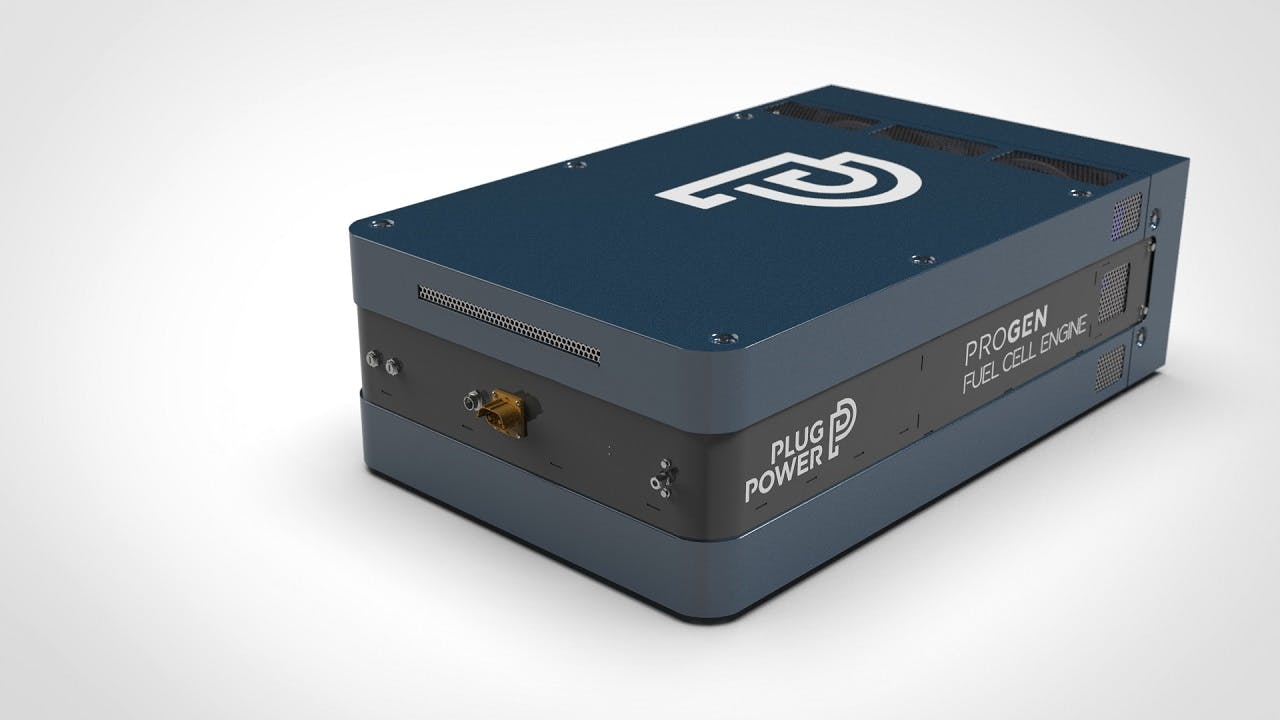
With the Nasdaq still in correction territory, renewable energy star, Plug Power (PLUG), is more than 35% off the all-time high. This is after a large bounce off the recent $34 low.
When the stock made a new all-time high of $75 in late January, we started to get signals of a top forming. We warned our premium readers, and even provided downward price targets we would be looking to start a position. Our readers were skeptical when we suggested a short-term price target of $34 was on the table in a webinar. At the time, this level of correction seemed extreme, so we provided an upper target at $43 region. This price, based on our forward growth analysis, was a solid value.
As we hit the $34 region, we saw heavy buying. Based on the significance of this level from our analysis, we expect this level to hold on any retest in the near future. The excitement in renewable energy, plus the technical significance of the recent bottom, should put a floor at this level.
We see the move in Plug as a healthy pullback in a strong long-term uptrend. Plug is a key player in the global green energy trend. This coupled with how it has followed our outlined count, made us comfortable laying into the position on this pullback. The fact that we bottomed at the $34 region, so far, further confirms our long-term view.
We added to Plug at $43, and will look to add on any notable breakout.
With the NASDAQ100 down about 10%, the current bull market’s darling, Tesla, is down about 27%. Even after a 500% increase over the past year, we believe the current correction will provide a great opportunity to participate in this real trend, which we see accelerating in 2021.
The price data with Tesla suggests that a pullback to the $500-$495 region is on the table. This would provide the most ideal entry, and if we do see a drawdown to this level, expect heavy buying. We realize this would be a sizable drawdown; however, a correction to this level would confirm that our current long-term target of $1400 would be on track.
However, it’s worth pointing out that several momentum indicators/oscillators are currently at levels that have indicated significant market bottoms. For this reason, we may look to layer into a position in the $630s if we receive a series of buy signals.
We would position Tesla as a momentum play that we would likely sell if we approach our upside targets. This is not the stock we would be comfortable holding once we enter a bigger selloff, so we will lean heavier on technical analysis to both manage risk, and take gains.
View Webinar Here:
Disclosure: Beth Kindig currently owns shares of TSLA. This is not financial advice. Please consult with your financial advisor in regards to any stocks you buy.
With many popular stay-at-home stocks pulling back on heavy volume and Bitcoin testing $50,000, investors are wondering what’s in store for the world’s most popular cryptocurrency. While some traders have been—and still are—calling for a crash in Bitcoin, we see no reason to sell out just yet.
View webinar here:
Is This the Top?
After reaching a new all-time high of $58,300 over the weekend, Bitcoin is currently trading just under $49,000.
The downward move came on the heels of a warning by U.S. Treasury Secretary Janet Yellen that Bitcoin is an “extremely inefficient” way to conduct monetary transactions, and a tweet by Tesla CEO Elon Musk that the price seems high.
Bitcoin is still up more than 80% this year, and we’re long since $7,753 for a more than 580% gain in our I/O Fund, which is invested in the most important tech microtrends.
Currently we are monitoring the $53,000 to $56,000 region for Bitcoin, which the digital coin is trying to clear. This is an area we will likely begin to start taking small gains to reduce the percentage allocation of Bitcoin in our portfolio.
If Bitcoin can clear this level, the next level of interest is $70,000/$80,000, which will be the zone at which we will continue to monitor closey. If Bitcoin can clear this region, the next level up will be $100,000 to $108,000.
We believe that between $53,000 to $56,000, and the $70,000/$80,000 region, Bitcoin should make a local top. When stocks or crypto reach these levels, we re-assess to determine if we will buy more, hold or sell in our fund.
We’re Up 580% in Bitcoin! What’s Next?
Bitcoin is one of our largest holding at just under 8% of our I/O Fund.
In August 2019, when Bitcoin was trading at around $10,000—well below the 2017 high of nearly $20,000—Beth predicted that global unrest would help establish the digital currency as a safe haven for institutional and retail investors, pushing the market value to $1 trillion.
At the time, it was a contrarian call. But Beth’s analysis proved correct when Bitcoin’s total market value surpassed $1 trillion on Feb. 19.
We purchased Bitcoin in mid-March at around $7,750 and sent an alert to our premium subscribers. We alerted premium subscribers for additional entries at around $10,000, $11,000, $12,000, $20,000, and $49,000.
When Bitcoin was breaking out around $7,000 earlier this year, it was insane to predict Bitcoin would reach over $50,000. But that is what the technicals were suggesting at the time and this is what we published for our premium readers.
Is Bitcoin Due for a Pullback?
Remember when analysts and investors called for a top in Bitcoin at around $32,500? Instead of a top, we predicted a relatively mild pullback. We monitored $28,000 for a shallow pullback and $22,000 for a deeper pullback.
Over the long term, we believe there are a lot more gains to be made in Bitcoin.
In the short to intermediate timeframe we are due for a pullback, which we will view as a buying opportunity and alert premium subscribers. Until we see clear divergences at key technical levels, we plan to hold. However, once we start seeing signs of weakness at key levels, we often take gains and notify our subscribers.
Want to learn more about Bitcoin? Download our free e-book. To receive in-depth analysis on popular technology stocks, and alerts for key entries and exits, subscribe at research.beth.technology.free e-book. To receive in-depth analysis on popular technology stocks, and alerts for key entries and exits, subscribe at research.beth.technology.
The electric vehicle trend seems bubble-like because of the valuations compared to traditional carmakers. However, these are growth companies where traditional carmakers are value stocks. Therefore, you'll need to decide if you see EVs as innovative tech that is pressing the envelope or if EVs should be valued like traditional automakers.
I had made a comment in my free newsletter about playing pickle awhile back with a trend. I was referencing Tesla, of course, where we have remained on the sidelines. Tech growth investors should figure out – do you plan to own Tesla or one of its competitors –or do you plan to not participate in the EV market? When there are significant gains in one company and this marks the start of a trend, then not making a decision is making a decision.
Moving forward, we will allocate a portion of our portfolio to "EVs" and this may include any of the companies listed below. This is a real trend that we want to participate in. David is leaning into Lucid Motors, and I am covering China's EV market.
Here is the summary of the analysis below:
• David is keen on Lucid Motors as a long-range EV that rivals Tesla founded by the former Chief
Engineer at Tesla. Although the initial price point is very high the company plans to release lower-priced models in the near future.
• I am interested in the lower price point that Xpeng offers and for its strategy to target the mid-tier and lower premium market. This makes sense to me in light of China's subsidies, especially since Tesla, Lucid, Nio, BMW, Mercedes – and now Apple will compete in the higher price range.
• Nio is appealing for its battery-as-a-service program and ability to compete with Tesla head-on in China as a domestic car company. Battery charging stations are a serious issue in China and Nio stands out for the battery swap described below.
• We also cover Li Auto, which is more family-oriented.
• Please also look for Knox’s coverage of Tesla from a technical analysis standpoint on the forum and any future webinars – especially as Tesla has added Bitcoin onto its balance sheet. We don't have much to add to this story fundamentally as the stock is well covered by other analysts but if Knox sees a breakout, then he may take it.
Part 1: Lucid Motors by David Marlin
Lucid is a disruptive, innovative company and we think there is more than enough hype and buying interest for this momentum to continue far longer than people expect. Knox is monitoring CCIV for an entry as the latest report shows that the merger with Lucid Motors is essentially done and will be formally announced as soon as this week.
A quick note on valuation …
Many investors will look at Lucid Motors, see they have $0 current revenue and dismiss the stock. It's important to know the market is always forward-looking. Money managers, analysts, and professional investors will typically look 1-2 years out when researching a company.
In the current market environment, they seem to be looking 3-5 years out in some cases. Why? The main reason is the Fed’s policy coupled with the low risk-free rate.
Professional money managers know the risk-free rate is the guaranteed return they can achieve by taking zero risk. When buying equities, investors are making a conscious decision that their returns will be worth the extra risk they are taking.
It’s important to note that the 10-yr rate has risen to 1.29% from 0.66% over the past few months putting some short-term pressure on the market. However, 1.29% is still a historically low rate and not yet a cause for concern for investors. If the 10-yr continues to rise, it will become a much bigger concern, but we are not at that point right now.
Lucid Motors Product Overview …
Somewhere over the last 10-15 years, the auto industry became the tech industry. It started with Tesla disrupting the traditional auto manufacturers by developing extensive proprietary technology for electric vehicles. The relentless rally in TSLA stock has sent every auto company in the world scrambling to produce EVs to capture the industry-wide shift. Even Apple has entered the arena with reports that they are actively working on car tech and plan to produce a vehicle in the next 3-6 years.
As in other subsectors within tech, we expect the company that produces the best and most advanced technology to capture the most market share. That is the case right now, as no company has been able to successfully challenge Tesla’s EV lead. The gap in innovation and technology could not be clearer as Tesla is essentially lapping its competition.
Enter Lucid Motors. Lucid’s CEO Peter Rawlinson said in an interview with CNBC last month that he was “disappointed the traditional auto industry hasn’t taken up the baton to compete with Tesla.” He went on to call the industry a “technology race”, which is exactly how we see it.
Lucid plans to deliver the Lucid Air, its first car, this spring from a new factory in Arizona. The first version of the Air — the Dream Edition — will go for $169,000 (see below for future pricing strategy).
CEO Peter Rawlinson was the former Chief Engineer of Tesla when the company first produced the landmark Model S. He told Forbes that in 2012, nobody believed him when he said the Tesla Model S would be lauded as the world’s best electric car. He said that he is receiving similar disbelief and hostility in response to claims that the Lucid Air will be a big breakthrough.
Even before they have delivered a single car, Lucid Motors is the only legitimate competitor to Tesla in the technology race. In his CNBC interview, Peter Rawlinson noted that the most important metric for measuring EVs is efficiency. The Lucid Air can achieve more than 4.6 miles per kWh versus the Tesla Model S record of 4 miles per kWh. Rawlinson has said that Lucid's efficiency is so much better than any other EV that the car uses 17% less energy to go a certain distance than their closest competitor.
The upcoming 2021 Lucid Air EV has a battery capacity of 113.0 kWh and a range as high as 517 miles. In comparison, Tesla’s 2021 Model S Plaid + announced a range as high as 520 miles, but the car will not be available until the end of 2021. The Lucid Air will also be the fastest charging battery-electric car in the world. The car can charge for 20 miles in one minute, or 300 miles in 20 minutes.
Below, we take a look at a more detailed comparison of the Lucid Air Dream Edition versus the Tesla Model S Plaid Plus:
As you can see, Lucid is a very real competitor to Tesla. We did not put a third automaker for comparison because there is not a third automaker that is even close technologically.
So, what about the valuation?
It is difficult to value Lucid right now because there is no revenue and have not delivered any vehicles. According to Forbes, Lucid could generate $900 million in 2021 revenue by making 6,000 Airs. Rawlinson told Forbes that volume could “top 25,000 units in 2022 as versions of Air priced at $77,000 arrive.”
We believe the best way to value Lucid is as a percentage of Tesla. Tesla has a current market cap of $755B, while CCIV’s implied market cap is around $70B. This would value Lucid at 10-11% of Tesla. Tesla should obviously be valued much higher than Lucid because they have proven the ability to scale, mass produce, and have built one of the best brands in the world. The question is, do those factors mean Tesla should be worth ~11x Lucid, a company that appears to be its equal in terms of technological development? We believe Lucid can be valued at 10-25% of Tesla for now, and potentially more in the future when they start successfully delivering vehicles.
In any event, Tesla may very well hit a $1T market cap at some point this year. At that point, Lucid should command a market cap north of $100B. I am expecting both companies to reach these milestones at some point this year.
The Future of the EV Industry
Elon Musk has said many times that his mission for Tesla is not to produce EVs for wealthy individuals, but to drive EV adoption globally and on a grand scale. Tesla has made great strides in making more affordable vehicles but still has a way to go.
Peter Rawlinson shares a similar mission for Lucid, as noted in Forbes: “He plans to use the Air’s 1,080-horsepower propulsion technology to “power cheaper electric vehicles [enabling Lucid to sell] hundreds of thousands of mid-
$40,000 electric cars and help big automakers sell $25,000 mass-market EVs” by 2026.”
Lucid is starting out as a premium, luxury EV that will appeal to wealthy individuals. However, the company plans to produce cheaper cars ultimately and use its technology to help other automakers produce EVs.
We believe the auto industry will consolidate over the next 5-10 years as companies with inferior technology are squeezed out of the market. Similar to the mobile phone industry where Blackberry, Nokia, and others could not keep up technologically, we will likely see a similar scenario play out in the EV market. It would not be surprising to see the global EV market dominated by a few companies that offer the best capabilities.
In the past, automakers like Mercedes and BMW would target a certain area of the market while Honda and Toyota would target another. With Tesla and Lucid planning to ultimately target the mass market, that will no longer be the case. Many legacy automakers targeting niche markets will likely fail because it will become abundantly clear which companies produce the best product. We would not expect consumers to pay a similar price to buy a mobile phone that has 50% the battery life that an iPhone has. The same will be true in the EV industry, as well.
Tesla has been called the Apple of the EV market as the innovative leader in the industry. In Lucid, Tesla has its first real challenger. We believe Lucid is positioned to be one of the few EV companies that dominate the industry along with Tesla. May the best technology win.
Xpeng has dipped about 25% since we first covered the stock. We think now is a good time to expand on EVs and why we are bullish on this company.
As noted in the original Xpeng blog post, please keep in mind the company's lock-up expires on February 23rd with earnings out on March 8th. We’ve kept some dry powder for this position to allocate after the lock-up. We do expect volatility in this category as Tesla has proven is par for the course.
The company released January 2021 results with 6,015 vehicles delivered, a 470% increase year-over-year. The delivery consisted of 3,710 P7s and 2,305 G3s. This compares to 5,700 EVs in December and 8,500 vehicles sold in Q3.
At this rate, Xpeng will grow annual deliveries (and implied revenue) by 266% if you assume 6,000 deliveries a month for FY2021 at 72,000 vehicles compared to FY2020 at 27,050 vehicles. There will be new record months in 2021 and we believe the annual run rate of 72,000 vehicles is low. The estimated deliveries will put revenue at around $2.2 billion for Xpeng in 2021, which puts us at a 14.5 forward P/S. There will be times we see a 10 forward P/S or lower and a 20 forward P/S or higher in this category.
The goal here is for Xpeng to beat 6,000 deliveries a month because this will lead to revised estimates for 2021, which then leads to a higher stock price. That's the number we want to meet or exceed. I won't be too concerned if this isn't met every single month (i.e., we all saw the Tesla ups and downs tied to deliveries) but I also think Xpeng is more than capable of exceeding this number which is why we are invested.
The main catalyst that should help Xpeng meet these numbers is the lidar-equipped XPILOT sedan coming out in 2021. This will be the first electric vehicle equipped with lidar for autonomous driving and is based the Nvidia Xavier Drive system. Notably, Nvidia is releasing a more powerful drive system called Orin which is scheduled for production in 2022.
According to the deputy chief engineer of China Association of Automobile Manufacturers, China’s EV sales might reach 1.8 million units in 2021, up 40% from a year earlier due to economic growth, continuous stimulus policies, and sales promotions from manufacturers.
The company recently added assisted highway autonomous driving through the Xmart OS 2.5.0 on January 26th.
NIO:
The key driver for Nio is that China’s well-off and affluent population has exceeded 500 million.
NIO provided a delivery update on January 3rd with 17,353 vehicles delivered in Q4, representing an increase of 111% year-over-year and exceeded the quarterly guidance.
For FY2020, the company delivered 43,728 vehicles for an increase of 113% year-over-year. Cumulative delivered reached 75,641.
In the month of December, the company delivered 7,007 vehicles compared to the previous record in October of roughly 5,000 vehicles. The company continues to show strength in doubling its numbers.
In Q3 2020, NIO reported revenue growth of 146% year-over-year for $666 million. This represented quarterover-quarter growth of 22%. The company reported 13% gross margins compared to (12%) in the year-ago quarter. Vehicle margins also improved at 15% compared to (6.8%).
As with Tesla, the losses are the more concerning issue with electric vehicle manufacturers. Nio reported an adjusted net loss of $147 million which equates to an adjusted loss of ($0.12) EPS. The company had $3.3 billion in cash and $1.2 billion in debt as of September 30th. On January 19th, the company closed $1.5 billion in Convertible Senior Notes.
Battery Swaps and Battery-as-a-Service (BaaS)
NIO designs its cars around the battery pack with an interchangeable tray for 70-kWh and 100-kWh battery packs. The three models the company offers all use the same battery packs which helps facilitate battery swapping and battery leasing. Although a handful of attempts at battery swaps and battery leasing have failed, NIO is making this strategy work by offering free battery exchanges that are strategically located near their customers. The company is currently swapping over 4,000 batteries a day.
In August, NIO launched Battery-as-a-Service which provides car owners with the choice to either buy the battery or to lease the battery. Leasing the battery will cut down the price of the vehicle by 20% from around $52,000 USD to $42,000 USD. This means you can buy a luxury NIO for less than a BMW, Audi or Mercedes with the battery lease.
The monthly lease costs $140 per month for the 70-kWh battery pack. There is a flexible upgrade offering to the 100 kWh for a longer trip at $230 per month. Keep in mind, the fuel costs nothing so the lease is equal to the cost of gas.
In November, NIO launched the 100-kWh battery pack with 37% higher energy density than the 70-kWh battery. According to the press release, the 100-kWh battery can reach up to 615 kilometers compared to Tesla’s roughly 500 kilometers for its most expensive model.
NIO delivers a faster battery than a charging station. The strategy of battery swaps is popular in China where many residents live in apartment buildings.
As stated, various companies have attempted this before such as Renault. However, NIO connects all of the dots to offer a complete ecosystem supporting the battery swap and leasing programs. NIO also offers performance parity which means the customer does not need to worry about battery degradation as NIO guarantees the EV will perform years later as if its brand new.
NIO has formed a partnership with CATL to handle the battery business. CATL is the supplier that will repair and replace battery packs and also recycle cells. After the life of the battery has been used, they will be repurposed for bikes and scooters.
Valuation and Forward Guidance
The median analyst’s revenue estimate for 2020 is 63% year-over-year to $2.46 billion and for 2021 is 94% growth to $4.77 billion. The median EPS estimate for 2020 is ($0.58) and for 2021 is ($0.33).
Total revenue for Q4 is estimated between $921.8 million and $947.9 million for approximately 120% to 126% growth YoY and 38% to 42% QoQ.
On January 9th, NIO Day was held in Chengdu, China where the first sedan model ET7 was introduced with autonomous driving features and a larger 150 kWh battery pack for a range of 621 miles. Tesla’s Model S has a range of 402 miles and Lucid Motors has the longest range on the market of 517 miles. Nio’s ET7 will start at $69,000 with a 70kWh battery pack or $58,000 with battery-as-a-service (BaaS).
The ET7 is enabled by a sensor system called NIO Aquila and a super computing platform called NIO Adam. NIO Aquila has 33 sensing units and 11 high-res cameras and one long-range lidar laser. NIO Adam features four Nvidia's DRIVE Orin SoCs with over 1,000 TOPS of performance. Per this press release, Nvidia and NIO will work together on future fleets.
Nio has a high forward P/S of 17 although if the growth continues in the 100% range then there will be room in the valuation as the quarterly results come in. We fully expect to see EVs trade at a forward P/S of 10 at times and forward P/S of 20 at times although it’s becoming apparent the market is valuing EVs (and AVs) as tech companies with growth valuations.
EVs will be hard to time which is why we initiated in Xpeng and prefer to layer in. They are hard to time because the growth is phenomenal and the tailwinds are strong yet there is major volatility in this category. We think the information presented above justifies having exposure to this category and to continue layering in.
Analyst views
Nomura has a buy rating on Nio Limited. They like the company’s top-down launch of its EV pipeline – starting with luxury flagship model ES8, followed by more consumer-friendly models and variants.
As a first mover in BaaS, Nio "should benefit from the price advantage over other OEMs." The analyst believes that by "improving swapping time to only three minutes without human-labor, and with plans to add minihotspots (around the size of three parking spaces) covering most parts of the major cities in China, NIO hopes to redefine the whole user experience of owning an EV.”
Citi downgrades Nio to a neutral rating from Buy. It warns of potential competition for ET7 from Tesla Model S facelift. Citi turns cautious on its shipments forecast for Nio and now expects 2021 shipments of 82K vs. 92k prior and sees 2022 shipments of 144K vs. 162K prior.
Li Auto
Li Auto’s lockup expired January 26th.
Li Auto released its delivery update on January 1st with 6,126 Li Ones delivered in December 2020 for an increase of 530%, which is not very relevant given the first delivery started on December 4th of last year. However, the company did grow quarterly revenue by 67% quarter-over-quarter with 14,464 deliveries in Q4.
The first quarterly release as a new company was Q3 with total revenues of $369 million, up from 29% in Q2. Gross profit margins are better with Li Auto than peers Nio and Xpeng at 19.8% when compared to 13.3% in Q2 2020. Adjusted loss from operations was $6.6 million and adjusted net income of $2.4 million. The (thin) profit margin separates Li Auto from its EV peers.
The company has cash of $2.79 billion and debt of $380,000 as of September 30th.
Guidance for Q4 is between $457.8 million and $499.4 million representing an increase of 23.9% to 35.1% from Q3. The median analyst revenue estimate for 2020 is $1.41 billion to $2.94 billion for growth of 109% year-overyear. The median EPS estimate for 2020 is ($0.11) and for 2021 is $0.01.
Li Auto Key Differentiators
Li Auto announced the adoption of NVIDIA’s next generation autonomous smart driving chip Orin. According to the company, Li Auto will be the first OEM equipping its vehicles, the full-size extended smart SUV to be launched in 2022 with the powerful NVIDIA Orin SoC chip.
Li Auto is focused on SUVs priced between $20,000 USD and $70,000 USD.
One of the key differentiators for Li Auto is extended range EV technology (EREV) which allows drivers to charge the battery pack with electricity or gas. Battery EVs (BEV) are the more popular EV in China per Li Auto’s S1 filing with 81.3% of the sales volume in 2019 with Li Auto being the “first successfully commercialized EREV in China.”
In the S-1 Filing, Li Auto points out that Battery EVs face challenges, such as a lack of charging stations and limited residential parking spaces compounds this issue. The ratio of parking to car is 2 to 1 in first-tier cities with less than 25% of families in China having access to a suitable space for home charging compared to 70% in the United States. This causes Chinese EV customers to rely on public charging infrastructure with EV to public charging station ratio of 7.4 to 1.
Li Auto also highlights their early profitability as an advantage over its battery-powered competitors with bill of materials being 40% to 50% higher than ICE vehicles. the cost of lithium-ion batteries has decreased from $855 per kilowatt-hour in 2010 to $166 per kilowatt-hour in 2019 – yet the cost is only expected to decrease to $111 per kilowatt-hour in the next five years. The end result is that Li Auto can be more competitive on pricing compared to EVs while also more profitable. Li Auto also benefits from the 10% extra vehicle purchase tax on ICEs in China.
Li Auto provides this plot graph showing its range and cost is competitive in the SUV segment. Nio also looking good here with Xpeng not pictured.
In my opinion, one drawback is the lack of a sedan. Xpeng is an attractive stock for the P7 (and the growth that followed this release) and Nio for its upcoming sedan. Li Auto makes a case that China is relaxing the one-child rule yet having two children does not necessarily require a SUV. Despite relaxing this rule, the number of births in 2018 was at its lowest rate since 1961.
The sales numbers for sedans illustrated by Xpeng don’t agree with the statistics that the SUV segment is expected to become the largest segment by 2020 as measured by sales volume with a penetration rate at 45.4% now and growing to 49.2% by 2024.
ByteDance has invested $30 million in a Series C round.
Stem Energy is an AI-driven energy storage solutions business. Stem is the first pure-play smart energy storage company to go public in the US. The addressable market for this industry is massive with a projected $1.2T in new revenue opportunities for integrated storage that are expected to be deployed by 2050. Battery storage capacity is expected to increase 25x by 2030.
With the world committed to fighting climate change, Stem is well positioned to capture this tailwind. The company has developed a commanding lead in California’s behind-the-meter (BTM) storage market, the largest storage market in the US, with a current 75% market share.
In 2019, Stem was the leading commercial energy storage installer in California with 3x the kW installed as its closest competitor.
Source: Citron Research Report
Stem has also developed a lead over competitors as the top systems integrator by disclosed commissioned projects.
Source: Stem Investor Presentation
Stem has over 900 systems operating on its Athena AI software in over 200 cities worldwide. The AI software is designed to lower energy costs, reduce carbon emissions, stabilize the grid, solve intermittency, and create VPPs and storage networks. As cumulative installs grow, Athena becomes more intelligent through continuous learning, creating more value to new and existing customers.
Athena AI optimizes time-of-use and demand charges, resulting in 10% – 30% monthly electricity bill reductions. The product saves clients’ money and helps them meet their ESG targets without changing the way they operate. Apple, Amazon, Alphabet, Facebook, Walmart, Home Depot, UPS, and others are partnered with Stem. The implication here is that some of the top technology companies in the world have validated Stem’s proprietary technology. These partnerships represent a backlog of business that should continue to drive future growth. Stem’s SaaS contracts range from 10-20 years and contain recurring monthly payments that are driven by storage assets under management (AUM).
The $2T Biden Plan to build a modern, sustainable infrastructure and a clean energy future is changing the way companies think. Globally, the US has rejoined the Paris Accord to fight climate change and Japan has pledged to reduce greenhouse-gas emissions to net zero by 2050. California has issued a mandate targeting 0 Non-EV passenger vehicles sales by 2035.
Financials
Stem has a strong balance sheet with over $525M in net cash available and $0 debt. The company is still in its infancy with $33M in net revenue for the FY 2020. Revenue is projected to grow 348% YoY in 2021 to $147M. With the way the company recognizes its sales, 88% of its forecasted 2021 revenues are from contracts that have already been executed. This means there is minimal risk that the company will fall short of its 2021 revenue target of $147M. This also speaks to the backlog for future growth that Stem already has in place.
Revenue is expected to reach $944M in 2025, which would represent over 2,800% growth from the current number. The company expects to reach adjusted EBITDA profitability in 2022 and turn FCF positive in 2023. Gross margins of 16% are expected to improve to 38% by 2025. The gross margin improvement will be driven by Stem’s increasing software revenue, which is the highest margin portion of their business (~80%). As Stem’s AUM grows, software will become a material portion of gross profit and improve the company’s margins.
Valuation
Compared to some of the other high growth SPACs in the renewable energy space, STPK appears attractively valued (comparatively) based off forward projections.
The market appears to be missing the fact that Stem is not just a hardware company, but an AI-driven software company that is leading a massive market. The software segment of Stem’s business is positioned to grow rapidly as the company’s AUM grows. This will provide a source of recurring monthly revenue and cash flow to Stem while also improving gross margins exponentially.
Conclusion
With numerous catalysts in place, the US energy storage industry is expected to grow at a 45% CAGR through 2030, the fastest of any country in the world. Stem is ideally positioned to benefit from this booming trend with its market leading technology and an impressive pipeline for future business already in place.
The top tech companies in the world have chosen to partner with Stem because their offering helps these companies lower energy costs, reduce carbon emissions, and hit their corporate ESG objectives without changing the way they function. Apple, Amazon, Alphabet, and Facebook have proven over the years that they are among the world leaders in adapting new technology. I expect other companies to follow their lead in partnering with Stem Energy.
Last month, Autonomous Vehicles fell into the “trough of disillusionment,” which is the downward slope that analyst firm Gartner publishes to show the hype cycle for certain technologies. You can think of this as “winter is coming” for tech products – a time when all of the buzz and excitement finally meets reality (note: artificial intelligence winter is a well-documented thing). The reality for autonomous vehicles includes regulations, production cycles, and delays in implementation for what is an extraordinarily difficult problem to solve – how to get machines to respond like humans at crucial moments. This gap between investor expectations (perception) and commercial deployments (reality) has created an autonomous vehicle bubble that will pop in 2019 as the next level of autonomy continues to face delays.
Brief Background on the 6 Levels of Autonomy
You can skip this section if you know the six levels of autonomous vehicles as published by SAE International. If not, this background is important to understand why the autonomous vehicle bubble occurred, and when it will burst.
Volatility is Closer than it Appears
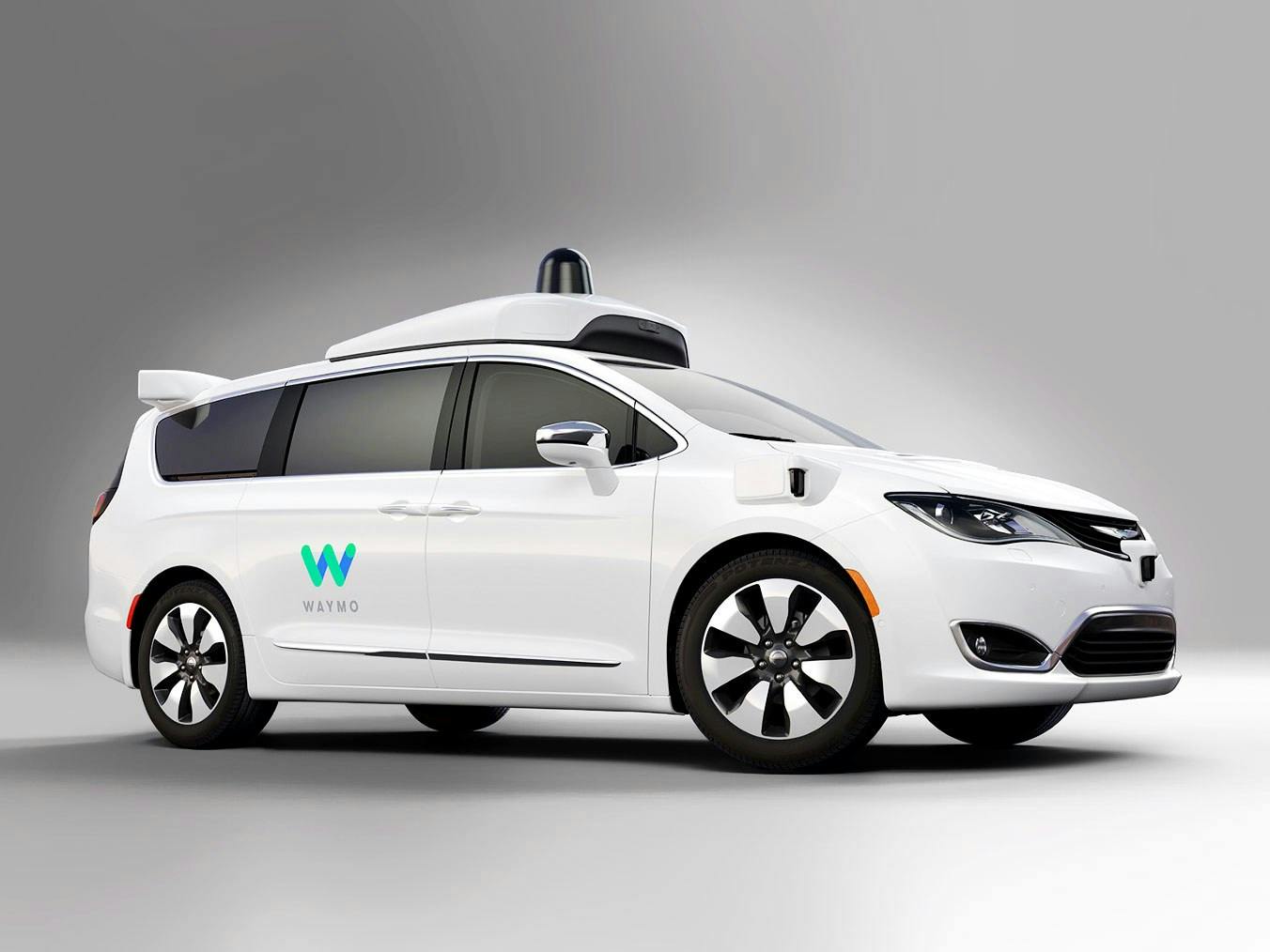
Waymo has been in testing since 2009 and has racked up more than 8 million miles on public roads and more than 5 billion miles in simulation. There are 600 self-driving Chrysler Pacifica Hybrid minivans on the road with goals of launching a commercial driverless transportation system later this year. This, and many other “near deployment” announcements have created massive expectations for the AV market, which is forecast to grow 10x from $54 billion in 2019 to $556 billion in 2026 at a growth rate of 39.47%[1]. For investors, the primary risk today is that these forecasts assume commercial deployments will occur on time.
As Mike Ramsey, a lead author on the Gartner report points out, even if Waymo and General Motors continue to debut driverless minivans or launch ride-hailing fleets, commercial deployments won’t be ready anytime soon. For example, the 2019 Audi A8 with Traffic Jam Assist with Level 3 partial automation, which has been anticipated for some time, has extended its release date another year due to foggy federal regulatory framework, infrastructural differences, and a lack of consumer understanding of self-driving technology[2].
The regulation hurdles between Level 2 and Level 3 and delayed deployments will put immense pressure on stocks that are overvalued based on AV speculation. ABI Research, an advisory firm that reports on market-foresight trends, predicts 8 million consumer vehicles with Level 3 to Level 5 autonomy will ship in 2025. Compare this to the 94.5 million vehicles sold in 2017 which equates to 8.5% of sales[3]. This is a small and fairly insignificant percentage of market share to be chasing 7-years ahead of deployment. Yet, investors are pouring cash into hyped up stocks- and the press plays a large role in this. Headlines are a continual churn of autonomous vehicle “moments” – every partnership, every mile driven, every make and model that adds another feature. To be clear, we’ve only gone from a Level 1 to Level 2. We are not able to release Level 3 AV right now – and yes, that includes Elon (most especially Elon – read my Tesla analysis here).
My newsletter subscribers get this information first. Sign up here.My newsletter subscribers get this information first. Sign up here.here.
One example of this investment bubble is when Tesla’s stock skyrocketed in 2016 while Adam Jonas from Morgan Stanley, a lead underwriter, said that Tesla’s ridesharing network was worth $244 a share. However, reality has set in, and Adam Jonas has now changed that valuation to $95 per share or $17 billion by 2040[4]. The following year, Tesla went on to surpass BMW’s market cap of $60 billion in 2017 despite posting a loss of $725 million from 80,000 vehicles compared to BMW making $7.7 billion from 2.4 million vehicles. Meanwhile, the 2017 deadline for a full rollout for self-driving has come and gone. And as recently as this month, Tesla officially stopped promoting the “Full Self-Driving” option for its cars.
Another example is GM, whose shares have dipped more than the broader markets, erasing any gains from its peak in October of 2017. The hurricane sales from last September helped the stock, which rose 11.9% from the previous years, however the stock has retraced and is now trading at $31-$32 per share. GM is no stranger to pushing the autonomous vehicle hype with executives commenting that Cruise Automation was making “rapid progress” back in October 2017, and in a blog post, the CEO stated, “in the coming months, we’ll take the next bold steps in testing our autonomous technology as we lead the way to fully self-driving vehicles without any human driver as a backup.” Those months have come and gone, of course.
Research studies have proven that consumers are very confused by the high profile promises, which Thatcham Research calls “dangerously confusing.” In a recent study, 71 percent of respondents around the world believe they can buy an autonomous vehicle today – yet there is not one autonomous vehicle on the market. The top three brands that consumers mistakenly believe distribute self-driving cars include Tesla (40%), BMW (27%), and Audi (21%). Of these, 11 percent say they would take a brief nap while using assist systems. Therefore, the disconnect between perception and reality is widespread – and not only in the investment community.
Startups will do their part in the autonomous vehicle bubble, as well. Zoox, Inc is a startup that has raised $800 million with a $3.2 billion valuation — but has not made any revenue yet. The premise of Zoox is to forego partnering with auto manufacturers by deploying their own vehicles. Essentially, the idea is to skip the AV iteration and deployment line and go directly to Level 4 or Level 5 autonomy with no prior manufacturing experience – all by 2020. Meanwhile, there is no mention of regulations, safety and security hurdles in the deployment estimate, or anything else related to practicality for that matter. And as Bloomberg reported, “Even with all of that cash, Zoox will be lucky to make it to 2020, when it expects to put its first vehicles on the road – ‘It’s a huge bet,’ [the founder] concedes.”
A note on Nvidia and Intel
I’m working on a separate analysis of these two companies. Follow me for updates.
Nvidia and Intel are in a well-publicized arms race to capture the autonomous vehicle market. With the ongoing PR focusing on AV, one could almost forget that Nvidia gets its revenue from gaming first and foremost, with data centers as the second driver of revenue. In fact, Nvidia’s revenue breakdown in order is: primarily gaming (4x all other revenue), data centers, professional visualization, OEM and IP, and then in last place, auto.
On a side note, gaming is a formidable industry worth $160 billion to $180 billion (this is 3x the size of the OTT market, for instance) – which is one reason Nvidia should stabilize in the short term. Nvidia is also set to capture data centers by providing chips for the GPU cloud, which powers machine learning and artificial intelligence. You can see this growth in the chart above as data center revenue has begun a nice upward trajectory. In other words, one reason I recommend Nvidia in the long-term precisely because they are not dependent on autonomous vehicles for future growth. When the autonomous vehicle revolution finally gets here, it’ll be a nice bonus to their already strong profit margins.
Intel on the other hand is dependent on the data center revenue that Nvidia is slowly chipping away at (apologies for the pun). Intel will have to prove it can compete with the GPU-processing power of the market leader in virtually every forward-thinking segment.
Note: In the short term, both of these stocks currently face potential volatility due to trade war issues with China.
Predictions at current prices: Sell: Tesla, GM and Intel
Hold: Nvidia
It’s understandable if you missed the headlines that Apple may buy Tesla. That piece of speculative news, like most news about Tesla, has been overshadowed by the PR storm that surrounds the CEO’s behavior rather than based on the technology behind the product.
Here’s some background information for those who missed it. Simultaneously with the CEO’s investigation for violation SEC law 10b-5, rumors began to circulate that Apple may buy Tesla. Some of these rumors were started by Ross Gerber, a Tesla investor, while others sourced the VC firm Loup Ventures, and the gossip is still being echoed a month later. Essentially, the prediction is that if Tesla fails to become profitable, “Apple gains the upper hand and becomes the most likely investor or buyer.”
From a technical standpoint, the theory of an Apple acquisition is nearly impossible. The authors oversimplify (or don’t even address) where Apple is in the development stack, where autonomous vehicles (AV) are in the maturation cycle, and the ongoing failure points in AV technology that Tesla is not able to solve.
I understand there are a lot of Elon fans rooting for him, and perhaps some satisfied Tesla owners who will read this, but stock investors are in a different class. They can’t afford to follow a fad because returns are at stake. With that said, here are three blatant reasons as to why Apple won’t touch Tesla, and why I won’t either. (There is information on shorting Tesla below).
My newsletter subscribers get this information first. Sign up here.My newsletter subscribers get this information first. Sign up here.here.
1. Apple Makes The World’s Best Software– Not Vehicles
Apple will not buy Tesla for the very fact that Apple doesn’t need to manufacture a car in order to capture the autonomous vehicle (AV) market. Apple is a computer and software company and AVs will require powerful computing systems. The cars released today with connectivity features have the computing power of 20 personal computers and feature over 100 million lines of programming code. Next decade’s semi-autonomous cars will have 300 million lines of code, and the distant future of fully autonomous will have 1 billion lines of code. Apple will not limit itself to the 200,000 cars that Tesla sells annually, (or even 320,000 if the current quarter is to be sustained), while at the time assuming the overhead, cyclical sales and incumbent competition of an auto manufacturing when it can capture a piece of the 82 million vehicles sold globally through the core business of supplying software. Keep in mind, Tesla is one among many who have achieved Level 2 autonomy with no indication they can safely release beyond Level 2. This makes the small amount of production Tesla actually does even less impressive from an acquisition standpoint (more on this below).
2. Apple Vs. Google: Nothing New Here Folks
The cars that Apple and Google have on the market are used to test the operating system and nothing more. These vehicles are not necessarily trying to compete with GM, Ford, Volkswagen or Audi. That’s why Apple and Google are seeking partnerships with them – they’re not competing with them. For instance, Google has run tests with Lexus/Toyota, and Jaguar Land Rover, and Apple has partnered with Volkswagon. Even still, we are at least a decadeaway from having full autonomous vehicles on the road due to technical mishaps, security vulnerabilities and government regulations. Of these, security will be the biggest hurdle to overcome as you can’t test for every possible scenario. This is because the electrical components in a car (known as the electronic control units, or ECUs) are connected via an internal network. The peripheral ECU introduces vulnerabilities such as the vehicle’s infotainment center, which means WiFi or Bluetooth can grant access to core systems such as the brakes and transmission.
AVs closest comparable for security today is the smartphone, with roving mobile sensors and signals, and iOS is challenging to hack. Can GM and other Detroit manufacturers duplicate the level of secure, computing power which Apple has perfected over the last 40 years with a closed ecosystem and the last 10 years with roving mobile signals? It’s not likely Detroit will compete with Cupertino on the machine learning required for 300 million lines of code or more, combined with full-system security, and it’ll take only one car hack before this is realized. (GM’s On Star was hacked in 2015).
This is true in the reverse, as well. Cupertino and Mountain View don’t have the talent recruits or experience that Detroit and Munich have in car manufacturing. Tesla most certainly doesn’t as the CEO is a mobile payments entrepreneur from Paypal (yes, he led a team that launched rockets — but there are no competitors here – except NASA which only spends money – therefore this is irrelevant for what Tesla faces).
3. Baby Steps: Connected Car, then Semi-Autonomous, then Fully-Autonomous
As Tim Cook said, “[Autonomous Systems] are probably one of the most difficult AI projects to work on.” There are six levels to autonomous vehicles as published by SAE International. The cars released today are primarily “connected cars” featuring driver assistance (level 1) or partial automation (level 2). Tesla’s Autopilot is a Level 2 system.
What will it take to get to a Level 3? Level 3, also known as conditional automation, is hands-off and eyes-off, but still requires a human. The first to market (and only vehicle to reach the public market as of yet) is the Audi A8 featuring Traffic Jam Pilot which continues to see delays in the United States. This is why it may be at least a decade before we see level 4, high automation, or level 5, full automation. (This is despite Elon Musk tweeting that Tesla will release full automation by 2019 – but at this point, it’s safe to say we should not put your money behind these tweets).
Gartner, one of the most trusted sources for predicting technology development cycles, has placed autonomous vehicles at more than 10 years out on their most recent hype cycle graph. This hype cycle graph predicts the maturation phases for new technologies and is hauntingly accurate in predicting the ebb and flow of tech and startup fads. Remember the wearables crash? Yes, Apple Watch survived but many did not – including Google Glass despite its backing. How about Virtual Reality – especially fan favorite Oculus? As you can see in the chart below, we have just exited the peak of inflated expectations and are on the way towards the trough of disillusionment. Short sellers of Tesla this year and last year may have been basing their calls on the CEO’s behavior but we are now about to enter major technology road blocks and consolidation that unbiased analysts predict will put even the highest performing AV companies to the test – with many low performing AV companies will not survive (see where Tesla is rated below). The current shorts are not wrong, they are simply too early in the maturation process for AVs and have had a bumpy ride because of this.
4. Would you Bet On a Horse in Nineteenth Place?
In a recent report released in Q1 2018 by Navigant Research, automated driving systems were rated on 10 criteria: go-to market strategy, partners, production strategy, technology, sales, marketing and distribution, product capability, product quality and reliability, product portfolio, and staying power. Of the nineteen companies that Navigant objectively analyzes, Tesla came in last place at number nineteen.
There is a “cost and complexity” once you take a “human driver out of the control loop,” as Navigant states, and it is my belief that the partnerships which are forming between software companies and auto manufacturers will continue to outrank Tesla in product capability, reliability and security (something Navigant did not report on) – not to mention the basics of production cycles and manufacturing vehicles at scale.
Here are the top 10 from the Navigant leaderboard:
Top 10 Vendors:
GM
Waymo
Daimler-Bosch
Ford
Volkswagen Group
BMW-Intel-FCA
Aptiv
Renault-Nissan Alliance
Volvo-Autoliv-Ericsson-Zenuity
PSA
Conclusion:
Apple has many opportunities to enter the connected car and semi-autonomous vehicle market, and the best card to play will be the through the OS in the level 1-2 category similar to Google’s recent announcement that the Android OS and Google Assistant will be featured across the Renault-Nissan-Mitsubishi Alliance. Taking these baby steps now is a much smarter move for Apple than acquiring a horse that is in nineteenth place with the race heating up to reliably and safely reach Level 3 and Level 4 autonomy. In this regard, there is nothing to here to acquire.
Although there is no doubt that Waymo is ahead of Apple (and everyone, really) in the race towards automation, if Gartner and many other unbiased sources are correct, Apple has time to develop a driving system in-house (or perhaps acquire a machine learning automation startup) as we are at least 10 years from full automation.
Beth.Technology Prediction: Telsa shorts were right but their timing was off. We are in a Level 2 AV bubble, and it will burst as Level 3 and Level 4 experiences growing pains (lots of cash has poured in with too high of expectations on when when AV will start to turn a profit). Tesla, a luxury electric car company, will struggle greatly in the competitive hurricane for reliable and safe automation. Therefore, I’m considering a short on Tesla in 2019 or 2020, which I plan to time with the AV bubble bursting.