Skip to content
Logo-main-white.860316a8

I/O Fund

  • Home
  • Free Stock Analysis
  • AI Stocks
  • BEST OF 2025
  • Analysts
  • Nvidia Hub
  • About
    • Case Studies
    • About Us
    • Premium Services
    • Pricing
    • Notable Wins
    • I/O Fund Reviews
    • Media
  • Contact Us

Category: Consumer Tech

What Everyone Should Know Before Facebook’s Q3 Earnings Call

Posted on October 30, 2018June 30, 2026 by io-fund
What Everyone Should Know Before Facebook’s Q3 Earnings Call

Facebook’s earnings call today may be the most anticipated call of Q3. The stock has tumbled since the last quarterly earnings call from a high of $217 in July to a low of $142. Three months ago, Street analysts did not think this was possible – and many still have price targets at $200. I believe bullish financial analysts are distracted by Facebook’s security costs, news feed fatigue and Instagram while underestimating the most important number on Facebook’s earnings call tomorrow –user growth rate.

Background on Facebook’s User Growth Trajectory

Facebook’s rampant growth from 2004-2017 was due to a viral coefficient formula which is also known as the k-factor. The k-factor equation was taken from epidemiology, in which a virus that has a k-factor greater than 1 indicates exponential growth. The equation for virality for websites and applications describes the growth rate:

k = i * c

i = number of invites
C = conversion rate

When K is equal to one or greater, you have viral growth.

Facebook’s growth rate trajectory was exponential because people found the network more rewarding when more people they knew joined the network. The same will be true for Facebook’s deceleration, as well. As people start to spend less time on the social network, there will be viral deceleration.

To illustrate, a loss of 1 million users in the United States to Facebook is not a 1:1 loss, like it would be for Netflix or Google, where users are isolated from each other in a “silo.”

  • If I stop using Google, your search results are not affected.
  • If I stop using Netflix, your programming choices are not affected.
  • Even Twitter can withstand user loss as the platform is not based on a reciprocal following structure. This is why a celebrity can have 60 million followers, yet only follow 135 people in return.

If 1 million users close their Facebook accounts in the United States, however, it will be subject to a negative k-factor. These 1 million people who delete their accounts weaken the content on the platform for the 50 million-500 million people who were connected to them (assuming each user has at least 100 friends and some are inter-connected).

Now, if 2 million of the subsequent 50-500 million start to use Facebook less due to the impact the original 1 million had, then another 500 million to 1 billion will have a less enjoyable experience, which will reduce time on site. If 5 million from those 500 million find the platform less interesting because their favorite people have left the platform, the affects will continue to spiral.

My newsletter subscribers get this information first. Sign up here.My newsletter subscribers get this information first. Sign up here.here.

This is why Snap has been a popular short. Snapchat continues to lose daily active users on a quarter-over-quarter basis in North America and Europe. Only last May, Snap began to report a sinking growth rate of 2.13 percent – which was its slowest ever at the time compared to 5 percent in Q4 2017. See below for how Facebook’s user growth rate compares.

It should be noted that this was once Facebook’s strength and Twitter’s weakness. New users on Facebook had a low barrier to entry because total friend count grew relative to how much you reciprocate and follow back. Twitter, on the other hand, has had a tough time attracting new users because there is no reciprocation.

Facebook Reported Slowest-ever User Growth Rate in Q2 2018

The viral-coefficient-in-the-reverse explains why the most important metric for investors to pay attention to in Facebook’s earnings report is the user growth rate. Last quarter, Facebook’s monthly user count grew 1.54 percent compared to 3.14 last quarter. Daily active users grew even slower at 1.44 percent, compared to 3.42 percent last quarter. Previously, the slowest daily active user growth rate was 2.18 percent in Q4 2017. If this number becomes stagnant, the social media platform can decelerate very quickly. This is also why it’s possible for Facebook to report strong earnings and there still be a sell-off. If and when this number goes into the red, Facebook will have reached its peak as a social media platform –and profits will soon follow this trailing decline.

Disclosure: I shorted this stock in April of 2018 and have a put option on this stock as of October 2018 as I expect the user growth rates to continue to decline in the near future. Readers should also note these declines are more likely to occur in high average revenue per user markets (ARPU) such as the United States, Canada, and in Europe.

Read more analysis on how I predicted Facebook earnings prior to Q2 and analyzed Facebook would face GDPR trouble following Q1 2018 here.

I consult for financial firms. Inquire here.
Posted in Consumer, Consumer Tech, Cybersecurity, Financial Markets, Social MediaLeave a Comment on What Everyone Should Know Before Facebook’s Q3 Earnings Call

Who is Responsible for the Data Security of 50 Billion IoT Connections?

Posted on June 13, 2018June 30, 2026 by io-fund
Who is Responsible for the Data Security of 50 Billion IoT Connections?

This article originally appeared on IAPP.org, the International Association of Privacy Professionals.

“No matter what happens, don’t panic,” were the words used by hackers just before they hacked a 2014 Jeep Cherokee. It wasn’t your typical hack, where credit card information is stolen, or a denial of service attack is propagated, or a website is taken down. This incident involved disabling the transmission and brakes of a vehicle driving 70 mph. In other words, this is the kind of hack that could take someone’s life.

Car hacks make juicy headlines, but dating back as far as 2007, we saw researchers demonstrate how a generator could be destroyed. In 2014, hackers broke into a German steel mill and prevented a blast furnace from being shut down. As recent as last year, Norse and the SANS Institute released a study revealing 375 U.S. health care organizations were actively compromised between September 2012 and October 2013.

As the Electronic Frontier Foundation recently pointed out, the old security paradigm “felt that human beings were the problem and tech is the solution.” What the internet of things pushes forward is a reversal on the old paradigm that humans are the solution to the problem that technology creates.

If we look closer at the human supply chain and data security for IoT, there are three key players: manufacturers, developers and end users.

Here’s how they can advance the future with foresight (rather than the proverbial hindsight):

1)   Manufacturers

We are finding that many manufacturers can engineer connected parts but do not have the security staff or experience to protect the features. Automotive and medical device companies release embedded systems with no one on staff to respond to a vulnerability report.

The product cycle typically looks like this: The manufacturers have a limited budget, as with all product releases, their primary goal is user adoption – not security. As the researchers and hackers find security flaws, user adoption is increasing, and the manufacturer has to release a patch or issue a recall. By this time, cybercriminals have an open opportunity to exploit the embedded system or flawed IoT gateway.

Original equipment manufacturers should focus on security from the product design stage, which will involve additional in-house security professionals or dedicated partners. With an average of 25 vulnerabilities per device, interconnectivity demands rigorous protection. One approach to improve the R&D cycle is to generate more revenue from the IoT device in order to invest early in more security checkpoints. One medical device company saw 10 to 20 times the revenue when opting to give a device away for free and charge monthly, moving from charging for IoT products to IoT services. This move helps incentivize the manufacturer to keep the device or embedded system on the market.

Also, to lump all manufacturers together would be a mistake. Many large software companies who have always handled security well will continue to do so – no matter the number of connections or level of proliferation. Apple tends to be a front runner on how they handle security, however, manufacturers can learn to lean more on legacy-level security companies to help test, iterate or secure, post-production, the connections and systems they release. “Leave it to the experts” is as true now as ever.

2)   Developers

Nearly 40 percent of large companies, including Fortune 500 companies, are not taking proper precautions to secure the apps they build for customers. On average, large organizations spend $34 million on mobile app development, of which only 5.5 percent is allocated to ensure that mobile apps are secure. Much more attention and focus is given to design even as we see the number of cyber attacks grow. And if those numbers seem shocking, consider that 50 percent of the organizations devote zero dollars to mobile security.

The mobile hackers we see today are able to break into highly valuable data through the insecure app or public WiFi networks. The mobile app hacks of tomorrow are those of embedded automotive IoT systems, flying drones (weighing up to 50 lbs), medical devices and other high-risk devices. Fundamentally, the IoT is about core components such as sensors for measuring temperature or wind speed and actuators to initiate driving a car or injecting insulin. As more and more gateways and apps connect to these core components, especially those in motion such as vehicles and drones, we will have a sudden and urgent need for developers to consider security testing imperative.

The IoT gateway is a device in the field responsible for gathering data from sensors and communicating with actuators. These are installed in homes, control systems and automobiles. One solution is to create a security framework that uses public key cryptography to authenticate communication between remote devices and gateways. This will prevent both data access and also unauthorized signals. Another fix for developers, according to Luca Dazi, who presented at the JavaOne Conference in October 2015, is to employ a framework that uses public-key cryptography to certify new software updates before installation. Lastly, another security step is to generate unique passwords for each device to provide different variants that are combined to generate the master password.

Beyond individual efforts, open source communities also cannot be underestimated. The idea of inviting your peers to help you find the vulnerabilities in your software or app build is quite powerful, and an open source community may be the right antidote for a porous ecosystem of this magnitude.

3)   End Users

What responsibility does the end user have, if any?

It would be difficult to rely on end-user education, rather than a push for open standards, protocols and industry organizations playing the role in IoT privacy and security. For instance, when you buy a phone charger, you don’t expect to have to do your own testing to make sure it is safe, you just look for a Underwriter’s Laboratory code on it. The way this would translate into IoT security would be to bake the open standards and protocols into the products as a matter of course, and standard bodies would then make sure the devices comply with security.

As always, end-user trust will be a key differentiator in the IoT marketplace.

Posted in Consumer Tech, CybersecurityLeave a Comment on Who is Responsible for the Data Security of 50 Billion IoT Connections?

Top 5 Security Risks for Connected Cars

Posted on June 13, 2018June 30, 2026 by io-fund
Top 5 Security Risks for Connected Cars

The global market for connected cars will grow by 270% by 2022 with 125 million passenger cars expected to ship worldwide between 2018 and 2022.1 By 2020, it’s estimated that UK, France and Germany will reach 100% connected car penetration. Growth in the European region is due to the eCall mandate which requires new cars to automatically dial the 112 emergency number in the event of a serious accident.2 While North America and Europe lead in the highest percentage of shipments, China accounts for 32% of shipments.

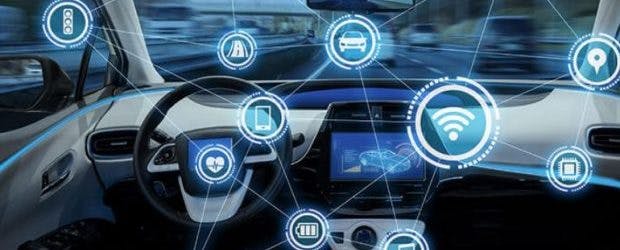
The list of connected features enjoyed by consumers that add more opportunities for security attacks include streaming radio, Wi-Fi access points and remote-control mobile phone applications. However, with these conveniences comes responsibility. The recent death of a woman in Arizona who was struck by an Uber in autonomous mode has put a spotlight on what can go wrong in connected vehicles as manufacturers seek to introduce more high-tech features to remain competitive to car buyers. Not surprisingly, 68% of Americans are fearful of cars with self-driving features.3

The increasing number of smart features built into cars opens door to a serious threat – hacker attacks. Because connected cars are linked with the Internet and its crucial parts are interconnected over a network, adversaries have the potential to remotely access and manipulate the data being exchanged leading to a number of problems, such as leaked personal information, overcoming vehicle’s security mechanisms, or even full remote control of the car.

Threats to the Connected Car

Innovative automakers, software developers, and tech companies are transforming the automotive industry. Drivers today enjoy enhanced entertainment, information options and connection with the outside world. As automobiles move towards more autonomous capabilities, the stakes will raise in regards to security. Even if cars are not entirely driverless, the functions will become increasingly dependent on applications, connectivity, and sensors. Vehicle-to-vehicle (V2V) and Vehicle-to-Infrastructure (V2I) allow the car to communicate with other cars and infrastructure such as traffic lights. Vehicle speed adjustments, telematics, and AI voice recognition and interfaces will become common features.

The rapid increase of these technologies inevitably creates the risk of hackers gaining access and control to the essential functions and features of those cars and utilizing information on drivers’ habits for commercial purposes without the drivers’ knowledge or consent.

Here are some of the risks for connected cars:

  • Stealing personally identifiable information(PII): Today, sensors generate 25 GB of data per hour and this is expected to double considering there will be 200 sensors installed in connected cars by 2020 up from 100 sensors in 2015. Once autonomous vehicles become mainstream, the 17,600 minutes Americans spend driving annually will equate to 300 TB of data per year.4 Financial information, personal trip information, location information and entertainment preferences are just some examples of PII that can potentially be stolen through a vehicle’s system.
  • Connection security: Like other connected devices, vendor implementation flaws are often exploited by researchers for proof-of-concept attacks. However, it is inevitable that these will be followed by real life attacks. The current poor state of security on connected cars creates a tempting target for cyber criminals.


  • Manipulating a vehicle’s operation: Catastrophic incidents resulting in personal injury and lawsuits may be in the near future. Well-known cybersecurity researchers Charlie Miller and Chris Valasek have demonstrated several proof-of-concept attacks where they were able to control the braking and steering of a car by accessing the adaptive cruise control system.5 Although costly and with a lower likelihood than data breaches and unauthorized entry, this sort of attack has now been proven possible to a global audience.


  • Unauthorized vehicle entry: Car thieves now have a new way to gain entry into locked vehicles. Many vehicle technologies have opted to replace physical ignition systems with keyless systems using mobile applications or wireless key fobs. These new access mechanisms mean that methods of obtaining illicit entry include intercepting the wireless communication between the vehicle and the mobile application or between the wireless fob and the vehicle to gain entry credentials, among other methods. The New York Times has documented methods such as wireless key emulation devices and “power amplifiers” that increase the range of the wireless signal looking for the entry credentials. If the owner is in a house or other location close to the car, criminals can then gain entry when their wireless fob responds.6


  • Mobile application security: As more automobile manufacturers release mobile applications that communicate with cars, mobile applications are quickly becoming a major target for malicious behavior. One example of a flaw in a mobile application happened when Nissan had to pull its NissanConnect EV application for the Nissan Leaf.7 The poor security of the application allowed security researchers to connect to the Leaf via the Internet and remotely turn on the car’s heated seating, heated steering wheel, fans and air conditioning. In an electric car, this meant the possibility a malicious actor could drain the battery of an unsuspecting owner. Mobile applications themselves can be vulnerable in a number of ways. According to Gartner, 75% of mobile applications would fail basic security tests.8 Mobile operating systems themselves are a source of concern—over the last four years, there has been a 188% increase in the number of Android vulnerabilities and a 262% increase in the number of iOS vulnerabilities.9
Posted in AI Stocks, Consumer Tech, Cybersecurity, Electric Vehicles, Internet of ThingsLeave a Comment on Top 5 Security Risks for Connected Cars

New Trends in On-the-Go Entertainment for Flights and Cars

Posted on June 12, 2018June 30, 2026 by io-fund
New Trends in On-the-Go Entertainment for Flights and Cars

Smartphones have popularized the concept of on-the-go entertainment with users now spending over five hours per day on their mobile device. This steady demand is great for businesses as long as this usage has reliable 3G or 4G broadband, or WiFi access. Data efficiency decreases the farther one travels from metropolitan areas, whether that be by plane or automobile, whereas the demand for entertainment is constant.

In-flight entertainment systems and broadband are popular with 70 percent of survey respondents citing they would be willing to pay 7 USD for connectivity[1]. Total revenue from these passenger connectivity services will reach $5.4 billion by 2025 growing at a rate of 23 percent CAGR[2].

Wireless in-flight entertainment is expected to reach 9000 aircrafts by 2021 with connected commercial aircrafts reaching 23,100 by 2025. Market size is expected to reach 9.82 billion by 2024[3] with in-flight broadband growing at a CAGR of almost 11% [4].

While these estimates seem in-line, the IFE connectivity may achieve an even higher trajectory due to High Throughput Satellites (HTS). Connectivity will increase 3x reaching 1,500 Gbps by 2017 while increasing 5x to 285 Gbps in 2018. These increased data speeds will also lower costs contributing to more widespread adoption for IFE services.

Cars are also pushing forward on-the-go entertainment with the global in-car market expected to reach $33.8 billion by 2022 up from 14.4 billion in 2016. The automotive landscape is undergoing a drastic change with only 2% of cars online in 2012 compared to an estimated 90% to be connected to the IoT by 2020. [5].

An Infographic on Key Trends in On-the-Go Entertainment:

an infographic on key trends in on-the-go entertainment
Posted in Consumer Tech, Internet of Things, Mobile, TravelLeave a Comment on New Trends in On-the-Go Entertainment for Flights and Cars

5 Ways Hackers Attack Mobile Devices and Applications

Posted on June 12, 2018June 30, 2026 by io-fund
5 Ways Hackers Attack Mobile Devices and Applications

Hackers go about achieving their goals with reverse engineering software to find vulnerabilities they can exploit, data they can extract, or ways to modify the software to do something it was never intended to do. The primary consequences of applications getting hacked include financial loss, destroyed brand reputation, exposure to liability, and regulatory risk.

Over 7 billion identities have been stolen in data breaches over the last eight years equal to one data breach for every person on the planet. 

Why do Hackers Attack Mobile Devices and Applications?

In order to understand threats, we must understand what hackers are trying to achieve. Hackers will mount different kinds of attacks to achieve different kinds of goals. And so, defending against hackers in the context of application security may involve defending against many different kinds of attacks on your mobile device.

Hackers might be interested in bypassing business logic. For example, they might want to bypass controls that let them cheat at a video game or violate the terms of a software license. Of more serious concern is the potential for hackers to bypass controls in safety critical systems. It is not inconceivable that lives could be at risk if a hacker were able to hack a medical device, connected car or some component of critical infrastructure, such as a wind farm, a coal or nuclear power plant, a power grid, or a water treatment facility.

According to a recent study, automobiles today run systems that have more than 100 million lines of code. Those applications often contain valuable intellectual property, which hackers would rather steal than develop. For example, they might be a competitor or a nation state with inferior technology attempting to improve their own products in order to compete more effectively.

Hackers might also be interested in obtaining valuable pieces of data that are managed within the application, such as music or video, financial data, or privacy sensitive health data.

While data can be protected with cryptography, this only shifts the problem from protecting the data directly to protecting the cryptographic keys. Cryptographic keys are not only used to protect data. They can also be used to create a secure identity for a device.

A device may need such a key to authenticate to a cloud service. If a hacker were able to obtain this secret, they might be able to masquerade as that device or as the owner of the device. Cryptographic keys are also used to establish secure communications. For example, HTTPS is a familiar protocol that uses SSL/TLS to secure communication to websites. If a hacker were able to obtain these keys, they could snoop on or alter supposedly secure communications.

For all of these reasons, hackers are highly motivated to steal cryptographic keys embedded in or controlled by an application.

Sometimes hackers aren’t interested in the application itself, but using the application as a digital stepping stone to try to achieve some other goal. Hackers are often interested in obtaining root access on the device the application is running on, so they can install malware or use the device as a launch pad to attack something else.

Consider the 2016 Mirai botnet that infected web enabled cameras and installed a piece of malware that launched the largest distributed denial of service attack in history against the dynamic domain name service Dyn, causing wide spread internet outages. Those 100,000 cameras were able to launch 1.2 terabytes per second of data at a major piece of the global internet infrastructure. Here the goal of the attacker was not to compromise the webcam directly, but rather to bring down the web services of many companies whose DNS was controlled by Dyn.

Hacking Mobile Devices: Reverse Engineering and Tampering

Hackers employ two fundamental techniques when attacking: reverse engineering and tampering. If the hacker is trying to bypass business logic, they have to find where in the application the business logic resides. That requires reverse engineering. Then they typically must tamper with the application to bypass that logic.

If the hacker is trying to steal intellectual property, sensitive data or cryptographic keys from an application, they have to know where to look in the application. Unless those secrets are obvious, hackers need to reverse engineer the application to find them.

If the hacker is trying to create a stepping stone attack, they often use the workflow shown in Figure 1:

  • First, they find some vulnerability in the application, which again requires reverse engineering;
  • Then, they craft an exploit that takes advantage of that vulnerability;
  • Finally, they attack by launching the exploit to the application.

In a remote attack like the popular SQL injection attack, this may involve sending the message to the application over the internet. But if they have physical access to the device, which with mobile and IoT based systems can be as easy as a trip to the store, then they can directly tamper with the device.

Posted in Consumer Tech, Cybersecurity, Cybersecurity, MobileLeave a Comment on 5 Ways Hackers Attack Mobile Devices and Applications

Should We Build a Backdoor into Mobile Devices?

Posted on February 22, 2018June 30, 2026 by io-fund
Should We Build a Backdoor into Mobile Devices?

Two years ago the San Bernardino shooting stirred a debate within the security community regarding warrant-proof encryption. The debate, known as “mobile backdoor access,” refers to exceptional access to encrypted communications and data by law officials. In theory, the Department of Justice wants technologists to “hide a key under the door mat” for law officials to access when they have the proper warrants. However, many security professionals and technologists have resisted this request due to creating weaknesses that are irreversible and require falsified automatic updates which may introduce other vulnerabilities.

Perhaps the biggest conflict for technologists, as pointed out by Herbert Lin, the Senior Research Scholar of Cyber Policy and Security at Stanford, is that anything less than deploying the best security (that is technologically possible) could constitute a neglect of professional obligation and ethics. Last November at the Intertrust LINE event, I had the opportunity to interview Lin, who is on the front lines of this debate. The conflict, as he pointed out in his keynote, exists in whether you can technologically design a system allowing exceptional access that is also secure. The security community says this is not possible while law enforcement says it is possible. Lin argues the parties are not talking about the same thing, as to talk about the same thing will require less-than-maximal security for users and less-than-desired capability for law enforcement (the proverbial grey area). In other words, maximal security is a technology issue, and adequate security is a policy issue — and it’s impossible to use a technical argument to solve policy.

Watch this 2 minute clip by Herbert Lin briefly covering the topic of mobile backdoor access: “Should We Build a Backdoor Into Mobile Devices?”Should We Build a Backdoor Into Mobile Devices?”

In his keynote, Lin poses questions that all sides must eventually answer during this debate and inevitable compromise, including tech vendors and the privacy community.

Questions we must answer for mobile backdoor access:

Questions for Law Enforcement:

· Why is law enforcement unwilling to acknowledge they’re asking the public to accept a lower level of cybersecurity?

· Why has a technical proof of concept not been provided? You think it can exist. Then prove it.

· How often and for what purposes are exceptional access capabilities expected to be used? If it begins for terrorism, when will it end?

Questions for Tech Vendors:

· Why do vendors provide password features if they’re against backdoors? This proves there situations where technologists have decided the benefits outweigh the consequences.

· How would exceptional access stifle innovation? Why should information technology not be subject to regulation? Lin points out technology is often subject to regulatory measures such as seat belts in cars.

Questions for the Privacy Community:

· What is the actual harm of having a back door? There are many people who are worried about being harmed that would not actually be harmed.

· How often are improper exceptional accesses expected to occur? The privacy community has the understanding there are to be zero improper uses, while one in 1 million or one in 10 million is more reasonable.

Click here to view the full keynote by Herbert Lin, entitled “Unresolved Issues Regarding Exceptional Access to Encrypted Data and Communications.”

Thanks for reading.

p.s. Don’t forget to follow me if you enjoyed this article!  On Twitter @Beth_Kindig and on Medium 

Posted in Consumer, Consumer Tech, Cybersecurity, CybersecurityLeave a Comment on Should We Build a Backdoor into Mobile Devices?

Hot Startups in IoT

Posted on January 19, 2018June 30, 2026 by io-fund
Hot Startups in IoT

The Internet of Things (IoT) has enjoyed a lot of attention from analysts and researchers who expect the number of IoT connections to surpass the human population this year. It’s no surprise there are quite a few startups in IoT. But how many of these products will actually be used? And does IoT simplify life or only add more gadgets in an already gadget-frenzied world?

An open-source analysis of IoT user behavior conducted by Harvard Business Review collected from 1,000 IoT technology platforms and 279,000 early adopters found that the most heavily used IoT programs made home life easier. The top 3 most preferred systems extended security, quantified the self, such as measuring body mass index (BMI) or sleeping patterns), and optimized machines to automate functions such as turning off lights when someone leaves the house.

A few months back, Santa Clara hosted the IoT World conference, which is known as the largest IoT conference in the world with 400 speakers, 250 sponsors and exhibitors, and an attendance of over 11,000 people. I attended this conference and found the following startups in IoT to be on the mark for both innovation and also answering demand for consumer needs:


Hot Startups in IoT:

1. Owlet:

Owlet has created a smart sock to track a baby's heart rate and oxygen levels while they sleep

In 2015, there were about 3,700 sudden unexpected infant deaths (SUID) in the United States with 1,600 confirmed from SIDS. These deaths occur in infants less than 1-year-old and have no immediate obvious cause, creating stress for parents of newborn babies. Owlet has created a smart sock to track a baby’s heart rate and oxygen levels while they sleep. The gadget features a sensor within the sock that connects to a smartphone to log and track the data collected. The technology is called “pulse oximetry” that works like the red light used in hospitals placed on the index finger to measure heart rate and oxygen. If the baby’s oxygen levels or heart rate exceeds the acceptable range, the monitor sounds the alarm. Owlet is still in the process of FDA approval and cannot yet claim to prevent SIDS, however, some parents already claim to be sleeping better.


2. Swarm Technology

Swarm Intelligence was introduced in 1989 by Jing Wang as a collective behavior of decentralized, self-organized systems and was employed for artificial intelligence, especially in regards to cellular robotic systems. The inspiration for “intelligent” global behavior comes from nature, such as ant colonies, bird flocks, animal herding and bacterial growth. The company, Swarm Technology, takes this concept and applies it to distributed processing, heterogeneous processing, machine learning and multi-agent artificial intelligence. Alfonso Inguez, the electrical engineer who developed the idea, explains the CPU broadcasts ‘this is what I need’ and the other computers or hardware that are interconnected and part of the internet of things lends to the fulfillment of what is being broadcast. Iniquz explains the key concept is “that the co-processors are not sitting idle waiting to be told what to do; they’re actively looking for work.”

Swarm Intelligence was introduced in 1989 by Jing Wang as a collective behavior of decentralized, self-organized systems and was employed for artificial intelligence, especially in regards to cellular robotic systems.


3. Grid Connect

The smart home market continues to be plagued by high device prices, limited value and hard to install devices as pointed out in my article in VentureBeat.  Centralization may be necessary for the connected home to work, but where should we limit this? If the benefits we’re looking for are interoperability and efficiency, then the connected home should limit centralization to only this, allowing the rest of the appliances and electronics to be decentralized. GridConnect helps facilitate this balance with the Connect Sense Smart Outlet. Released in 2015, the company announced the addition of power monitoring to the Smart Outlet and ConnectSense app in late 2016. With the ConnectSense app, users can integrate scenes and rules for the Smart Outlet and other home automation devices regardless of manufacturer. The power monitoring also helps to give insight into the power consumption of the devices plugged into the Smart Outlet. The ConnectSense app also gives the ability to create rules based on power usage.

4. Mynt

Smart trackers are becoming increasingly sophisticated and Mynt is not only reasonably priced but offers a full set of features such as accurate position tracking, playing music, taking a picture, recording video and sharing location, to name a few. By attaching Mynt to your valuables, your smartphone will alert you if you leave your keys or wallet behind, or if your pet is lost. Mynt is also a bi-directional tracker that has a built-in buzzer if you leave your phone. You can also locate your car by saving your parking location or take a selfie with Mynt by using it as a remote control for your cell phone camera. Although not the only Bluetooth tracker on the market, Mynt is extremely thin and reasonably priced at $19.99.

Please note: The I/O Fund conducts research and draws conclusions for the Fund’s positions. We then share that information with our readers. This is not a guarantee of a stock’s performance. Please consult your personal financial advisor before buying any stock in the companies mentioned in this analysis.

Posted in AI Stocks, Broad Market Today, Consumer, Consumer Tech, Health Tech, Internet of Things, Tech Stock NewsLeave a Comment on Hot Startups in IoT

Posts navigation

Newer posts

Recent Posts

  • The IPO Glut of 2020: Why Valuations Have Gone Too Far
  • Zoom Discusses Two Important Catalysts In Q1 Earnings
  • Three Risk Management Tools the I/O Fund Offers
  • Micron Is Up 900%. Here’s Why the AI Memory Trade May Still Have Room to Run
  • Credo: Reliability Leader Aggressively Moves into Optics

Recent Comments

No comments to show.

Archives

  • June 2026
  • May 2026
  • April 2026
  • March 2026
  • February 2026
  • January 2026
  • December 2025
  • November 2025
  • October 2025
  • September 2025
  • August 2025
  • July 2025
  • June 2025
  • May 2025
  • April 2025
  • March 2025
  • February 2025
  • January 2025
  • December 2024
  • November 2024
  • October 2024
  • September 2024
  • August 2024
  • July 2024
  • June 2024
  • May 2024
  • April 2024
  • March 2024
  • February 2024
  • January 2024
  • December 2023
  • November 2023
  • October 2023
  • September 2023
  • August 2023
  • July 2023
  • June 2023
  • May 2023
  • April 2023
  • March 2023
  • February 2023
  • January 2023
  • December 2022
  • November 2022
  • October 2022
  • September 2022
  • August 2022
  • July 2022
  • June 2022
  • May 2022
  • April 2022
  • March 2022
  • February 2022
  • January 2022
  • December 2021
  • November 2021
  • October 2021
  • September 2021
  • August 2021
  • July 2021
  • June 2021
  • May 2021
  • April 2021
  • March 2021
  • February 2021
  • January 2021
  • December 2020
  • November 2020
  • October 2020
  • September 2020
  • August 2020
  • July 2020
  • June 2020
  • May 2020
  • April 2020
  • March 2020
  • February 2020
  • January 2020
  • December 2019
  • November 2019
  • October 2019
  • September 2019
  • August 2019
  • July 2019
  • June 2019
  • May 2019
  • April 2019
  • March 2019
  • February 2019
  • January 2019
  • December 2018
  • November 2018
  • October 2018
  • September 2018
  • August 2018
  • July 2018
  • June 2018
  • May 2018
  • April 2018
  • February 2018
  • January 2018

Categories

  • 5G
  • About
  • Accounting Tips
  • AdTech
  • Ai Platforms
  • Ai Platforms
  • Ai Platforms
  • Ai Platforms
  • Ai Platforms
  • Ai Platforms
  • Ai Platforms
  • Ai Platforms
  • Ai Platforms
  • Ai Platforms
  • Ai Platforms
  • Ai Platforms
  • Ai Platforms
  • Ai Platforms
  • Ai Platforms
  • Ai Platforms
  • AI Stocks
  • AI Stocks
  • Analysts
  • Application Monitoring
  • Application Monitoring
  • Applications
  • Applications
  • Applications
  • Applications
  • Applications
  • Applications
  • Applications
  • AR
  • Audit Reports
  • Autonomous Vehicles
  • Autonomous Vehicles
  • Autonomous Vehicles
  • Autonomous Vehicles
  • Autonomous Vehicles
  • Autonomous Vehicles
  • Autonomous Vehicles
  • Avod
  • Avod
  • Battery Charging
  • Bear Market
  • Bitcoin
  • Bitcoin
  • Bitcoin
  • Bitcoin
  • Bitcoin
  • Bitcoin
  • Bitcoin
  • Blockchain
  • Blockchain
  • Blockchain
  • Blockchain
  • Blockchain
  • Blockchain
  • Blockchain
  • Broad Market Today
  • Bull Market
  • Bull Market
  • Chainlink
  • Chainlink
  • Chainlink
  • Chainlink
  • China Stocks
  • Cloud
  • Cloud Infrastructure
  • Cloud Infrastructure
  • Cloud Infrastructure
  • Cloud Infrastructure
  • Cloud Infrastructure
  • Cloud Infrastructure
  • Cloud Infrastructure
  • Cloud Platforms
  • Cloud Platforms
  • Cloud Software
  • Cloud Software
  • Cloud Software
  • Cloud Software
  • Cloud Software
  • Cloud Software
  • Cloud Technology
  • Company
  • Company
  • Console Gaming
  • Console Gaming
  • Console Gaming
  • Consumer
  • Consumer
  • Consumer
  • Consumer
  • Consumer
  • Consumer
  • Consumer
  • Consumer
  • Consumer
  • Consumer
  • Consumer
  • Consumer
  • Consumer
  • Consumer
  • Consumer Tech
  • Corrections
  • Crypto Investment
  • Ctv
  • Ctv
  • Ctv
  • Ctv
  • Ctv
  • Ctv
  • Ctv
  • Ctv
  • Ctv
  • Ctv
  • Cybersecurity
  • Cybersecurity
  • Cybersecurity
  • Cybersecurity
  • Cybersecurity
  • Cybersecurity
  • Cybersecurity
  • Cybersecurity
  • Cybersecurity
  • Cybersecurity
  • Cybersecurity
  • Cybersecurity
  • Data
  • Data Analytics
  • Data Analytics
  • Data Analytics
  • Data Center
  • Data Center
  • Data Center
  • Data Center
  • Data Center
  • Data Center
  • Data Center
  • Data Center
  • Data Center
  • Data Center
  • Data Center
  • Data Center
  • Data Center
  • Data Center
  • Data Center
  • Data Center and Processing
  • Data Warehousing
  • Data Warehousing
  • Data Warehousing
  • Data Warehousing
  • Databases
  • Databases
  • Databases
  • Databases
  • Dating
  • Defi
  • Digital Ads
  • Digital Ads
  • Digital Ads
  • Digital Ads
  • Digital Ads
  • Digital Ads
  • Digital Ads
  • Digital Ads
  • Digital Ads
  • Digital Ads
  • Digital Ads
  • Digital Ads
  • Digital Ads
  • Digital Ads
  • E-Commerce
  • Earning Updates
  • Earning Updates
  • Earning Updates
  • Earning Updates
  • Earning Updates
  • Earnings Report
  • Earnings Report
  • Earnings Report
  • Earnings Report
  • Earnings Report
  • Earnings Report
  • Earnings Report
  • Earnings Report
  • ECommerce
  • Electric Vehicles
  • Electric Vehicles
  • Electric Vehicles
  • Electric Vehicles
  • Electric Vehicles
  • Electric Vehicles
  • Electric Vehicles
  • Energy Stocks
  • Enterprise
  • Enterprise
  • Enterprise
  • Enterprise
  • Enterprise
  • Enterprise
  • Enterprise
  • Enterprise
  • Enterprise
  • Ethereum
  • Events1
  • Events1
  • Exchange
  • Faq
  • Finance
  • Financial Analysis
  • Financial Analysis
  • Financial Analysis
  • Financial Analysis
  • Financial Analysis
  • Financial Analysis
  • Financial Analysis
  • Financial Analysis
  • Financial Analysis
  • Financial Analysis
  • Financial Analysis
  • Financial Analysis
  • Financial Markets
  • FinTech
  • Fundamental Analysis
  • Gambling
  • Gaming
  • Genomics
  • Glossary
  • Green Energy
  • Growth Stocks
  • Growth Stocks
  • Growth Stocks
  • Headsets
  • Headsets
  • Health Tech
  • Hydrogen
  • Identity
  • Identity
  • Identity
  • Inflation
  • Inflation
  • Inflation
  • Internet of Things
  • Interviews
  • Interviews
  • Interviews
  • Interviews
  • Investing
  • Investing
  • Ltbh
  • Ltbh
  • Ltbh
  • Ltbh
  • Ltbh
  • Macro Trends
  • Macro Trends
  • Market Trends
  • Market Trends
  • Market Trends
  • Market Trends
  • Market Trends
  • Market Trends
  • Market Trends
  • Market Updates
  • Market Updates
  • Market Updates
  • Market Updates
  • Market Updates
  • Market Updates
  • Market Updates
  • Market Updates
  • Market Updates
  • Market Updates
  • Media
  • Membership
  • Mining
  • Mobile
  • Mobile
  • Mobile
  • Mobile
  • Mobile Gaming
  • Mobile Gaming
  • Mobile Gaming
  • Multimedia
  • Music Streaming
  • NVDA | NVIDIA Corporation
  • Performance Updates
  • Pin Content
  • Podcasts
  • Podcasts
  • Podcasts
  • Portfolio
  • Premium Research
  • Press Releases
  • Press Releases
  • Productivity
  • Productivity
  • Productivity
  • Productivity
  • Productivity
  • Productivity
  • Productivity
  • Reports and Whitepapers
  • Research Services Preview
  • Resources
  • Resources
  • Semiconductor Stocks
  • Semiconductors
  • Semiconductors
  • Semiconductors
  • Semiconductors
  • Semiconductors
  • Semiconductors
  • Semiconductors
  • Semiconductors
  • Semiconductors
  • Semiconductors
  • Semiconductors
  • Semiconductors
  • Semiconductors
  • Social Media
  • Social Media
  • Social Media
  • Social Media
  • Social Media
  • Social Media
  • Social Media
  • Software
  • Software
  • Software
  • Software
  • Software
  • Software
  • Software
  • Software
  • Software
  • Software
  • Software
  • Software
  • Software
  • Software
  • Software
  • Solar
  • Solar
  • Stock Analysis PDFs
  • Stock Updates
  • Stock Updates (Blogs)
  • Supplychain
  • Supplychain
  • Supplychain
  • Supplychain
  • Supplychain
  • Supplychain
  • Svod
  • Svod
  • Svod
  • Svod
  • Svod
  • Svod
  • Tech Podcast
  • Tech Stock News
  • Tech Stock News
  • Tech Stock News
  • Tech Stock News
  • Tech Stock News
  • Tech Stocks
  • Tech Stocks
  • Tech Stocks
  • Tech Stocks
  • Tech Stocks
  • Tech Stocks
  • Tech Stocks
  • Tech Stocks
  • Tech Stocks
  • Tech Stocks
  • Tech Stocks
  • Tech Stocks
  • Tech Stocks
  • Tech Stocks
  • Technical Analysis
  • Telehealth
  • Telehealth
  • Telehealth
  • Telehealth
  • Testing Equipment
  • Testing Equipment
  • Top Tech Stock News
  • Travel
  • Trends Report
  • Tutorials
  • Uncategorized
  • Updates
  • Updates
  • Updates
  • Video
  • Video
  • Video
  • Video
  • Video Footage
  • VR
  • Webinar Alerts
  • Webinar Alerts
  • Webinars
Proudly powered by WordPress | Theme: iofund by iofund.co.uk.