Skip to content
Logo-main-white.860316a8

I/O Fund

  • Home
  • Free Stock Analysis
  • AI Stocks
  • BEST OF 2025
  • Analysts
  • Nvidia Hub
  • About
    • Case Studies
    • About Us
    • Premium Services
    • Pricing
    • Notable Wins
    • I/O Fund Reviews
    • Media
  • Contact Us

Category: AI Stocks

Nvidia Premium Analysis

Posted on September 18, 2019June 30, 2026 by io-fund

We have a few years before Nvidia will show the market it’s true earnings potential. When a thesis is not reflected in the revenue segments yet, there are typically lower entry points and ongoing volatility. You’ll see in the technical analysis that although I could not be more bullish on this stock long-term, there is weakness in the semiconductor sector and we hope this translates to a lower entry point for our readers.   

The market is also in a fierce debate between AMD, Intel, and Nvidia and is also distracted by other chips, such as Micron and NXP. In my analysis, I look for growth. How big is the market relative to how big the company is now?

You can ignore Nvidia’s gaming revenue and other segments for the main trajectory that we are focused on. Gaming is great for stability and earnings reports, but the growth will not be from gaming (a market where Nvidia is already a mature, market leader). I’m also not focused on PC sales or the CPU-powered cloud, as the first is not a growth market and the second is not the piece in the cloud stack that will accelerate future technologies. 

I’ve written at length about the Mellanox acquisition and it’s a great reference for Nvidia’s long-term strategy. In this report, I’d like to break down what the GPU-powered cloud is capable of and why it’s important to differentiate Nvidia’s strategy from the competitors (and some competitors to keep an eye on).

0e2c95a4-828b-4858-bbee-199b8f618cb4_Nvidia-Premium-Analysis-1.pdf

Nvidia Premium Analysis

Introduction:

I’ve covered Nvidia a few times on my free blog, however, it would be a disservice to my premium members to not formally initiate coverage and provide critical updates to the GPU-powered cloud and AI economy as it’s built out. I believe Nvidia will be on my short list in a decade from now.

To be bold – I believe Nvidia will be one of the world’s most valuable companies by 2030. The research below organizes my investment thesis for the GPU-powered cloud and why I believe Nvidia will emerge as a clear leader. 

The question is how long can you have your money in a stock? This is a long-term play that requires a 10-year hold for the full return. Like Amazon, Google and Netflix, it requires ten years before emerging technology goes from a moonshot, to a viable company, to a less volatile company – and finally, to a profitable machine. Nvidia is a viable company that is volatile, proven during the crypto surge. Investors should see the crypto bust as an opportunity as the issues were not based on Nvidia’s core business. The trade war certainly hasn’t helped the stock price, either. 

We have a few years before Nvidia will show the market it’s true earnings potential. When a thesis is not reflected in the revenue segments yet, there are typically lower entry points and ongoing volatility. You’ll see in the technical analysis that although I could not be more bullish on this stock long-term, there is weakness in the semiconductor sector and we hope this translates to a lower entry point for our readers.    

The market is also in a fierce debate between AMD, Intel, and Nvidia and is also distracted by other chips, such as Micron and NXP. In my analysis, I look for growth. How big is the market relative to how big the company is now? 

You can ignore Nvidia’s gaming revenue and other segments for the main trajectory that we are focused on. Gaming is great for stability and earnings reports, but the growth will not be from gaming (a market where Nvidia is already a mature, market leader). I’m also not focused on PC sales or the CPU-powered cloud, as the first is not a growth market and the second is not the piece in the cloud stack that will accelerate future technologies.  

I’ve written at length about the Mellanox acquisition and it’s a great reference for Nvidia’s long-term strategy. In this report, I’d like to break down what the GPU-powered cloud is capable of and why it’s important to differentiate Nvidia’s strategy from the competitors (and some competitors to keep an eye on).

SECTION 1: Artificial Intelligence

Artificial intelligence is a collection of categories, including computer vision, natural language, virtual assistants, robotic process automation and advanced machine learning. The AI impact will not be linear, rather adoption will resemble an S-curve pattern with a slow start due to the substantial costs and investment required for applications. The slow start will be followed by an acceleration that is driven by competition across capabilities and innovations. The penalty is steep for laggards, as pointed out below.

The slow start to AI will cause many investors to become complacent, not realizing the artificial intelligence boat will quickly leave the shore, metaphorically speaking, once it is closed to new entrants. If you add in the inevitable recession that will follow this long bull market, we could see many investors rotate back to growth stocks too late to realize the full gains from AI.

As noted in the graph below, we should see an AI acceleration around 2022-2023. The last call for decent gains in AI will be in 2025, although by then, the gains will be somewhat diminished compared to investors who choose their AI stocks by 2021/2022. 

Basically, weigh the costs adding artificial intelligence to your portfolio earlier as opposed to later in the tech cycle as it’ll be one of the biggest economic growth drivers in history (more on this below).  

source: McKinsey

Nvidia’s acceleration may happen one or two years earlier as they are the core piece in the stack that is required for the computing power for the front-runners referenced in the graph above. There is a chance Nvidia reflects data center growth as soon as 2020-2021. 

Between the years 2025 and 2030, the stage after AI infancy, artificial intelligence is expected to add $13-$15 trillion to global economic activity, or 1.2 percent additional GDP growth per year. Compare this to the spread of information technology (IT) in the 2000s, which added 0.6 percent. Also, compare this to 5G technologies, which are expected to add $2.2 trillion over the next 15 years. 

McKinsey points out that front-runners, who are currently investing in artificial intelligence, will reflect an increase in positive cash flow of up to 120% from their AI investments. The capital required to invest in AI, however, is negatively affecting cash flow right now and will continue to do so throughout the next year or two. Laggards are expected to lose at least 20% of their cash flow from the negative impact of investing in AI too late (or not at all). 

Most investors today are well aware of what mobile and cloud did for tech stocks. These gains will seem minor in comparison to what artificial intelligence will do for your portfolio by choosing the right companies. 

Today, Nvidia is my top pick for AI. I will also be providing more AI stock picks throughout the next 1-3 years to ensure my readers are well prepared for the massive gains AI will deliver by 2030. I believe this report is being delivered before at least one more pullback in Nvidia’s future due to broader semiconductor weakness. 

It is too early for the data center to make an impact and this trajectory (data center) is what we are targeting. When I deliver information well before momentum, it helps to be patient with an entry and one of the main benefits of my reports is to give you that time, when possible.

SECTION 2: Competitive Positioning

Desktop GPUs is not the growth category that I am targeting for this investment thesis, which is why many oftcited statistics are irrelevant. For example:

“AMD shipments increased 9.8%, Nvidia was flat and Intel's shipments, decreased -1.4% as indicated in the following chart.” -John Peddie Research  

Many financial analysts and authors on Seeking Alpha (etcetera) are quick to think this means AMD is the better investment, whereas this statistic refers to a mature market. To cut through the noise, it’s important to remember this thesis is about the GPU-powered cloud. 

I’ve already covered why AMD is not as big of a threat to Nvidia as Wall Street believes. AMD has its hands full competing with Intel on the CPU-powered cloud and does not have the CUDA programming platform (more on this below). The two are competing in other segments (gaming, PCs) but those are less of a concern to the buyand-hold thesis in this report (data center). I can’t stress enough to separate these segments if Nvidia is of interest to you as a growth story.

Competitors to watch for at this layer in the data center stack are: 

•       Xilinx’s FPGAs, 

•       Intel’s FPGAs (through the acquisition with Alterra), 

•       Google’s TPUs (essentially an ASIC on the efficiency/flexibility spectrum). 

FPGAs have distinct advantages over GPUs as they offer a higher amount of on-chip cache memory to help reduce the bottlenecks from external memory, and are flexible enough to be reconfigured for various data types, such as binary, ternary, and custom data types, whereas GPUs must be modified at the vendor level. 

FPGAs are also known for power efficiency and test at 10x better in power consumption than GPUs and also 4x better than GPUs for general purpose compute. Reconfigurability for FPGAs help provide efficiency beyond deep learning for a large number of end applications and workloads. 

The architecture of FPGAs are very adaptable as the chips allow a user to address all of the needs of a workload with the resources provided by FPGAs. Meanwhile, GPUs are restricted as the architecture is a Single Instruction Multiple Thread (SIMT), which provides an advantage over CPUs but can result in lower performance efficiency.  

Today, FPGAs require knowledge of machine learning algorithms at the hardware level, in addition to the software development, and this is the barrier to entry for FPGAs. 

As readers of mine know, I like Xilinx and this will be a stock I cover in the future with a full-length report. The company operates in a niche, is the inventor of FPGAs and has the ability to attract developers to its ecosystem. The challenge with FPGAs is they are hard to program as most software developers are not able to program hardware. Xilinx is working on becoming more of a platform company to solve this issue, and if the company succeeds, it’ll be a worthwhile investment. 

Intel will face headwinds with developers, who are the ultimate decision makers for any ecosystem. Even now, you will be hard pressed to hear much discussion on developer forums and news feeds about Intel/Alterra’s FPGAs. Developers tend to avoid overly-corporate companies and cultures, and Xilinx has a serious shot of overcoming Intel if they execute correctly. 

AMD also has a decent chance of eating away at Intel’s market share on the CPU-powered cloud. Overall, I prefer pure play options, when possible, and most of my tech stock coverage focuses on this. In my opinion, Intel is not the growth story in these categories.  

This brings us to Google’s TPUs. TensorFlow is rising in popularity as a machine learning language and TPUs primarily run TensorFlow models. This is one of Google’s more successful experiments. They are cheaper and use less power than GPUs and are specifically focused on machine learning. 

TPUs train and run machine learning models and power Google Translate, Photos, Search, Assistant and Gmail – i.e. image recognition, language translation, speech recognition and image generation. TPUs do not compete with GPUs in other areas of artificial intelligence. 

It’s also important to remember that Nvidia and Xilinx are hardware companies that offer platforms for software developers. This is a distinct advantage compared to software companies (Apple, Google and Facebook) trying to release hardware chips. The market is so valuable, that they will most certainly try, but I think there are a lot of technical hurdles for a software company competing in the chip space other than Google. Workday’s cloud financial management solutions have less traction with 8 companies in the Fortune 500 and 530 customers overall.  

SECTION 3: Developer Ecosystem

In November of 2018, I wrote about Nvidia’s developer ecosystem as a primary moat. GPUs are hardware which require software to write applications and utilize GPUs. Nvidia has a special language called CUDA that is universally known due to a first mover advantage in GPUs. 

This ecosystem is not apparent to the public markets right now because new technology is developed in waves, and funded by venture capitalists in cycles. We are seeing the last of the mobile era of venture-funded companies with the IPOs of Uber and Lyft, — which began with Twitter, Yelp, Spotify — and was also reflected in Facebook’s epic rise from mobile native app revenue. 

We are in the later stages of the venture-funded cycle for cloud software, hence a string of newly public companies over the last two to three years with some runway to go in this category before the majority of use cases are claimed. For artificial intelligence, it is so early that it’s essentially invisible right now to the public markets as development teams are beginning to form. 

The strength of the developer ecosystem is what propelled Apple to become a $1 trillion company. While many investors look at iPhone sales, and Mac sales, the ecosystem that created by application developers is why Apple had an impenetrable moat. If the iPhone only had applications from Apple on the device (iTunes, iOS Maps, Safari browser), then many device manufacturers could have competed with Apple. The moat that Apple has enjoyed was created by the third-party developers who created iPhone applications in C and C++ with XCode, which made the device more attractive due to the mobile app ecosystem. 

Android then became the second operating system in the mobile duopoly. Due to the friction of learning too many languages, the mobile ecosystem did not entertain any further competitors. This is despite there being 5 billion smartphones globally (i.e. it’s certainly feasible from a consumer supply/demand view point to entertain more operating systems and app stores), yet the limitation came from the number of languages developers are willing to learn. Microsoft Windows failed because it launched too late, and developers had already chosen the two languages they were willing to work with. 

This is what is meant by developer ecosystem. Devices themselves do not have moats. The developer ecosystem creates the moat as third-party developers favor developing on certain operating systems and there is a limit to the programming languages they will learn before it impedes progress for the developer and the company the developer works for. 

This is what is happening with Nvidia’s CUDA. The chips themselves do not create the moat. The compute platform creates the moat. Due to the need for a universal language to build GPU-accelerated applications, universities are teaching CUDA, and students are graduating knowing Tesla/Volta chips over competing chips, such as AMD’s Radeon or FPGAs or TPUs. 

Here’s a quote from Marc Andreessen of Andreessen-Horowitz, one of the most successful venture capitalists in Silicon Valley: “We’ve been investing in a lot of startups applying deep learning to many areas, and every single one effectively comes in building on Nvidia’s platform. It’s like when people were all building on Windows in the ’90s or all building on the iPhone in the late 2000s.”

Here's another quote from a developer on Reddit:

“Nvidia, thanks to the CUDA software stack (which AMD cannot match), has a much more unassailable position than does Intel with Xeon CPUs (where an X86 application just runs on either a Xeon or an Epyc).” 

– software developer on Reddit

SECTION 4: Financials

In this case, I began with the investment thesis rather than the financials as the two do not sync up today. Gaming is Nvidia’s strongest revenue segment with $1.3 billion per quarter. Data center revenue has been flat to declining for three straight quarters, ranging between $634 million and $679 million.

The market is encouraged, yet cautious, with revenue of $2.58 billion in the most recent quarter fiscal Q2 2020, up 16.2%, yet down about 17% from $3.12 billion in the year-ago quarter. 

GAAP earnings was $0.90, compared to $1.76 a year ago, and $0.64 in the previous quarter. Non-GAAP earnings of $1.24 in the current quarter, compared to $1.94 a year earlier, and $0.88 in the previous quarter. 

Similarly, net income was down 50% year-over-year but up 40% quarter-over-quarter at $552 million. 

Next quarter, Nvidia is expecting $2.90 billion, plus or minus 2 percent, with gross margins of 62%. 

The bigger story this quarter was Nvidia’s gaming growth, which reflected 24% growth sequentially, with revenue of 1.31 billion compared to estimates of 1.29 billion. There is also evidence that inventory is normalizing with an inventory ratio of 50% and on track to lower to around 40% in fiscal Q3 compared to the previous ratio of 71%. 

As stated, the current financials do not reflect the growth expected from AI. 

SECTION 5: Technical Analysis

By Knox Ridley

5.1 Trend Lines and Internal Strength

Focusing on the black trend lines, you’ll see three sets. The upward trend in price, which coincides with the upward trend in momentum in the RSI, tracks two recent topping patterns in Nvidia’s price action. 

The trendlines coincide with each other. When both momentum and price roughly trend together, it can show a healthy trend in place. Using these corresponding trends can also offer reasonable warnings, as well.    

By following the approximate time at which both the RSI trend and price trend broke to the downside together, we can see safe and effective exits that allow you to side-step pull backs.  

Further information can be found by looking at the set of green and red arrows. Notice that just before the last top in Nvidia, before the May correction, as the price of Nvidia climbed higher, the momentum in the RSI was decreasing. So, when I see a divergence like this coupled with trendlines being violated, it’s a warning of a correction on the horizon.

This exact pattern is unfolding today if we look at the last set of trend lines in the price and RSI. With Nvidia’s RSI closing just below oversold levels and pointing down towards the black trendline, this same negative divergence pattern is unfolding in real time, signaling a weakening of momentum. A break in this trend on both the RSI and price, and we can expect more downside to follow.  

5.2 Elliot Wave Analysis

If we are forming a double top pattern, and Nvidia fails to break out above the $200 barrier, we can look at the retrace levels and expected extensions to gauge the likely targets for entry. First, if we zoom into the internal structure of Nvidia’s 3-month drop, which is highlighted by the light blue roman numeral count, you’ll see a very clear 5-wave drop.  

It’s hard to see anything other than 5-waves in this move, all of which line up with internal Fibonacci ratios. The first pattern in a correction being a 5-wave drop is a strong indication of a 5-3-5 corrective pattern, which is highlighted in purple.  

So, the Purple A was a 5-wave drop, while the purple B was a 3-wave correction, which touched the 50% retrace of Wave A before falling.  If this count is correct, we are just now completing the 2nd wave in the final 5-wave pattern. 

It’s always worth noting how the stock price reacts to these extensions.  The stock found major support at the 61.8% retrace, testing this level before meeting heavy resistance at the 38.2% retrace.  If Nvidia cannot break through the 38.2% retrace, the analysis is suggesting that we could see the final C wave play out, which will have Nvidia retest the 61.8% retrace level and likely make new lows.  

However, I want to be clear with our convictions in this position. Anywhere between $125 to $160 is a great entry. Even though the analysis in this count is suggesting that we could see lower lows, and correction will be welcomed for a long-term entry. Thus, we will update any entries if the pull-back scenario takes hold.   

Due to Nvidia’s fundamental strength, we will now look outside the individual stock for the cause of a sentiment shift.  Please also refer to the bullish scenario below.

5.3 Global Semiconductor Sector

Like most semiconductors, Nvidia is a global company that is manufactured overseas (mainly from Taiwan) with 44% of its sales coming from China.  Semiconductors are cyclical and sensitive to economic cycles. This is why we must look holistically at this sector when guiding an entry. 

The Korean KOSPI Index

South Korea is an economy that is fueled by some of the world’s largest semi-conductor companies, as well as many mid-level players.  Companies such as Samsung, and SK Hynix supplied over 60% of the components used in memory chips sold globally in 2018.  So, the KOSPI can provide more information about the global health of semiconductors.  

Since 2011, the index has been in a long-term uptrend, which it respected until very recently.  

The KOSPI broke through this trendline, highlighted in black, which coincides with the 61.8% retrace.  This level is now acting as resistance as the KOSPI is showing a negative RSI reversal pattern, which is indicating more downside is likely to follow.

This pattern is highlighted by the blue circles.  In short, as the price makes lower highs, the RSI is making higher highs, indicating that the buying pressure is not sufficient to reverse the trend as it reaches oversold levels.  This chart is anything but encouraging.  

Philadelphia Semiconductor (PHLX)

The Philadelphia Semiconductor index (PHLX) will have some international exposure, such as NXP Semiconductors and Taiwan Semiconductor Manufacturing Company, but it is populated with mostly US companies. Nvidia accounts for nearly 9% of its total value.  

Looking at the weekly chart, we can get a glimpse of the bigger patterns at play, which I believe are pertinent for where we are. If we start with the first long term trend from 2013 – 2015, you’ll notice that the price respected the first long-term trend line in magenta.  

The black arrows indicate the moment when the RSI and price broke their respective trends. This trend broke first on the RSI, then fell to a lower long-term trend highlighted in black. Once this trend broke along with the black trend in the RSI, the index gave way to a significant correction.  When these long-term trends break together, both in momentum and in price, it’s a warning to step aside.  

Further evidence can be found by the descending red line in the RSI leading up to the drop.  There is a negative divergence with the price and momentum.  As the price action increased leading up to the sell-off in 2015, the RSI made significantly lower highs, failing to break out multiple times.  When you see negative divergence that is followed by the RSI and price trend lines breaking, this is where technical analysis can help you avoid downside risk.  

Today, the price has managed to find a bottom, and has resumed a new trend, which is also highlighted in black, and appears to be trading in a diagonal pattern. The RSI is showing a divergence between the RSI, making lower highs while the price makes higher highs, just like we saw leading up to the 2015 correction. Furthermore, just like in the prior run-up before the correction, the RSI’s momentum keeps failing to break out of the descending trend highlighted in red.

Taking what we are seeing today, the evidence is leaning towards a more cautious stance.  The intermarket divergence we are seeing between the KOSPI and the PHLX, coupled with the weakness we are currently seeing in the PHLX, leads me to conclude that the KOSPI is a possible leading indicator of the semiconductor sector.  

Nvidia, being a major global player in the semiconductor space, is not immune to this broad market weakness.  With the weakness we are seeing with Nvidia’s chart as well, I think letting these patterns play out, will allow a safer and more optimal entry price. 

5.4 The Bullish Scenario 

I attempt to approach each chart from a blank slate. I let the data and analysis lead me with as little bias as possible. However, especially in a late cycle bull market, I always ask myself where I could be wrong, and what it would take for me to invalidate my primary thesis. The below chart is my alternative invalidation thesis.

From an Elliot Wave Count, the primary Wave 4 correction, which is highlighted in yellow, unfolded in an A-B-C pattern, highlighted in purple, and ended at the December low. This would mean that we are currently in the final 5th Wave push of the larger yellow count. This final 5th Wave will be an impulsive move, so its structure will have its own 5 waves.  This means that we have completed the Wave 1 and Wave 2, highlighted in purple and are currently in Wave 3.  If we look one degree lower into Wave 3, we have completed waves 1 and 2 of 3, and are about to breakout to the upside.

I have some issues with this count.  Specifically, when you zoom into the lower degree structure, we can see a 5wave structure down, who’s ratios line up like we want to see, and we can also see 3-waves up.  However, if we see a break above $200, this strongly implies that the Wave 4 in yellow is over, and that the bull trend can continue.  

I will need to see the RSI divergence forming to be invalidated by the RSI breaking through the red trend line as well as the price of Nvidia break through the $200 level. At $200, we may have left some minor gains on the table, but it is a much safer entry than where the stock is trading right now and worth the insurance. 


Posted in AI Stocks, Cloud Software, Cybersecurity, Semiconductors, Stock Analysis PDFsLeave a Comment on Nvidia Premium Analysis

Beaten-down Nvidia is diligently preparing to pounce on its rivals

Posted on August 16, 2019June 30, 2026 by io-fund
Beaten-down Nvidia is diligently preparing to pounce on its rivals

Nvidia’s stock went from unstoppable to nearly uninvestable in the matter of a few weeks last year and has not recovered. 

The sudden drop in Nvidia’s stock price and a competitive ecosystem that’s hard to understand are two reasons the chipmaker has scared away growth investors, who have opted for momentum bets such as cloud-software companies. The fact that semiconductor companies are cyclical, and mired in the U.S.-China trade war, has further overshadowed Nvidia’s growth potential. 

But the real story is that Nvidia is spring-loaded as its product offerings quietly gather strength in a market of enormous magnitude: artificial intelligence (AI). The path for Nvidia’s market domination in the AI economy, worth $15 trillion over the next decade, will be choppy now and exhilarating later. 

Nvidia’s profits have been slammed over the past two quarters, and will require a few more quarters to return to levels before the cryptocurrency bust, which reduced demand for Nvidia’s mid-range graphics chips. A spectacular comeback is not likely when the company reports earnings Thursday after the stock market closes. 

In the first quarter, Nvidia reported $394 million in net income and earnings per share (EPS) of 65 cents, down from $1.24 billion and EPS of $2.05 a year earlier. Analysts are predicting EPS of  $1.07-$1.24 for the third quarter. Still, profit margins are better than those of rival AMD, which booked net income of $35 million on revenue of 1.53 billion in the second quarter. Despite that, AMD’s stock has risen 79% over the past 12 months, compared with Nvidia’s -40% 

Nvidia vs AMD

Taking a somewhat contrarian stance, I do not regard AMD as Nvidia’s primary competitor. AMD is more focused on Intel and taking market share from the CPU data center. Nvidia’s true rivals are FPGA chips from Xilinx and Intel/Alterra. I also believe AMD will have to choose if it plans to go against two 800-pound gorillas (Intel on CPUs and Nvidia on GPUs).

It would be nearly impossible to stave off Nvidia, which is putting all of its weight into the GPU data center with the acquisition of Mellanox and new partnerships such as with Arm on AI and high-performance computing software. That will help strengthen Nvidia’s lead, which already owns over 90% of the cloud infrastructure-as-a-service market. 

Chief Executive Officer Jensen Huang had an excellent quote that described Nvidia’s ongoing cooperation with CPUs as the necessary backbone to GPUs, and why his focus has been elsewhere in the data center stack. It helps to provide a glimpse into his future strategy.

“These two types of processing are going to be here to stay,” he said. “With accelerated computing, we don’t suffer from Amdahl’s Law — we obey it, and the thing that you don’t accelerate becomes the critical path. We believe in fast CPUs, and that is why we work with all of the world’s fastest CPU makers — IBM, Intel, AMD, Arm.”

Huang went on to say he’s focused on the X factor, or what will accelerate the path forward at the highest percentages possible. Rather than compete with many players on CPUs, Huang wants Nvidia to be the leader in the highest growth piece of the data stack — parallel computing and acceleration, especially in AI.

The $7 billion acquisition of Mellanox, announced in March, will help Nvidia accelerate the performance of GPUs while maintaining a low barrier to entry for developers who favor Nvidia’s CUDA platform for AI development.

Mellanox acquisition

To illustrate how Mellanox accelerates the performance of GPUs, Nvidia and Mellanox support more than 250 of the world’s top 500 super computers, including the world’s two fastest supercomputers, Sierra and Summit, operated by the U.S. Department of Energy.

Mellanox’s Ethernet switch systems are the most used internal system in the top 500 in a recent report released at ISC High Performance, with 247 systems, and InfiniBand is the second most-used, with 140 systems. However, InfiniBand, a computer-networking communications standard, connects the most high-powered computers where the presence of Ethernet is nearly non-existent.

This is clearly a strategic acquisition for Nvidia as Mellanox has small profits (net income of $38.4 million in the second quarter) with profit margins of 2%, and the acquisition will require nearly all of Nvidia’s cash reserves.  As a result, Nvidia may have to take on debt.

Some speculate that Chinese regulators could block the acquisition, similar to what happened when Qualcomm attempted to acquire NXP Semiconductors. This is less likely, though, as Nvidia and Mellanox are in separate categories and don’t pose security risks from communications. In addition, China is a large customer of Nvidia for AI applications and stands to benefit from the combined company. 

In other words, Nvidia is not acquiring Mellanox to simply own InfiniBand and Ethernet, but rather to boost its GPUs as the best data center option available. Nvidia is aligning its architecture with speed, as Mellanox supports Virtual Protocol Interconnect (VPI), which allows the ubiquitous Ethernet to provide bandwidth as cheap as possible, and InfiniBand to deliver higher throughput and fewer bottlenecks during high loads.

Mellanox has done an excellent job of taking market share from Ethernet incumbents, such as Cisco, Arista Networks, Juniper Networks, Hewlett-Packard, Dell and Intel. Some of this is due to Ethernet, and also InfiniBand, and now a hybrid of the two.

Nvidia’s Mellanox acquisition helps increase Nvidia’s competitive lead on GPUs, while also slightly reducing the requirement for CPUs from companies like Intel and AMD. Mellanox can be leveraged to speed up GPUs while closing the gap in latency performance with FPGAs (Xlinx and Intel/Alterra). This is a strategic acquisition for Nvidia and Mellanox to become the strongest combination for artificial-intelligence and machine-learning computations.

Declining data center revenue

This thesis hinges on data center GPU revenue, which is declining quarter-over-quarter across both Nvidia and AMD. The Mellanox acquisition won’t close until the end of the year. Plus, rumor has it, China may delay trade talks through the 2020 election. Therefore, timing remains a primary challenge for Nvidia investors to capture this forward-looking opportunity. 

Nvidia’s data center sales have fallen over the past two quarters by 14% in January and 7% in April. According to MarketWatch, some analysts predict data center revenue will continue to decline through the third quarter of this year.

AMD reported its average GPU sales price was down slightly quarter over quarter due to lower data center GPU sales. Still, sales rose year over year. 

Nvidia’s singular focus is GPU-powered cloud and artificial intelligence applications, and FPGAs are the second runner-up rather than AMD’s GPUs. According to Liftr Cloud Insights, 97.4% of cloud infrastructure-as-a-service (IaaS) compute instances deploy Nvidia’s GPUs across the top four cloud providers. The top four cloud providers are Amazon, Microsoft, Google and Alibaba, and account for 62.3% of the IaaS and platform-as-a-service markets. According to the insights report, AMD accounts for only 1% of the cloud IaaS market. 

As with many of the best growth opportunities, the current earnings outlook does not accurately portray Nvidia’s potential. This will be true for a few quarters. It may require sniper-like timing (or a generous trailing stop), but betting on Nvidia and AI will have spring-loaded gains when there are clearer skies for semiconductors and hyper growth in the $15 trillion AI economy.

This article appeared on MarketWatch August 14th, 2019.MarketWatch August 14th, 2019.

My premium subscribers received a 12-page report on Roku And TTD prior to earnings, Snap prior to earnings and tech trade war plays to hedge their portfolios. Premium researchPremium research members receive updated recommendations and entry/exit scenarios on tech stocks. Learn more hereLearn more here. 

Posted in AI Stocks, Cloud Infrastructure, Data Center, Semiconductors, Tech StocksLeave a Comment on Beaten-down Nvidia is diligently preparing to pounce on its rivals

Why Robotaxis in 2020 Are Impossible and More Truths About Autonomous Vehicles

Posted on May 3, 2019June 30, 2026 by io-fund
Why Robotaxis in 2020 Are Impossible and More Truths About Autonomous Vehicles

This last week, we saw Tesla take advantage of the lack of information available on autonomous vehicle technology. Unfortunately, the facts around autonomous vehicles are elusive as PR copywriters fuel journalists, who are churning out content to meet deadlines.

For starters, to get machines to respond like humans, within milliseconds, is one of the most difficult problems that technologists have aimed to solve. The truth about autonomous vehicles includes regulations, production cycles, and delays in implementation. I predicted when I wrote my analysis six months ago, that the gap between investor expectations (perception) and commercial deployments (reality) had created an autonomous vehicle bubble that would pop in 2019.

One example is Intel, which has been propped up under hope that AV is close to deployment. “How Intel Plans to Win Self-Driving Cars,” is a headline published by Motley Fool and there are dozens of more like it. Meanwhile, six days ago, Intel laid off dozens from the autonomous vehicle program in Palo Alto.

In my updated analysis, I want to dive deep into the reality around autonomous vehicles, and draw some important conclusions as to why it is impossible to deliver robotaxis in 2020.  This will help investors and consumers understand a few basics around what needs to happen for full autonomy so that both constituents can make better, informed decisions. Investors should especially pay close attention because for the handful of companies who are overhyped and pushing for sky-high valuations too early, there are many more quality small cap and mid cap stocks that are underhyped and perfectly timed relative to valuation.

Truth Number One: Driver-Assisted Vehicles

We are at level 2 autonomy and all auto manufacturers are halted at this level. Tesla cannot release more advanced features than what Ford, Mercedes, or BMW have on the roads today. On that note, autonomy is a misnomer as Level 2 is considered “driver-assisted.”

Please note: I wrote about the disconnect between SAE’s AV levels and reality around commercial deployment long before it appeared in the press. My previous analysis is a must-read for anyone interested in more information on the AV bubble or AV software.

Here is an overview from my analysis published in October of 2018:

Level 0-1: No automation and driver assistance.
Level 2: Partial automation. The vehicle assists with steering and accelerating functions.
Level 3: Conditional automation: The vehicle controls the monitoring of environment using sensors. The driver’s attention is critical but the AV system runs the safety critical functions. Does not require human attention under 37 miles per hour
Level 4: High automation: Vehicle is capable of steering, braking, and accelerating, as well as responding to events and changing lanes. Vehicle cannot determine dynamic instances such as traffic jams or merging onto the highway.
Level 5: Complete automation. No human attention required. No need for pedals, brakes or a steering wheel. The AV controls all critical tasks, monitoring of the environment and identification of unique driving conditions like traffic jams.

Level 2 (where we are today) and Level 3 (where we might be in 2-3 years from now) are not considered autonomous. These levels are considered “driver-assisted.” Audi, not Tesla, was going to be the first to commercially deploy a Level 3 autonomous vehicle in January of 2019 with the Audi A8 Traffic Jam Assist, but has been delayed due to “foggy federal regulatory framework, infrastructural differences, and a lack of consumer understanding of self-driving technology.”

As of January 2019, any presentations on releasing Level 3 driver-assisted technology (again, the next level is not categorized as autonomous) would be remiss to not address the regulatory framework that is preventing deployment of Level 3 at this time. The presentation would also be remiss to not discuss why regulations would skip Level 3 and go to Level 4 – or as robotaxis would require, Level 5 commercial deployment.

Truth Number Two: AVs Heart 5G

5G was absent from Tesla’s recent presentation on autonomous vehicles, which is odd to say the least. 4G speeds are simply not fast enough for the sensors on a vehicle to react or brake in milliseconds. We need the network capacity of 5G for machines and vehicles to think as fast as humans, and to remove latency in critical moments.

On my podcast about 5G, I recently interviewed Anthony Pellegrino from a disruptive startup called Mutable, which provides edge computing for microdata centers. Microdata centers are miniature data center racks that enable faster, easier and a more cost-effective way to build and deploy applications at the network edge. Because 5G microdata centers will be more omnipresent, so to speak, and located closer to the device or vehicle, you can improve response time from 60 milliseconds to 20 milliseconds. In the case of braking for a pedestrian, these 40 milliseconds are crucial.

Pellegrino provided the following example in the podcast, “Think about Ford, if they want to do autonomous vehicles, are they going to put redundant compute literally in thousands of locations, or are they going to, when a car comes by in the neighborhood, and you’re connected to 5G, send a request across? You can just spin up an instance of these applications on demand, and use it when it’s needed … that’s very cost effective.”

At MWC in Barcelona this past year, a semi company called Einride, set up a simulator for autonomous driving that allowed attendees to demo driving an 18-wheeler from roughly 3,000 miles away. The speed was limited to 5 kilometers per hour for safety purposes andEricsson provided Einride with a 5G network for the successful simulation.

Although 5G has deployed in two cities, Chicago and Minneapolis, we will need the semi-ubiquitous presence of 5G for the commercial deployment of personal-use vehicles on public roads. For instance, one critical feature of 5G is that the signal from connected devices do not need to travel to a cellular tower first in order for vehicles to quickly send and receive information. One reason many auto companies are putting the next level of AV deployment at 2022 when many optional autonomous features will be released, is that 5G networks will be available. However, fully autonomous (without human driver) will still have serious hurdles as 5G is an urban technology rather than a rural technology – and privately owned robotaxis, without a human driver, deployed outside of urban areas is skipping many crucial levels and steps, that it should not even be discussed right now.

Keeping this in mind, we are more likely to see 5G-enabled autonomous transportation within urban areas for mass transportation before you or I have the ability to buy an autonomous vehicle from a dealership. China hopes to do this by 2022 through a partnership with Mobileye/Intel, Beijing Public Transport Corporation (BPTC), and Beijing Beytai.

China's autonomous bus transportation

Truth Number Three: Driverless is Prohibitively Expensive

Notably, there are vehicles that have all of the data onboard and do not need to communicate with IoT sensors or the cloud to brake or respond to obstacles. Caterpillar is currently operating driverless machinery today although these machines drive in areas where there are few unknown obstacles, such as pedestrians or bicyclists. However, self-driving with computing resources built into the machine or vehicle is prohibitively expensive today for personal vehicles and for most industries outside of the manufacturing industry or defense industry.

Historically, autonomous vehicle technology was first developed for the military to prevent deaths from roadside bombs. I spoke with Michael Fleming of Torc Robotics in a separate podcast interview, who has been developing AV software for the defense industry for over a decade, and is the software provider for the Caterpillar driverless machinery currently operated today.

Here is what Fleming said about the current state of AV software “Self-driving is a very difficult problem. It’s a very complex problem, but in reality, think of the software architecture as hundreds of different software modules all being interconnected, which is pretty incredibly complex. Now, we’ve been working in this space for over 12 years, and these complex technologies do not come together in short order. And for that reason, I think it’s important that the organizations take a slow and methodical approach to not only developing, but deploying self-driving vehicles.”

In the podcast, Fleming also pointed out that “defense vehicles and mining vehicles are a little bit more expensive than the consumer car that you and I would buy, so they can justify a higher price point for autonomy.”

Elon Musk is priming people to rent out their cars “while they sleep” because full self-driving that doesn’t rely on 5G edge computing will be too expensive to sell to consumers for personal use. This doesn’t address the more holistic issue which is the battery of the vehicle may not be able to handle autonomous workloads with reasonable battery life.

As Pellegrino pointed out, “So with autonomous vehicles, when you have cars, you can fill them up with batteries, and you can go from point A to point B. But the more compute that you have on the car, or servers that you have on these cars, the less you’ll travel because you’re now using that energy not just to move the car, but to make decisions.”

Truth Number Four: Very Little Differentiation Right Now

Tesla’s Autonomous Investor day revealed basically two things: the company has built an in-house AV chip and the company does not plan to rely on lidar sensors. Instead, Tesla will rely on cameras. Musk emphasized that the hardware was ready to deploy.

Keep in mind Waymo has had the hardware ready for nearly a decade and has already tested the hardware and software with over 10 million miles recorded, with a human driver on board to intervene when needed. Waymo will not be commercially deploying AVs for the public anytime soon because the software is the challenging part, and the AVs they are testing with beta testers in Arizona are confused by pedestrians and rain storms.

The cars released today with connectivity features have the computing power of 20 personal computers and feature over 100 million lines of programming code. Next decade’s semi-autonomous cars will have 300 million lines of code, and the distant future of fully autonomous will have 1 billion lines of code. The challenge is in the software – not the hardware.

Security is another challenge that needs to be solved before AVs can be commercially released to the public. This is because the electrical components in a car (known as the electronic control units, or ECUs) are connected via an internal network. The peripheral ECU introduces vulnerabilities such as the vehicle’s infotainment center, which means WiFi or Bluetooth can grant access to core systems such as the brakes and transmission.

Regarding AV-specific chips, Qualcomm has been doing some interesting things in the AV chip space with the Qualcomm 9150 C-V2X chipset solution launched in 2017 which enables C-V2X technology or cellular-to-vehicle everything. This is the technology of choice for China’s Intelligent Transportation System and Connected Vehicles, and Ford plans to roll out C-V2X in global fleets by 2022. C-V2X uses LTE networks to enhance driver safety by allowing vehicles and infrastructure to communicate (machine to machine communication), although 5G networks is where true autonomy can occur. C-V2X can offer direct communications outside of cell networks, although features are limited in this transmission mode, as ideally traffic lights and pedestrian crosswalks communicate with the vehicle rather than relying on the vehicle to discern these situations without IoT communication. Audi, Ford and Ducati motorcycles with C-V2X chips were on display this year at CES 2019.

Truth Number Five: Autonomous Vehicle Leaders Work Together for Public Safety

Companies developing AV technology are being irresponsible if they are not working together for public safety before they work towards individual company gains. We’ve recently seen what can happen when a veteran like Boeing rushes the deployment in transportation. Today, there are 6 million auto collision per year in the United States and 2 million permanent injuries. The risks are too great to rush deployment for AVs, and a company acting alone can become the target for lawsuits and negative sentiment following the first high-profile accident.

At CES 2019 this year, a new coalition called PAVE was formed which stands for Partners for Automated Vehicle Education. The purpose of PAVE is “to bring realistic, factual information to policymakers and the public so consumers and decision-makers understand the technology, its current state and its future potential – including the benefits in safety, mobility and sustainability.” The partnership list is lengthy and includes Audi, Daimler, General Motors, Toyota, Waymo, Volkswagen, Nvidia and Intel.

Notably, Tesla is missing from the list of Autonomous Vehicle Education (PAVE) participants.

Conclusion:

Rather than write a new conclusion, I’ll copy what I had written in October of 2018, as my analysis written then is even more pertinent today.

“Short sellers of Tesla this year and last year may have been basing their calls on the CEO’s behavior but we are now about to enter major technology road blocks and consolidation that unbiased analysts predict will put even the highest performing AV companies to the test – which many low performing AV companies will not survive. The current shorts [October 2018] are not wrong, they are simply too early in the maturation process for AVs and [the shorts] have had a bumpy ride because of this.

Telsa shorts were right but their timing was off. We are in a Level 2 AV bubble, and it will burst as Level 3 and Level 4 experience growing pains (lots of cash has poured in with too high of expectations on when AV will start to turn a profit). Tesla, a luxury electric car company, will struggle greatly in the competitive hurricane for reliable and safe automation. Therefore, I’m considering a short on Tesla in 2019 or 2020, which I plan to time with the AV bubble bursting.”when AV will start to turn a profit). Tesla, a luxury electric car company, will struggle greatly in the competitive hurricane for reliable and safe automation. Therefore, I’m considering a short on Tesla in 2019 or 2020, which I plan to time with the AV bubble bursting.”

As I posted on FATrader, I entered my short at $300 in early March 2019 based off my understanding of the AV bubble and expectations vs reality. It surprised me to see an Autonomous Investor Day scheduled and occur this month, as although it supports my thesis, it is also disappointing that the misinformation has reached this level.

My overall advice would be to question any company who is making big AV claims and to look for small companies who are designing a workforce around testing right now or supply a critical piece to the stack for driver-assisted and autonomous. Look for industries that can justify the high price for vehicles to carry AV load or look for pure plays in the 5G market at very low prices.

I am updating my analysis on Xilinx, which I consider a solid investment. Xilinx is well diversified in 5G, AVs and my favorite – AI and data centers. My original analysis called for a 20% pullback and we hit a 15% pullback this earnings season. I have not built a position in Xilinx yet but am patiently waiting to do so.

You can read my previous analysis on autonomous vehicles here:

Autonomous Vehicle Bubble:
The Level 2 Autonomous Vehicle Bubble
GM Stock Risky Due to Autonomous Vehicle Bubble
Why Apple Will Never Buy Tesla: Autonomous Vehicles 101
Autonomous Vehicles: Fact Vs. Fiction at CES 2019

Security in Autonomous Vehicles:
Top 5 Security Risks for Connected Cars
Cybersecurity in Connected Vehicles Becomes Safety Feature for New Cars

Posted in AI Stocks, Autonomous Vehicles, Financial MarketsLeave a Comment on Why Robotaxis in 2020 Are Impossible and More Truths About Autonomous Vehicles

Nvidia Versus Xilinx: Heavy Hitter AI Stocks

Posted on April 4, 2019June 30, 2026 by io-fund
Nvidia Versus Xilinx: Heavy Hitter AI Stocks

Nvidia fell off a cliff last October from a high of $290 to a low of $130. Meanwhile, the challenger Xilinx remained unharmed by the tech rout, and despite unfavorable macro conditions. Nvidia popularized GPUs in 1999 and Xilinx invented FPGAs in 1985, and both are chips that will define the computationally-intensive future.

GPUs originated from the advanced computations required in gaming and FPGAs originated from electronics engineering. There are strengths and weaknesses to both, however, these are the two that will power the artificial intelligence and machine learning-driven economy. The size of this AI and ML economy is expected to reach $15 trillion by 2030 up from $2 trillion this year.

Keep in mind, that long before technologies go public, they are incubating across the startup ecosystem. By the time AI and ML companies reach the public markets, the technology powering and developing this wave of companies was already decided in the years prior. We are in those critical years where startups must quickly design and develop AI if they want to have the first-mover advantage. This is creating a battle between FPGAs and GPUs.

Below, I break down the differences between Xilinx’s FPGAs and Nvidia’s GPUs before analyzing the financials and theories on how the two will perform in the future.

Note: Previously, I discussed how Nvidia stock has two impenetrable moats: the developer ecosystem and GPU-powered cloud. This previous analysis was written during the height of the panic sell-off, which I negated as being overly-pessimistic due to Nvidia’s strong fundamentals.Nvidia stock has two impenetrable moats: the developer ecosystem and GPU-powered cloud. This previous analysis was written during the height of the panic sell-off, which I negated as being overly-pessimistic due to Nvidia’s strong fundamentals.

AI and Machine Learning

On many technical levels, FPGAs (Xilinx) are considered superior to GPUs (Nvidia). They offer a higher amount of on-chip cache memory to help reduce the bottlenecks from external memory, and are flexible enough to be reconfigured for various data types, such as binary, ternary, and custom data types, whereas GPUs must be modified at the vendor level.

FPGAs are also known for power efficiency, and often test at 10x better in power consumption than GPUs and also 4x better than GPUs for general purpose compute[1]. Reconfigurability for FPGAs also helps provide this efficiency beyond deep learning for a large number of end applications and workloads. The architecture of FPGAs is very adaptable as the chips allow a user to address all of the needs of a workload with the resources provided by FPGAs, such as reconfiguring the data path during run time and with partial reconfiguration. Meanwhile, GPUs are restricted as the architecture is a Single Instruction Multiple Thread (SIMT), which provides an advantage over CPUs but can result in lower performance efficiency when enough parallels cannot be found while mapping the workload.

As pointed out in my previous analysis on Nvidia, software developers prefer GPUs as their frameworks are easier to develop on. Nvidia’s CUDA architecture, for instance, does not require an in-depth understanding of underlying hardware. FPGAs require knowledge of machine learning algorithms at the hardware level, in addition to the software development, and this has been a barrier to entry for FPGAs. FPGAs are a reconfigurable integrated circuit (hence the strengths on being easily reconfigured), which requires specifying a hardware circuit, whereas GPUs are configured via software[2].

“Nvidia, thanks to the CUDA software stack (which AMD cannot match), has a much more unassailable position than does Intel with Xeon CPUs (where an X86 application just runs on either a Xeon or an Epyc).”

– software developer on Reddit

Section takeaway: FPGAs result in faster and more efficient compute but are harder to program due to hardware circuit configurations when compared to GPUs for machine learning, which are more universal and require less engineering resources.

Financials

Nvidia and Xilinx power more than data centers, of course. Nvidia’s top revenue segment is gaming, the origin of GPUs, and this drives about $1 billion per quarter in revenue. Xilinx’s top segment is Communications with many investors using Xilinx as a global bet on 5G with communications revenue increasing 41% year-over-year as reported in the most recent quarter. Xilinx also was not as affected by crypto as the Broadcast, Consumer & Automotive category was 17% of revenue compared to 15% of revenue in the same quarter YoY. (Xilinx classifies crypto as consumer in this 10-K).

Xilinx has a direct competitor with Intel, who acquired Alterra for $16.7 billion. Intel is keen to solve the development uptake issues with FPGAs with the release of Stratix 10 hardware, which has a software layer to simplify development. Microsoft Azure is partnered with both Xilinx and Intel/Alterra on FPGAs although there is some indication that MS is leaning more towards Xilinx in the near future after announcing they will replace Intel chips with Xilinx in over half of their servers.

Developers  favor Xilinx over Intel as a brand, and Microsoft is doing quite a bit to court developers right now including the acquisition of Github – read more tech stock analysis here. Therefore, the shift towards Xilinx was not unexpected.tech stock analysis here. Therefore, the shift towards Xilinx was not unexpected.

Nvidia:

While Xilinx reported double digit increases, Nvidia reported double digit declines with revenue down 24 percent, earnings per share down 48 percent to $0.92 and operating income down a shocking 73 percent year-over-year in fiscal Q4. The annual numbers ended on a better note with revenue increasing 21 percent to $11.72 billion, and GAAP earnings per share increasing 38 percent to $6.63. Of Nvidia’s revenue segments, gaming was hit the hardest due to the crypto bust flooding the market with GPUs, which in turn, caused reduced unit shipments overall. In addition, the new Turing architecture and real-time ray tracing, while impressive from a graphics perspective, are ahead of their time and are seeing slow adoption (At release, I had originally put Q3 2019 for these to find early adopters and this timing still looks accurate or maybe Q4).

This upcoming quarter is not likely to be the comeback quarter for Nvidia with guidance of $2.20 billion, which is flat from last quarter and represents a 31 percent decline year-over-year. As you’ll see in the takeaway paragraph below, I am very bullish on Nvidia in the long term as crypto causing temporary GPU saturation offered an opportunity to enter the stock below its value.

Gaming is a foundation for Nvidia, but most certainly, this is not the growth story. The GPU-powered cloud is the future due to AI and ML. If you can get Nvidia below a $100 billion market cap, then my prediction is you will be resting easy by 2022 and 2023 with a stellar return as it’s understated presence across cloud data centers and AI applications should have a firm hold on the market.

Xilinx:

Xilinx’s revenue growth is at 34% year-over-year in Q3 2019, with 63% growth in operating income YoY in the same quarter, and 42% net income growth. It’s important to mention that Xilinx is a small fish in a big pond and this quarterly growth of 34% and 42% equals $200 million to the top line and less than $100 million to the bottom line. Meanwhile, Xilinx commands a PE ratio of 38, at time of writing.

Guidance for the upcoming quarter is revenue of $815 to $835 million compared to $800 million in the previous quarter. One reason Xilinx’s stock price continued to climb, while Nvidia fell off a cliff, is that the smaller fish did not have enough market share to reflect a big impact, whereas Nvidia’s crypto business alone exceeded Xilinx’s net income for the entire year (at around $500 million per quarter). In addition, one year ago Xilinx posted negative net income of $12 million but is now at a net income in the range of $200-$250 million the last two quarters.

In other words, Xilinx is more of a trout than a tuna, but is a pure play option that is likely to see very solid returns as the AI economy is built out. (This is why I don’t invest in Intel; I prefer pure plays when possible).

Snapshot of Xilinx Revenue segments:

Source: Xilinx

Takeaway:

Nvidia is one of my favorite companies from a fundamental standpoint, and it is worth repeating that I was not fair weathered during the crypto bust, rather encouraged readers to look at the developer moat and GPU-powered cloud as future drivers of growth. As I stated to a reader over email two days before the Mellanox acquisition: “Can Xilinx’s FPGA disrupt Nvidia GPU’s at 4x faster? My best guess (and it’s only a guess) is that Nvidia will continue to release the right chips that the market demands.” In this case, Nvidia is acquiring the right company that the market demands. You can read my analysis on Mellanox acquisition published on FATRADER here.

I want to point out that Xilinx will make a solid investment, as well. Xilinx is priced a minimum of 25-30% higher than Nvidia when looking at PE ratio, Price to Sales, and EPS. Quarter-over-quarter growth for Xilinx right now is in the single digits, and for this reason, I’d like to see Xilinx priced 20% cheaper before I build a position or I’d like to see more than single digit QoQ revenue growth in a highly competitive market for a 30+ PE ratio. Due to Nvidia’s upcoming flat quarter (per guidance), Nvidia is also likely to trade sideways for a quarter or two. I bought Nvidia in 2017 and cost averaged down to $160, and am comfortable here for the long term.

[1] https://www.aldec.com/en/company/blog/167–fpgas-vs-gpus-for-machine-learning-applications-which-one-is-better
[2] https://blog.esciencecenter.nl/why-use-an-fpga-instead-of-a-cpu-or-gpu-b234cd4f309c

Posted in AI Stocks, Cloud Infrastructure, Data Center, SemiconductorsLeave a Comment on Nvidia Versus Xilinx: Heavy Hitter AI Stocks

“Algorithms are not biased; data is biased” – MWC 2019

Posted on March 7, 2019June 30, 2026 by io-fund
“Algorithms are not biased; data is biased” – MWC 2019

Last week at MWC in Barcelona, the session panels focused on the hottest topics in mobile, such as 5G, artificial intelligence and blockchain. The more controversial panels discussed the bias found in data, and how that data goes onto inform algorithms, which results in unethical conclusions. Speakers and panelists pointed out the racial bias in prison sentencing, gender bias in mortgage loans, financial institutions, age-related bias that occurs during job recruitment, and pre-existing conditions in health care coverage.

Danny Guillory, the head of global diversity and inclusion at AutoDesk told Fortune Magazine that by running a search for a professional social network for social engineers, the results were primarily Caucasian men. Guillory pointed out that when you engage or ask for more results, the AI delivers candidates with similar attributes – more Caucasian men. Another example of AI bias is the notorious Microsoft’s Tay AI, when released on Twitter back in March of 2016, the AI quickly became misogynist and racist on social media within a staggering 24 hours.

AI may seem like an auxiliary technology to how we live our daily lives today, however, it will soon be the primary driver across the tech industry. PricewaterhouseCoopers estimates the world economy will reach an additional 15.7 trillion in value by 2030 due to artificial intelligence. To put this into perspective, the top 5 technology companies today have a combined value of about $4 trillion, which includes Apple, Amazon, Microsoft, Google and Facebook. The annual global technology spend is similar – about $3 trillion. Over the next decade, AI will drive a market 5x the size of tech’s current global spend.

Although this growth is exciting on many levels, the panelists at MWC 2019 voiced concerns about the handling of inherent biases that comes from data, as clearly discrimination by age, race, gender, education or other factors within audience segmentation is counterproductive to the advancement of society that AI promises.

My newsletter subscribers get this information first. Sign up here.My newsletter subscribers get this information first. Sign up here.here.

AI algorithms are responsible for making consequential decisions and are trained to find lookalikes or other markers to learn patterns. Some argue that the bias occurs when the computer system reflects the humans who designed it. Proven downsides to artificial intelligence have surfaced in recent years, for instance with fake news allegedly influenced the 2016 Presidential election. These accusations are proof that we have run out of time in addressing these concerns, especially as we near the precipice of a much larger, multi-trillion-dollar AI market.

Provided there is more diversity within the field of artificial intelligence, many of the panelists asked who should regulate the infractions of algorithmic bias – governments or markets? Many felt there should be an international community to establish guidelines for AI. But even then, will the lower classes be invited or what level of inclusivity will an international community realistically provide for, as the world’s most vulnerable and marginalized people are unlikely to be represented. In this way, AI could further the gap between lower class and upper class along socioeconomic lines, if it hasn’t done so already as AI is currently in use by the largest financial funds in capital markets.

The unanimous solution among the panelists and speakers was to broaden the conversation and not limit artificial intelligence jobs only to technical experts. “Requiring someone to know Python in order to work with AI is not democratizing AI,” one panelist pointed out. Along these lines, a more human centric approach is necessary.

Posted in 5G, Ai Platforms, AI Stocks, Blockchain, Consumer, Crypto Investment, Tech StocksLeave a Comment on “Algorithms are not biased; data is biased” – MWC 2019

GM Stock Risky Due to Autonomous Vehicle Bubble

Posted on November 29, 2018June 30, 2026 by io-fund
GM Stock Risky Due to Autonomous Vehicle Bubble

This week, General Motors Company cut more than 14,000 salaried staff and factory workers with plans to close seven factories worldwide in what Bloomberg calls a “sweeping realignment to prepare for a future of electric and self-driving vehicles.” Unfortunately for GM, and their employees, the future of autonomous vehicles is much farther off than what the company represents. Investors in GM stock should be cautious, and realistic, as to when new revenue streams will occur, as cutting costs, even to the tune of a net savings of $4.5 billion, might not be enough to wait out the innovation cycle.

In light of the recent layouts, there is $1.5 billion of reduced capex that the company will be saving by cutting the low-demand production lines and the anticipated plant closures (a drop in the bucket compared to the annual capex of $27.5 billion), however, the $1.5 billion capex is not being reinvested into electric vehicles or autonomous vehicle production at this time. The lack of reallocation conflicts with statements from the company CEO, Mary Barra, who promised the company would double investment in electric vehicles and self-driving technology during this week’s announcement.

The bottom line is that GM is correct to prepare for tough times, but they are not disclosing the true timeline for long-range electric vehicle and autonomous vehicle deployment and investors will have to wait years before they see any real profit from new production lines.

Three Words to Heed for GM Stock: Gartner’s “Trough of Disillusionment”

In September, Autonomous Vehicles fell into the “trough of disillusionment,” which is the downward slope published by the analyst firm, Gartner, to show the hype cycle for certain technologies. You can think of this as “winter is coming” for tech products – a time when all of the buzz and excitement finally meets reality (note: artificial intelligence winter is a well-documented thing).

ABI Research, an advisory firm that reports on market-foresight trends, predicts 8 million consumer vehicles with Level 3 to Level 5 autonomy will ship in 2025. Compare this to the 94.5 million vehicles sold in 2017 – which equates to 8.5% of sales. This is a small and fairly insignificant percentage of market share to be chasing 7-years ahead of deployment. Yet, investors have poured cash into auto manufacturers due to marketing campaigns that provide false hope for the near future.

Twitter post

The reality for autonomous vehicles includes regulations, production cycles, and delays in implementation for what is an extraordinarily difficult problem to solve – how to get machines to respond like humans at crucial moments. This gap between investor expectations (perception) and commercial deployments (reality) has created an autonomous vehicle bubble.

Per statements from GM, long-range electric vehicles are a minimum of 8 years before they represent a slim 10% of GM’s current production. In 2017, the company committed to a volume production goal of “1 million units globally by 2026,” with the majority of EVs being sold in China. GM’s overall production was about 10 million units globally in 2016.

Brief Background on the 6 Levels of Autonomy

You can skip this section if you know the six levels of autonomous vehicles as published by SAE International. If not, this background is important to understand why the autonomous vehicle bubble formed, and why and when it will burst.

Level 0: No Automation. The driver performs all of the tasks.

Level 1: Driver Assistance. The driver handles all of the accelerating, braking, and monitoring of surrounding environment. An example of this level is when a car brakes for you in a critical moment.

Level 2: Partial Automation. The vehicle assists with steering and acceleration functions and allows the driver to disengage. Bubble formed here with investments pouring in, fueled by high hopes of Level 4 or Level 5 commercial deployment by 2020.

Level 3: Conditional Automation. The vehicle controls all monitoring of the environment using sensors. The driver’s attention is critical but the AV system runs the safety critical functions. This level does not require human attention under 37 miles per hour. Bubble will burst at this level as commercial deployments are delayed and reality sets in that AV investments will not see returns for many years.

Level 4: High Automation. Vehicle is capable of steering, braking, and accelerating, as well as responding to events and changing lanes. The system is switched into the mode under safe conditions, but the vehicle cannot determine dynamic instances like traffic jams or merging onto the highway. Most likely ETA 7-10 years.

Level 5: Complete Automation. No human attention required. No need for pedals, brakes, or a steering wheel. The AV controls all critical tasks, monitoring of the environment and identification of unique driving conditions like traffic jams. Most likely ETA 10-15 years.

Autonomous Vehicles – Stuck in Second Gear

Hurricane auto sales from last September helped GM stock, which rose 11.9% from the previous years, however the stock has retraced and is now trading at $35 per share. GM is no stranger to pushing the autonomous vehicle hype with executives commenting that Cruise Automation was making “rapid progress” back in October 2017, and in a blog post, the CEO stated, “in the coming months, we’ll take the next bold steps in testing our autonomous technology as we lead the way to fully self-driving vehicles without any human driver as a backup.” Those months have come and gone, of course.

Tesla is another example of a company that has made unfulfilled AV promises. In 2017, Tesla missed the deadline for a full rollout for self-driving cars. Since 2015, the company had been promising that every car made going forward would have the hardware necessary to facilitate full self-driving capabilities. In line with inflated expectations, Tesla announced it would officially stop promoting the “Full Self-Driving” option for its cars.

My newsletter subscribers get this information first. Sign up here.My newsletter subscribers get this information first. Sign up here.here.

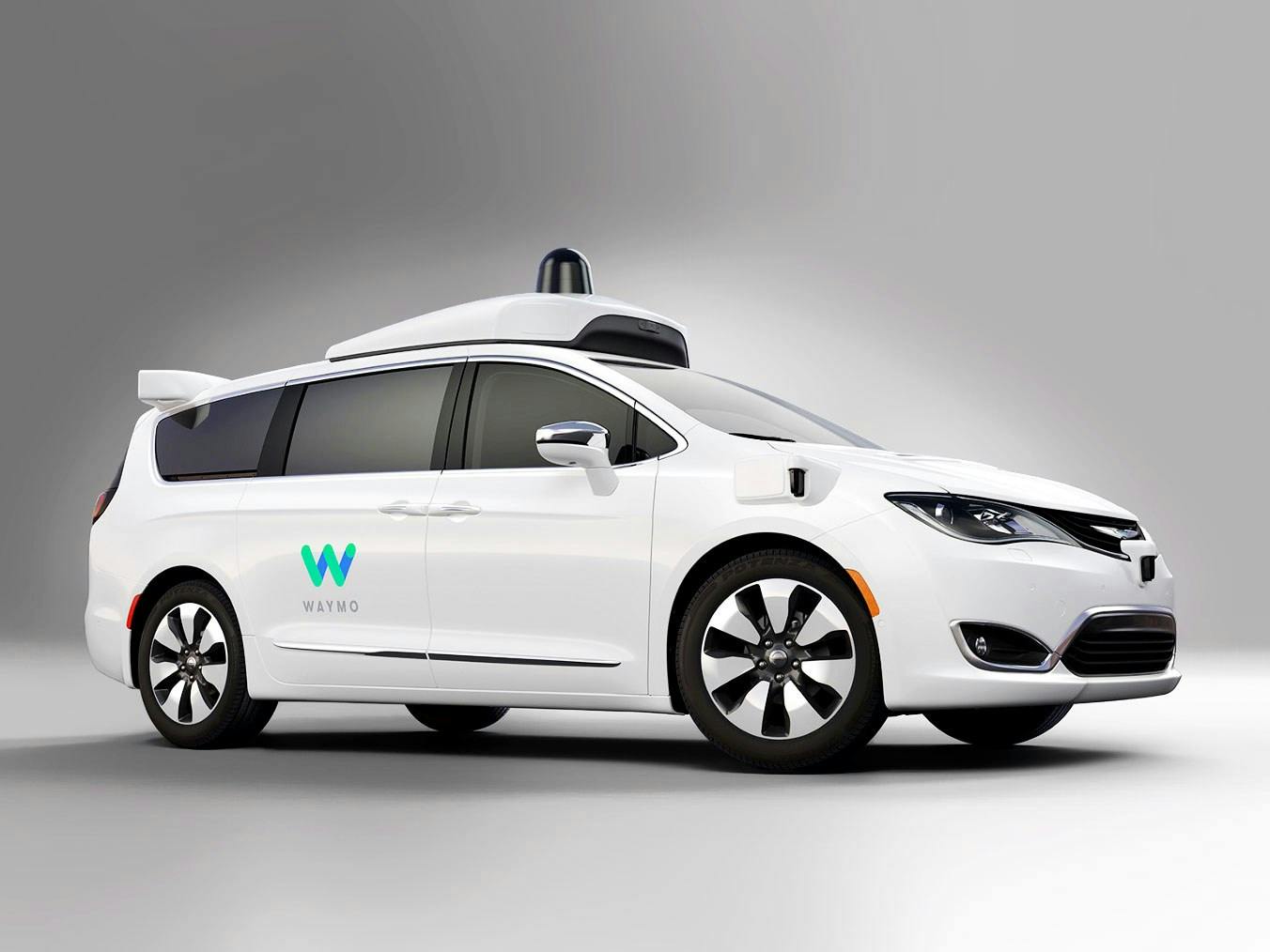
Waymo has been in testing since 2009 and has racked up more than 8 million miles on public roads and more than 5 billion miles in simulation. There are 600 self-driving Chrysler Pacifica Hybrid minivans on the road with goals of launching a commercial driverless transportation system later this year. This, and many other “near deployment” announcements have created massive expectations for the AV market, which is forecast to grow 10x from $54 billion in 2019 to $556 billion in 2026 at a growth rate of 39.47%.

The primary risk today for GM stock is that these forecasts assume commercial deployments will occur on time. As Mike Ramsey, a lead author on the Gartner report points out, even if GM and Waymo continue to debut driverless minivans or launch ride-hailing fleets, commercial deployments won’t be ready anytime soon. For example, the 2019 Audi A8 with Traffic Jam Assist with Level 3 partial automation, which has been anticipated for some time, has extended its release date another year due to foggy federal regulatory framework, infrastructural differences, and a lack of consumer understanding of self-driving technology.

More Evidence of the Autonomous Vehicle Bubble

In two side-by-side headlines we see Mary Barra of GM propagating a very different perception than what company insiders have reported. On November 1st, at the New Times conference moderated by Andrew Ross Sorkin, Barra stated the company is “on track” to roll out a ride sharing service in 2019 that would rely on autonomous vehicles, with the New York Times reporting Barra “added the company had a strategy to show how its vehicles are safer than human drivers.”

Dealbook

Meanwhile, on October 23rd, GM insiders told Reuters, “Nothing is on schedule,” citing unexpected technical challenges, such as Cruise cars not correctly identifying whether objects are in motion. Current employees and former employees also reported that Cruise software struggled to identify whether objects on the road are stationary or moving, failed to recognize pedestrians, and has mistakenly seen phantom bicycles.

Reuters

The regulation hurdles between Level 2 and Level 3, and delayed deployments, will put immense pressure on stocks, like GM, that are overvalued based on AV speculation. Press plays a large role in this. Headlines are a continual churn of autonomous vehicle “moments” – every partnership, every mile driven, every make and model that adds another feature. To be clear, we’ve only gone from a Level 1 to Level 2. We are not able to release Level 3 AV right now –that includes Waymo, GM, Audi, Mercedes, BMW, and yes – even Tesla.

Research studies have proven that consumers are very confused by the high profile promises, which Thatcham Research calls “dangerously confusing.” In a recent study, 71 percent of respondents around the world believe they can buy an autonomous vehicle today – yet there is not one autonomous vehicle on the market. The top three brands that consumers mistakenly believe distribute self-driving cars include Tesla (40%), BMW (27%), and Audi (21%). Of these, 11 percent say they would take a brief nap while using assist systems (hopefully, you’re not the person in the crosswalk when this happens).

GM Stock Investors Must Define “Future”

The company’s decision to lay off a sizeable work force seems sensible enough from a shareholders’ perspective (however unfortunate for the Midwest laborers). However, what is not sensible is having high expectations of when the future will deliver new revenue streams.

For value investors looking to buy GM’s high yield at depressed prices, don’t base the decision on GM’s PR push around electric vehicles and autonomous vehicles unless you’re comfortable not seeing profits in these production lines for many years to come.

Posted in AI Stocks, Autonomous Vehicles, Consumer Tech, Electric Vehicles, Tech StocksLeave a Comment on GM Stock Risky Due to Autonomous Vehicle Bubble

Holding Nvidia Stock Will Pay Off Due to Two Impenetrable Moats

Posted on November 15, 2018June 30, 2026 by io-fund
Holding Nvidia Stock Will Pay Off Due to Two Impenetrable Moats

Tech stocks are getting slammed right now, and Nvidia may be one of Wall Street’s biggest losers in the sell-off that began last month and continued into this week. Nvidia’s stock has seen a 30-day high of $292 and a whiplash low of $176 – equaling a 40% plunge in the matter of four weeks. Today, it stands at $197.60.

Economic indicators and earnings from tech companies have not exactly warranted this reaction from the market. Fears the semi-conductor industry is slowing down based off Advanced Micro Devices earnings report were negated when Intel reported strong Q3 earnings. And while Apple may be on the precipice of a capped out $1 trillion-dollar market cap due to possible iPhone saturation, Nvidia’s outlook is quite the opposite in regards to public-company growth trajectory. The market may continue to have volatility, but Nvidia investors who are patient will be rewarded due to competitive advantages in GPU-powered cloud performance and developer adoption of Nvidia’s platform.

Brief Overview of Nvidia’s Revenue Segments

To summarize, gaming claims the majority of Nvidia’s revenue at $1.81 billion, up 52% YoY. Gaming will get a nice boost in 6-12 months from the new GeForce RTX 2070, RTX 2080 and 2080 Ti chips, which introduce the possibility of hybrid rendering through ray-tracing. In layman’s terms, ray-tracing mimics how light behaves in the real world by mapping out rays from 3D illumination sources. The imagery is much more realistic as a result. Electronic Arts released the first raytracing game today (November 14th) whereas 6 months ago, the gaming industry did not think raytracing would even be possible. Companies who have signed up for the new Turing architecture include Adobe, Pixar, Siemens, Black Magic, Weta Digital, Epic Games (maker of Fortnite) and Autodesk.

Data center revenue has been picking up speed at 83% YoY, or $760 million, as GPU chips are powering more of the cloud for machine learning and artificial intelligence applications. Data center revenue, once a small blip, claims 24% of the company’s total sales. This will continue to grow steadily into the near future due to the computing power and flexibility GPUs provide over CPUs, which is what Intel sells, or TPUs and FPGA, which are custom machine-learning chips by Google and used by Microsoft that are too specific to one platform for widespread adoption – more on these points below.

Source: TechCrunch

Smaller segments by Nvidia include professional visualization and automotive, which grew to $281 million and $161 million, respectively, up 20% and 13% year over year.

Two Impenetrable Moats: GPU-Cloud and Developer Adoption

Revenue segments are your typical Nvidia stock coverage. But can Nvidia take market share from Intel? Will Google, Microsoft, Facebook and Apple design their own custom chips to compete with Nvidia? This is what investors need to answer for themselves especially if we continue into correction territory.

Regarding Intel, the cloud is too competitive to forego the performance and efficiency that Nvidia delivers. Recently, the Turing T4 GPU became the fastest adopted server GPU of all time in just two short months of hitting the market. Prior to the release of the Turing T4 GPU, Nvidia’s data center growth was 3x compared to Intel. Intel posted 26% growth YoY whereas Nvidia posted 83% YoY. However, Nvidia’s data center revenue is 1/6th compared to Intel’s at $760 million vs. $6.1 billion. This revenue segment will continue to grow as the GPU-powered cloud is built out. Unfortunately for Intel, GPUs are the better choice for cloud customers as the usage pattern is constantly in flux, demanding a wide variety of models and different software frameworks. Intel’s CPU Xeon Processor cannot compete with the performance-per-watt of what Nvidia offers in the cloud. Per the announcement on September 13th, 2018, Microsoft, Google, Cisco, Dell EMC, Fujitsu, HPE, IBM, Oracle and Supermicro plan to release servers with Nvidia’s T4 GPU on board.

My newsletter subscribers get this information first. Sign up here.My newsletter subscribers get this information first. Sign up here.here.

Google and Microsoft have both made chips for their data centers. Microsoft adopted the field-programmable gate array (FPGA) which is used for AI apps. And Google has built a custom chip called the Tensor Processor Unit (TPU) for Google’s TensorFlow deep learning framework. Competing, customized chips will become the new norm as tech giants prefer to use proprietary tech. The biggest weakness that competing customized chips face like TPUs, from Google, and FPGA, used by Microsoft, is that they may be too specialized for developers to adopt. The drawbacks will continue to be price and difficulty, as programming for FPGA is an area not many engineers have expertise in. The same goes for Google Cloud Platform (GCP). They’ll have to get developers to adopt GCP and keep them locked into TensorFlow. Even so, there are alternate frameworks such as PyTorch from Facebook which add further to the fragmentation of developer frameworks. In addition, even if Google uses TPUs for inferencing, it may still use Nvidia’s GPU for training neural networks.

Let’s use mobile application development as an example. One of the reasons mobile is a duopoly between Android and iOS is that developers can only learn so many tools and development environments before the process becomes inefficient. In order to truly excel at a language, it has to be universal. For instance, Microsoft attempted to launch a Windows phone, which was met by resistance as developers did not care to learn a new operating system that could not prove itself with user adoption. In turn, mobile users did not buy the Windows phone because their favorite applications were not available to download. iPhone’s success was due to iOS developers who learned tools like XCode to create applications. Android became the competing universal language for the remaining manufacturers, such as Samsung, LG, Sony, Pixel, etcetera. The next wave of AI applications and machine learning inferences will follow the same path of limited competition due to development bandwidth. Developers will self-regulate the number of competitors for processing units due to a need for a universal platform that supports all frameworks.

Here’s a quote from Marc Andreessen of Andreessen-Horowitz, one of the most successful venture capitalists in Silicon Valley:

“We’ve been investing in a lot of startups applying deep learning to many areas, and every single one effectively comes in building on Nvidia’s platform. It’s like when people were all building on Windows in the ’90s or all building on the iPhone in the late 2000s.”

There is an even greater need to simplify artificial intelligence and machine learning than exists for mobile standards. There are thousands of variants emerging each year in AI as neural networks evolve and expand in depth, complexity and architecture. There are multiple frameworks supported by major industry players and Nvidia’s GPUs are flexible enough to accelerate all of these frameworks and workflows including Caffe2, Cognitive Toolkit, Kaldi, MXNet, PaddlePaddle, Pytorch and TensorFlow.

In addition, AI occurs beyond the cloud and Nvidia’s GPUs are available in what is called edge devices, such as self-driving cars, desktops, workstations, data centers and across all major cloud providers.

Conclusion

Nvidia is already the universal platform for development, but this won’t become obvious until innovation in artificial intelligence matures. Developers are programming the future of artificial intelligence applications on Nvidia because GPUs are easier and more flexible than customized TPU chips from Google or FGPA chips used by Microsoft. Meanwhile, Intel’s CPU chips will struggle to compete as artificial intelligence applications and machine learning inferencing move to the cloud. Intel is trying to catch-up but Nvidia continues to release more powerful GPUs – and cloud providers such as Amazon, Microsoft and Google cannot risk losing the competitive advantage that comes with Nvidia’s technology.

The Turing T4 GPU from Nvidia should start to show up in earnings soon, and the real-time ray-tracing RTX chips will keep gaming revenue strong when there is more adoption in 6-12 months. Nvidia is a company that has reported big earnings beats, with average upside potential of 33.35 percent to estimates in the last four quarters. Data center revenue stands at 24% and is rapidly growing. When artificial intelligence matures, you can expect data center revenue to be Nvidia’s top revenue segment. Despite the corrections we’ve seen in the technology sector, and with Nvidia stock specifically, investors who remain patient will have a sizeable return in the future.

Posted in AI Stocks, Cloud Infrastructure, Data Center, Semiconductors, Tech StocksLeave a Comment on Holding Nvidia Stock Will Pay Off Due to Two Impenetrable Moats

The Level 2 Autonomous Vehicle Bubble – Tesla, GM, Audi, BMW, Waymo, Nvidia, and Intel

Posted on October 17, 2018June 30, 2026 by io-fund
The Level 2 Autonomous Vehicle Bubble – Tesla, GM, Audi, BMW, Waymo, Nvidia, and Intel

Last month, Autonomous Vehicles fell into the “trough of disillusionment,” which is the downward slope that analyst firm Gartner publishes to show the hype cycle for certain technologies. You can think of this as “winter is coming” for tech products – a time when all of the buzz and excitement finally meets reality (note: artificial intelligence winter is a well-documented thing). The reality for autonomous vehicles includes regulations, production cycles, and delays in implementation for what is an extraordinarily difficult problem to solve – how to get machines to respond like humans at crucial moments. This gap between investor expectations (perception) and commercial deployments (reality) has created an autonomous vehicle bubble that will pop in 2019 as the next level of autonomy continues to face delays.

Brief Background on the 6 Levels of Autonomy

You can skip this section if you know the six levels of autonomous vehicles as published by SAE International. If not, this background is important to understand why the autonomous vehicle bubble occurred, and when it will burst.

Volatility is Closer than it Appears

Waymo has been in testing since 2009 and has racked up more than 8 million miles on public roads and more than 5 billion miles in simulation. There are 600 self-driving Chrysler Pacifica Hybrid minivans on the road with goals of launching a commercial driverless transportation system later this year. This, and many other “near deployment” announcements have created massive expectations for the AV market, which is forecast to grow 10x from $54 billion in 2019 to $556 billion in 2026 at a growth rate of 39.47%[1]. For investors, the primary risk today is that these forecasts assume commercial deployments will occur on time.

As Mike Ramsey, a lead author on the Gartner report points out, even if Waymo and General Motors continue to debut driverless minivans or launch ride-hailing fleets, commercial deployments won’t be ready anytime soon. For example, the 2019 Audi A8 with Traffic Jam Assist with Level 3 partial automation, which has been anticipated for some time, has extended its release date another year due to foggy federal regulatory framework, infrastructural differences, and a lack of consumer understanding of self-driving technology[2].

The regulation hurdles between Level 2 and Level 3 and delayed deployments will put immense pressure on stocks that are overvalued based on AV speculation. ABI Research, an advisory firm that reports on market-foresight trends, predicts 8 million consumer vehicles with Level 3 to Level 5 autonomy will ship in 2025. Compare this to the 94.5 million vehicles sold in 2017 which equates to 8.5% of sales[3]. This is a small and fairly insignificant percentage of market share to be chasing 7-years ahead of deployment. Yet, investors are pouring cash into hyped up stocks- and the press plays a large role in this. Headlines are a continual churn of autonomous vehicle “moments” – every partnership, every mile driven, every make and model that adds another feature. To be clear, we’ve only gone from a Level 1 to Level 2. We are not able to release Level 3 AV right now – and yes, that includes Elon (most especially Elon – read my Tesla analysis here).

My newsletter subscribers get this information first. Sign up here.My newsletter subscribers get this information first. Sign up here.here.

One example of this investment bubble is when Tesla’s stock skyrocketed in 2016 while Adam Jonas from Morgan Stanley, a lead underwriter, said that Tesla’s ridesharing network was worth $244 a share. However, reality has set in, and Adam Jonas has now changed that valuation to $95 per share or $17 billion by 2040[4]. The following year, Tesla went on to surpass BMW’s market cap of $60 billion in 2017 despite posting a loss of $725 million from 80,000 vehicles compared to BMW making $7.7 billion from 2.4 million vehicles. Meanwhile, the 2017 deadline for a full rollout for self-driving has come and gone. And as recently as this month, Tesla officially stopped promoting the “Full Self-Driving” option for its cars.

Another example is GM, whose shares have dipped more than the broader markets, erasing any gains from its peak in October of 2017. The hurricane sales from last September helped the stock, which rose 11.9% from the previous years, however the stock has retraced and is now trading at $31-$32 per share. GM is no stranger to pushing the autonomous vehicle hype with executives commenting that Cruise Automation was making “rapid progress” back in October 2017, and in a blog post, the CEO stated, “in the coming months, we’ll take the next bold steps in testing our autonomous technology as we lead the way to fully self-driving vehicles without any human driver as a backup.” Those months have come and gone, of course.

Research studies have proven that consumers are very confused by the high profile promises, which Thatcham Research calls “dangerously confusing.” In a recent study, 71 percent of respondents around the world believe they can buy an autonomous vehicle today – yet there is not one autonomous vehicle on the market. The top three brands that consumers mistakenly believe distribute self-driving cars include Tesla (40%), BMW (27%), and Audi (21%). Of these, 11 percent say they would take a brief nap while using assist systems. Therefore, the disconnect between perception and reality is widespread – and not only in the investment community.

Startups will do their part in the autonomous vehicle bubble, as well. Zoox, Inc is a startup that has raised $800 million with a $3.2 billion valuation — but has not made any revenue yet.  The premise of Zoox is to forego partnering with auto manufacturers by deploying their own vehicles. Essentially, the idea is to skip the AV iteration and deployment line and go directly to Level 4 or Level 5 autonomy with no prior manufacturing experience – all by 2020. Meanwhile, there is no mention of regulations, safety and security hurdles in the deployment estimate, or anything else related to practicality for that matter. And as Bloomberg reported, “Even with all of that cash, Zoox will be lucky to make it to 2020, when it expects to put its first vehicles on the road – ‘It’s a huge bet,’ [the founder] concedes.”

A note on Nvidia and Intel

I’m working on a separate analysis of these two companies. Follow me for updates.

Nvidia and Intel are in a well-publicized arms race to capture the autonomous vehicle market. With the ongoing PR focusing on AV, one could almost forget that Nvidia gets its revenue from gaming first and foremost, with data centers as the second driver of revenue. In fact, Nvidia’s revenue breakdown in order is: primarily gaming (4x all other revenue), data centers, professional visualization, OEM and IP, and then in last place, auto.

On a side note, gaming is a formidable industry worth $160 billion to $180 billion (this is 3x the size of the OTT market, for instance) – which is one reason Nvidia should stabilize in the short term. Nvidia is also set to capture data centers by providing chips for the GPU cloud, which powers machine learning and artificial intelligence. You can see this growth in the chart above as data center revenue has begun a nice upward trajectory. In other words, one reason I recommend Nvidia in the long-term precisely because they are not dependent on autonomous vehicles for future growth. When the autonomous vehicle revolution finally gets here, it’ll be a nice bonus to their already strong profit margins.

Intel on the other hand is dependent on the data center revenue that Nvidia is slowly chipping away at (apologies for the pun). Intel will have to prove it can compete with the GPU-processing power of the market leader in virtually every forward-thinking segment.

Note: In the short term, both of these stocks currently face potential volatility due to trade war issues with China.

Predictions at current prices:
Sell: Tesla, GM and Intel
Hold: Nvidia

[1] https://www.forbes.com/sites/edgarsten/2018/08/13/sharp-growth-in-autonomous-car-market-value-predicted-but-may-be-stalled-by-rise-in-consumer-fear/#3ae3a3c7617c
[2] https://www.cnet.com/roadshow/news/2019-audi-a8-level-3-traffic-jam-pilot-self-driving-automation-not-for-us/
[3] https://www.thestreet.com/technology/this-many-autonomous-cars-will-be-on-the-road-in-2025-14564388
[4] https://cleantechnica.com/2018/09/05/tesla-autonomous-ride-sharing-network-worth-10-of-waymo-morgan-stanley/

Posted in AI Stocks, Electric Vehicles, Energy Stocks, Tech StocksLeave a Comment on The Level 2 Autonomous Vehicle Bubble – Tesla, GM, Audi, BMW, Waymo, Nvidia, and Intel

Top 5 Security Risks for Connected Cars

Posted on June 13, 2018June 30, 2026 by io-fund
Top 5 Security Risks for Connected Cars

The global market for connected cars will grow by 270% by 2022 with 125 million passenger cars expected to ship worldwide between 2018 and 2022.1 By 2020, it’s estimated that UK, France and Germany will reach 100% connected car penetration. Growth in the European region is due to the eCall mandate which requires new cars to automatically dial the 112 emergency number in the event of a serious accident.2 While North America and Europe lead in the highest percentage of shipments, China accounts for 32% of shipments.

The list of connected features enjoyed by consumers that add more opportunities for security attacks include streaming radio, Wi-Fi access points and remote-control mobile phone applications. However, with these conveniences comes responsibility. The recent death of a woman in Arizona who was struck by an Uber in autonomous mode has put a spotlight on what can go wrong in connected vehicles as manufacturers seek to introduce more high-tech features to remain competitive to car buyers. Not surprisingly, 68% of Americans are fearful of cars with self-driving features.3

The increasing number of smart features built into cars opens door to a serious threat – hacker attacks. Because connected cars are linked with the Internet and its crucial parts are interconnected over a network, adversaries have the potential to remotely access and manipulate the data being exchanged leading to a number of problems, such as leaked personal information, overcoming vehicle’s security mechanisms, or even full remote control of the car.

Threats to the Connected Car

Innovative automakers, software developers, and tech companies are transforming the automotive industry. Drivers today enjoy enhanced entertainment, information options and connection with the outside world. As automobiles move towards more autonomous capabilities, the stakes will raise in regards to security. Even if cars are not entirely driverless, the functions will become increasingly dependent on applications, connectivity, and sensors. Vehicle-to-vehicle (V2V) and Vehicle-to-Infrastructure (V2I) allow the car to communicate with other cars and infrastructure such as traffic lights. Vehicle speed adjustments, telematics, and AI voice recognition and interfaces will become common features.

The rapid increase of these technologies inevitably creates the risk of hackers gaining access and control to the essential functions and features of those cars and utilizing information on drivers’ habits for commercial purposes without the drivers’ knowledge or consent.

Here are some of the risks for connected cars:

  • Stealing personally identifiable information(PII): Today, sensors generate 25 GB of data per hour and this is expected to double considering there will be 200 sensors installed in connected cars by 2020 up from 100 sensors in 2015. Once autonomous vehicles become mainstream, the 17,600 minutes Americans spend driving annually will equate to 300 TB of data per year.4 Financial information, personal trip information, location information and entertainment preferences are just some examples of PII that can potentially be stolen through a vehicle’s system.
  • Connection security: Like other connected devices, vendor implementation flaws are often exploited by researchers for proof-of-concept attacks. However, it is inevitable that these will be followed by real life attacks. The current poor state of security on connected cars creates a tempting target for cyber criminals.


  • Manipulating a vehicle’s operation: Catastrophic incidents resulting in personal injury and lawsuits may be in the near future. Well-known cybersecurity researchers Charlie Miller and Chris Valasek have demonstrated several proof-of-concept attacks where they were able to control the braking and steering of a car by accessing the adaptive cruise control system.5 Although costly and with a lower likelihood than data breaches and unauthorized entry, this sort of attack has now been proven possible to a global audience.


  • Unauthorized vehicle entry: Car thieves now have a new way to gain entry into locked vehicles. Many vehicle technologies have opted to replace physical ignition systems with keyless systems using mobile applications or wireless key fobs. These new access mechanisms mean that methods of obtaining illicit entry include intercepting the wireless communication between the vehicle and the mobile application or between the wireless fob and the vehicle to gain entry credentials, among other methods. The New York Times has documented methods such as wireless key emulation devices and “power amplifiers” that increase the range of the wireless signal looking for the entry credentials. If the owner is in a house or other location close to the car, criminals can then gain entry when their wireless fob responds.6


  • Mobile application security: As more automobile manufacturers release mobile applications that communicate with cars, mobile applications are quickly becoming a major target for malicious behavior. One example of a flaw in a mobile application happened when Nissan had to pull its NissanConnect EV application for the Nissan Leaf.7 The poor security of the application allowed security researchers to connect to the Leaf via the Internet and remotely turn on the car’s heated seating, heated steering wheel, fans and air conditioning. In an electric car, this meant the possibility a malicious actor could drain the battery of an unsuspecting owner. Mobile applications themselves can be vulnerable in a number of ways. According to Gartner, 75% of mobile applications would fail basic security tests.8 Mobile operating systems themselves are a source of concern—over the last four years, there has been a 188% increase in the number of Android vulnerabilities and a 262% increase in the number of iOS vulnerabilities.9
Posted in AI Stocks, Consumer Tech, Cybersecurity, Electric Vehicles, Internet of ThingsLeave a Comment on Top 5 Security Risks for Connected Cars

How Driverless Cars will put Mobile Security to the Test?

Posted on February 28, 2018June 30, 2026 by io-fund
How Driverless Cars will put Mobile Security to the Test?

As GM CEO Mary Barra said in a keynote speech, “A cyber incident is a problem for every automaker in the world. It is a matter of public safety.” As Tesla, GM and many others continue to release connected vehicles – and soon driverless vehicles, the dangers are set to increase. In fact, more than half of the vehicles sold today are connected and vulnerable.

By 2025, the driverless market will be worth $42 billion up from nearly nothing with an official market entry still being anticipated [1]. Self-driving cars have the potential to save 292,000 lives annually from preventing collisions. This is in addition to the added benefits of reducing traffic and climate change, along with the costs of car ownership.

While gaining access to, and being able to control or steal a vehicle such as a Tesla is disturbing enough, it raises several concerns about not only connected cars, but also the mobile applications that extend the features of these vehicles. In fact, mobile apps are quickly becoming the main target for malicious behavior. Over the last four years, there has been a 188 percent increase in the number of Android vulnerabilities and a 262 percent increase in the number of iOS vulnerabilities. In addition, according to Gartner, 75 percent of mobile apps would fail basic security tests.

In another report, more than 80 percent of mobile apps on both the Android and iOS platforms revealed cryptographic implementation issues. Recently, Android malware has become more stealth and has begun to obfuscate code to bypass signature-based security software. Despite Google’s response to critical vulnerabilities and patches of critical issues in the Android OS, end users are still dependent on device manufacturers for these updates.

Driverless Car Security Infographic:

Driverless Car Security Infographic

The main source of security and data breaches are found in hacking, malware and social engineering [2].

There are four major attack clusters in the automotive sector:

  • Direct physical attack: Cars can be breached through the OBDII port and/or while in for maintenance or lent to other drivers.
  • Indirect physical attack: A carrier is used to compromise the vehicle such as a USB stick, SD card, or through a software patch.
  • Wireless attacks: Bluetooth and mobile networks including the current development of iOS and Android apps open up the vehicle to an abundant variety of attacks.
  • Sensor fooling: As of yet, there are no known hacks documented that indicate you can take over a car by fooling the sensors alone.

Consumers are becoming more aware of the dangers around connectivity with 62% saying they are concerned that connected cars will become easily hacked in the future and 48% saying data privacy and security are extremely important. Executives of car manufacturers are also aware of the heightened concern with 52% rating data security and privacy as being of upmost importance to their customers [3].

While the path towards better cyber security for connected cars is a multi-actor road map, auto manufacturers who take the lead will be improving the security of their own brand and product will also improve the safety of their customer.

Posted in AI Stocks, Autonomous Vehicles, Cybersecurity, Internet of ThingsLeave a Comment on How Driverless Cars will put Mobile Security to the Test?

Posts navigation

Older posts
Newer posts

Recent Posts

  • The IPO Glut of 2020: Why Valuations Have Gone Too Far
  • Zoom Discusses Two Important Catalysts In Q1 Earnings
  • Three Risk Management Tools the I/O Fund Offers
  • Micron Is Up 900%. Here’s Why the AI Memory Trade May Still Have Room to Run
  • Credo: Reliability Leader Aggressively Moves into Optics

Recent Comments

No comments to show.

Archives

  • June 2026
  • May 2026
  • April 2026
  • March 2026
  • February 2026
  • January 2026
  • December 2025
  • November 2025
  • October 2025
  • September 2025
  • August 2025
  • July 2025
  • June 2025
  • May 2025
  • April 2025
  • March 2025
  • February 2025
  • January 2025
  • December 2024
  • November 2024
  • October 2024
  • September 2024
  • August 2024
  • July 2024
  • June 2024
  • May 2024
  • April 2024
  • March 2024
  • February 2024
  • January 2024
  • December 2023
  • November 2023
  • October 2023
  • September 2023
  • August 2023
  • July 2023
  • June 2023
  • May 2023
  • April 2023
  • March 2023
  • February 2023
  • January 2023
  • December 2022
  • November 2022
  • October 2022
  • September 2022
  • August 2022
  • July 2022
  • June 2022
  • May 2022
  • April 2022
  • March 2022
  • February 2022
  • January 2022
  • December 2021
  • November 2021
  • October 2021
  • September 2021
  • August 2021
  • July 2021
  • June 2021
  • May 2021
  • April 2021
  • March 2021
  • February 2021
  • January 2021
  • December 2020
  • November 2020
  • October 2020
  • September 2020
  • August 2020
  • July 2020
  • June 2020
  • May 2020
  • April 2020
  • March 2020
  • February 2020
  • January 2020
  • December 2019
  • November 2019
  • October 2019
  • September 2019
  • August 2019
  • July 2019
  • June 2019
  • May 2019
  • April 2019
  • March 2019
  • February 2019
  • January 2019
  • December 2018
  • November 2018
  • October 2018
  • September 2018
  • August 2018
  • July 2018
  • June 2018
  • May 2018
  • April 2018
  • February 2018
  • January 2018

Categories

  • 5G
  • About
  • Accounting Tips
  • AdTech
  • Ai Platforms
  • Ai Platforms
  • Ai Platforms
  • Ai Platforms
  • Ai Platforms
  • Ai Platforms
  • Ai Platforms
  • Ai Platforms
  • Ai Platforms
  • Ai Platforms
  • Ai Platforms
  • Ai Platforms
  • Ai Platforms
  • Ai Platforms
  • Ai Platforms
  • Ai Platforms
  • AI Stocks
  • AI Stocks
  • Analysts
  • Application Monitoring
  • Application Monitoring
  • Applications
  • Applications
  • Applications
  • Applications
  • Applications
  • Applications
  • Applications
  • AR
  • Audit Reports
  • Autonomous Vehicles
  • Autonomous Vehicles
  • Autonomous Vehicles
  • Autonomous Vehicles
  • Autonomous Vehicles
  • Autonomous Vehicles
  • Autonomous Vehicles
  • Avod
  • Avod
  • Battery Charging
  • Bear Market
  • Bitcoin
  • Bitcoin
  • Bitcoin
  • Bitcoin
  • Bitcoin
  • Bitcoin
  • Bitcoin
  • Blockchain
  • Blockchain
  • Blockchain
  • Blockchain
  • Blockchain
  • Blockchain
  • Blockchain
  • Broad Market Today
  • Bull Market
  • Bull Market
  • Chainlink
  • Chainlink
  • Chainlink
  • Chainlink
  • China Stocks
  • Cloud
  • Cloud Infrastructure
  • Cloud Infrastructure
  • Cloud Infrastructure
  • Cloud Infrastructure
  • Cloud Infrastructure
  • Cloud Infrastructure
  • Cloud Infrastructure
  • Cloud Platforms
  • Cloud Platforms
  • Cloud Software
  • Cloud Software
  • Cloud Software
  • Cloud Software
  • Cloud Software
  • Cloud Software
  • Cloud Technology
  • Company
  • Company
  • Console Gaming
  • Console Gaming
  • Console Gaming
  • Consumer
  • Consumer
  • Consumer
  • Consumer
  • Consumer
  • Consumer
  • Consumer
  • Consumer
  • Consumer
  • Consumer
  • Consumer
  • Consumer
  • Consumer
  • Consumer
  • Consumer Tech
  • Corrections
  • Crypto Investment
  • Ctv
  • Ctv
  • Ctv
  • Ctv
  • Ctv
  • Ctv
  • Ctv
  • Ctv
  • Ctv
  • Ctv
  • Cybersecurity
  • Cybersecurity
  • Cybersecurity
  • Cybersecurity
  • Cybersecurity
  • Cybersecurity
  • Cybersecurity
  • Cybersecurity
  • Cybersecurity
  • Cybersecurity
  • Cybersecurity
  • Cybersecurity
  • Data
  • Data Analytics
  • Data Analytics
  • Data Analytics
  • Data Center
  • Data Center
  • Data Center
  • Data Center
  • Data Center
  • Data Center
  • Data Center
  • Data Center
  • Data Center
  • Data Center
  • Data Center
  • Data Center
  • Data Center
  • Data Center
  • Data Center
  • Data Center and Processing
  • Data Warehousing
  • Data Warehousing
  • Data Warehousing
  • Data Warehousing
  • Databases
  • Databases
  • Databases
  • Databases
  • Dating
  • Defi
  • Digital Ads
  • Digital Ads
  • Digital Ads
  • Digital Ads
  • Digital Ads
  • Digital Ads
  • Digital Ads
  • Digital Ads
  • Digital Ads
  • Digital Ads
  • Digital Ads
  • Digital Ads
  • Digital Ads
  • Digital Ads
  • E-Commerce
  • Earning Updates
  • Earning Updates
  • Earning Updates
  • Earning Updates
  • Earning Updates
  • Earnings Report
  • Earnings Report
  • Earnings Report
  • Earnings Report
  • Earnings Report
  • Earnings Report
  • Earnings Report
  • Earnings Report
  • ECommerce
  • Electric Vehicles
  • Electric Vehicles
  • Electric Vehicles
  • Electric Vehicles
  • Electric Vehicles
  • Electric Vehicles
  • Electric Vehicles
  • Energy Stocks
  • Enterprise
  • Enterprise
  • Enterprise
  • Enterprise
  • Enterprise
  • Enterprise
  • Enterprise
  • Enterprise
  • Enterprise
  • Ethereum
  • Events1
  • Events1
  • Exchange
  • Faq
  • Finance
  • Financial Analysis
  • Financial Analysis
  • Financial Analysis
  • Financial Analysis
  • Financial Analysis
  • Financial Analysis
  • Financial Analysis
  • Financial Analysis
  • Financial Analysis
  • Financial Analysis
  • Financial Analysis
  • Financial Analysis
  • Financial Markets
  • FinTech
  • Fundamental Analysis
  • Gambling
  • Gaming
  • Genomics
  • Glossary
  • Green Energy
  • Growth Stocks
  • Growth Stocks
  • Growth Stocks
  • Headsets
  • Headsets
  • Health Tech
  • Hydrogen
  • Identity
  • Identity
  • Identity
  • Inflation
  • Inflation
  • Inflation
  • Internet of Things
  • Interviews
  • Interviews
  • Interviews
  • Interviews
  • Investing
  • Investing
  • Ltbh
  • Ltbh
  • Ltbh
  • Ltbh
  • Ltbh
  • Macro Trends
  • Macro Trends
  • Market Trends
  • Market Trends
  • Market Trends
  • Market Trends
  • Market Trends
  • Market Trends
  • Market Trends
  • Market Updates
  • Market Updates
  • Market Updates
  • Market Updates
  • Market Updates
  • Market Updates
  • Market Updates
  • Market Updates
  • Market Updates
  • Market Updates
  • Media
  • Membership
  • Mining
  • Mobile
  • Mobile
  • Mobile
  • Mobile
  • Mobile Gaming
  • Mobile Gaming
  • Mobile Gaming
  • Multimedia
  • Music Streaming
  • NVDA | NVIDIA Corporation
  • Performance Updates
  • Pin Content
  • Podcasts
  • Podcasts
  • Podcasts
  • Portfolio
  • Premium Research
  • Press Releases
  • Press Releases
  • Productivity
  • Productivity
  • Productivity
  • Productivity
  • Productivity
  • Productivity
  • Productivity
  • Reports and Whitepapers
  • Research Services Preview
  • Resources
  • Resources
  • Semiconductor Stocks
  • Semiconductors
  • Semiconductors
  • Semiconductors
  • Semiconductors
  • Semiconductors
  • Semiconductors
  • Semiconductors
  • Semiconductors
  • Semiconductors
  • Semiconductors
  • Semiconductors
  • Semiconductors
  • Semiconductors
  • Social Media
  • Social Media
  • Social Media
  • Social Media
  • Social Media
  • Social Media
  • Social Media
  • Software
  • Software
  • Software
  • Software
  • Software
  • Software
  • Software
  • Software
  • Software
  • Software
  • Software
  • Software
  • Software
  • Software
  • Software
  • Solar
  • Solar
  • Stock Analysis PDFs
  • Stock Updates
  • Stock Updates (Blogs)
  • Supplychain
  • Supplychain
  • Supplychain
  • Supplychain
  • Supplychain
  • Supplychain
  • Svod
  • Svod
  • Svod
  • Svod
  • Svod
  • Svod
  • Tech Podcast
  • Tech Stock News
  • Tech Stock News
  • Tech Stock News
  • Tech Stock News
  • Tech Stock News
  • Tech Stocks
  • Tech Stocks
  • Tech Stocks
  • Tech Stocks
  • Tech Stocks
  • Tech Stocks
  • Tech Stocks
  • Tech Stocks
  • Tech Stocks
  • Tech Stocks
  • Tech Stocks
  • Tech Stocks
  • Tech Stocks
  • Tech Stocks
  • Technical Analysis
  • Telehealth
  • Telehealth
  • Telehealth
  • Telehealth
  • Testing Equipment
  • Testing Equipment
  • Top Tech Stock News
  • Travel
  • Trends Report
  • Tutorials
  • Uncategorized
  • Updates
  • Updates
  • Updates
  • Video
  • Video
  • Video
  • Video
  • Video Footage
  • VR
  • Webinar Alerts
  • Webinar Alerts
  • Webinars
Proudly powered by WordPress | Theme: iofund by iofund.co.uk.