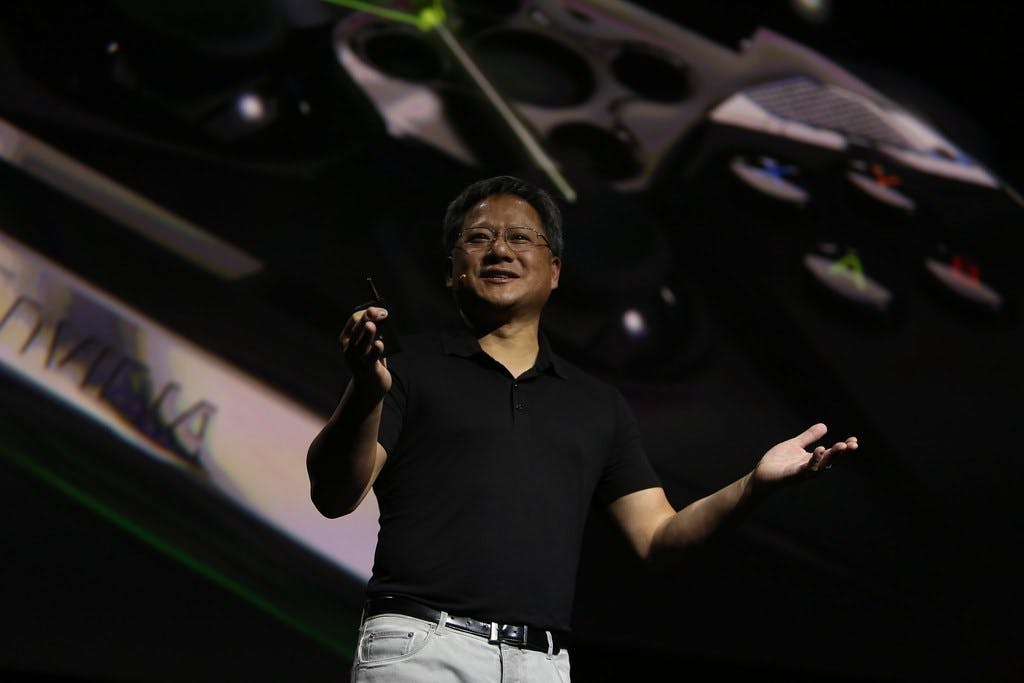
Last week, I wrote about the Nvidia-Arm acquisition, the politics involved as well as its chances of success. Nvidia announced last September that it reached a deal with Softbank to acquire U.K. based semiconductor and software design company Arm Ltd. for $40 billion, making it one of the biggest acquisitions in tech.
Behemoths like Google and Microsoft are opposed to the deal, which requires approval from authorities in at least four governments, including the U.S., U.K., E.U., and China. Qualcomm is fighting the acquisition, as the company relies heavily on Arm for microprocessor intellectual property (IP).
For reference, the name Arm stands for “Acorn RISC Machine” and comes from founders Sophie Wilson and Steve Furber discovering that a CPU can run faster on a small set of instructions. The discovery these two made in the early 1980s was to let the operating system break down tasks rather than add more instructions to the processor. While most CPU designs were adding more instructions to chips, Arm patented the technique of using fewer instructions that run more quickly and efficiently. Due to power constraints of the mobile device, which was introduced much later, Arm found a massive market where it dominates at 90%.
The company works quietly in the background with 22 billion chips shipped globally in 2019 and a cumulative total of 166 billion chips in 2019. The company hit 180 billion chips as of the press release on the acquisition.
Revenue is generated from licenses for Arm’s technology and royalties that come from the subsequent sale of the licensees’ chips that contain Arm’s technology. To compare, Nvidia announced it had shipped 1 billion processors in 2011 and there has not been an update for the 2 billion mark yet, with estimates of Nvidia’s shipments hitting around 100 million chips per year.
Arm is most dominant in mobile with 90% market share in mobile processors, and dominates in-vehicle infotainment and advanced-driver assistance system (ADAS) processor market at 75%. The overall share of Arm’s related markets is 34%.
Arm-based technology is found in electronic devices and PCs, including Microsoft’s Arm-based Surface and Apple’s custom CPUs for Macs. The majority of tablets and digital TVs also use Arm’s architecture.
In fact, Arm offers the most popular CPU architecture in the world. The company’s dominant market share is achieved through its developer ecosystem, which fits neatly into one of our primary theses for Nvidia, its GPU-powered cloud and developer ecosystem.
Arm will bring an estimated 15 million software programmers to Nvidia. In Nvidia’s recent earnings report, the company announced it had doubled from 1 million to 2 million developers – so Arm increases Nvidia’s reach by 7X.
Over the past few weeks, I have read many lagging explanations on the chip shortage – too many fabless semiconductor companies, too few foundries, automobile manufacturers paused ordering in March and didn’t prepare for the sharp rebound, tensions with China, and even a fire at the Asahi Kasei plant that specifically manufactures sensing devices for the automobile industry.
While all of these are true, the overarching issue is that the role of semiconductors has changed from a commodity to the primary accelerant of future technologies. This is because connectivity, automation, and ultimately AI, will disrupt every corner of every industry.
We saw this happen with data and cloud but now we must accelerate this to the next level for AI/ML and the common denominator is semiconductors. Automotive is only the beginning. We can add renewables to the list and even e-commerce as AR/VR and AI/ML attempt to prop up the leaders who are competitive enough to add these features first.
As a tech stock analyst, I don’t have the luxury of lagging analysis of any kind. My subscribers require (and deserve) forward-looking, and with my intense focus on semiconductor chips, I don’t think my readers are surprised that semis are under pressure due to an increasingly important role.
I have repeated (perhaps too many times) that there is no way forward without the semis. We are seeing this manifest in automotive right now, but as investors, we should get used to hearing about semiconductor shortages.
You and I can debate Palantir, Snowflake or C3.AI, for example, and the valuations or the right angle for AI-driven software, but the common denominator to these companies is the need for semiconductors to drive forward AI and 5G.
Now, we add the enormous push for auto manufacturers to compete with Tesla, Apple, Lucid Motors and what we have is a bottle neck where the automotive industry filters into semiconductors.
My guess is the demand won’t be letting up for many years as we are no longer in the cyclical pattern that semis are notorious for. Instead, demand will outpace supply for years to come.
Is this a bad thing or a good thing for our stocks? As investors, we can either listen to the news or listen to management. In this case, they are not aligned. Machines trade off news and natural language processing (NLP) but as human investors, we have the advantage of looking deeper into the issues.
I have written volumes of analysis leading up to the triple-digit growth we are seeing now in the data center from AI accelerator chips. Most of this was written when data center growth was negative. For instance, my Nvidia thesis was set end of 2018 — and in 2019 Nvidia reported negative data center revenue year-over-year for four quarters in a row.
I mention this because following a trend’s trajectory is more important than immediate gratification from the market. The trend will always win out over time.
I have maintained that chips will eventually lead the AI market and are the best angle for investing in edge computing. I have also defended our stocks against custom silicon. Now we have the first of what I predict will be many semiconductor shortages and bullish to me.
The shortage is that there are hundreds (thousands really) of companies that rely on semiconductors. This will come to a head with AI and 5G as those who go-to-market soon with these features will have an enormous competitive advantage.
Below, we will first look into the supply shortage as it pertains to the automotive industry. We will then discuss earnings and management statements from Qualcomm, Atomera, Nvidia and Lam Research.
Our goal is to see 60% or higher returns in these names. We have chosen semis as our foundational hedge and you can consider cloud software along with semis on risk/reward ratio. We understand the market has conditioned some investors to see very large gains in a short period of time. This is a mirage produced from quantitative easing, and now more than ever, we want quality companies that have a solid bottom line in our portfolio to protect us long-term. This also allows us to take moonshots with SPACs and other high-growth names comfortably.
Regarding the supply shortage, the last thing we are interested in doing is disrupting our long-term thesis for a short-sighted bump in the road. I explain why I think this is short-sighted and why we continue to be long NVDA, AMD, QCOM and LCRX. We are also long MRVL although earnings will occur after this blog is released.
We’ve discussed the AI semi market growing at about 45% CAGR over the next few years. The 5G chip market has an even higher CAGR of 63%. However, automotive is forecast for a smaller growth rate of 10.7% CAGR.
Therefore, anything automotive-specific is not central to our thesis. However, semiconductor components in the automotive sector will add an additional 600 USD for each vehicle by 2022, according to Deloitte. This is a nice boon for Nvidia and Qualcomm. Xilinx also has exposure to the automotive segment. (These are the stocks we cover although there are others of interest in the semiconductor category).
ADAS leads the growth over a five-year period with semiconductor content that will add USD 100 for partial automation and up to 400 USD for a higher level of automation. Full automation will add USD 550.
Today, automotive semiconductors are primarily driven by microcontrollers (MCUs), sensors and memory. Over the next decade, electric vehicles, automation, digital connectivity and security will drive greater demand from this sector.
ADAS (advanced-driver assisted systems) are forecast to grow by 23.1% between 2017-2022 which drives demand for integrated circuits and MCUs. EV/HEV (electric vehicles and hybrid) are forecast to grow by 21% between 2017-2022 and Infotainment by 8.2%.
Automation requires about 30 sensors for the most advanced autonomous driving at Level 5. The industry is developing more advanced microcontrollers and MPUs to handle and process the sensor data so the vehicles think/act like humans. For EVs, sensors and controls are required to run the engine efficiently.
The primary suppliers for automotive semiconductors include: Nvidia, NXP/Freescale, Renesas, Panasonic, Toshiba, Infineon, STMicro, Texas Instruments, Broadcom/Avago, AMD/Xilinx and Samsung. Intel/Mobileye is also a leader in automotive and automation.
Automotive chips are not as constrained by size although some are expanding their system-on-chip (SoC) platforms to the 7nm and 5nm size. However, the failure rate must be lower for automotive than mobile with a target of 0 failure rate compared to a target of less than 10% failure rate on mobile. Automotive chips must also tolerate high voltages and operate at a wider range of temperatures.
The specifications for integrated circuits and MCUs/MPUs are more stringent with expectations the chips will last 20 to 30 years compared to only four years for mobile.
Semiconductor foundries are required to achieve higher quality and yield; yet long-term reliability, or “latent reliability,” can be hard to achieve as components must perform on the road under normal wear and tear including electromagnetic interference, which can be hard to simulate.
Basically, automotive requires more R&D at the foundry level.
On a side note, we had initiated in Luminar and ultimately closed the position. LiDAR will continue to test investors as there are many new entrants and the technology is very expensive with dynamic range still unsolved for and requiring backup cameras/sensors. The cost of LiDAR has caused some companies, such as Mobileye, to start LiDAR development in-house to lower this cost once higher volume production begins. My best guess is Apple will do the same in future years.
Whether tech will own the AV/EV space or if traditional automakers will transition to own the space is still up for debate. My guess is that tech will lead again as autos are headed towards having operating systems in the vehicle. Autonomous driving is also an incredibly hard problem to solve and has nothing in common with the traditional mechanics of combustion engines.
According to Alix Partners, the chip shortage may cut $60.6 billion in revenue from the global automotive industry this year across the whole supply chain.
One reason that automotive is being hit harder than cloud, for example, is because automakers halted orders on car parts between March and May of last year including chips as showrooms were closed. This was compounded by the sharp rebound we’ve seen since the summer and especially during the holidays.
The plant at Asahi Kasei Microdevices is still down following a fire in October, which affects advanced sensing devices used in automotive. This also contributed to the shortage.
There is some disagreement between what the news is saying about the chip shortage lasting through 2021, and what various management teams are saying about the chip shortage, which is the worst is over and the respective companies will meet or exceed this year’s guidance.
General Motors recently stated the situation has gotten better for them with CFO Paul Jacobson stating last week, “Over the last couple of weeks as we talked about this being a volatile situation, we’ve actually seen the situation get better. At this point, I would say that we’re highly confident about being able to hit our guidance that we put out to the Street.”
GM had temporary closed car and crossover plants in Kansas, Canada, and Mexico through mid-March yet Jacobson went on to add, “We feel confident that we’re working through this issue and that we’ll be able to return to normal as soon as the back half of this year … and a high degree of confidence that this isn’t going to be an issue for us going forward.”
Audi had to furlough 10,000 employees, yet CEO Markus Duesmann said the overall output for 2021 wouldn’t be affected as the company expects to make up for lost time in the second half.
According to Sony and the availability of the PS5, the President and CEO said, “It will get better every month throughout 2021,” he said. “The pace of the improvement in the supply chain will gather throughout the course of the year, so by the time we get to the second half of [2021], you’re going to be seeing really decent numbers indeed.”
Earlier this month, Senator Tom Cotton published a report entitled Beat China that points towards the weak supply stance for the United States as a matter of military and commercial importance. The wafer fabrication capacity of the United States is at 11% of global share down from 33% in 1990. South Korea currently leads with 25%, Taiwan at 22%, Japan at 16% and China at 14%
China’s rival to advanced CPUs in the United States is the HiSilicon Kirin 9000 designed in China, yet due to sanctions on Huawei, is not able to be developed. China’s chip foundry is Semiconductor Manufacturing International Corporation (SMIC) and is also on the blacklist. SMIC is capable of producing 14nm and has plans to produce 7nm chips, whereas competitors are already releasing 5nm chips. As of 2019, China was importing 90% of its chips.
Washington and special interest groups are concerned that China will surpass the United States in supply, and later in the race towards AI and 5G. For example, China has built the world’s largest 5G network with 720,000 5G base stations.
By most standards, Qualcomm had an excellent earnings report. The blemish that sent the stock reeling at a 15% drawdown was the $40 million miss in revenue. Management had guided for 62% forward growth for this quarter of $8.20 billion at the midrange yet analyst consensus was 63% revenue growth, which became a top line miss at $8.23 billion in revenue compared to $8.27 billion expected. Margins expanded 900 basis points to 29%.
When a company meets management guidance yet narrowly misses analyst consensus, I tend not to be too concerned.
As stated, Qualcomm reported adjusted revenue of $8.23 billion compared to $8.27 billion estimated with sales up 63%. The company beat on earnings with adjusted EPS of $2.17 compared to $2.10 estimated, representing growth of 119%.
Chip sales grew 79% year-over-year to $4.22 billion and RF front-end chips used for 5G and modems were up 157% year-over-year.
Qualcomm’s RF products have crossed $1 billion in revenues. Qualcomm is now one of the largest radio frequency suppliers in the smartphone ecosystem, supporting end-to-end product applications, including 4G, 5G sub-6 bands, and 5G millimeter bands.
Automotive grew 44% to $212 million. The automotive pipeline has grown to $8.3 billion, up from $3 billion three years ago intending to reach $1.5 billion in automotive revenues by 2024. Qualcomm offers 4G LTE and 5G connected driving experiences with V2X, WiFi and Bluetooth to connect vehicles to the cloud. There are 150 million vehicles that use Qualcomm modems. The company is expanding into computer vision, AI and multi-sensor processing for the fourth-generation automotive platform to be used by GM, Google, LG and Panasonic.
IoT grew 48% and passed the $1 billion threshold. The company is also a leader in XR (AR/VR) and indoor/outdoor WiFi 6 connectivity.
Management guided for $7.2 billion to $8 billion in sales in the current quarter, which was higher than analyst expectations, or 46% growth at the midpoint. The company is guiding for adjusted EPS of $1.55 to $1.75 for the next quarter, representing 88% growth at the midpoint.
Qualcomm has over 800 designs using their 5G modems and RF solutions.
The company had estimated 225 million 5G handsets to be sold in 2020. The overall number of handsets declined 12% in 2020 across 3G, 4G and 5G. For calendar 2021, the company estimates 450 million to 550 million 5G handsets to be sold and for overall number of handsets to grow in the “high single-digits year-over-year.” The model expects COVID to affect the first half of the year with a second-half recovery.
Huawei expands Qualcomm’s serviceable market by about 16%, according to management on the earnings call.
From the earnings call, I tend to agree with this analyst who commented on the impressive RF growth and whether this will continue, which the new CEO indicates it will:
Joe Moore (analyst)Joe Moore (analyst)
Great. Thank you. I wonder if you can give us color on the growth in RF being so impressive when you look at 5G units potentially kind of more than doubling, when you look at millimeter-wave really at one customer and one region. I’m just surprised at how robust December is and kind of can you talk to the sustainability of those revenue levels and the growth drivers going forward.wonder if you can give us color on the growth in RF being so impressive when you look at 5G units potentially kind of more than doubling, when you look at millimeter-wave really at one customer and one region. I’m just surprised at how robust December is and kind of can you talk to the sustainability of those revenue levels and the growth drivers going forward.
Hi, Joe, it’s Cristiano. Yes, it’s very consistent to what we have been saying since the beginning of 5G. We saw 5G as an entry point for us. We have a highly differentiated solution with our modem-to-antenna platform and all of those designs. I think we updated the design count now 5G is in excess of 800 designs. They all contain 5G RF front-end components.
Also we like that it’s very diversified RF front-end revenues across our customers, also with a lot of sub-6, it’s not only millimeter-wave, even though we are very happy with the expansion prospects of millimeter-wave and that’s definitely an accelerator for Qualcomm.
So, it’s a business which is now one of the fastest-growing [businesses] we have. We’re happy we achieved the threshold of $1 billion and we’ll continue to grow as we grow 5G.
There were many hints on the earnings call that Qualcomm should have a strong 2021 performance. First, the company is expecting 5G handsets to double year-over-year in addition to overall handsets recovering from negative growth to single-digit growth. The company is also supplying both Apple and Huawei and has inroads to new market opportunities, such as IoT and automotive.
So, really what our guidance — just to reiterate it, we are saying the market was down 12%, 2019 to 2020 — calendar 2019 to calendar 2020 and would grow in high single-digits from 2020 to 2021 and this reflects kind of continuing COVID impact in the first half and then recovery in the second half.
Really within that market, what’s the critical driver for us is how 5G plays out. And so if you look at our 5G forecast, we’re expecting it to go up from 225 million in calendar 2020 to a midpoint of 500 million. So, very strong growth and that’s kind of the key driver for us in terms of how our revenue expands on the chip side.And so if you look at our 5G forecast, we’re expecting it to go up from 225 million in calendar 2020 to a midpoint of 500 million. So, very strong growth and that’s kind of the key driver for us in terms of how our revenue expands on the chip side.
And then maybe last thing I’ll point out is to Cristiano’s comment earlier, Huawei has been a very large OEM and it was — really from a chip perspective, it was mostly high silicon that was satisfying their demand.
Now, with the change in the market, we have kind of 16% of the market that was not available to us before being available. So, as we kind of look further out, we see this as a pretty material expansion of SAM for us., we have kind of 16% of the market that was not available to us before being available. So, as we kind of look further out, we see this as a pretty material expansion of SAM for us.
Nuvia Acquisition:
In January, Qualcomm announced plans to buy Nuvia, a company working on a core CPU design which can be used broadly in smartphones, next-gen laptops, infotainment systems and driver-assistance systems among other applications. The deal could lessen Qualcomm’s reliance on Arm should the Nvidia-Arm acquisition go through.
Nuvia uses Arm’s architecture but utilizes custom designs. The use of custom core designs through the Nuvia acquisition could improve margins for Qualcomm.
Nuvia was founded by “former star chip designers” from Apple and Google. The founders have worked on a combined 20 chips including Apple’s A-series microarchitectures that power the iPhone and iPad. Between them, the team also has more than 100 patents for their work in silicon. Although very little is disclosed about the stealth company and its chips, the general understanding is that the Nuvia team aims to bring the power-efficiency of mobile to the data center and in-between (i.e., edge computing).
Please note – many articles will state this is about competing with Apple’s M1 but I believe this is about Qualcomm’s desire to control the 5G market on other edge devices beyond laptops.
The management hints towards the Nuvia acquisition being much more forward-looking than PCs:
Our commitment to our high-performance processor roadmap was reflected in our recently announced proposed acquisition of NUVIA. We look forward to combining NUVIA’s world-class CPU and technology design team with Snapdragon to enable our ecosystem of customers to redefine computing performance, drive innovation, and deliver a new class of products and experiences for the 5G era.and deliver a new class of products and experiences for the 5G era.
QCOM comments on Supply Constraints:
Here is what Qualcomm said about supply constraints:
Qualcomm: Notably, our strong performance and outlook would have been even stronger had we not been supply constrained.
We are executing extremely well in our strategy to address many of the technical challenges of delivering a true modem-to-antenna 5G experience and capture a higher dollar share of content in smartphones.
This process continues through the successive releases of 5G currently under development as our foundational innovations, coupled with our ability to implement 5G in products and coordinated deployment in new verticals, continues to drive progress outside the handset industry.
Qualcomm believes the shortage will normalize by the second half of the year:
And in your opening remarks, you mentioned that revenue would have been higher if not for the shortages. Could you help us to quantify that some and then perhaps talk about the next couple of quarters, how that may play out if you recapture some of the business that you weren’t able to ship in the December quarter and how that proceeds?
Cristiano AmonCristiano Amon
Hi, Chris, this is Cristiano. Yes, happy to address. We have seen, I think, probably shortage across the entire industry. There is a couple of factors driving that. One is V-shaped recovery, I think, across many of the sectors that were present now. We saw acceleration of digital transformation also consistent with this trend of the enterprise transformation of their home.
And especially for Qualcomm and QCT, we have seen an opportunity with the expansion of addressable market. Huawei represent — or it represented 16% of the market that becomes available to us across all of our OEMs.
So, that’s driving a situation that demand is outpacing supply. We’re happy what we see right now on the premium tier, for example. In high tier, we see share gains in fiscal 2021 and we expect the situation to normalize towards the second half of the year.
Atomera
Atomera is still an all-or-nothing proposition and the recent earnings report saw a sell-off in the stock as the market attempts to figure out the company that executed the JDA.
The company started the earnings call immediately addressing the JDA with this quote. The only clue we were given is that it’s a foundry (or a company with a fab plant but probably the former):
“The JDA we recently announced marks a major milestone for Atomera, including a manufacturing license which will enable our customer to deposit MST film on its wafers in its own fab positioning them for fast integration and transition to production. Our release of MSTcad V1.0 simplifies customer evaluation of MST, which should extend our reach to new customers and technologies and shorten time to revenuewhich will enable our customer to deposit MST film on its wafers in its own fab positioning them for fast integration and transition to production. Our release of MSTcad V1.0 simplifies customer evaluation of MST, which should extend our reach to new customers and technologies and shorten time to revenue” -Scott Bibaud, President and CEO.
The company is pre-revenue at $0 in the fourth quarter of 2020 compared to $138,000 in the year-ago quarter. The company incurred a net loss of ($3.9) million or ($0.19) EPS. The losses were essentially the same a year-ago.
Fiscal year 2020 saw revenue of $62,000 compared to $533,000 in fiscal 2019. Net loss was ($0.79) EPS compared to ($0.84) in fiscal 2019.
The company had $37.9 million in cash and cash equivalents as of December 31st and completed an at-the-market equity offering to raise $24.2 million in cash through the sale of shares.
The company is guiding for $400,000 in Q1 revenue. Management states this is based on payments under the JDA, which could slip from Q1 to Q2.
Here is the exact statement: “We anticipate that our Q1 revenue will be $400,000 based on payments under the JDA. However, the recognition of this revenue will depend on future events and therefore could slip from Q1 into Q2. The JDA includes other milestones that could result in additional revenue in later periods, but we’re not in a position to forecast the timing or likelihood of those milestones.”However, the recognition of this revenue will depend on future events and therefore could slip from Q1 into Q2. The JDA includes other milestones that could result in additional revenue in later periods, but we’re not in a position to forecast the timing or likelihood of those milestones.”
In the opening remarks by the management, they stated they would disclose the customer once payment was received, which looks like it should be Q1 or Q2. This is likely why we saw a bounce in the stock following the sell-off.
Here is another comment about timing of disclosure by the CEO:
“On the Phase 4, in my remarks I mentioned, we’ll show a Phase 4 when we deliver IP to this first JDA customer. I think it corresponds closely with Francis’ comments on revenue. We expect — we probably expect it to happen this quarter, but it will happen near the quarter edge, so it could go into next quarter, but not very far away.”We expect — we probably expect it to happen this quarter, but it will happen near the quarter edge, so it could go into next quarter, but not very far away.”
Guidance for adjusted operating expenses in FY2021 is in the range of $14 million to $14.5 million driven by 300mm tool costs, engineers and GMA expenses.
Here are some additional comments that management made in regards to the Phase 4 JDA:
In January, we were able to announce a newly completed JDA with a major semiconductor company who is one of our existing Phase 3 customers. This is evidence of Atomera delivering on a critical step towards commercializing MST. This JDA will result in the first customer moving to Phase 4, since our agreement includes a manufacturing license, which gives our customer the right to install our process and deposit MST on wafers in their own fab.since our agreement includes a manufacturing license, which gives our customer the right to install our process and deposit MST on wafers in their own fab.
As you can see, our pipeline does not yet show them in Phase 4 because they have not met our strict criteria yet. For a customer to enter into Phase 4, we must have delivered to them our MST IP transfer package, which is typically done when the customer’s tool is properly configured, and we have received payment. At that point, we will update the status on our customer engagement chart.At that point, we will update the status on our customer engagement chart.
The company also highlighted specific ways MST can help the 5G market:
Our improved ability to combine MST CAD modeling with internal wafer runs has helped us bring both technologies closer to production worthiness. Today, we are witnessing growth of a new market in the rollout of 5G cellular. MST SP is targeted primarily at products that are battery-operated and RF SOI brings new design options for 5G front-ends.
As the large manufacturers of 5G cellular devices seek out ways to achieve competitive advantage, Atomera’s MST will be one of the options that can provide them with a leg up. This is the type of market transition which allows new technologies like ours to get a foothold and start expanding.
The company also discussed that work will begin soon on 300mm and 200mm wafers, which will help with the advanced nodes and lead to a higher average sales price. Over 65% of the semiconductor market uses 300mm wafers.
Epi deposition work by Atomera engineers in our new facility has been underway for the last few months, allowing us to get a running start qualifying MST on our new epi tool. We are very excited to take full possession of this instrument so we can accelerate our customer work on both 300 millimeter and 200-millimeter wafers with a fully state-of-the-art setup.
Perhaps most importantly, this is what management said about the semiconductor shortage:
“And one of the things that’s being experienced by the automotive industry, as you said, they’re having shortages on these analog products, among others. But really, I think one of the big things holding them back are the analog solutions, they tend to be manufactured on older production nodes that are using 200-millimeter wafers.
Now, the challenge there is that people built these factories for 200-millimeter wafers decades ago. And they can’t expand them anymore very easily. And even if they could build a new fab, they have a hard time getting a supply of the of the processing tools that are needed to make 200-millimeter wafers because it just not made anymore, everybody’s using 300 millimeter. So one of the things that MST can do is, we can actually take a product designed on a 200 millimeter wafer, and we can help them improve the performance to a point where they could shrink the devices, maybe get something like a 20% or 25% shrink opportunity. What that means is that every single wafer would be able to make 25% more capacity. So for a manufacturer, that means it could get 25% more capacity out of a fab without having to add a whole bunch of new equipment and so forth.Now, the challenge there is that people built these factories for 200-millimeter wafers decades ago. And they can’t expand them anymore very easily. And even if they could build a new fab, they have a hard time getting a supply of the of the processing tools that are needed to make 200-millimeter wafers because it just not made anymore, everybody’s using 300 millimeter. So one of the things that MST can do is, we can actually take a product designed on a 200 millimeter wafer, and we can help them improve the performance to a point where they could shrink the devices, maybe get something like a 20% or 25% shrink opportunity. What that means is that every single wafer would be able to make 25% more capacity. So for a manufacturer, that means it could get 25% more capacity out of a fab without having to add a whole bunch of new equipment and so forth.
So yes, I would say this is something that it’s not going to probably help the manufacturers in the very near term. But long term, I think it’s going to be a continuing problem, and our technology really provides a good solution for it.”
Lam Research
This was a record quarter for Lam and next quarter is expected to be another record quarter. The CEO made comments in the recent earnings call that reflect my understanding of the opportunity ahead of the semiconductor industry:
While today’s absolute levels of WFE are significantly higher than a few years ago, we believe the rapid digitization of the global economy combined with rising capital intensity due to greater process complexity supports robust multi-year WFE spending. In fact, if there’s a common theme that underpins our outlook for the next several years, it is that sustainable growth throughout the semiconductor value chain will be driven by the proliferation of artificial intelligence, high performance computing, IoT, 5G, and the incredible societal advances and user experiences these technologies enable.it is that sustainable growth throughout the semiconductor value chain will be driven by the proliferation of artificial intelligence, high performance computing, IoT, 5G, and the incredible societal advances and user experiences these technologies enable.
We expect strong demand from a diverse set of end-use markets to positively impact semiconductor and semiconductor equipment growth in 2021 and beyond.expect strong demand from a diverse set of end-use markets to positively impact semiconductor and semiconductor equipment growth in 2021 and beyond.
To illustrate, management spoke about gaming as a category expected to grow at 50% CAGR. The number of consoles shipped is much less than mobile, however, the GPU is four times the size with 2X the DRAM bits, leading to a 5% upside for Lam and $500 million incremental WFE (wafer front end equipment).
Management also discussed 5G as a driver with 5% incremental demand in 5G resulting in $1 billion of incremental WFE. Management went on to say, “It is demand drivers such as these that have strengthened our conviction around the sustainability of WFE spending over a multi-year period.”
Because Lam is a supplier, the company predicts spending will be biased towards the first half of 2021. One drawback to Lam is the company’s dependency on China, which represents 30% of revenue and something we have to continually monitor. China is a big consumer of NAND and DRAM with $10 billion in spend last year.
Lam Research has one of the best bottom lines of any company in the technology industry. The company reported EPS of $6.03 in the current quarter compared to analyst expectations of $5.64. In the year-ago quarter, Lam reported EPS of $4.01. Revenue came in at $3.46 billion, up 33.78% from $2.58 billion a year ago.
Management guidance for the upcoming quarter is higher at $3.7 billion with EPS of $6.47 which beat analyst estimates of $3.31 billion with EPS of $6.55. the current analyst estimates have been revised to reflect management guidance.
Gross margin in the current quarter was 46.4% and management is guiding for gross margin of 46% in the upcoming quarter.
Lam is expected to close fiscal year 2021 that ends in June with $13.9 billion in revenue, representing top line growth of roughly 40% up from $10.04 billion. For the fiscal year 2021, EPS is estimated to be $24.77 for growth of 66%, up from $15 EPS in FY2020.
Nvidia
Similar to Lam, the management from Nvidia outlined many edge cases that will continue to drive growth for the semiconductor industry including the strength in hyperscalers from the adoption of AI, deep learning recommendations across the internet and ecommerce, and the industrial data center, which includes things like weather simulation, genomics, molecular dynamics simulation, quantum chemistry, and simulating quantum computing.
On the industrialization of AI, the company is working with 7,000 startups plus corporations like John Deere and Wal-Mart on robotics machines. Jensen Huang compared this to the smartphone where the connected device will continually improve with AI the way applications continually the mobile device.
The third phase is the industrialization of AI. And some of the great examples when I say in terms of smartphone moment, I meant that it’s a device with AI, it’s autonomous and it’s connected to a cloud service, and it’s continuously learning. So some of the exciting example that I saw, that I’ve seen and we’re working with companies all over the world, we have some 7,000 AI startups that we’re working with, and almost all of them are developing something like this. And large industrial companies whether it’s John Deere or Walmart, they’re all developing applications kind of like this.
… They’re not going to just be products that you buy and use from that point forward, but it likely be a connected device with an AI service that runs on top of it.
The company acknowledged the industry was supply constrained but that due to proper planning, Nvidia will not see the effects in its data center segment. However, the market is timid regarding management’s statements that gaming will drive the majority of the growth sequentially.
Nvidia posted revenue of more than $5B for the first time, up approximately 61% YoY, beating expectations by $180M.
Adjusted EPS of $3.10 beat by $0.29. GAAP EPS of $2.31 beat by $0.33.
Gaming and Data Center also hit new records. Gaming saw $2.5B in sales, up 67% YoY, and data center sales hit $1.9B, up 97% YoY.
For the full year, revenue was $16.68B, up 53% YoY. GAAP earnings was $6.90, up 53% YOY. Adjusted earnings per diluted share was $10, up 73% YoY.
The company also provided strong guidance, with revenue of $5.3B, plus or minus 2%, versus expectations of $4.51B.
Gaming has become an integral part of global culture and will remain robust going forward, said Nvidia Executive Vice President and CFO Colette Kress during the call. She also expressed optimism about growth in virtual experiences, data center, and AI.
“We are on the cusp of a new age in which AI fuels industries ranging from healthcare to scientific research to the environment,” Kress said. “With this transaction, our vision is to boost Arm’s potential so it can thrive in this new era and grow into promising new markets.”
It’s not every day that we see this level of consolidation across key players in the semiconductor industry.
As stated in the AMD-Xilinx PDF, Marvell’s ASICs were becoming favored in 5G for various reasons, including power consumption and lower cost over time. The 5G product-market fit compliments Inphi’s recent trials with Verizon, which were deemed successful in September for supplying interconnects across its content delivery network.
Many of my readers ask me about edge computing in relation to momentum stocks. Marvell-Inphi with customers like Samsung and Nokia on infrastructure and Verizon or AT&T for the network are at the center of edge computing.
On that note, Marvell-Inphi promises to be a challenging acquisition to analyze. For one, it is not a common household name or even among the most recognized in semiconductor names (although we have already tackled both separately). For two, Marvell’s fundamentals do not show its potential – and this is key to understanding the opportunity. Three, Marvell is taking on a sizable debt load to acquire Inphi. Fourth, the market may take time to figure out the potential of this acquisition as the synergy is forward-looking.
The conclusion here is that we are very bullish and this PDF serves as our investment thesis.
The $10 Billion Strategy Behind Inphi
I’ve seen editorials written by some journalists believe that Nvidia “wants it all” as the Arm acquisition takes the GPU-leader outside of the data center for AI and ML workloads.
Well, AMD-Xilinx and Marvell-Inphi are here to say that Nvidia will not “have it all.” Perhaps Nvidia will lead in general artificial intelligence use cases, and now edge devices with Arm if the acquisition is approved, but AMDXilinx will be a serious player in more complex AI and ML computing tasks, for example space and autonomous vehicles. These are two areas where Xilinx shows strong growth and AMD can lower the barrier to entry for developers. The exact use cases and demand for AMD-Xilinx would be hard to predict but will be greater than the two parts of owning CPUs and AI acceleration with FPGAs.
However, for Marvell, the door is wide open on 5G and this has been confirmed by customers in the critical hour for 5G infrastructure. The Nokia Q3 2019 earnings call, which I have referred to many times, is not to be taken lightly as it sets the stage for an important shift in the chip of choice for major 5G players. Below, we see Intel’s ongoing stock price decline and AMD and Marvell’s positive price action.
Due to the timing of this acquisition and the product road map for both Marvell and Inphi, I see this as a big move by Marvell to own 5G base stations and compute plus now photonics for edge computing (intricately linked to the 5G buildout).
The majority of analysis written on this acquisition will discuss how it strengthens Marvell’s position for the data center due to silicon photonics as Marvell is mainly copper right now. Data centers are a core market to help stabilize Marvell against competitors but the growth opportunity for Marvell (and the reason I am investing) is for the lead Marvell currently has in 5G.
We have covered both Marvell and Inphi on this site with full-length reports. You can access them here:
Last week, Marvell announced an agreement to acquire Inphi in a cash and stock transaction for $10 billion for a combined enterprise value of $40 billion. The transaction will generate an annual run-rate of $125 million within 18 months after the transaction closes.
The deal is expected to be accretive to Marvell’s adjusted EPS by the end of the first year after the transaction closes with an anticipated date in the first half of 2021. Ownership will be 83% Marvell and 17% Inphi.
Inphi is expected to add more than $750 million in annual revenue with operating-EBITDA margins in the mid-30% range. The proforma gross margins will be an estimated 63.5%.
Marvell will finance part of the transaction through JP Morgan Chase which will increase the debt on the balance sheet. The proposal is for $4 billion of new debt with $1.5 million in a committed term loan and $2.5 billion in a bridge loan commitment. Despite this, Marvell has stated in the Investors Presentation that the company plans to maintain the current dividend policy.
The new addressable market is placed at $23 billion with an acceleration in market growth of 12% CAGR.
Marvell released Q2 results on August 27 with revenue growth of 11% year-over-year to $727.3 million. EPS was $0.21 on adjusted income of $140.4 million compared to $0.16 EPS on $110 million last year.
For Q2, the company had cash of $831 million and debt of $1.4 billion. Free cash flow in Q2 was at $205.2 million. The company stated Q3 revenue would be $750 million +/- 5%. The next earnings release will be on December 3rd.
TTM revenue was $2.80 billion with net income of $1.41 billion and EPS of $2.09.
Inphi:
Inphi released results on October 29th. Revenue grew by 92% year-over-year to $180.7 million. Adjusted EPS was $0.88 on adjusted income of $47.9 million compared to $0.45 EPS on $21.5 million last year.
Management forecasted Q4 revenue to be in the range of $185 million to $189 million. Adjusted net income in the range of $47.2 million to $50.6 million at $0.85-$0.91 EPS.
TTM revenue was $598.1 million with an adjusted loss of $61 million for EPS of ($1.29).
Inphi had cash and marketable securities of $223 million and debt of $508 million as of September 30th. Free cash flow in Q3 of $13.4 million.
More on Valuation …
The acquisition to acquire Inphi will be paid in 60% stock, with the remaining 40% in cash. The transaction will include $66 in cash and 2.323 shares of the combined company for current Inphi shareholders.
The cash and stock deal will value Inphi at approximately $10B at its purchase price. Marvell shareholders will have an 83% stake in the combined company and Inphi shareholders will command a 17% stake on a fully-diluted basis.
Marvell plans to close the acquisition in H2 2021, financing the deal with current cash on hand and obtained debt financing. At the $10B purchase price, Marvell will be paying 12.4x 2021 revenue to acquire Inphi. This valuation is on the steeper side, but Inphi recorded 92% YoY sales growth in its most recent quarter compared to just 11% growth for Marvell. In this sense, the deal will be accretive to revenue growth, gross margins, and operating margins.
On a Pro Forma basis, the acquisition of Inphi will improve Marvell’s growth rate, gross margin, operating margin, and EBITDA margin. The acquisition will also double Marvell's number of $100M+ cloud & networking customers to 8.
Marvell currently trades at 7.4x 2021 revenue and the acquisition of Inphi to drive higher growth should eventually lead to a higher multiple. As stated under Financials, the deal is expected to expand Marvell’s TAM to $23B in 2023 and accelerate market growth to 12% CAGR.
1-year returns for Inphi and Marvell:
1-year forward price-to-sales across semiconductors:
What Analysts Have to Say:
10/30: Marvell upgraded to Buy from Hold at Craig-Hallum Craig-Hallum analyst Christian Schwab upgraded Marvell (MRVL) to Buy from Hold with a price target of $48, up from $44 following the company's announcement to acquire Inphi (IPHI). Schwab agrees with management that the acquisition of Inphi will help transform Marvell into a faster growing cloud and 5G player. The acquisition improves Marvell's long term growth outlook to 12%16%, from 10%-15% alone, Schwab says, adding that with synergies, the combined company offers long-term investors an attractive long-term model.
10/29: Morgan Stanley downgrades Inphi, raises Marvell price target after takeover deal. As previously reported, Morgan Stanley analyst Joseph Moore downgraded Inphi (IPHI) to Equal Weight from Overweight with a price target of $159, down from $162, following Marvell's (MRVL) announcement of a cash and stock deal to acquire the company. Moore, who thinks the two businesses "fit together nicely," raised his price target on Marvell shares to $40 from $37 following the deal announcement. He keeps an Equal Weight rating on Marvell shares, stating that although the company has used M&A to put themselves in a better position, its legacy Marvell businesses are "struggling."
10/20: Keybanc analyst John Vinh resumed Marvell coverage with overweight rating and $55 price target due to $1 billion 5G revenue potential stating "MRVL is one of the best-positioned companies to benefit from the inflection in 5G infrastructure deployments." The analyst cites 35%+ operating margins and believes Marvell will achieve over $1 billion in 5G revenues by FY23-24.
Note: this analyst is guiding up from $600M in annual 5G revenue that Marvell’s management guided previously.
Fitch: In addition to the analyst comments, Fitch Ratings revised Marvell from Positive to Stable with a credit rating of BBB-. The outlook takes into consideration that the combined revenue growth “may fall short of forecasts, and provide insufficient profitability and cash flow to return elevated leverage metrics.”
Despite Fitch expecting strong design wins and annualization of acquisitions during fiscal 2020 that drives the FCF margin into the teens from 4.2%, the debt to operating EBITDA will nearly double from 1.9X to 3.5X pro forma.
Fitch believes Marvell is stronger in market position than both Micron and Broadcom and is in-line with NXP. The key assumptions include strong design wins for Marvell especially in networking, driving growth acceleration to mid-to-high single digits compared to the overall semiconductor industry growing at low-single digits in the forecast period. Fitch also forecasts operating EBITDA and cash flow margins to expand. The company also forecasts shareholder returns to be “flattish” until debt-to-operating EBITDA returns to 2X.
Patrick Moorhead, a semiconductor specialist for Moor insights, has positive things to say about the data center opportunity with Marvell’s strong positioning in copper networking and now adding Inphi’s silicon photonics for networking. He references Marvell’s DPU and storage networking as a solid synergy with Inphi’s photonics interconnects.
Product Overview:
Inphi will add silicon photonics to Marvell’s copper-based networking. Both companies are in the networking layer with Inphi stronger on data centers and Marvell stronger in 5G (competitively speaking). Together, they will expand the footprint in both the data center and 5G arenas.
Some analysts critiqued AMD as having less-than-desirable M&A history. Marvell, on the other hand, pushed into 5G very successfully following the Cavium acquisition. This leads many analysts to believe the Marvell-Inphi acquisition will follow the same path to strengthen Marvell’s positioning in the data center.
However, as stated, I believe the impetus could be Marvell’s 5G and edge networking strategy. Networks like Verizon badly need Inphi’s interconnects to drive high-speed connections between its content delivery network servers, which are expanding their footprint for 5G. The data center is an all-out battleground with lots of big tech throwing around muscle. However, specifically in 5G, Inphi can help solidify Marvell’s lead and perhaps help dig a moat for Marvell’s ASICs.
When it comes to data center networking, however, there is no moat of any kind to be had. For example, Mellanox is a competitor on networking ethernet and has the 800-pound weight of Nvidia behind the company. Therefore, did Marvell take on a 3.5X debt-to-EBITDA ratio to be a small fish in a big pond? I don’t think so when Marvell can be the big fish in the 5G pond.
Data Center:
We discussed Inphi at length in this PDF but will summarize a few points below. You can access the Inphi full-length report here. e Inphi full-length report here.
Inphi is the leader in PAM4 electro-optics. This market has seen tailwinds due to data center spending and the need for more bandwidth from COVID’s streaming and traffic usage. As stated in the PDF, we expected Inphi’s growth to continue on an investable trajectory due to its aggressive product road map for fiber optics that connect both short distances (PAM4 DSP) and long distances (coherent DSP).
Regarding the product road map, Inphi currently supplies 400-gigabit PAM4 pluggables that are made with a 7nm process compared to a 16 nm process which reduces power consumption. Artificial intelligence and data center switching will drive the demand for 800-gigabit PAM4 modules to increase the speed of input-output and to process the data flows. Inphi announced the industry’s first 800-gigabit client-side pluggable modules earlier this year.
Part of the 2021 story for Inphi is the release of the Spica DSP (the aforementioned 800-gigabit PAM4) which is expected to be deployed in volume. This will double the throughput (bandwidth) due to an 8x100Gpbs optical transceiver. The main application for the 2021 story is the transition of optical connectivity inside and between AI clusters.
COLORZ II is the other half to the 2021 story for Inphi as the silicon photonics technology increases metro-access bandwidth to facilitate edge computing through a “network fabric.” COLORZ allows regional data centers to be linked together in the same metro region to function as one single mega data center. Verizon recently completed an important trial using Inphi’s COLORZ II optics.
In March of 2019, Marvell released a new Ethernet switch solution for edge and private data centers. The solution uses compostable infrastructure, which allows for compute, storage and networking to be managed by software and removes the need to configure by hardware. This is one example of how Inphi and Marvell can complement one another.
To elaborate more on PAM4-based connectivity …
Hyperscalers are going through an ongoing upgrade cycle that requires high bandwidth and port density. PAM4 connects networking ASICs and machines, like servers and AI machines. Digital-based PAM4 uses analog-to-digital converters to clean up the signal in the digital domain before converting it back to analog to transmit. This allows developers to configure various deployment scenarios via software. This software configurability is a compatible match with Marvell’s ASICs.
Semiconductor experts will tell you that silicon photonics connecting hyperscalers and network carriers are the future. This is the primary architecture for edge computing — hyperscalers and 5G networks connected regionally with solutions like what Inphi offers.
We mentioned in the PDF that Microsoft is a large customer for Inphi’s COLORZ DCI product including for global build-outs related to the Pentagon contract. I’ll place the quote here from the Inphi PDF – which should be strengthened under Marvell:
“As I discussed on our prior earnings call, we're still consistently expecting our ZR solution to go to production in the first half of 2021 and ramp into volume starting in the mid-2021. And so you should expect the second half of 2021 to be a significant revenue driver coming from the 400-gig ZR solution at multiple cloud data centers as well as telecom operators.” And so you should expect the second half of 2021 to be a significant revenue driver coming from the 400-gig ZR solution at multiple cloud data centers as well as telecom operators.”
Marvell supplies the data center with Thunder X2 Arm-based processors which provides the computational performance of an Arm server with I/O connectivity, memory bandwidth and capacity. Nvidia partnered with Marvell to port the CUDA-X AI libraries and tools to the platform.
Marvell also offers DPUs, which require an analysis of their own as Nvidia plans to compete here. Briefly, DPUs stand for Data Processing Unit and will become more commonplace in the future as they move data around the data center. Its roots are a system-on-a-chip (SoC) and is software programmable. Marvell will become a major player here and this is a future bull thesis for Marvell in addition to the current thesis outlined here.
5G Infrastructure:
As stated in the Investors Presentation, Marvell leads with base station compute. This sets the bandwidth bar and cadence while Inphi adds the fronthaul and backhaul interconnect.
Marvell supplies components for 5G base stations with Nokia and Samsung as customers. Although Marvell has exposure to Huawei, these two suppliers can make up for this exposure in time.
We have covered ASICs in detail in both the Marvell PDF and the AMD-Xilinx PDF. ASICs stands for applicationspecific integrated circuit and are customized to perform one very specific function. Recently, 5G infrastructure has favored ASICs over FPGAs – which is key to the success that Marvell has seen in 2020 and beyond. One driving factor is that ASICs cost less over time while rivaling FPGAs on efficiency and power.
The main point here is that Marvell has a serious opportunity to be the front-runner in 5G infrastructure. The 5G network will soon rival cloud infrastructure on data and processing, and therefore, I believe quite a bit of Marvell’s strategy with Inphi resides in the interconnects increasing the speed of the 5G network and reducing capex by removing steps in the network layer.
As stated in the Marvell PDF, the company is attempting to offer end-to-end network infrastructure with baseband DSPs, Arm multi-core SoCs (system on chips), purpose- built hardware accelerators, Ethernet connectivity engines and system-level security solutions.
Although Marvell aims to offer specific-use ASICs and semi-custom ASICs, the 5G platform that Marvell offers will be adaptable for many use cases to expand on any ASIC limitations. Adding Inphi to this will strengthen the endto-end network infrastructure offering by Marvell.
This matters when you analyze supply and demand. To me (as an investor), the data center with DPUs/Liquid IO, Thunder X Arm-based platform and now Inphi’s silicon photonics are the core business but the demand for 5G and edge networking are the tailwind and growth opportunity that I am primarily keen on for 2021. With that said, I don’t want to overlook Marvell’s potential with DPUs in 2022-ish.
With Inphi, Marvell has the potential to own edge networking with very few competitors on ASICs and silicon photonics in this arena whereas the data center is highly competitive. Inphi’s solutions connect edge switches (and core switches) over both short and long distances (the long distances being more important for 5G), which along with Marvell’s lead on base stations, is a strong combination for the 5G build-out.
Please note that small cap stocks can be extremely volatile and high risk. Atomera has a market cap of $160 million with a current price-to-sales of 254. The forward price-to-sales is 29. This illustrates that a small cap needs very little revenue growth to move from an outsized valuation to one that is more aligned with the market. This also represents a fair amount of speculation as the forward price-to-sales is determined from a consensus of two analysts who are counting on deals moving through the pipeline. There is no guarantee this will happen.
Atomera’s extreme volatility was on display last week. The stock climbed 24% before erasing those gains by market close. Last month, Atomera offered 1.76 million shares for $5.00 per share to raise $8.8 million. This led to a 13% drop. Additionally, Atomera is expecting no revenue in Q2 due to the effects of the coronavirus. This could add to volatility.
I am covering Atomera because I feel like there are some gains to be had in the breakup between Huawei and Western countries. There is a major restructuring going on. I also like how the market is attempting to price this company right now. We may wait until after the first Phase 4 deal (see below), as there will be plenty of runway left.
Technical analysis can often be less important when a trend is in play and the story is well known. However, for stocks like Atomera, technical analysis is crucial. Knox will be updating our readers this weekend and as we go along on this company.
Please note, as one reader pointed out on the forum, there are bearish comments online about design challenges around MST. These comments are likely correct to some extent and the question is if the company can overcome them. I’ve included more information under the subheading “Design Challenges” below.
I am still initiating coverage and asking Knox to track this stock for an entry because I am comfortable with the iteration process for technologies that solve big problems. The semiconductor market is old fashioned and moves very slowly at times around new processes. However, I am especially keen to find worthy stocks that help strengthen the domestic semiconductor market as China tensions heat up.
Financials
Atomera’s revenue in Q1 2020 was $62,000 compared to $71,000 in the year-ago quarter. For Q4, the revenue was $138,000 compared to $150,000 in the year-ago quarter.
The company’s net loss is $3.6 million per share, or negative ($0.22) EPS. Adjusted EBITDA was a loss of $2.9 million.
The company has cash and cash equivalents of $11.4 million as of March 31, 2020. As mentioned, ATOM recently issued shares at $5.00, for gross proceeds of $8.8 million.
For the full year 2019, revenue was $533,000 compared to $246,000 in fiscal 2018. Net loss was ($0.84) EPS in FY 2019 compared to ($1.02) EPS in FY 2018. TTM revenue is slightly down from FY 2019 at $520,000 and ($0.83) EPS.
The median forward revenue estimate from two analysts is $786,000 for 2020 with one analyst projecting $5.45 million in 2021. It’s the second estimate that makes Atomera exciting although the road may be bumpy between now and 2021.
Roth Capital is the bullish analyst: “We regard ATOM as a highly differentiated silicon enhancement IP vendor that is gaining traction with large semiconductor supply chain companies. We believe the company continues to make solid progress across its significant base of engagements. We expect ATOM to continue to convert additional engagements to licensing revenue over the next few quarters. We maintain our Buy rating.”
Forward EPS estimates for 2020 is ($0.71) and ($0.61).
Integrated License Agreements
Revenue is generated from integrated license agreements. Customers pay a licensing fee to use MST technology in the manufacturing of silicon wafers. Royalties are paid for each silicon wafer or device that incorporates the MST technology (see below for more on MST). The company also generates revenue through engineering services revenue.
According to the 2019 Investors Presentation, the company has an addressable market of $6-$7 billion in royalty fees primarily driven by FinFET and Advanced Nodes ($6 billion), RF SOI ($50 million) and 5V Analog ($660 million).
Please note: I’ve reached out to Investor Relations to confirm these numbers have not changed from any design challenges and will update as we go along.
Total addressable market as of 2018 was $7 billion at 2-3% licensing fees, or $140 million. The 5V analog market adds another $660 million to the addressable market figured on a market size of $33 billion.
Valuation
The gamble that Phase 4 deals will go through is best understood when looking at the spread between forward PS ratio of 200 with the PS ratio in 2021 at 29. Due to Atomera’s tiny revenue of roughly $520,000-$530,000 per year, Phase 4 deals are imperative to reach the 1-year forward price-to-sales (i.e. this is an all or nothing stock).
Customer Pipeline
As of now, there are 19 customers with 26 engagements with 16 in Phase 3 (integration). The more bullish moves around this stock are due to the Phase 3 deals the company has in the pipeline. It would be easy to presume the Phase 3 deals are with larger semiconductor companies as Atomera has a very specific use for its product. TMSC is used often as an example in their Investor Presentations.
According to the March 2020 Investors Presentation, the company is engaged with 50% of the world’s top semiconductor markets. The company states Asahi Kasei Microdevices and STMicroelectronics have licensed the technology plus “a large fabless semiconductor company” for mobile 5G markets.
The coronavirus is a challenge for Atomera as the customers in Phase 3 are cautious with budgest. There is also a slight delay in R&D engineering for new programs. As the company explained on the earnings call, the production personnel are in the fab, but development engineers continue to work from home, which can limit the ability to start new R&D lots.
Per the management, “where some customers would normally be starting wafers, they may be holding back until their engineers get back into the office to start pulling the levers on new lots.”
Here is what the company said about the coronavirus: “Due to the delays created by the coronavirus travel restrictions and the impact on our customer’s business, we are now expecting to have no revenue in Q2 2020. But as Scott indicated in his remarks, none of our customers have ceased work on MST and progress on the JDA contracts has been delayed but not canceled.”
Therefore, any investment in Atomera is a gamble on the company moving one or more customers to Phase 4 (installation). If/when the company moves to Phase 4 through Phase 6 (production), revenue levels become much more attractive.
Notably, it can be viewed as concerning that the company held a secondary offering at $5.00 a share before securing a Phase 4 deal. On the other hand, this may be to buy time and create a necessary financial cushion as covid-19 delays budgets and capex/R&D spending.
Product
Mears Silicon Technology (MST) is a performance enhancing technology that the company believes helps integrated circuits overcome a number of key engineering challenges.
Primarily, MST enhances transistor capabilities and reduces chip size. According to Atomera and a third-party study by PMIC published on their website, MST can result in a 16-21% reduced chip size.
MST allows DRAM designers to reduce chip size without moving to a new technology node. According to Atomera, the IDM process/development is $10 million and the foundry equipment upgrade is $30 to $50 million. Meanwhile, a foundry for a new node can cost billions.
MST is also beneficial in stopping dopant diffusion in high temperature manufacturing, which makes it helpful in chip designs. According to Tailwinds research, MST could become an essential element in FinFET production processes, as dopant diffusion is a major issue. The three major companies who have explored FinFET are Intel, Samsung and TSMC.
According to Atomera, Mixed-Signal/RF devices can also achieve a 10-11% die size reduction. This is achieved with a lattice design that increases horizontal current flow and reduces vertical leakage.
The CEO grew a $1 billion-plus division at Broadcom and also worked as an SVP and GM at Altera. The CTO has been inventing and working on patents for broadband networks for 30 years. I don’t see any flags with the management (a common issue with small caps).
Design Challenges
Atomera is as high-tech as a company and concept can be. Obviously, there are design challenges to overcome or the company would be generating more sales and would no longer be a tiny cap company. What I look for here is whether there will be enough demand to overcome the design challenges and to support the iteration process. I believe there is with the recent pressure on more domestic semiconductor manufacturing.
There is an ongoing debate sparked on a thread by an anonymous commenter on Seeking Alpha. The comment asserts: “High temperatures of older nodes won’t let their concept survive. Finer nodes with finfets/nanowires don't need it.” The comments state that Atomera’s advantage lies in “surface inversion devices whereas finfet/nanowires are volume inverted.”
I try to stay as neutral as possible and weigh both sides of a debate like this. The truth is this company could go either way – boom or bust — but probably not much in-between.
One thing I like about passionate bulls/investors and passionate bears/short sellers is they always bring to the surface the major catalysts or risks.
Here is what Atomera’s Investor Relations team said when I inquired about these issues: “MST1 and MST2 have different properties for handling thermal budgets, depending on the application. There is a lot of variability in customer processes and thermal budgets, and Atomera has worked with enough to have a good sense of how to navigate these types of engineering challenges.”
Below is what one of Atomera’s investors said (who also writes analysis). I’m pasting sections from his blog on the topic below. You can read the full blog here: “Are All the Atoms Aligned for Atomera?”
“The first potential issue to be addressed relates to diffusion of oxygen in high-temperature processes. Which translates roughly into the question of can MST be applied to chips that have high heat during manufacturing? The concern here is that many production lines have stages in which chips are subject to annealing at very high temperatures. If the thin layer of oxygen that Atomera applies were to be diffused in these processes, this would greatly diminish if not alleviate all the benefits of MST. Taking it one step further, if MST is not going to be used in high-heat process manufacturing, the applicable market for MST would be greatly diminished making this truly only a niche product.
From my digging, it appears that this concern is very overblown but not completely without merit.
Atomera has developed a work-around solution whereby they can apply MST at later stages in the process, thereby missing out on the high temperature steps that could diffuse the oxygen. This actually was discussed on ATOM’s Q2 2018 earnings call. Here’s what they said about this issue…
“I’m very pleased to tell you that during the last quarter, Atomera has started testing an optimized version of our film that shows remarkable potential by attacking the problem in a new way. Our approach has been to find a new material construction method that’s better at oxygen retention so it’s able to withstand a wider spectrum of processes surrounding MST…This should make it easier for customers to see better results earlier in their integration process and gain higher confidence in MST’s ability to withstand manufacturing variances during mass production which is a critical factor in their decision of whether to adopt our technology.”“I’m very pleased to tell you that during the last quarter, Atomera has started testing an optimized version of our film that shows remarkable potential by attacking the problem in a new way. Our approach has been to find a new material construction method that’s better at oxygen retention so it’s able to withstand a wider spectrum of processes surrounding MST…This should make it easier for customers to see better results earlier in their integration process and gain higher confidence in MST’s ability to withstand manufacturing variances during mass production which is a critical factor in their decision of whether to adopt our technology.”
I can also confirm that during conversations with management, they have specifically noted that oxygen diffusion is a potential issue, but they are very confident in their ability to deal with this. However, applying MST after annealing will certainly place constraints on the process. Some potential customers will need annealing too late, in the process, for MST to help them. Dopant implantation messes with the crystals, annealing heals them. Is it possible for doping to be accomplished without high energy, destructive implants? Maybe. But if not, how many customers are impacted by this?
At this time, I’m sure Atomera knows how big this potential issue is through their customer interactions, but it’s impossible for outsiders to have this knowledge. Having listened to the Company and learned what I can about semiconductor manufacturing processes, it seems likely that the truth lies somewhere between MST being a niche product and it working on any and all processes. I lean in favor of the market being much larger than some concerns have expressed.
Another issue mentioned by investors related to the stage of the product. Namely, all the white papers reporting the great gains of MST were based on simulations. Which implies that the process has yet to be replicated in the real world. Once again, here’s CEO Scott Bibaud, this time on last quarter’s conference call…
“These papers are based on simulation models and only limited experimental results since the advanced process nodes are not widely accessible and are extremely expensive, but they all show impressive performance improvements with MST. Over the last few months, we’ve had multiple test results from actual silicon runs, which have validated those fundamental mechanisms.”“These papers are based on simulation models and only limited experimental results since the advanced process nodes are not widely accessible and are extremely expensive, but they all show impressive performance improvements with MST. Over the last few months, we’ve had multiple test results from actual silicon runs, which have validated those fundamental mechanisms.”
So, yeah, it’s true that the papers were based on simulations, but Atomera has run their process on customer silicon many times. The theoretical gains were seen in these runs. However, “customer silicon” is, by definition, not Atomera’s. The data obtained from these trials is not Atomera’s to share with the world, and I don’t think a semiconductor company would be sharing their test results
from a new process with their competitors. So, we’ve not seen the actual numbers from silicon runs and will need to base confidence here on management’s statements that those numbers are consistent with simulations.”
Conclusion:
This is a true Hail Mary small cap idea. The stock’s potential hinges on Phase 4 deals coming through (already a gamble) meanwhile the coronavirus may have delayed orders.
However, one or two Phase 4 deals can really move the stock price for this company. The June 2019 investors report provided two scenarios showing $6.7 million in revenue up to $29 million in revenue as a result of signing one large customer.
From a high-level overview, I like this company right now (given the ample risks) because I am keen to invest in the increasing pressure on semiconductor companies to reduce dependency on China and to make up for Huawei’s dominance. As one Seeking Alpha comment had also pointed out, the semiconductor industry can be slow to adopt new technologies. This is very true, however, the geopolitical tensions will put pressure on the manufacturing process.
It’s important to emphasize that if Atomera signs a Phase 4 deal, there will still be time to invest. To reduce risk, we may explore waiting until the first Phase 4 deal is signed OR we will wait for a very clear technical breakout. We are not front-running this stock based on fundamentals.
Knox is essential to navigate this and he will write a blog update on the technicals (and what he’s looking for) this weekend.
This article was originally published on Forbes on Apr 10, 2020,04:05pm EDTForbes on Apr 10, 2020,04:05pm EDT
The Dow broke many records in March of 2020. We saw the fastest bear market in history, the largest one-day gain in history, and the Dow had its worst first quarter since 1987.
Many more records were broken on the intraday level. For instance, fourteen trading days between February 25th and March 20thmade the top twenty list for largest intraday swings. According to Wikipedia, nine of the top ten positions occurred in a span of three weeks between March 2nd and March 20th.
Throughout the generations, there have been world wars, depressions, recessions and financial market implosions, but this is the first market to be whipsawed by machines. What’s driving the intensity is algorithms which puts wealth preservation at stake as retirement funds compete against quant traders.
Flash rallies and flash crashes are occurring as I write this, with yet another record-breaking day of the Dow gaining 1,627 points on April 6th. Following the fastest bear market and worst first-quarter since ‘87, we have now closed out our best week on the Dow in 45 years on April 9th.
The full effects of this much machine trading is yet to be seen, especially as forward-looking markets must reconcile with double-digit unemployment and other economic uncertainties. While machines can change their allocation in the blink of an eye, many average Americans must grapple with the effects these swings may have on their livelihood.
Last month holds the record for how quickly the market plummeted into a bear market at only 16 days starting on February 19th. The contrast is even more severe when calculating how quickly the March 2020 crash hit 30%'
Last month was not for the faint of heart. The bear market of March of 2020 took 19 days to drop 30% while all other black swan events took 55 days or longer. Meanwhile, the economic backdrop includes a health care crisis, high unemployment, canceled school years, and state mandates to “shelter in place.” Machines driving record gains last week are clearly not in a quarantine.
The Fed recently warned that the country could face an unemployment rate of 32%, or 47 million. This would exceed the Great Depression at 24.9%. As we saw in 2008, massive unemployment forces the middle class to withdraw their 401Ks to pay bills. This could cause major unintended consequences from the Federal Reserve policy that pushed retirement accounts into equity markets in order to keep up with inflation.
Despite evidence of negative consequences, rampant algorithmic trading in the financial markets has become accepted as the new norm. However, this will be the first time that algorithmic trading could compound an economic recession as 401Ks have been squandered by the sheer speed of stock market machines. This, of course, depends which way the wind blows next week and how machines react to news headlines with natural language processing (NLP).
Machines Behaving Badly: Faster than “Blink of an Eye”
High-frequency trading costs regular investors up to $5 billion per year, according to a recent study released in January of 2020. The practice of “latency arbitrage” involves arbitraging prices extracted by lower latencies. Better prices are then quickly bought by machines that can move quickly.
The FCA found the machines racing against one another is faster than “the blink of an eye” at 79 millionths of a second. The FCA study tracked 2.2 billion transactions over 43 trading days and found 20% of trading volume was from latency arbitrages. The FCA concluded that latency eliminating latency arbitrage would reduce the cost of trading by 17%. Six firms won the arbitrages 82% of the time.
Sign up for I/O Fund's free newsletter with gains of up to 403% – Click hereSign up for I/O Fund's free newsletter with gains of up to 403% – Click hereClick here
In 2011, electronic inter-dealer broker ICAP had introduced a fifth decimal point to its EBS foreign exchange platform so that its currency pairs such as euro/dollar read as $1.24980, instead of the standard $1.2498. The fifth decimal attracted high-frequency computers, which disrupted the flow of liquidity on the EBS platform. This upset the banks with slower technology as they could not execute large transactions when super-fast computers sliced them into smaller trades. Notably, Deutsche Bank and Barclays had already offered tenth pricing to their customers.
In 2014, The Securities and Exchange Commission sanctioned a New York City based high frequency trading firm Athena Capital Research for placing a high number of aggressive, rapid-fire trades. The trades occurred in the final two seconds of nearly every trading day during the six-month period with an intent to manipulate the closing prices of thousands of NASDAQ-listed stocks. The Company had to pay a $1 million penalty to settle the SEC’s charges.
Tower Research Capital paid $67 million to settle spoofing charges. On thousands of occasions, between 2012 and 2013, the company manipulated the futures contracts on the Chicago Mercantile Exchange and the Chicago Board of Trade.
Evidence of Recent Algorithmic Damage
Over the last 10 years, commodity trading assets (CTAs) have collectively risen by about 36% to roughly $360 Billion. Because they are hedge funds, they are likely leveraged anywhere between 2-5 times this amount, putting the total amount of assets anywhere between $1-2 trillion dollars. These software driven funds tend to be crowded in the same trade together, which can make for violent swings.
Nearly a decade ago, there was a flash crash that occurred on May 6, 2010. This “flash crash” caused the Dow Jones to drop 998.5 points (about 9%) within minutes, only to recover a large part of the crash later in the day. According to the Commodity Futures Trading Commission (CFTC), high frequency trading “did not cause the Flash Crash, but contributed to it by demanding immediacy ahead of other market participants.”
Flash crashes and flash rallies of 1000 points are now the new normal with sixteen occurring since March 1st. Four of these historical daily gains were above 9%. Trading curbs, known has circuit breakers, were hit four times last month.
During the Q4 2018 sell-off, Guy De Blonay, a fund manager at Jupiter Asset Management stated 80% of the stock market is controlled by machines. In 2017, JP Morgan stated that “fundamental discretionary traders” accounted for only 10 percent of stock trading volume.
Billionaire Steven A Cohen’s hedge fund had to focus more on quant trading in 2017 when it lost money in most of its traditional trading strategies in that year, while its quant investors made money. For example, Steven Cohen’s $12-billion hedge fund, Point 72 Asset Management, is moving about half of its portfolio managers to a “man plus machine” approach.
According to Wells Fargo, robots will replace 200,000 banking jobs over the next 10 years. Citigroup has formed a lab to cross-train traders and developers for machine learning and artificial intelligence. The programming language, Python, is especially in high demand at leading banks, such as JP Morgan and Goldman Sachs.
Conclusion:
Daniel Pinto, JP Morgan’s Co-President, stated that investors may have to get used to big, sudden moves in the stock market due to fewer institutions pushing equities to attractive valuations while hedge funds reach unprecedented levels of employing computerized momentum-based strategies. The result will be “faster and deeper” corrections.
The problem with “faster and deeper” corrections is there is essentially no time for the average investor to adjust. Perhaps we will get a coronavirus vaccine or antiviral tomorrow, and business will go on as usual. Or, the opposite could happen, and things will get worse. One thing is certain: Until there is regulation, the machines will profit either way.
This article was originally published on Forbes on Jan 31, 2020,08:06pm ESTForbes on Jan 31, 2020,08:06pm EST
Artificial intelligence is frequently discussed yet it’s too early to show real gains. AI’s major headwind is the cost of the investment, which will skew returns in the short-term. When the turnaround occurs, however, companies who are making the investment can expect to be rewarded disproportionately with a wide performance gap. In a recent report, McKinsey predicts AI leaders will see up to double the cash flow.
We can see some evidence of this in Alphabet’s revenue segment, Other Bets, which includes many AI projects with a loss of $3.35 billion in 2018. Of this, Deep Mind is responsible for $571 million in losses and owes its parent company $1.4 billion. The autonomous driving project, Waymo, had its valuation cut by 40% due to delays last September.
We see other companies taking on massive and expensive AI projects, such as Baidu, Facebook, Tesla, Alibaba, Microsoft and Amazon. Except for Tesla, these companies are flush with cash and can afford the transition costs and capital expenditures required for artificial intelligence.
Sign up for I/O Fund's free newsletter with gains of up to 403% – Click hereSign up for I/O Fund's free newsletter with gains of up to 403% – Click hereClick here
Despite tech giants pouring cash into AI investments, most of the industries that stand to benefit are not in the tech industry, per se. This week, I attended Re-Work’s Deep Learning and AI Summit, where AI engineers and executives gathered for presentations and discussions about the projects they’re spearheading.
Here are a few ways that AI is slated to make an impact sooner rather than later:
1. Training AI to Know What it Does Not Know
The next decade will determine if humans or machines are better are making a medical diagnosis as more health care companies turn to AI for accuracy. One problem that Curai is working on, is how to train a model to know when it doesn’t know, so a human can intervene to avoid the misclassification of unknown diseases. This approach is known as physician-in-the-loop.
Daphe Koller of Insitro presents on Machine Learning and Drug Discovery at Re:Work Deep Learning and AI Summit
BETH KINDIG / RE:WORK DEEP LEARNING AND AI SUMMIT
2. Reducing Call Center Burden
United Health received 36 million calls in 2017 with 7.6 million calls transferred to a representative. The AI platform solution involves deep learning for a pre-check portal and claim queue, Automatic Speech Recognition (ASR) to translate audio to text, and Natural Language Processing (NLP) for unsupervised clustering, to generate new call variables and automate transfer calls.
3. Retail Giants making Big AI Investments
Retail had a large presence at the conference with Wal-Mart Labs, Proctor and Gamble and Target presenting on ways they plan to make the retail experience more optimized. Perhaps these companies are being more careful to embrace technology and AI after the last decade ushered in many competitors who stole critical turf (i.e. Amazon).
Imagine a shopping experience where the carts are plentiful, cashiers are always open, and inventory is fully stocked. Rather than focus on replacing cashiers, Wal-Mart is more focused on inventory control. This is a different approach than competitor Amazon Go, designed to be cashier-less.
4. AI Could Be the Answer to Restoring Privacy
Privacy has been in the headlines lately as regulators and social media users begin to question what is a fair exchange for a free service. While the battle is nearing two years since Cambridge Analytica, other companies are creating AI recommendation engines so powerful that little information is needed about the person making the choice; their preference is enough to determine what to recommend next.
Netflix is a leader here with its recommendation engine for content. Pinterest also employs a complex recommendation engine to surface the best image for an individual out of the billions of images on Pinterest’s platform. This is done through the process of query understanding to candidate generation to ranking to blending to the final result. In layman’s terms, this is how a discovery engine narrows down choices from billions to hundreds.
5. Prepare to Be Blown Away by AI-Assistants
Over the next few years, we will become hands-free and will have better posture and fewer car accidents. Once AI-assistants are fully built out, our interaction with mobile devices may become the brunt of criticism from future generations. Many companies are working to own this space as the ecosystem lock-in and data produced by AI-assistants will be incredibly valuable – expect a full-fledged battle between Amazon, Google, Facebook and Apple in this space.
Please note: The I/O Fund conducts research and draws conclusions for the Fund’s positions. We then share that information with our readers. This is not a guarantee of a stock’s performance. Please consult your personal financial advisor before buying any stock in the companies mentioned in this analysis.
I covered my top tech predictions recently with an opening statement that we are in an earnings recession as the aggregate S&P 500 is expected to fall 2.6% for the fourth consecutive quarter of year-over-year net income declines. Compare this to 2018’s 23% increase in EPS.
I won’t comment too much on the coronavirus other than to say that Knox is very good at finding bottoms. Please follow him in the forum and he will be writing blog updates to keep you in the loop on what he sees for targets. Right now, based on the information the market has given us, he sees this pullback taking us to 3170-3050 with a small bounce before we hit this target. He will be writing a full-length update by Thursday on technicals when he has more data to work with.
Purpose of this update
My goal is to help our premium readers navigate the upcoming year as best as possible. Especially as we now have a catalog of research, this update will be geared towards organizing my thoughts around the research we’ve published in a more conversational tone.
In the 8 Predictions for Tech Stocks in 2020 column, I covered eight points. I plan to expand on these for my premium readers with specific stocks starting with this blog.
My two favorite growth trends in tech right now are connected TV advertising and hybrid cloud. Cloud productivity is a strong trend, as well. You can definitely squeeze a few more drops out of mobile (Apple, Facebook and some Google) — but just be aware that tech industry verticals don’t lead in tech for typically more than a decade. We are a hype industry and the way people and businesses interact with tech waxes and wanes in a fairly predictable pattern.
For instance, despite every person on earth using the internet many times every day, the hype faded. We still use the internet every day, but it’s not a driver of growth like it used to be. (Even Amazon needed cloud this past decade to drive operating income). Other examples include mobile gaming, which had a big boom and faded. PC CPUs still drive profits but the boom is over, etcetera.
Over the next two months, I’ll be going to a Deep Learning and AI conference, RSA security conference, Nvidia’s GPU conference and will add more conferences as we go along into Q2 – maybe SaaStr and Programmatic I/O.
RSA at the end of February should deliver some excellent intel on cloud security – so look for a detailed update on companies like DDOG, DT, ZS, CRWD, ESTC, SPLK, CYBR, FTNT, PANW, and QLYS.
Some leading stocks that I’ve covered:
Quick overview of important stocks that are not in the categories below. We’ve hyperlinked the research for easy access.
Nvidia has my highest conviction for the next ten years, although Roku is a close tie for second place when considering size of company relative to addressable market.
I am watching for breakouts from Xilinx and Marvell. One of these should capture the market alternative to CPUs/GPUs whether it be FPGA or ASIC market – Right now, my understanding is ASICS are winning out. Here’s a good write-up if you want more info.
AMD is a great product too and I fully believe Intel has its hands full with AMD as a competitor.
Alteryx and Twilio are safer bets in cloud software as the market likes these companies and they meet a few of the fundamental benchmarks with above average forward EPS growth and above average forward revenue growth (the combo is good to have)
Alibaba has been my China pick throughout the trade war and it hasn’t let me down or our readers as we continued to encourage this stock through the rockier trade war spots. This company is centered in many big trends (B2B ecommerce and China’s soon-to-be burgeoning cloud market) so keep an eye on it if you’re not invested.
Shopify is an excellent stock with very strong forward growth guidance. As I mentioned in the PDF, by serving the merchants, Shopify has a bright future ahead. Follow Knox for TA on this one bc it’s volatile (and that’s a good thing for anyone not in the stock yet).
Connected TV
Connected TV advertising is in a sweet spot because it opens up the multi-billion dollar vault of brand dollars. This is distinguished from direct marketing dollars that favor mobile or desktop.
Please reference the following premium coverage for Connected TV ads:
Despite mobile devices far exceeding the number of televisions globally, ad spending on television continues to thrive with 34% of ad dollars in 2018 compared to mobile’s 33%.
Television ads are favored by brands who have large budgets as they prefer these impressions.
Connected television delivers the optimal form of advertising as you can combine data on the viewer with television impressions.
Prior to connected TV, or over-the-top TV ads, the only method of audience measurement was Neilson. These are surface-level insights, such as gender, age and income.
Connected TV ads now offer data comparable to mobile, which cracks open a lot of brand dollars
Average revenue per user on ad platforms like Roku is $20 ARPU compared to Twitter at $9 ARPU. It took Facebook over a decade to surpass $20 ARPU while Roku did this very quickly (1-2 years).
When a company is centered in an important trend, short-term quarterly earnings are not something that I care too much about. With that said, I don’t foresee revenue being a problem for the companies below. Earnings could miss at times, if a company is attempting to grow very quickly.
If the market wants to sell-off over a short-term miss, then this will open up opportunities for any readers who are not invested in this trend yet, and it will allow those who are invested to increase buy and hold positions.
Roku:
Roku continues to be a high conviction stock as the company owns the tech stack from hardware to operating system to ad platform. Hardware is very low priced and is ad-supported for lower GDP geographies. eMarketer came out with a report in November predicting Roku will continue to lead the market in hardware at 44.2%. (Please reference the razor/razor blade model I cover in the PDF for why hardware matters despite contributing very little to profits)
As stated, one of Roku’s strengths is that it’s more agnostic compared to big tech competitors. We saw this with Apple’s launch (Roku was present), and Disney buying many ads from Roku. There are some rumors that Roku could have a better earnings report than expected because of Disney’s ad spend.
This agnosticism will help Roku with global expansion. It can be quite threatening to invite Google or Amazon into your hardware if you’re a mid-size manufacturer of smart TVs or OTT equipment (even big brand behemoths like Disney and Apple don’t want to strengthen Google or Amazon).
On that note, Roku expanded into Brazil recently. Here’s a write-up on the announcement. If you read my Roku coverage, then you know my conviction is based on the company doing well in international markets.
A reader had asked me about Vizio entering the market. On their own, Vizio doesn’t have enough of a market presence to scale and target audiences (about 13 million devices). The accuracy of data increases quite a bit when you have more scale.
This consortium is something to keep an eye on but it may be more focused on linear, traditional television. Either way, as the article points out, television advertisers aren’t early adopter types who care to explore new platforms or ad formats, such as what Vizio is proposing.
Telaria:
Telaria is especially interesting due to their partnerships with Nielson and the executive team coming from Nielson. This is a selling point for advertisers as measurement is a common complaint and Nielson is a trusted name for TV advertisers.
I like supply-side platforms and have encouraged my readers to consider the strengths of working from the publisher side of the transaction. Rubicon brings a little bit of baggage to the deal as the supply-side platform adjusts to new ad standards. I covered this and the M&A in the PDF.
Rubicon/Telaria will face competition, as the ad-tech market has a low barrier to entry. However, the revenue growth and high margins from ad exchanges are typically very attractive to investors. This is more of a side note as I will monitor the competitive market as we go along.
The Trade Desk:
The Trade Desk’s strength is programmatic omnichannel. They work with advertisers on connected TV ads, but most importantly, they also deliver those ads across all mediums so the advertiser has a one-stop shop.
Programmatic and omnichannel are not unique or new, but TTD’s advertising ID is a differentiation that helps the company rise to the surface as one of the best in the industry. This is because you can track the campaigns independently from Google/Facebook/Amazon’s blackbox.
One reader had asked if Google’s Chrome cookie changes will affect The Trade Desk. This change won’t occur for two years and will give The Trade Desk plenty of time to adjust.
Similar to Telaria/Rubicon, The Trade Desk will face competition due to low barriers to entry in ad-tech. Not all of The Trade Desk’s revenue is Connected TV ads, of course. But it should help the growth trajectory quite a bit that they are a leader in CTV ads. We will monitor any changes here, as well.
More on ad companies
Cardlytics broke out this quarter. This is a company that could be very interesting on a pullback. They reach banking customers and have signed Chase and Wells Fargo.
Adobe has their hat in the ring as a data management platform for connected TV ads. Read more here. The company’s fundamentals aren’t bad either. Keep an eye on Adobe as a leading ad-tech competitor.
A few notes on Snap and Pinterest …
We covered Snapchat in July. The company will need to figure out how to monetize the data outside of their monthly active user base if Snap plans to earn it’s keep with a market cap that matches Twitter (right now, Snap has about 50% less revenue than Twitter and same market cap at the $25-$26 billion mark).
Twitter makes its revenue from brokering its social media data on MoPub, an ad exchange the company bought in 2013. Twitter’s revenue is not driven solely from its monthly active users on the social feeds. Neither is Facebook’s revenue. Facebook also brokers data on an ad exchange they own called Audience Network (this launched in 2014 and has the same name as what Snap proposed in April).
Snap will need to figure out a way to broker the data outside the social app to become a stellar advertising stock. Snap’s Audience Network announcement in April has not materialized yet. This would help put Snap on par with Twitter/MoPub and Facebook/Audience Network. I’d like to see an update on Audience Network before joining the crowd on this recent Snap rally.
Also, TikTok is a very real threat to Snap as they share the same demographic. This is another reason I’d like to see more discussion on an earnings call about Audience Network or a new press release.
There are a few risks to Pinterest that I have pointed out since the IPO and in our premium PDF, including the international ARPU and (formally) the high price-to-sales. The positives here is that Pinterest offers a new method of advertising that is very popular from a discoverability standpoint. The niche demographic doesn’t bother me from an addressable market standpoint – Lululemon has done quite well. Snap also has a limitation with its demographic and more competitors.
The price to sales is in better shape now at 11 with forward price to sales of 6.3. I like Pinterest long-term because it solves a real issue for advertisers, which is product discoverability. I cover this in the PDF. Follow Knox for TA updates on Pinterest.
Hybrid Cloud
Hybrid cloud is a trend wrapped inside of a trend. This is helpful because the market will be trading on financials rather than understanding the microtrend that is occurring.
Microsoft is the bellwether for hybrid cloud but there will be many more companies downstream that we plan to capture and build a foundation on.
The concept of hybrid is counterintuitive to anyone who reads the headlines on the popularity of cloud computing and cloud software. We’ve seen rampant success from cloud companies, such as Amazon’s AWS and Salesforce, plus 2018 and the first half of 2019 was a stellar year for many cloud companies.
This would have you believe every SMB and enterprise is moving to the cloud. But, this is dead wrong … especially for big-budget enterprises.
To illustrate my point using statistics:
Spiceworks is a well-respected community of over six million IT professionals and 3,000 technology vendors. Their 2019 State of Servers survey reveals that 98% of enterprises will run on-premise server hardware this year[1].
According to IHS, the number of physical servers is expected to double in 2019 across 151 North American organizations that were surveyed.
But here’s why there’s so much buzz about cloud …
83% of enterprise workloads will be in the cloud by 2020.
91% of businesses will use the public cloud and 72% will use a private one.
Yet, the budgets don’t match up …
According to Forbes, 30% of IT budgets were allocated to cloud computing in 2018.
According to Spiceworks, this is actually 22% of IT budgets this year
(I would place slightly more weight on Spiceworks as a resource).
[1]For simple definition purposes: On-premise means physical servers owned by a company. Cloud means servers owned by third-party, such as Amazon or Microsoft, that is rented. Cloud can also mean software or platforms owned by another company and offered as a subscription service (Salesforce for instance).
How can cloud be so popular yet have less than 1/3 budget allocation?
The answer to this problem is hybrid cloud. Hybrid cloud allows enterprises to keep their on-premise servers while leveraging public and private clouds for specific workloads. This is an important trend because enterprises have very large budgets. The 20-30% you’re seeing equals out to $3.5 million spent on cloud per enterprise. This means an enterprise IT budget can easily surpass the annual revenue of some small businesses who are cloud-only.
Despite the security and intellectual property needs that drive on-premise, these enterprises are well aware they will be left behind if they don’t send real-time workloads to the cloud.
Regarding gains in the stock market, this is why Microsoft has been able to compete with Amazon’s AWS as Microsoft decided to build solutions that cater to the on-premise enterprises while Amazon (and Salesforce) were cloud-only. Cloud-only worked for awhile as SMBs signed up, but the bigger bag of gold comes from the enterprises who have these on-premise needs.
Datadog and Dynatrace
Datadog and Dynatrace are downstream from Microsoft as they help enterprises monitor cloud infrastructure and networks. They either currently offer on-premise or are expanding to on-premise as we speak.
This is why I chose to cover these stocks from the cloud software list (and thanks to the reader who pointed out Dynatrace is now public). Gartner believes cloud infrastructure monitoring can grow as much as 400% through 2021, and even then, this will only cover 20% of all business applications. If this is true, then either both or one of these (Datadog and Dynatrace) should be 4-baggers.
I’d think of these two as an investment pair. Datadog is more agile but Dynatrace already does well with enterprises. I like them both quite a bit better than New Relic or App Dynamics as they can move quickly to answer demand and iterate on the products. New Relic has to shed its image of being a SaaS leader for on-premise and Cisco’s ownership of App Dynamics could hurt in the long run as App Dynamics is not a singular focus.
Rather than choose one, seeing them as a diversified pair is a good idea.
Elastic NV
The reason I like Elastic is because there’s a movement towards “open core” – which takes free open source libraries and improves on them with premium products. Open source and closed source have always been at odds because open source has the larger community improving the product while closed source can pay the best engineers. (A good example is Android and iOS where Android has 85% of the smartphone market yet iOS has the profits and best engineers; open core sits between these pros/cons).
However, “open core” can be tricky because the open source community does not want to be taken advantage of. For instance, Amazon has attempted to profit from the same libraries as Elastic NV and there was serious backlash.
I believe Elastic NV will be successful at walking that fine line and that’s why I covered the company. Another company called GitLab (private company) does a great job of walking the open core fine line, as well.
There’s also the expansion into SIEM, which will help Elastic expand.
Cloud Productivity Tools
Cloud productivity tools claim the majority of cloud budget allocations, and will increase from 10% in 2019 to 14% in 2020.
The percentages are even higher among smaller businesses with up to 18% spent on cloud productivity tools in companies with under 500 employees.
Zoom Video and Slack fit this category. The cost-benefit ratio of cloud productivity tools is important to consider. For the small amount paid for the service, a company saves much more in productivity costs.
Zoom Video clearly has a high valuation. On the other hand, this company will be around for the long haul. Knox trades it well. I’d follow him on the forum if you have interest in a ZM position and look for his TA update blog on Thursday.
I have a high conviction around Zoom Video’s success because the product-market fit is exceptional and there are very few viable competitors in ZM’s path.
It may be contrarian, but Microsoft Teams doesn’t bother me at all with Slack. i.e. Amazon doesn’t bother me with Roku either. There is room for both and Slack’s agnosticism can become a plus. Not only that, but Slack is incredibly popular in San Francisco and Silicon Valley and there are many MS Outlook users who use Slack rather than Teams. I can’t quantify that but it’s still important to share what I’m seeing.
The main issue with Slack is that we are early to this trend. Enterprises and SMBs will eventually understand the benefit of having data to mine across their employees as opposed to siloed email, as well as the cost savings benefit of communicating across a team via messaging as it’s much more efficient. You saw this with consumers, and undoubtedly in your own experience, of how messaging overtook phone calls and emails for communicating due to the efficiency.
Unfortunately, Slack is really bruised up by the market. Knox also trades this stock well as it’s been range bound between $20-$23. Keep an eye on his updates if Slack breaks $24 for any buy-and-hold positions.
5G and Artificial Intelligence …
I’ve covered less than 10% of what I plan to cover on 5G. My plan is to provide more 5G coverage and AI coverage than any other tech analyst on the market. I’ll build this over time with many conferences planned this year including interviews with product people and executives in the field.
In regards to my current coverage on 5G, I’ll expand more on semis soon with Qualcomm being part of the semi coverage. You’ll be getting a lot more on 5G and many AI updates this year.
Boingo is a high risk/high reward choice. It’ll either hit a grand slam by providing indoor 5G coverage to wireless networks or it’ll strike out with someone else answering this demand. I’m leaning towards Boingo hitting a grand slam as they’ve been sitting on this technology for some time but it wasn’t valuable for 4G. As with any small cap, allocation is important. You can always add more when/if it breaks resistance.
In February …
We are planning a 5G spreadsheet similar to the cloud software spreadsheet we published and then will break this down into covering individual stocks
Look for unique intel on cloud companies that are at RSA and SaaStr
I’ll be starting AI commentary with a Deep Learning summit this week and Nvidia’s AI conference in March (quite a few AI companies attend)
Dynatrace is a premium application management software company that ranks high on product evaluations by Gartner and Forrester. The company claimed 8.8% of the APM market in 2018, placing the company in third place behind New Relic at 10.3% and Cisco’s AppDynamics at 11.2%. The company is ahead of IBM at 8% and Broadcom at 7.6% of the APM market.
The all-in-one cloud platform is priced higher than other APM products and is sold as a package rather than as separate modules. The offerings include real-time topology and AI algorithms to monitor applications, infrastructure and business operations.
In 2016, Dynatrace launched a full-stack cloud monitoring platform. The platform is now the main driver of growth at 80% of annual recurring revenue, up from 75% of total annual recurring revenue last quarter, and up from 39% a year ago. Subscriptions and services combined make up 98% of revenue compared to licensing at 2%.
Dynatrace is seeing the positive effects of transitioning to the subscription-based model in its operating margin. The non-GAAP operating margin grew from 13% in fiscal Q1 2019 to 22% in fiscal Q1 2020, ending in August. The most current non-GAAP operating margin in fiscal Q2 2020 was 23%.
Dynatrace is focused on large, enterprise accounts with greater than $750 million in annual revenue. This is reflected in the company’s average account totaling over $200,000 ARR per customer.
Product
Please refer to the Datadog Premium Research report for more information on the APM market including information on competitors New Relic and AppDynamics. t for more information on the APM market including information on competitors New Relic and AppDynamics.
Dynatrace’s product road map is geared towards exceeding Cisco’s AppDynamics and New Relic in AI-powered analytics, such as self-learning AI, real-time discovery, automated problem remediation and the use of AI chatbots.
Full-stack observability is another area where Dynatrace stands out. Rather than offer infrastructure monitoring or application monitoring separately, the company has developed a more comprehensive approach to business observability. In a recent earnings call, Dynatrace stated the company was four years ahead of the competition in full-stack observability, which helps return business value to its customers.
In a sponsored case study, Dynatrace returns up to 311% ROI over three years to its customers with the investment paid back in six months.
Hybrid cloud
Dynatrace’s product roadmap includes expanding into multi-cloud and hybrid cloud and using purpose-built AI to perform root cause analysis faster.
Hybrid cloud is a technology that enables companies to store some of their data on their own servers while simultaneously sending other data to the private and public cloud. Companies prefer hybrid cloud because it is cost-efficient, transparent, and safe. Hybrid essentially helps to push many companies off the fence in deciding between cloud and on-premise.
According to a recent study, 76% of companies are committed to hybrid cloud. This is the main catalyst for why Microsoft Azure has gained in popularity against the heavyweight Amazon’s AWS as Microsoft set out to specialize in hybrid cloud in 2016. (I’ve hammered this point home a few times on Microsoft). It’s important to pay close attention to this trend as hybrid will be a driver for the remaining growth in cloud.
Fundamentals
As stated, Dynatrace is reporting 23% non-GAAP operating margins since moving to an all-in-one cloud monitoring platform. The company is profitable on a non-GAAP basis at $0.06 in the most recent quarter, yet has reported negative GAAP EPS of -$1.58.
Total revenue increased 27% year-over-year in the most recent quarter with subscriptions and services growth exceeding this at 37% YoY and annual recurring revenue increasing 44%.
The question that is worthy of speculation, is if the subscription growth of 37-47% is going to pick up the overall revenue growth in the forward year as the Dynatrace platform eclipses the classic products at 80% versus 20%. Subscription and services also far exceed licensing at 98% versus 2%.
The company is projecting full year fiscal 2020 revenue to be between $533 million and $535 million. This is up from $431 million in fiscal 2019, or 24% growth.
As of now, the company is not projecting the kind of rampant growth that the more popular cloud software stock report although revenue growth has been steadily increasing since the 2016 product pivot. Revenue growth was negative from 2017-2018 as the company absorbed the transition and was at 8% year-over-year growth from 2018-2019.
The CEO believes the company is in the sixth quarter of a 10-12 quarter transition from the licensing model to the subscription model. The dollar-based net expansion rate of 140% is well above the cloud software benchmark, which is a very good sign for future revenue growth. This is higher than any cloud software subscription company that reported net retention in 2018 with the previous leaders being Smartsheet at 130% and Alteryx at 131%. Netdollar expansion rates measure whether the growth from the existing customer base offsets any losses. Typically, these numbers will decline over time. With Dynatrace, the number has increased due to the pivot to cloud platform.
Non-GAAP operating income is expected to be in the range of $119 million to $121 million. This will put non-GAAP EPS at $0.23 to $0.24 for the fiscal year ending in March.
There was nearly $1 billion in debt on the balance sheet, but this has steadily improved over the last year with the help of the IPO. Following the public offering, which produced $590 million in net proceeds, the current debt balance is $540 million. Cash flow for fiscal Q2 was $27.2 million, and $174 million on trailing 12-month basis.
According to Dynatrace’s S-1 Filing, the addressable market is $18 billion. Gartner places the addressable market for global IT operations software at $29 billion with compound annual growth rate of 6.7% to $37.5 million in 2023.
Notable Price Volatility & Upcoming Lockup
Expiration
Dynatrace launched in 2006 and raised $22 million before Compuware bought the company in 2011. The private equity firm, Thoma Bravo, bought Compuware for $2.5 billion in 2014 and spun Dynatrace off as a private company after merging Dynatrace with Keynote, another APM company in Thoma Bravo’s portfolio.
After the company went public in August, Thoma Bravo reduced its stake from 71% at the IPO to 61% over the course of a week in December. The stock price fell 12% during this time with the offering from Thoma Bravo of
27.5 million shares.
Most importantly, the company’s lock-up period will expire on January 28th. The company reports quarterly earnings the following day on January 29th. One of the current trends in this IPO market is for lock-up expirations to result in a short-term drawdown in stock price.
Technical Analysis
By Knox Ridley
Just under 6 months ago, Dynatrace (DT) listed on the NYSE at $16. Following the recent, hot IPO trends, DT closed on the first day of trading 49% above its IPO price at $23.85. Notably, shares opened at $25.50.
However, unlike the broad market that continued to rally in the back half of 2019, DT then began a 36% drawdown that bottomed just above its IPO listing price at $17.13.
Basic Technical Analysis
Using basic Technical Analysis, we can follow the initial downtrend with the price and MACD using the downward sloping, blue-dashed lines in the chart above. The MACD signaled long before the bottom that the momentum was fading.
Notice the green arrow sloping up on the chart. As the MACD was making higher lows, price was making lower lows. This is the type of positive divergence that we see before a bottom. The trend reversed when both price and the MACD broke through the blue downward sloping lines shown on the chart, as DT began to make higher highs and higher lows for the first time since going public.
Since then, Dynatrace has been in a standard uptrend. It’s worth noting that DT broke above the all-time high at $26.90 this year. This is a sign of strength that we want to see prior to initiating a long position.
Just like on the way down, we can use the same trendline tools to gauge the health of the current uptrend. The MACD signaled weakness prior to the actual recent top. As the price was making new highs, the MACD was making lower highs, which is a sign of fading momentum. The RSI, MACD and price all followed their own internal trendlines in unison, highlighted in blue. Recently, all three have broken these trends, which is a sign that a possible reversal is underway.
Elliott Wave Analysis
Using Elliott Wave, we can get a clearer idea of what the structure of Dynatrace is telling us. The initial downtrend followed a standard 3-wave structure, where the C wave unfolded in a final 5-wave impulse before bottoming. Since a reversal at $17.13, the uptrend broke out to new highs, which takes a larger degree downtrend off the table for now.
We have a clear 5-waves up off the bottom, which is highlighted by the green roman numerals. These waves coincided with the standard Fibonacci levels that make up a 5-wave uptrend – e.g., 3rd waves typically break at the 161.8%extension of waves 1 and 2, and the 5th wave terminates around the 200% extension.
This would now put us in a larger degree 2nd wave, which will be confirmed if Dynatrace breaks through $26.50 level. Above this region, and DT could press higher, extending for its final 5th wave towards the $30 region before we see a larger degree pullback.
If Dynatrace breaks support to confirm the 2nd wave scenario, I’ll look between the 38.2% retrace level, around $25, and the 61.8% retrace level, around $22, to initiate a position.
If this is the structure we are dealing with, expect the 3rd wave up to take us to new highs and beyond. However, if DT closes below $19.25, I will consider this a failed impulse and stop out of any long position.
Marvell’s sales are flat year-over year – reflecting the status of many semiconductors with exposure to Huawei. The company reported quarterly revenue of $657 million in fiscal Q2 2019 ending in July with GAAP net loss of $57 million or -$0.09 diluted EPS. The company reports on December 3rd and has guided for $660 million in the mid-range with diluted EPS of -$0.09 and -$0.05 and non-GAAP EPS of $0.15 to $0.19 EPS.
Marvell’s revenue peaked in the quarter ending October of 2018 at $851 million, and in the quarter ending January 2019 at $744 million.
The company has guided for ongoing impact from the Huawei ban, yet stated it would be offset by a “stabilizing storage business and the earlier than expected first production shipments of our 5G solutions.” As many investors are aware, Huawei is building base stations without components made in the United States and this impacts Marvell as Huawei is the current leader in 5G infrastructure. The storage business was down 1% sequentially at $275 million due to the export restrictions on Huawei.
Samsung is increasing their orders, which helps Marvell. Nokia also uses Marvell’s chips. There was an important announcement from Microsoft in regards to using Marvell’s ThunderX in Azure for advanced programming. Lastly, Marvell has recently acquired a former-IBM ASIC chip company for $650 million (plus an additional $90 million when conditions are met), which will help its aim in 5G infrastructure as ASICs are becoming the go-to chip for customized, specific functions.
Beyond the Huawei risk, Marvell also took on quite a bit of debt in 2017 totaling $1.879 billion with a current balance of $1.685 billion in the most recent quarter. This can be problematic as the company is not currently profitable (although did achieve profitability between in 2018, 2017 and for many years prior to 2016). Cash flow from operations in the second quarter was $73 million.
In July of 2018, Marvell completed the acquisition of Cavium for $6 billion, a developer of ARM and MIPS-based SoCs. This helped broaden Marvell across the storage, networking and connectivity solutions markets and doubled the addressable market from $8 billion to $16 billion. The long term debt Marvell secured was due to this acquisition.
Marvell has a forward PE ratio of 23 and a forward price-to-sales of 5.7. Historically, the forward PE ratio is lower than years past because Marvell is forecast to have 13% growth next year. The trailing EV to EBITDA is 54, which is very high. Marvell had a EV to EBITDA of 17 during 2017 and 2018, and this doubled to 30-38 during the first half of 2019.
Although it’s good to be forward looking, to some extent, Marvell’s valuation does not leave room for the risks. This matches my opinion of nearly all semiconductors, as it’s better to buy on trade war pessimism for the long haul rather than all-time highs and trade war optimism.
5G
In the 5G premium analysis, I had outlined key technologies for 5G infrastructure including Massive Multiple Input and Multiple Output (MIMO). MIMO sends data through multiple streams, increasing throughput, and helps to avoid lost signals. Marvell’s fusion processors assemble antennas to help multiply the capacity of the network. Marvell’s Fusion processor also helps high capacity data throughput and reduce power consumption. The comprehensive 5G platform delivers baseband, transport, switching and front-haul and MIMO at base station OEMs.
Marvell supplies components for 5G base stations and both Nokia and Samsung are customers. In turn, Samsung works with Verizon, AT&T, SK Telecom, and KT. Samsung has been able to capture business that Huawei has lost, and the level of this future growth is an important catalyst.
According to Gary Mobley of Wells Fargo, Marvell can generate $600 million in incremental revenue from 5G base station customers compared to the $2.9 billion over the past four quarters (20%) of revenue. Marvell management confirmed they expect $600 million per year from 5G revenue on the last earnings call. The speed of this growth depends on Samsung and Nokia’s market share.
Marvell stated on the most recent earnings call that 5G macro-base station penetration will grow “from about 10% this year to 38% next year, and then onto 55% in calendar year 2021.” According to the executive vice president of China Mobile, Zhengmao Li, 5G will require three times more base stations than LTE and will cost four times more than LTE. IDC states that
5G-related spending will grow at a compound annual growth rate of 118% through 2022. Therefore, there is plenty of green field.
As stated in the intro, one of the primary headwinds is the Huawei entity ban. In 2018, Huawei controlled nearly 30% of the 5G market compared to Nokia at 17% and Ericsson at 13.4%. Samsung had only 2-3% of the market.
Most developed countries today face a tough decision: move forward with Huawei’s radio access networks and core equipment or delay the 5G roll-out. According to Mobile UK, a partial to full restriction of Huawei could delay a full 5G launch by 18 to 24 months. This is due to many of the current 4G base systems containing Huawei’s core equipment. Non-standalone 5G systems leverage existing 4G for the roll-outs anticipated next year. In the future, new stand-alone systems will be built with new architecture and many Western countries are unlikely to choose Huawei for the rebuild. In the meantime, Europe, for instance, may be stuck with Huawei for the first roll-out.
Marvell’s 5G potential is based on the likelihood that developed countries will delay roll-outs to minimize security risks. If this does not occur, and countries deploy non-stand-alone 5G based on current 4G base systems (under the assumption the 4G systems were also a security risk), then Marvell’s growth potential relative to 5G will be delayed until stand-alone systems are built.
According to 2018 numbers, Samsung is not a lead competitor – but this could change. Newly available 2019 data tells a different story. Samsung reportedly took first position in global sales in Q1 2019 this year with 36% of sales compared to Huawei’s 28% and Nokia’s 14%. Notably, Samsung and Huawei are the only end to end providers of 5G infrastructure. Wins for Samsung and Nokia are wins for Marvell. Nokia announced 42 commercial 5G contracts in June of this year with 22 major customers such as T-Mobile, Telia Company and SoftBank.
ASICs
In May, Marvell announced plans to acquire Avera Semiconductor for $650 million in cash plus $90 million if the business does well within the next 15 months. The deal is expected to close at the end of fiscal year 2020. Avera is a player in the ASIC market, which will help diversify Marvell as 5G has begun to favor ASICs over FPGAs due to costs and power consumption. ASICs, which stands for application-specific integrated circuit, are customized to perform one very specific function repeatedly rather than general-purpose chips – hence the “application specific.” Broadcom could potentially be challenged by this acquisition. Avera will add $300 million per year to Marvell’s top line.
In contrast to ASICs, the traditional FPGA chips are high in cost and power consumption, according to critics. Marvell is attempting to offer end-to-end network infrastructure with baseband DSPs, Arm multi-core SoCs (system on chips), purposebuilt hardware accelerators, Ethernet connectivity engines and system-level security solutions. Although Marvell aims to offer specific-use ASICs and semi-custom ASICs, the 5G platform that Marvell offers will be adaptable for many use cases to expand on any ASIC limitations.
The primary SoC competitor is Broadcom. NXP Semiconductors and Qualcomm also compete with Marvell. Xilinx is a competitor on FPGAs.
It’s important to note that Marvell is also a supplier for cloud infrastructure and data center storage solutions. On November 12th, 2019, Marvell announced that Microsoft Azure is deploying production-level servers with Marvell’s Thunder X2 Armbased processors.
Thunder X2 is the second generation of the Armv8-based server and is based on the computational performance of an Arm server along with balanced IO connectivity, memory bandwidth and capacity.
Following this announcement, Nvidia announced a collaboration with Marvell’s ThunderX to port its CUDA-X AI and high performance computing libraries and tools to the platform. This will help Marvell secure an entry into the AI and ML market through the Arm architecture. ThunderX has over 100 partners across commercial, open source and industry standard engagements. The Nvidia partnership will open up more than 600 HPC applications and AI frameworks.
If you’d like some history on ThunderX during the then-pending Cavium acquisition, this article on Forbes is a good resource.
Conclusion:
Marvell is certainly a lesser known name at $17 billion market cap compared to the $100 billion market cap competitors. Typically, investors overestimate the ability of the larger competitors and don’t give enough attention to the fast-moving innovators. The reason I wrote this analysis is because Marvell is doing all of the right things across its product line to overcome the current challenges.
Huawei is overshadowing their product strength and with some luck, this can subside and the Fusion processor can find real growth again. On one hand, you have the very real possibility that Samsung picks up market share and Nokia maintains market share, especially among Western regions.
ASICs are also a strategic play as they are becoming favored over FPGAs. Lastly, there is the ThunderX platform that delivers acceleration in the cloud, which will need time to be adopted, yet is an area of product-market fit that I am tracking.
At the right price, Marvell is worth the risk as any turn in one of these events can make an impact on the company’s fundamentals. Knox will follow up with some technical analysis shortly.
Texas Instruments, widely known as the bellwether of the semiconductor space, reported a big miss yesterday on the top and bottom line. With sales down 11% YoY and a downside Q4 forecast of $3.07-$3.3B compared to the consensus of $3.6B, the stock slipped just around 10%.
Semiconductors trade like commodities in that they are highly cyclical, and the timing of the end of the cycle is typically sudden and a sharp move.
I encourage you to review the technical outlook in the Nvidia PDF that I wrote mid-September. The global outlook around the KOSPI as well as the Philadelphia Semiconductor are still in place and have not changed much, since my last writing.
In other words, the KOSPI is in a bear market with weak momentum, suggesting a lower leg, and the Philadelphia Semiconductor Index (SOXX) is still trading in an ascending wedge pattern with weakening momentum.
The US semis are crucial and we’ve now seen two warnings – Texas Instruments and Micron. Xilinx didn’t have the best quarter-over-quarter results even if they did beat analyst estimates. This quarter, Xilinx reported $833 million in revenue down from $850 million last quarter. EPS was flat at $0.94.
To highlight the SOXX ETF, which tracks the Philadelphia Semiconductor Index, you can visually see this pattern unfolding. Notice how the index has been making higher highs while the momentum indicators in the RSI and MACD are decelerating, making lower lows.
The technical evidence coupled with the recent earnings reports of Micron, Texas Instruments and today’s Xilinx suggests that this pattern should resolve to the downside.
Our primary entry target is Nvidia. This is a high conviction, long-term hold.
Also, it’s one of the strongest names in the semi sector, and any cyclical slowdown has not caught up to the sentiment in Nvidia. As you can see, its momentum is also fading as it is failing to break and close above the $200 region.
If you’re bearish on semis, the easiest way to play this position would be either short or buy a put on SMH or SOXX, which are both ETFs. The SMH tracks the VanEck Semiconductor Index while the SOXX tracks the Philadelphia Semiconductor Index.
However, SOXX has a few more names and also caps the allocations allowed, so it’s technically more diversified. Either option should be sufficient. As more earnings flow in, we should get a clear direction for the near future. In the mean time, I’ll leave you with a quote from the recent Texas Instruments (TXN) earnings call.
In the quote below, TXN states their negative results are due to a broad-based macro slowdown on the earnings call.
“I can sense that you collectively are unsatisfied with our answers, and I understand that. We have close to 100,000 different customers, and we sell about 100,000 different products. It’s difficult to pinpoint any one thing, but the sense we get, talking to those customers, getting input from them, from our sales people and all the touchpoints that we have, is that the weakness is broad-based. It’s due to macro events and specifically the trade tensions. And if you think about when there’s tensions in trade and obstacles to trade, what do businesses do? They become more cautious, and they pull back. And we are at the very end of a long supply chain, and when the ones at the very front pull back, it becomes a traffic jam. And so our sense is that is what’s happening in the marketplace. But we’ll see what other companies will report over time and we’ll get a clearer picture over the next several weeks and really quarters, because this thing, we’ve been in it for now four quarters, and it’s going to be longer than that.”