Skip to content
Logo-main-white.860316a8

I/O Fund

  • Home
  • Free Stock Analysis
  • AI Stocks
  • BEST OF 2025
  • Analysts
  • Nvidia Hub
  • About
    • Case Studies
    • About Us
    • Premium Services
    • Pricing
    • Notable Wins
    • I/O Fund Reviews
    • Media
  • Contact Us

Category: Data Center

The Key To Unlocking The Metaverse Is Nvidia’s Omniverse

Posted on September 8, 2021June 30, 2026 by io-fund
The Key To Unlocking The Metaverse Is Nvidia’s Omniverse

This article was originally published on Forbes on Sep 2, 2021, 06:43 pm EDT.Forbes on Sep 2, 2021, 06:43 pm EDT.

Last week, I wrote that Nvidia could surpass Apple in five years as the artificial intelligence economy will be nearly four times larger than the mobile economy that drove Apple. To get an understanding of how big the AI economy will be, we pointed towards estimates of AI adding $15 trillion in GDP once it reaches maturation in 2030 compared to mobile adding $4.4 trillion to GDP in the current year.

The analysis discussed some of the underlying product strength Nvidia has with its GPUs and its new software suite that allows accelerated AI computing on virtual machines rather than bare metal servers. We also revisited my original thesis around the GPU-powered cloud and developer adoption of CUDA, both of which are still intact three years later.

There are numerous forward-looking catalysts for Nvidia as enterprises will seek to lower costs and increase production with AI. In fact, while I wrote the AI economy would be four times larger, Jensen Huang predicts that “Omniverse or the Metaverse is going to be a new economy this is larger than our current economy.”

Well then, so much for correlating the AI economy to the mobile economy as Huang predicts an entirely separate revenue segment will surpass our current GDP of $84.7 trillion.

Let’s Start with Metaverse Basics:

The dry definition of the Metaverse is a shared virtual 3D world that is interactive, immersive, and collaborative. The word “Metaphrase” was first coined by American writer Neal Stephenson in his science fiction Snow Crash in the year 1992. However, the word meta dates back to the Greek era, which means “after” or “beyond.”

There are many other articles online that describe the Metaverse in detail, like this one in Forbes by Cathy Hackl. She points out that the Metaverse is described as “digital realities where people work, play and socialize.” In some ways, social media and gaming are the stepping stones to these virtual realities. How many of us have friends and acquaintances on social media that we have never met, such as on Twitter or on Fortnite, or people we haven’t seen in decade yet feel close to, such as on Facebook or LinkedIn?

If you experience moments where your virtual life online feels as real as your physical life, then you’ve dipped your toe into the idea of a Metaverse.

The idea of a virtual economy already exists in many games where you can trade virtual goods and where players are paid for creating content. The idea of crypto mining is also an example of where real-world work is exchanged for virtual currency (and value). Now that Bitcoin at $1 trillion and rivaling the market cap of FAAMG stocks, we have already seen some evidence of a virtual world translating to the real world.

This new economy will be a combined effort of many companies and users. As mentioned, the term Metaverse is not new and has been used by tech companies over the past few years. Microsoft Xbox head, Phil Spencer made this point four years ago that he is a believer in the Metaverse. In addition to the various gaming and AR/VR tools that the company offers, it also purchased Minecraft maker Mojang Studios. Minecraft could be one of the pioneers of Metaverse in the future due to the digital world games and its large user base.

Roblox is another company that was early to this concept. On average more than 36 million young people come to Roblox to play, learn, and interact in a 3D virtual space. Neil Rimer, co-founder of Index Ventures which is an early investor in Roblox, rightly said in an interview with CNBC that “No single company can build a metaverse. It has to be a community.”

It’s important to point out that there are false starts and early spinouts in technology. I had written at length about why autonomous vehicles were an impossibility by 2020 when the financial news had generated a hornet’s nest worth of buzz. Three years later, and we do not have robotaxis or anything of the sort driving commercially on roads. Similarly, The Metaverse will take time to build.

Where Will the Metaverse Be Built?

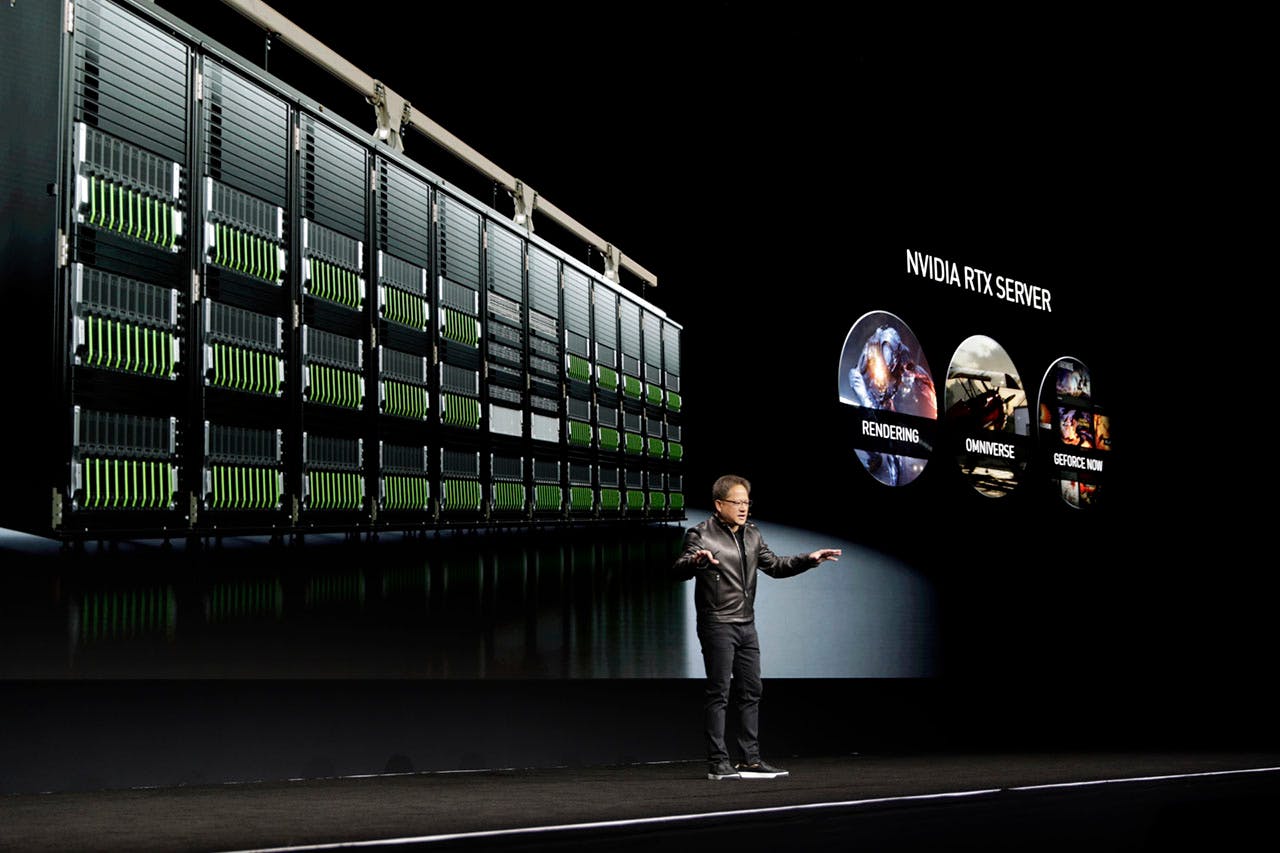
Nvidia’s Omniverse is the simulation and collaboration platform that will be partly used to build the Metaverse. More than 50,000 individual creators have downloaded Omniverse since it opened Beta in December 2020 compared to 2 million that have registered with the CUDA platform. The number of creators is now opened up due to integrations with Blender and Adobe, where it can potentially reach millions of additional users.

In the words of CEO Jensen Huang, “We are thrilled to have launched NVIDIA Omniverse, a simulation platform nearly five years in the making that runs physically realistic virtual worlds and connects to other digital platforms. We imagine engineers, designers and even autonomous machines connecting to Omniverse to create digital twins and industrial metaverses.”

It makes sense that Nvidia is early to this market as the company has worked ten years on the ray tracing technology used in the RTX Turing GPUs. The RTX platform was invented by Nvidia to “physically simulate light behavior in the world” and combines RT cores for ray tracing with Tensor Cores for AI. This drives Nvidia’s professional visualization revenue segment, which was up 156% year-over-year and up 40% sequentially.

The company also invented the ability to simulate physics and create architectures in the cloud to build “connectors.” This led to the development of USD, or Universal Scene Description, which allows for a portal into virtual worlds. These virtual worlds are then used to train robots or to create concerts and theme parks.

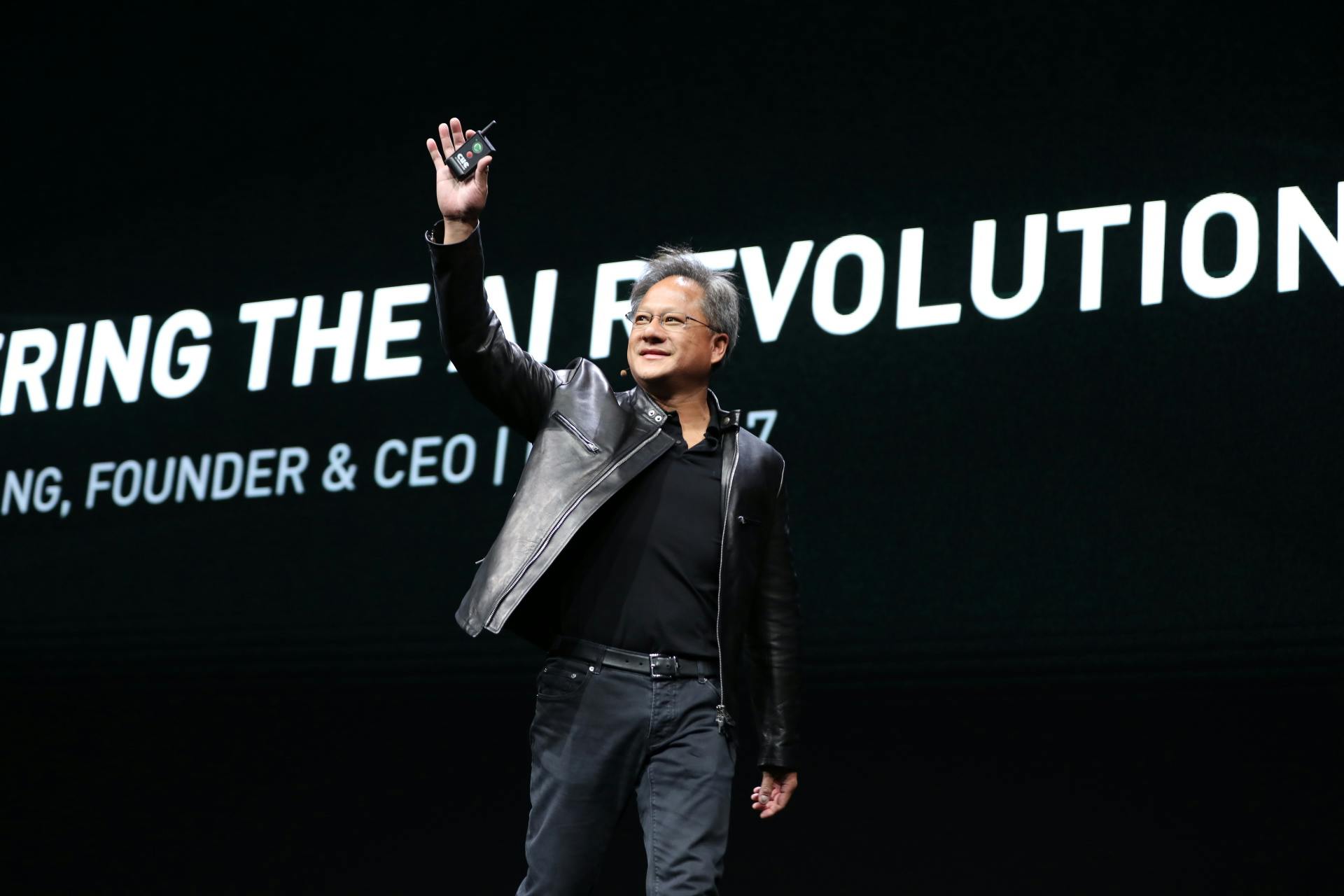
This year’s Nvidia’s GPU Technology Conference event slides were made from the company’s own Omniverse platform to make the presentation more interactive. The main highlight of GTC 2021 was a perfect virtual replica of Jensen Huang’s kitchen and with a digital clone of the CEO himself. The details given in the video of The Making of the GTC Keynote shows the combined work of NVIDIA’s deep learning and graphics research teams with several engineering teams and the company’s in-house creative team.

To create the virtual keynote, the teams had to take several photos of the kitchen and Jensen to create the 3D model that could mimic his gestures. The keynote raised debates as to which parts were rendered and which parts were real. A TechRadar article had said that the entire presentation was not real. However, Nvidia reached out to the company to note that while “Jensen's corporeal form may have been rendered during portions of the keynote, it was Jensen Huang himself who was speaking at the presentation.”

The company’s post on the making of GTC made sure it was clarified. To be sure, you can’t have a keynote without a flesh and blood person at the center. Through all but 14 seconds of the hour and 48 minute presentation — from 1:02:41 to 1:02:55 — Huang himself spoke in the keynote.

Omniverse Use Cases

NVIDIA Omniverse Enterprise has made it possible for 3D production teams to work seamlessly together on complex projects. Rather than requiring in-person meetings or exchanging and iterating on massive files, design teams can work simultaneously in a virtual world from anywhere.

NVIDIA is working with various industry leaders using the company’s Omniverse platform in real-time situations. Omniverse enterprise software is in the early access stage and might be available later this year from NVIDIA’s partners, including Dell, HP, and others. Over 500 companies are evaluating Omniverse Enterprise, including BMW, Volvo, Lockheed Martin, Ericsson, and Bentley Systems.

Nvidia pointed out on the earnings call that there is a “Factory of the Future” that was developed on the Omniverse platform and that companies like BMW are using RTX and USD to simulate factories: “We've got a shared GTC Factory of the Future that is designed completely in Omniverse, robots trading Omniverse with goods and materials that are its original CAD data put into the battery. The logistics plan, like an ERP system, except this an ERP system of physical grids and physical simulation simulated through this Omniverse world, and you could plan the entire factory in Omniverse.

This will help BMW to increase the speed in decision-making and improve efficiency. The new approach will help to view their entire factory in simulation mode with photorealistic detail. Another advantage is that data is available immediately and any changes can be made in the planning stage itself, which saves time and money.

Bentley Software is an infrastructure engineering software company that builds complex infrastructure projects. The Bentley iTwin platform allows engineering firms to create and analyze digital twins of infrastructure assets. The result is millimeter-accurate digital content that even allows users to explore and even walk through infrastructure in real time. The digital twins are explored across multiple devices including AR/VR headsets. Foster + Partners, the architectural design and engineering firm that built Apple’s headquarters, is also testing Omniverse to help them render virtual sets in real-time.

Beyond the Omniverse:

As stated in the introduction, Jensen Huang said in the earnings call, “I'm fairly sure at this point that Omniverse or the Metaverse is going to be a new economy that is larger than our current economy.” If that’s true, then many companies will be winners in the space. Facebook is certainly trying as CEO Mark Zuckerberg said, “I expect people will transition from seeing us primarily as a social media company to seeing us as a metaverse company”.

My personal opinion is that Facebook has too many privacy issues and (frankly) a poor reputation to find much uptake in new markets. We’ve seen the company fail many times at attempts to move into stable coins, dating, Facebook gifts, Parse, among others. Not to mention the Cambridge Analytica data scandal, with its only success outside of the social network being accomplished through acquisitions. Regardless, the company is likely to get the kind of headlines that investors tend to rely on.

Unity, Epic Games and Roblox have arguably the best audience as they’ll target gamers for the Metaverse. The trick will be recruiting non-gaming audiences to produce a bigger market than what is currently being monetized through gaming.

For a list of investable Metaverse companies, check out the Roundhill Ball Metaverse ETF META provides exposure to companies that are involved in Metaverse. NVIDIA is currently its largest holding followed by Microsoft, Roblox, Tencent, Unity and Autodesk.

Conclusion:

If the Metaverse economy surpasses the real-world economy, as Huang predicts, then one day we may look back at Jensen Huang’s keynote in a fully rendered kitchen and memorialize this moment similar to Steve Jobs keynote in 2007.

However, the beauty of a company like Nvidia is that I don’t have to time the Metaverse in order to see real gains. If the Metaverse thesis takes longer than expected to materialize, I am still bullish on the company due to its AI and GPU-cloud capabilities that is driving many industries. In fact, I am so bullish on Nvidia for AI that I believe the company can outpace even Apple, which I covered here.
Posted in AI Stocks, Data CenterLeave a Comment on The Key To Unlocking The Metaverse Is Nvidia’s Omniverse

Here’s Why Nvidia Will Surpass Apple’s Valuation In 5 Years

Posted on September 2, 2021June 30, 2026 by io-fund
Here’s Why Nvidia Will Surpass Apple’s Valuation In 5 Years

Aug 27, 2021, 12:24am EDT (Originally published on Forbes)

Nvidia has a market cap of roughly $550 billion compared to Apple’s nearly $2.5 trillion. We believe Nvidia can surpass Apple by capitalizing on the artificial intelligence economy, which will add an estimated $15 trillion to GDP. This is compared to the mobile economy that brought us the majority of the gains in Apple, Google and Facebook, and contributes $4.4 trillion to GDP. For comparison purposes, AI contributes $2 trillion to GDP as of 2018.

While mobile was primarily consumer, and some enterprise with bring-your-own-device, artificial intelligence will touch every aspect of both industry and commerce, including consumer, enterprise, and small-to-medium sized businesses, and will do so by disrupting every vertical similar to cloud. To be more specific, AI will be similar to cloud by blazing a path that is defined by lowering costs and increasing productivity.

I have an impeccable record on Nvidia including when I stated the sell-off in 2018 was overblown and missing the bigger picture as Nvidia has two impenetrable moats: developer adoption and the GPU-powered cloud. This was when headlines were focused exclusively on Nvidia’s gaming segment and GPU sales for crypto mining.

Although Nvidia’s stock is doing very well this year, this has been a fairly contrarian stance in the past. Not only was Nvidia wearing the dunce hat in 2018, but in August of 2019, the GPU data center revenue was flat to declining sequentially for three quarters, and in fiscal Q3 2020, also declined YoY (calendar Q4 2019). We established and defended our thesis on the data center as Nvidia clawed its way back in price through China tensions, supply shortages, threats of custom silicon from Big Tech, cyclical capex spending, and on whether the Arm acquisition will be approved.

Suffice to say, three years later and Nvidia is no longer a contrarian stock as it once was during the crypto bust. Yet, the long-term durability is still being debated —- it’s a semiconductor company after all —- best to stick with software, right? Right? Not to mention, some institutions are still holding out for Intel. Imagine being the tech analyst at those funds (if they’re still employed!).

Before we review what will drive Nvidia’s revenue in the near-term, it bears repeating the thesis we published in November of 2018:

Nvidia is already the universal platform for development, but this won’t become obvious until innovation in artificial intelligence matures. Developers are programming the future of artificial intelligence applications on Nvidia because GPUs are easier and more flexible than customized TPU chips from Google or FGPA chips used by Microsoft [from Xilinx]. Meanwhile, Intel’s CPU chips will struggle to compete as artificial intelligence applications and machine learning inferencing move to the cloud. Intel is trying to catch-up but Nvidia continues to release more powerful GPUs – and cloud providers such as Amazon, Microsoft and Google cannot risk losing the competitive advantage that comes with Nvidia’s technology.from Xilinx]. Meanwhile, Intel’s CPU chips will struggle to compete as artificial intelligence applications and machine learning inferencing move to the cloud. Intel is trying to catch-up but Nvidia continues to release more powerful GPUs – and cloud providers such as Amazon, Microsoft and Google cannot risk losing the competitive advantage that comes with Nvidia’s technology.

The Turing T4 GPU from Nvidia should start to show up in earnings soon, and the real-time ray-tracing RTX chips will keep gaming revenue strong when there is more adoption in 6-12 months. Nvidia is a company that has reported big earnings beats, with average upside potential of 33.35 percent to estimates in the last four quarters. Data center revenue stands at 24% and is rapidly growing. When artificial intelligence matures, you can expect data center revenue to be Nvidia’s top revenue segment. Despite the corrections we’ve seen in the technology sector, and with Nvidia stock specifically, investors who remain patient will have a sizeable return in the future.”When artificial intelligence matures, you can expect data center revenue to be Nvidia’s top revenue segment. Despite the corrections we’ve seen in the technology sector, and with Nvidia stock specifically, investors who remain patient will have a sizeable return in the future.”

Notably, the stock is up 335% since my thesis was first published – a notable amount for a mega cap stock and nearly 2-3X more returns than any FAAMG in the same period. This is important because I expect this to trend to continue until Nvidia has surpassed all FAAMG valuations.

Below, we discuss the Ampere architecture and A100 GPUs, the Enterprise AI Suite and an update on the Arm acquisition. These are some of the near-term stepping stones that will help sustain Nvidia’s price in the coming year. We are also bullish on the Metaverse with Nvidia specifically but will leave that for a separate analysis in the coming month.

Nvidia Not Standing Still with Ampere Architecture and A100 GPU

“Nvidia’s acceleration may happen one or two years earlier as they are the core piece in the stack that is required for the computing power for the front-runners referenced in the graph above. There is a chance Nvidia reflects data center growth as soon as 2020-2021.” -published August 2019, Premium I/O Fund

Last year, Nvidia released the Ampere architecture and A100 GPU as an upgrade from the Volta architecture. The A100 GPUs are able to unify training and inference on a single chip, whereas in the past Nvidia’s GPUs were mainly used for training. This allows Nvidia a competitive advantage by offering both training and inferencing. The result is a 20x performance boost from a multi-instance GPU that allows many GPUs to look like one GPU. The A100 offers the largest leap in performance to date over the past 8 generations.

At the onset, the A100 was deployed by the world’s leading cloud service providers and system builders, including Alibaba cloud, Amazon Web Services, Baidu Cloud, Dell Technologies, Google Cloud platform, HPE and Microsoft Azure, among others. It is also getting adopted by several supercomputing centers, including the National Energy Research Scientific Computing Center and the Jülich Supercomputing Centre in Germany and Argonne National Laboratory. 

One year later and the Ampere architecture is becoming one of the best-selling GPU architectures in the company’s history. This quarter, Microsoft Azure recently announced the availability of Azure ND A100 v4 Cloud GPU which is powered by NVIDIA A100 Tensor Core GPUs. The company claims it to be the fastest public cloud supercomputer. The news follows the launch by Amazon Web Services and Google Cloud general availability in prior quarters. The company has been extending its leadership in supercomputing. The latest top 500 list shows that Nvidia power 342 of the world’s top 500 supercomputers, including 70 percent of all new systems and eight of the top 10. This is a remarkable update from the company.

Ampere architecture-powered laptop demand has also been solid as OEM’s adopted Ampere Architecture GPUs in a record number of designs. It also features the third-generation Max-Q power optimization technology enabling ultrathin designs. The Ampere architecture product cycle for gaming has also been robust, driven by RTX’s real-time ray tracing.

In the area of GPU acceleration, Nvidia is working with Apache Spark to release Spark 3.0 run on Databricks. Apache Spark is the industry’s largest open source data analytics platform. The results are a 7x performance improvement and 90 percent cost savings in an initial test. Databricks and Google Cloud Dataproc are the first to offer Spark with GPU acceleration, which also opens up Nvidia for data analytics.  

The demand has been strong for the company’s products which have exceeded supply. In the earnings call, Jensen Huang mentioned, “And so I would expect that we will see a supply-constrained environment for the vast majority of next year is my guess at the moment.”  However, he assured that they have secured enough supplies to meet the growth plans for the second half of this year when he said, “We expect to be able to achieve our Company's growth plans for next year.”

Virtual Machines for AI Workloads

Virtualization allows companies to use software to expand the capabilities of physical servers onto a virtual system. VMWare is popular with IT departments as the platform allows companies to run many virtual machines on one server and networks can be virtualized to allow applications to function independently from hardware or to share data between computers. The storage, network and compute offered through full-scale virtual machines and Kubernetes instances for cloud-hosted applications comes with third-party support, making VMWare an unbeatable solution for enterprises.

Therefore, it makes sense Nvidia would choose VMWare’s VSphere as a partner on the Enterprise AI Suite, which is a cloud native suite that plugs into VMWare’s existing footprint to help scale AI applications and workloads. As pointed out by the write-up by IDC, many IT organizations struggle to support AI workloads as they do not scale as deep learning training and AI inferencing is very data hungry and requires more memory bandwidth than what standard infrastructures are capable of. CPUs are also not as efficient as GPUs, which have parallel processing. Although developers and data scientists can leverage the public cloud for the more performance demanding instances, there are latency issues with where the data repositories are stored (typically on-premise).

The result is that IT organizations and developers can deploy virtual machines with accelerated AI computing where previously this was only done with bare metal servers. This allows for departments to scale and pay only for workloads that are accelerated with Nvidia capitalizing on licensing and support costs. Nvidia’s AI Enterprise targets customers who are starting out with new enterprise applications or deploying more enterprise applications and require a GPU. As enterprise customers of the Enterprise AI Suite mature and require larger training workloads, it’s likely they will upgrade to the GPU-powered cloud.

Subscription licenses start at $2,000 per CPU socket for one year and it includes standard business support five days a week. The software will also be supported with a perpetual license of $3,595, but support is extra. You also have the option to have get 24×7 support with additional charges. According to IDC, companies are on track to spend a combined nearly $342 billion on AI software, hardware, and services like AI Enterprise in 2021. So, the market is huge and Nvidia is expecting a significant business.

Nvidia also announced Base Command, which is a development hub to move AI projects from prototype to production. Fleet Command is a managed edge AI software SaaS offering that allows companies to deploy AI applications from a central location with real-time processing at the edge. Companies like Everseen use these products to help retailers manage inventory and for supply chain automation.

Fiscal Q2 Earnings and More on the Arm Acquisition:

Over the past year, there have been some quarters where data center revenue exceeded gaming, while in the most recent quarter, the two segments are inching closer with gaming revenue at $3.06 billion, up 85 percent year-over-year, and data center revenue at $2.37 billion, up 35 percent year-over-year.

It was good timing for Jensen Huang to appear in a fully rendered kitchen for the GTC keynote as professional visualization segment was up 156% year-over-year and 40% quarter-over-quarter. Not surprisingly, automotive was down 1% sequentially although up 37% year-over-year.

Gross margins were 64.8% when compared to 58.8% for the same period last year, which per management “reflected the absence of certain Mellanox acquisition-related costs.” Adjusted gross margins were 66.7%, up 70 basis points, and net income increased 282% YoY to $2.4 billion or $0.94 per share compared to $0.25 for the same period last year.

Adjusted net income increased by 92% YoY to $2.6 billion or $1.04 per share compared to $0.55 for the same period last year.

The company had a record cash flow from operation of $2.7 billion and ended the quarter with cash and marketable securities of $19.7 billion and $12 billion in debt. It returned $100 million to the shareholders in the form of dividends. It also completed the announced four-for-one split of its common stock.

The company is guiding for third quarter fiscal revenue of $6.8 billion with adjusted margins of 67%. This represents growth of 44% and with the “lion’s share” of sequential growth driven by the data center.

We’ve covered the Arm acquisition extensively with in a full-length analysis you can find here on Why the Nvidia-Arm acquisition Should Be Approved. In the analysis, we point towards why we are positive on the deal, as despite Arm’s extremely valuable IP, the company makes very little revenue for powering 90% of the world’s mobile processors/smartphones (therefore, it needs to be a strategic target). We also argue that the idea of Arm being neutral in a competitive industry is idealistic, and to block innovation at its most crucial point would be counterproductive for the governments reviewing the deal. We also discuss how the Arm acquisition will help facilitate Nvidia’s move towards edge devices.

In the recent earnings call, CFO Colette Kress reiterated that the Arm deal is a positive for both the companies and its customers as Nvidia can help expand Arm’s IP into new markets like the Data Center and IoT. Specifically, the CFO stated, “We are confident in the deal and that regulators should recognize the benefits of the acquisition to Arm, its licensees, and the industry.”

Conclusion:

The conclusion to my analysis is the same as the introduction, which is that I believe Nvidia is capable of out-performing all five FAAMG stocks and will surpass even Apple’s valuation in the next five years.

Posted in AI Stocks, Data CenterLeave a Comment on Here’s Why Nvidia Will Surpass Apple’s Valuation In 5 Years

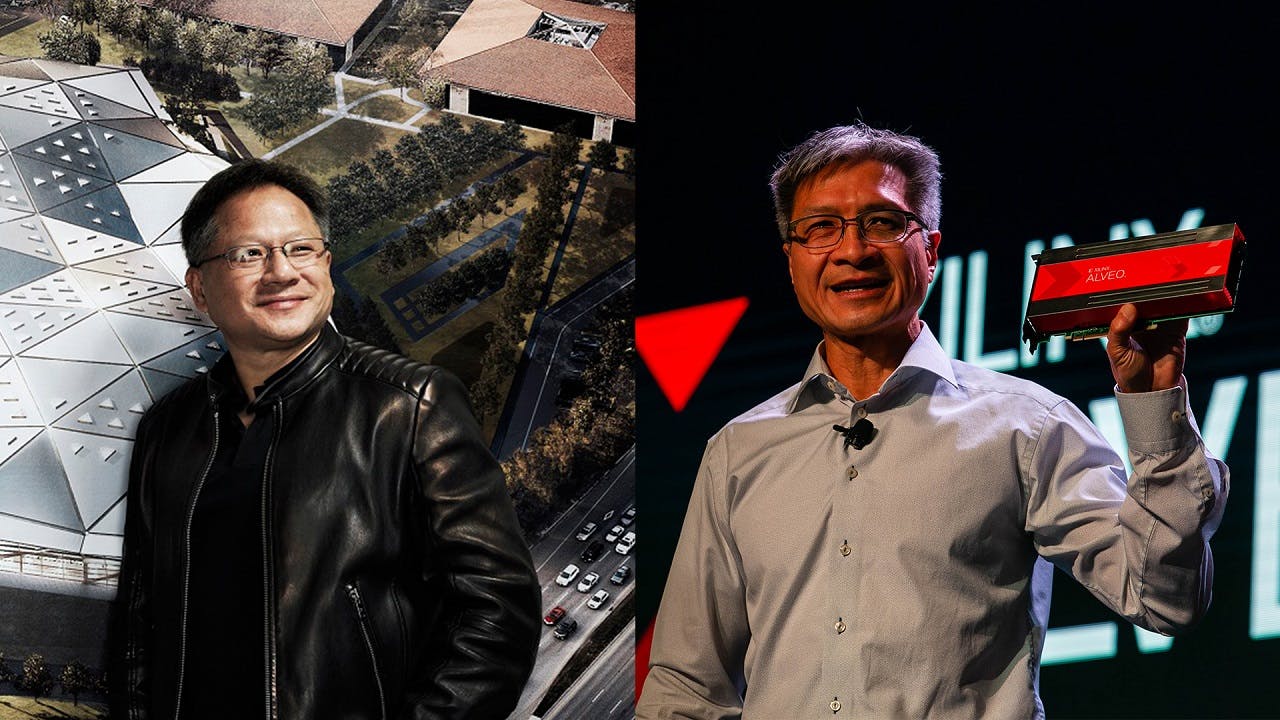
Nvidia Versus Xilinx: Heavy Hitter AI Stocks

Posted on April 4, 2019June 30, 2026 by io-fund
Nvidia Versus Xilinx: Heavy Hitter AI Stocks

Nvidia fell off a cliff last October from a high of $290 to a low of $130. Meanwhile, the challenger Xilinx remained unharmed by the tech rout, and despite unfavorable macro conditions. Nvidia popularized GPUs in 1999 and Xilinx invented FPGAs in 1985, and both are chips that will define the computationally-intensive future.

GPUs originated from the advanced computations required in gaming and FPGAs originated from electronics engineering. There are strengths and weaknesses to both, however, these are the two that will power the artificial intelligence and machine learning-driven economy. The size of this AI and ML economy is expected to reach $15 trillion by 2030 up from $2 trillion this year.

Keep in mind, that long before technologies go public, they are incubating across the startup ecosystem. By the time AI and ML companies reach the public markets, the technology powering and developing this wave of companies was already decided in the years prior. We are in those critical years where startups must quickly design and develop AI if they want to have the first-mover advantage. This is creating a battle between FPGAs and GPUs.

Below, I break down the differences between Xilinx’s FPGAs and Nvidia’s GPUs before analyzing the financials and theories on how the two will perform in the future.

Note: Previously, I discussed how Nvidia stock has two impenetrable moats: the developer ecosystem and GPU-powered cloud. This previous analysis was written during the height of the panic sell-off, which I negated as being overly-pessimistic due to Nvidia’s strong fundamentals.Nvidia stock has two impenetrable moats: the developer ecosystem and GPU-powered cloud. This previous analysis was written during the height of the panic sell-off, which I negated as being overly-pessimistic due to Nvidia’s strong fundamentals.

AI and Machine Learning

On many technical levels, FPGAs (Xilinx) are considered superior to GPUs (Nvidia). They offer a higher amount of on-chip cache memory to help reduce the bottlenecks from external memory, and are flexible enough to be reconfigured for various data types, such as binary, ternary, and custom data types, whereas GPUs must be modified at the vendor level.

FPGAs are also known for power efficiency, and often test at 10x better in power consumption than GPUs and also 4x better than GPUs for general purpose compute[1]. Reconfigurability for FPGAs also helps provide this efficiency beyond deep learning for a large number of end applications and workloads. The architecture of FPGAs is very adaptable as the chips allow a user to address all of the needs of a workload with the resources provided by FPGAs, such as reconfiguring the data path during run time and with partial reconfiguration. Meanwhile, GPUs are restricted as the architecture is a Single Instruction Multiple Thread (SIMT), which provides an advantage over CPUs but can result in lower performance efficiency when enough parallels cannot be found while mapping the workload.

As pointed out in my previous analysis on Nvidia, software developers prefer GPUs as their frameworks are easier to develop on. Nvidia’s CUDA architecture, for instance, does not require an in-depth understanding of underlying hardware. FPGAs require knowledge of machine learning algorithms at the hardware level, in addition to the software development, and this has been a barrier to entry for FPGAs. FPGAs are a reconfigurable integrated circuit (hence the strengths on being easily reconfigured), which requires specifying a hardware circuit, whereas GPUs are configured via software[2].

“Nvidia, thanks to the CUDA software stack (which AMD cannot match), has a much more unassailable position than does Intel with Xeon CPUs (where an X86 application just runs on either a Xeon or an Epyc).”

– software developer on Reddit

Section takeaway: FPGAs result in faster and more efficient compute but are harder to program due to hardware circuit configurations when compared to GPUs for machine learning, which are more universal and require less engineering resources.

Financials

Nvidia and Xilinx power more than data centers, of course. Nvidia’s top revenue segment is gaming, the origin of GPUs, and this drives about $1 billion per quarter in revenue. Xilinx’s top segment is Communications with many investors using Xilinx as a global bet on 5G with communications revenue increasing 41% year-over-year as reported in the most recent quarter. Xilinx also was not as affected by crypto as the Broadcast, Consumer & Automotive category was 17% of revenue compared to 15% of revenue in the same quarter YoY. (Xilinx classifies crypto as consumer in this 10-K).

Xilinx has a direct competitor with Intel, who acquired Alterra for $16.7 billion. Intel is keen to solve the development uptake issues with FPGAs with the release of Stratix 10 hardware, which has a software layer to simplify development. Microsoft Azure is partnered with both Xilinx and Intel/Alterra on FPGAs although there is some indication that MS is leaning more towards Xilinx in the near future after announcing they will replace Intel chips with Xilinx in over half of their servers.

Developers  favor Xilinx over Intel as a brand, and Microsoft is doing quite a bit to court developers right now including the acquisition of Github – read more tech stock analysis here. Therefore, the shift towards Xilinx was not unexpected.tech stock analysis here. Therefore, the shift towards Xilinx was not unexpected.

Nvidia:

While Xilinx reported double digit increases, Nvidia reported double digit declines with revenue down 24 percent, earnings per share down 48 percent to $0.92 and operating income down a shocking 73 percent year-over-year in fiscal Q4. The annual numbers ended on a better note with revenue increasing 21 percent to $11.72 billion, and GAAP earnings per share increasing 38 percent to $6.63. Of Nvidia’s revenue segments, gaming was hit the hardest due to the crypto bust flooding the market with GPUs, which in turn, caused reduced unit shipments overall. In addition, the new Turing architecture and real-time ray tracing, while impressive from a graphics perspective, are ahead of their time and are seeing slow adoption (At release, I had originally put Q3 2019 for these to find early adopters and this timing still looks accurate or maybe Q4).

This upcoming quarter is not likely to be the comeback quarter for Nvidia with guidance of $2.20 billion, which is flat from last quarter and represents a 31 percent decline year-over-year. As you’ll see in the takeaway paragraph below, I am very bullish on Nvidia in the long term as crypto causing temporary GPU saturation offered an opportunity to enter the stock below its value.

Gaming is a foundation for Nvidia, but most certainly, this is not the growth story. The GPU-powered cloud is the future due to AI and ML. If you can get Nvidia below a $100 billion market cap, then my prediction is you will be resting easy by 2022 and 2023 with a stellar return as it’s understated presence across cloud data centers and AI applications should have a firm hold on the market.

Xilinx:

Xilinx’s revenue growth is at 34% year-over-year in Q3 2019, with 63% growth in operating income YoY in the same quarter, and 42% net income growth. It’s important to mention that Xilinx is a small fish in a big pond and this quarterly growth of 34% and 42% equals $200 million to the top line and less than $100 million to the bottom line. Meanwhile, Xilinx commands a PE ratio of 38, at time of writing.

Guidance for the upcoming quarter is revenue of $815 to $835 million compared to $800 million in the previous quarter. One reason Xilinx’s stock price continued to climb, while Nvidia fell off a cliff, is that the smaller fish did not have enough market share to reflect a big impact, whereas Nvidia’s crypto business alone exceeded Xilinx’s net income for the entire year (at around $500 million per quarter). In addition, one year ago Xilinx posted negative net income of $12 million but is now at a net income in the range of $200-$250 million the last two quarters.

In other words, Xilinx is more of a trout than a tuna, but is a pure play option that is likely to see very solid returns as the AI economy is built out. (This is why I don’t invest in Intel; I prefer pure plays when possible).

Snapshot of Xilinx Revenue segments:

Source: Xilinx

Takeaway:

Nvidia is one of my favorite companies from a fundamental standpoint, and it is worth repeating that I was not fair weathered during the crypto bust, rather encouraged readers to look at the developer moat and GPU-powered cloud as future drivers of growth. As I stated to a reader over email two days before the Mellanox acquisition: “Can Xilinx’s FPGA disrupt Nvidia GPU’s at 4x faster? My best guess (and it’s only a guess) is that Nvidia will continue to release the right chips that the market demands.” In this case, Nvidia is acquiring the right company that the market demands. You can read my analysis on Mellanox acquisition published on FATRADER here.

I want to point out that Xilinx will make a solid investment, as well. Xilinx is priced a minimum of 25-30% higher than Nvidia when looking at PE ratio, Price to Sales, and EPS. Quarter-over-quarter growth for Xilinx right now is in the single digits, and for this reason, I’d like to see Xilinx priced 20% cheaper before I build a position or I’d like to see more than single digit QoQ revenue growth in a highly competitive market for a 30+ PE ratio. Due to Nvidia’s upcoming flat quarter (per guidance), Nvidia is also likely to trade sideways for a quarter or two. I bought Nvidia in 2017 and cost averaged down to $160, and am comfortable here for the long term.

[1] https://www.aldec.com/en/company/blog/167–fpgas-vs-gpus-for-machine-learning-applications-which-one-is-better
[2] https://blog.esciencecenter.nl/why-use-an-fpga-instead-of-a-cpu-or-gpu-b234cd4f309c

Posted in AI Stocks, Cloud Infrastructure, Data Center, SemiconductorsLeave a Comment on Nvidia Versus Xilinx: Heavy Hitter AI Stocks

Holding Nvidia Stock Will Pay Off Due to Two Impenetrable Moats

Posted on November 15, 2018June 30, 2026 by io-fund
Holding Nvidia Stock Will Pay Off Due to Two Impenetrable Moats

Tech stocks are getting slammed right now, and Nvidia may be one of Wall Street’s biggest losers in the sell-off that began last month and continued into this week. Nvidia’s stock has seen a 30-day high of $292 and a whiplash low of $176 – equaling a 40% plunge in the matter of four weeks. Today, it stands at $197.60.

Economic indicators and earnings from tech companies have not exactly warranted this reaction from the market. Fears the semi-conductor industry is slowing down based off Advanced Micro Devices earnings report were negated when Intel reported strong Q3 earnings. And while Apple may be on the precipice of a capped out $1 trillion-dollar market cap due to possible iPhone saturation, Nvidia’s outlook is quite the opposite in regards to public-company growth trajectory. The market may continue to have volatility, but Nvidia investors who are patient will be rewarded due to competitive advantages in GPU-powered cloud performance and developer adoption of Nvidia’s platform.

Brief Overview of Nvidia’s Revenue Segments

To summarize, gaming claims the majority of Nvidia’s revenue at $1.81 billion, up 52% YoY. Gaming will get a nice boost in 6-12 months from the new GeForce RTX 2070, RTX 2080 and 2080 Ti chips, which introduce the possibility of hybrid rendering through ray-tracing. In layman’s terms, ray-tracing mimics how light behaves in the real world by mapping out rays from 3D illumination sources. The imagery is much more realistic as a result. Electronic Arts released the first raytracing game today (November 14th) whereas 6 months ago, the gaming industry did not think raytracing would even be possible. Companies who have signed up for the new Turing architecture include Adobe, Pixar, Siemens, Black Magic, Weta Digital, Epic Games (maker of Fortnite) and Autodesk.

Data center revenue has been picking up speed at 83% YoY, or $760 million, as GPU chips are powering more of the cloud for machine learning and artificial intelligence applications. Data center revenue, once a small blip, claims 24% of the company’s total sales. This will continue to grow steadily into the near future due to the computing power and flexibility GPUs provide over CPUs, which is what Intel sells, or TPUs and FPGA, which are custom machine-learning chips by Google and used by Microsoft that are too specific to one platform for widespread adoption – more on these points below.

Source: TechCrunch

Smaller segments by Nvidia include professional visualization and automotive, which grew to $281 million and $161 million, respectively, up 20% and 13% year over year.

Two Impenetrable Moats: GPU-Cloud and Developer Adoption

Revenue segments are your typical Nvidia stock coverage. But can Nvidia take market share from Intel? Will Google, Microsoft, Facebook and Apple design their own custom chips to compete with Nvidia? This is what investors need to answer for themselves especially if we continue into correction territory.

Regarding Intel, the cloud is too competitive to forego the performance and efficiency that Nvidia delivers. Recently, the Turing T4 GPU became the fastest adopted server GPU of all time in just two short months of hitting the market. Prior to the release of the Turing T4 GPU, Nvidia’s data center growth was 3x compared to Intel. Intel posted 26% growth YoY whereas Nvidia posted 83% YoY. However, Nvidia’s data center revenue is 1/6th compared to Intel’s at $760 million vs. $6.1 billion. This revenue segment will continue to grow as the GPU-powered cloud is built out. Unfortunately for Intel, GPUs are the better choice for cloud customers as the usage pattern is constantly in flux, demanding a wide variety of models and different software frameworks. Intel’s CPU Xeon Processor cannot compete with the performance-per-watt of what Nvidia offers in the cloud. Per the announcement on September 13th, 2018, Microsoft, Google, Cisco, Dell EMC, Fujitsu, HPE, IBM, Oracle and Supermicro plan to release servers with Nvidia’s T4 GPU on board.

My newsletter subscribers get this information first. Sign up here.My newsletter subscribers get this information first. Sign up here.here.

Google and Microsoft have both made chips for their data centers. Microsoft adopted the field-programmable gate array (FPGA) which is used for AI apps. And Google has built a custom chip called the Tensor Processor Unit (TPU) for Google’s TensorFlow deep learning framework. Competing, customized chips will become the new norm as tech giants prefer to use proprietary tech. The biggest weakness that competing customized chips face like TPUs, from Google, and FPGA, used by Microsoft, is that they may be too specialized for developers to adopt. The drawbacks will continue to be price and difficulty, as programming for FPGA is an area not many engineers have expertise in. The same goes for Google Cloud Platform (GCP). They’ll have to get developers to adopt GCP and keep them locked into TensorFlow. Even so, there are alternate frameworks such as PyTorch from Facebook which add further to the fragmentation of developer frameworks. In addition, even if Google uses TPUs for inferencing, it may still use Nvidia’s GPU for training neural networks.

Let’s use mobile application development as an example. One of the reasons mobile is a duopoly between Android and iOS is that developers can only learn so many tools and development environments before the process becomes inefficient. In order to truly excel at a language, it has to be universal. For instance, Microsoft attempted to launch a Windows phone, which was met by resistance as developers did not care to learn a new operating system that could not prove itself with user adoption. In turn, mobile users did not buy the Windows phone because their favorite applications were not available to download. iPhone’s success was due to iOS developers who learned tools like XCode to create applications. Android became the competing universal language for the remaining manufacturers, such as Samsung, LG, Sony, Pixel, etcetera. The next wave of AI applications and machine learning inferences will follow the same path of limited competition due to development bandwidth. Developers will self-regulate the number of competitors for processing units due to a need for a universal platform that supports all frameworks.

Here’s a quote from Marc Andreessen of Andreessen-Horowitz, one of the most successful venture capitalists in Silicon Valley:

“We’ve been investing in a lot of startups applying deep learning to many areas, and every single one effectively comes in building on Nvidia’s platform. It’s like when people were all building on Windows in the ’90s or all building on the iPhone in the late 2000s.”

There is an even greater need to simplify artificial intelligence and machine learning than exists for mobile standards. There are thousands of variants emerging each year in AI as neural networks evolve and expand in depth, complexity and architecture. There are multiple frameworks supported by major industry players and Nvidia’s GPUs are flexible enough to accelerate all of these frameworks and workflows including Caffe2, Cognitive Toolkit, Kaldi, MXNet, PaddlePaddle, Pytorch and TensorFlow.

In addition, AI occurs beyond the cloud and Nvidia’s GPUs are available in what is called edge devices, such as self-driving cars, desktops, workstations, data centers and across all major cloud providers.

Conclusion

Nvidia is already the universal platform for development, but this won’t become obvious until innovation in artificial intelligence matures. Developers are programming the future of artificial intelligence applications on Nvidia because GPUs are easier and more flexible than customized TPU chips from Google or FGPA chips used by Microsoft. Meanwhile, Intel’s CPU chips will struggle to compete as artificial intelligence applications and machine learning inferencing move to the cloud. Intel is trying to catch-up but Nvidia continues to release more powerful GPUs – and cloud providers such as Amazon, Microsoft and Google cannot risk losing the competitive advantage that comes with Nvidia’s technology.

The Turing T4 GPU from Nvidia should start to show up in earnings soon, and the real-time ray-tracing RTX chips will keep gaming revenue strong when there is more adoption in 6-12 months. Nvidia is a company that has reported big earnings beats, with average upside potential of 33.35 percent to estimates in the last four quarters. Data center revenue stands at 24% and is rapidly growing. When artificial intelligence matures, you can expect data center revenue to be Nvidia’s top revenue segment. Despite the corrections we’ve seen in the technology sector, and with Nvidia stock specifically, investors who remain patient will have a sizeable return in the future.

Posted in AI Stocks, Cloud Infrastructure, Data Center, Semiconductors, Tech StocksLeave a Comment on Holding Nvidia Stock Will Pay Off Due to Two Impenetrable Moats

Posts navigation

Newer posts

Recent Posts

  • The IPO Glut of 2020: Why Valuations Have Gone Too Far
  • Zoom Discusses Two Important Catalysts In Q1 Earnings
  • Three Risk Management Tools the I/O Fund Offers
  • Micron Is Up 900%. Here’s Why the AI Memory Trade May Still Have Room to Run
  • Credo: Reliability Leader Aggressively Moves into Optics

Recent Comments

No comments to show.

Archives

  • June 2026
  • May 2026
  • April 2026
  • March 2026
  • February 2026
  • January 2026
  • December 2025
  • November 2025
  • October 2025
  • September 2025
  • August 2025
  • July 2025
  • June 2025
  • May 2025
  • April 2025
  • March 2025
  • February 2025
  • January 2025
  • December 2024
  • November 2024
  • October 2024
  • September 2024
  • August 2024
  • July 2024
  • June 2024
  • May 2024
  • April 2024
  • March 2024
  • February 2024
  • January 2024
  • December 2023
  • November 2023
  • October 2023
  • September 2023
  • August 2023
  • July 2023
  • June 2023
  • May 2023
  • April 2023
  • March 2023
  • February 2023
  • January 2023
  • December 2022
  • November 2022
  • October 2022
  • September 2022
  • August 2022
  • July 2022
  • June 2022
  • May 2022
  • April 2022
  • March 2022
  • February 2022
  • January 2022
  • December 2021
  • November 2021
  • October 2021
  • September 2021
  • August 2021
  • July 2021
  • June 2021
  • May 2021
  • April 2021
  • March 2021
  • February 2021
  • January 2021
  • December 2020
  • November 2020
  • October 2020
  • September 2020
  • August 2020
  • July 2020
  • June 2020
  • May 2020
  • April 2020
  • March 2020
  • February 2020
  • January 2020
  • December 2019
  • November 2019
  • October 2019
  • September 2019
  • August 2019
  • July 2019
  • June 2019
  • May 2019
  • April 2019
  • March 2019
  • February 2019
  • January 2019
  • December 2018
  • November 2018
  • October 2018
  • September 2018
  • August 2018
  • July 2018
  • June 2018
  • May 2018
  • April 2018
  • February 2018
  • January 2018

Categories

  • 5G
  • About
  • Accounting Tips
  • AdTech
  • Ai Platforms
  • Ai Platforms
  • Ai Platforms
  • Ai Platforms
  • Ai Platforms
  • Ai Platforms
  • Ai Platforms
  • Ai Platforms
  • Ai Platforms
  • Ai Platforms
  • Ai Platforms
  • Ai Platforms
  • Ai Platforms
  • Ai Platforms
  • Ai Platforms
  • Ai Platforms
  • AI Stocks
  • AI Stocks
  • Analysts
  • Application Monitoring
  • Application Monitoring
  • Applications
  • Applications
  • Applications
  • Applications
  • Applications
  • Applications
  • Applications
  • AR
  • Audit Reports
  • Autonomous Vehicles
  • Autonomous Vehicles
  • Autonomous Vehicles
  • Autonomous Vehicles
  • Autonomous Vehicles
  • Autonomous Vehicles
  • Autonomous Vehicles
  • Avod
  • Avod
  • Battery Charging
  • Bear Market
  • Bitcoin
  • Bitcoin
  • Bitcoin
  • Bitcoin
  • Bitcoin
  • Bitcoin
  • Bitcoin
  • Blockchain
  • Blockchain
  • Blockchain
  • Blockchain
  • Blockchain
  • Blockchain
  • Blockchain
  • Broad Market Today
  • Bull Market
  • Bull Market
  • Chainlink
  • Chainlink
  • Chainlink
  • Chainlink
  • China Stocks
  • Cloud
  • Cloud Infrastructure
  • Cloud Infrastructure
  • Cloud Infrastructure
  • Cloud Infrastructure
  • Cloud Infrastructure
  • Cloud Infrastructure
  • Cloud Infrastructure
  • Cloud Platforms
  • Cloud Platforms
  • Cloud Software
  • Cloud Software
  • Cloud Software
  • Cloud Software
  • Cloud Software
  • Cloud Software
  • Cloud Technology
  • Company
  • Company
  • Console Gaming
  • Console Gaming
  • Console Gaming
  • Consumer
  • Consumer
  • Consumer
  • Consumer
  • Consumer
  • Consumer
  • Consumer
  • Consumer
  • Consumer
  • Consumer
  • Consumer
  • Consumer
  • Consumer
  • Consumer
  • Consumer Tech
  • Corrections
  • Crypto Investment
  • Ctv
  • Ctv
  • Ctv
  • Ctv
  • Ctv
  • Ctv
  • Ctv
  • Ctv
  • Ctv
  • Ctv
  • Cybersecurity
  • Cybersecurity
  • Cybersecurity
  • Cybersecurity
  • Cybersecurity
  • Cybersecurity
  • Cybersecurity
  • Cybersecurity
  • Cybersecurity
  • Cybersecurity
  • Cybersecurity
  • Cybersecurity
  • Data
  • Data Analytics
  • Data Analytics
  • Data Analytics
  • Data Center
  • Data Center
  • Data Center
  • Data Center
  • Data Center
  • Data Center
  • Data Center
  • Data Center
  • Data Center
  • Data Center
  • Data Center
  • Data Center
  • Data Center
  • Data Center
  • Data Center
  • Data Center and Processing
  • Data Warehousing
  • Data Warehousing
  • Data Warehousing
  • Data Warehousing
  • Databases
  • Databases
  • Databases
  • Databases
  • Dating
  • Defi
  • Digital Ads
  • Digital Ads
  • Digital Ads
  • Digital Ads
  • Digital Ads
  • Digital Ads
  • Digital Ads
  • Digital Ads
  • Digital Ads
  • Digital Ads
  • Digital Ads
  • Digital Ads
  • Digital Ads
  • Digital Ads
  • E-Commerce
  • Earning Updates
  • Earning Updates
  • Earning Updates
  • Earning Updates
  • Earning Updates
  • Earnings Report
  • Earnings Report
  • Earnings Report
  • Earnings Report
  • Earnings Report
  • Earnings Report
  • Earnings Report
  • Earnings Report
  • ECommerce
  • Electric Vehicles
  • Electric Vehicles
  • Electric Vehicles
  • Electric Vehicles
  • Electric Vehicles
  • Electric Vehicles
  • Electric Vehicles
  • Energy Stocks
  • Enterprise
  • Enterprise
  • Enterprise
  • Enterprise
  • Enterprise
  • Enterprise
  • Enterprise
  • Enterprise
  • Enterprise
  • Ethereum
  • Events1
  • Events1
  • Exchange
  • Faq
  • Finance
  • Financial Analysis
  • Financial Analysis
  • Financial Analysis
  • Financial Analysis
  • Financial Analysis
  • Financial Analysis
  • Financial Analysis
  • Financial Analysis
  • Financial Analysis
  • Financial Analysis
  • Financial Analysis
  • Financial Analysis
  • Financial Markets
  • FinTech
  • Fundamental Analysis
  • Gambling
  • Gaming
  • Genomics
  • Glossary
  • Green Energy
  • Growth Stocks
  • Growth Stocks
  • Growth Stocks
  • Headsets
  • Headsets
  • Health Tech
  • Hydrogen
  • Identity
  • Identity
  • Identity
  • Inflation
  • Inflation
  • Inflation
  • Internet of Things
  • Interviews
  • Interviews
  • Interviews
  • Interviews
  • Investing
  • Investing
  • Ltbh
  • Ltbh
  • Ltbh
  • Ltbh
  • Ltbh
  • Macro Trends
  • Macro Trends
  • Market Trends
  • Market Trends
  • Market Trends
  • Market Trends
  • Market Trends
  • Market Trends
  • Market Trends
  • Market Updates
  • Market Updates
  • Market Updates
  • Market Updates
  • Market Updates
  • Market Updates
  • Market Updates
  • Market Updates
  • Market Updates
  • Market Updates
  • Media
  • Membership
  • Mining
  • Mobile
  • Mobile
  • Mobile
  • Mobile
  • Mobile Gaming
  • Mobile Gaming
  • Mobile Gaming
  • Multimedia
  • Music Streaming
  • NVDA | NVIDIA Corporation
  • Performance Updates
  • Pin Content
  • Podcasts
  • Podcasts
  • Podcasts
  • Portfolio
  • Premium Research
  • Press Releases
  • Press Releases
  • Productivity
  • Productivity
  • Productivity
  • Productivity
  • Productivity
  • Productivity
  • Productivity
  • Reports and Whitepapers
  • Research Services Preview
  • Resources
  • Resources
  • Semiconductor Stocks
  • Semiconductors
  • Semiconductors
  • Semiconductors
  • Semiconductors
  • Semiconductors
  • Semiconductors
  • Semiconductors
  • Semiconductors
  • Semiconductors
  • Semiconductors
  • Semiconductors
  • Semiconductors
  • Semiconductors
  • Social Media
  • Social Media
  • Social Media
  • Social Media
  • Social Media
  • Social Media
  • Social Media
  • Software
  • Software
  • Software
  • Software
  • Software
  • Software
  • Software
  • Software
  • Software
  • Software
  • Software
  • Software
  • Software
  • Software
  • Software
  • Solar
  • Solar
  • Stock Analysis PDFs
  • Stock Updates
  • Stock Updates (Blogs)
  • Supplychain
  • Supplychain
  • Supplychain
  • Supplychain
  • Supplychain
  • Supplychain
  • Svod
  • Svod
  • Svod
  • Svod
  • Svod
  • Svod
  • Tech Podcast
  • Tech Stock News
  • Tech Stock News
  • Tech Stock News
  • Tech Stock News
  • Tech Stock News
  • Tech Stocks
  • Tech Stocks
  • Tech Stocks
  • Tech Stocks
  • Tech Stocks
  • Tech Stocks
  • Tech Stocks
  • Tech Stocks
  • Tech Stocks
  • Tech Stocks
  • Tech Stocks
  • Tech Stocks
  • Tech Stocks
  • Tech Stocks
  • Technical Analysis
  • Telehealth
  • Telehealth
  • Telehealth
  • Telehealth
  • Testing Equipment
  • Testing Equipment
  • Top Tech Stock News
  • Travel
  • Trends Report
  • Tutorials
  • Uncategorized
  • Updates
  • Updates
  • Updates
  • Video
  • Video
  • Video
  • Video
  • Video Footage
  • VR
  • Webinar Alerts
  • Webinar Alerts
  • Webinars
Proudly powered by WordPress | Theme: iofund by iofund.co.uk.