Skip to content
Logo-main-white.860316a8

I/O Fund

  • Home
  • Free Stock Analysis
  • AI Stocks
  • BEST OF 2025
  • Analysts
  • Nvidia Hub
  • About
    • Case Studies
    • About Us
    • Premium Services
    • Pricing
    • Notable Wins
    • I/O Fund Reviews
    • Media
  • Contact Us

Category: Tech Stocks

Governments won’t be able to stop Facebook and Google from abusive tracking on smartphones — but Apple could

Posted on October 4, 2019June 30, 2026 by io-fund
Governments won’t be able to stop Facebook and Google from abusive tracking on smartphones — but Apple could

Another day, another headline saying Alphabet’s Google and Facebook are being investigated for allegedly breaking privacy laws and engaging in anti-trust behavior.

Google GOOG, +0.95% GOOGL, +0.98%  has been the subject of three antitrust investigations conducted by the European Union, resulting in more than $8 billion in fines.

Now the company, which controls 31% of global digital ad dollars, will face the U.S. on anti-trust matters. A big question is if governments will be effective, as they may not understand how social-media and internet businesses operate.

In April 2018, Congress tried to piece together how Facebook’s FB, +2.74%  platform works. It ended up being a disaster. Anyone who works in the mobile-ad industry knows that the mobile device, notorious for its massive data leakage, could be used to collect thousands of data points daily to reveal personal thoughts, behaviors and political preferences.

When Facebook CEO Mark Zuckerberg answered a question on how Facebook makes money — “We sell ads, senator” — he wasn’t fooling the ad industry. It’s well aware that Facebook sells audiences and identities, as the company’s ads would be worthless without extracting data points from the mobile device and aggregating them for targeting.

This isn’t your typical targeting of pizza (or beer) ads during football games. This targeting knows you better than you know yourself, as it monitors your actions with data science and look-alike modeling.

The only force that can stand up to the complex tracking methods used by Google and Facebook will be an opposite, yet equal, force. It will not come from governments, which think that paying for search results is the problem. Rather, the problem is the pervasive code and software that continually tracks people, which no competitor can compete with.

Turns out, there is an opposite and equal force in magnitude that has chipped away at the anti-competitive tracking that occurs in the browser with Intelligent Tracking Prevention (ITP). Yet it has not done so on the leakiest device of all: mobile. And that would be Apple AAPL, +0.85%.

Pervasive tracking is anti-competitive

Facebook and Google aren’t the only companies that track users on mobile and browsers. They simply have software and code in more places. For instance, Facebook’s software is in 32% of the top 500 app market — and up to 800,000 applications. They track billions of non-Facebook users with software that can track you whether you have navigated one of their digital properties or not.

There is no way to opt out of Facebook or Google from tracking you, as their tracking is simply everywhere. In fact, security experts, including Bruce Schneier of the Berkman Center for Internet and Society at Harvard, call such tracking outright surveillance.

The incredible depth of information those giant companies have on mobile and internet users is the “moat” that generates unprecedented cash flow in advertising. Both ad-dollar machines have inertia from the data being collected, and it doesn’t appear that the EU’s General Data Protection Regulation (GDPR), anti-trust lawsuits in Europe and the U.S., or the Cambridge Analytica scandal is going to slow those companies.

The flow of data is provided by tracking code across websites. Those include the Facebook “like” button and sign-in. It’s also done through software development kits (SDKs), such as Facebook Audience Network, which is installed in 32% of the top 500 apps on the market. Google simply acquired Android to have tracking across the majority of mobile, and then went further, acquiring AdMob in 2009. That ad network was especially popular on the Apple iPhone.

The moat that Google and Facebook have enjoyed comes from having first-party relationships with nearly every user who has a smartphone. This is called first-party data and is a loophole used to collect data even after a user is on another property where there is no relationship. For instance, Facebook uses first-party data to power ads on streaming service Hulu, but at this point, the first-party relationship does not exist with Facebook’s social network once someone is on Hulu, and this is done without explicit consent (by both Facebook and Hulu). Easy-to-navigate opt-ins are not offered, as it’s unlikely Hulu viewers, who pay for the app, would want Facebook accessing their viewing data if they had to opt-in.

Privacy issues aside, there is no way for another ad company to compete when Google and Facebook collect that much data. Other companies are copying their approach by tracking users with universal ad IDs, including leveraging Apple’s Identification for Advertisers (IDFA).

Apple’s ITP prevents browser tracking

To understand how technology can neutralize tracking, it’s important to look at Apple’s Intelligent Tracking Prevention measures, which were launched in 2017. Apple’s ITP placed a limit on how long cookies are available for third-party contexts by removing third-party cookies after 24 hours.

At first, ITP did not have an effect on Google, as users of its search service and other properties visit those sites daily and, therefore, are not considered third-parties. Some critics say ITP strengthened Google as one of few remaining options to target niche audiences.

In 2018, Apple continued to battle data collection on the Safari browser by shutting down finger printing, a method of triangulating a user’s identity through fonts, screen dimensions and plug-ins.

In March 2019, Apple announced ITP 2.1, which limited first-party cookie storage to seven days. To put that in perspective, a Google Analytics cookie, in theory, would last for up to two years. Safari can now delete it within a week.

Finally, in May 2019, Apple limited tracking to 24 hours, including Google and Facebook.

We’ve seen statistics from publishers where they get half the CPM value — cost per thousand impressions — as a result of ITP’s impact. If they can’t have good targeting, some of their sites become less worthwhile for their advertisers.

Google and Facebook are the companies most affected by ITP 2.2, which was released in May 2019. Still, the companies reported record second-quarter ad revenue — $16 billion for Facebook and $38 billion for Google.

That may be due to Apple’s Safari and Mozilla having a small share of browser activity, or it could be because Facebook and Google have daily first-party relationships with users. A third possibility is that it’s too soon to understand the effects of ITP.

Keep in mind, the browser is not nearly as powerful as the mobile device.

Also Read: Apple’s Stock Price is at Inflection Point

More on Apple’s IDFA

At the Advertising Week conference in New York last week, there was a presentation by Gadi Eliashiv of Singular titled “A World Without IDFA: The Implications for Marketers.” I caught up with him after the presentation to get more background on Apple’s Identifier for Advertisers, or IDFA, and the possibility of Apple restricting the identifier. Unlike cookies on the web, where there is a tag on the browser, mobile identifiers have much stronger tracking capabilities. The identifier belongs to the device and works across applications and devices.

Eliashiv pointed out that attribution, or the tracking of advertising’s effectiveness, will always be a reality as it’s important for advertisers to track return on investment (ROI), and this ultimately supports the mobile ecosystem for the development of new apps and features. He also thought the recent iOS 13 upgrade, which offers users the option to sign into apps via an email address that Apple generates, is a way of logging into apps and getting personalized experiences without having to give up personally identifiable information.

As Eliashiv said, if it were an easy decision, then Apple would have already made it.

Apple’s chance to make a statement

As of now, Apple has no plans to remove the IDFA, although for a company that insists it is a protector of privacy, at the very least, there should be better opt-ins. The changes made with ITP on the browser may not have had a big effect. However, the implications of Apple restricting IDFAs on iOS becomes more serious with the iPhone having a global penetration of up to 20% of smartphone sales.

Even companies that have fancier IDs, such as Trade Desk TTD, +3.04%, with its Unified ID, relies on IDFA to some extent, and any changes to IDFA would limit the ability to collect and stitch together fragments about the user.

That said, perhaps Apple should have addressed those issues before hyping its privacy efforts. As of now, Apple is enabling a lot of tracking with the IDFA, and this may not be an appropriate compromise for attribution as users are completely unaware their activity can be tracked across the entire device.

Furthermore, users don’t have any method for approving the software development kits, from Facebook’s Audience Network or Google’s AdMob.

Even with anti-trust regulations, this level of tracking will continue. That is, unless Apple steps in.

Also Read: Apple is Not a Growth Company Anymore

Posted in Cloud Software, Consumer Tech, Cybersecurity, Digital Ads, Tech Stocks, Tech StocksLeave a Comment on Governments won’t be able to stop Facebook and Google from abusive tracking on smartphones — but Apple could

The path to profitability for Uber and Lyft looks more like a dead end

Posted on September 20, 2019June 30, 2026 by io-fund
The path to profitability for Uber and Lyft looks more like a dead end

The ride-sharing companies are subsidizing rides and overspending on technology, and soon their very business model may be upended in California.

Ride-share company earnings prove that if you lower the bar to the ground, it’s easy to leap over.

Uber UBER, -1.28%  and Lyft LYFT, +1.42%  each reported staggering losses recently, yet the reports were delivered with positive spins.

Lyft released “record second-quarter results” while losing roughly the same amount of money as in previous years. Lyft’s improving loss guidance was meant to look attractive at $850 million to $875 million per year, compared with the $1.15 billion-$1.175 billion previously forecast. But that amount is higher than in both 2016 and 2017.

Uber had an epic $5 billion quarterly loss, which is about $1.3 billion when adjusted for certain items. In what universe does a company with a $58 billion market cap report any losses at all, let alone what’s projected to be $4 billion for a full year.

Below, I look beyond the earnings reports to review a few of the systemic issues that affect Uber and Lyft. It’s important to look for the cause of the losses.

1. Ride subsidies destroy potential profits

The S-1 filings disclosed a risk that overshadows the path to profitability for both companies. An excerpt from Lyft’s S-1 filing says:

“We grow our business by attracting new riders to our platform and increasing their usage of our platform over time. … We also offer incentives for first-time riders to try Lyft, as well as incentives for existing drivers and riders to refer new riders. … We often also provide incentives to existing riders to encourage them to expand their use of our platform. If we fail to continue to attract riders to our platform and grow our rider base, expand riders’ usage of our platform over time or increase our share of riders’ transportation spend, our results of operations would be harmed.”

In 2017, Reuters published that Uber passengers pay only 41% of the actual cost of their trips, citing research from transportation consultant Hubert Horan. At the time, Reuters warned that this creates an “artificial signal about the size of the market” after Uber had released limited financial data as a private company that showed losses of $708 million per quarter. Four years later, with a $1.3 billion quarterly loss, there’s no evidence anything has changed.

The problem with subsidizing rides is that investors aren’t able to determine what would be required for profitability, how much the cost of a ride would have to increase to cover expenses, and if increasing prices would negatively affect demand. Therefore, the real-world revenue is unknown, and the losses reflect the effects of subsidies.

2. Business model under threat in California

Lyft and Uber have scaled their companies, but it comes with the variable cost of human labor. Ideally, you want fixed costs for R&D on platforms, software, hardware and other products to create the margins that technology is known for.

Lyft and Uber are mobile applications, but the business model is more of a large-cap human-resources department with many variables around wages, and now, regulations due to independent contractor classifications.

The systemic issue is that the mobile app holds very little intellectual property, with the primary value of the product resting in the mobilization of a massive workforce of nearly 1.9 million people, per Lyft’s S-1 filing, and 3.9 million drivers with Uber. We know there isn’t intellectual property in ride sharing, as there are many such companies globally: China’s Didi, Singapore’s Grab, India’s Ola, Europe’s Bolt (previously Taxify) and MyTaxiApp, and Dubai’s Careem (which is being bought by Uber).

Therefore, the value of the companies is in the workforce, not the technology. This also happens to be the biggest risk.

Uber and Lyft face legislation in California that may require them to reclassify independent contractors as employees. The ride-share companies maintain they are exempt from the law, which is set to go into effect in January. That could lead to a statewide ballot initiative in 2020.

It’s a stretch to think California taxpayers would side with Uber and Lyft. California is especially burdened by workers who make less than minimum wage in a state with high living costs. The lack of health care, and Social Security and tax withholdings from a workforce the size of Uber’s and Lyft’s means costs must be absorbed by taxpayers. Meanwhile, hundreds of Uber and Lyft drivers have organized protests in the state, which doesn’t help for voter sentiment.

Most importantly, these companies have no profits to absorb a change in the business model, such as being required to pay minimum wage or health care. Uber is offering $21 per hour as a compromise, instead of facing the overhead of becoming an employer, but it’s unclear how much Uber pays per hour now to calculate the impact. This would also set a precedent for workers in other states, who might pursue a similar arrangement.

On the one hand, the companies are subsidizing rides up to 60% to lure customers, and on the other, workers are protesting. That is not a good formula.

3. Autonomous vehicles are farther away than they appear

This leads us to the only hope for ride sharing to become profitable: To remove the human driver through autonomous vehicles (AV). Over a year ago, I wrote that regulation hurdles between levels 2 and 3, and delayed deployments, will put immense pressure on stocks that are overvalued based on AV speculation.

For background, we are at Level 2 for commercial purposes. Audi was set to be the first company to release a Level 3 system, which was denied by regulators in early 2019. To remove the driver, we will need to be at Level 4 or Level 5. (See this article for AV levels.)

ABI Research, an advisory firm that reports on market-foresight trends, predicts 8 million consumer vehicles with Level 3 to Level 5 autonomy will ship in 2025. Compare this to the 94.5 million vehicles sold in 2017, which equates to 8.5% of sales.

This is a small and fairly insignificant percentage of market share to be chasing six years ahead of deployment. Yet, headlines are a continual churn of autonomous vehicle “moments” — every partnership, every mile driven, every make and model that adds another feature. The headlines don’t make it clear we are not able to commercially release Level 3 AV right now — and that includes Tesla TSLA, +1.28%  and Google’s GOOG, +0.51% GOOGL, +0.49%  Waymo.

It’s surprising Uber and Lyft would attempt to fund autonomous vehicles. After all, they’re not high-tech companies with robotics and artificial-intelligence experience. They certainly don’t have the reserves to fund R&D, as Google/Waymo do, or the talent to compete with AV specialists that have been working on this problem for over a decade, such as Torc Robotics, which works with industrial systems for companies including Caterpillar CAT, -0.72%  and Daimler Trucks.

Keep in mind, Tim Cook of Apple AAPL, -0.81% has called autonomous systems one of the most difficult AI projects to work on. Ideally, there is a successful, core business funding autonomous R&D — as Google has operated at a loss on its AV projects for a long time. Instead, Uber is losing $1.3 billion from the core business, yet has the resources to  pursue flying taxis.

From an investment perspective, the better bet is a successful core business that can absorb the R&D on other projects.

4. Uber lockup expiration is looming

In July, Lyft’s stock was trading at $67. After the Aug. 19 lockup expiration, in which early investors could sell their shares, it’s now at $48.

Early investors have lost a lot of money on Lyft, whose shares traded at $79 the day the company went public. On March 14, I warned my readers two weeks in advance of the IPO that these weak fundamentals and product-market-fit issues were insurmountable, even when Wall Street analysts predicted the stock would reach $100.

My next warning is the Uber IPO lockup, which expires the first week of November. While I don’t expect an immediate dump on day one of the lockup expiring, there should be a noticeable unwinding in the months that follow. This is a possibility for all IPOs, even ones with solid financials. So one can only imagine what might happen to a large-cap stock that’s losing $4 billion per year while potentially facing deeper losses from California legislation.

This article appeared on MarketWatch September 20th, 2019.MarketWatch September 20th, 2019.

Posted in Consumer Tech, Tech Stocks, TravelLeave a Comment on The path to profitability for Uber and Lyft looks more like a dead end

Top Tech Stock News: 7 Things You Missed This Week (20-Sep-2019)

Posted on September 20, 2019June 30, 2026 by io-fund
Top Tech Stock News: 7 Things You Missed This Week (20-Sep-2019)

1. Amazon Altered Search Algorithms to Promote Certain Products

Amazon.com Inc. reportedly altered its product search system to better feature items which are more profitable for the company. According to reports, Amazon had apparently optimized its search algorithm late last year, so that instead of showing the most relevant and best selling items, it will instead promote items which are most profitable to the company.

The move to change the search algorithm was the result of several years of discussions with Amazon’s Seattle retail interests, which supported the changes, and the company’s California-based search team, who opposed it.

Any changes to Amazon’s search system will greatly affect many businesses because of how shoppers use the search bar to find items online. According to marketing analytics firm Jumpshot, nearly two thirds of all product traffic comes from first page results. So the introduction of the new search algorithm will therefore shift priority from best-selling items to items which are most profitable to Amazon’s profit margins.

https://www.wsj.com/articles/amazon-changed-search-algorithm-in-ways-that-boost-its-own-products-11568645345

2. Apple Launches Apple Arcade

Apple recently launched the Apple Arcade app on September 19. This new app will allow players to play games that were developed over the course of several years.

According to the official Apple site, the Apple will include several interesting games with rich and subtle stories. One game, called ‘The Enchanted World,’ takes place in a magical fantasy setting, where a fairy is given the task of solving various puzzles in order to save her world.

Another game is ‘Patterned,’ and it involves coloring various puzzle pieces in order to complete a new canvas. Nate Dickens, who developed the game, claimed that he developed it as a way to ‘find calm.’

Two other popular games include “Overland,” a post-apocalyptic road trip type game and ‘Card of Darkness,’ a game that involves various card-type puzzles. Interested gamers can find more information on Apple’s app store.

https://www.apple.com/newsroom/2019/09/apple-arcade-its-time-to-play/

3. Elon Musk: Tesla Expanding Services at ‘Max Speed’

Tesla CEO Elon Musk recently reported that Tesla is now expanding its services at “Max Speed.” The new policy was intended to help Tesla balance its service capacity with its production capacity and fleet size, both of which grew significantly over the past two years. In contrast, Tesla’s service coverage lagged behind other aspects of the company, a problem that Musk admitted was a ‘foolish oversight.’

Now, the company is expanding the number of services centers that it has all over the world. In fact, Tesla announced last month that it will be opening more than 30 new service centers, and several more in the coming months. Some of the new service centers are also intended to complement the arrival of the new Model 3 in Europe.

Tesla announces more than 30 new service centers everywhere but on MarsTesla announces more than 30 new service centers everywhere but on Mars

4. Oracle and Intel Collaborate on Next Generation Oracle Exadata X8M

Intel and Oracle recently announced that Oracle is incorporating the capabilities of the Intel Optane DC persistent memory into its new Exadata platform, the Oracle Exadata X8M. The new integrated platform will be used to support and power the Oracle Autonomous Database, Oracle Cloud Applications as well as the database infrastructure of several major banks, retailers and telecoms.

The Oracle Exadata X8M was designed to perform several tasks, including support for Online Transaction Processing (OLTP), database consolidation, machine learning as well as analytics and mixed workload database requirements.

The new integration is also expected to provide superior services activities that require sensitive latency, such as stock trading, data processing, security detection, financial trading and real-time interaction apps.

https://newsroom.intel.com/news-releases/oracle-intel-collaborate-persistent-memory-performance-breakthroughs/#gs.4r1gy8

5. eBay to Offer Managed Payments Outside the US

Ecommerce giant eBay announced earlier this week that it recently launched Managed Payments in Germany. Managed Payment is a payment processing system that allows buyers to pay eBay for the items they buy instead of the sellers.

So far, there are ‘thousands’ of sellers in the US who are now integrated into the new system, but eBay plans to shift most or all of its sellers into the new system by 2021, which is intended to drive ‘significant efficiencies’ that will benefit both buyers and sellers by providing more payment options to buyers and giving sellers a more ‘streamlined’ way of managing their eBay accounts and businesses. eBay’s expansion of its Managed Payment Option is another step in its drive to transition buyers and sellers into the new payment system.

https://www.ecommercebytes.com/2019/09/17/ebay-launches-managed-payments-outside-the-us/

6. Cisco and Apple Team Up to Make the iPhone 11 More Wifi-Friendly

Apple and Cisco are teaming up to enhance the iPhone’s performance across different wireless networks. Their latest goal is to integrate the iPhone 11 with the WiFi 6.

However, Cisco and Apple’s partnership is nothing new. The relationship was originally established back in 2015 with the goal of integrating Cisco ‘enterprise environments with iPhones and iPads. The partnership was driven – in part – by the growing role that smartphones and other similar devices played in modern commercial and entrepreneurial environments.

Cisco estimates that a total of 111.4 exabytes of mobile data traffic will be offloaded to Wi-Fi, and that a total of 8.4 billion mobile devices will be used all over the world by 2022.

https://www.networkworld.com/article/3439098/cisco-apple-team-up-to-make-iphone-11-better-for-wifi-6.html

7. Hewlett Packard Prepares for Post-Brexit Scotland

Hewlett Packard Enterprises is committed to a post-Brexit Scotland, regardless of how negotiations with the EU turn out. HPE’s Ray McGann said on a radio interview that “The lack of clarity maybe over the last three years has meant that nobody was taking any particular outcome for granted, therefore the planning would have taken the worst case.”

Furthermore, he also added that Hewlett Packard is working with several European partners on issues of logistics and shipments to make sure that they can withstand a hard Brexit scenario. “We’re confident we have the expertise, the knowledge to support the eventual outcome,” he added.

More importantly, Hewlett Packard also expects certain changes in how IT customers operate both in and outside of the UK. HPE’s Renfrewshire site, located at Erskine, is already prepared for the looming effects of a post-Brexit UK, and is ready to expand operations regardless of how negotiations turn out.

https://www.bbc.com/news/uk-scotland-scotland-business-49713197

Posted in Broad Market Today, Tech Stock News, Tech StocksLeave a Comment on Top Tech Stock News: 7 Things You Missed This Week (20-Sep-2019)

Top Tech Stock News: 7 Things You Missed This Week (6-Sep-2019)

Posted on September 6, 2019June 30, 2026 by io-fund
Top Tech Stock News: 7 Things You Missed This Week (6-Sep-2019)

1. Netflix to Change Its Service Model

Netflix is changing its service model. Starting this October, the company will no longer release all of the episodes of certain TV shows in one go. Instead, they plan to release groups of episodes each week.

Netflix executives hope that this new strategy will not only provide more value to their customers, it will also allow them to compete more effectively with Hulu, Disney+ and Apple TV.

The idea behind the new model is that viewers benefit from watching shows that don’t spoil their own endings. By releasing chunks of episodes per week, people who don’t have the time to binge-watch an entire series in one go will no longer have to worry about spoilers.

However, despite the new weekly model, Netflix will not be abolishing their older binge system completely. Reality TV and certain shows will still be released using the old model, whereas the new policy will be used for the latest Netflix series.

https://www.yahoo.com/lifestyle/netflix-ditching-binge-start-releasing-150305987.html

2. Dell Quarter EPS and Revenue Beat Estimates

Dell Technologies recently reported quarterly earnings of $2.15 per share, well above $1.81 from about a year ago. The latest quarterly report represents the second time in the last four quarters that Dell has surpassed consensus estimates.

Furthermore, Dell Technologies posted revenues of $23.37 billion for the quarter that concluded on July 2019. This is also the first time that the company has beaten consensus revenue estimates over the last four quarters.

However, it’s also worth mentioning that Dell Technologies’ stock has underperformed the market throughout 2019, and there are also concerns over estimates for succeeding quarters as well as the current fiscal year change.

So far, the current earnings per share consensus for Dell Technologies is around $1.41 on $22.99 billion in revenues for the coming quarter, while estimates for the current fiscal year is $6.31 on earnings per share and $93.23 in total revenues.

https://finance.yahoo.com/news/dell-technologies-dell-q2-earnings-215509603.html

3. Uber and Lyft Face Problems in California

Uber and Lyft may be facing problems in California. On August 29, both companies released a proposal where they promised to pay drivers $21 an hour, provide sick leave policies and allow them to have a ‘collective voice,’ which basically means allowing them to form their own unions.

The proposal was presented as an alternative to Assembly Bill 5 (AB5), which will force Uber and Lyft to designate their drivers as employees rather than as independent contractors. Both companies, however, consider the new bill a threat, and are doing all they can to prevent it from becoming law.

Supporters of the law argue that it will address many of the problems faced by many Uber and Lyft drivers, including poor pay and lack of certain legal protections. Furthermore, AB5 is also meant to address problems within Uber and Lyft algorithms that disadvantage drivers and passengers alike.

However, both companies are concerned that the new bill will undermine the rideshare business model, and if California passes the bill into law, there are concerns that other states may pass similar laws, thereby undermining Uber and Lyft’s ability to operate anywhere.

California state senators are set to vote on the bill soon.

https://www.theverge.com/2019/9/2/20841070/uber-lyft-ab5-california-bill-drivers-labor

4. Gartner Embraces Algorithmically Guided’ Sales Tools

Gartner, Inc. recently conducted a survey which revealed that around 51% of all sales organizations have either deployed or are in the process of deploying ‘algorithmically-guided’ sales tools in the next five years.

Algorithmic guided sales tools combine the latest AI technologies with up-to-date sales data to guide business decisions, automate manual sales and reduce the need for individual decisions throughout the sales process.

The downside, however, is that the algorithms are based on existing customer data. So bad or outdated data can lead to inaccuracies in the prediction algorithms, which in turn leads to lower return on investments.

Despite these problems, Gartner, inc. believes that AI driven sales algorithms have a lot of potential. Businesses will need to learn how to use them correctly, and they will need to implement strict data hygiene policies, but algorithmic guided sales are becoming more and more popular each day.

https://www.gartner.com/en/newsroom/press-releases/2019-09-03-algorithmic-guided-selling-to-have-significant-impact

5. Roku’s New Soundbar Also Works as a Streaming Device

Roku’s expansion into the home theatre market continues thanks to the new Roku Smart Soundbar. Not only can it function as a speaker, it can also be plugged into a standard HDMI port and used as a 4K streaming platform/audio hybrid device. And the best part is that it is compatible with most TV brands.

Compatibility has been an issue with a few Roku products. Some of the company’s previous wireless speakers were only compatible with Roku TVs. The new soundbar indicates that the company has been aware of these compatibility issues and taken the necessary steps to address them.

The player that’s built into the soundbar is similar to Roku’s Ultra player. It features 4K, HD as well as HDR video. What makes the soundbar different, however, is that it can be paired with Google Assistant and Amazon Echo, and it comes with its own Roku remote, which can be used to connect to various streaming accounts.

https://www.wired.com/story/roku-smart-soundbar-and-subwoofer/

6. Apple Borrows in the Bond Market

According to a prospectus filed on Wednesday, Apple is planning to borrow in the bond market, the first time since 2017. The company plans to use the proceeds for share buybacks, dividend payments, funding for acquisitions and other expenditures. According to Dow Jones, Apple hopes to raise between $4 billion to $5 billion.

As of the last earnings report, Apple has reported that the company has around $210.6 billion in cash and marketable securities on hand, but the company is also planning to become net-cash-neutral in the foreseeable future, and they plan to use the bonds to help meet that goal.

https://www.cnbc.com/2019/09/04/apple-issues-first-bonds-since-us-tax-reform.html

7. Facebook Enters the Dating Market

Facebook is apparently entering the online dating business. The social media giant recently launched Facebook Dating in the US, and the new service promises to leverage Facebook users’ personal data to provide better matches than other online dating platforms, like Bumble, Match or Tinder.

Furthermore, Facebook Dating will also allow users to integrate their Instagram posts into their dating profiles as well as add Instagram followers onto a Secret Crush list.

The new dating service represents a significant step in Facebook’s strategy to expand beyond its traditional niche as a social media platform for friends and family. With Facebook Dating, it has now thrown its hat into the online dating market.

However, it’s worth mentioning that this isn’t the first time that Facebook has expanded its horizons. The company launched Facebook at Work a few years ago as a way to reach out to businesses, and Facebook Dating is the latest step in a broader strategy.

It’s Facebook Official, Dating Is Here

Posted in Broad Market Today, Tech Stock News, Tech StocksLeave a Comment on Top Tech Stock News: 7 Things You Missed This Week (6-Sep-2019)

Okta Earnings: More to Squeeze From Valuation?

Posted on August 30, 2019June 30, 2026 by io-fund
Okta Earnings: More to Squeeze From Valuation?

Okta is fundamentally weaker than many analysts believe, making its booming stock priced to perfection.

The company was early out of the gate for cloud-subscription IPOs in 2017, and the valuation has reaped the benefits of Wall Street’s enthusiasm for subscription models. However, a reasonable price to initiate Okta as a buy-and-hold investment is now in the rearview mirror, rendering it a momentum play. That will be important for investors when they review its earnings report for the three months through July after the stock market closes Wednesday.

Okta’s stock dropped 10% on weakening guidance for both revenue and earnings per share (EPS) in the March earnings report. The stock quickly recovered, as there was little adjustment given for lower EPS guidance.

Investors put that out of their mind, as the stock recovered with renewed momentum within a few days and has not looked back. Last quarter, Okta raised its guidance to expected losses of $0.45 to $0.49 per share, although this “improvement” is relative, as the original expectations of the full-year loss was at $0.22 per share prior to the March earnings report.

This article originally appeared on MarketWatch on August 28th, 2019.originally appeared on MarketWatch on August 28th, 2019.

Valuation has been an ongoing worry with Okta, as the company has the highest forward price-to-sales in its category, at 27, with a current price-to-sales of 34. Compare this to Workday at 12 forward price-to-sales, Veeva Systems (which is profitable)  at 22, and Twilio at 15.

There is ample evidence that, although Okta is priced to perfection, it does not need to report perfection to continue its momentum. This is one red flag for a buy-and-hold strategy at current prices, but a positive sign for momentum trading. Eventually, the market will want perfection for the price it’s paying when macro conditions warrant more discernment.

For instance, many analysts are touting the stock for positive free cash flow (FCF), although this is from operating cash efficiencies. Okta does not have positive free cash flow from positive net income, which is something financial analysts are writing out of the script entirely.

Free cash flow becomes more indicative of financial health when net income is positive; to separate the two underweights profitability, which is a mistake for buy-and-hold investors (or analysts) when evaluating the stock. Free cash flow positive is much more celebratory when net income is positive.

In fact, Okta suffered a record net loss in the fiscal first quarter that ended in April. Okta’s loss widened nearly 200% year-over-year, to $51.9 million. This led to diluted EPS of negative 46 cents, compared with negative 25 cents in the year-earlier quarter.

Lastly, Okta is no longer a debt-free company and is carrying $275 million in convertible senior notes.

Wall Street is laser-focused on Okta’s top line, and is a little blind-sided to the bottom line as free cash flow and subscription growth were the only touted highlights from last quarter’s earnings report.

Okta posted 53% year-over-year growth in subscription services to $108.5 million, while professional services revenue grew 15% to $7 million. Total calculated billings hit $158.9 million, with trailing 12-month subscriptions jumping 55% to $488.2 million.

The increase in net losses from the most recent quarter was under-reported due to subscriptions driving revenue growth of 50% year-over-year.

In the upcoming earnings report, the bar for revenue is set to less than 40%, which is an easy hurdle for a subscription cloud company that has been posting 50%-plus revenue growth for many consecutive quarters.

Also Read: Microsoft Stock Price: Technical Analysis

Under the Hood

In Okta’s case, there are two areas I am watching more closely, as spending is substantial and executive decisions are slightly unusual.

The first is sales and marketing expenses, which are nearly two-thirds of revenue. At Workday, sales and marketing comprise 30% of revenue, Twilio is at about a third and Zoom Video Communications is at about half.

This signifies Okta needs to spend a lot to scale and maintain its footing. Selling, general and administrative (S&GA) expenses were nearly 85%, or $107 million, of $125 million in total revenue in the most recent quarter. Notably, Okta’s S&GA and research and development (R&D) exceed revenue at 114%.

The second clue is a few recent acquisitions that will hurt Okta’s financials. For instance, Okta’s $52.5 million purchase of early-stage startup Azuqua will dent operating expenses. (Early-stage startups tend to have thin margins, although exact numbers from Azuqua weren’t provided.)

There is also a recently announced $50 million venture fund. Creating venture funds is typically a positive, as companies including Twilio and Workday also have created venture funds to help incubate firms that use its product and services. However, in Okta’s case, it’s funding startups to help innovate the core product, which is concerning because Okta is not even profitable yet and is already looking for help to iterate the core product, rather than incubate to increase demand in the market.

Looking deeper, I believe Okta is throwing a lot of weight into product because the mega-cap cloud server companies are in the identity and access management (IAM) market. Okta has to provide a compelling reason to use an add-on service to Microsoft Azure, Google Cloud, Amazon’s AWS and IBM Cloud rather than use the in-house identity and access management service.

See: Beth Kindig runs a  premium service that includes a forum on tech stocks where she answers questions from readers. See: Beth Kindig runs a  premium service that includes a forum on tech stocks where she answers questions from readers. 

Okta does have a competitive advantage due to its superior product, which is confirmed by third-party analysts Gartner and Forrester. The one issue to consider for the long term is that larger rivals are going to protect their turf. Cloud infrastructure is a revenue segment that will determine the world’s most valuable company over the next few years, and Okta has an incredible feat ahead to remain more agile and to iterate faster than opponents that have bottomless amounts of cash. On that note, Okta could make a great acquisition for one of those companies, though any prospective suitor would have to overpay.

Also Read: Roku’s Stock Price: Will There Be Another Pullback?

Conclusion

Okta is unlikely to miss estimates on revenue as the subscription model helps protect growth, yet other line items may continue to miss or weaken. Okta has no choice but to spend heavily on its market position — either through S&GA, R&D or acquisitions — to fend off larger cloud competitors that are a one-stop shop for identity and access management, and are currently engaged in a battle for cloud infrastructure.

Overall, Okta became a fundamentally weaker company in the past two quarters, yet the stock price does not reflect this, which is why it makes a better momentum play than a buy-and-hold. Previous earnings reports prove that although priced to perfection, the company does not need to report perfection in order for the stock to claw at a higher price-to-sales ratio.

Posted in Cloud Software, Cybersecurity, Tech StocksLeave a Comment on Okta Earnings: More to Squeeze From Valuation?

Tech Stock News: 7 Things You Missed This Week

Posted on August 23, 2019June 30, 2026 by io-fund
Tech Stock News: 7 Things You Missed This Week

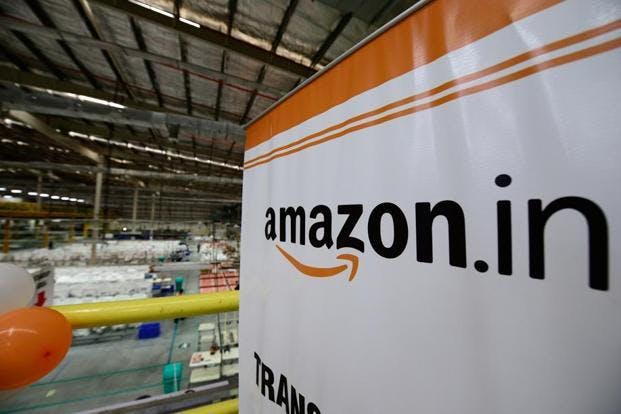
1. Amazon Calls on India to Reduce Ecommerce Restrictions

Amazon executive Amit Agarwal recently told Reuters that India needs to reduce red tape and encourage ecommerce if it is to overcome sluggish domestic growth. “There is so much opportunity to just let ecommerce thrive versus trying to define every single guard rail under which it should operate,” Agarwal said.

Agarwal’s comment was directed at India’s latest ecommerce laws which limits Amazon and Walmart’s ability to operate in the country. Pushing back on these new legislations, he emphasized Amazon’s role in helping small and medium enterprises in the country by enhancing their export capabilities. According to reports, Amazon has allowed India’s businesses to earn more than $1 billion in exports, with another $5 billion expected in the next three years if certain barriers are eliminated.

“The number of basic paper cut opportunities out there are so many,” Agarwal said. “I feel we’re getting lost in the high level debate around ecommerce and data localization.”

Despite these concerns, Amazon is actively expanding its presence in the subcontinent. Not only has the company launched a new campus in India, Amazon founder Jeff Bezos also promises to invest $5 billion into India. Furthermore, Indian demand for the Amazon Prime loyalty program also doubled in the last 18 months, and the country remains one of the fastest growing markets for Prime Membership in the world.

https://www.reuters.com/article/us-amazon-com-india/amazon-opens-its-biggest-global-campus-in-india-idUSKCN1VB1EZ

2. Splunk Expands Cloud Capabilities With $1 Billion Acquisition Of SignalFx

Splunk made news this Wednesday when it announced that it had acquired cloud monitoring SignalFx for $1.05 billion. This new acquisition will not only allow SignalFx to expand its cloud capabilities, it will also allow Splunk to expand its presence in the application performance monitoring market.

SignalFx offers real time cloud monitoring services for data anomalies, and it seems to be doing well. It managed to generate $25 million in revenue last year, and raise $179 million at a recent valuation of $500 million. It also managed to secure venture capital support from well-known firms like CRV and Andressen Horowitz.

Aside from its SignalFX deal, Splunk’s stock also rose to $141.25 shortly after it released its latest quarterly earnings and revenue report. According to the official data, the company’s revenues rose by $517 million, which represents a 33% year over year increase. This news, combined with the Signal Fx acquisition, helped to drive up sentiment for Splunk shares throughout most of the week.

https://www.forbes.com/sites/kenrickcai/2019/08/21/splunk-acquires-cloud-monitoring-company-signalfx/#469b8cc34b51

3. NVIDIA Jumps by 7% After RTX Ray-Tracing Technology Announcement

NVIDIA shares recently jumped by 7% after announcing that their RTX Ray-Tracing technology will be used for the PC version of Minecraft, the most widely sold video game in the world. NVIDIA shares closed at $170.78 this Monday, bringing the stock’s year to date 2019 return to 28%.

NVIDIA’s RTX Ray-Tracing technology promises to allow Minecraft fans to experience more realistic lightings, shadows and colors on the PC platform. Additionally, this new technology is also expected to increase exposure for NVIDIA’s latest graphic processing unit (GPU) technology, which happens to be the only GPU with real time ray tracing capabilities.

NVIDIA originally introduced RTX technology back in 2018, a huge achievement at that time. Today, NVIDIA’s leaders believe that by introducing RTX technology into Minecraft’s PC platform, it will be able to expose PC gamers to what the technology has to offer.

“Minecraft will expose ray tracing to millions of gamers of all ages and backgrounds that may not play more hardcore video games,” GeForce head of Marketing Matt Wuebbling said.

Aside from its Ray-Tracing announcement, NVIDIA’s stock also benefited from last week’s second quarter earnings report. Although adjusted earnings per share fell by 36% year over year to $1.24, they were still higher than expectations.

Finally, NVIDIA also benefitted from the overall strength in tech sector, which rallied due to investor expectations that the US-China trade war may be cooling or at least stabilizing.

https://finance.yahoo.com/news/why-nvidia-stock-jumped-7-120100086.html

4. The Trade Desk Brings in New Talent to Speed Up China Strategy

The Trade Desk’s (TTD) recent appointment of Calvin Chan as their general manager for their China operations marked another key step in their growth strategy. The news comes at the heels of The Trade Desk’s announcement back in in spring that it will allow customers to purchase ads in the country.

Prior to joining The Trade Desk, Chan originally worked for AdMaster, a major data and digital company in China. He also briefly worked at Nielsen, which specializes in data, information and management. TTD Senior vice president of North Asia, Troy Yang said that, “Calvin’s appointment will help accelerate our growth with major Chinese partners and advertisers.”

Although TTD’s presence in China is relatively small, it is aggressive expanding under the assumption that it can tap into the country’s growing middle class. Chan was chosen because of his experiences and connections in China, and also because of his deep understanding of TTD’s long term strategy for the country.

The Trade Desk’s China strategy aims for a ‘long term approach,’ comparable to the one used to create a platform for the connected-TV market. Not only will the company need to adapt to serve China’s growing middle class, it will also need to cultivate deeper connections with the Chinese tech industry.

 https://www.fool.com/investing/2019/08/20/the-trade-desk-makes-a-key-hire-to-accelerate-its.aspx

5. Are Lyft Options About to Get Cheaper?

Lyft’s shares took a big jump this Tuesday, climbing 3% in early trading. Investors have always been bullish on Lyft’s future prospects, but there was another reason why the stock jumped the way it did earlier this week: cheaper Lyft Options. 

Many were betting that Lyft shares would soon bottom out, which in turn forced many investors to rethink their strategies, particularly with regards to the $50 support level. This all happened in conjunction with the lockup expiration, which failed to cause many major selloffs among shareholders.

According to Seymour Asset Management’s Tim Seymour, people who bought Lyft shares this week did so because they believe in its long term value. “If you’re buying this company today … I don’t think you’re buying it for a trade. I think you are truly going to be an investor,” Seymour said.

Additionally, there was also Lyft’s August 7 earnings report, which beat most expectations, further reinforcing the sentiment that ride-shares and Lyft’s business model as a whole have bright futures.

https://www.cnbc.com/2019/08/20/lyft-options-may-soon-get-a-whole-lot-cheaperheres-how.html

6. Roku Adds New Child Streaming Service

Roku recently announced the creation of a “Kids and Family” section for its ad-supported channel this Monday. The announcement came at the heels of last week’s news which saw Roku shares reaching a new record high of 142.10 on August 13 based on strong second quarter data.

According to official reports, the new child streaming service will not only offer quality, child-friendly shows and content, it will also allow parents to control what their children can watch. Furthermore, there are also premium subscription offerings for children’s entertainment as well as other future services.

The new Kid’s and Family service promises to offer around 7000 free, ad-supported shows and movies from several Roku partners, including Lionsgate, Mattel, Hasbro, Pocket Watch and more. Lego has also willingly signed on as the first advertising sponsor for the new Roku service.

Roku Adds Free Children’s Channel To Its Streaming Video Platform

7. Salesforce Beats Revenue Forecasts; Shares Rise by 7%

Salesforce shares climbed by around 7% on Thursday after the software company announced that its quarterly revenue had beaten expectations. The company’s shares briefly touched $149 per share before closing at $148.24.

According to official data, Salesforce’s quarter revenue rose to around $4 billion this quarter, higher than the $3.95 billion estimate from earlier projections. A significant portion of the revenue was generated by the company’s largest product, Sales Cloud which grew by 13% while the second largest, Service Cloud grew by 22%. Due to the positive data, Salesforce is raising its revenue forecast for 2019 from $16.2 billion to between $16.7 billion and $16.9 billion.

However, even before the company released its latest report, Salesforce had already expected to beat its revenue target for the current fiscal year by several billions dollars. A major portion of this growth came from Tableau and Mulesoft, which were acquired for $15.3 billion and $6.5 billion respectively. The company plans to continue its rapid expansion all throughout the year.

https://www.cnbc.com/2019/08/22/salesforce-earnings-q2-2020.html

Posted in Broad Market Today, Tech Stock News, Tech StocksLeave a Comment on Tech Stock News: 7 Things You Missed This Week

Beaten-down Nvidia is diligently preparing to pounce on its rivals

Posted on August 16, 2019June 30, 2026 by io-fund
Beaten-down Nvidia is diligently preparing to pounce on its rivals

Nvidia’s stock went from unstoppable to nearly uninvestable in the matter of a few weeks last year and has not recovered. 

The sudden drop in Nvidia’s stock price and a competitive ecosystem that’s hard to understand are two reasons the chipmaker has scared away growth investors, who have opted for momentum bets such as cloud-software companies. The fact that semiconductor companies are cyclical, and mired in the U.S.-China trade war, has further overshadowed Nvidia’s growth potential. 

But the real story is that Nvidia is spring-loaded as its product offerings quietly gather strength in a market of enormous magnitude: artificial intelligence (AI). The path for Nvidia’s market domination in the AI economy, worth $15 trillion over the next decade, will be choppy now and exhilarating later. 

Nvidia’s profits have been slammed over the past two quarters, and will require a few more quarters to return to levels before the cryptocurrency bust, which reduced demand for Nvidia’s mid-range graphics chips. A spectacular comeback is not likely when the company reports earnings Thursday after the stock market closes. 

In the first quarter, Nvidia reported $394 million in net income and earnings per share (EPS) of 65 cents, down from $1.24 billion and EPS of $2.05 a year earlier. Analysts are predicting EPS of  $1.07-$1.24 for the third quarter. Still, profit margins are better than those of rival AMD, which booked net income of $35 million on revenue of 1.53 billion in the second quarter. Despite that, AMD’s stock has risen 79% over the past 12 months, compared with Nvidia’s -40% 

Nvidia vs AMD

Taking a somewhat contrarian stance, I do not regard AMD as Nvidia’s primary competitor. AMD is more focused on Intel and taking market share from the CPU data center. Nvidia’s true rivals are FPGA chips from Xilinx and Intel/Alterra. I also believe AMD will have to choose if it plans to go against two 800-pound gorillas (Intel on CPUs and Nvidia on GPUs).

It would be nearly impossible to stave off Nvidia, which is putting all of its weight into the GPU data center with the acquisition of Mellanox and new partnerships such as with Arm on AI and high-performance computing software. That will help strengthen Nvidia’s lead, which already owns over 90% of the cloud infrastructure-as-a-service market. 

Chief Executive Officer Jensen Huang had an excellent quote that described Nvidia’s ongoing cooperation with CPUs as the necessary backbone to GPUs, and why his focus has been elsewhere in the data center stack. It helps to provide a glimpse into his future strategy.

“These two types of processing are going to be here to stay,” he said. “With accelerated computing, we don’t suffer from Amdahl’s Law — we obey it, and the thing that you don’t accelerate becomes the critical path. We believe in fast CPUs, and that is why we work with all of the world’s fastest CPU makers — IBM, Intel, AMD, Arm.”

Huang went on to say he’s focused on the X factor, or what will accelerate the path forward at the highest percentages possible. Rather than compete with many players on CPUs, Huang wants Nvidia to be the leader in the highest growth piece of the data stack — parallel computing and acceleration, especially in AI.

The $7 billion acquisition of Mellanox, announced in March, will help Nvidia accelerate the performance of GPUs while maintaining a low barrier to entry for developers who favor Nvidia’s CUDA platform for AI development.

Mellanox acquisition

To illustrate how Mellanox accelerates the performance of GPUs, Nvidia and Mellanox support more than 250 of the world’s top 500 super computers, including the world’s two fastest supercomputers, Sierra and Summit, operated by the U.S. Department of Energy.

Mellanox’s Ethernet switch systems are the most used internal system in the top 500 in a recent report released at ISC High Performance, with 247 systems, and InfiniBand is the second most-used, with 140 systems. However, InfiniBand, a computer-networking communications standard, connects the most high-powered computers where the presence of Ethernet is nearly non-existent.

This is clearly a strategic acquisition for Nvidia as Mellanox has small profits (net income of $38.4 million in the second quarter) with profit margins of 2%, and the acquisition will require nearly all of Nvidia’s cash reserves.  As a result, Nvidia may have to take on debt.

Some speculate that Chinese regulators could block the acquisition, similar to what happened when Qualcomm attempted to acquire NXP Semiconductors. This is less likely, though, as Nvidia and Mellanox are in separate categories and don’t pose security risks from communications. In addition, China is a large customer of Nvidia for AI applications and stands to benefit from the combined company. 

In other words, Nvidia is not acquiring Mellanox to simply own InfiniBand and Ethernet, but rather to boost its GPUs as the best data center option available. Nvidia is aligning its architecture with speed, as Mellanox supports Virtual Protocol Interconnect (VPI), which allows the ubiquitous Ethernet to provide bandwidth as cheap as possible, and InfiniBand to deliver higher throughput and fewer bottlenecks during high loads.

Mellanox has done an excellent job of taking market share from Ethernet incumbents, such as Cisco, Arista Networks, Juniper Networks, Hewlett-Packard, Dell and Intel. Some of this is due to Ethernet, and also InfiniBand, and now a hybrid of the two.

Nvidia’s Mellanox acquisition helps increase Nvidia’s competitive lead on GPUs, while also slightly reducing the requirement for CPUs from companies like Intel and AMD. Mellanox can be leveraged to speed up GPUs while closing the gap in latency performance with FPGAs (Xlinx and Intel/Alterra). This is a strategic acquisition for Nvidia and Mellanox to become the strongest combination for artificial-intelligence and machine-learning computations.

Declining data center revenue

This thesis hinges on data center GPU revenue, which is declining quarter-over-quarter across both Nvidia and AMD. The Mellanox acquisition won’t close until the end of the year. Plus, rumor has it, China may delay trade talks through the 2020 election. Therefore, timing remains a primary challenge for Nvidia investors to capture this forward-looking opportunity. 

Nvidia’s data center sales have fallen over the past two quarters by 14% in January and 7% in April. According to MarketWatch, some analysts predict data center revenue will continue to decline through the third quarter of this year.

AMD reported its average GPU sales price was down slightly quarter over quarter due to lower data center GPU sales. Still, sales rose year over year. 

Nvidia’s singular focus is GPU-powered cloud and artificial intelligence applications, and FPGAs are the second runner-up rather than AMD’s GPUs. According to Liftr Cloud Insights, 97.4% of cloud infrastructure-as-a-service (IaaS) compute instances deploy Nvidia’s GPUs across the top four cloud providers. The top four cloud providers are Amazon, Microsoft, Google and Alibaba, and account for 62.3% of the IaaS and platform-as-a-service markets. According to the insights report, AMD accounts for only 1% of the cloud IaaS market. 

As with many of the best growth opportunities, the current earnings outlook does not accurately portray Nvidia’s potential. This will be true for a few quarters. It may require sniper-like timing (or a generous trailing stop), but betting on Nvidia and AI will have spring-loaded gains when there are clearer skies for semiconductors and hyper growth in the $15 trillion AI economy.

This article appeared on MarketWatch August 14th, 2019.MarketWatch August 14th, 2019.

My premium subscribers received a 12-page report on Roku And TTD prior to earnings, Snap prior to earnings and tech trade war plays to hedge their portfolios. Premium researchPremium research members receive updated recommendations and entry/exit scenarios on tech stocks. Learn more hereLearn more here. 

Posted in AI Stocks, Cloud Infrastructure, Data Center, Semiconductors, Tech StocksLeave a Comment on Beaten-down Nvidia is diligently preparing to pounce on its rivals

AWS DocumentDB and MongoDB Atlas: Friend or Foe?

Posted on July 25, 2019June 30, 2026 by io-fund
AWS DocumentDB and MongoDB Atlas: Friend or Foe?

MongoDB outperformed the tech sector a few times over the past 12 months, most notably during Q4, when MongoDB managed to trade between $65 and $80. The stock recouped losses by early December, when MongoDB reached new highs at $90 per share. By March, MongoDB had gained more than 50% off its new highs to $152 in March.

MongoDB’s Atlas has proven to defy gravity even in the face of AWS launching a competing product called Amazon DocumentDB in January. This sent shares of MongoDB down 15 percent, with a few larger investors exiting based on the news, but the company quickly shrugged it off.

The first quarter results reported a 78% year-over-year increase in total revenue with a 82% increase in subscription revenue. Notably, the company reported first-quarter net losses of $33.2 million, or 61 cents a share, compared with losses of $26.6 million, or 53 cents per share, in the year-ago period. Adjusted losses were 22 cents a share.

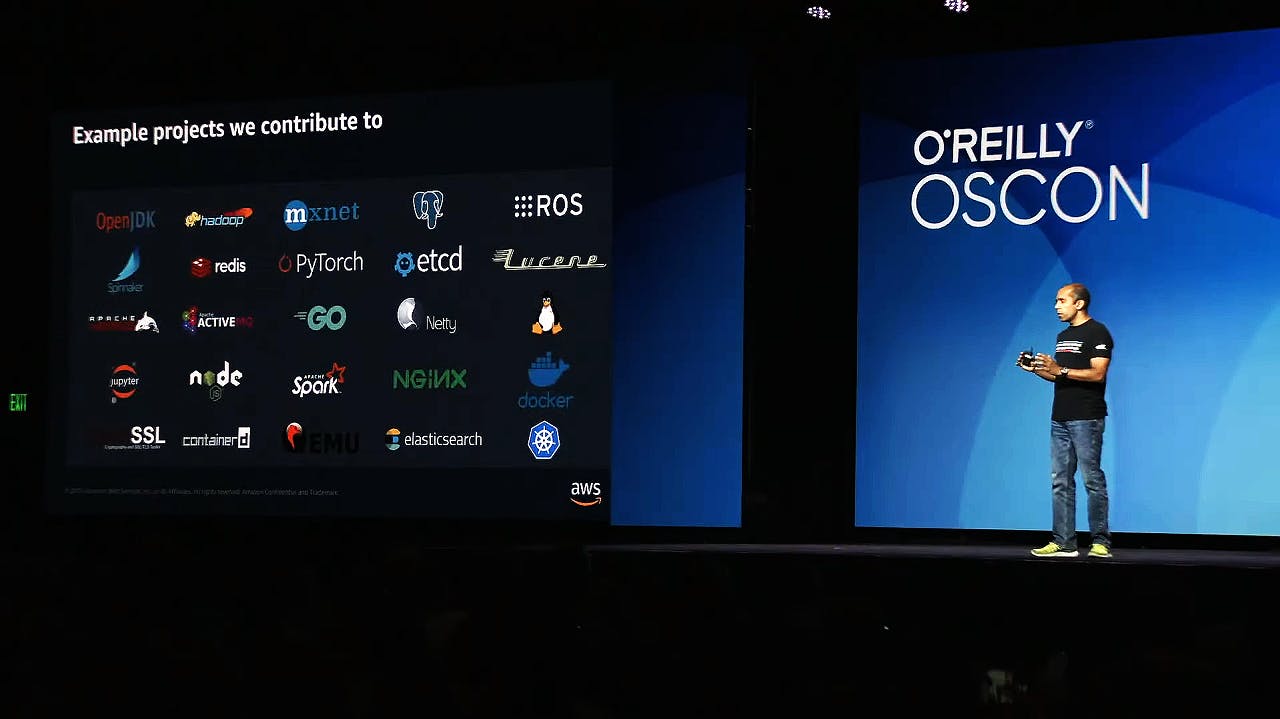
AWS Pitches MongoDB Atlas at OSCON

Amazon’s DocumentDB advertises MongoDB compatibility in its headline throughout the AWS website while MongoDB’s Atlas website focuses on the differences between the two products. AWS wants to be seen as a friend, but MongoDB thinks they are more of a foe.

Amazon’s NoSQL JSON document database is not based on the MongoDB server, however, and there are key differences which AWS’s product is unlikely to compensate for. 

Here are a few:

AWS walks a razor edge between capturing the NoSQL database revenue segment or disrupting the customer base, who now have many options in cloud, including Microsoft and Google Cloud – both motivated to compete with AWS from any angle. Trying to disrupt MongoDB’s Atlas could have the opposite effect on AWS as developers are notoriously tribal. 

Not surprisingly, last quarter, MongoDB announced a new business partnership with Google Cloud Platform with MongoDB’s Atlas integrated into the GCP console. MongoDB also announced new product features, including Atlas Data Lake, Atlas Full-Text Search and increased availability of MongoDB Charts. These upgrades will be hard for larger, more diversified tech companies (like AWS) to keep up with.

Needless to say, I was on the edge of my seat at OSCON when Amazon presented a keynote and pitched MongoDB Atlas to the crowd. At OSCON, Amazon stated that “AWS effectively endorses MongoDB Atlas as the segment winner” and that MongoDB Atlas is an “AWS reinvent 2019 top level sponsor.” Amazon also stated that Atlas growth has continued on the platform after the AWS DocumentDB release.

Takeaway:

The financial markets guessed wrong about AWS’s ability to compete with MongoDB. We see very little evidence that AWS’s DocumentDB has been a success with Amazon changing its tone at a recent software developer conference. One area that I have written extensively about is developer mindshare, as software developers are not easy to convince. You can access my analysis on Nvidia and developer mindshare here – the time to learn a new AI and ML platform is one reason I remained long on Nvidia during the crypto sell-off.

“Imitation is the sincerest form of flattery, so it’s not surprising that Amazon would try to capitalize on the popularity and momentum of MongoDB. However, developers are savvy enough to distinguish between the real thing and a poor imitation,” Dev Ittycheria, MongoDB’s CEO

In addition, IDC updated its forecast and expects the worldwide database software market to grow from $64 billion in 2019 to $98 billion in 2023. MongoDB’s Atlas is positioned to capitalize on this growth, especially as a flexible option for running applications on-premise, in a private cloud, or a private cloud, without being locked into any one cloud vendor.

After gaining 200% in the past two quarters, is MongoDB still a buy? Premium research members receive updated recommendations and entry/exit scenarios on tech stocks. Learn more here.Learn more here.

Recommended Reading:

  • Why Microsoft (Not Amazon) Will Win the Pentagon Contract
  • Smoke and Mirrors: How Snap and Pinterest Hide User Attrition
  • Slack IPO: Pros and Cons
Posted in Cloud Platforms, Databases, Tech StocksLeave a Comment on AWS DocumentDB and MongoDB Atlas: Friend or Foe?

Blockchain Technology Interest Waning – OSCON

Posted on July 25, 2019June 30, 2026 by io-fund
Blockchain Technology Interest Waning – OSCON

The O’Reilly Open Source Convention (OSCON) is an annual convention for the discussion of free and open source software. Open source has seen tremendous support over the last decade after going through a dark winter of software commercialization in the 80s and 90s. A historical turning point was when Netscape released the Netscape Communicator internet suite as free software in 1998 and the source code was used to spur Mozilla Firefox, Thunderbird, SeaMonkey and KompoZer.

Background on Open Source:

Proponents of Free and Open Source (FOSS) during the 90s included heavy weight Microsoft, Oracle and IBM. For instance, a Microsoft executive stated in 2001 that “open source is an intellectual property destroyer. I can’t imagine something that could be worse than this for the software business and intellectual-property business.” Fast forward nearly two decades, and Microsoft has reversed direction, and is pining for the open source community to accept the company as a contributor and supporter of open source.

Tim O’Reilly of O’Reilly Media, and the founder of OSCON, was at the strategy session in April of 1998 when the term open source was coined. Open source software today has won the war with most software development containing open source code and many previously opposed corporations changing their stance to support FOSS. According to the Open Source Initiative, the movement has caused a $60 billion loss for proprietary software, which correlates to $60 billion in customer savings per year.

This year’s conference reflected the relative calm confidence around open source development with most keynotes used for marketing purposes to win over the attendees on using their services rather than anything news breaking. Google, Amazon, Microsoft and IBM were among those bidding for the crowd in the keynotes.

Blockchain Technology Decline: False Signal?

Interesting enough, O’Reilly’s insights showed blockchain technology losing interest from software developers in the keynote on developer audience insights. The term fell 18 points in their rank points to number 26 on search terms. Kubernetes, the open source container framework, was effectively number 1.

According to Brian Behlendorf of Hyperledger, blockchain technology is not likely to create the next Amazon or Google as it’s more of a cooperative consortium. In his session, “2019: Year of professionalization for open source blockchain,” he pointed out that 45% of companies stated they would join with their competitor on blockchain technology development.

With that said, 80% of companies have not put blockchain technology into production and the market is very early. Many mistakenly think blockchain technology is synonymous with crypto, however, some of the most compelling use cases today include traceability with the food supply chain, judicial consortium chain, routing and settling insurance claims, and digital identity within businesses and government agencies. These uses are currently being explored by companies, such as Wal-mart with FoodTrust, LegalX Chain, the Intelligent Health Care Network and the OrgBook.

Here are a few more companies putting blockchain technology into use:

  • NASA for secure flight data
  • Honeywell for used aircraft parts market
  • Chinese Central Bank’s has processed $4.36 billion on blockchain trade platform
  • Malta is using smart contracts to initiate and register rent remittance
  • Visa is planning to join a growing list of blockchain-based international payment providers

Behlendorf also pointed out that the United States is more averse to centralized technologies overall. Intermediaries in finance, such as SWIFT, are more comfortable for people in the United States compared to other countries around the world.  Therefore, the trends presented by O’Reilly may not be reflective of blockchain’s use globally.

In addition, venture funding in blockchain technology has reportedly tumbled 60% in 2019 from $1.6 billion, down from $4.1 billion in venture funding in 2018, according to CB Insights. Taking a closer look, CB Insights reported an increase in early stage funding from 80% of equity deals in 2017 to 88% of equity deals in 2019, with funding nearly non-existent at Series D and E.

There are a few conclusions you can draw from this information:

  • Blockchain technology is incipient and not able to stand up to the premature pressure that initial coin offerings placed on the technology. With ICOs now fizzling, there is more wariness around blockchain than what is deserved (and scaring off VCs)
  • Blockchain technology is less of a venture-funded effort and more of a development effort, like a programming language or an internet protocol, with not much ROI to offer investors
  • Blockchain technology will be developed in-house at companies rather than requiring a startup ecosystem (similar to a new programming language)
  • Crypto is consolidating and other industries will need to be the impetus for blockchain’s commercialization

In the early 2000s, Python was a neglected programming language. Today, Python is the most widely used programming language, with the majority of the growth in the last five years. I think we are very early on blockchain and its potential should not be dismissed.

Conclusion:

Blockchain databases are revolutionary and will disrupt the way many industries record and share data (beyond the financial industry). The recent withdraw of blockchain development interest is very common for new technologies. You can think of disruptive technology products like an ocean wave that comes in stronger with each attempt. Crypto pushed blockchain too hard, too soon. The market saw dollar signs rather than carefully architecting sustainable blockchain applications. We will be keeping an eye on companies for cheap, early investments in this area.

Want to know my best alt-coin recommendation? Out of 1,500 coins, I believe this is the winner. Premium research members receive recommendations and entry/exit scenarios on my favorite alt-coin, bitcoin and tech stocks. Learn more.

Recommended Reading:

  • Will Facebook Cryptocurrency Have A Long-Term Impact?
  • Highlights from Bitcoin Conference 2019
  • Will Bitcoin Make a Good Investment? Phase 2: Economic Uncertainty
  • Is Bitcoin a Good Investment? Phase 3: Bitcoin Mobile Payments
Posted in Blockchain, FinTech, Tech StocksLeave a Comment on Blockchain Technology Interest Waning – OSCON

Is Bitcoin a Good Investment? Phase 3: Bitcoin Mobile Payments

Posted on July 19, 2019June 30, 2026 by io-fund
Is Bitcoin a Good Investment? Phase 3: Bitcoin Mobile Payments

Institutional adoption of bitcoin and economic uncertainty are two phases previously discussed in this series that evaluates if bitcoin will make a good investment. Finding the right entry price is critical for a buy and hold strategy as there is unusual volatility in this asset. Trading bitcoin may be successful for some; however, this series predicts that holding bitcoin until the technology matures is the better option – all of which is dependent on the right entry price for this volatile, yet high-potential asset

Bitcoin is not trading at support levels and there will likely be a better entry later this year. Also, this is a mix of tech analysis and my opinions; not financial advice

The third phase that will contribute to bitcoin’s potential as an investment will be the adoption of crypto wallets and crypto payment transactions. Today, bitcoin is a speculative play. The tipping point will occur when bitcoin is used for transactions. Psychologically, bitcoin will have a permanent place in society when this occurs, and the value of bitcoin will reflect this due to the limited supply of the coin.

Bitcoin and Free Markets

Bitcoin’s ultimate opportunity will be reached when the coin provides seamless and low-cost digital transactions. Opponents to bitcoin believe central banks and governments will create obstacles that cryptocurrency cannot overcome. However, the free market is already moving towards capitalizing on bitcoin as many corporations do not want to miss out on this opportunity.

As discussed, Starbucks is partnering  with Bakkt, and this will create a payment gateway for the security-backed exchange. Keep in mind, Starbucks’ payment app has more users than Google Pay or Apple Pay

Several more online retailers are currently accepting bitcoin payments, such as:

  • Wikipedia accepts donations in bitcoin
  • Expedia accepts bitcoin through Coinbase
  • KFC accepts bitcoin through BitPay
  • Overstock accepts bitcoin through Coinbase
  • Subway branches (where available) accepts bitcoin as a payment
  • Virgin Mobile and Virgin Airlines accepts bitcoin for space travel
  • CheapAir accepts bitcoin through Coinbase
  • Purse.io allows you to shop on Amazon and pay with bitcoin
  • Hotels.com will reward you with micro-amounts of bitcoin for booking through the site

Notably, AT&T became the first major U.S. mobile carrier to let customers pay in bitcoin through a third-party service provider.

There are important distinctions between bitcoin and digital transactions. Knowing the difference between AliPay, Venmo, Apple Pay, Facebook’s Libra, JP Morgan’s JPM Coin – and why bitcoin is not like any of these options is critical to understand. This has been covered in the previous articles in this series, Part 1: Institutions, and Part 2: Economic Uncertainty. Here is a side-by-side comparison that summarizes key differences:

Source: UMN.edu

Emerging Payment Options

Paying for daily goods with a mobile wallet, tied to crypto, will become effortless in the years to come. One of the leading startups right now is Flexa’s SPEDN, which is linked to fifteen retailers, such as Whole Foods, Barnes and Noble, Nordstrom, Petco, Ulta Beauty, Lowe’s and Bed, Bath and Beyond.

The app integrates existing point-of-sale with blockchain technologies and simplifies the payment settlement process for the merchant while allowing Ether, Bitcoin, Bitcoin Cash and the Gemini dollar payments. As Gemini’s CEO Tyler Winklevoss stated, “This technology shifts cryptocurrency from investment and speculation toward real usability.”

There will be many startups offering to bridge the gap between crypto’s current lack of flexibility and the broader world of crypto users who want to pay with an alternative form of currency. The barrier to entry is relatively low, requiring a team of software developers, compared to 5G or autonomous vehicles, which require entirely new infrastructure or complex robotic systems.

Thus, the number of startups in this space is likely to swell. Whatever friction exists for crypto payments, technically speaking, will be solved in short order over the next few years.

As stated, larger corporations and the free market are driving the supply forward. To interrupt this process, via the Federal Reserve, the IRS, or control from other central banks, will require direct action against free markets – and, essentially, capitalism. In addition, stopping the advancement of technology around blockchain will severely hinder a free market economy as blockchain transactions reduce intermediary fees, that in turn, lowers debt and improves savings for the financial system and all of its participants.

Blockchain and cryptocurrencies also assist banking with a much more secure, decentralized system. Too many critics misunderstand how development around Bitcoin, Ethereum and blockchain protocols improves the fiat system by removing unnecessary costs. The token, bitcoin, may compete with fiat currencies, but development around the token is essential right now for an economy to run on blockchain in the future (even if the bitcoin blockchain is not the one adopted).

The countries that do adopt blockchain, and some form of cryptocurrency, will be superior technologically speaking, and the United States is very unlikely to halt this progress by attacking Bitcoin – a token and a protocol that is laying the groundwork for economic efficiency. 

The more likely response from the federal government will be a centralized, regulated token that competes with bitcoin (while allowing bitcoin to run its course). There is room for both, and to repeat this point, development around bitcoin will cut the path for any centralized tokens. The Federal government cannot hinder development around bitcoin while expecting to have a federal cryptocurrency in the future; this would be counterproductive.

Despite the likelihood of a centralized domestic token, my prediction is that bitcoin’s value will persist due to its global potential, as covered in my previous articles in this series.

Recommended Reading:

Will Bitcoin Make a Good Investment? Phase 2: Economic Uncertainty
Will Bitcoin Make a Good Investment? Part 1: Institutional Adoption

Paid subscribers to my Research Services will receive the following additional information:

  • Scenarios for when to enter the asset and build a buy and hold strategy.
  • Why I timed my analysis to Q2/Q3 2019 (and not 2018 or 2020) – from a fundamental standpoint.
  • The one alt-coin that I am watching closely and has potential for a 1000% return along with recommendations timed for the next (and perhaps final) pullback for this alt-coin.
Posted in Bitcoin, Crypto Investment, Tech StocksLeave a Comment on Is Bitcoin a Good Investment? Phase 3: Bitcoin Mobile Payments

Posts navigation

Older posts
Newer posts

Recent Posts

  • The IPO Glut of 2020: Why Valuations Have Gone Too Far
  • Zoom Discusses Two Important Catalysts In Q1 Earnings
  • Three Risk Management Tools the I/O Fund Offers
  • Micron Is Up 900%. Here’s Why the AI Memory Trade May Still Have Room to Run
  • Credo: Reliability Leader Aggressively Moves into Optics

Recent Comments

No comments to show.

Archives

  • June 2026
  • May 2026
  • April 2026
  • March 2026
  • February 2026
  • January 2026
  • December 2025
  • November 2025
  • October 2025
  • September 2025
  • August 2025
  • July 2025
  • June 2025
  • May 2025
  • April 2025
  • March 2025
  • February 2025
  • January 2025
  • December 2024
  • November 2024
  • October 2024
  • September 2024
  • August 2024
  • July 2024
  • June 2024
  • May 2024
  • April 2024
  • March 2024
  • February 2024
  • January 2024
  • December 2023
  • November 2023
  • October 2023
  • September 2023
  • August 2023
  • July 2023
  • June 2023
  • May 2023
  • April 2023
  • March 2023
  • February 2023
  • January 2023
  • December 2022
  • November 2022
  • October 2022
  • September 2022
  • August 2022
  • July 2022
  • June 2022
  • May 2022
  • April 2022
  • March 2022
  • February 2022
  • January 2022
  • December 2021
  • November 2021
  • October 2021
  • September 2021
  • August 2021
  • July 2021
  • June 2021
  • May 2021
  • April 2021
  • March 2021
  • February 2021
  • January 2021
  • December 2020
  • November 2020
  • October 2020
  • September 2020
  • August 2020
  • July 2020
  • June 2020
  • May 2020
  • April 2020
  • March 2020
  • February 2020
  • January 2020
  • December 2019
  • November 2019
  • October 2019
  • September 2019
  • August 2019
  • July 2019
  • June 2019
  • May 2019
  • April 2019
  • March 2019
  • February 2019
  • January 2019
  • December 2018
  • November 2018
  • October 2018
  • September 2018
  • August 2018
  • July 2018
  • June 2018
  • May 2018
  • April 2018
  • February 2018
  • January 2018

Categories

  • 5G
  • About
  • Accounting Tips
  • AdTech
  • Ai Platforms
  • Ai Platforms
  • Ai Platforms
  • Ai Platforms
  • Ai Platforms
  • Ai Platforms
  • Ai Platforms
  • Ai Platforms
  • Ai Platforms
  • Ai Platforms
  • Ai Platforms
  • Ai Platforms
  • Ai Platforms
  • Ai Platforms
  • Ai Platforms
  • Ai Platforms
  • AI Stocks
  • AI Stocks
  • Analysts
  • Application Monitoring
  • Application Monitoring
  • Applications
  • Applications
  • Applications
  • Applications
  • Applications
  • Applications
  • Applications
  • AR
  • Audit Reports
  • Autonomous Vehicles
  • Autonomous Vehicles
  • Autonomous Vehicles
  • Autonomous Vehicles
  • Autonomous Vehicles
  • Autonomous Vehicles
  • Autonomous Vehicles
  • Avod
  • Avod
  • Battery Charging
  • Bear Market
  • Bitcoin
  • Bitcoin
  • Bitcoin
  • Bitcoin
  • Bitcoin
  • Bitcoin
  • Bitcoin
  • Blockchain
  • Blockchain
  • Blockchain
  • Blockchain
  • Blockchain
  • Blockchain
  • Blockchain
  • Broad Market Today
  • Bull Market
  • Bull Market
  • Chainlink
  • Chainlink
  • Chainlink
  • Chainlink
  • China Stocks
  • Cloud
  • Cloud Infrastructure
  • Cloud Infrastructure
  • Cloud Infrastructure
  • Cloud Infrastructure
  • Cloud Infrastructure
  • Cloud Infrastructure
  • Cloud Infrastructure
  • Cloud Platforms
  • Cloud Platforms
  • Cloud Software
  • Cloud Software
  • Cloud Software
  • Cloud Software
  • Cloud Software
  • Cloud Software
  • Cloud Technology
  • Company
  • Company
  • Console Gaming
  • Console Gaming
  • Console Gaming
  • Consumer
  • Consumer
  • Consumer
  • Consumer
  • Consumer
  • Consumer
  • Consumer
  • Consumer
  • Consumer
  • Consumer
  • Consumer
  • Consumer
  • Consumer
  • Consumer
  • Consumer Tech
  • Corrections
  • Crypto Investment
  • Ctv
  • Ctv
  • Ctv
  • Ctv
  • Ctv
  • Ctv
  • Ctv
  • Ctv
  • Ctv
  • Ctv
  • Cybersecurity
  • Cybersecurity
  • Cybersecurity
  • Cybersecurity
  • Cybersecurity
  • Cybersecurity
  • Cybersecurity
  • Cybersecurity
  • Cybersecurity
  • Cybersecurity
  • Cybersecurity
  • Cybersecurity
  • Data
  • Data Analytics
  • Data Analytics
  • Data Analytics
  • Data Center
  • Data Center
  • Data Center
  • Data Center
  • Data Center
  • Data Center
  • Data Center
  • Data Center
  • Data Center
  • Data Center
  • Data Center
  • Data Center
  • Data Center
  • Data Center
  • Data Center
  • Data Center and Processing
  • Data Warehousing
  • Data Warehousing
  • Data Warehousing
  • Data Warehousing
  • Databases
  • Databases
  • Databases
  • Databases
  • Dating
  • Defi
  • Digital Ads
  • Digital Ads
  • Digital Ads
  • Digital Ads
  • Digital Ads
  • Digital Ads
  • Digital Ads
  • Digital Ads
  • Digital Ads
  • Digital Ads
  • Digital Ads
  • Digital Ads
  • Digital Ads
  • Digital Ads
  • E-Commerce
  • Earning Updates
  • Earning Updates
  • Earning Updates
  • Earning Updates
  • Earning Updates
  • Earnings Report
  • Earnings Report
  • Earnings Report
  • Earnings Report
  • Earnings Report
  • Earnings Report
  • Earnings Report
  • Earnings Report
  • ECommerce
  • Electric Vehicles
  • Electric Vehicles
  • Electric Vehicles
  • Electric Vehicles
  • Electric Vehicles
  • Electric Vehicles
  • Electric Vehicles
  • Energy Stocks
  • Enterprise
  • Enterprise
  • Enterprise
  • Enterprise
  • Enterprise
  • Enterprise
  • Enterprise
  • Enterprise
  • Enterprise
  • Ethereum
  • Events1
  • Events1
  • Exchange
  • Faq
  • Finance
  • Financial Analysis
  • Financial Analysis
  • Financial Analysis
  • Financial Analysis
  • Financial Analysis
  • Financial Analysis
  • Financial Analysis
  • Financial Analysis
  • Financial Analysis
  • Financial Analysis
  • Financial Analysis
  • Financial Analysis
  • Financial Markets
  • FinTech
  • Fundamental Analysis
  • Gambling
  • Gaming
  • Genomics
  • Glossary
  • Green Energy
  • Growth Stocks
  • Growth Stocks
  • Growth Stocks
  • Headsets
  • Headsets
  • Health Tech
  • Hydrogen
  • Identity
  • Identity
  • Identity
  • Inflation
  • Inflation
  • Inflation
  • Internet of Things
  • Interviews
  • Interviews
  • Interviews
  • Interviews
  • Investing
  • Investing
  • Ltbh
  • Ltbh
  • Ltbh
  • Ltbh
  • Ltbh
  • Macro Trends
  • Macro Trends
  • Market Trends
  • Market Trends
  • Market Trends
  • Market Trends
  • Market Trends
  • Market Trends
  • Market Trends
  • Market Updates
  • Market Updates
  • Market Updates
  • Market Updates
  • Market Updates
  • Market Updates
  • Market Updates
  • Market Updates
  • Market Updates
  • Market Updates
  • Media
  • Membership
  • Mining
  • Mobile
  • Mobile
  • Mobile
  • Mobile
  • Mobile Gaming
  • Mobile Gaming
  • Mobile Gaming
  • Multimedia
  • Music Streaming
  • NVDA | NVIDIA Corporation
  • Performance Updates
  • Pin Content
  • Podcasts
  • Podcasts
  • Podcasts
  • Portfolio
  • Premium Research
  • Press Releases
  • Press Releases
  • Productivity
  • Productivity
  • Productivity
  • Productivity
  • Productivity
  • Productivity
  • Productivity
  • Reports and Whitepapers
  • Research Services Preview
  • Resources
  • Resources
  • Semiconductor Stocks
  • Semiconductors
  • Semiconductors
  • Semiconductors
  • Semiconductors
  • Semiconductors
  • Semiconductors
  • Semiconductors
  • Semiconductors
  • Semiconductors
  • Semiconductors
  • Semiconductors
  • Semiconductors
  • Semiconductors
  • Social Media
  • Social Media
  • Social Media
  • Social Media
  • Social Media
  • Social Media
  • Social Media
  • Software
  • Software
  • Software
  • Software
  • Software
  • Software
  • Software
  • Software
  • Software
  • Software
  • Software
  • Software
  • Software
  • Software
  • Software
  • Solar
  • Solar
  • Stock Analysis PDFs
  • Stock Updates
  • Stock Updates (Blogs)
  • Supplychain
  • Supplychain
  • Supplychain
  • Supplychain
  • Supplychain
  • Supplychain
  • Svod
  • Svod
  • Svod
  • Svod
  • Svod
  • Svod
  • Tech Podcast
  • Tech Stock News
  • Tech Stock News
  • Tech Stock News
  • Tech Stock News
  • Tech Stock News
  • Tech Stocks
  • Tech Stocks
  • Tech Stocks
  • Tech Stocks
  • Tech Stocks
  • Tech Stocks
  • Tech Stocks
  • Tech Stocks
  • Tech Stocks
  • Tech Stocks
  • Tech Stocks
  • Tech Stocks
  • Tech Stocks
  • Tech Stocks
  • Technical Analysis
  • Telehealth
  • Telehealth
  • Telehealth
  • Telehealth
  • Testing Equipment
  • Testing Equipment
  • Top Tech Stock News
  • Travel
  • Trends Report
  • Tutorials
  • Uncategorized
  • Updates
  • Updates
  • Updates
  • Video
  • Video
  • Video
  • Video
  • Video Footage
  • VR
  • Webinar Alerts
  • Webinar Alerts
  • Webinars
Proudly powered by WordPress | Theme: iofund by iofund.co.uk.