Skip to content
Logo-main-white.860316a8

I/O Fund

  • Home
  • Free Stock Analysis
  • AI Stocks
  • BEST OF 2025
  • Analysts
  • Nvidia Hub
  • About
    • Case Studies
    • About Us
    • Premium Services
    • Pricing
    • Notable Wins
    • I/O Fund Reviews
    • Media
  • Contact Us

Category: Cloud Platforms

Big Data, Analytics (and ML): Microtrend Deep Dive

Posted on September 29, 2021June 30, 2026 by io-fund

There are three important trends we weave together in this report to draw conclusions around potential winners in big data and analytics. We’ve recently covered MongoDB, Elastic, and we’ve discussed Confluent. What do they all have in common and why are these companies important right now? That’s what we aim to answer in this write-up.

Before we go into where we are with big data and analytics right now, I’ll quickly touch on cloud IaaS and especially why hybrid and multi-cloud are leading this space and why investors should not be concerned with tech giants that offer competing products in the data and analytics space.

When we talk about Big Data, the main driver is machine learning, which is performed through supervised learning with the use of historical data, or unsupervised learning, with clustering models and associations to identify rules. There is also reinforcement learning that is trained from feedback. Here are the three trends we are going to weave together to form a full picture of Big Data and Analytics.

  1. The migration to the cloud — but more specifically multi-cloud and hybrid
  2. Why multi-cloud drives demand for best-of-breed, i.e., generally speaking, we do not need to be overly concerned when tech giants that offer competing products
  3. How Apache Spark helped catalyze the AI/ML market with efficient data processing
  4. How we plan to invest right now given that #2 and #3 are prepping the market for us

Hybrid and Multi-Cloud are Driving the Cloud IaaS Market:

For cloud IaaS, we don’t want to only focus on CAGR but also the budget allocation that cloud IaaS is capturing. According to IDC, the IaaS market will reach $112.9 billion at a CAGR of 11.3% through 2025 and will account for 66.1% of total compute and storage infrastructure spend. Two-thirds of IaaS spend is on the public cloud.

To compare, the on-premise market (i.e., not hybrid) will grow at 0.3% CAGR for a total of $57.9 billion. According to the most recent Denodo survey, hybrid cloud drove 35% of the workloads worldwide. Private cloud expanded from 16.6% of workloads to 24% percent of workloads worldwide. Meanwhile, the public cloud had flat growth.

Hybrid cloud is a mix of public and private clouds or a mix of cloud and on-premise. Enterprise companies that choose hybrid deployments are motivated to not share intellectual property or data with a vendor, known as data residency, plus other security implications that come with storing data on another company’s servers. Other companies find moving to the cloud to be time and resource-intensive and prefer to keep some workloads on the servers they own.

Recently, a report came out that repatriation, or moving some workloads back to on-premise, has resulted in quite a bit of cost savings for companies like Dropbox, Crowdstrike and Zscaler, who use hybrid approaches. The report is quite surprising as the conclusion is that $100 billion to $500 billion in market value is lost on cloud deployments in terms of margins. One use case that is detailed is Dropbox, a company that reported savings of $75 million in two years after repatriation, which in turn, helped the company’s gross margins increase from 33% to 67%. Meanwhile, companies like Asana and Datadog spend about 60% of their revenue towards committed cloud spend. This report, among others, shows why hybrid is likely to be the chosen deployment for many enterprises into the near future.

We had previously formed a Microsoft thesis in 2018 based on the trend towards hybrid cloud and why a focus on a hybrid strategy for governments and enterprises was important to Azure’s growth rate. Microsoft is especially well suited to serve the hybrid market because of the company’s deep roots with on-premise enterprise software. When the I/O Fund first covered hybrid cloud as a major driver of cloud IaaS in 2018, Amazon’s AWS did not even have a publicly available hybrid product. The company later publicly released Outposts in 2019 to compete with Azure. If you want more information about how these two compete on hybrid on-prem deployments specifically, the in-depth analysis I published in the past is found on Seeking Alpha and also Forbes.

Multi-cloud refers to using more than one cloud provider, which is usually done to avoid vendor lock-in and to choose best-of-breed products. It also helps to avoid downtime should one cloud provider go down or become overwhelmed with demand.

Source: Statista

Multi-cloud is the dominant strategy today and is used by 80% to 90% of organizations. In 2019, Gartner stated 81% of respondents were using two or more cloud providers. The top reason was to avoid vendor lock-in by the “megavendors.” Therefore, this is why investors should not be concerned with tech giants offering competing products in the data and analytics space. The far majority of companies are taking strides to avoid vendor lock-in as multi-cloud technically requires more work yet increases agility and flexibility. The end result is these companies will use best-in-breed products.

According to IBM, 98% of companies plan to use multiple hybrid clouds and 85% operate in multi-cloud environment. There is substantial evidence that organizations are preferring a mix of cloud providers. Most importantly to our thesis and this particular analysis, only 40% use management tools and/or have implemented DevOps practices. The migration to the cloud was happening slowly over time and this migration is under-served in terms of management tools, data and analytics. This would be a sufficient tailwind on its own yet we also have the additional tailwind of data-intensive industries that are moving into machine learning. 

The motivation behind cloud IaaS growth and especially hybrid and multi-cloud growth is partially driven by the need for analytics, and also newer trends, such as stream processing. Stream processing is a continuous stream of events that is processed in real-time as it’s received. This allows applications to respond to events as they occur. It combines real-time analytics, inferencing and monitoring to achieve things like optimizing transportation routes, understanding traffic patterns, anomaly detection in cyber security, making real-time predictions powered by machine learning, and even location-based advertising.

In terms of architecture, we’ve covered how microservices and containers are also driving the multi-cloud trend as microservices often span multiple clouds. You can find this write-up here on Forbes and also here on Medium, where we discussed a background on Google Cloud and how the company was the first to automate orchestration across containers. This write-up provides a great overview of where the major cloud IaaS providers are today and where they might go next strategically speaking.

Big Data and Analytics will Explode because of AI/ML Applications

There is an oft-quoted statistic that 90% of the world’s data was created in the last two years – and this stat is from 2018. The world produces 44 zetabytes of data across the digital universe as of 2020 and there is expected to be 200+ zetabytes of data in cloud storage by 2025. Each zettabyte has 21 zeroes or is 1,000 bytes to the 7th power. By these estimates, we can expect to see up to 5X growth specifically in data centers. Statista places the number at 181 zetabytes by 2025 up from 64.2 zettabytes in 2020.

In regards to data integration in the cloud, this spans from data lakes, to ETL pipelines, cloud data warehouses and object storage. Data fabrics and data virtualization is key to both hybrid and multi-cloud strategies.

Here's how Datadog’s CEO describes what is going on in terms of big data in the most recent earnings call: “it's almost a given that there will need to be a different way of charging for capturing some of the value provided to customers that can't just be attached to the straight volumes of data that are being exchanged because those volume of data are exploding exponentially while our customers' revenues are not going to explode exponentially.”

Generating the data is not the issue (clearly), and distributed data storage has been largely solved with Hadoop. I think it’s worth going through what Hadoop is and how it came about, and then we can look at how Apache Spark helped accelerate data processing, including for Machine Learning. Notably, most open-source projects are not “easy” and this is why companies do well that simplify how to work with Apache Spark and other frameworks, like Kafka.

Background on Hadoop and Data Storage:

Hadoop became instrumental in helping companies store large amounts of structured data, semi-structured and unstructured data through distributed storage and compute. The result was that data storage became cheap enough to retain any/all data that was generated rather than only the essential data due to its distributed file system. The distributed file system was designed to store and process billions of search engine pages across thousands of nodes. The project was created in 2006 by a team of engineers at Yahoo, who had worked previously on a search engine in the early 2000s with the goal of indexing 1 billion pages.

You can think of search engines as some of the first projects that needed to utilize Big Data. The original search engine project “Nutch was limited to 20-to-40 node clusters, and for this amount of data, more clusters were needed. At Yahoo, the team separated the distributed computing parts from Nutch and renamed the project Hadoop, which successfully worked on thousands of nodes. Parallelism was key for the data processing model as Yahoo’s algorithm would need to be run on multiple nodes at the same time and it had to scale linearly. It was then released in 2008 as an open-source project with up to 4000 nodes with distributed capacity with contributors such as Facebook and LinkedIN.

Distributed systems and parallel computing didn’t begin with Yahoo, of course, it began with Google. The paper “MapReduce: Simplified Data Processing on Large Clusters” is considered a defining moment in how programming models handled large data sets. MapReduce was a key moment because it was specifically designed to handle Big Data in terabytes and petabytes due to its framework for parallel computation using a key-value pair.

By 2012, Hadoop’s clusters were up to 42,000 nodes and the number of contributors had reached nearly 1500. Apache Hive is a ETL and data warehouse tool that uses SQL, but Hadoop can manage and process large volumes of data that are structured, unstructured or semi-structured data depending on the database that is chosen. Therefore, you can use many tools with Hadoop, such as Spark.

Background on Apache Spark and Data Processing for Machine Learning:

In 2014, Apache Spark was released which took over the MapReduce model primarily because of its speed. By working with data in-memory, the parallel processing framework can push queries 100X faster and on-disk queries run 10X faster. After the extract, transform and load the data (ETL) process, with Spark you can run a training algorithm on the same in-memory data. This helps Spark reach peak performance over competitors for ETL and relational queries, but also for machine learning. Spark’s goal was to become (and now remain) the general platform for distributed programmers where many specialized systems have one interface and one system to install and manage. Apache Spark also reduces code volume by using APIs for Scala, Java and Python. The framework offers a unified API for fault-tolerant stream processing, which reduces the number of APIs to learn. Spark ML and SparkML are the two APIs that are offered for machine learning pipelines.

Hadoop helped solve some of the data storage issues and reduced the cost for expensive storage and compute. Therefore, the next issue is who can work with these databases and can this be simplified. Apache Spark simplifies who can work with the framework by supporting libraries, which can be executed to interact with data shared across many libraries. The data processing engine is extremely fast because it processes and keeps the data in-memory without reading or writing to disk. This has resulted in Apache Spark becoming popular for machine learning and AI applications with the support of Apache’s very large community of contributors.

Overview of Public Companies in the Big Data and Analytics Space

Databricks and Snowflake:

I’m starting with Databricks and Snowflake simply because we discussed Apache Spark in this analysis. The founders of Apache Spark are from Berkeley and later went onto become the founders of Databricks. We covered this company in-depth on our Snowflake analysis because we feel this is Snowflake’s strongest competitor (i.e., not traditional SQL warehouses or Big Tech). Databricks is not public right now but plans to go public soon.

Here is a summary of the explanation we published in April as to how these two companies compare:

The major difference between Snowflake and Databricks from a customer standpoint is that Snowflake is laser-focused on the public cloud/cloud native while Databricks is differentiated in that it can build information pipelines across silos, including on-premise and hybrid architectures. As we know from this analysis, hybrid is key moving forward.

Snowflake's main value proposition is to reduce the time required to prep and monitor data so that a customer does not need to manage software or hardware. Even if a team has the technical skills, they may not want to spend the time required for Databricks, which is perhaps one reason why Snowflake is reporting decent growth in the Fortune 500 and other key accounts.

The architecture of a data lakehouse allows for business intelligence and machine learning through a more open paradigm. The idea is to combine the best of data warehouses and data lakes to span unstructured and semi-structured data while keeping costs low. By combining both, teams can move faster and without duplicating the data. This is a key benefit to Databricks DeltaLake, and this is especially important for data analytics and machine learning. With that said, Databricks is more advanced and expert-level.

I want to point out that Snowflake is very clear as to why it's done well – which is that it handles migrations to the public cloud from legacy on-premise systems better than the competitors. Snowflake's priority is to compete with other SQL databases right now, although the company will need to eventually compete with Databricks. Management has discussed rolling out support for unstructured data, for instance, but no timeline has been set.

Looking longer-term, what Snowflake needs to answer is how will it compete with Databricks on machine learning? Databricks is superior here for ML as it’s built on top of Apache Spark and supports Spark, Python, Scala and also SQL. This was discussed in the thread on the forum here.

The forum thread points out that Databricks is more complex to upload the data, monitor and manage, but there are benefits to going through this hassle. One of the primary benefits is support for Python and Scala, which are programming languages for machine learning. For now, you must use an outside vendor or tool as connectors or integrations in order to support these programming languages and libraries with Snowflake. It’s also worth mentioning that Databricks is cheaper for processing a lot of data at petabyte scale.

Growth is the great equalizer when comparing products and my preliminary understanding is that Snowflake is growing much faster than Databricks and expects to continue to outpace the competitor. I will need to look into Databrick’s financials and see an earnings report or two to determine more about the competitor’s sustained growth rate.

What I find to be very intriguing is what Snowflake will do to compete on ML. This gap in product capability is not lost on the Snowflake team and management. Being laser-focused on the public cloud/cloud-native lends itself well for Snowflake to compete here theoretically, yet its laser-focus on SQL is getting in the way strategically speaking. The company is aware of this and plans to roll out support for unstructured data.

We have two strong products here yet the valuation on Snowflake is stretched and I imagine Databricks will be, too. It’s rare to see a company sustain higher than a 40 or a 50 forward P/S for an extended period of time. Right now, Snowflake is at a 79 forward P/S.

MongoDB:

Big Data applications require a flexible data model, which NoSQL supports. MongoDB is a database that can handle unstructured and semi-structured data, whereas SQL competitors require data to be structured and stored in tables. The predefined schema of the relational database is correlated due to common characteristics. SQL is well-supported as the original database management type yet NoSQL is also reaching critical mass.

The reason NoSQL has risen in popularity is because as data grows, there are more data types to work with outside of Excel spreadsheets/CSV or tabular structures. MongoDB and its competitors are a good choice for Big Data because NoSQL databases can process unpredictable and unstructured data. The most popular types of NoSQL databases include graph, key-value pairs, columnar and document.

Moving forward, we think NoSQL is going to take more market share, simply because it saves steps when dealing with Big Data as the unstructured data does not need to be converted and this is preferred for some machine learning models. This is why NoSQL is used by companies that generate the most data, like Amazon, Facebook, LinkedIN and Google. The extra bonus is that the JSON documents in NoSQL databases can be prepared for machine learning. Because you do not have to define a schema, this allows data to be directly loaded from any new source without changing lines of code. SQL is used in training machine learning models with most of this data coming from on-premise servers. Therefore, the migration to the cloud and various types of data that are generated is also helpful for companies like MongoDB in growing market share. This is because the cloud produces various forms of data.

MongoDB has a query language and secondary indexes for specific values to filter, sort and aggregate data. The leading NoSQL database also allows for the storage and retrieval of trained models as JSON documents. In this case, you can query MongoDB to pull up a previous model.

In the multi-cloud trend, MongoDB is a leader here as the company was the first cloud database to run applications simultaneously on all major cloud providers. The multi-cloud clusters allow developers to deploy applications across multiple cloud providers without having to manage the complexity. In addition, the technical team at MongoDB maintains that you can forego Hadoop and Spark, which requires complex functions and logic, and instead rely on Tensorflow.js, MongoDB and a browser for the same level of machine learning but with less complexity. In an example, a MongoDB representative was able to write a ML program with 88 lines of code. With that said, NoSQL requires more expertise than the universal language of SQL.

The takeaway is that Big Data companies prefer NoSQL for many reasons, and we think in the era of ML and AI, that more companies will lean towards having similar requirements as Big Data companies. This isn’t to say that SQL isn’t alive and well due to the sheer amount of support for structured data across various database systems. Financial transactions for instance fit well into SQL. This is not a “SQL will die” discussion, instead it’s a “NoSQL may see a bigger market thanks to big data and the sheer amounts of unstructured and semi-structured data that will continue to grow” discussion.

Although the SQL and NoSQL debate has lingered for some time with SQL being the leading database today, requirements may change and we think MDB is positioned well for this shift.                                                                                                                                                                                

Also, refer to the fact that MongoDB is fifth in terms of database market share yet is tied for first place for most wanted database skills among software developers. Notably, MySQL and Oracle are the top database systems globally yet MySQL is fifth in terms of most wanted database skills. The demand for talent is typically an important indicator of where we are now and where the puck is going.

You can read more about MongoDB here in our deep dive research report including more details on Atlas.

Confluent:

The founding team of Apache Kafka worked at LInkedIN before leaving to start Confluent. Apache Kafka is used by thousands of companies for message streaming, such as LinkedIN, where a publish/subscribe model allows applications to share and create data in a serverless and microservices architecture. What Kafka solved for is the ingestion of events data in real-time and with low latency.

At the time that Kafka was developed, LinkedIN was ingesting 1 billion events a day. The company is now ingesting 1 trillion per day. Kafka does this through a log that writes messages to a topic and is able to retain messages for a long time. Kafka is also used in stream processing by parallelizing the pipelines. Kafka Streams were built to increase simplicity while retaining the same amount of performance as a Spark streaming job.

As with Spark and other open-source projects, there is a marketplace for making the frameworks easier to use. Confluent Kafka opens up the amount of data that can be integrated, for example, to combine transactional data (orders, inventory) with sentiment-driven data (likes, page clicks). This helps with predictive analytics and also machine learning because the “data flow” allows for algorithms to work as they are intended to. This is what is meant by the title slide of the S-1 filing “Set Data in Motion.” In order for data to be in motion, Confluent’s platform connects data from many different sources.

The end result for Confluent is that the company allows large amounts of data to be moved very quickly. This is needed for machine learning algorithms that are very data hungry. Kafka can be paired with Apache Spark and Apache Samza to route data and then load it into ElasticSearch, for instance, so it’s a bridge (or a nervous system according to Confluent’s marketing department).

The goal of Confluent is to reduce operational complexity. In the case of Kafka Streams, this is done by not requiring a cluster to be spun up, offering a single framework for streams of events, and reducing the number of pieces in a stream architecture. Confluent Cloud is growing rapidly at 200% year-over-year, primarily driven by event streaming.

Please note, that Confluent is on a partial lockup schedule. The partial lockup dates are 15% on the day of the IPO (June 24th), 25% on the second day of trading (August 09th) after the Q2 earnings, with the remaining at the earlier of the second day of trading after Q3 earnings and 181 days of the IPO.My note: Already up to 40% of the shares have already been released by the eligible employees. The full lock-up expiry is between November and December..

Elastic:

Elastic is a best-of-breed search company that has other benefits, as well. Elasticsearch is the core product that allows for the searching, storing and analyzing of data. This allows developers to build search features that pair Uber passengers with drivers, recommend grocery items on Instacart based on your history, match online data profiles for Tinder, or log events for Fitbit at a rate of 250,000 logs per second. In addition to searching and storing data, Logstash and Beats are ingestion tools to ingest data from applications and to query external systems. Kibana is an open-source tool for visualizing the data. We’ve covered Elastic Stack in more detail here.

Since 2018, the Elastic License has been free and open source with paid proprietary features. As Bradley detailed in this write-up, Amazon began to profit from Elastic’s open-source software and did not contribute back. According to Elastic, over 90% of new downloads choose Elastic’s License. As of January 2021, the company dual-licensed Elasticsearch and Kibana under SSPL or “Server Side Public License,” which requires Amazon or any others to publish modifications and the entirety of their source code. We think the multi-cloud trend is one reason that Elastic has been able to overcome Amazon as the primary driver is to avoid vendor lock-in. Notably, Elastic is cloud neutral so it does not rely on any specific external services for machine learning like AWS’s OpenSearch. Basically, this goes back to the points we made about multi-cloud earlier in this analysis.

We also discussed Elastic’s move into XDR is important because security is a primary concern for those who are on multi-cloud deployments. The SIEM and XDR space is not without its competitors yet it could be Elastic’s combination of already having ingestion tools for thousands of applications and sensors that lends itself well to monitoring and detection. SIEM is security, information and event management while XDR stands for extended, detection and response (XDR). SIEM was first used as a compliance product and often works alongside endpoint and network security products in order to offer a narrower yet deeper set of activity. This last piece has become critical over time. For Elastic’s product, XDR builds on the SIEM and EDR (endpoints) combination for more accuracy and applies machine learning models to detect anomalies.

Where there is data, there will be new opportunities for growth as the AI/ML landscape goes from nascent to mature (i.e. not all uses cases have arrived for big data and analytics companies). Due to Elastic being essentially a pretrained model for extracting keywords and synonyms and “term co-occurrences”, it lends itself well to natural language processing (NLP). With Elastic, terms can be filtered by significance and offer out-of-the box shortcuts to Python with its REST API. Cognitive search is a new form of search that uses AI to improve search queries and to extract information from multiple data sets. Cognitive search can combine a traditional search engine with NLP to extract more useful information since keyword search is limited in the variety of data that can be searched. Cognitive search uses machine learning algorithms for its greatly improved search results and will be a $6 billion market by 2025. We think it's impressive that Elastic was named a Leader in the Gartner Magic Quadrant for cognitive search in the first year it was added as a new entrant, blowing past Microsoft, AWS and even Google.

Conclusion:

I wanted to cover Big Data and Analytics broadly and horizontally rather than vertically by company because it paints a better picture of what we are positioning for and why. It’s easy to get lost in the jargon when discussing companies individually especially with technical companies like these. But what really separates each of them? We think the side-by-side comparison can be more conducive at times when setting up a microtrend.

We had a few goals with this analysis that I hope we accomplished:

  • Bring to your attention this trend (and the common thread) and pull-out names from the general “cloud” list to discuss why they may have a unique catalyst. There will be many winners in this space and we are limited in terms of number of positions we can enter. It’s easy to get caught up in “stock picks” yet we also want to offer you microtrends to help inform your individual portfolio decisions.
  • We think big data and analytics from best-of-breed companies could become a solid post-covid cloud play due to the sheer number of companies that migrated to the cloud yet have multi-cloud and hybrid deployments
  • Third, I want to make sure and elaborate on where the MongoDB, Confluent and Elastic positions are coming from that the I/O Fund recently entered. We offer deep dives on companies but we also want to anchor our readers with the underlying microtrends that we are investing in. For instance, Snowflake is a great choice, yet the valuation is high and that range above 50 has not treated us well in the past (i.e., personal choice). Perhaps for your investment profile, you prefer Snowflake right now, etc.

This is a big space and it’d be impossible for me to cover everything but we pulled out the critical pieces. We think it’s important to simplify the key drivers of a microtrend and illustrate the ways that specific companies are serving the trend. You can expect to see MongoDB and perhaps Confluent added to the LTBH portfolio as the thesis should take about 3-5 years to fully play out. The main thing to know is this means we will have to remove a name or two from the current LTBH portfolio. We will keep you in the loop as we weigh these decisions.

Posted in Cloud Infrastructure, Cloud Platforms, Cloud Software, Data Center, Data Center and Processing, Data Warehousing, Software, Stock Updates (Blogs)Leave a Comment on Big Data, Analytics (and ML): Microtrend Deep Dive

ZoomInfo 2021 Analysis

Posted on September 22, 2021June 30, 2026 by io-fund

ZoomInfo, formally known as DiscoverOrg, was founded in 2007 and is the premier platform used for highly accurate sales and marketing intelligence.  The company is a cloud-based platform that delivers intelligence and analytics to salespeople so they can better target their customers, shorten the sales cycle and increase win rates.

The company is the market leader in business to business (B2B) sales data and has recently reported an acceleration in growth, especially with enterprise customers. The company commands a dominate position, evident by its strong topline growth and cashflow generation. While there are risks, such as privacy concerns and changes to third party cookies, the company is positioned well to benefit from a market undergoing a fundamental shift, as enterprises increasingly modernize their sales processes. In the discussion that follows, I discuss ZoomInfo’s business and the fundamental shift underway in its core market, along with a discussion on its recent financial performance, valuation and key risks.

ZoomInfo’s opportunity

The core of what ZoomInfo does is to help sales professionals know what companies they should be engaging with, who makes the buying decisions and how to contact them.

The company’s B2B sales data is highly accurate as the firm employs a team of 400+ data scientists to train the company’s AI and ML models that constantly source and update ZoomInfo’s 95 million+ company profiles, 500+ million contact methods and 1.6 billion+ daily record events. ZoomInfo is known for having highly accurate information, and the company provides a guarantee that 95% of its data is accurate at any given time. The company provides buying intent data that helps source deals and up to date contact information on decision makers to help close deals.

ZoomInfo operates in a market undergoing a massive fundamental shift, which has only just begun. According to a Forrester report commissioned by the company, only 1.2% of enterprises utilize mature B2B intelligence practices and technology. The report also found that companies that have adopted some B2B intelligence practices and technology generate 35% more leads, resulting in higher revenues and faster growth. CEO-Founder Henry Schuck explained this trend during the Q2 Earnings Call:

“In our conversations with customers, we find companies are still in the early stages of modernizing how they go-to-market. They're just beginning to use data and insights instead of intuition and automated workflows instead of inconsistent one-off sales motion. This is a secular shift that we believe will accelerate.

We estimate that today, the market is only penetrated in the single-digits. And Gartner has indicated that by 2025, 60% of B2B sales organizations will transition from experience and intuition-based selling to data-driven selling, merging their sales processes, sales applications, sales data and sales analytics into a single operational practice.”

The below chart also illustrates how companies are modernizing their sales teams. According to a survey of enterprise CMOs by Gartner, marketing technology has become an increasingly larger part of the enterprise sales budget. Marketing tech has grown from ~22% of an enterprise’s sales budget in 2017 to ~27% of the budget in 2021, taking share from agencies and labor expense. Enterprises are shifting resources away from manual processes and towards tools that improve the efficiencies of sales and marketing teams.

Furthermore, B2B sales and marketing campaigns have evolved into complex projects that cost $100,000+, so having reliable data for highly focused campaigns is paramount. We can directly observe this trend with large enterprise software companies, such as Intuit, Palo Alto Networks and Splunk, each rapidly increasing their S&M expenditures in recent quarters. These companies spend millions on S&M expense per quarter to capture B2B sales.

The below chart illustrates how B2B S&M expenditures has recently accelerated. For instance, the aggregate quarterly S&M expense for the below sample of enterprise software providers increased 28% YOY in Q2 2021, an acceleration from the 11% and 26% growth rates in Q2 2020 and Q2 2019, respectively. The acceleration in B2B enterprise S&M expense adds support that ZoomInfo’s market opportunity is growing at an accelerated rate.

Another trend that supports ZoomInfo’s growth going forward is the rising trend of programmatic advertising, which is highly dependent on accurate data.  This is a favorable trend for ZoomInfo, as its robust, high-quality data is critical for efficient programmatic ad-buying. Essentially, as programmatic budgets grow, the demand for accurate third-party data increases. ZoomInfo address this demand by providing targeted audience data and buyer intent data. As the fundamental shift of modernized B2B selling strengths along with a continued rise in B2B S&M expense and programmatic ad-buying, ZoomInfo should be able to continue to grow at an accelerated rate going forward. The company’s recent results also support the narrative that there is still plenty of runway ahead of the firm, which we discuss in greater detail next.

ZoomInfo’s recent results: accelerating enterprise growth and improving cashflows

ZoomInfo recently reported an acceleration in key metrics such as sales and enterprise customer growth, highlighting the firm’s position as the leader in its end market. For instance, Q2 2021 sales increased 57% YOY to $174 million, which beat estimates by $12 million. Q2 sales included a $4 million benefit from acquired companies, and absent this benefit, organic sales increased 54% YOY, which represented an acceleration from the 50% and 53% YOY growth rates in Q1 2021 and Q4 2020, respectively.

The strong topline beat also flowed into guidance, as management increased its FY2021 sales guide by $32 million (5%) to $705 million at the mid-point. The forward guide includes $10 million from newly acquired companies, and absent acquired sales, the guide still came in 3% above the Street’s initial estimate.

Further highlighting the strength in ZoomInfo’s results, enterprise customer growth also accelerated. For instance, customers with annual contract values (ACV) >$100,000 increased 69% YOY to 1,100, which was faster than the company’s 57% YOY topline growth rate. This trend is also evident when viewed on a sequential basis. As shown below, customers with ACV >$100,00) have grown faster than sales on a QoQ basis for the last three quarters.

Generally, enterprise customers are higher value relative to other customer cohorts because they are more likely to expand into new products and can support larger budgets. As a result, the strength in ZoomInfo’s enterprise customer growth improves the quality of recently reported topline growth and also supports a premium valuation.

Another important metric is ZoomInfo’s net retention ratio (NRR), which was static YOY at 108%. ZoomInfo’s NRR is below other tech peers with retention ratios in the 130%+ range. However, the company has made a series of acquisitions and CEO-Founder Henry Schuck explained on the Q2 Earnings Call that he expects these deals to become meaningful to sales in 2022 and 2023 than in 2021. In other words, NRR will likely improve going forward as recent acquisitions are fully integrated onto the platform and cross-selling ramps. 

Continuing down the income statement, Q2 adjusted operating profit increased 38% YOY to $76 million, while adjusted operating margin fell YOY from 49% down to 43%. The decline in adjusted operating margin was due to a ramp in hiring, as ZoomInfo’s employee count increased from 1,300 in June 2020 to 2,100 as of August 2021. Adjusted EPS of $0.14 beat estimates of $0.12 by $0.02.

It is also noteworthy that ZoomInfo is well beyond the ‘rule of 40’, as its 57% topline growth rate and 43% operating margin (a proxy for cashflow margin) put it closer to the ‘rule of 100’.  In fact, ZoomInfo provided the following slide during its Analyst Day presentation, which showed that the company was in the top quartile for CY21 revenue growth and operating margins.

Further confirming ZoomInfo’s strength is its cashflow performance. For instance, free cash flow conversion was 120% of adjusted operating income, meaning that ZoomInfo collects more cash than it reports as profits. ZoomInfo is able to do this because of its strong market position, as the company collects cash upfront from customers. The upfront collection of cash is a significant advantage for ZoomInfo as it is effectively an interest free loan from customers that helps support ZoomInfo future growth. The upfront collection of cash is also a sign of market dominance, showcasing that ZoomInfo has pricing power over its customers (customers generally want to pay later, and sellers want to be paid upfront). Being paid upfront also supports a premium multiple.

As mentioned above, ZoomInfo is in a dominate market position due to its first mover advantage and large, highly accurate industry specific data. This market dominance is also present in ZoomInfo’s financials, as the company is rapidly growing with enterprise customers and these customers are paying cash upfront. In the next section, we discuss the firm’s valuation and conclude with key risks that investors should be aware of.

Valuation

ZoomInfo claims to have no direct competition, rather it competes with niche operators. Due to the lack of directly comparable peers, it is best to compare ZoomInfo to other fast growing and highly profitable tech firms, such as Zoom Video, Snowflake, Adobe, Veeva and Shopify.

Against this peer set, ZoomInfo’s P/S multiple of 38x was 28% higher than its peers but its most recent growth rate of 57% was also higher than the peer median of 54%. Moreover, ZoomInfo’s forward growth rate of 49% YOY is well above the peer median of 31%. A faster growth rate helps support a premium multiple.

As discussed above, ZoomInfo also reported an acceleration in enterprise customer growth. Since enterprise customers have larger budgets and can pay more and expand into more products, they are higher value and support a premium multiple. Furthermore, the company has pricing power as its customers pay cash upfront, which helps support future growth and also supports a premium multiple.

Key risks and conclusion

Data protection is a major theme globally. The FTC is increasingly enforcing data privacy in the U.S, European Union enacted the General Data Protection Regulation (GDPR) in 2018, the U.K. has a Brexit-amended GDPR that went into effect in 2021 and California Consumer Privacy Act went into effect in 2020. These laws have added tremendous complexity and impose certain restrictions and obligations on companies such as ZoomInfo.

However, this data compliance complexity can actually work in ZoomInfo’s favor, as it provides a barrier to entry. New entrants must try and compete with ZoomInfo’s robust data and also comply with complicated compliance burdens, which could make the endeavor cost prohibitive.

ZoomInfo also takes privacy and compliance seriously and has a dedicated team to processing requests for deletion of contact information and also announced an expansion to its privacy team. The company’s goal is to build trust and the company has implemented a program for providing direct notifications to individuals that are in its databases.

There are also risks associated with third-party tracking cookies and the IDFA changes announced by Apple. These changes impact the way that data is collected by third-parties, and could limit ZoomInfo’s buyer intent data. However, ZoomInfo rolled out ‘privacy clusters’ in 2020 “which allow ZoomInfo to deliver B2B intent in a privacy-first way without the reliance on cookies or other Identifier For Advertisers (IDFA) or Personal Identifiable Information (PII) based tracking”. So while ZoomInfo will likely be impacted by the change in third-party tracking, its focus on B2B company data, rather than individual level data, should limit the impact on the firm going forward.

In conclusion, ZoomInfo is positioned well to benefit from a fundamental shift happening with B2B selling. Enterprises are looking for ways to scale their sales and marketing programs with repeatable processes, and ZoomInfo has the data platform to facilitate this trend. The company reported an acceleration in growth as well as an acceleration in enterprise customer growth, which supports a premium valuation. Moreover, the company gets paid upfront in cash, evident by its strong cashflows, which further highlights the company’s market dominance and also supports a premium valuation. While there are risks, such as privacy concerns and changes to third-party cookies, these trends may actually work out in ZoomInfo’s favor by increasing the barrier to entry. Looking forward, ZoomInfo can be expected to continue to grow at a robust rate as B2B sales increasingly modernize.

Technical Setup

By Knox Ridley

Zoom Info’s recent earnings report attracted a swarm of new buyer. This can be seen with the large spikes in volume, which propelled ZI to new highs. After breaking out of its IPO high at $64.40 (green on the chart), ZI has been consolidating above this breakout, which is historically a bullish sign. It has further formed a minor cup and handle pattern just below the $67.50 resistance zone (blue on the chart), which it is currently attempting to breakout from. If confirmed, we expect to see a nice move within our momentum portfolio.

Disclosure: The I/O Fund owns shares in ZoomInfo and does not have plans to change its position within the next 72 hours. You can access the I/O Fund’s positions herehere. The above article expresses the opinions of the author, and the author did not receive compensation from any of the discussed companies 

Posted in Cloud Platforms, Data Analytics, Digital Ads, Tech StocksLeave a Comment on ZoomInfo 2021 Analysis

MongoDB Update: Atlas Helps Accelerate Growth

Posted on September 9, 2021June 30, 2026 by io-fund

MongoDB Update: Atlas Helps Accelerate Growth

by Beth Kindig

We discussed on the forum that we like the Elastic setup and we want to add that we also like MongoDB in terms of both fundamentals and technicals. Below, we revisit MongoDB, a company that we have owned in the past, and our coverage of Atlas, a product that we expanded on in July of 2019.

In addition to these two, we have been eyeing Confluent (CFLT) a recent IPO. We will cover this company soon yet want to caution our readers as to the likelihood of a company holding its IPO opening price after the lock-up expires. This is very rare even for quality companies. Therefore, if we enter a company prior to lock-up, we sometimes have to exit and re-enter again due to the nature of IPOs.

You can read our past analysis here on MongoDB

And my previous editorial coverage of Atlas here from 2019.

Atlas Update:

MongoDB is officially an Atlas company with 56% of revenue coming from this product. The CEO ended the call by saying that aren’t many businesses growing at 80% with a run rate of $0.5 billion. He is talking specifically about Atlas. In fact, Atlas is mentioned on the earnings call 90 times (!)

MongoDB is officially an Atlas company

Here’s a quote from the call:

And I think you’ll see us continue to invest aggressively in Atlas, because every customer that we know, even the customers who are predominantly on-premise, they know that the benefit of using MongoDB is that they can start on-prem, but they have a very seamless path to the cloud. There’s no forklift upgrade. There’s no rewrite of the application code. It’s just a very seamless migration path. And so there’s different customers based on the regulatory environment they’re in, compliance reasons, sometimes even cultural reasons. They may be moving more slowly. But every customer has a very clear migration path to the cloud and we believe the ultimate destination will be Atlas.you’ll see us continue to invest aggressively in Atlas, because every customer that we know, even the customers who are predominantly on-premise, they know that the benefit of using MongoDB is that they can start on-prem, but they have a very seamless path to the cloud. There’s no forklift upgrade. There’s no rewrite of the application code. It’s just a very seamless migration path. And so there’s different customers based on the regulatory environment they’re in, compliance reasons, sometimes even cultural reasons. They may be moving more slowly. But every customer has a very clear migration path to the cloud and we believe the ultimate destination will be Atlas.

Atlas is the MongoDB product that allows the flexibility and scale of a document database with the automation of the cloud. The company took the well-loved NoSQL database that put MongoDB on the map and allowed companies to leverage NoSQL in the cloud and connect pipes to companies like Snowflake for structured and semi-structured data analysis. MongoDB has done well because its platform is nearly universal in terms of training and software developer experience. The fact that MongoDB is a highly requested skill across software developers is not a moat, per se, but it’s helped the company remain defensible. You’ll see here that MongoDB is the top-ranking document store with a comfortable lead in terms of score and is also in the top 5 database systems worldwide. Of the top 5, it’s the top-ranking NoSQL database.

The global NoSQL market was worth $4.9 billion in 2020 and will be worth $29.6 billion In 2026. This is equal to the SQL database market. With Atlas, developers can leverage any cloud infrastructure company and also leverage best-of-breed data analytics, when needed, such as Snowflake. Essentially, MongoDB is integrated with every major player and this has helped the company do well in a multi-cloud environment. Elastic is also a NoSQL database yet is primarily a search engine, and therefore, superior in terms of search with better tokenizers and analyzers that result in a more advanced search.

Here is why the market is excited about MongoDB as we’ve seen Atlas re-accelerate two quarters in a row.

A few things that could drive the more growth in the future is the ease-of-use features the company launched recently. The first is Atlas Serverless which allows a company to add compute and storage during traffic spikes or scale back during low usage periods. MongoDB will charge for usage and will maintain the servers for scaling compared to SQL which tends to charge on an hourly basis. This can help Atlas’ growth because it now competes with serverless databases like Google’s Firestone and expands the customer base to include those who can’t or don’t want to pay for dedicated Atlas clusters. It also allows for more integrations with serverless app platforms. As MongoDB put it in the earnings call, “We expect Serverless to drive more customer demand, because getting started on and using Atlas just became even easier.”

The release of MongoDB 5.0 in July includes Live Resharding, which simplifies the process of splitting a database into smaller pieces for horizontal scale. MongoDB now handles the data redistribution and backend synchronization of moving the data to the appropriate shards. The company also allows for time series data to sequence data in order of time. Of the 5.0 updates, the Versioned API release was the most requested change, which allows developers to update or change an API without breaking the client integration.

The 5.0 release followed the 4.0 release which improved the Atomicity, Consistency, Isolation and Durability (ACID) which is a set of properties offered in SQL databases that helps to make accurate transactions. Previously, NoSQL databases prioritized speed by complying with ACID on a single-document level. With the 4.0 release, MongoDB can compete with SQL on multi-document ACID transactions, which puts the company in a stronger position for e-commerce companies and also enterprises. This was an important release because it combined the best of both worlds, which is the speed of NoSQL with the transactional accuracy of SQL.
The main takeaway from MongoDB’s fast iterations of 4.0 and 5.0 is that more enterprises can use MongoDB because it’s bridging the gap with the benefits of SQL and serves both on-prem and cloud by allowing for a seamless transition if/when the enterprise is ready. Here’s a quote as to how Atlas has evolved since its launch:

Atlas has clearly become a mission critical platform. In the early days, there were probably people were, obviously, being a new service and people didn’t know what to expect. You saw more dev and test workloads, perhaps, peripheral or Tier 3 workloads moving on to Atlas. But as people got more and more experience with Atlas, as we added more enterprise features to Atlas, people became increasingly more comfortable and now we’re seeing, very, very large and demanding applications move to Atlas, even from some of the more conservative mainstream organizations out there. So what we’re really seeing now is enterprise adoption of Atlas at scale.as we added more enterprise features to Atlas, people became increasingly more comfortable and now we’re seeing, very, very large and demanding applications move to Atlas, even from some of the more conservative mainstream organizations out there. So what we’re really seeing now is enterprise adoption of Atlas at scale.

Notably, the recent FedRAMP approval could also be a catalyst for MongoDB as the company is able to serve local and federal governments now.

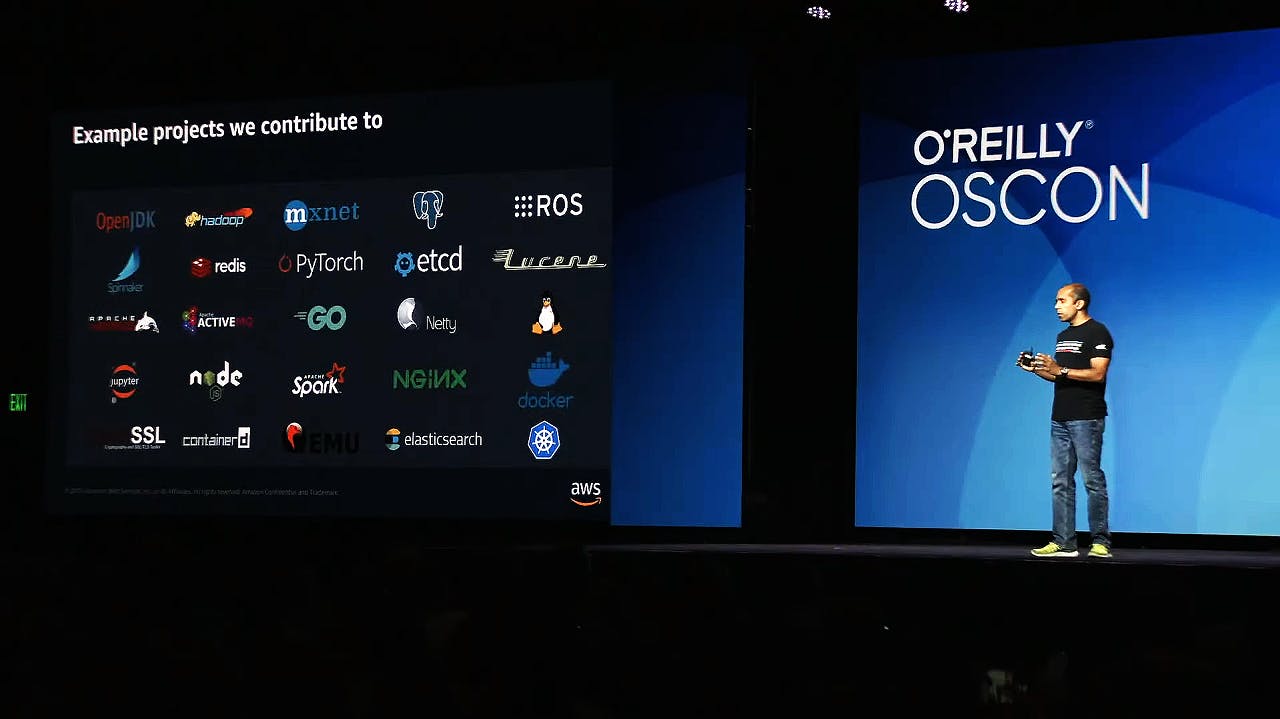
Multi-cloud is another driver, which we will expand on with in a cloud report for next week so that our members can have a more holistic view of why this trend is critical to have exposure to. On a similar note as multi-cloud, our past Atlas coverage focused on MongoDB’s ability to stave off competitors who had cloned its product, such as Amazon’s Document DB. At the time, the market was concerned MongoDB would lose substantial share to AWS. We thought that was unlikely as during the OSCON conference Amazon had stated that Atlas was the segment winner and that Atlas growth had continued after the AWS DocumentDB release. During that time period, I was particularly fond of this comment by the CEO, which exudes confidence: “Imitation is the sincerest form of flattery, so it’s not surprising that Amazon would try to capitalize on the popularity and momentum of MongoDB. However, developers are savvy enough to distinguish between the real thing and a poor imitation.” Dev Ittycheria, MongoDB’s CEO

Notably, MongoDB is fully valued at 38 forward P/S and won’t rank on cash efficiency in terms of the cloud category. Similar to Snowflake, competing with tech giants costs money and we can see this reflected in the sales and marketing costs with both Snowflake and MongoDB in the upper range for this cost.

Financials:

By Bradley Cipriano

MongoDB reported strong Q2 FY2022 results on 9/2/21 which beat both on the top and bottom-line. The 20%+ move in the stock price coupled with a strong surge in volume following the results suggests that there was a shift in the narrative. If so, MongoDB could be nearing an inflection point, where sales will reaccelerate and grow faster than usual, therefore, attracting a premium multiple.

While sales growth recently accelerated (growing 44% YOY, the fastest pace of growth since Q1 FY2021), the company’s core product, MongoDB Atlas, grew much faster at 83% YoY. This also represented the second quarter in a row where MongoDB Atlas sales accelerated on a YoY basis. Specifically, MongoDB Atlas sales increased 83% YoY, which represented the fastest pace of growth in the last six quarters. As shown in the chart above, MongoDB’s Atlas revenue growth rate has been trending up in recent quarters, suggesting that MongoDB is nearing an inflection point in its growth rate. Atlas accounts for 56% of MongoDB’s total sales and the net sequential dollar increase doubled in the recent quarter from $8 million in revenue to $18 million. Seasonally, Q2 tends to be stronger than Q1, adding to this increase.

Another key indicator that MongoDB’s business is doing well is the increase in downloads of MongoDB’s free basic products. The company utilizes an open-source distribution model, where users can download the basic version of MongoDB’s products for free. Once these users become familiar with the products and integrate them into their work flow, then they often convert to paying customers.

MongoDB reported that downloads in the LTM increased 50% YoY to 75 million, bringing the cumulative downloads of MongoDB to over 200 million. Moreover, the 75 million downloads over the last 12 months was greater than the cumulative downloads in the first 11 years of MongoDB’s existence. Since downloads often result in paying customers, the surge in downloads is a leading indicator of future sales. We can see that MongoDB is taking advantage of the surge in downloads, as the company has ramped its expenditures on sales and marketing expense to convert these new users into customers. 


Customer metrics have also accelerated, as customers with ARR over $100k grew to 1,126, up 37% YoY and above the 36% and 30% YoY growth rates in Q1 FY2022 and Q4 FY2021, respectively. Total customer count grew 44% YoY to 29,000+ customers, while Atlas customer increased 46% YoY to 27,500+ customers. It is great to see that customers are driving growth (+44%), rather than an increase in price. Since raising prices is ultimately an unsustainable trend, we prefer to see growth driven by volume (customer count) rather than price.

Another key trend to monitor going forward is international growth, especially growth in Asia. In February 2021, MongoDB announced a global partnership with Tencent Cloud. The company also has a partnership with Alibaba Cloud. These partnerships have benefitted MongoDB, as sales to Asia increased 84% YoY to $20 million. Asia accounted for just 10% of sales in the most recent quarter, which means that there is plenty of runway left to capture share in the Asian market.

In summary, MongoDB appears to be nearing an inflection point as the company’s core product, MongoDB Atlas, has accelerated for two consecutive quarters. This acceleration may continue, as downloads have also greatly increased and downloads are a leading indicator of future sales since free users usually convert into paying customers. There were more downloads in the last twelve months than in the prior 11 years, suggesting that growth will remain robust going forward. MongoDB has also ramped its investments in sales and marketing to convert free users into paying customers, which should help support a further acceleration in sales going forward. Lastly, the company has started ramping in Asia with key cloud partnerships, with a long runway of sales available in the APAC key market.


Posted in Application Monitoring, Cloud Infrastructure, Cloud Platforms, Cloud Software, ProductivityLeave a Comment on MongoDB Update: Atlas Helps Accelerate Growth

Snowflake Premium Analysis

Posted on April 5, 2021June 30, 2026 by io-fund

9c7f7950-f8cd-4f16-ac46-5f9dbeeb1aa1_Snowflake+Premium+Analysis+v1.pdf

Snowflake Premium Analysis:

You can find my previous analysis of Snowflake here. previous analysis of Snowflake here.

After being nearly 50% off from all-time highs, Snowflake still has a neck-breaking valuation. In this premium analysis, we spend time digging into the financials and valuation as this is a critical piece for this particular company. We also discuss product, especially as it relates to the upcoming Databricks public offering, and a few reasons why Snowflake outpaces this important competitor in terms of revenue growth. We also discuss areas where Databricks is stronger and what Snowflake must do to maintain its lead in the future. 

Best-in-Show Key Metrics:

Snowflake is a leading cloud software company in terms of revenue growth, net retention rate and remaining performance obligations (RPOs). Like all cloud software, Snowflake is declining year-over-year as the base increases.

Snowflake went public with 121% year-over-year growth, which has settled to 117% in the most recent quarter. The outlook for Snowflake is growth of 82% at the midpoint with adjusted operating margins of (19%) up from adjusted operating margins of (38%) last year.

Snowflake's two areas of strength include a net retention rate that improved sequentially from 158% to 168% in the most recent quarter. The reacceleration is important as it shows customer satisfaction and is a number that tends to decelerate.

Remaining performance obligations (RPO) is also very high at 213% year-over-year, with $1.3 billion in the pipeline. This represents the revenue that is contracted but not yet realized. The number is higher than forward revenue guidance because the future period may require more than a year. Regardless, the point is it provides a glimpse as to Snowflake’s strength in the future and 200%+ growth shows customer satisfaction. The topic of Snowflake’s future strength, particularly 3-5 years out, is discussed in the valuation section below.  

The company grew Fortune 500 customers by 46% from 127 to 186. These customers tend to remain loyal due to their size. I also pointed out Snowflake's impressive growth in customers with product revenue greater than $1 million in my previous analysis.

At the time of IPO the accounts >$1M had grown 56% compared to 22% in the year-ago period. The most recent growth shows an acceleration at 88%. The company is also a usage-based model rather than subscription. The more the world relies on data, the more revenue Snowflake will make. These larger accounts also matter more in a usage-based model.

It’s important to note that Snowflake is bleeding on the bottom line on a GAAP basis with sales and marketing costs equal to its revenue. Sales and marketing costs were at 111% of revenue in FY2020 and at 81% of revenue FY2021. These costs are high due to growing the sales and marketing departments. The company plans to hire 1,200 new employees this year with an emphasis on these two departments.


The operating expenses are nearly 200% of total revenue after R&D and G&A. The translation is that Snowflake is in the middle of a land grab. I imagine the aggressive sales and marketing budget strategy is that the high switching costs of data warehousing solutions will support the LTV needed. In other words, the strategy of establishing customer relationships at any cost should pay off in the long run. 

Frank Slootman, CEO of Snowflake and prior CEO of ServiceNow and Data Domain, is the main reason investors are not concerned about the bottom line. The CEO improved the cash efficiency of Data Domain, a company he took from near bankruptcy to a significant acquisition after "selling more than all its competitors combined.” He also grew Service Now from $75 million to $1.5 billion.

The free cash flow margin is set to improve this upcoming year again to "break-even" with operating losses of adjusted (19%) compared to (38%) in FY2021. The operating losses saw a 5X improvement from two years ago when the adjusted operating margins were (105%) in FY2020.

Ultimately, Snowflake has best-in-show key metrics. There is a lot of supporting evidence that Snowflake is well-loved by its customers and is positioned well for future/sustained growth. Databricks has an upcoming IPO and this is a primary risk to Snowflake as there will be a competitor on the public markets once this happens. I expect Databricks to split investor interest – more on this below.

Product Overview:

Snowflake’s decoupled architecture allows for compute and storage to scale separately with the storage provided from any cloud provider the customer chooses. By processing queries using massively parallel processing (MPP), where each node in the cluster stores a portion of the data set locally, the virtual warehouses can access the storage layer independently so as not to compete for compute power. With the competitors, such as Redshift, where compute and storage are coupled, more time is spent reconfiguring the cluster. 

Snowflake calls this offering a virtual data warehouse where workloads share the same data but can run independently. This is crucial because Snowflake’s competitors combine compute and storage and require customers to size and pay based on the largest workload. 

Data warehouses are centralized data repositories that collect and store information across many sources that are both internal and external. The raw data is ingested into the data warehouse and processed to answer queries. To ingest data, warehouses follow the ETL process, which is: (1) Extract the data from the internal or external database or file, (2) Transform by cleaning and preparing the data to fit the schema and constraints of the data warehouse and (3) Load into the data warehouse. The ETL method helps to organize the data into a relational format. Notably, Snowflake supports both ETL and ELT, which allows for data transformation during or after loading. 

One key product differentiator is that Snowflake is not built on Hadoop, rather the company uses a new SQL database engine with cloud-optimized architecture. Overall, this translates to faster queries and also reduces costs by scaling up or down for both capacity and performance. This also allows the shift to the cloud while still honoring traditional relational database tools. Just like cloud infrastructure does not require you to hold server space for peak times year-round, a cloud data warehouse does not require you to plan, acquire or manage resources for peak data demand (i.e. elasticity).

The need for resources could change by either increasing or decreasing (scaling up or down). Customers that have a need for storage but less of a need for CPU computations do not have to pay up front and can shrink the environment dynamically. Users either pay for terabytes or are billed on a per-second basis for computations. Notably, Snowflake charges by execution-based usage and is not a cloud SaaS-company that charges by subscription. 

Snowflake has a multi-cluster architecture which is unique from single cluster databases. The multi-cluster approach allows the clusters to access the same underlying data yet to run independently. This allows for heavy queries and operations to run very quickly and with fewer errors because the queries are not accessing the same data warehouse.

Queries are made with standard SQL, for analytics, and integrates with R and Python programming languages. The company delivers the ability to handle all incongruent data types in a single data warehouse. Because the data is accessible through SQL, there is widespread developer uptake as it’s the most common database language.

Snowflake supports both structured data and semi-structured data. As machine-generated data grows to include applications, sensors and mobile devices, Snowflake allows semi-structure data to be handled without preparation or schema definitions. The result is handling JSON, Avro, ORC, Parquet or XML data as if it were relational and structured. 

Snowflake uses a compressed columnar database. Columnar databases are optimized for the fast retrieval of columns of data and is used for analytic data queries.  Other features include centralized metadata management that is stored in a single-key value store that allows cloning of tables and databases. Security is baked into the platform to where Snowflake automatically encrypts all data to the point where unencrypted data is not even allowed. There is third-party certification and validation for security standards like HIPAA.

Beyond the value proposition of separating storage from compute for speed, and also scaling up or down to reduce costs, the third takeaway is that Snowflake is also much easier for customers to use as it’s designed to remove the role of a database administrator for monitoring and/or to tune query performance. 

The end goal of choosing Snowflake is that you load data, run queries, and do little else – which is an immense value proposition due to the amount of time wasted prepping, balancing, tuning and monitoring traditional data warehouses originally built for on-premise. 

Snowflake is capitalizing on the multi-cloud trend and growing rapidly with customers who want a choice in public cloud provider despite the cloud giants having their own data warehouse systems, such as Amazon Redshift, Azure Synapse and Google Big Query. 

Generally speaking, Big Query is a closer competitor as Google’s offering also separates storage and compute. The differences between BigQuery and Snowflake include pricing structure where Snowflake is a time-based pricing model where users are charged for execution time and BigQuery is a query-based pricing model, where users are charged for the amount of data returned from the queries. BigQuery has a serverless feature that makes it easier to begin using the data warehouse a the serverless feature removes the need for manual scaling and performance tuning. Dremel is the query engine for BigQuery.

When it comes to deciding between BigQuery and Snowflake, it can come down to what you do with the database due to pricing structure differences. For instance, Snowflake is a better choice for concurrent users and business intelligence. It’s also a great choice for data-as-a-service, where you might give client access to your data in the form of analytics. BigQuery is perhaps a better choice for ad hoc reporting, where you have occasional complex reports on a quarterly basis or recommendation models and machine learning that require high idle time. Again, these examples are mainly due to pricing structure. 

Despite BigQuery having a strong following with nearly twice the number of companies as Snowflake and growing around 40%, it tested slower than Snowflake in field tests performed by GigaOm in 2019. Vendor lock-in from BigQuery is also undesirable as companies may prefer AWS or Azure and/or more interoperability or best-in-breed solutions – we can see this in the growing trend of multi-cloud. AWS Redshift has the biggest market presence but growth is nearly flat at 6.5% and AWS is the leading partner for Snowflake.

Here's a great write-up from the Hashmap Engineering and Technology Blog that points out why implementing optimized row columnar (ORC) format data loads is ideal for either Snowflake or Amazon Redshift due to the ORC file format. Again, ultimately the choice in which system you use comes down to the individual needs for implementation although Snowflake is designed to be a competitor in nearly every case.

There’s a great write-up from analyst David Vellante that discusses how Snowflake competes with cloud native database giants. His analysis discusses survey responses from CIOs and IT buyers with Snowflake having a lead over the tech giants in spending intentions. The Enterprise Technology Research study he highlights showed 80% of AWS accounts plan to spend more on Snowflake in 2020 relative to 2019 with 35% adding Snowflake as new compared to 12% adding Redshift as new. In Azure, 78% plan to spend more on Snowflake with 41% adding new. On Google Cloud, 80% plan to increase spending on Snowflake. We can see the people have spoken.

Pricing pressure is the weakness we must monitor with Snowflake as it’s sandwiched heavily between tech giants in an area where these tech giants are very protective of their turf. How cheap will BigQuery become to attract developers to Google Cloud, which Google can then monetize the life span a customer in various ways?

You'll also see below that the tech giants are also private investors in Databricks.

Valuation Update:

Snowflake is the fastest growing cloud stock with 124% revenue growth over the last 12 months and a projected 85% over the next 12 months. The recent sell-off in tech stocks has led to a significant contraction in Snowflake's valuation. Snowflake trades at 56.8x EV/NTM revenue after seeing its valuation peak above 80x forward revenue following its IPO.  

Snowflake guided for 82% revenue growth in 2021 at the midpoint of its target. As covered in the financials, the company is also targeting breakeven in Free Cash Flow for the full year in 2021 after a -12% FCF margin in 2020.  Snowflake sees Operating Margin improving to -19% in 2021 from -38% in 2020. 

SaaS stocks are typically valued based on a multiple of forward revenue.  Below, we take a look at the ten highest valuations in the space:

As we can see, Snowflake has the highest projected growth rate over the next 12 months by a wide margin.  Only one other SaaS stock in the table is projected to grow over 40% YoY in 2021 (CRWD).  Conversely, Snowflake is projected to grow 85% YoY in 2021, 48 percentage points above the median.

Consensus expectations show that Snowflake is projected to grow revenue 65% YoY in 2022 and 57% YoY in 2023.  In fact, Credit Suisse’s DCF Model on SNOW calls for its growth rate to exceed 40% YoY in 2024 and 2025, before retreating to 37% in the year ending 2026. 

This growth is unparalleled by any other public SaaS stock, as the median NTM growth rate for the 10 highest valuations is currently 37%.  This means that analysts are expecting SNOW to grow revenue in 2026 at the same rate that Cloudflare, Zscaler, and ZoomInfo will this year.  It becomes even more extraordinary when you consider that Snowflake is projected to achieve this growth rate after posting $3.5B in revenue in 2025. 

This revenue number comfortably exceeds the combined annual revenues of Cloudflare, Zscaler, and ZoomInfo. To put Snowflake's growth into perspective, analysts expect a higher growth rate from Snowflake in 2025 than any SaaS stock this year outside of CrowdStrike. 

This is why we believe it is essential to look beyond the NTM revenue multiples, as Snowflake will separate itself by continuing to grow faster than any of its peers over the next 5 years.  With this level of growth, SNOW will be able to compound its revenues to bigger and bigger totals. 

The farther out we look into the future, the more reasonable SNOW's valuation becomes compared to its peers.    

Major Competitor: Databricks

In my most recent Motley Fool podcast, I pointed out that Databricks planned to go public, which was a risk to Snowflake's valuation.

We don't have an S-1 filing at this time, but TechCrunch has done some preliminary work based on a $28 billion private valuation. The tech media site estimates that the company grew from a $200 million annual run rate to a $350 million annual run rate between Q3 2019 and Q3 2020.

TechCrunch's current number is a run rate of $425 million to $485.6 million for Q1 2021. CNBC reported, "$425 million in annualized sales," representing 70% growth for last year. This is quite a bit lower than Snowflake's growth last year, which was 123% for full-year growth.

We believe Databricks could open up at a higher valuation than where Snowflake is currently trading. This is because the forward growth is lower, which we estimate to be 60% for FY2021. We are assuming a $50 billion market cap at the opening. The $50 billion represents about 2X the private valuation while Snowflake opened around 3X its last private valuation.

Early backers for Databricks include Microsoft, which was later joined by Amazon Web Services, Google via CapitalG, and Salesforce. Venture firm A16Z and Tiger Global are also among the investors. This strong lineup participated in the latest $1.9 billion round. The articles that reported on the recent round point out the rarity in getting backing from all four major cloud vendors.

What’s the difference between Databricks and Snowflake?

Yesterday on our forum, there was an excellent post by a subscriber around the differences between Snowflake and Databricks.

The major difference between Snowflake and Databricks from a customer standpoint is that Snowflake is laser-focused on the public cloud/cloud native while Databricks is differentiated in that it can build information pipelines across silos, including on-premise and hybrid architectures. Snowflake's main value proposition is to reduce the time required to prep and monitor data so that a customer does not need to manage software or hardware. Even if a team has the technical skills, they may not want to spend the time required for Databricks, which is perhaps one reason why Snowflake is reporting decent growth in the Fortune 500 and other key accounts.

The architecture of a data lakehouse allows for business intelligence and machine learning through a more open paradigm. The idea is to combine best of data warehouses and data lakes to span unstructured and semi-structured data while keeping costs low. By combining both, teams can move faster and without duplicating the data. This is a key benefit to Databricks DeltaLake, and this is especially important for data analytics and machine learning. With that said, Databricks is more advanced and expert-level.

I want to point out that Snowflake is very clear as to why it's done well – which is that it handles migrations to the public cloud from legacy on-premise systems better than the competitors. Snowflake's priority is to compete with other SQL databases right now, although the company will need to eventually compete with Databricks. Management has discussed rolling out support for unstructured data, for instance, but no timeline has been set.

Looking longer-term, what Snowflake needs to answer is how will it compete with Databricks on machine learning? Databricks is superior here for ML as it’s built on top of Apache Spark and supports Spark, Python, Scala and also SQL. This was discussed in the thread on the forum here.

The forum thread points out that Databricks is more complex to upload the data, monitor and manage, but there are benefits to going through this hassle. One of the primary benefits is support for Python and Scala, which are programming languages for machine learning. For now, you must use an outside vendor or tool as connectors or integrations in order to support these programming languages and libraries with Snowflake. It’s also worth mentioning that Databricks is cheaper for processing a lot of data at petabyte scale.

Growth is the great equalizer when comparing products and my preliminary understanding is that Snowflake is growing much faster than Databricks and expects to continue to outpace the competitor. I will need to look into Databrick’s financials and see an earnings report or two to determine more about the competitor’s sustained growth rate. Here’s a snapshot of Snowflake Google search queries compared to Databricks. We should ignore the spike as it was IPO related.

 What I find to be very intriguing is what Snowflake will do to compete on ML. This gap in product capability is not lost on the Snowflake team and management. Being laser-focused on the public cloud/cloud-native lends itself well for Snowflake to compete here theoretically, yet its laser-focus on SQL is getting in the way strategically speaking. The company is aware of this and plans to roll out support for unstructured data. Essentially, Snowflake is capable of evolving to meet the growing demands of ML … so let’s see what happens here as Snowflake's management likely has a plan.

Conclusion:

Snowflake is disrupting the data warehousing market (or cloud data market) with a superior cloud data platform that delivers across key differentiators. Snowflake demonstrates excellent product-market fit, clear competitive advantages, and strong management — the primary ingredients for a great growth stock.

I prefer to not pay over 40 forward P/S and certainly not over 50 forward P/S yet Snowflake's forward growth requires additional consideration as it promises to outpace its peers. In this case, we initiated in the 55x range and will build more into the position either on a pullback or a breakout.

Posted in Cloud Platforms, Data Warehousing, Stock Updates (Blogs)Leave a Comment on Snowflake Premium Analysis

Snowflake IPO: In-Depth Analysis

Posted on September 17, 2020June 30, 2026 by io-fund
Snowflake IPO: In-Depth Analysis

This article was originally published on Forbes on Sep 11, 2020,03:02am EDTForbes on Sep 11, 2020,03:02am EDT

Snowflake is the most anticipated IPO of the year. Investors should decide in advance how much they are willing to pay as Snowflake will test the upper limits of what it means to have a stretched valuation. Heck, the company has even inspired value-legend Warren Buffet to change his thesis and invest in an IPO prior to profitability (!)

Perhaps because the company delivered sky-high revenue growth last fiscal year of 173% and 121% in the most recent quarter with a record-breaking net retention rate of 158% — which is the highest of any public cloud company at time of listing.

Graph: Net Dollar Retention at IPO

David Marlin

These industry-leading numbers are due to the company disrupting the data warehousing market with a superior cloud data platform that delivers across key differentiators (we review this below). Despite Snowflake demonstrating excellent product-market fit, clear competitive advantages, and strong management — no company is perfect. We go over a few key risks that investors should keep in mind as the bidding becomes fierce on opening day.

Snowflake Financials

Snowflake has strong financials for a tech IPO, yet it’s important to remember the product has been available for only six years and tech growth is typically strongest in the early days. The company delivered 173% growth in the fiscal year ending January 31, growing from $96.7 million to $264.7 million with gross profit margins of 56.2%.

These gross margins are below what cloud companies are capable of yet improved in the most recent period. Revenue grew 133% year-over-year in the first six months of fiscal 2021 ending in July, growing from $104 million to $242 million with improving gross profit margins of 61.5%.

In the most recent quarter, the company reported growth of 121%. Here, we already see the effects of age within a short time period as Snowflake settles from 173% growth to 133% growth and now to 121% growth. This is not a negative by any means (triple-digit growth is to be celebrated) but keep in perspective it’s age when comparing Snowflake to any high-growth cloud SaaS peers.

Graph: Revenue Growth at IPO

David Marlin

The bottom line has been varied depending on what period you look at. The losses doubled from fiscal year 2019 with net losses of $178 million increasing to net losses of $348.5 million in fiscal year 2020.

More recently in the first six months of fiscal 2021, the net losses were flat period-over-period at $177.2 million compared to losses of $171.3 million. This could be an encouraging sign or it could be Snowflake tightening the belt temporarily for the public offering before returning to the original pace of worsening losses. There is not enough history to know if the more encouraging flat rate of losses is sustainable. Adjusted EPS was negative $1.63 in the fiscal year ending in January compared to negative adjusted EPS of $0.72 in the first half of fiscal 2021.

Sign up for I/O Fund's free newsletter with gains of up to 403% – Click hereSign up for I/O Fund's free newsletter with gains of up to 403% – Click hereClick here

Net retention rate for Snowflake is a record 158% — the highest of any company when going public. However, it’s important to remember that net retention rate lowers over time as customers become harder to retain long-term (I cover net retention rates more in-depth here).

The company was founded in 2012 yet the product came out of stealth mode in 2014. When considering the product launch, Snowflake is a very young company of only six years old.

Stock Companies Revenue Growth in Year #

David Marlin

You can see evidence of how net retention is affected by number of years in Snowflake’s S-1 filing as the company had a rate of 223% in the first half of 2019 compared to 158% period-over-period. Annually, the company lost 11 percentage points in net retention rate from 180% to 169%.

Snowflake S-1 Filing

SNOWFLAKE S-1 FILING

Regardless, Snowflake has impressive numbers. Perhaps the most impressive key metric in the S-1 filing is the growth in the percentage of customers with product revenue greater than $1 million. This has grown considerably from 14% in fiscal year 2019 to 41% in fiscal year 2020. There is evidence high-end accounts are continuing to grow with the first six months of 2020 at 56% compared to 22% in the year-ago period.

The new CEO, Frank Slootman, clearly knows how to make a company attractive to investors. Not only did the company quicky tighten its belt in regard to net losses, the company also doubled customers from 1,547 to 3,117 over the past twelve months. This includes 7 of the Fortune 10 and 146 of the Fortune 500.

Cash used in operating activities decreased from $110 million to $45.3 million in the first six months of fiscal 2021. The company has cash and investments of $591 million and no debt.

As outlined in the S-1, IDC places the addressable market for Analytics Data Management and Integration Platforms and Business Intelligence and Analytics Tools at $56 billion in 2020 and $84 billion in 2023.

In an effort to narrow this addressable market, I dug up a few more sources. According to MarketsandMarkets, the addressable market for Data Warehouse-as-a-Service is much smaller at $1.2 billion in 2018 and set to grow to $3.4 billion by 2023 at a CAGR of 23.8%. P&S Intelligence reports a similar CAGR of 29.2%, estimating the Data Warehouse-as-a-Service market to reach $23.8 billion by 2030. When combining on-premise, Allied Market Research places the data warehousing market at $34.7 billion by 2025.

You’ll find larger addressable markets in tech but the weight Snowflake brings to the category is considerable.

Snowflake’s former CEO, Bob Muglia, grew the company from 80 customers in 2015 to 1000 customers in early 2018 when he was replaced by Frank Slootman. The change likely happened due to pressure from private investors who want a grand slam exit (and looks like they’ll be getting just that).

Slootman is known for resuscitating Data Domain from nearly running out of money in 2003 to an acquisition in 2009 after the company “grew to sell more than all its competitors combined.” This was detailed in a book that Slootman wrote called: “TAPE SUCKS: Inside Data Domain, A Silicon Valley Growth Story.” Three years later, Slootman took over the CEO role of ServiceNow between 2011 to 2017 and grew the company from $75 million in annual revenue to $1.5 billion. This was achieved by diversifying the product beyond the IT department.

For many investors, management is a key factor in deciding to invest or not. Here, Snowflake fires on yet another cylinder.

Product:

Snowflake’s decoupled architecture allows for compute and storage to scale separately with the storage provided from any cloud provider the customer chooses. By processing queries using massively parallel processing (MPP), where each node in the cluster stores a portion of the data set locally, the virtual warehouses can access the storage layer independently so as not to compete for compute power. With the competitors, such as Redshift, where compute and storage are coupled, more time is spent reconfiguring the cluster. 

Snowflake calls this offering a virtual data warehouse where workloads share the same data but can run independently. This is crucial because Snowflake’s competitors combine compute and storage and require customers to size and pay based on the largest workload.

Data warehouses are centralized data repositories that collect and store information across many sources that are both internal and external. The raw data is ingested into the data warehouse and processed to answer queries. To ingest data, warehouses follow the ETL process, which is: (1) Extract the data from the internal or external database or file, (2) Transform by cleaning and preparing the data to fit the schema and constraints of the data warehouse and (3) Load into the data warehouse. The ETL method helps to organize the data into a relational format. Notably, Snowflake supports both ETL and ELT, which allows for data transformation during or after loading.

One key product differentiator is that Snowflake is not built on Hadoop, rather the company uses a new SQL database engine with cloud-optimized architecture. Overall, this translates to faster queries and also reduces costs by scaling up or down for both capacity and performance. This also allows the shift to the cloud while still honoring traditional relational database tools. Just like cloud infrastructure does not require you to hold server space for peak times year-round, a cloud data warehouse does not require you to plan, acquire or manage resources for peak data demand (i.e. elasticity).

The need for resources could change by either increasing or decreasing (scaling up or down). Customers that have a need for storage but less of a need for CPU computations do not have to pay up front and can shrink the environment dynamically. Users either pay for terabytes or are billed on a per-second basis for computations. Notably, Snowflake charges by execution-based usage and is not a cloud SaaS-company that charges by subscription.

Snowflake has a multi-cluster architecture which is unique from single cluster databases. The multi-cluster approach allows the clusters to access the same underlying data yet to run independently. This allows for heavy queries and operations to run very quickly and with fewer errors because the queries are not accessing the same data warehouse.

Queries are made with standard SQL, for analytics, and integrates with R and Python programming languages. The company delivers the ability to handle all incongruent data types in a single data warehouse. Because the data is accessible through SQL, there is widespread developer uptake as it’s the most common database language.

Snowflake supports both structured data and semi-structured data. As machine-generated data grows to include applications, sensors and mobile devices, Snowflake allows semi-structure data to be handled without preparation or schema definitions. The result is handling JSON, Avro, ORC, Parquet or XML data as if it were relational and structured.

Snowflake uses a compressed columnar database. Columnar databases are optimized for the fast retrieval of columns of data and is used for analytic data queries.  Other features include centralized metadata management that is stored in a single-key value store that allows cloning of tables and databases. Security is baked into the platform to where Snowflake automatically encrypts all data to the point where unencrypted data is not even allowed. There is third-party certification and validation for security standards like HIPAA.

Beyond the value proposition of separating storage from compute for speed, and also scaling up or down to reduce costs, the third takeaway is that Snowflake is also much easier for customers to use as it’s designed to remove the role of a database administrator for monitoring and/or to tune query performance.

The end goal of choosing Snowflake is that you load data, run queries, and do little else – which is an immense value proposition due to the amount of time wasted prepping, balancing, tuning and monitoring traditional data warehouses originally built for on-premise.

Snowflake is capitalizing on the multi-cloud trend and growing rapidly with customers who want a choice in public cloud provider despite the cloud giants having their own data warehouse systems, such as Amazon Redshift, Azure Synapse and Google Big Query.

Generally speaking, Big Query is a closer competitor as Google’s offering also separates storage and compute. The differences between BigQuery and Snowflake include pricing structure where Snowflake is a time-based pricing model where users are charged for execution time and BigQuery is a query-based pricing model, where users are charged for the amount of data returned from the queries. BigQuery has a serverless feature that makes it easier to begin using the data warehouse a the serverless feature removes the need for manual scaling and performance tuning. Dremel is the query engine for BigQuery.

Sign up for I/O Fund's free newsletter with gains of up to 403% – Click hereSign up for I/O Fund's free newsletter with gains of up to 403% – Click hereClick here

When it comes to deciding between BigQuery and Snowflake, it can come down to what you do with the database due to pricing structure differences. For instance, Snowflake is a better choice for concurrent users and business intelligence. It’s also a great choice for data-as-a-service, where you might give client access to your data in the form of analytics. BigQuery is perhaps a better choice for ad hoc reporting, where you have occasional complex reports on a quarterly basis or recommendation models and machine learning that require high idle time. Again, these examples are mainly due to pricing structure.

Despite BigQuery having a strong following with nearly twice the number of companies as Snowflake and growing around 40%, it tested slower than Snowflake in field tests performed by GigaOm in 2019. Vendor lock-in from BigQuery is also undesirable as companies may prefer AWS or Azure and/or more interoperability or best-in-breed solutions – we can see this in the growing trend of multi-cloud. AWS Redshift has the biggest market presence but growth is nearly flat at 6.5% and AWS is the leading partner for Snowflake.

Here's a great write-up from the Hashmap Engineering and Technology Blog that points out why implementing optimized row columnar (ORC) format data loads is ideal for either Snowflake or Amazon Redshift due to the ORC file format. Again, ultimately the choice in which system you use comes down to the individual needs for implementation although Snowflake is designed to be a competitor in nearly every case.

There’s a great write-up from analyst David Vellante that discusses how Snowflake competes with cloud native database giants. His analysis discusses survey responses from CIOs and IT buyers with Snowflake having a lead over the tech giants in spending intentions. The Enterprise Technology Research study he highlights showed 80% of AWS accounts plan to spend more on Snowflake in 2020 relative to 2019 with 35% adding Snowflake as new compared to 12% adding Redshift as new. In Azure, 78% plan to spend more on Snowflake with 41% adding new. On Google Cloud, 80% plan to increase spending on Snowflake. We can see the people have spoken.

A few risks …

Due to Snowflake’s product strengths, the public cloud providers offer Snowflake while at the same time being in competition. The main risk being discussed is that public cloud providers have competing databases, but in reality, the risk may be pricing pressure over time. Snowflake has a great top line; however, the bottom line is affected by its partnership with the competitors. Plus, tech giants can greatly undercut Snowflake on pricing. Therefore, margins may be an inherent issue.

The company pays quite a bit for sales and marketing, which is typical for a company going public as this strengthens the top line yet could make it hard to balance this growth with profitability in the future. (But hey, if Berkshire doesn’t care, why should we!)

In the S-1 filing, it was noted that Salesforce will buy $250 million in stock in a private placement. This could be a risk if Salesforce becomes too intertwined with Snowflake as it’s best possible growth will be achieved by stating neutral, in my opinion. This involvement is something to monitor.

As stated, Berkshire Hathaway is also intending to purchase $250 million in shares in a private placement plus an additional $300 million from an unnamed stockholder in a secondary transaction. As Business Insider pointed out, this involvement from Berkshire is “rarer than a unicorn” and will be viewed as a strength by both institutions and retailers. 

There could be risk in Snowflake being cloud-native only and not offering hybrid or on-premise. This can limit the customer pool as enterprises prefer hybrid options. Perhaps the bigger picture for Snowflake’s strength will be leveraging artificial intelligence in applications and business intelligence, and in this case, a hybrid and on-premise offering won’t be as necessary.

Valuation

Snowflake’s amended filing on September 8th shows the company will be priced at $75 to $85 per share with a valuation between $20.9 billion and $23.7 billion. This would raise $2.7 billion. The last private valuation for Snowflake was $12.5 billion when the company raised a Series G for $479 million.

When we look at various scenarios, we see Snowflake hitting 40 forward price-to-sales in the $30 billion valuation range.

Snowflake IPO Valuation Table

Snowflake IPO Valuation Table – BETH KINDIG

Snowflake is not profitable while Shopify, Zoom Video and Datadog are profitable with some showing accelerating revenue. These three have commanded above a 40 forward price-to-sales in perfect conditions only. The majority of their trading history has been beneath a 30 forward price-to-sales. Being profitable should come with a premium yet Snowflake will likely inch its way into this valuation range without demonstrating profitability.

Forward price-to-sales chart shows Snowflake is not profitable

Snowflake's IPO opening price will test the upper limits of high growth valuations. – BETH KINDIG

When we look at Zoom Video, Crowdstrike and Datadog, we see these three traded at or beneath their opening IPO price many times in the year following IPO. Crowdstrike saw roughly a 50% drawdown from its opening price.

Chart showing stock price of Zoom Video, Crowdstrike and Datadog

Snowflake's IPO opening price may not sustain if history is any indication – BETH KINDIG

Therefore, if Snowflake trades at a 30 forward price-to-sales and sustains this valuation, it will be the first high growth company with negative earnings to do so. Even those with positive earnings growth have only traded above this valuation for a brief period over the last three months.

A better strategy would be not pay over this amount and count on history rhyming. At NTM revenue of $750 million, that means Snowflake would have to open at the price listed in the prospectus in order to remain within a reasonable $25 billion valuation (“reasonable” being used loosely here as only a few companies have traded at this valuation in the most ideal conditions/tech market and these comparables were profitable).

Conclusion:

When you were a child, your parents probably asked, “are you going to jump off a bridge if everyone else does?” The goal of the question was to get you to think for yourself in the face of peer pressure.

In this situation, the question that should be asked is, “are you going to invest in a company with triple-digit growth, clear product differentiation, key metrics that prove product-market fit and gravity-defying management … if Berkshire does?” The answer is probably “yes.”

The issue is that we aren’t Berkshire or Salesforce so we will probably overpay. Therefore, the biggest risk of all is how much alpha will be left in the first year of trading by the time retailers are offered the crumbs.

I’ve participated in IPOs out the gate and the only ones that have paid off were under-hyped (Roku). Those that were over-hyped, such as Zoom Video and Crowdstrike, either retreated back to their opening price or saw up to a 50% haircut from the opening price.

I did not participate in either of these over-hyped IPOs but I did snag Zoom Video later in January of 2020. I was able to put that money to use elsewhere while waiting for the lock-up period to expire and the right entry in the low $60s nearly 9 months after Zoom Video had listed.

Even as a Snowflake enthusiast. I may back-off after 30 forward price-to-sales (and most certainly at 40 forward P/S) as I’m confident I can find many great tech companies that are less hyped while I wait it out. We will always see periods of indiscriminate selling across high-growth and I don’t think Snowflake will escape those rotations.

Please note: The I/O Fund conducts research and draws conclusions for the Fund’s positions. We then share that information with our readers. This is not a guarantee of a stock’s performance. Please consult your personal financial advisor before buying any stock in the companies mentioned in this analysis.

Posted in Cloud, Cloud Infrastructure, Cloud PlatformsLeave a Comment on Snowflake IPO: In-Depth Analysis

Work-From-Home Could Eradicate Telecom Hardware ($BAND)

Posted on August 18, 2020June 30, 2026 by io-fund
Work-From-Home Could Eradicate Telecom Hardware ($BAND)

This article was originally published on Forbes on Aug 13, 2020,11:01pm EDTForbes on Aug 13, 2020,11:01pm EDT

Shelter-in-place has led to a surge for many stocks across e-commerce, online streaming, video conferencing and gaming as these subsectors are seen as the primary beneficiaries of covid-19. In many cases, this boost in usage is temporary as it requires people to spend an unnatural amount of time indoors, not to mention the effects of covid are fully priced-in to most of these stocks. 

The market can be myopic due to the sheer number of swing traders and machines driving the market. Therefore, strong consideration should be given to the long-term effects of covid even if the gains are not immediate or overnight. One trend I am monitoring closely for the more permanent effects is the disruption of telecom hardware systems through cloud-native communications. 

Cloud-native voice customers will be permanent and won’t revert back post-covid because it’s cheaper, can be scaled depending on immediate needs, and can also be built into collaboration platforms for increased productivity or used as a stand-alone. Session Initiation Protocol (SIP) enables reliable voice over a Tier-1 Network with a phone line as cheap at $0.35 compared to the typical phone bill that ranges between $20 to $30 per phone line.

Although there are many tech giants with products in the cloud-native communications space, such as Microsoft, Google and up-and-comer Zoom, the Tier 1 Network powering many of these voice features is offered by a little-known company called Bandwidth.

Hardware-as-a-Service Powered by Tier 1 Network

Where dedicated, daily user behavior within enterprises around VoIP and cloud native conferencing apps may have been many years out, covid-19 has sped up this more permanent trend. We were looking at growth of about $1.7 billion in 2017 to $6.7 billion in 2022 for this market. According to IDC, the global market will reach $17.2 billion by 2023. 

Corporations have been announcing permanent work-from-home policies with many discussions on earnings calls about the improvement in margins that is caused by not providing physical space. With many empty office buildings across metropolises, the common concern is what will happen to real estate prices and commercial rent. However, inside the buildings are miles of telecom wires that lay dormant at $20 to $30 per line per month. 

This need to re-envision the post-covid office extends beyond enterprises to also include SMBs, who will want to cut costs as stay-orders are extended, such as retail outlets, attorneys, dentists and insurance agents, to name a few.  

The company Bandwidth delivers SIP that enables voice-over-internet-protocol (VoIP) by defining the messages sent between endpoints and managing the actual elements of a call. SIP supports voice calls, video conferencing, instant messaging and media distribution. Bandwidth works with the very largest VoIP and video/audio conferencing companies with some important catalysts: (1) work-from-home migrating budgets (i.e. the customers), (2) large investments and innovation from Bandwidth’s customers including Zoom and Microsoft (i.e. the providers), and (3) the potential for global expansion. Phone lines offered by Bandwidth are as low as $0.35.

Major customers for Bandwidth include Zoom, Google, Cisco, Microsoft, Skype, RingCentral and Square. In this case, we do not need to predict or speculate who will take market share from the telecom hardware systems as all of the bigger players use Bandwidth (we do need to have conviction that cloud-native will replace telecom hardware).

Bandwidth offers a Voice over Internet Protocol (VoIP) network of 70 million phone numbers. The category of Communications Platform as-a-service (CPaaS) is cloud-based middleware that facilitates cloud-based hosting and management of application programming interfaces (APIs). This helps simplify the programming process for real-time communication by embedding voice and messaging APIs into enterprise applications. 

While Twilio’s strength comes from native mobile applications with a loyal following of mobile application developers, Bandwidth’s strength and customer base comes from cloud-native companies.

The difference between these companies is important to review. Twilio enables communications for mobile applications, such as voice or text. When you text or make a call inside of a mobile application, you are likely using Twilio’s APIs. The company works with over 1,000 mobile carriers in over 150 countries for voice and text/SMS services. The features that come pre-packaged with Twilio are ideal for companies who want to cut down on development time, such as startups or pureplay apps. Examples include customer service calls on Zendesk and messaging home owners inside the AirBnB app.

However, large companies in the video and phone conferencing space (including business apps), with a primary focus on communications, are unlikely to incorporate an expensive third-party for out-of-the box development. As a network carrier, Bandwidth undercuts Twilio on pricing with cheaper outgoing and incoming calls plus free incoming SMS. This option is entirely focused on voice and SMS while its customers develop any additional features in-house. Twilio costs $1 for a dedicated number while Bandwidth costs $0.35 per dedicated number. This is why Bandwidth is the network provider for Google, Microsoft enterprise apps and Skype, and also Zoom.

Bandwidth’s product differentiation comes from the national IP network platform, which in turn, delivers reliability for audio calls. Bandwidth makes a fraction of a penny for every call or message that is sent over the Tier 1 network. Therefore, Bandwidth’s revenue is not up to par with Twilio’s at about $300 million on an annual run rate compared to $1.5 billion. Another contributing factor is that the mobile app economy has been fully built-out while cloud communications is very nascent. Therefore, as the trend grows, this should help deliver acceleration across Bandwidth’s financials.

Bandwidth owns the network and can serve enterprises who are seeking price efficiency. As stated in the IDC MarketScape analysis: Worldwide Cloud Communications PaaS analysis, this allows a high-level of reliability and quality. The companies who choose Bandwidth over Twilio are looking for “mission-critical” communications.

According to Gartner, Bandwidth’s direct competitor is actually AT&T when it comes to being a network provider with APIs, such as 911 access. Bandwidth recently announced Duet for Microsoft Teams, which provides direct routing with 911 capabilities as emergency calling is something CIOs must provide for in the event an employee needs to contact first responders. Bandwidth is one of two providers with E911.

More on Bandwidth (stock ticker: BAND):

This quarter highlighted Bandwidth’s ability to service the increasing communications needs of enterprises. The company accelerated revenue in Q2 to $76.8 million, up 35% year-over-year. This beat the consensus of 22% year-over-year growth, or $69.4 million. This is the best growth rate the company has ever recorded, up from 29% in Q1.

Dollar-based net retention rate improved from 113% to 133%. Forward guidance for Q3 came in above Street estimates and the company raised its full year outlook to 28% year-over-year at the midpoint.

The company highlighted broad-based growth across existing enterprise customers as they continue to elevate usage in their cloud-based communications services. Demand for messaging services was especially strong at 108% in Q2. The outperformance was due to higher A2P messaging surcharges, which are application-to-person messages that come from chatbots, appointment reminders or marketing messages.

Sign up for I/O Fund's free newsletter with gains of up to 403% – Click hereSign up for I/O Fund's free newsletter with gains of up to 403% – Click hereClick here

Management estimates the net impact of covid to be about 6% of revenue in Q2: “While it is becoming increasingly difficult to differentiate COVID-19-related usage from organic usage growth, we estimate that COVID-19 revenue impact in the second quarter to be in the range of $4.5 to $5 million.”

Despite management guiding for lower contribution from covid in the second half of the year, they raised the FY outlook 5.5% above the number they gave after Q1. With that said, momentum is on Bandwidth’s side after the company announced record total revenue growth (+35%), record CPaaS revenue growth (+40%), and a record dollar-based net retention rate (133%). 

There are a number of growth drivers in place for Bandwidth to see sustainable 25%+ growth over the next year:

1. Existing enterprise customers continuing to scale usage:

Bandwidth prices its services per API connection (i.e. per minute on calls or per message) so they will continue to grow with any permanent migrations.

Last month, Zoom announced two hardware-as-a-service options including hardware for “Zoom Phone” and “Zoom Rooms” and has announced ServiceNow will be using Zoom as hardware-as-a-service to displace its current phone system and legacy hardware. In the July announcement, ServiceNow stated, “Going forward, with the addition of Zoom Phone, we're getting a head start on an even more robust experience with Zoom— one-touch communication and collaboration features, plus Zoom-connected conference rooms.”

The two HaaS options Zoom launched allow companies working remotely (or in the office) to consolidate Zoom software and hardware for one consistent experience. Bandwidth is downstream from these products as they will increase the number of minutes and messages on its Tier 1 network.

Microsoft Teams competes with Zoom on both audio and video while using Bandwidth for audio. Aternity’s Productivity Tracker released a study in Mid-June showing that Microsoft Teams usage grew by 894% as of June 14th, compared with its base usage during the week of February 17th.

As more enterprises and businesses seriously consider replacing legacy phone systems, I believe they will go with the direct routing and E911 option in Microsoft Teams for reliability and safety concerns as the price is very competitive. Microsoft Teams competes with Zoom on both audio and video while offering Bandwidth for direct routing and E911. Aternity’s Productivity Tracker released a study in Mid-June showing that Microsoft Teams usage grew by 894% as of June 14th, compared with its base usage during the week of February 17th. 

2. Enterprises increasingly migrating to the cloud from on-premise legacy solutions:

Only 7 percent of Americans worked from home prior to covid-19. This number is likely to be much higher even after shelter-in-place is over. According to Sarah Walas, VP of Investor Relations at Bandwidth, calls over the voice network spiked 30 percent overall in March, with meeting-solutions clients like Zoom increasing usage by as much as 66 percent.

Bandwidth management announced a significant customer win in Q2 – a five-year multimillion-dollar agreement with a Fortune 100 company that is one of the nation’s 10 largest banks. The announcement between ServiceNow and Zoom Phone also point towards long-term or permanent hardware replacement.

Overall, the company ended Q2 with 1,900 active CPaaS customers (+30% YoY). Bandwidth is in an ideal position to continue to win large new customers looking for a migration partner with an attractive pricing model. We may see more growth here as the year goes on. Twilio released a survey in July that showed enterprise decision makers stating they believe their digital communications strategy has been accelerated by an average of 6 years. 

Analyst Estimates May Be Too Low

Wall Street consensus estimates are calling for FY21 revenue growth of 14.6% YoY. Just as Bandwidth blew past Street estimates in Q2 by 11%, estimates for 2021 remain very beatable.   Bandwidth is ideally positioned to be a sustained beneficiary of the digital transformation, even as the covid tailwind dissipates. 

As mentioned, management estimated that covid had a 6% impact on Q2 revenue, meaning they recorded a 26.4% purely organic growth rate, a number that would have still beat consensus estimates comfortably. Management also guided for less expected contribution from covid in the second half of 2020 and is still expecting 28% growth YoY.

The following year (2021) will present tougher comps, but with the trends driving Bandwidth’s growth firmly in place for the future, I think they can beat these low projections.

Conclusion:

As office buildings remain empty, traditional phone bills will be challenged by cloud-native phone systems. Not only is there a shift away from physical offices placing pressure on telecom hardware but companies are wanting to improve margins by cutting costs. Many trends are temporary or covid-dependent while telecommunications equipment could be permanently eradicated.

Twilio has benefited from the mobile app ecosystem. However, with the mega-trend driven by Zoom, Slack and Microsoft Teams, we may be transitioning towards a boom in unified communications and cloud productivity tools. If this is the case, Bandwidth could become a solid stock as their customer roster is full of large competitors in need of an independent Tier 1 network.

Posted in Cloud Platforms, ProductivityLeave a Comment on Work-From-Home Could Eradicate Telecom Hardware ($BAND)

What Happened to Splunk Last Week? Earnings Review

Posted on August 27, 2019June 30, 2026 by io-fund
What Happened to Splunk Last Week? Earnings Review

Splunk Inc’s (NASDAQ: SPLK) shares are currently trading at $118.46 which represents flat gains over the past 12-months basis compared to the broader market returning flat gains over the same time frame. Second-quarter earnings were reported on Wednesday and the question of weakening cash flow is taking center stage.

Splunk Overview

Splunk is a hybrid cloud computing company that harnesses the power of artificial intelligence to offer data analytics solutions to a variety of organizations. The company is one of the leaders in the big data analysis and security space, which according to Statista is expected to grow from roughly $42 billion in 2018 to $103 billion by 2027 representing a CAGR of 9.4 percent.

The company derives the majority of its revenue from licensing its platform which gives users the ability to investigate, monitor, analyze and act on machine data regardless of format or source. “Machine data is produced by nearly every software application and electronic device across an organization and contains a real-time record of various activities, such as transactions, customer and user behavior, and security threats,” Splunk notes in its annual report.

Splunk offers customers two options; either Splunk Enterprise whose license fee is based on the estimated daily data indexing capacity required and Splunk Cloud which offers the core capabilities of Splunk Enterprise as a scalable cloud service.

Splunk’s Q2 Highlights

Ultimately, the most important aspect that potential shareholders were looking for was whether Splunk would be able to improve its cash flow going forward. Back in May when the company released its first-quarter earnings report, the share price tumbled by at least 17 percent driven by concerns about the company’s weakening cash flow.

History seemed to repeat itself again on Wednesday when shares fell over 10 percent after it reported earnings. Apparently, the market chose to ignore the fact that Splunk had another one of its best quarters in recent years and that it had made significant progress towards shifting its business model from perpetual software licenses to recurrent cloud-based revenue.

As a matter of fact, Splunk reported better than expected numbers in the quarter, and also reaffirmed guidance for the rest of the year. According to the earnings release, the new business model is already paying off with revenue for the second quarter posting a 33 percent increase to $517 million compared to the year ago quarter. Software revenues, which combines licensing and cloud, were up $350 million or 46 percent year-over-year.

Moreover, the company added more than 500 new Enterprise customers including Verizon Media Group and ABB Group, in addition to recording 93 orders greater than $1 million. In spite of this, the company still posted an operating loss of $100.9 million, though adjusted earnings came in at $0.30 per share which beat Wall Street’s expectations of $0.12 on revenue of $488.4 million.

Overall, gross margin for the quarter was 84 percent up 2 points on a year-over-year basis with cloud delivering over 50 percent gross margin.

In Q2, 95 percent of software revenue was either term or cloud and management expects the elimination of perpetual license sales will accelerate the renewable mix to 99 percent in Q4 and high 90s for the full year.

As previously highlighted in Q1, the accelerated shift to renewable has a timing impact on cash collections. In other words, Splunk’s transition from perpetual licenses to more predictable, cloud-based subscription model is happening much faster than the company initially anticipated and this has caused the timing of Splunk’s cash flow to take a hit over the short term.

Newly appointed CFO Jason Child had this to say about the cash flow situation:

“As expected, Q2 operating cash flow was negative, given the more rapid growth of multi-year term and cloud contracts. This translates to a greater cash flow drag this year, as more of our contracts are paid ratably. We are now expecting negative operating cash flow for the balance of the current year and expect fiscal 2020 with $300 million net negative operating cash flow.”

This is in stark contrast to the Q1 cash flow guidance of positive $250 million which understandably spooked investors triggering a mild sell off.

According to Child, there were two new drivers behind this expected reduction. First, the renewable transformation is already essentially complete with the mix at 95 percent in Q2 and expected to go to 99 percent by Q4. Second, the company is significantly reducing its upfront cash invoicing for term and cloud deals from 58 percent paid upfront in the first half of FY 2020 to an estimated 33 percent paid upfront in the second half of FY 2020.

William Blair analyst David Griffin further explains that “because the entire value of perpetual contracts is invoiced and collected in cash up front, the lower contribution creates a significant headwind to cash flow.” The company is also billing customers for fewer months in advance, which again reduces cash received up front.

Apart from transitioning away from perpetual licenses, Splunk has made some strategic purchases in the recent past to boost its artificial intelligence position, including SignalSense in 2017 and VictorOps last year. On the call, Splunk revealed that it would be making another acquisition – cloud-monitoring service SignalFX for $1.05 billion in a cash-and-stock deal which is expected to strengthen the company’s application monitoring service.

The combination of Splunk and SignalFx will give application developers and IT departments a unified data platform that allows them to monitor and absorb data in real-time, no matter the infrastructure or scale, in order to cut costs, boost revenue and improve the customer experience. “I am excited by our strong quarter, tremendous cloud growth and our agreement to acquire SignalFx,” Splunk CEO Doug Merritt said during the earnings call. “I am particularly pleased with how quickly we are accelerating our business transformation to cloud, and the impact cloud is having on our customers.”

Splunk’s Valuation

A quick look at Splunk’s revenue multiples shows that it is trading well below its three-year historical price to sales ratio. Furthermore, on a relative valuation basis, Splunk doesn’t appear to be as expensive as other companies in a similar space. The chart below shows the price to sales ratios for Splunk versus Adobe (NASDAQ: ADBE), Talend (NASDAQ: TLND), Salesforce (NASDAQ: CRM), Workday (NASDAQ: WDAY).

chart showing price to sales ratio of splunk versus other companies

(Source: YCharts)

With the company expecting total revenues of approximately $2.25 billion in 2020, this would imply a forward price to sales of roughly 7x which would make it a bargain compared to other companies in the same sector.

Conclusion

Splunk has delivered revenue figures above analysts’ forecasts in the past 12 consecutive quarters. The main takeaway is that the transition of the business model is just about completed and any near-term weakness should be watched closely for a potential buying opportunity. Acquisitions, like Salesforce and Tableau, and Google and Looker, are shaking up the space and this may have also affected buying pressure.

Disclosure:  Disclosure:  Subscribers to my premium service may have positions in the securities mentioned in this article or may take positions at any time. Splunk is not currently on my list of top tech stocks although this may change in the future.

Posted in Cloud Platforms, Data AnalyticsLeave a Comment on What Happened to Splunk Last Week? Earnings Review

MongoDB: 2019 Analysis

Posted on August 1, 2019June 30, 2026 by io-fund

910af809-34a0-434f-9da1-62aee604ee76_MongoDB-2019-Analysis.pdf

SECTION 1: What Is NoSQL?            

Data storage is the invisible layer to the back-end that large-scale applications rely on to store passwords, product data, files, content, and accounting information. Website and applications are made of files containing data and this data needs to be stored and easily retrieved. NoSQL stands for Not only SQL, referring to relational databases that define and manipulate data based on structured query language (SQL). 

The drawback to SQL databases, which MongoDB’s NoSQL database competes with, is that SQL databases are restrictive and require you to use predefined schemas. The data must follow the same structure with SQL databases, whereas MongoDB’s NoSQL database allows you to store data with dynamic schema for unstructured data, such as document-oriented, column-oriented, graph-based and as a key-value store. 

MongoDB is a popular and well-supported NoSQL database that offers a database-as-a-service (DBaaS) product to reduce the operational complexity of on-premise databases. As an open source database, MongoDB has many competitors outlined below. The moat, if you will, comes from the time it requires for software developers to learn a new database platform. Platforms that are known universally, like MongoDB, are desirable as it is not a requirement to learn a new platform if a software developer changes employment. The friction in changing databases for companies is also very costly.   

1A:  MongoDB Products:    

MongoDB Enterprise Advanced runs in the cloud, on-premise, and in a hybrid environment.  This subscription package represented between 56-65% of revenue subscriptions over the past three years. In June of 2016, a cloud-hosted database-as-a-service (DBaaS) product was introduced, MongoDB Atlas, which recently represented 23% of revenue up from 7% of revenue in the year prior. 

Community Server is a free-to-download database that has seen over 60 million downloads over the past ten years with 20 million downloads occurring in the last year. 

1B.  Market  Opportunity:          

IDC updated its forecast and expects the worldwide database software market to grow from $64 billion in 2019 to $98 billion in 2023. There are six segments in the big data management space: enterprise data warehouse, NoSQL, Hadoop, big data integration, data virtualization, and in-memory data fabric. 

The NoSQL market is growing quickly and outpacing overall IT, but the market size is small compared to other big data segments. Some estimates place the NoSQL market at $1.6 billion in 2021 while other sources state the near-term opportunity is $4 billion.  

Here’s a glimpse of the growth from natural language processing (NLP), growing from $720 million in 2019 to over $4 billion by 2025. MongoDB is well situated to capitalize on this specific software segment. You can add another $1 billion to the market potential for deep learning. IoT data may also become a driver for NoSQL, adding to the trajectory. 

To complicate addressable market, up to 25% of databases are entirely open source and unpaid without licensing fees, such as PostreSQL. MongoDB is also open source, however, competing corporations must license the code and the company charges for enterprise-level products, cloud database-as-a-service products and analytics.

 It’s important to remember we are in a transition as indicated by the developer survey. Big data has evolved over the last decade and will face more complex challenges that go beyond predictive modeling to include natural language processing, deep learning, IoT connectivity and new methods, such as data lakes. 

1C.  Competitors:    

MongoDB has competitors from all sides. As stated, the moat in software platforms and languages is established by becoming universal as there is a time prohibitive learning curve in switching to new platforms/languages/frameworks which prevents customers from switching frequently. 

Tech companies also need to hire based on universal database skills. There cannot be too much fragmentation or it will impede technological progress.  

This works both ways as MongoDB may be the better product, yet many companies may find it hard to switch from Oracle or another legacy, relational database. 

Due to becoming a universal NoSQL option, MongoDB is in the lead for most wanted database skills as of early 2019. Being agnostic certainly helps, meaning that the competition between Oracle-owned MySQL, Microsoftowned SQL Server and Amazon-owned DynamoDB helps MongoDB because it is neutral and does not compete with these companies across other, more lucrative revenue segments. When Microsoft hires, they will not advertise for DynamoDB experience but they will seek MongoDB experience, helping MongoDB establish itself as a universal database program.

1D. MySQL Still Dominates the Market                     

MySQL is the leading database technology with nearly 55% of developers responding they use it or have used it.

The free and open-source software was bought by Sun Microsystems, which in turn, was bought by Oracle in 2010. The founders of MySQL decided to fork the project and create MariaDB, most likely as a rebuttal against Oracle. MariaDB now competes with MySQL.

The debate between SQL and NoSQL is still very heated, but as we can see from the skills most sought-after, NoSQL has a bright future ahead. The best growth stocks are at the beginning of a trend with future market share dwarfing current market share. Not only is MongoDB the leading NoSQL database (current market), it is also the most in demand database (future market).

“When I joined MongoDB, about 5 percent of all projects were relational (SQL) migrations – now it’s 30 percent as companies look to transform.

Cost can be a factor, but more often it’s development speed and running at scale. It’s not unusual to see developer productivity up 3 to 5x after switching [from a SQL database], coupling MongoDB with a shift to cloud, microservices, and agile/devops.”

– Mat Keep, director of product marketing at MongoDB, 2018

MongoDB’s growth depends on converting developers from SQL databases (relational) and also convincing developers to pay for features when open source is traditionally free. Startups also compete with MongoDB, such as YugaByte, which raised $16 million last year to combine SQL and NoSQL into a single database. 

Within the segment of NoSQL, MongoDB has a few competitors, as well – hence the reason I stated there were competitors from all sides (from free open source, SQL and also NoSQL). MongoDB is the leading NoSQL database although Redis, Cassandra, and Couchbase are competitive NoSQL products that vie for market share. 

According to Stack Overflow, Redis is the closest competitor to MongoDB.  Forrester positions Couchbase as a more serious contender than Statista indicates, although Statista is more insightful as over 80,000 developers were polled on the Stack Overflow survey as opposed to 26 vendors from Forrester. 

Section 2: Fundamentals        

MongoDB has reported solid revenue growth YoY of $65 million, $114 million, $186 million and $267 million in the most recent year. The revenue growth of MongoDB YoY is nearly 70% from a fairly mature company that was founded in 2007. 

 As a percentage of revenue, net losses decreased from 62% to 51% to 38% revenue in the most recent year ending January 31st, 2019. Gross profit margins were lower in the most recent quarter at 68% gross margin, compared to 73% gross margin in the year-ago period.

Free cash flow improved in the most recent quarter to $2.8 million compared to negative $8.4 million in the year-ago period.

Sales and marketing costs are over 50% of revenue and R&D costs are over 30% of revenue; this represents an increase of 36% in sales and marketing costs YoY and an increase of 44% in R&D.

 The company is choosing to not be profitable and instead is going after market share, and this strategy will likely continue over the next few quarters. Dismissing profitability for critical early-trend growth should pay off as we are in an important window of opportunity for AI and ML development. Also, once customers are converted, there is too much friction to switch, and therefore, time is of the essence to win this market. 

 Despite strong earnings reported in June (fiscal Q1 2020) that beat estimates on all accounts, MongoDB stock has dipped from the $165 range to the $145 range, currently, due to revised guidance on expected losses for the full year to $1.04 to $1.11. Wall Street had expected a full-year loss of $1.01 per share. 

 Most notably, MongoDB is courting Google Cloud Platform, which should further its compatibility with Kubernetes, a container system that originated from Google, and Tensorflow, a machine learning framework and language that is rising in popularity.  

I’ve reached out to MongoDB, who stated MongoDB 4.2 will be released in a few weeks, which should strengthen fundamentals with increased Kubernetes functionality and more competitive features for Atlas, including full-text search to take on Elastic. Kubernetes has gained in popularity from 10% of survey respondents using container orchestration in 2015 to over 71% respondents using Kubernetes in 2017. 

For these reasons, I expect MongoDB’s growth to continue its trajectory.

2A. Amazon Endorses  MongoDB  as Segment  Winner         

Amazon has been a leading cause of MongoDB stock dropping two times this year. In January, MDB lost over

15% of its value in one day following the announcement of Amazon’s competing database-as-a-service product DocumentDB.  In March, the news that Lyft was leaving MongoDB for Amazon was enough to shake the stock by 5%. Therefore, further analysis of Amazon is required to forecast the fundamental strength of MDB.

Last week, I wrote a public article about Amazon’s keynote at O’Reilly’s open source conference, OSCON. There was a disproportionate amount of endorsement for MongoDB coming from Amazon, stating “AWS effectively endorses MongoDB Atlas as the segment winner” and that MongoDB Atlas is an “AWS reinvent 2019 top level sponsor.” The speaker also made it clear that Amazon and Microsoft have cloned MongoDB’s Atlas but this has not slowed down growth from Atlas. 

There was a slide that shows MongoDB’s growth from 22% as a percentage of revenue to 35%, despite DocumentDB’s launch in January. This matches the reported 400% growth of Atlas to account for 34% of MDB’s revenue in fiscal Q4 2019 and 35% in fiscal Q1 2020 (reported in June 2019). 

One concern is if the Atlas growth of 34% of revenue in fiscal Q4 to 35% of revenue QoQ in fiscal Q1 was due to DocumentDB. According to Amazon’s presentation, MongoDB is still dominating, and this was welcomed intel directed towards NoSQL and SQL software developers, who Amazon is not likely to lead astray.  

You can read my public article here. Here’s a video of Amazon’s presentation that I attended that was shared on our RS Forum.   

Product and Fundamental Analysis Conclusion:

As of now, customer or competitor statements have a positive outlook on MongoDB. Developers are preferring MongoDB as the most wanted database skills in early 2019, per a survey of over 80,000 developers. Atlas’ growth was light QoQ compared to previous quarters, yet Amazon recently conceded that MongoDB remains the segment winner. Although this endorsement was based on industry insider information rather than from actual fiscal Q2 2020 results, I do not believe this would be in a keynote if Amazon did not truly believe MongoDB is currently the segment winner at the time of the keynote. 

MongoDB is spending its resources on gaining market share. The company may not be profitable in the near future as it attempts to cement itself as the universal NoSQL option with a major ramping up in R&D and sales and marketing. I believe you can play this to your advantage as a buy and hold investor as the market is likely to penalize MongoDB for losses now to hold its position for the future. To build a buy and hold position, wait for a pullback. 

I place the addressable market on the high end of estimates as charging for commercial open source software is a new trend that is gaining traction. Enterprises will pay if the tools are faster and cheaper for their teams. Database-as-a-service is a newer category that is also likely to grow faster than current analyst estimates.

MongoDB is a volatile stock as seen from the Amazon news and revised guidance for EPS. From my research,  MongoDB will continue to perform well in the competitive landscape and buying the stock on perceived weakness is a good strategy. 

3. TECHNICAL ANALYSIS    

Technical Analysis provided by Knox Ridley.      

Shortly after its IPO in October of 2017, MDB began an uptrend of a breathtaking 300%. With less than two years of trading, we have enough data to gauge major support and resistance levels, as well as gauge the strength of the current trend, which can give us a reasonable guess at the best entry.  

3A. Internals:    

The MACD is in a very weak state.  It’s made lower highs as the stock has made higher highs, indicating negative divergence, which we usually see leading up to a pullback. You’ll also notice the volume decreasing as the price is rising, which is characteristic of weakening buying pressure.  

However, the biggest warning to me is the puncturing of the Bollinger Bands, which can be seen below:

You can see the move initiated on high volume, broke straight through the bottom band with a widening upper band.  This is followed by 2 days of lower lows on higher than average volume.  This move confirms that MDB is in a downtrend (making lower highs and now lower lows).  

 Also, MDB is comfortably below it’s 50-day moving average, with that average now pointing down. It has respected this moving average through-out its bull run, so to see it break through with force and comfortably staying below it is something to watch carefully.

 It is currently touching the line in the sand support at $141, bouncing around for 3 days.  The more a stock tests the support, the more likely it is to break that support.  Bellow this support and I think we will visit the 200-day moving average, which is around $115.  The 200-day sits directly in the middle of our entry target in the green box between $128 and $95

3B. Scenarios:   

•       The more likely scenario is that MongoDB will break the $141 support and our entry will be between $95 and $128. There is a saying, “The market abhors a vacuum.”  More times than not, the market will attempt to fill a gap up or down.  If we break the $141 support, that will be the target region, which also line up with a Wave 4 (ABC) retrace.  This is the most likely scenario if the 200-day moving average breaks.

•       It’s lower risk to wait and buy MongoDB when/if it reclaims it’s 50-day moving average. Depending on how quickly MDB regains its 8, 21, 50-day EMA, we may enter before the $167 resistance.

•       If MDB breaks $167, we will buy with the assumption of a broader bull market.

Posted in Cloud Platforms, Databases, Stock Analysis PDFsLeave a Comment on MongoDB: 2019 Analysis

AWS DocumentDB and MongoDB Atlas: Friend or Foe?

Posted on July 25, 2019June 30, 2026 by io-fund
AWS DocumentDB and MongoDB Atlas: Friend or Foe?

MongoDB outperformed the tech sector a few times over the past 12 months, most notably during Q4, when MongoDB managed to trade between $65 and $80. The stock recouped losses by early December, when MongoDB reached new highs at $90 per share. By March, MongoDB had gained more than 50% off its new highs to $152 in March.

MongoDB’s Atlas has proven to defy gravity even in the face of AWS launching a competing product called Amazon DocumentDB in January. This sent shares of MongoDB down 15 percent, with a few larger investors exiting based on the news, but the company quickly shrugged it off.

The first quarter results reported a 78% year-over-year increase in total revenue with a 82% increase in subscription revenue. Notably, the company reported first-quarter net losses of $33.2 million, or 61 cents a share, compared with losses of $26.6 million, or 53 cents per share, in the year-ago period. Adjusted losses were 22 cents a share.

AWS Pitches MongoDB Atlas at OSCON

Amazon’s DocumentDB advertises MongoDB compatibility in its headline throughout the AWS website while MongoDB’s Atlas website focuses on the differences between the two products. AWS wants to be seen as a friend, but MongoDB thinks they are more of a foe.

Amazon’s NoSQL JSON document database is not based on the MongoDB server, however, and there are key differences which AWS’s product is unlikely to compensate for. 

Here are a few:

AWS walks a razor edge between capturing the NoSQL database revenue segment or disrupting the customer base, who now have many options in cloud, including Microsoft and Google Cloud – both motivated to compete with AWS from any angle. Trying to disrupt MongoDB’s Atlas could have the opposite effect on AWS as developers are notoriously tribal. 

Not surprisingly, last quarter, MongoDB announced a new business partnership with Google Cloud Platform with MongoDB’s Atlas integrated into the GCP console. MongoDB also announced new product features, including Atlas Data Lake, Atlas Full-Text Search and increased availability of MongoDB Charts. These upgrades will be hard for larger, more diversified tech companies (like AWS) to keep up with.

Needless to say, I was on the edge of my seat at OSCON when Amazon presented a keynote and pitched MongoDB Atlas to the crowd. At OSCON, Amazon stated that “AWS effectively endorses MongoDB Atlas as the segment winner” and that MongoDB Atlas is an “AWS reinvent 2019 top level sponsor.” Amazon also stated that Atlas growth has continued on the platform after the AWS DocumentDB release.

Takeaway:

The financial markets guessed wrong about AWS’s ability to compete with MongoDB. We see very little evidence that AWS’s DocumentDB has been a success with Amazon changing its tone at a recent software developer conference. One area that I have written extensively about is developer mindshare, as software developers are not easy to convince. You can access my analysis on Nvidia and developer mindshare here – the time to learn a new AI and ML platform is one reason I remained long on Nvidia during the crypto sell-off.

“Imitation is the sincerest form of flattery, so it’s not surprising that Amazon would try to capitalize on the popularity and momentum of MongoDB. However, developers are savvy enough to distinguish between the real thing and a poor imitation,” Dev Ittycheria, MongoDB’s CEO

In addition, IDC updated its forecast and expects the worldwide database software market to grow from $64 billion in 2019 to $98 billion in 2023. MongoDB’s Atlas is positioned to capitalize on this growth, especially as a flexible option for running applications on-premise, in a private cloud, or a private cloud, without being locked into any one cloud vendor.

After gaining 200% in the past two quarters, is MongoDB still a buy? Premium research members receive updated recommendations and entry/exit scenarios on tech stocks. Learn more here.Learn more here.

Recommended Reading:

  • Why Microsoft (Not Amazon) Will Win the Pentagon Contract
  • Smoke and Mirrors: How Snap and Pinterest Hide User Attrition
  • Slack IPO: Pros and Cons
Posted in Cloud Platforms, Databases, Tech StocksLeave a Comment on AWS DocumentDB and MongoDB Atlas: Friend or Foe?

Posts navigation

Newer posts

Recent Posts

  • The IPO Glut of 2020: Why Valuations Have Gone Too Far
  • Zoom Discusses Two Important Catalysts In Q1 Earnings
  • Three Risk Management Tools the I/O Fund Offers
  • Micron Is Up 900%. Here’s Why the AI Memory Trade May Still Have Room to Run
  • Credo: Reliability Leader Aggressively Moves into Optics

Recent Comments

No comments to show.

Archives

  • June 2026
  • May 2026
  • April 2026
  • March 2026
  • February 2026
  • January 2026
  • December 2025
  • November 2025
  • October 2025
  • September 2025
  • August 2025
  • July 2025
  • June 2025
  • May 2025
  • April 2025
  • March 2025
  • February 2025
  • January 2025
  • December 2024
  • November 2024
  • October 2024
  • September 2024
  • August 2024
  • July 2024
  • June 2024
  • May 2024
  • April 2024
  • March 2024
  • February 2024
  • January 2024
  • December 2023
  • November 2023
  • October 2023
  • September 2023
  • August 2023
  • July 2023
  • June 2023
  • May 2023
  • April 2023
  • March 2023
  • February 2023
  • January 2023
  • December 2022
  • November 2022
  • October 2022
  • September 2022
  • August 2022
  • July 2022
  • June 2022
  • May 2022
  • April 2022
  • March 2022
  • February 2022
  • January 2022
  • December 2021
  • November 2021
  • October 2021
  • September 2021
  • August 2021
  • July 2021
  • June 2021
  • May 2021
  • April 2021
  • March 2021
  • February 2021
  • January 2021
  • December 2020
  • November 2020
  • October 2020
  • September 2020
  • August 2020
  • July 2020
  • June 2020
  • May 2020
  • April 2020
  • March 2020
  • February 2020
  • January 2020
  • December 2019
  • November 2019
  • October 2019
  • September 2019
  • August 2019
  • July 2019
  • June 2019
  • May 2019
  • April 2019
  • March 2019
  • February 2019
  • January 2019
  • December 2018
  • November 2018
  • October 2018
  • September 2018
  • August 2018
  • July 2018
  • June 2018
  • May 2018
  • April 2018
  • February 2018
  • January 2018

Categories

  • 5G
  • About
  • Accounting Tips
  • AdTech
  • Ai Platforms
  • Ai Platforms
  • Ai Platforms
  • Ai Platforms
  • Ai Platforms
  • Ai Platforms
  • Ai Platforms
  • Ai Platforms
  • Ai Platforms
  • Ai Platforms
  • Ai Platforms
  • Ai Platforms
  • Ai Platforms
  • Ai Platforms
  • Ai Platforms
  • Ai Platforms
  • AI Stocks
  • AI Stocks
  • Analysts
  • Application Monitoring
  • Application Monitoring
  • Applications
  • Applications
  • Applications
  • Applications
  • Applications
  • Applications
  • Applications
  • AR
  • Audit Reports
  • Autonomous Vehicles
  • Autonomous Vehicles
  • Autonomous Vehicles
  • Autonomous Vehicles
  • Autonomous Vehicles
  • Autonomous Vehicles
  • Autonomous Vehicles
  • Avod
  • Avod
  • Battery Charging
  • Bear Market
  • Bitcoin
  • Bitcoin
  • Bitcoin
  • Bitcoin
  • Bitcoin
  • Bitcoin
  • Bitcoin
  • Blockchain
  • Blockchain
  • Blockchain
  • Blockchain
  • Blockchain
  • Blockchain
  • Blockchain
  • Broad Market Today
  • Bull Market
  • Bull Market
  • Chainlink
  • Chainlink
  • Chainlink
  • Chainlink
  • China Stocks
  • Cloud
  • Cloud Infrastructure
  • Cloud Infrastructure
  • Cloud Infrastructure
  • Cloud Infrastructure
  • Cloud Infrastructure
  • Cloud Infrastructure
  • Cloud Infrastructure
  • Cloud Platforms
  • Cloud Platforms
  • Cloud Software
  • Cloud Software
  • Cloud Software
  • Cloud Software
  • Cloud Software
  • Cloud Software
  • Cloud Technology
  • Company
  • Company
  • Console Gaming
  • Console Gaming
  • Console Gaming
  • Consumer
  • Consumer
  • Consumer
  • Consumer
  • Consumer
  • Consumer
  • Consumer
  • Consumer
  • Consumer
  • Consumer
  • Consumer
  • Consumer
  • Consumer
  • Consumer
  • Consumer Tech
  • Corrections
  • Crypto Investment
  • Ctv
  • Ctv
  • Ctv
  • Ctv
  • Ctv
  • Ctv
  • Ctv
  • Ctv
  • Ctv
  • Ctv
  • Cybersecurity
  • Cybersecurity
  • Cybersecurity
  • Cybersecurity
  • Cybersecurity
  • Cybersecurity
  • Cybersecurity
  • Cybersecurity
  • Cybersecurity
  • Cybersecurity
  • Cybersecurity
  • Cybersecurity
  • Data
  • Data Analytics
  • Data Analytics
  • Data Analytics
  • Data Center
  • Data Center
  • Data Center
  • Data Center
  • Data Center
  • Data Center
  • Data Center
  • Data Center
  • Data Center
  • Data Center
  • Data Center
  • Data Center
  • Data Center
  • Data Center
  • Data Center
  • Data Center and Processing
  • Data Warehousing
  • Data Warehousing
  • Data Warehousing
  • Data Warehousing
  • Databases
  • Databases
  • Databases
  • Databases
  • Dating
  • Defi
  • Digital Ads
  • Digital Ads
  • Digital Ads
  • Digital Ads
  • Digital Ads
  • Digital Ads
  • Digital Ads
  • Digital Ads
  • Digital Ads
  • Digital Ads
  • Digital Ads
  • Digital Ads
  • Digital Ads
  • Digital Ads
  • E-Commerce
  • Earning Updates
  • Earning Updates
  • Earning Updates
  • Earning Updates
  • Earning Updates
  • Earnings Report
  • Earnings Report
  • Earnings Report
  • Earnings Report
  • Earnings Report
  • Earnings Report
  • Earnings Report
  • Earnings Report
  • ECommerce
  • Electric Vehicles
  • Electric Vehicles
  • Electric Vehicles
  • Electric Vehicles
  • Electric Vehicles
  • Electric Vehicles
  • Electric Vehicles
  • Energy Stocks
  • Enterprise
  • Enterprise
  • Enterprise
  • Enterprise
  • Enterprise
  • Enterprise
  • Enterprise
  • Enterprise
  • Enterprise
  • Ethereum
  • Events1
  • Events1
  • Exchange
  • Faq
  • Finance
  • Financial Analysis
  • Financial Analysis
  • Financial Analysis
  • Financial Analysis
  • Financial Analysis
  • Financial Analysis
  • Financial Analysis
  • Financial Analysis
  • Financial Analysis
  • Financial Analysis
  • Financial Analysis
  • Financial Analysis
  • Financial Markets
  • FinTech
  • Fundamental Analysis
  • Gambling
  • Gaming
  • Genomics
  • Glossary
  • Green Energy
  • Growth Stocks
  • Growth Stocks
  • Growth Stocks
  • Headsets
  • Headsets
  • Health Tech
  • Hydrogen
  • Identity
  • Identity
  • Identity
  • Inflation
  • Inflation
  • Inflation
  • Internet of Things
  • Interviews
  • Interviews
  • Interviews
  • Interviews
  • Investing
  • Investing
  • Ltbh
  • Ltbh
  • Ltbh
  • Ltbh
  • Ltbh
  • Macro Trends
  • Macro Trends
  • Market Trends
  • Market Trends
  • Market Trends
  • Market Trends
  • Market Trends
  • Market Trends
  • Market Trends
  • Market Updates
  • Market Updates
  • Market Updates
  • Market Updates
  • Market Updates
  • Market Updates
  • Market Updates
  • Market Updates
  • Market Updates
  • Market Updates
  • Media
  • Membership
  • Mining
  • Mobile
  • Mobile
  • Mobile
  • Mobile
  • Mobile Gaming
  • Mobile Gaming
  • Mobile Gaming
  • Multimedia
  • Music Streaming
  • NVDA | NVIDIA Corporation
  • Performance Updates
  • Pin Content
  • Podcasts
  • Podcasts
  • Podcasts
  • Portfolio
  • Premium Research
  • Press Releases
  • Press Releases
  • Productivity
  • Productivity
  • Productivity
  • Productivity
  • Productivity
  • Productivity
  • Productivity
  • Reports and Whitepapers
  • Research Services Preview
  • Resources
  • Resources
  • Semiconductor Stocks
  • Semiconductors
  • Semiconductors
  • Semiconductors
  • Semiconductors
  • Semiconductors
  • Semiconductors
  • Semiconductors
  • Semiconductors
  • Semiconductors
  • Semiconductors
  • Semiconductors
  • Semiconductors
  • Semiconductors
  • Social Media
  • Social Media
  • Social Media
  • Social Media
  • Social Media
  • Social Media
  • Social Media
  • Software
  • Software
  • Software
  • Software
  • Software
  • Software
  • Software
  • Software
  • Software
  • Software
  • Software
  • Software
  • Software
  • Software
  • Software
  • Solar
  • Solar
  • Stock Analysis PDFs
  • Stock Updates
  • Stock Updates (Blogs)
  • Supplychain
  • Supplychain
  • Supplychain
  • Supplychain
  • Supplychain
  • Supplychain
  • Svod
  • Svod
  • Svod
  • Svod
  • Svod
  • Svod
  • Tech Podcast
  • Tech Stock News
  • Tech Stock News
  • Tech Stock News
  • Tech Stock News
  • Tech Stock News
  • Tech Stocks
  • Tech Stocks
  • Tech Stocks
  • Tech Stocks
  • Tech Stocks
  • Tech Stocks
  • Tech Stocks
  • Tech Stocks
  • Tech Stocks
  • Tech Stocks
  • Tech Stocks
  • Tech Stocks
  • Tech Stocks
  • Tech Stocks
  • Technical Analysis
  • Telehealth
  • Telehealth
  • Telehealth
  • Telehealth
  • Testing Equipment
  • Testing Equipment
  • Top Tech Stock News
  • Travel
  • Trends Report
  • Tutorials
  • Uncategorized
  • Updates
  • Updates
  • Updates
  • Video
  • Video
  • Video
  • Video
  • Video Footage
  • VR
  • Webinar Alerts
  • Webinar Alerts
  • Webinars
Proudly powered by WordPress | Theme: iofund by iofund.co.uk.