Skip to content
Logo-main-white.860316a8

I/O Fund

  • Home
  • Free Stock Analysis
  • AI Stocks
  • BEST OF 2025
  • Analysts
  • Nvidia Hub
  • About
    • Case Studies
    • About Us
    • Premium Services
    • Pricing
    • Notable Wins
    • I/O Fund Reviews
    • Media
  • Contact Us

Category: Social Media

Pinterest Stock: Price-to-Sales Risky

Posted on May 16, 2019June 30, 2026 by io-fund
Pinterest Stock: Price-to-Sales  Risky

Despite Pinterest’s stock climbing from its initial public offering last month, analysts are expecting a first-quarter loss of 16 cents a share, adjusted, compared to a 10-cent loss in the year-ago quarter. With that said, analysts are expecting revenue of $197 million, reflecting growth of 50%, however there are discrepancies between the user base that is growing and the user base that is monetizing, which is what is causing the losses.

Last month, I wrote an article on how mobile application companies hide user attrition and how Pinterest and Snap bury important key metrics in 10-Ks and S-1 filings. One thing I stated is that financials in tech companies can be misleading when not accompanied by scrutiny of the underlying business.

The key metrics to watch for when evaluating Pinterest stock include monthly active users (MAU), daily active users (DAU) and average revenue per user (ARPU). I’ll review some information here from my last analysis before I go into why Pinterest is seeing an increase in revenue yet a slight decrease in net income.

Pinterest Stock: Company Struggles to Monetize International Audiences

Thus far, Pinterest has struggled to monetize global users. The difference in average revenue per user (ARPU) in the United States compared to the global users is astonishing – and uncommon for social media. We see the United States users monetize at $9 average revenue per user while the international users monetize at a mere 25 cents per user. This is what the graph looks like:

The user growth in the United States shows saturation in previous quarters with flat to declining growth between Q1 2018 to Q4 2018. This means the areas where there actually is user growth (international) does not contribute to profits as the costs of operations likely exceeds 25 cents per user annually. Facebook’s international ARPU is currently at $7 and has never been below $1.50 as a public company even with the stock struggled in 2012. Twitter has seen below $1 international ARPU as reported in 2017 but was also hovering at 5 price-to-sales during some of this time period compared to Pinterest’s 20 price-to-sales (more on this below).

Meanwhile, Snap which is a more direct comparable as both companies are newer to the public markets, shows nearly 1500% more ARPU in the Rest of World region. Yes, you read that right – 1500% with 9 cents from Pinterest ROW compared to $1.24 ROW.

This helps complete the issues Pinterest faces globally as the user growth is coming regions which result in losses. I believe this may be the culprit as to why Pinterest is expected to post 50% revenue growth yet slightly higher losses from -10 cents per share to -16 cents per share. You’ll see below that the United States has stagnated.

According to data from Apptopia, a provider of app intelligence that partnered with Bloomberg in February, Pinterest downloads in Brazil surpassed United States downloads for the first time on Android. This gives us a glimpse as to where the user growth is coming from; which are regions that create a loss.

The information above means investors are doing one of the two:

  1. Betting the United States will monetize higher than $9 per user
  2. Betting the global audience will monetize higher

My best guess is that number one is likely to occur while number two will present a challenge. The issues here are surmountable and we may see some progress here in the next earnings report; however, I do not believe we will see enough from this quarter’s earnings to justify Pinterest’s stock price due to the flat United States base and the lack of revenue coming from the international base. This leads me to ask how overpriced is Pinterest stock?

Pinterest Stock Trading 30-50% Too High

Pinterest’s IPO stock price was originally $15-$17 and went public at $19. My analysis points to this pricing being correct while the current trading price of $28.50 at time of writing is 30-50% too high due to the constraints of social media valuations.

With total revenue at $775 million in 2018 and a market cap of about $15 billion, Pinterest stock is at a 19.3 price to sales ratio. When adjusted for 50% revenue growth this quarter, Pinterest will have about $100 million more in revenue for the past twelve months, which puts the price to sales at 17.14 – if the price remains the same. If investors run up the price after earnings due to revenue growth, we will be right back where we were with a 19 or 20 price-to-sales ratio. This will be on revenue of about $197 million with 50% growth same-quarter YoY.

Meanwhile, Facebook is at 8.8 price-to-sales with 26% same-quarter YoY revenue growth at $15 billion per quarter, Twitter at 8.8 price-to-sales with 20% same-quarter YoY growth on $787 million quarterly revenue and Snap with 39% same-quarter YoY growth on $320 million quarterly revenue at 10.8 price-to-sales.

Historically, Facebook did trade at a price-to-sales above 15 between 2013 and 2016, however, we see that the time period when Facebook was able to command a price-to-sales above 15 was when the company had crossed 1.2 billion monthly active users and was growing towards 2 billion monthly active users. At that time, the company posted 63% YoY growth with $1.5B to $3.0B in profits. With this user base, Facebook is an outlier. Pinterest’s stock is a better comparable to Twitter and Snap with all three social media companies having users in the 270-325 million monthly active user range, with Pinterest being the smaller user base of all three.

Twitter’s price-to-sales history has also been at a high price-to-sales ratio over 15 when posting over 75% growth (Pinterest is expecting growth at 50%). Even with solid growth, Twitter’s price-to-sales did not last long at the 15-20 range and the price was down nearly 50% within two quarters. The second time Twitter tried to get above 10 price-to-sales in early 2018, the price again corrected the following quarter to below 10 price-to-sales.

Snap has met a similar fate of having a short-lived price-to-sales above 15 before correcting to 10 or below where it has been for the last few quarters. Again, the correction in price-to-sales happened despite Snap reporting 50% YoY quarterly growth.

Takeaway: Do you remember Twitter at $50? Snap at $20? Pinterest at $28-$30 is kinda like that. Social media companies with a 10 or higher price-to-sales ratio have not fared well in the immediate quarters that followed with both Twitter and Snap seeing their value cut in half when reaching the price-to-sales where Pinterest is at today.

The market has created a valuation that will be hard for Pinterest to live up to. Pinterest priced correctly at the IPO as I believe the price should be in the $15-$19 range as this would be in the reasonable 8-10 price to sales range. Even if Pinterest beats expectations and we see a bump up in price, I stand by my analysis that the stock’s price-to-sales is 30%-50% too high – and the valuation will be short-lived.

Posted in Financial Markets, Social Media, Tech StocksLeave a Comment on Pinterest Stock: Price-to-Sales Risky

Facebook Stock: Too Good to Be True

Posted on February 21, 2019June 30, 2026 by io-fund
Facebook Stock: Too Good to Be True

Facebook has financial statements that Wall Street dreams are made of. Profit margins are at 40 percent, free cash flow outperforms due to low capex, and annual growth exceeds 20 percent year-over-year. In fact, FB posted 35 percent growth this past year with lots of runway to go. Meanwhile many of its FAANG peers struggle with high capex (Netflix) and diminishing growth (Apple).

To put it simply, Facebook’s cash flow and profit margins are not only some of the best in the S&P 500, but the best in the world. The ad dollar machine has incredible inertia and advertisers simply can’t turn away.  If you are looking at the income statements, then you have every reason to go all-in on this company.

The more insidious issue at hand is that Facebook is posting meteoric growth of 35% year-over-year in the middle of a tech slump, yet the stock price does not reflect the growth. The current earnings should have caused a rally, instead Facebook is at a PE ratio of 19 while posting better growth than Netflix with a PE ratio of 150, Google at 24 and Microsoft at 23.

In fact, Facebook is growing faster than 95% of the S&P 500 with margins higher than 90% of the S&P, but Facebook stock is hovering at post-Cambridge Analytics levels. If financials and free cash flow “never lie,” then this stock should be at $240 right now (well past the stock price it was when posting $40 billion annual revenue)

In April, I published “Facebook’s Challenges are Much Bigger than Cambridge Analytica.” You’d have to go back in a time machine to remember all of the stock investors insisting Cambridge Analytica was “priced into the stock” and Facebook would be the bull story everyone was betting on. Before the Q2 Facebook stock plunge, I insisted that the GDPR was a much bigger deal than investors realized and I broke down the various ways Facebook illegally (in the EU) takes data from users and non-users outside of Facebook. (Jeffrey Gundlach, the Bond God, may have stated the stock would be hurt by regulations, but he most certainly couldn’t explain why revenue would be affected or why investors should care. Likewise, Citron said Facebook was a long-term short, but has now reversed their recommendation to a buy with a fairly sensational report about Facebook being evil, which drove the price down making it a great opportunity – again, not explaining much in the way of the business model).

The goal of this article is to break down the risk of Facebook stock for any investor who wants to know. I realize a large majority of Facebook investors may not want to know, because, well, numbers don’t lie.

First-party data vs. Third-party data

Data extraction that is done inside the apps of FB, Instagram and Whatsapp is fair use and legal. You’ve given consent to use these apps, and how they use your data, within reason, is within the realm of a first-party relationship. This is very similar to how you engage with every company who you provide information to.

For the rest of this article, we are placing those applications aside. They are not at risk. What is at risk is that Facebook collects data from millions of applications and websites it does not own. This is called third-party data because you are not a party to the customer relationship in order to collect the data. As of May 25th, the European Union made this illegal in those geos.

Take a look at your smartphone right now. Facebook is collecting data from your applications through software called Audience Network. If you have 25 apps on your phone, Facebook’s software is tracking you inside 12 of those applications, for example. (Again, we are not talking about Facebook-owned apps – these are not apps owned by Facebook).

The GDPR is concerned with tracking that occurs outside of a first-party relationship, and Facebook’s revenue will be affected when third-party data collection is cut off.

Don’t believe me? You don’t have to. Facebook has stated they expect single digit losses and they list the GDPR and data regulation as a risk in their SEC filings. The window of opportunity here, if you like to bet against Facebook (like I did and will again), is that Facebook investors are walking towards a mirage of uninterrupted returns. They, again, think Facebook’s problems are in the rear view, and that these privacy issues are within Facebook’s domain, such as FB, Instagram and Whatsapp. Perhaps more concerning, is that investors don’t have a means of determining how third-party sites (that Facebook does not own) contributes to the $55 billion in revenue.

Germany is Hot on the Trail

Despite all of the investigations on privacy this past year, regulators and the press struggle to organize the issues into one clear thesis. Are we worried that Facebook is leaking data to profiling agencies like Cambridge Analytica? Is Facebook politically motivated and censoring posts or is this a free platform for people to express their ideas? Or what about the pixel we keep hearing about? Or that Facebook should censor what teenagers post? What was that thing about George Soros and Sheryl Sandberg? It’s a complete mess.

The FTC is unlikely to understand how a software development kit (SDK) works and what kind of device signals SDKs can extract, and why that threatens privacy[1]. The FTC is still reacting to fairly insignificant data leaks and the accusations of political brainwashing (this is what the FTC is likely to fine Facebook for). It clouds the actual practices that lie beneath, and it’s unintelligible as to why Facebook investors should care about any of this.

Not to fault the FTC. Since I wrote my article in April, hundreds of journalists have covered Facebook’s privacy issues, and not one reporter has clearly described how Facebook’s software extracts data across billions of users the company doesn’t have a relationship with, and why this is illegal in the EU as of May 25th, 2018.

My newsletter subscribers get this information first. Sign up here.My newsletter subscribers get this information first. Sign up here.here.

Germany, however, is hot on Facebook’s trail. Last month, I read an article that spelled out exactly how and why Facebook’s business models are at risk. If you’re an investor in Facebook, you’ll want to read it and follow what Germany is doing. As the article pointed out, Facebook is collecting data off-site from millions of applications and websites it doesn’t own, and Germany most certainly doesn’t want its citizens tracked by a company in the United States with this software.

Therefore, the approaching FTC fine for political issues or fake news is a red herring. The important regulations to watch are from the European Union as their concerns will have the greatest impact on Facebook’s revenue, which I believe is unsustainable in the current regulatory environment.

What is Audience Network and the Pixel Worth?

Hopefully, Facebook bulls have stopped reading the article by this point as they definitely will not want to hear the specifics on how much revenue is generated from the third-party data that Facebook doesn’t have consent to collect. (If bulls are still reading this article, I am sure to hear about it in the comments).

A few stats:

  • Facebook’s “third-party website and application” revenue is not in their SEC filing. Google clearly discloses this and the company makes $17 billion per year off third-party sites. (I think the fact FB didn’t break out this line item is a bit misleading, but that’s up to the SEC and anyone who experienced losses from Facebook stock to determine).
  • The official statistic I have in my research is that Facebook’s software is in approximately 40% of the mobile applications on the market. That exceeds Google’s third-party reach on mobile and would be about 2 million iOS and Android apps. If you look collectively at these 2 million applications, all of the 3-4 billion smartphones in the world today will have at least 1 of these 2 million applications installed.
  • Facebook Audience Network directly monetizes over 2 billion users (off-Facebook and off-Instagram) yet collects data on approximately 3-4 billion users. The value of this exceeds the value of Instagram (which has 1 billion users).
  • The data from the software informs the entire ad machine for higher average revenue per user. (Lookalike modeling is somewhat complicated but that’s the easiest way I can describe it within this article). I wrote about lookalike modeling a few years back. You can read about it here.
  • In 2016, Facebook executives warned of ad load issues. This means that the Facebook properties of FB and IG can only handle so many ads as there is finite inventory. The majority of the revenue made past this date would have relied on the Audience Network 2 million app-reach.

I put the value of Audience Network and third-party data at $20 billion in annual revenue. This is conservative considering Google makes $17 billion and when comparing apples to apples, mobile is worth much more than desktop (mobile can extract location, text/SMS and app activity across the device). You could probably add about $5 billion in brand reputation issues, as well, if/when third-party revenue is cut off. In addition, Facebook has added about $35 billion in revenue since the warning of ad load issues [2] in 2016, and at the time, Audience Network was stating massive user growth of over 1 billion users. Assuming half of this came from the new software with a reach 3-4 billion people is, again, conservative.

Is Facebook still a great stock at $30 billion annual revenue? Yes, in fact, I think it’s priced pretty close for a company with those financials. The adjusted expectations of the market could cause a shock for a year or two, but in the long-run, a $30 billion in annual revenue with low capex is still a solid business.

Takeaway: If you’re one of my readers who is invested in Facebook, keep a close eye on the EU and don’t get a false sense of confidence if the FTC clouds the press with fines for fake news or political ads while Germany and the EU pursues the software that collects third-party data.

The timing of this is probably 2020-2021, maybe even 2022 for all of the third-party data collection to be regulated. My prediction is that 2019 will be the year the European Union cuts off the third-party software and the United States may catch up during the election year or shortly thereafter. I’m watching the EU closely for a put option now. If they go forward, I’ll enter a short position again (as I did when the GDPR went into effect end of May 2018 and was rewarded for that courage).

[1] For reference purposes, an SDK has the capability to track every activity performed on the smartphone across ten device signals and sensors. They track everything you click, say or text inside the apps, and they can track your location whether you are inside the application with the SDK or not.

[2] Ad loads refer to the limited amount of ads social media feeds can show. For instance, one social media user may see a ratio of one ad per seven posts, which restricts the number of ads Facebook can serve within its own properties of Facebook and Instagram, creating finite limitations.

Posted in Social Media, Tech Stocks, Tech StocksLeave a Comment on Facebook Stock: Too Good to Be True

I Predicted Facebook Would Miss Q2 Earnings: Here’s What Investors Need To Know For Q3

Posted on July 27, 2018June 30, 2026 by io-fund
I Predicted Facebook Would Miss Q2 Earnings: Here’s What Investors Need To Know For Q3

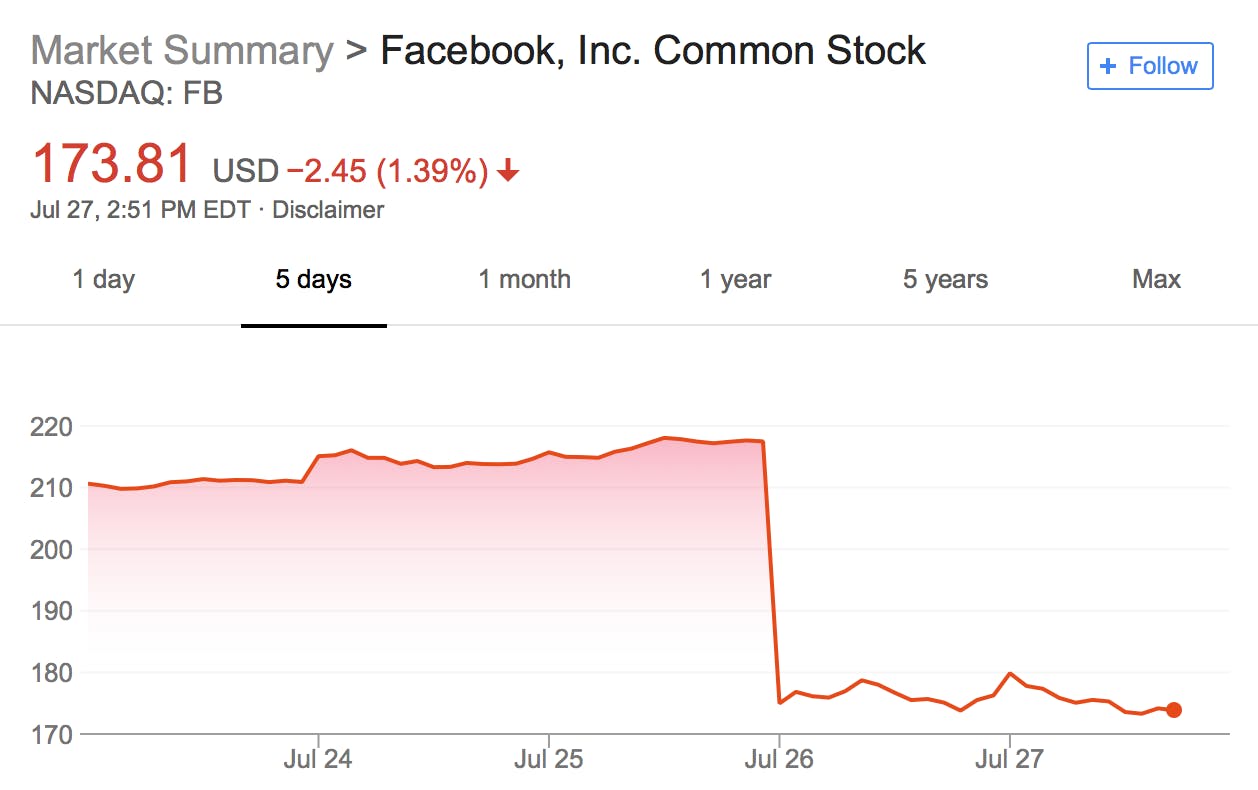
This is a crucial time to point out to investors that my predictions were correct. Last April, I published an in-depth analysis on Seeking Alpha along with predictions for Facebook (FB) stock. The analysis urged readers to ignore post-Cambridge Analytica hype as Facebook’s quarterly earnings would miss as a result of GDPR. Specifically, I stated the culprit would be revenue and data sources outside of the Facebook “family of apps.” However, with this article, I’d like to explore this point even further and explain with granularity why the issues have only begun and what Facebook isn’t telling you (source for Facebook earnings report: NASDAQ).

Tech companies are complex, especially as it relates to data science, and it’s unlikely a financial analyst or hedge fund whose expertise is in finance understands what exactly Facebook does with data and how this impacts average revenue per user (ARPU) or future earnings.

There’s more to Facebook than a “family of apps” which is causing confusion in the markets.

Have you heard of Audience Network? As an investor, it’s essential that you know what this is. Facebook makes money off third-party websites and applications through a platform called Audience Network. This is an advertising network, which powers advertisements to 40% of the top 500 applications. This is indicative of Audience Network’s overall presence in the mobile app market of approximately 40%. While it is well known in the mobile industry as the most dominant ad network in the mobile market, don’t be surprised if you’ve never heard of it.

Facebook Inc. doesn’t like to talk about Audience Network. You’ll be hard pressed to find any mention of it in their SEC filings or on earnings calls. Even among advertisers, who pay billions of dollars into Audience Network, the ad platform is notorious for its lack of transparency and is known to be a black box.

And, it’s a very profitable black box. The last time Facebook reported Audience Network numbers, it served advertisements to over 1 billion people per month at the end of 2016. That’s more than Instagram today, and this incredible base should be more like 2 billion in 2018 assuming it followed the same trajectory of adding 1 billion users every 2 years (Audience Network was launched in 2014).

With Audience Network, advertisers see 16% more reach on average globally than on Facebook and Instagram alone, and a 12% increase in website conversions with Facebook and Audience Network combined.

What could possibly have more reach than Facebook or Instagram?possibly have more reach than Facebook or Instagram?

Whoa – higher reach than Facebook and Instagram? And higher conversions? And all of this to over 1 billion people outside of Facebook’s “family of apps”?

Why is Audience Network so widely used in the mobile industry? Because it’s augmented with proprietary data from Facebook’s social apps. In order to power ads across hundreds and thousands (maybe even millions) of applications at a higher conversion than the world’s best advertising platforms (Facebook and Instagram) would require using data in ways that you would never want your users to find out about.

My newsletter subscribers get this information first. Sign up here.My newsletter subscribers get this information first. Sign up here.here.

I mean, what Facebook user would want their private information brokered to hundreds of applications to power advertisements in websites and applications that they didn’t authorize or have relationships with? From the backlash we saw after Cambridge Analytica, I’m guessing not many would like this.

Let me stop because this is where a lot of confusion begins. I’ll give you an example as to how this works. Let’s say you buy items from the retailer Target (NYSE: TGT) every week. Maybe you buy toilet paper, dish soap and laundry soap. How would you feel if Target used that data in a partnership with Hulu or NBC or CBS to show you advertisements later on your television? That evening, Hulu or NBC or CBS would start to show you toilet paper ads and laundry soap ads based specifically off your private purchases and information shared at the cash register.

Target would make a lot of money if they brokered your private cash register data – but they don’t. Apple (NASDAQ:AAPL) has been very upfront about the billions of dollars they have opted to not make by keeping data private. This is what Tim Cook is referring to. Investors should know that it’s very, very rare for a company to risk the customer relationship in this way.

Meanwhile, Facebook is doing this across hundreds and thousands of applications using private data shared in what should be a privileged customer relationship. Not only that, but Facebook takes your private data from application partners (in this fake example, that would be Hulu, NBC or CBS) – so now they know what you were watching that night – but you never gave consent for any of this.

Data collected from the Audience Network software development kit (SDK) installed in iOS and Android applications continues to enrich Facebook proprietary data sets and drive up cost per impressions on advertising and average revenue per user. This business model of being a “data-broker-and-ad-network-without-consent-and-for-profit-beyond-social-media” is where some of the fallout from Cambridge Analytica began to occur. But this is miniscule compared to the data exchange (dare I say, data leakage?) through Audience Network.

Ethics aside, what investors need to know about Audience Network is that it violates some important regulations put into place by the GDPR as data is being used by both partners in ways that are explicitly without consent (Facebook users have NO IDEA how their private data is being used beyond the “family of apps.” On that note, investors don’t either because all Facebook ever talks about on earnings calls is the “family of apps” – never referring to Audience Network by its name).

The applications who share data with Facebook are at risk and Facebook who brokers proprietary data with partner applications are at risk if they continue this practice. In 2020, these regulations will also go into effect in the State of California. Facebook will have to slowly wean Audience Network out of existence or face major fines. As this weaning takes place, the revenue earned from 40% of the top 500 apps (plus more) will slowly dwindle.

How Much Are We Talkin’?

Quite a few people have asked me to estimate the value of Audience Network. I want to be clear that Facebook has provided very little information here. While the exact number of how much Audience Network is impossible to predict with pinpoint accuracy (insert: lol) the important thing to understand here is that the average revenue per user will drop on Facebook social because they will no longer store data and use that data from partner applications.

One reason there is limited information is that Facebook runs Audience Network ads through their Newsfeed feature, and therefore, uses this loop hole to count the revenue as Facebook revenue. This is very misleading to not provide transparency. Compare this to Alphabet which clearly discloses third-party websites and application revenue as a separate line item in their SEC Filing of roughly $17 billion per year.

Here’s one of the only statements issued by Facebook on Audience Network’s reach:

“We talk about reaching a billion people every month, and these are real people,” said Brian Boland, VP of publisher solutions at Facebook. “We’re not talking about cookies or browsers or devices or ID, where one person can look like six things. We’re talking about legitimately 1 billion people that can be reached on the audience network[2][2].”-Q4 2016

This means Audience Network is larger than Instagram today (Instagram has 800 million users). This also means Audience Network was 2 times larger than Whatsapp at the time of acquisition when Whatsapp had 484 million users – enough to claim the largest acquisition price tag in history of $19 billion.

This is how I estimated the net value at $5 billion minimum up to excess of $10 billion net to Facebook (after 70% revenue share with publishers).

  • Audience Network serves approximately 40% of the mobile apps on the market today which means Facebook likely monetizes every person with a smartphone (i.e. over 3 billion people rather than the 2.2 billion on Facebook social apps). Plus, they monetize this 3 billion many times over across unlimited inventory.
  • Google monetizes 2 million websites and 650,000 apps for $17 billion in third-party network revenue. Facebook Audience Network has a larger reach on mobile than Google’s ad network and the SDK could be in up to 2 million iOS and Android applications (figuring 40% of applications).
  • Facebook warned of ad load issues due to limited real estate in social network apps in earnings calls in 2016, however the exact opposite happened. Revenue skyrocketed and Facebook doubled the number of advertisers from 3 million to 6 million. This growth would have been supported by Audience Network as the ad network would eliminate ad load issues. Facebook added $23 billion in annual revenue since warnings of ad load. A large portion of this would have been supported by Audience Network alleviating ad load.

Most importantly, Facebook does not have to net anything off Audience Network in order to increase average revenue per user on its own social media apps. Growth in the United States and Canada flatlined a long time ago, meanwhile the ARPU (average revenue per user) skyrocketed. Data extracted from Audience Network would have substantially contributed to this ARPU growth. This is essential for investors to understand.This is essential for investors to understand.


Therefore, any ARPU made after the warning of ad load issues in 2016 and 2017 are questionable as the enriched data and targeting capabilities from Audience Network likely contributed to this ARPU growth.

Images from Shift Communications can be found here 

Additional Considerations for Facebook’s Q3 Earnings:

  1. User attrition and slowing user growth has been occurring for some time in the United States and Canada, yet earnings previously remained strong with ARPU climbing to $26 per user in these coveted markets. Therefore, a small user attrition of 1 million European Users from a base of 2.2 billion monthly active users is not why we are seeing the first revenue miss with Facebook executives warning of more decline to come. To believe the stock dropped because of infinitesimal decimal point user attrition is a dangerous theory propagated on earnings calls because your next thought will be whatever revenue lost from the Facebook user base could easily be made up by Instagram or one of the other “family of apps.” If you believe this storyline, then you will continue to hold onto this stock without having all of the information.
  2. The other Facebook domain properties such as Instagram, Whatsapp, and Oculus should be ignored for now. Yes, Instagram has potential but this is not what you are investing in when you buy Facebook stock. It is sheer speculation and if Instagram was a standalone company, you wouldn’t be paying these stock prices. You bought Facebook, Inc and to hype up Instagram as the central business model in 2018 is senseless.
  3. First-party data uploaded to Facebook by advertisers has weakened. The GDPR has a trickle-down effect by weakening the data advertisers upload to the Facebook newsfeed. This reduces the targeting power and the CPMs they can charge. I made this point in my Seeking Alpha article that “many brands will undergo the same regulations as to how they obtained their data.” In addition, Facebook is shutting down the self-serve tool that allows advertisers to import data from third-parties. This will also continue to erode earnings.

Conclusion:

Investors cannot expect transparency from Facebook executives. This company has better trained actors than Hollywood (sorry, but true). There are many instances in prior earnings calls where they purposely covered up revenue sources, such as Audience Network, in order to keep Wall Street confidence high leading up to these quarterly earnings (I’m working on a follow up article citing these specific omissions). They played down the impact of the GDPR and have omitted third-party mobile applications and websites revenue from SEC Filings. It is nearly impossible to evaluate the stock with what little information has been provided by Facebook, Inc.

But remember, this is a company that has misled the general public, Congress, and most importantly their users on important facts about their business model and revenue streams – especially that they use the data from Facebook across a huge network of applications and websites without authorization from their users. Quite simply, investors have been caught in the cross fire of Facebook’s attempts to cover up privacy issues with their users.

While the drop yesterday was “startling” for investors caught unaware, my readers on Seeking Alpha and beth.technology were fully informed with insider knowledge as to the underlying forces which are at play with Facebook, Inc and mobile advertising. You can subscribe to my newsletter here.

Any information or analysis contained herein and published or referenced elsewhere should be appropriately credited to Beth Kindig of beth.technologybeth.technology

This article appeared on Seeking Alpha.

Posted in Social Media, Tech Stocks, Tech StocksLeave a Comment on I Predicted Facebook Would Miss Q2 Earnings: Here’s What Investors Need To Know For Q3

Facebook’s Challenges Are Much Bigger Than Cambridge Analytica

Posted on April 17, 2018June 30, 2026 by io-fund
Facebook’s Challenges Are Much Bigger Than Cambridge Analytica

Next month, when General Data Privacy Regulations (GDPR) take effect, there will be a seismic shift across many technology stocks reflecting a private data drought.

Facebook is a half a trillion-dollar profit machine because of a business model dependent on first-party data which will come under scrutiny May 25 under the new GDPR policies.

Average revenue per user (ARPU) currently stands at $26.76 compared to $4.08 at IPO. With strict policies for data control, consent, erasure and portability, ARPU and earnings will drop significantly.


Editor’s note: This article was published on Seeking Alpha on April 17th, 2018

Investors should be aware of a data bust set to occur on May 25 due to policies called General Data Protection Regulation (GDPR). Since 2012, big data has been traded like a commodity, helping to raise stock prices and boost earnings. We saw a peak in Facebook’s (NASDAQ: FB) average revenue per user, especially on mobile which comprises 88% of earnings, when the company introduced Audience Network to target audiences across third-party mobile websites and applications. However, these current methods for collecting and leveraging data without consent are undergoing massive changes in the coming months.

Why the GDPR Matters in the United States:

General Data Protection Regulation (GDPR) is the biggest data privacy shake-up in history and it comes at a time when many tech companies already are under scrutiny. In brief, the GDPR has four principles covering data control, consent, portability and erasure. Companies must obtain explicit permission any time data is collected on an EU citizen. Users can request all of the data a company has collected and must be able to revoke consent. The provision which may be most profit busting is that users also will have the ability to erase their data or port and transfer their data to another company. Both erasure and portability will greatly weaken ad-targeting capabilities.

While the measures are directly binding and applicable to any company that services a citizen of the European Union, it will be challenging for US lawmakers to defend a lower level of privacy after the regulations are in effect. Most companies service at least one European customer and therefore must abide by the policies within these countries. You can expect an additional global ripple effect due to difficulties in partitioning data and siloing by country. In addition, immense pressure will continue to build over the coming months as all FAANG companies will be asked why there are separate standards for citizens outside European borders. Recently, Mark Zuckerberg was asked if he planned to give North American Facebook users a lower standard of data protection in an April 4 conference call to which he replied “we’ll make all controls and settings the same everywhere, not just in Europe.” One week later, on April 9, the Center for Digital Democracy along with other consumer and privacy organizations wrote an open letter to Facebook requesting the company to officially adopt GDPR measures in the United States. Not if, but when this happens, there will be a seismic shift across many technology stocks reflecting a private data drought.

Cambridge Analytica is Mild Compared to What’s Coming:

Facebook’s Cambridge Analytica scandal is a mild situation of third-party data being bartered (Congress called this “rented”). The scandal saw data from 87 million users accessed through Facebook’s Open Graph API (application programming interface), which allowed data to be accessed by third-party developers in exchange for Facebook becoming the authority in user identities across tens of thousands of applications and websites. Most of this data was traded without consent, such as when Cambridge Analytica obtained profiles from friends of friends to identify the personalities of American voters and to influence voting behavior.

While Facebook testified last week, very few Facebook users (and perhaps senators) understand the far-reaching implications of having 87 million identities in the hands of data scientists, who can model the training set and create a psychological prediction graph through a practice called look-alike modeling. The psychological prediction graph obtained from lookalike modeling can then be used beyond the Facebook platform to influence behavior through micro-targeted ads elsewhere. Essentially, your behaviors and intents logged on Facebook create a level of mind control that can be unsettling on an ordinary day – but most certainly on a hyped election day.

The ethics in this situation may take time to sort out. However, Cambridge Analytica will have a minor effect on Facebook’s business model. The Open Graph API was an equal and free exchange (although by scraping and trading application data, there’s most certainly value as the API enriched Facebook’s platform data by resulting in stronger predictions). In the industry, this is known as third-party data.

The cataclysm that Facebook and all tech companies next month must navigate relates to first-party data, which will be heavily scrutinized and regulated under GDPR policies.first-party data, which will be heavily scrutinized and regulated under GDPR policies.

You Are the Product because Data is Bartered, Not Sold

Wall Street analysts are speculating that Facebook stock can rebound and may be at its bottom. But let’s be clear. Facebook can rebound from the Cambridge Analytica scandal but these analysts fail to consider the impending GDPR. Today, Facebook is a half a trillion dollar profit machine because of a business model dependent on first-party data (or the data Facebook holds on its customers). Advertisers buy audiences from this data and pay an extraordinary amount of money to advertise to these audiences because Facebook’s data has logged behaviors and intents to influence users to make impulsive purchases. Just like a political campaign can influence voters to vote a certain way. Facebook’s advertising network can influence people to buy things they may not necessarily want or need due to psychological profiling.

An essential piece to this is that Facebook has an advertising network that uses this data to target advertisements outside of the social media platform. Thousands of mobile websites and applications benefit from better ad targeting based on Facebook’s data – and this exchange is done without user consent. This is why Facebook’s earnings are 88% from mobile – they make money on mobile outside of the social media platform.“Facebook holds an enormous amount of data on users collected without consent on user activity happening outside of the platform,” Bruce Schneier explained, a security expert and fellow at Harvard’s Berkman Center: “Everything people do, either on Facebook directly or on sites that have a Facebook ‘Like’ button, reveals information about them to Facebook … Facebook tracks you even when you’re not on Facebook, because of their extensive surveillance network on sites that link to them.” Additionally, Facebook tracks location without explicit consent through iOS and Android location services. For instance, they can even inform advertisers whether you’ve walked into a physical retail store following an ad display – actually, you can be within 150-1,500 feet of the store and the advertiser will know.

First-Party Data is How Facebook Makes Money – Without Consent

There are three sets of data that Facebook uses for ad targeting. First-party data owned by Facebook, first-party data owned by brands, and third-party data from various applications and mobile websites.

  1. First-party data owned by Facebook:The four principles of the new regulations under the GDPR are data control, consent, portability and erasure. Facebook’s business model is at great risk because users did not give consent for data collected outside of the platform such as location data and web browsing activity (among others). Facebook also is sharing data outside of the social media platform to advertisers without consent to boost profits through their ad network. The disclosureFacebook describes includes what you did on the social media site without taking into account data collected through the API, artificial intelligence used on photos and videos, lookalike modeling and psychological profiling. Currently, Facebook offers an eight-week snapshot of advertisers who hold your account information with one user finding over 2,000 advertisers had accessed his information on a rolling basis in this short time frame – none of which had consent.

Average revenue per user currently stands at $26.76 per user in the United States and Canada per year. Historically, Facebook made $4.08 per user in the United States and Canada when the company had its IPO in 2012. The last six years have reaped the benefits of unregulated data through mobile and the Audience Network which uses Facebook first-party data in questionable ways. When users get a clear picture of what’s being tracked and delete their data, as provided for by the GDPR, the average revenue per user (ARPU) will drop significantly. User sentiment already is shaky following Cambridge Analtyica with 9% of Facebook users in the United States deleting their account and 35% are reportedly using Facebook less.

  1. First-party data owned by brands:Facebook allows brands to upload their customer data and target audiences accordingly. For instance, the retailer Target (NYSE:TGT) may have first-party data on you from purchases you made in the store that can be uploaded and used to advertise to custom audiences on Facebook. Many brands also will undergo the same regulations as to how they obtained their data with fines up to 4% of an organization’s global turnover.
  2. Third-party data:Facebook already has announced plans to shut down the self-serve tool that advertisers use to import data from third-partiessuch as Oracle (NYSE: ORCL) and Acxiom (NASDAQ: ACXM). More announcements have followed to shut down managed Custom Audiences which will make the platform less desirable from a targeting standpoint. Most of these moves are to reduce Facebook’s liability now but will soon be mandatory under GDPR regulations.

What to Expect When Data Dries Up

Facebook’s entire model is based on being able to share data with advertisers, as confirmed by Sheryl Sandberg earlier this month. In fact, what she stated was “Our service depends on your data, (so) we don’t have an opt-out at the highest level. That would be a paid product.”

What Sandberg failed to mention is that an opt-out at the highest level is coming for EU citizens next month and there is immense pressure for all technology companies to extend these privacy protections to North American citizens. The alternative, which is to convert 2 billion users to a paid product, will cause massive attrition for the platform.

The bottom line is that Facebook’s 2014 revenue was $12.4 billion before it began to collect data and sell audiences through questionable practices including off the platform across apps and mobile sites. Over the last three years, the commodity of data has been more valuable than oil with 2017 revenue reaching $40 billion. What will come of Facebook when the data dries up? As Zuckerberg stated, “it will take years to sort this out.” Meanwhile, the bottom is nowhere in sight.

Disclosure: I/we have no positions in any stocks mentioned, and no plans to initiate any positions within the next 72 hours.


Next month, when General Data Privacy Regulations (GDPR) take effect, there will be a seismic shift across many technology stocks reflecting a private data drought.

Facebook is a half a trillion-dollar profit machine because of a business model dependent on first-party data which will come under scrutiny May 25 under the new GDPR policies.

Average revenue per user (ARPU) currently stands at $26.76 compared to $4.08 at IPO. With strict policies for data control, consent, erasure and portability, ARPU and earnings will drop significantly.


Editor’s note: This article was published on Seeking Alpha on April 17th, 2018

Investors should be aware of a data bust set to occur on May 25 due to policies called General Data Protection Regulation (GDPR). Since 2012, big data has been traded like a commodity, helping to raise stock prices and boost earnings. We saw a peak in Facebook’s (NASDAQ: FB) average revenue per user, especially on mobile which comprises 88% of earnings, when the company introduced Audience Network to target audiences across third-party mobile websites and applications. However, these current methods for collecting and leveraging data without consent are undergoing massive changes in the coming months.

Why the GDPR Matters in the United States:

General Data Protection Regulation (GDPR) is the biggest data privacy shake-up in history and it comes at a time when many tech companies already are under scrutiny. In brief, the GDPR has four principles covering data control, consent, portability and erasure. Companies must obtain explicit permission any time data is collected on an EU citizen. Users can request all of the data a company has collected and must be able to revoke consent. The provision which may be most profit busting is that users also will have the ability to erase their data or port and transfer their data to another company. Both erasure and portability will greatly weaken ad-targeting capabilities.

While the measures are directly binding and applicable to any company that services a citizen of the European Union, it will be challenging for US lawmakers to defend a lower level of privacy after the regulations are in effect. Most companies service at least one European customer and therefore must abide by the policies within these countries. You can expect an additional global ripple effect due to difficulties in partitioning data and siloing by country. In addition, immense pressure will continue to build over the coming months as all FAANG companies will be asked why there are separate standards for citizens outside European borders. Recently, Mark Zuckerberg was asked if he planned to give North American Facebook users a lower standard of data protection in an April 4 conference call to which he replied “we’ll make all controls and settings the same everywhere, not just in Europe.” One week later, on April 9, the Center for Digital Democracy along with other consumer and privacy organizations wrote an open letter to Facebook requesting the company to officially adopt GDPR measures in the United States. Not if, but when this happens, there will be a seismic shift across many technology stocks reflecting a private data drought.

Cambridge Analytica is Mild Compared to What’s Coming:

Facebook’s Cambridge Analytica scandal is a mild situation of third-party data being bartered (Congress called this “rented”). The scandal saw data from 87 million users accessed through Facebook’s Open Graph API (application programming interface), which allowed data to be accessed by third-party developers in exchange for Facebook becoming the authority in user identities across tens of thousands of applications and websites. Most of this data was traded without consent, such as when Cambridge Analytica obtained profiles from friends of friends to identify the personalities of American voters and to influence voting behavior.

While Facebook testified last week, very few Facebook users (and perhaps senators) understand the far-reaching implications of having 87 million identities in the hands of data scientists, who can model the training set and create a psychological prediction graph through a practice called look-alike modeling. The psychological prediction graph obtained from lookalike modeling can then be used beyond the Facebook platform to influence behavior through micro-targeted ads elsewhere. Essentially, your behaviors and intents logged on Facebook create a level of mind control that can be unsettling on an ordinary day – but most certainly on a hyped election day.

The ethics in this situation may take time to sort out. However, Cambridge Analytica will have a minor effect on Facebook’s business model. The Open Graph API was an equal and free exchange (although by scraping and trading application data, there’s most certainly value as the API enriched Facebook’s platform data by resulting in stronger predictions). In the industry, this is known as third-party data.

The cataclysm that Facebook and all tech companies next month must navigate relates to first-party data, which will be heavily scrutinized and regulated under GDPR policies.first-party data, which will be heavily scrutinized and regulated under GDPR policies.

You Are the Product because Data is Bartered, Not Sold

Wall Street analysts are speculating that Facebook stock can rebound and may be at its bottom. But let’s be clear. Facebook can rebound from the Cambridge Analytica scandal but these analysts fail to consider the impending GDPR. Today, Facebook is a half a trillion dollar profit machine because of a business model dependent on first-party data (or the data Facebook holds on its customers). Advertisers buy audiences from this data and pay an extraordinary amount of money to advertise to these audiences because Facebook’s data has logged behaviors and intents to influence users to make impulsive purchases. Just like a political campaign can influence voters to vote a certain way. Facebook’s advertising network can influence people to buy things they may not necessarily want or need due to psychological profiling.

An essential piece to this is that Facebook has an advertising network that uses this data to target advertisements outside of the social media platform. Thousands of mobile websites and applications benefit from better ad targeting based on Facebook’s data – and this exchange is done without user consent. This is why Facebook’s earnings are 88% from mobile – they make money on mobile outside of the social media platform. “Facebook holds an enormous amount of data on users collected without consent on user activity happening outside of the platform,” Bruce Schneier explained, a security expert and fellow at Harvard’s Berkman Center: “Everything people do, either on Facebook directly or on sites that have a Facebook ‘Like’ button, reveals information about them to Facebook … Facebook tracks you even when you’re not on Facebook, because of their extensive surveillance network on sites that link to them.” Additionally, Facebook tracks location without explicit consent through iOS and Android location services. For instance, they can even inform advertisers whether you’ve walked into a physical retail store following an ad display – actually, you can be within 150-1,500 feet of the store and the advertiser will know.

First-Party Data is How Facebook Makes Money – Without Consent

There are three sets of data that Facebook uses for ad targeting. First-party data owned by Facebook, first-party data owned by brands, and third-party data from various applications and mobile websites.

  1. First-party data owned by Facebook: The four principles of the new regulations under the GDPR are data control, consent, portability and erasure. Facebook’s business model is at great risk because users did not give consent for data collected outside of the platform such as location data and web browsing activity (among others). Facebook also is sharing data outside of the social media platform to advertisers without consent to boost profits through their ad network. The disclosure Facebook describes includes what you did on the social media site without taking into account data collected through the API, artificial intelligence used on photos and videos, lookalike modeling and psychological profiling. Currently, Facebook offers an eight-week snapshot of advertisers who hold your account information with one user finding over 2,000 advertisers had accessed his information on a rolling basis in this short time frame – none of which had consent.

Average revenue per user currently stands at $26.76 per user in the United States and Canada per year. Historically, Facebook made $4.08 per user in the United States and Canada when the company had its IPO in 2012. The last six years have reaped the benefits of unregulated data through mobile and the Audience Network which uses Facebook first-party data in questionable ways. When users get a clear picture of what’s being tracked and delete their data, as provided for by the GDPR, the average revenue per user (ARPU) will drop significantly. User sentiment already is shaky following Cambridge Analtyica with 9% of Facebook users in the United States deleting their account and 35% are reportedly using Facebook less.

  1. First-party data owned by brands: Facebook allows brands to upload their customer data and target audiences accordingly. For instance, the retailer Target (NYSE:TGT) may have first-party data on you from purchases you made in the store that can be uploaded and used to advertise to custom audiences on Facebook. Many brands also will undergo the same regulations as to how they obtained their data with fines up to 4% of an organization’s global turnover.
  2. Third-party data: Facebook already has announced plans to shut down the self-serve tool that advertisers use to import data from third-parties such as Oracle (NYSE: ORCL) and Acxiom (NASDAQ: ACXM). More announcements have followed to shut down managed Custom Audiences which will make the platform less desirable from a targeting standpoint. Most of these moves are to reduce Facebook’s liability now but will soon be mandatory under GDPR regulations.

What to Expect When Data Dries Up

Facebook’s entire model is based on being able to share data with advertisers, as confirmed by Sheryl Sandberg earlier this month. In fact, what she stated was “Our service depends on your data, (so) we don’t have an opt-out at the highest level. That would be a paid product.”

What Sandberg failed to mention is that an opt-out at the highest level is coming for EU citizens next month and there is immense pressure for all technology companies to extend these privacy protections to North American citizens. The alternative, which is to convert 2 billion users to a paid product, will cause massive attrition for the platform.

The bottom line is that Facebook’s 2014 revenue was $12.4 billion before it began to collect data and sell audiences through questionable practices including off the platform across apps and mobile sites. Over the last three years, the commodity of data has been more valuable than oil with 2017 revenue reaching $40 billion. What will come of Facebook when the data dries up? As Zuckerberg stated, “it will take years to sort this out.” Meanwhile, the bottom is nowhere in sight.

Disclosure: I/we have no positions in any stocks mentioned, and no plans to initiate any positions within the next 72 hours.

Posted in Social Media, Tech Stocks, Tech StocksLeave a Comment on Facebook’s Challenges Are Much Bigger Than Cambridge Analytica

Posts navigation

Newer posts

Recent Posts

  • The IPO Glut of 2020: Why Valuations Have Gone Too Far
  • Zoom Discusses Two Important Catalysts In Q1 Earnings
  • Three Risk Management Tools the I/O Fund Offers
  • Micron Is Up 900%. Here’s Why the AI Memory Trade May Still Have Room to Run
  • Credo: Reliability Leader Aggressively Moves into Optics

Recent Comments

No comments to show.

Archives

  • June 2026
  • May 2026
  • April 2026
  • March 2026
  • February 2026
  • January 2026
  • December 2025
  • November 2025
  • October 2025
  • September 2025
  • August 2025
  • July 2025
  • June 2025
  • May 2025
  • April 2025
  • March 2025
  • February 2025
  • January 2025
  • December 2024
  • November 2024
  • October 2024
  • September 2024
  • August 2024
  • July 2024
  • June 2024
  • May 2024
  • April 2024
  • March 2024
  • February 2024
  • January 2024
  • December 2023
  • November 2023
  • October 2023
  • September 2023
  • August 2023
  • July 2023
  • June 2023
  • May 2023
  • April 2023
  • March 2023
  • February 2023
  • January 2023
  • December 2022
  • November 2022
  • October 2022
  • September 2022
  • August 2022
  • July 2022
  • June 2022
  • May 2022
  • April 2022
  • March 2022
  • February 2022
  • January 2022
  • December 2021
  • November 2021
  • October 2021
  • September 2021
  • August 2021
  • July 2021
  • June 2021
  • May 2021
  • April 2021
  • March 2021
  • February 2021
  • January 2021
  • December 2020
  • November 2020
  • October 2020
  • September 2020
  • August 2020
  • July 2020
  • June 2020
  • May 2020
  • April 2020
  • March 2020
  • February 2020
  • January 2020
  • December 2019
  • November 2019
  • October 2019
  • September 2019
  • August 2019
  • July 2019
  • June 2019
  • May 2019
  • April 2019
  • March 2019
  • February 2019
  • January 2019
  • December 2018
  • November 2018
  • October 2018
  • September 2018
  • August 2018
  • July 2018
  • June 2018
  • May 2018
  • April 2018
  • February 2018
  • January 2018

Categories

  • 5G
  • About
  • Accounting Tips
  • AdTech
  • Ai Platforms
  • Ai Platforms
  • Ai Platforms
  • Ai Platforms
  • Ai Platforms
  • Ai Platforms
  • Ai Platforms
  • Ai Platforms
  • Ai Platforms
  • Ai Platforms
  • Ai Platforms
  • Ai Platforms
  • Ai Platforms
  • Ai Platforms
  • Ai Platforms
  • Ai Platforms
  • AI Stocks
  • AI Stocks
  • Analysts
  • Application Monitoring
  • Application Monitoring
  • Applications
  • Applications
  • Applications
  • Applications
  • Applications
  • Applications
  • Applications
  • AR
  • Audit Reports
  • Autonomous Vehicles
  • Autonomous Vehicles
  • Autonomous Vehicles
  • Autonomous Vehicles
  • Autonomous Vehicles
  • Autonomous Vehicles
  • Autonomous Vehicles
  • Avod
  • Avod
  • Battery Charging
  • Bear Market
  • Bitcoin
  • Bitcoin
  • Bitcoin
  • Bitcoin
  • Bitcoin
  • Bitcoin
  • Bitcoin
  • Blockchain
  • Blockchain
  • Blockchain
  • Blockchain
  • Blockchain
  • Blockchain
  • Blockchain
  • Broad Market Today
  • Bull Market
  • Bull Market
  • Chainlink
  • Chainlink
  • Chainlink
  • Chainlink
  • China Stocks
  • Cloud
  • Cloud Infrastructure
  • Cloud Infrastructure
  • Cloud Infrastructure
  • Cloud Infrastructure
  • Cloud Infrastructure
  • Cloud Infrastructure
  • Cloud Infrastructure
  • Cloud Platforms
  • Cloud Platforms
  • Cloud Software
  • Cloud Software
  • Cloud Software
  • Cloud Software
  • Cloud Software
  • Cloud Software
  • Cloud Technology
  • Company
  • Company
  • Console Gaming
  • Console Gaming
  • Console Gaming
  • Consumer
  • Consumer
  • Consumer
  • Consumer
  • Consumer
  • Consumer
  • Consumer
  • Consumer
  • Consumer
  • Consumer
  • Consumer
  • Consumer
  • Consumer
  • Consumer
  • Consumer Tech
  • Corrections
  • Crypto Investment
  • Ctv
  • Ctv
  • Ctv
  • Ctv
  • Ctv
  • Ctv
  • Ctv
  • Ctv
  • Ctv
  • Ctv
  • Cybersecurity
  • Cybersecurity
  • Cybersecurity
  • Cybersecurity
  • Cybersecurity
  • Cybersecurity
  • Cybersecurity
  • Cybersecurity
  • Cybersecurity
  • Cybersecurity
  • Cybersecurity
  • Cybersecurity
  • Data
  • Data Analytics
  • Data Analytics
  • Data Analytics
  • Data Center
  • Data Center
  • Data Center
  • Data Center
  • Data Center
  • Data Center
  • Data Center
  • Data Center
  • Data Center
  • Data Center
  • Data Center
  • Data Center
  • Data Center
  • Data Center
  • Data Center
  • Data Center and Processing
  • Data Warehousing
  • Data Warehousing
  • Data Warehousing
  • Data Warehousing
  • Databases
  • Databases
  • Databases
  • Databases
  • Dating
  • Defi
  • Digital Ads
  • Digital Ads
  • Digital Ads
  • Digital Ads
  • Digital Ads
  • Digital Ads
  • Digital Ads
  • Digital Ads
  • Digital Ads
  • Digital Ads
  • Digital Ads
  • Digital Ads
  • Digital Ads
  • Digital Ads
  • E-Commerce
  • Earning Updates
  • Earning Updates
  • Earning Updates
  • Earning Updates
  • Earning Updates
  • Earnings Report
  • Earnings Report
  • Earnings Report
  • Earnings Report
  • Earnings Report
  • Earnings Report
  • Earnings Report
  • Earnings Report
  • ECommerce
  • Electric Vehicles
  • Electric Vehicles
  • Electric Vehicles
  • Electric Vehicles
  • Electric Vehicles
  • Electric Vehicles
  • Electric Vehicles
  • Energy Stocks
  • Enterprise
  • Enterprise
  • Enterprise
  • Enterprise
  • Enterprise
  • Enterprise
  • Enterprise
  • Enterprise
  • Enterprise
  • Ethereum
  • Events1
  • Events1
  • Exchange
  • Faq
  • Finance
  • Financial Analysis
  • Financial Analysis
  • Financial Analysis
  • Financial Analysis
  • Financial Analysis
  • Financial Analysis
  • Financial Analysis
  • Financial Analysis
  • Financial Analysis
  • Financial Analysis
  • Financial Analysis
  • Financial Analysis
  • Financial Markets
  • FinTech
  • Fundamental Analysis
  • Gambling
  • Gaming
  • Genomics
  • Glossary
  • Green Energy
  • Growth Stocks
  • Growth Stocks
  • Growth Stocks
  • Headsets
  • Headsets
  • Health Tech
  • Hydrogen
  • Identity
  • Identity
  • Identity
  • Inflation
  • Inflation
  • Inflation
  • Internet of Things
  • Interviews
  • Interviews
  • Interviews
  • Interviews
  • Investing
  • Investing
  • Ltbh
  • Ltbh
  • Ltbh
  • Ltbh
  • Ltbh
  • Macro Trends
  • Macro Trends
  • Market Trends
  • Market Trends
  • Market Trends
  • Market Trends
  • Market Trends
  • Market Trends
  • Market Trends
  • Market Updates
  • Market Updates
  • Market Updates
  • Market Updates
  • Market Updates
  • Market Updates
  • Market Updates
  • Market Updates
  • Market Updates
  • Market Updates
  • Media
  • Membership
  • Mining
  • Mobile
  • Mobile
  • Mobile
  • Mobile
  • Mobile Gaming
  • Mobile Gaming
  • Mobile Gaming
  • Multimedia
  • Music Streaming
  • NVDA | NVIDIA Corporation
  • Performance Updates
  • Pin Content
  • Podcasts
  • Podcasts
  • Podcasts
  • Portfolio
  • Premium Research
  • Press Releases
  • Press Releases
  • Productivity
  • Productivity
  • Productivity
  • Productivity
  • Productivity
  • Productivity
  • Productivity
  • Reports and Whitepapers
  • Research Services Preview
  • Resources
  • Resources
  • Semiconductor Stocks
  • Semiconductors
  • Semiconductors
  • Semiconductors
  • Semiconductors
  • Semiconductors
  • Semiconductors
  • Semiconductors
  • Semiconductors
  • Semiconductors
  • Semiconductors
  • Semiconductors
  • Semiconductors
  • Semiconductors
  • Social Media
  • Social Media
  • Social Media
  • Social Media
  • Social Media
  • Social Media
  • Social Media
  • Software
  • Software
  • Software
  • Software
  • Software
  • Software
  • Software
  • Software
  • Software
  • Software
  • Software
  • Software
  • Software
  • Software
  • Software
  • Solar
  • Solar
  • Stock Analysis PDFs
  • Stock Updates
  • Stock Updates (Blogs)
  • Supplychain
  • Supplychain
  • Supplychain
  • Supplychain
  • Supplychain
  • Supplychain
  • Svod
  • Svod
  • Svod
  • Svod
  • Svod
  • Svod
  • Tech Podcast
  • Tech Stock News
  • Tech Stock News
  • Tech Stock News
  • Tech Stock News
  • Tech Stock News
  • Tech Stocks
  • Tech Stocks
  • Tech Stocks
  • Tech Stocks
  • Tech Stocks
  • Tech Stocks
  • Tech Stocks
  • Tech Stocks
  • Tech Stocks
  • Tech Stocks
  • Tech Stocks
  • Tech Stocks
  • Tech Stocks
  • Tech Stocks
  • Technical Analysis
  • Telehealth
  • Telehealth
  • Telehealth
  • Telehealth
  • Testing Equipment
  • Testing Equipment
  • Top Tech Stock News
  • Travel
  • Trends Report
  • Tutorials
  • Uncategorized
  • Updates
  • Updates
  • Updates
  • Video
  • Video
  • Video
  • Video
  • Video Footage
  • VR
  • Webinar Alerts
  • Webinar Alerts
  • Webinars
Proudly powered by WordPress | Theme: iofund by iofund.co.uk.